Oxyrhynchus
Oxyrhynchus, Egypt
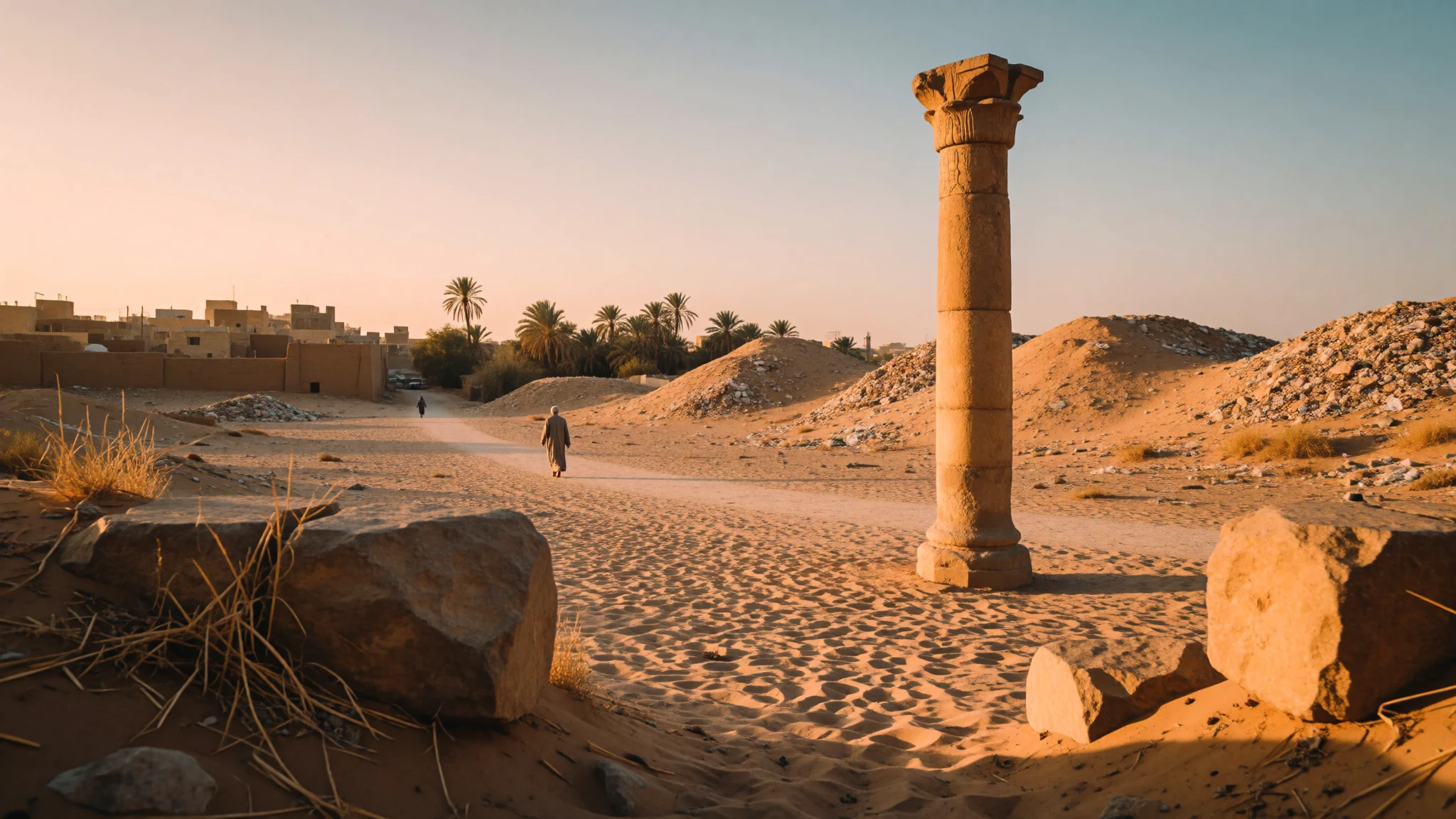
Oxyrhynchus is a quiet Middle Egyptian site where rubbish mounds gave up a vast library of ancient papyrus, and where ruins and tombs sit almost alone.
The place
Oxyrhynchus, now called Al-Bahnasa, lies in Minya Governorate in Middle Egypt, a few hours' drive south of Cairo. It sits on the desert side of the Nile, beside the Bahr Yussef, a channel that branches off the river and runs towards the Faiyum. The modern town is small and agricultural, with fields, palm groves, mud-brick houses and a scatter of mosques. The ancient city is mostly gone above ground. What remains is a landscape of low mounds, sand, broken stone, the odd standing column and a few shrines and cemeteries, rather than a monument that announces itself.
That is the point of the place. Its name is Greek and means 'sharp-nosed', after a fish, and the site is known less for architecture than for paper. Excavators have worked here, on and off, since Victorian times, and the ground has yielded a huge quantity of papyrus texts from the Ptolemaic and Roman periods, along with a few vellum pages and later Arabic manuscripts on paper. Those finds now sit in libraries and museums across the world.
The site suits people who enjoy imagining more than seeing. There are no queues, no ticket-hall bustle and very little shade. Expect a rural Egyptian town, curious locals, dust, glare and silence, plus a sense of how a provincial Greek-speaking city once lived. It works best as a half-day beside a longer stay in Minya, not as a standalone trip from Cairo.
Its story
Oxyrhynchus began as an Egyptian town called Per-Medjed, named after the medjed, a Nile elephantfish worshipped locally. Tradition held that this fish swallowed part of the god Osiris after his dismemberment, which gave the creature a sacred role and the town a reason to matter. It served as the capital of its province, what Egyptians called a nome, in Upper Egypt.
After Alexander the Great took Egypt, the town was refounded as a Greek city, Oxyrrhynchoupolis, 'town of the sharp-snouted fish'. Under the Ptolemies it grew into a prosperous regional capital, among the larger cities of the country at the time. Greek settlers, Egyptian families and officials of the Roman state mixed here, and they all wrote: letters, tax receipts, contracts, school exercises, private accounts, and copies of literary works. Much of it was thrown away on rubbish heaps at the edge of town, where the dry desert air preserved it for centuries.
Roman rule left the city prominent but slowly fading. When revolts by Jewish communities spread across Egypt in the early second century, fighting reached this province too. Later, after Egypt turned Christian, Oxyrhynchus became known for its many churches and monasteries, and the local saints Sirenos, Philoxenos and Ioustos were venerated in shrines in the city. Early Muslim burials followed, which is why the area is still honoured as a martyrs' district. The papyri then waited under the sand until modern excavators began to dig.
What to see
- The standing column of Al-Bahnasa — Archaeological area, Al-Bahnasa
A single ancient column, pale against the sky, is the clearest landmark at Al-Bahnasa and the sort of image most visitors remember. It hints at the scale of the vanished town. Come early or late for softer light, and bring water, because there is almost no shade around it.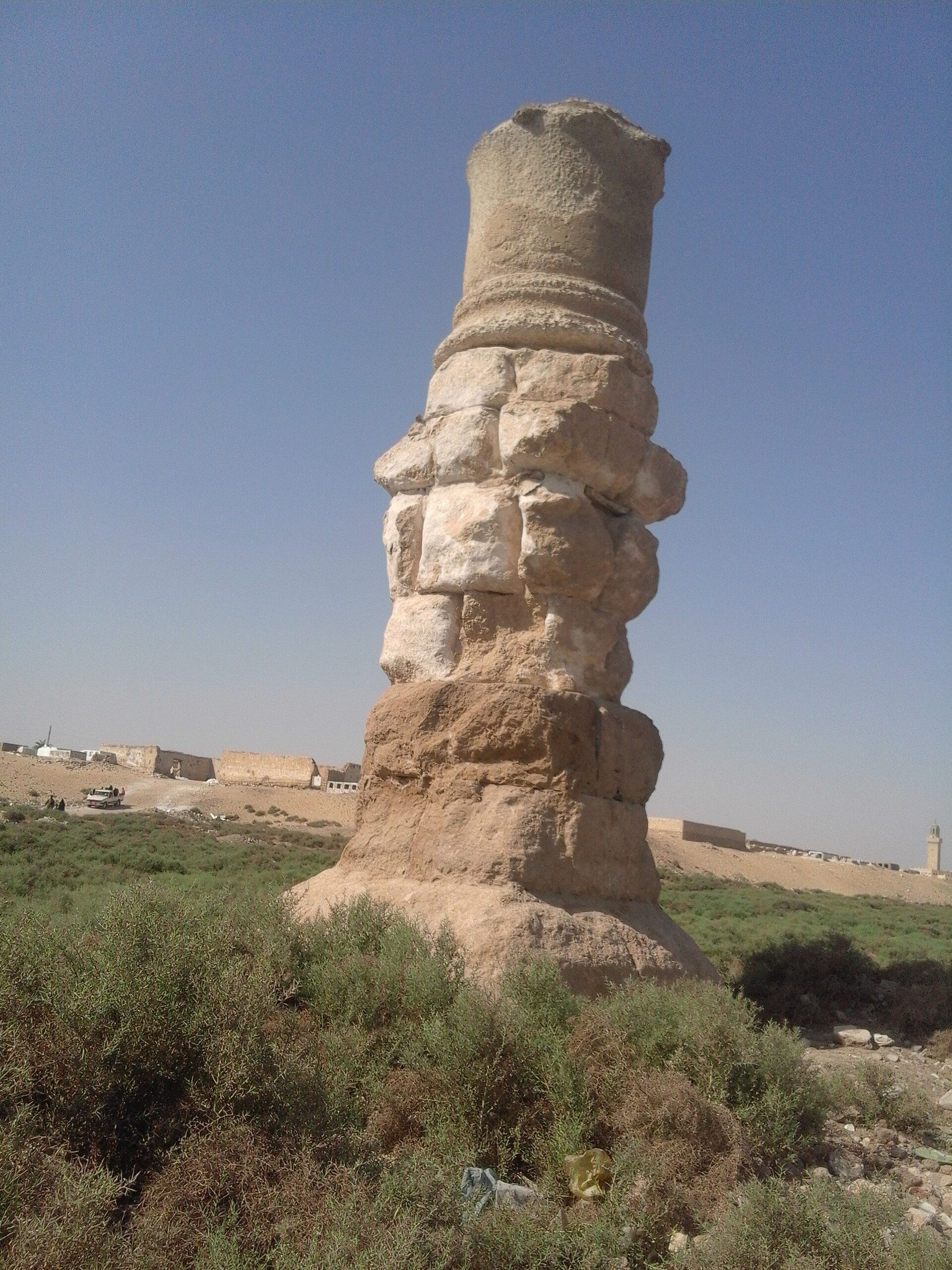
- The martyrs' district — Edge of the town, Al-Bahnasa
A cemetery area on the edge of Al-Bahnasa is honoured as the resting place of early Muslim figures from the time of the conquest. Local people still treat it as a place of respect, so visit quietly, dress modestly and ask before photographing anyone nearby.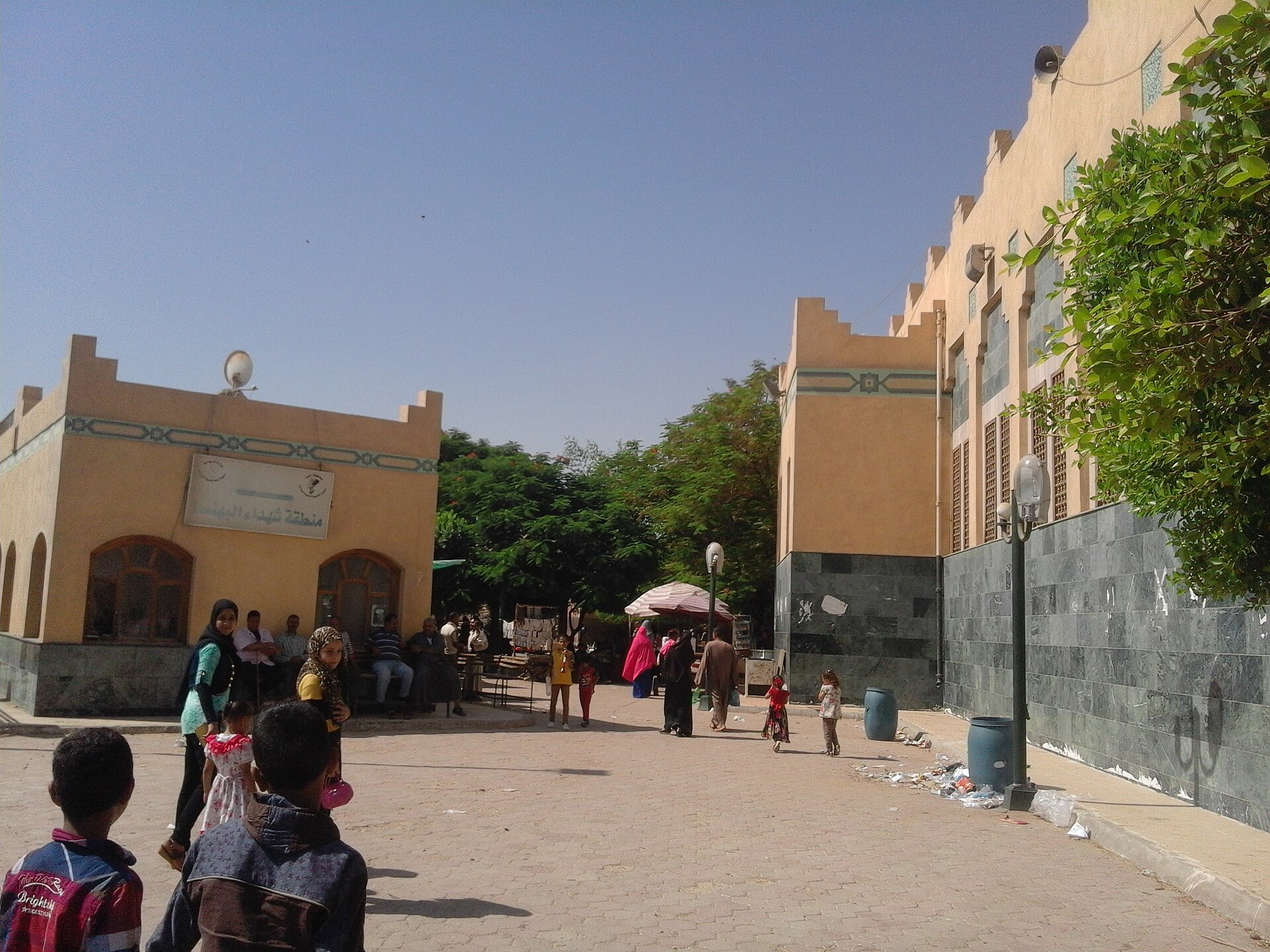
- The papyrus mounds — Desert fringe around the ancient city
The low hills of earth and sand around the town are the old rubbish heaps that gave the site its fame. There is little to look at beyond ground-level shapes and scattered pottery, but standing here helps explain why thousands of ordinary documents survived. Do not pick up or remove fragments. - The lying lion at the Allard Pierson Museum — Allard Pierson Museum, Amsterdam
A stone lion from Oxyrhynchus, dated to the Roman centuries, now rests in the Allard Pierson Museum in Amsterdam. It shows the kind of sculpture the city once produced, and is worth knowing about before a visit, since many finds from the site are displayed abroad rather than at the site itself. - Gilt bronze and funerary portraits abroad — Tokyo National Museum and the Louvre
Objects from Oxyrhynchus appear in the Tokyo National Museum, which holds a gilt bronze from the Late Period, and in the Louvre, which has a funerary bust of a priest probably from here. Looking these up beforehand gives the empty site a human face.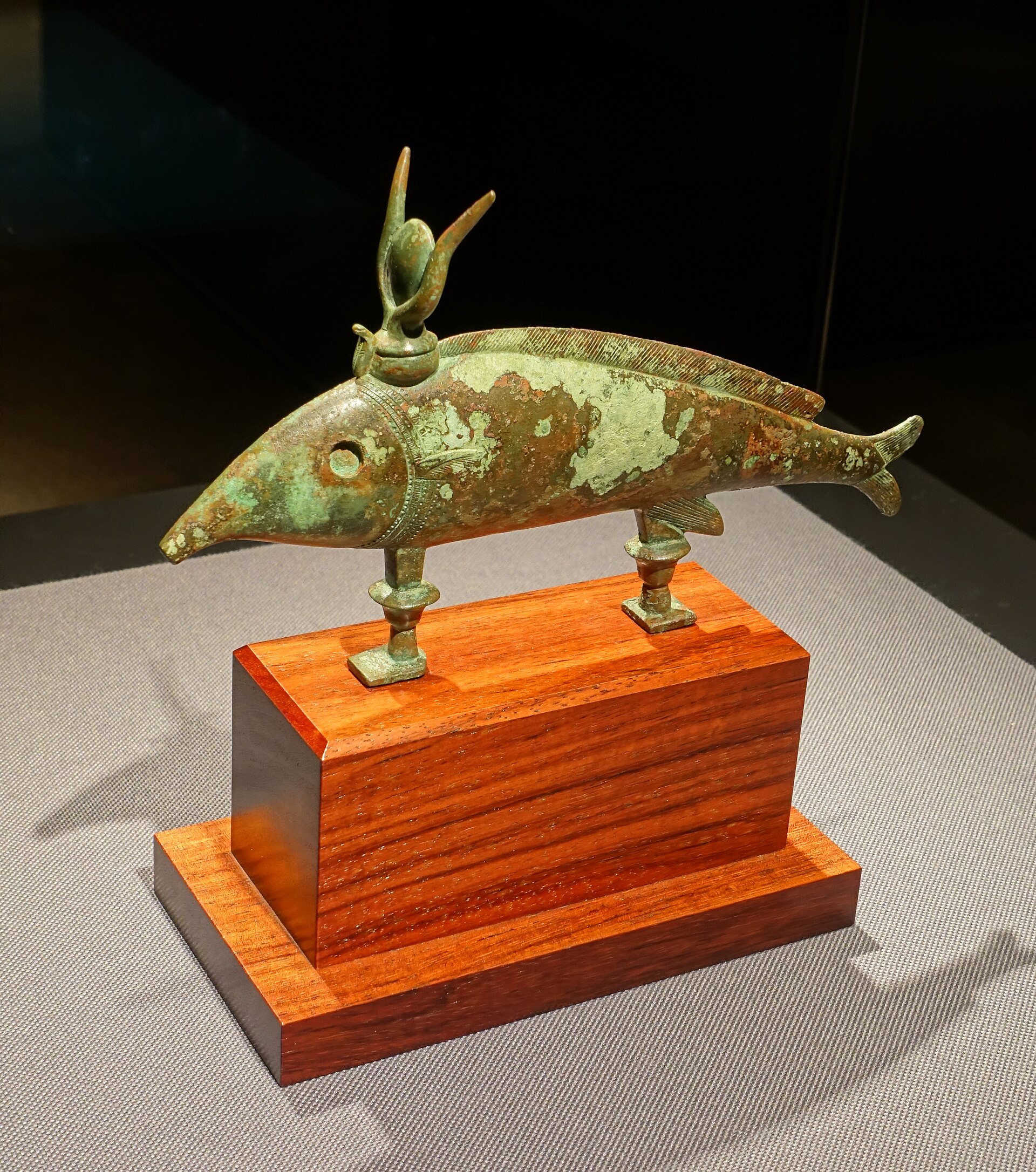
Culture
Oxyrhynchus sits in Upper Egypt's farming country, where hospitality is a point of honour. Visitors who arrive at Al-Bahnasa are likely to be greeted, asked where they come from, and quite possibly offered tea. Guests are expected to accept warmly, and a refusal given kindly, with a hand on the heart, is understood.
Life here follows the rhythm of Islam and the farming year. Friday is the quiet day, the call to prayer shapes the daytime, and Ramadan changes opening times and the mood of the town. Coptic Christians also live in the wider Minya region, so religion is a subject to approach with care and curiosity rather than argument. Egyptians in general value saving face, so criticism is best avoided in public. If something goes wrong, a mix of praise and gentle suggestion works better than a direct complaint.
The town does not see many foreign visitors, which means attention can be intense but is usually friendly. Children may follow you, and guards or local officials may want to know what you are doing. Patience and a few words of Arabic go a long way. The shrines in the martyrs' district are active places of respect, not just attractions.
In the martyrs' district, dress modestly, lower your voice, and always ask permission before photographing people, especially women.
What to wear
In ancient Oxyrhynchus, dress mixed Egyptian and Greek habits. Linen, made from flax and woven on local looms, was the everyday cloth for tunics and wraps, with wool for colder months. Greek-style tunics and cloaks were worn by the settler class, while many Egyptians kept to simpler linen garments. Burial portraits from the region show richly dressed people, often in coloured borders and jewellery.
Today, the traditional dress of Upper Egypt is the galabeya, a long loose robe in cotton or cotton blends. Men wear it in plain colours such as grey, cream or brown, often with a turban or skullcap, and on market days or at celebrations they may wear fresh, pressed versions. Many women wear long dresses or abayas with a headscarf, sometimes with embroidered or printed trim. Younger people in towns mix this with shirts, trousers, jeans and trainers.
Visitors should plan for strong sun, dust and conservative norms. Loose, lightweight cotton or linen that covers shoulders and knees is the sensible choice for both heat and respect, and women may find a light scarf handy at religious sites. Bring a wide-brimmed hat, sunglasses and sun cream. For the uneven sand and rubble, wear closed, sturdy shoes with a good grip, not sandals.
What to eat
- Ful medames — Breakfast stalls and corner cafés in Minya and nearby towns
Slow-cooked fava beans mashed with oil, lemon, cumin and sometimes chopped tomato or parsley, eaten with flatbread. It is the standard Egyptian breakfast and filling enough to carry a morning of walking. - Ta'amiya — Street stalls and sandwich counters in town centres
Egypt's version of falafel is made with crushed fava beans rather than chickpeas, giving a green, herby centre and a crisp crust. Eaten in a sandwich with salad and tahini, it is cheap and quick. - Aish baladi — Neighbourhood bakeries and village markets
Round, wholemeal flatbread baked in village ovens and used to scoop up beans, dips and stews. Fresh from the oven it is soft and slightly sweet, and it is the basis of almost every meal. - Molokhia — Family-run eateries and home kitchens in Upper Egypt
A glossy green soup made from finely chopped jute leaves, garlic and coriander, usually served with rice and chicken or rabbit. The texture is silky, and it is a home-style dish more than a restaurant showpiece. - Koshari — Dedicated koshari eateries in Minya city
A hearty mix of rice, lentils, macaroni and chickpeas topped with tomato sauce, crisp fried onions and a splash of vinegar-garlic dressing. It is vegetarian, cheap and widely loved.
Plan it
Best time. October–November and February–April, when days are warm rather than punishing. Summer is very hot with little shade at the site, and midday sun can be fierce even in winter.
How long. 1
Getting there. Fly into Cairo, then take a train or road transfer south to Minya (a few hours). The last leg to Al-Bahnasa is by taxi or private car across the Nile and out towards the Bahr Yussef; agree the return trip before setting off.
Budget. low
Tips
- Check current access, opening arrangements and any permission needed with the Ministry of Tourism and Antiquities before going
- Carry cash, small notes especially, as cards are rarely accepted outside Minya city
- Take plenty of water, sun protection and snacks, since there are few facilities at the site
- Go in the morning to avoid the worst of the heat and to have time to return before dark
- Check the e-visa rules on your own government's travel advice page before flying
Etiquette
- Ask before photographing people, especially women
- Dress modestly and keep your voice low in the martyrs' district
- Do not take pottery or other fragments from the site
Nearby
Sources
- Wikidata Q622640 (CC0)
- Wikipedia: Oxyrhynchus (rev 1379770542) (CC BY-SA 4.0)
- Wikivoyage: Egypt (rev 5410102) (CC BY-SA 4.0)
- Photo 01: Abdallah ali, via Wikimedia Commons (CC BY-SA 4.0)
- Photo 02: Abdallah ali, via Wikimedia Commons (CC BY-SA 4.0)
- Photo 03: Daderot, via Wikimedia Commons (CC0 1.0)
- Photo 04: Remi Mathis, via Wikimedia Commons (CC BY 3.0)
- Photo 05: Remi Mathis, via Wikimedia Commons (CC BY 3.0)
- Photo 06: Unknown author, via Wikimedia Commons (CC0 1.0)
- Photo 07: Sailko, via Wikimedia Commons (CC BY 3.0)
- Photo 08: Unknown author, via Wikimedia Commons (CC0 1.0)


