Outer Banks
Outer Banks, United States
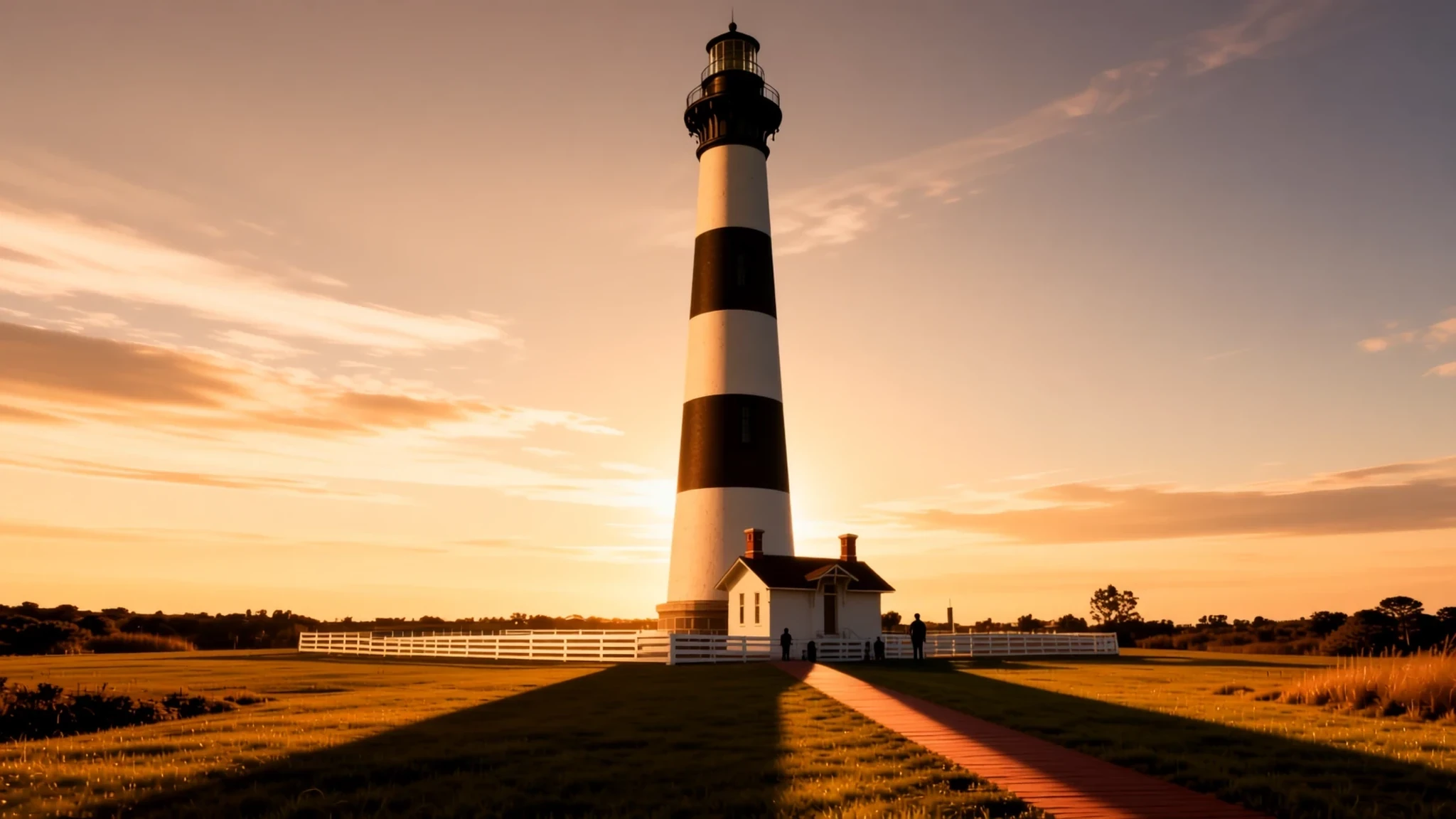
A string of wind-shaped barrier islands off North Carolina, with wild horses, lighthouses and long empty beaches.
The place
The Outer Banks, often shortened to OBX, is a long chain of barrier islands and sandy spits that runs along most of the North Carolina coast and reaches into southeastern Virginia. The islands sit between the Atlantic and the sheltered sounds of Currituck, Albemarle and Pamlico, so within a short drive you can have the ocean on one side and calm water on the other. Most visitors come for the beaches, which are wide, open and backed by dunes. Cape Hatteras National Seashore protects much of the southern section, and its dunes and beach grasses do real work by holding the land together against storms.
The towns are small and strung out along one main road. Development is concentrated around places like Nags Head, Kill Devil Hills, Duck and Corolla, while the villages further south, such as Buxton and Rodanthe, feel quieter and more spread out. Expect long drives between towns, and check road conditions before you set off, because storms can close sections.
The coast is changing. Erosion is a serious problem here, and parts of Hatteras Island have narrowed sharply over time. Rising seas and storms such as Hurricane Irene have damaged roads, homes and other infrastructure. You will notice this in rebuilt houses and in sand pushed across the road after a blow, a reminder that the islands are always moving.
Its story
The Outer Banks has one of the most distinctive histories on the East Coast. Long before European ships arrived, Algonquian-speaking peoples, among them the Chowanoke, Secotan and Poteskeet, moved through the islands with the seasons. They fished the Atlantic-facing islands in summer and wintered on Roanoke Island or the mainland, living in small, semi-nomadic groups.
Sixteenth-century European visitors wrote warmly of the Native communities on Hatteras Island, praising their hospitality and what looked to them like a comfortable way of life. Disease and the pull of the mainland later thinned those communities. The English attempt to plant a colony on Roanoke Island is the best-known episode of that era. Its failure, with the fate of its settlers still unresolved, gave the region a lasting air of mystery that the Lost Colony drama still draws on.
The islands became famous for a different reason in the early twentieth century. On the dunes at Kitty Hawk, two brothers from Ohio got a powered machine heavier than air off the ground for the first time in recorded history, and North Carolina has carried the motto "First in Flight" ever since. Wrecks along the shoals earned the surrounding seas the name Graveyard of the Atlantic. Until bridges reached the islands in the years between the world wars, boats were the only way on or off them, which kept the communities isolated for a long time.
What to see
- Cape Hatteras Light
Cape Hatteras Light stands at Buxton, and its striking pattern makes it easy to recognise from the road and from the sea. It is one of the best-known lighthouses on the coast, and it is a fixture of most visits to the southern islands. The lighthouse is under renovation as of August 2026, with its tower covered in scaffolding and climbing closed, though the visitor centre and museum remain open. The grounds and the nearby beach are good for a slow walk.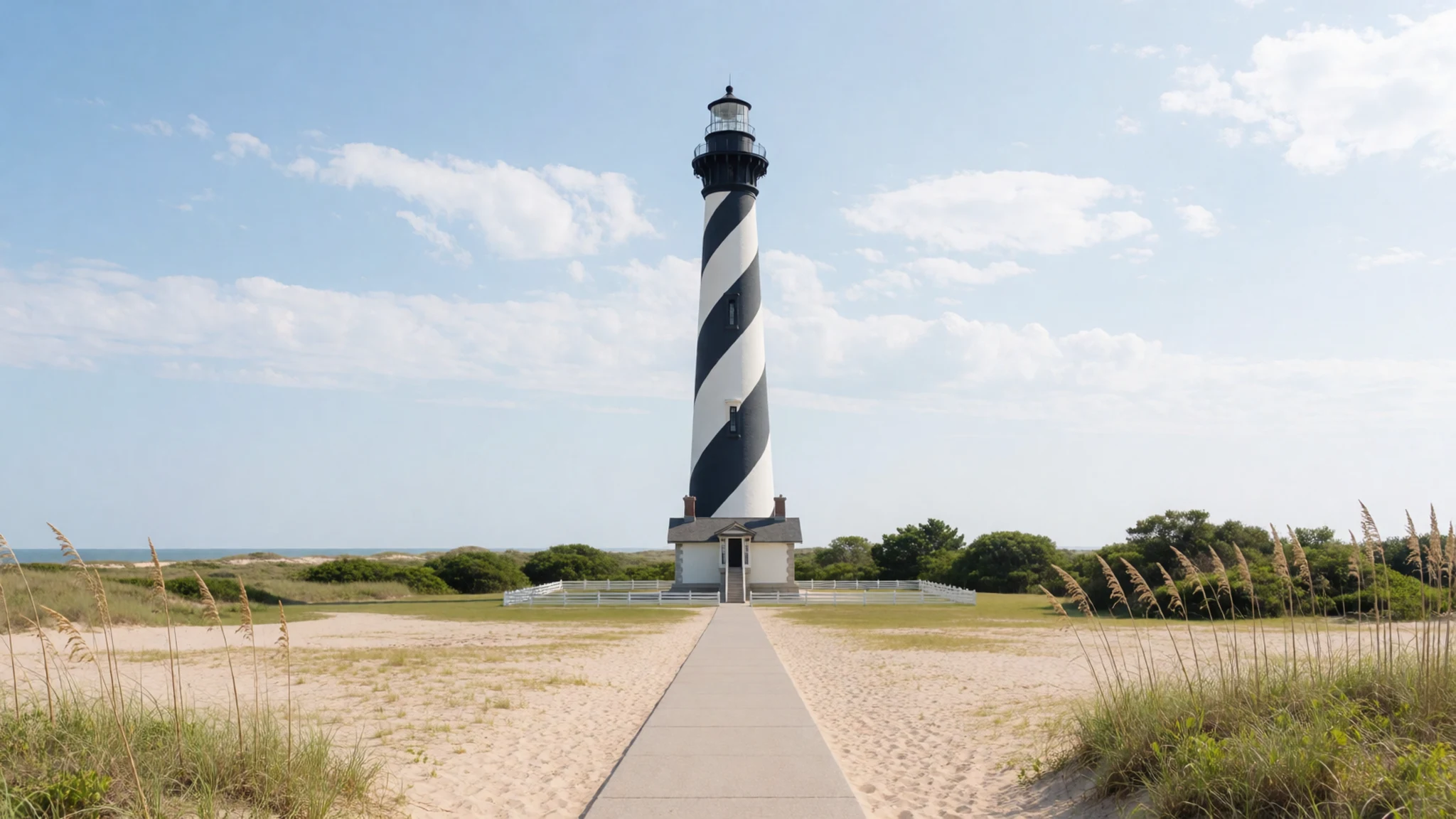
- Bodie Island Lighthouse
Bodie Island Lighthouse sits near Nags Head on the sound side of a narrow peninsula, at the start of the Cape Hatteras National Seashore. Its tower is a favourite subject for photographs, especially in evening light over the water. Walk the grounds, then take the boardwalk trails through the marsh nearby. Opening times for climbing the tower change, so check the official site before you go.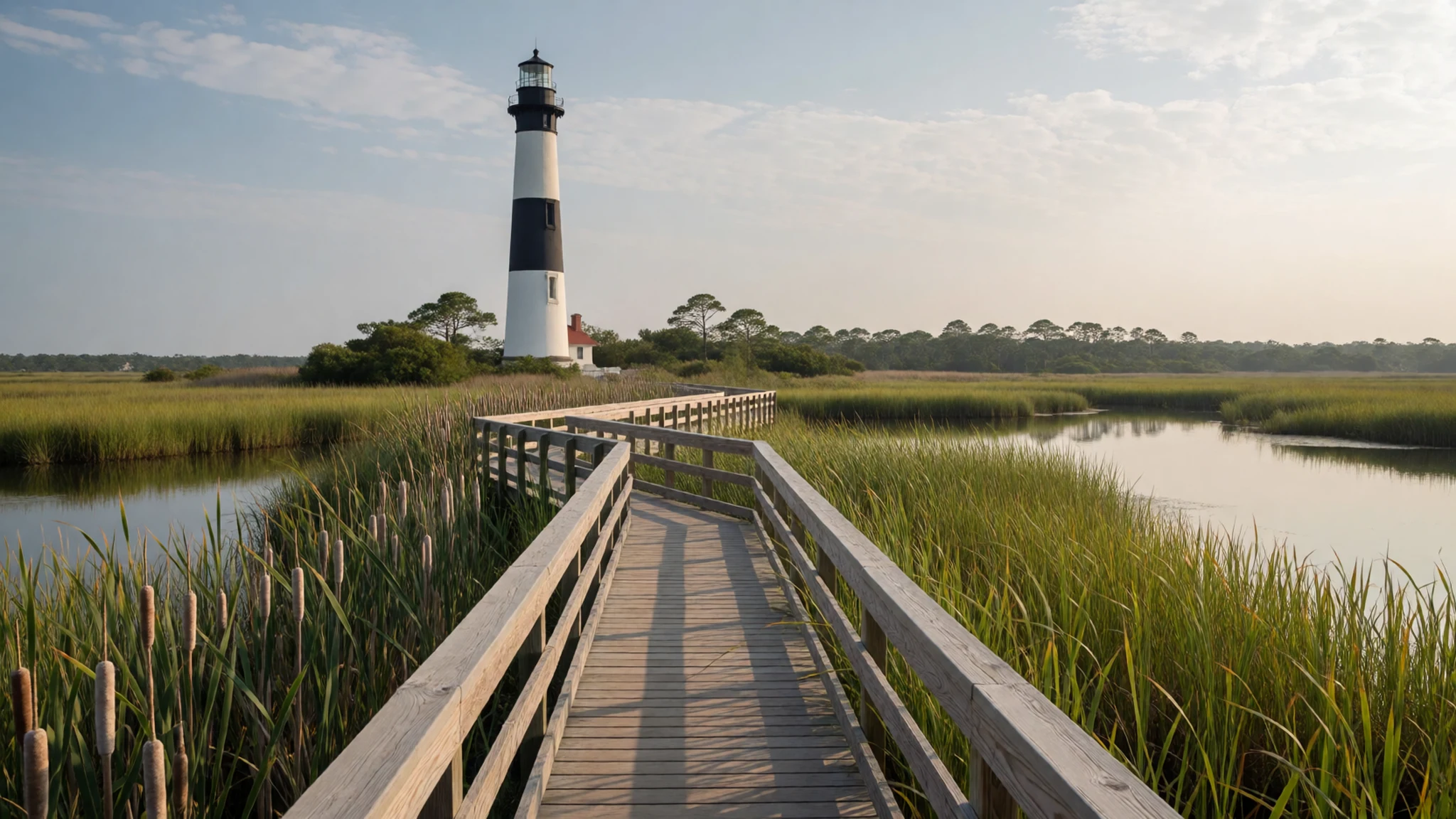
- Wright Brothers National Memorial
The Wright Brothers National Memorial at Kill Devil Hills marks the dunes where the brothers first got a powered aircraft into the air and kept it flying. It is a short drive from Nags Head and the easiest place to understand what happened here. Plan a relaxed visit with the visitor centre and the grounds around the flight area. Check the official site for current opening times and any charges.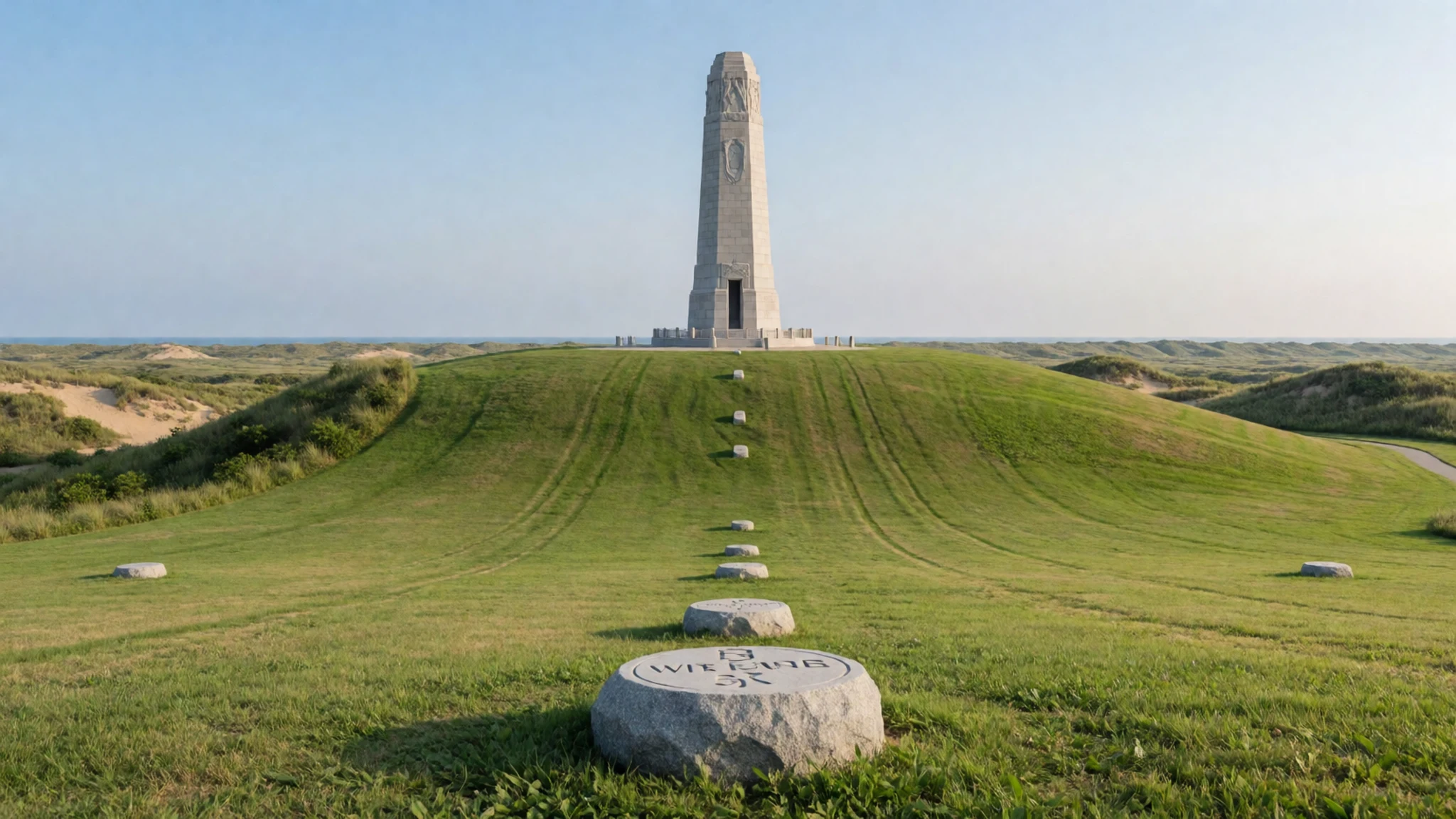
- Chicamacomico Life-Saving Station
Chicamacomico Life-Saving Station near Rodanthe preserves a group of buildings from the era when crews went out to rescue shipwrecked sailors. It keeps its main station buildings and outbuildings, a rare survival on this coast, and it gives a clear picture of the work these crews did. The site is quieter than the lighthouses, so it suits a slow walk. Check opening days in the off-season, since some buildings may be closed.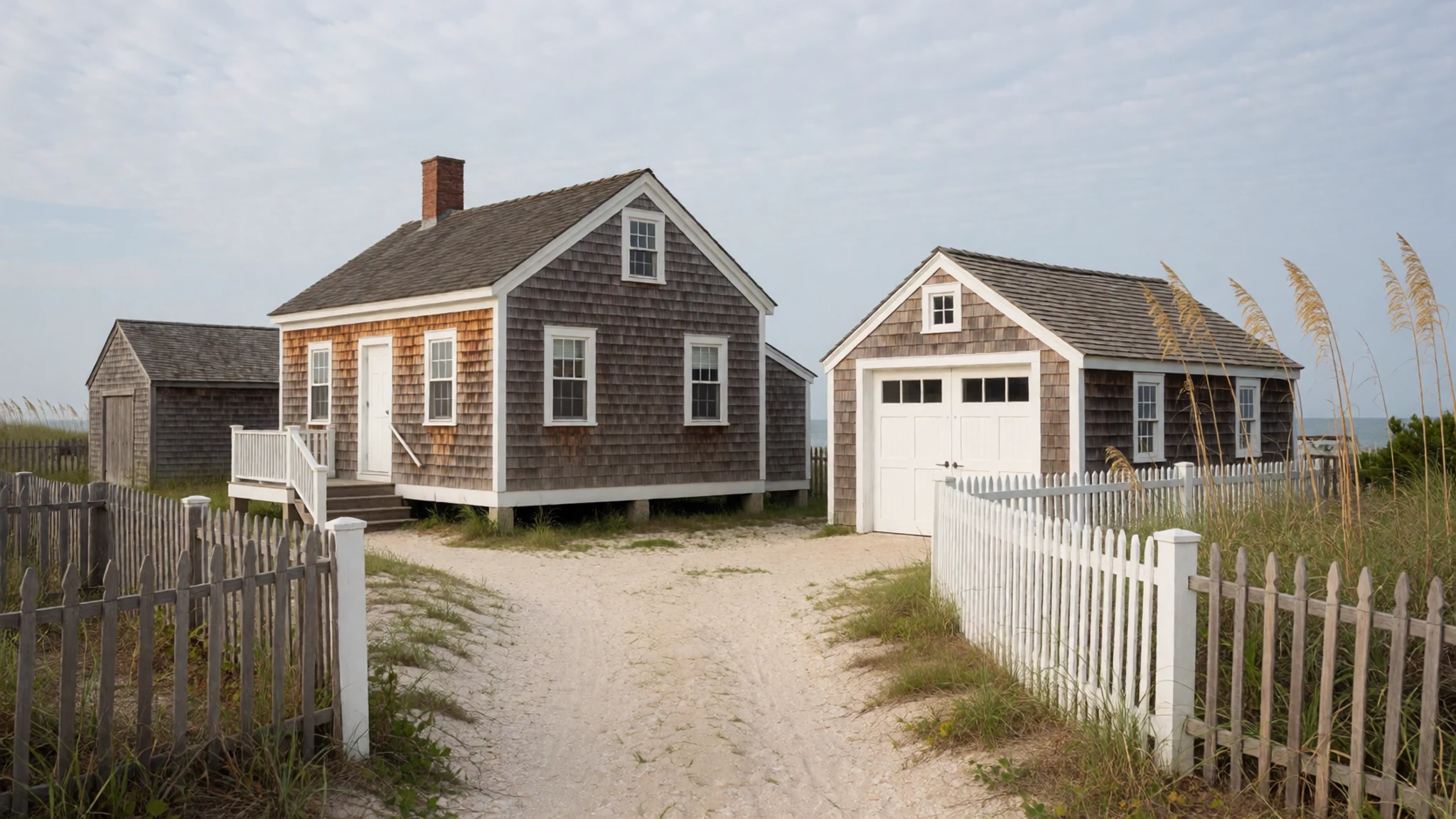
- Jockey's Ridge State Park
Jockey's Ridge State Park, just outside Nags Head, is built around a large, shifting sand dune that visitors climb for the view across the sound and the ocean. The sand moves with the wind, so the landscape looks a little different each season. Go in early morning or late afternoon, when it is cooler and less crowded in summer. Wear shoes you do not mind getting sandy, and keep to the marked paths.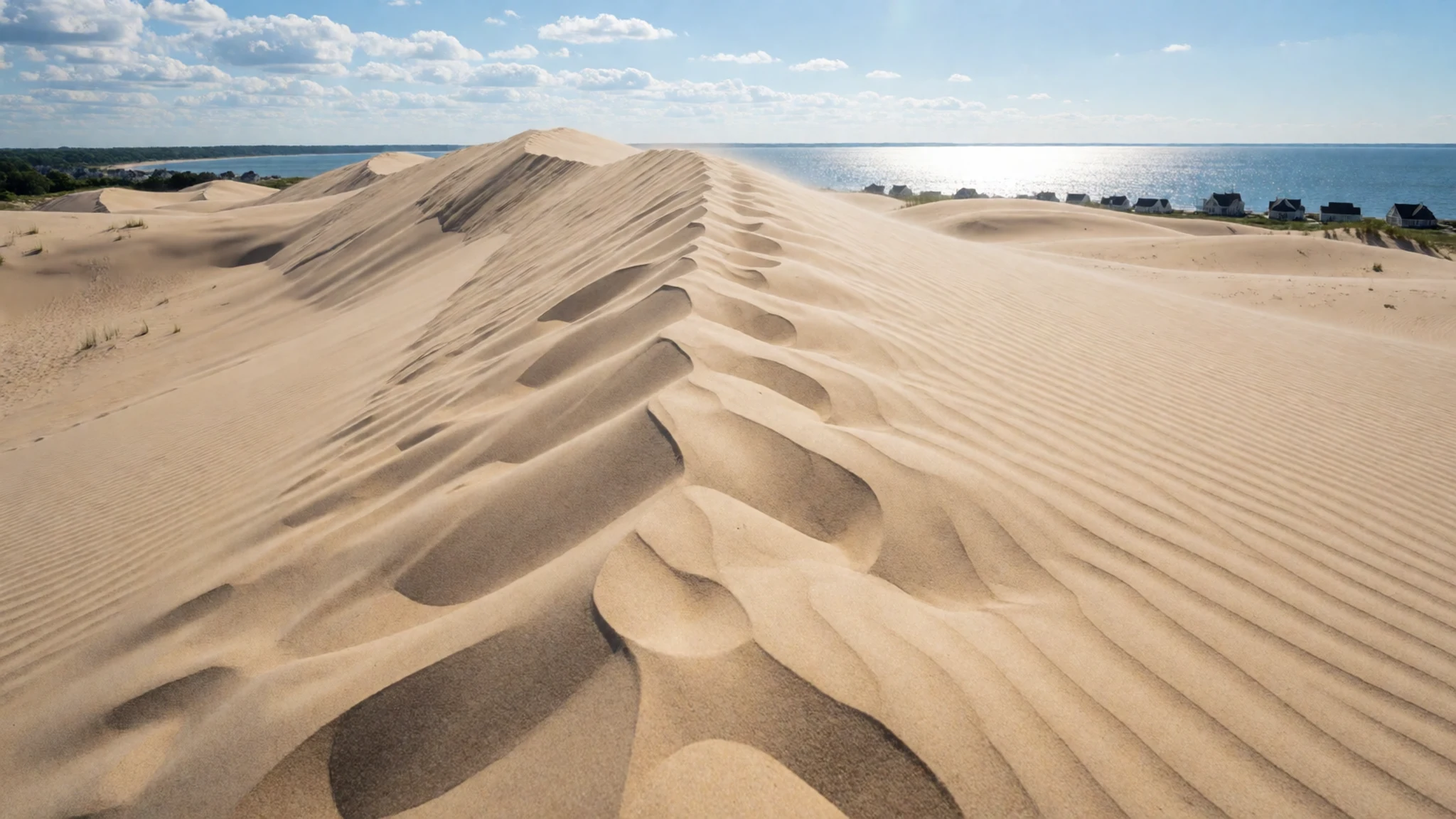
Culture
The Outer Banks is a place of small communities, many of them built around fishing and boat-building traditions that predate tourism. The islands were reached only by water for a long time, and that isolation left a strong local character that people still take pride in. Locals tend to be friendly and talk easily with visitors at the docks, in the shops and at the fish markets.
Holiday rental houses have changed the feel of many villages, with families arriving in large groups and staying a week at a time. Many residents depend on the summer season, so expect busy roads and parking pressure in the peak months, and be patient when traffic slows near the bridges. The landscape is also protected. Wild horses roam parts of the northern islands, around Corolla, and they are wild animals that can bite or kick. Dune grass is fragile and holds the sand in place, so stay on the boardwalks and marked paths.
Storms shape daily life too. After a blow, residents often clear sand and debris quickly from roads and driveways, so give crews and neighbours room to work. Stay on the boardwalks, keep a safe distance from the wild horses, and never feed them.
What to wear
On the Outer Banks, traditional dress was working dress. Fishermen, boat crews and the lifesaving crews who watched the shoals wore heavy wool, cotton canvas and waterproof oilskin, materials that shed salt spray and held up in the wind. These practical textiles belong to the working life of the islands, and they are still the reference point for much of the local outdoor clothing.
What people wear now is far more relaxed. In summer you will see shorts, sandals, flip-flops and swimwear on the beach and at restaurants, with T-shirts for evenings out. Locals dress casually almost everywhere, and a clean pair of shorts is accepted at nearly every eatery in the villages.
For a visit, pack for sun and wind. Lightweight cotton or linen keeps you cool in the humid summer, while a windproof layer is worth having for evenings and early mornings on the beach. Wear closed shoes with grip for sandy boardwalks, marsh trails and lighthouse grounds, and bring water shoes for rocky jetties. Carry a hat, since the open dunes offer little shade.
What to eat
- Fresh seafood — sound-side restaurants along the Beach Road
Fresh seafood, cooked simply and often fried or grilled, is the default order on the Outer Banks. Look for it at restaurants on the sound side of the Beach Road, where menus change with the catch and the weather. Ask what came in that day, since the best dish is usually the one the kitchen is proudest of.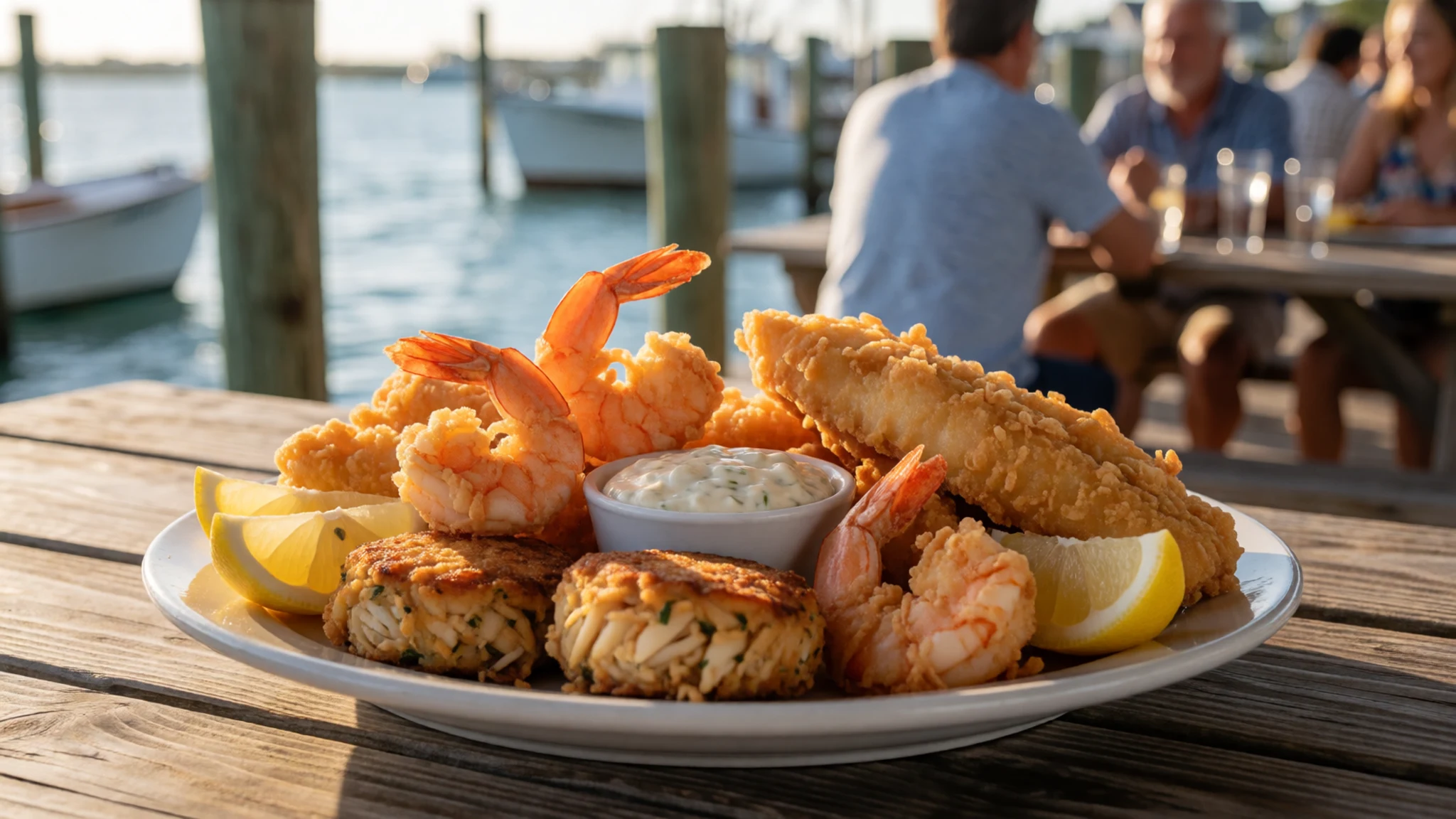
- Stone-oven pizza — pizza kitchens along the Beach Road
Stone-oven pizza is a common night-out choice, often served alongside fresh fish or steaks. Several pizza kitchens line the Beach Road, and in season they fill quickly, so arrive early or expect a short wait. Check whether a place takes bookings before you set out.
- All-beef burgers — family-run burger places on the Beach Road
Big all-beef burgers, eaten on a porch with a cold drink, are a holiday staple. Try a family-run burger place on the Beach Road, where lunch specials are common and the mood stays relaxed. Some seasonal places close early or shut entirely in the off-season. - Village diner breakfast — village diners in Buxton and Rodanthe
A village diner is the place for a proper breakfast of eggs, grits, sausage and biscuits, served fast and filling. Look for one in Buxton or Rodanthe, where opening hours tend to be early and the crowd is mostly locals. Expect fewer choices outside peak summer. - Fried local shrimp — casual waterfront stands on the sound side
Fried local shrimp in a paper basket is a classic beach-shack meal. Find it at casual waterfront stands and seafood shacks on the sound side, and eat it outdoors where the breeze helps. Small stands may prefer cash, so check before you order.
Plan it
Best time. Spring, around April and May, and October are the mildest months, with fewer crowds and calmer weather. Summer is hot and humid with frequent afternoon storms, and hurricane season runs into the autumn, so watch forecasts. Winters are milder than inland but often windy, and many places close.
How long. 3–4
Getting there. Fly into Norfolk International Airport in Virginia or Raleigh-Durham in North Carolina, then drive to the islands. The last leg is by car, since the Outer Banks are reached by road.
Budget. mid
Tips
- Book rentals early for summer, since the best houses fill months ahead
- Start beach walks and lighthouse visits early, when it is cooler and quieter
- Carry cash for small stands and some car parks
- Check the weather and road status before you leave, because storms can close sections of road
- Bring water, sunscreen and a windproof layer, since the ocean breeze can chill evenings
Etiquette
- Keep a safe distance from the wild horses and never feed them
- Stay on boardwalks and marked paths to protect the dune grass
- Leave shells and bird nesting areas alone, and keep dogs leashed where signs ask
Nearby
Sources
- Wikidata Q1517373 (CC0)
- Wikipedia: Outer Banks (rev 1380358163) (CC BY-SA 4.0)
- Wikivoyage: Outer Banks (rev 5375586) (CC BY-SA 4.0)
- Two CoastCams installed in the Outer Banks for DUNEX project (USGS) (Public domain)
- Wild Horses Outer Banks North Carolina (Kabongolei) (CC BY-SA 4.0)
- Two brown pelicans (USFWS/Southeast) (CC BY 2.5)
- Graveyard of the Atlantic Museum (Vbofficial) (Public domain)
- Sunset over the Currituck Sound in Duck (M0M3NTUM) (CC BY 3.0)
- Bodie Island Lighthouse, Outer Banks, NC (Aaronm86) (Public domain)
- Sunset over northern outskirts of Avon (Yeti Hunter) (CC BY 3.0)
- Jockey's Ridge State Park (Aaronm86) (Public domain)


