Oulu
Oulu, Finland
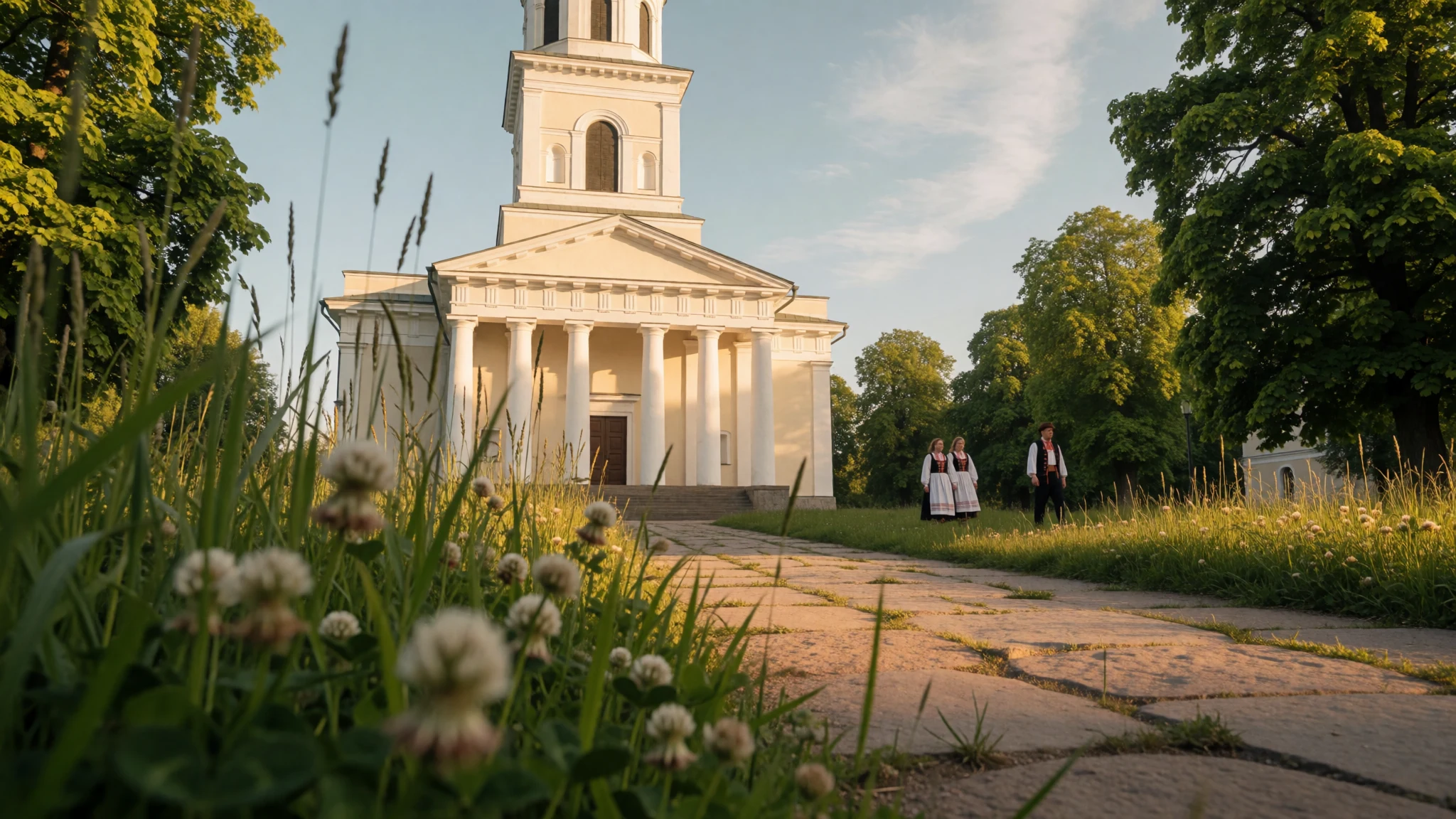
Oulu is a flat, bike-friendly northern Finnish port city for long summer light, quirky festivals, riverside parks and a taste of everyday life far from Helsinki.
The place
Oulu sits on the north-western coast of Finland, where the River Oulu reaches the Gulf of Bothnia, and it serves as the regional capital of North Ostrobothnia. Around 217,000 people live in the city, making it the largest in Northern Finland and a natural base for the region's hospitals, studies and business. The land is flat, only about 8 m above sea level, so the town suits bicycles far better than boots: paths follow the river, hop between small islands and run out toward the shore. Few cities of this size lie so far north, which shapes everything about daily life. Winter is long, dark and properly cold, with the sea freezing near the coast, while summer evenings stay bright late into the night. Oulu has a reputation as a technology town. The university is known for information technology, a large phone-industry employer once shaped the suburbs, and the city has described itself as a living laboratory where residents test new ideas such as tags and public screens. That gives it a young, practical feel, quite unlike a postcard old town. Expect a working northern city: modest museums, a compact centre of wide streets, parks, cafés and a great many cyclists. It is a good place to see ordinary northern Finland, and a sensible stopping point on the way further north.
Its story
Oulu's story begins with a river mouth. The Oulu River gave traders on the Gulf of Bothnia a natural meeting point, and in the medieval period both Novgorod and the Kingdom of Sweden claimed influence over the area. Each built defences, Swedish forces took over the Novgorodian castle, and through the fifteenth century raiding from the east made life uncertain. Trading rights came in the sixteenth century, a Swedish castle followed, and a later treaty settled the region firmly under Swedish control. King Charles IX founded the town in 1605, and it received city privileges a few years afterwards. Later, permission to trade beyond Sweden's borders helped it grow into a real port, and from the late eighteenth century until 2009 it was the capital of the Province of Oulu. Wood was the main building material, which proved costly. A great fire in the early nineteenth century destroyed much of the centre, and Carl Ludvig Engel, the architect behind the neoclassical buildings around Helsinki's Senate Square, was brought in to plan the rebuilding. His influence can still be felt in the cathedral and the orderly layout of the central streets. The castle itself is long gone: the old fortress was damaged in fighting and then destroyed when lightning hit its gunpowder store. Only traces remain, so that part of the story reads better from a signboard than from the ground.
What to see
- Oulu Cathedral — City centre
Oulu Cathedral is the clearest reminder of the rebuilding after the great fire. This neoclassical Lutheran church was designed by Carl Ludvig Engel, who also shaped Helsinki's Senate Square, and it replaced an earlier church lost to flames. The interior is pale and restrained. Check the parish website for visiting times before you go.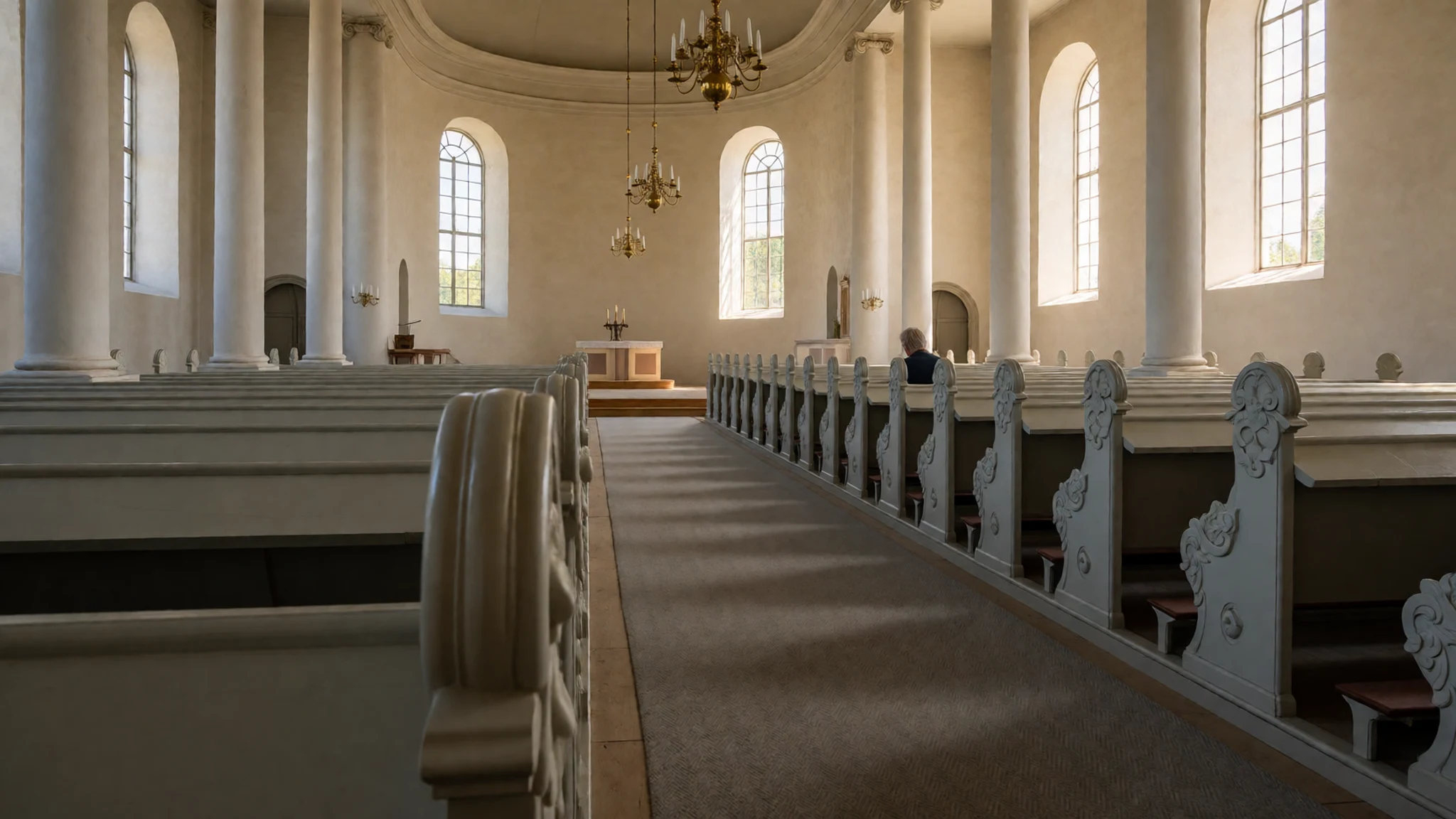
- Oulu Museum of Art — Near Hupisaaret
Oulu Museum of Art is a two-storey gallery of modern work in the centre, with several changing exhibitions through the year. Most labels come with English text, though small temporary shows may be Finnish only. It makes an easy rainy-day stop close to the park islands. Check the museum's official site for opening times and tickets.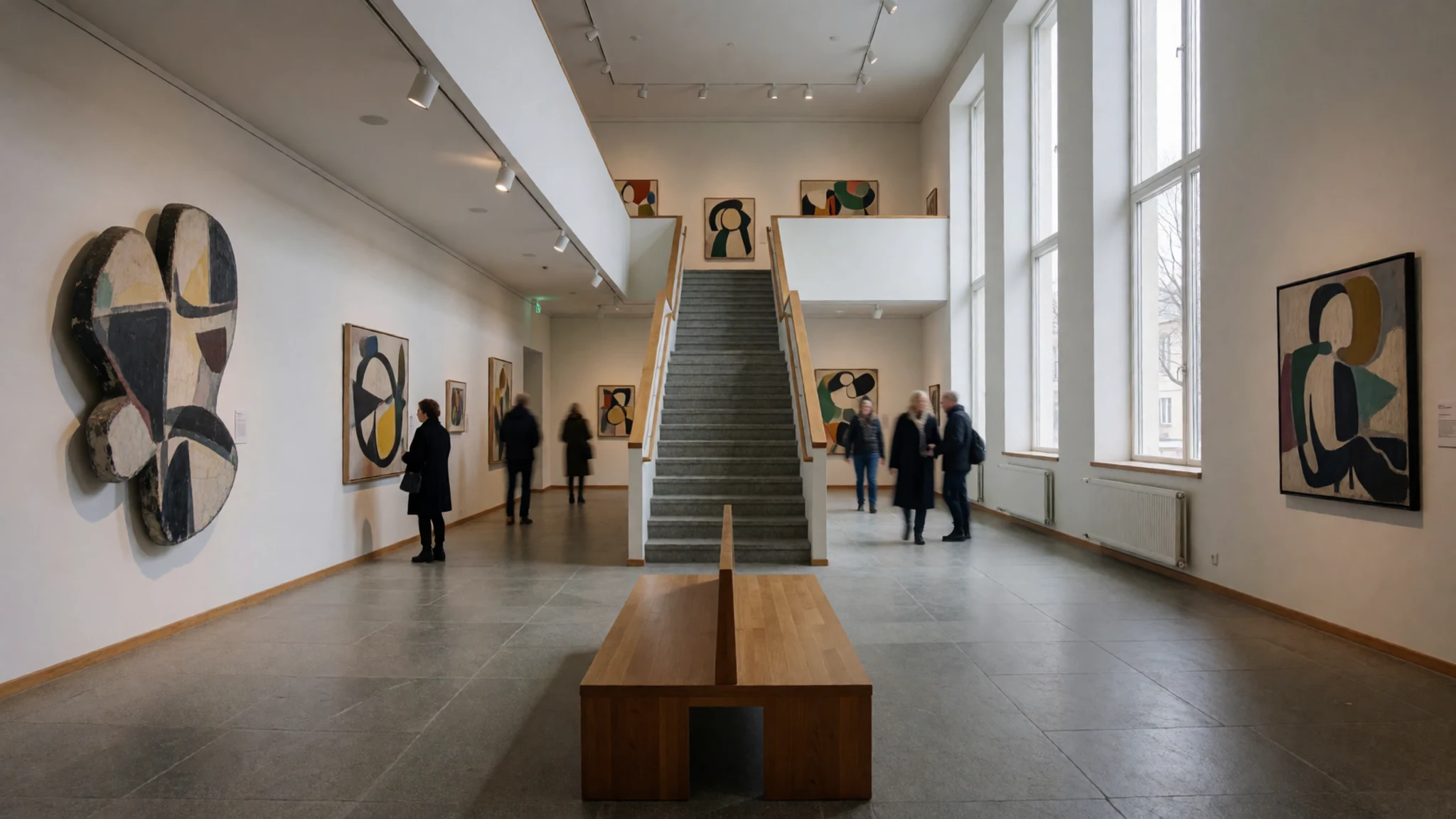
- Hupisaaret park — River islands by the centre
Hupisaaret is a leafy island park close to the centre, with fountains and a set of salmon stairs that let fish climb past the river's flow. It suits a slow walk or a picnic in summer, and turns snowy and very quiet in winter. Several other sights are a short stroll away.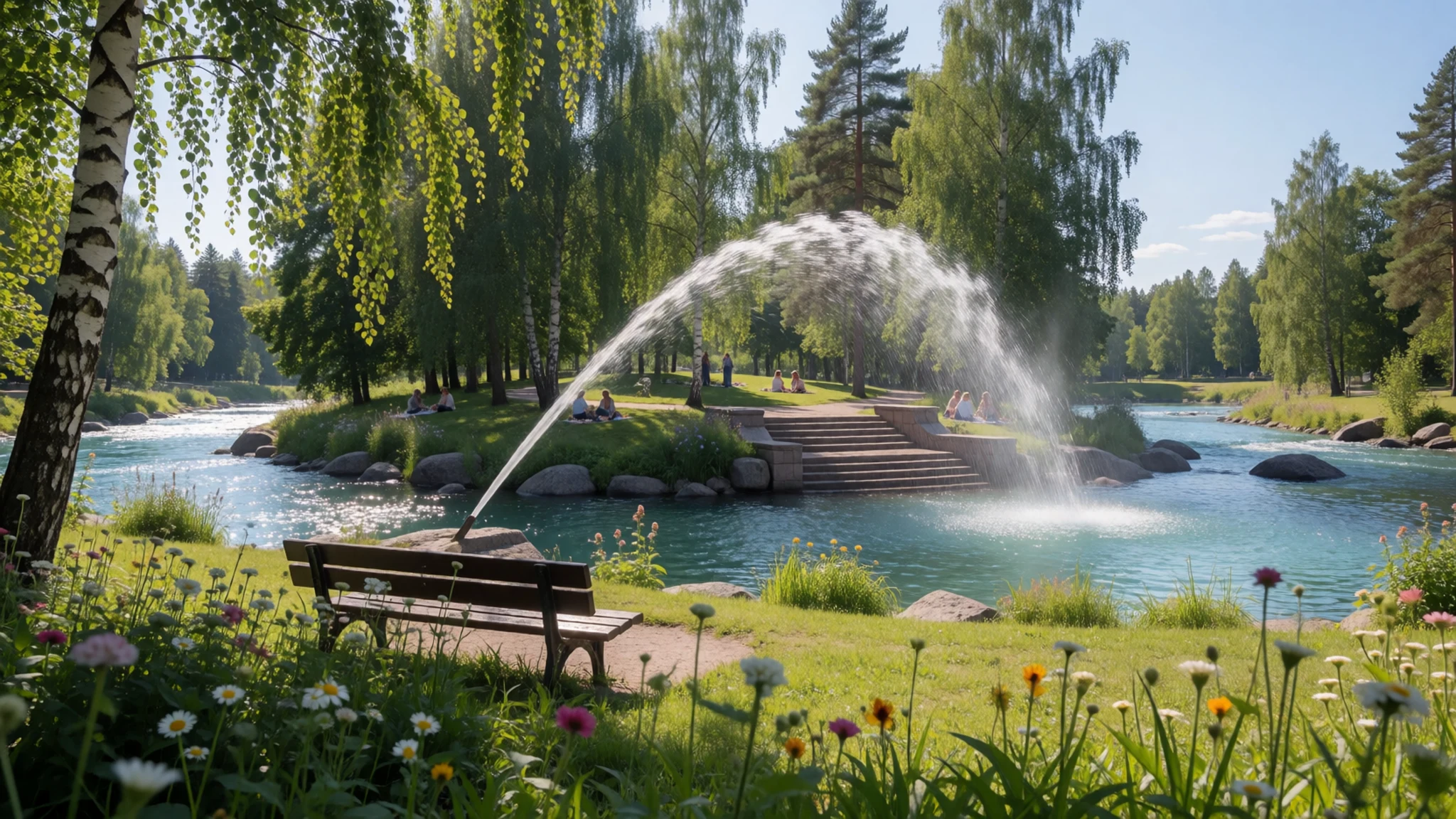
- Oulu Castle site — Old town edge, by the water
Oulu Castle survives mostly as a story. The Swedish fortress was damaged in attack during the eighteenth century and was finally destroyed when lightning struck its gunpowder store. Visit for the feel of where the town began, the view over the water and the information boards, rather than for grand ruins.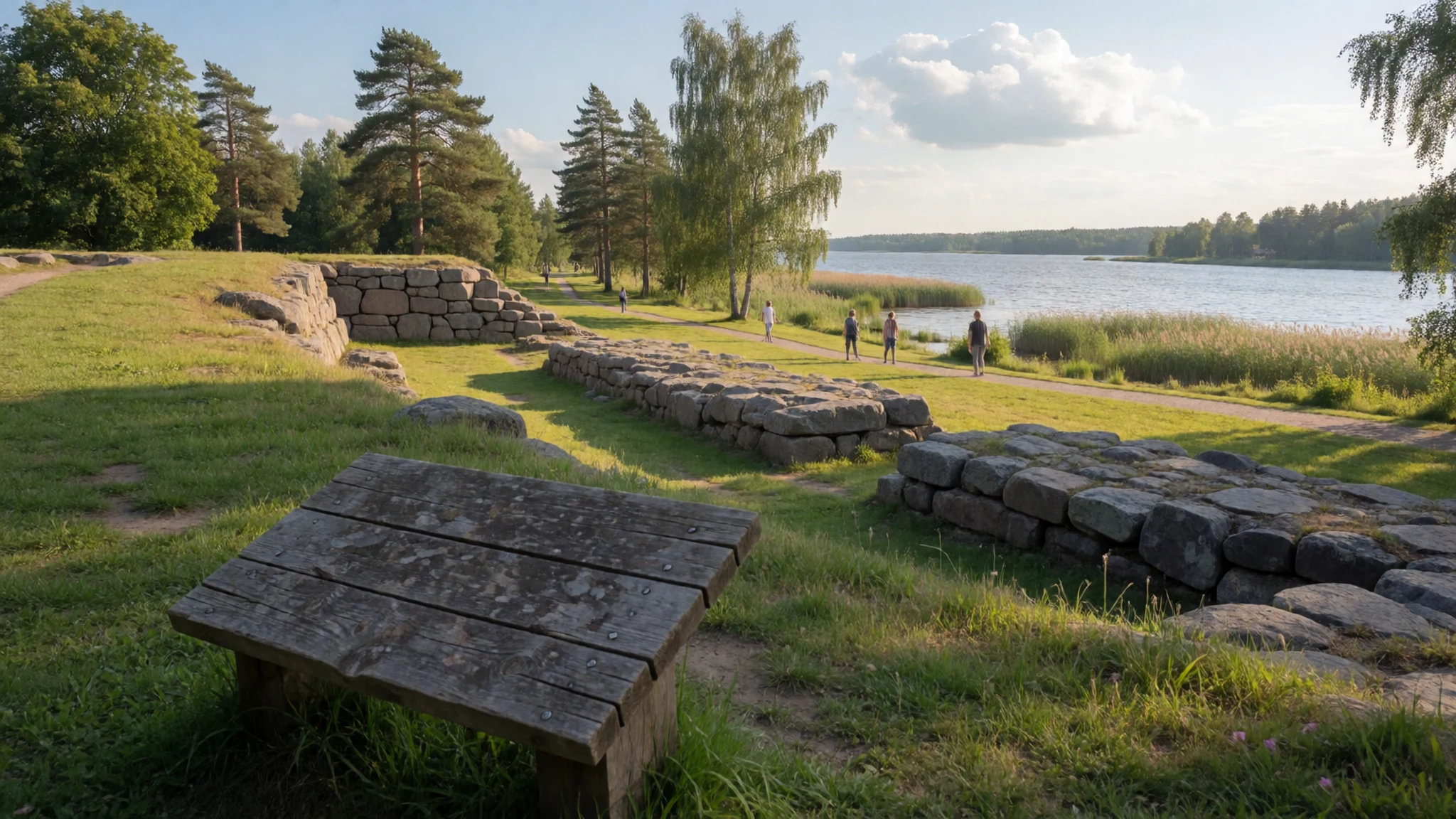
- Tietomaa Science Centre — Near the river mouth
Tietomaa is a hands-on science museum, mostly interactive exhibits on motion and physics. It suits older children well and gives adults plenty to try. It has been under renovation, so check the official site to learn whether it has reopened before building a day around it.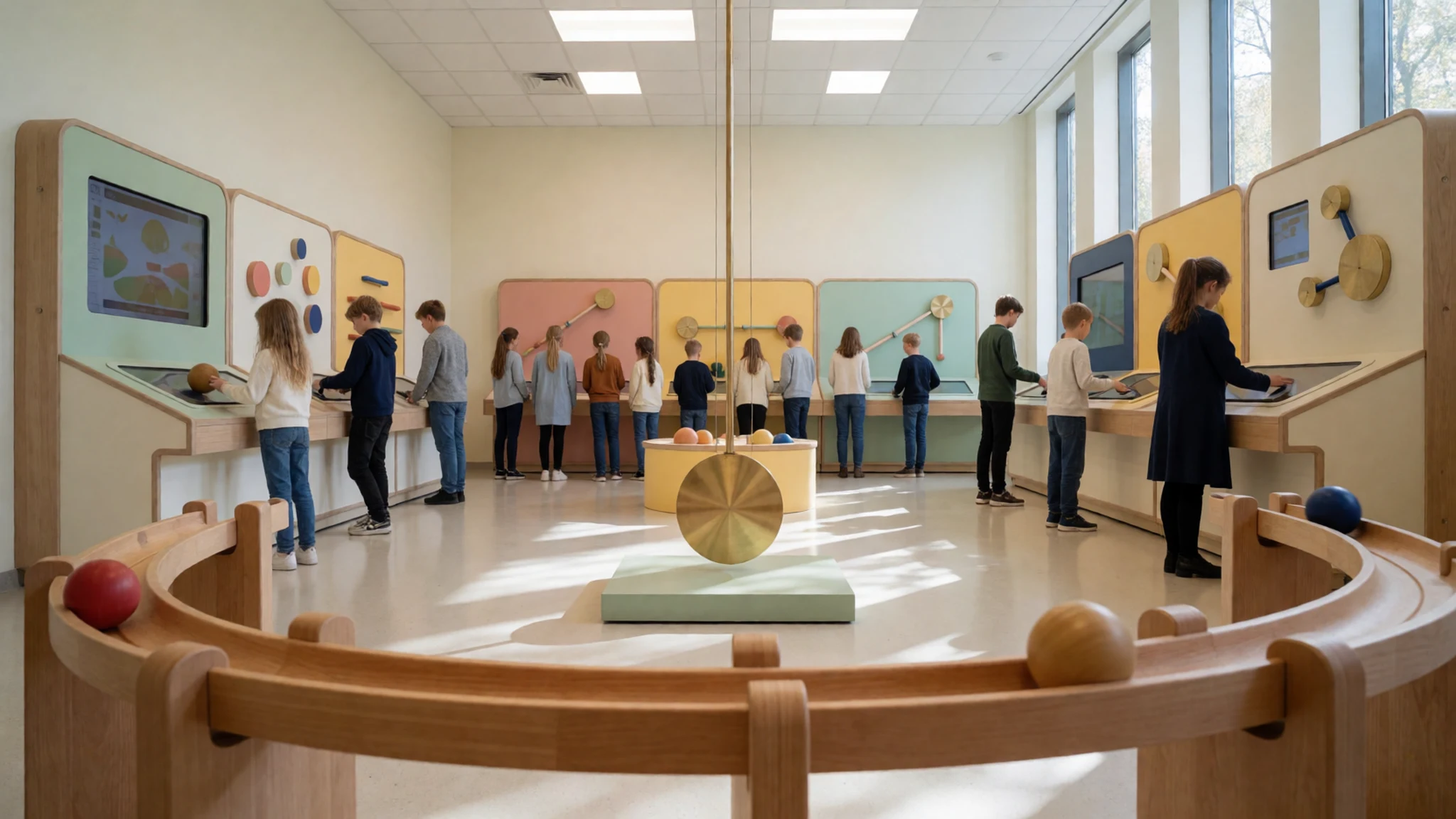
Culture
Oulu has a lively, slightly irreverent cultural scene, and music sits at its centre. The city is best known abroad for the Air Guitar World Championships, held every August, where contestants perform imaginary solos with total commitment and audiences cheer without irony. Other exports fit the same mood: the Screaming Men, a choir who shout rather than sing, and the metal band Sentenced. The crime drama All the Sins (Kaikki synnit), filmed around the region across several seasons, has added a darker image of the north. Beyond the headline acts, culture here is community-based: student events, small festivals, bands in cafés and a university that keeps the city young. Finnish manners are low-key. People are friendly but reserved, conversations with strangers are short and silence is not awkward, which can feel cold at first to visitors from India or Britain but is simply the local rhythm. Sauna is part of ordinary life, at home and in apartment blocks, and winter swimming in cold water is a respected habit among some residents. Summer brings outdoor events to the river and parks, while the dark months move life indoors to cafés, libraries and concert rooms. Queues are orderly and punctuality is expected. In any sauna or public changing area, follow the posted rules, wash before going in and sit on the towel provided.
What to wear
Oulu's traditional dress belongs to the wider Finnish folk-costume tradition rather than to one famous local garment. Regional costumes, called kansallispuku, are made from wool, linen and sometimes silk, with embroidered bodices, aprons and ribbons for women and wool coats or waistcoats for men. They appear at weddings, folk festivals and Midsummer, rarely on ordinary days. Farther north, the Sámi gákti, a bright wool tunic with woven trim, is worn with pride on formal and cultural occasions. Everyday dress in Oulu is practical, plain and layered. Dark colours, good outdoor jackets, wool socks and sturdy shoes are normal, and people cycle in almost every season, so reflective strips and helmets are common sights. Students add a casual, sporty look, and office wear is smart but understated. Nothing is expected to be flashy. Visitors should dress for the weather first. In winter pack thermal base layers, a windproof insulated coat, a warm hat, gloves and waterproof boots with real grip for ice. Summer is mild but changeable, so bring light layers, a rain jacket and insect repellent for evenings near water. There is no strict dress code at the cathedral or museums; modest, tidy clothes are enough, and men should remove hats inside a church. Shoes come off at the door in Finnish homes, so wear clean socks.
What to eat
- Salmon soup (lohikeitto) — Lunch eateries in the centre and stalls around the market square
A creamy soup of salmon, potato and dill, filling and gentle on the palate. It is a standard lunch across Finland and suits Oulu's cold weather, with fish from the Gulf of Bothnia coast a natural fit.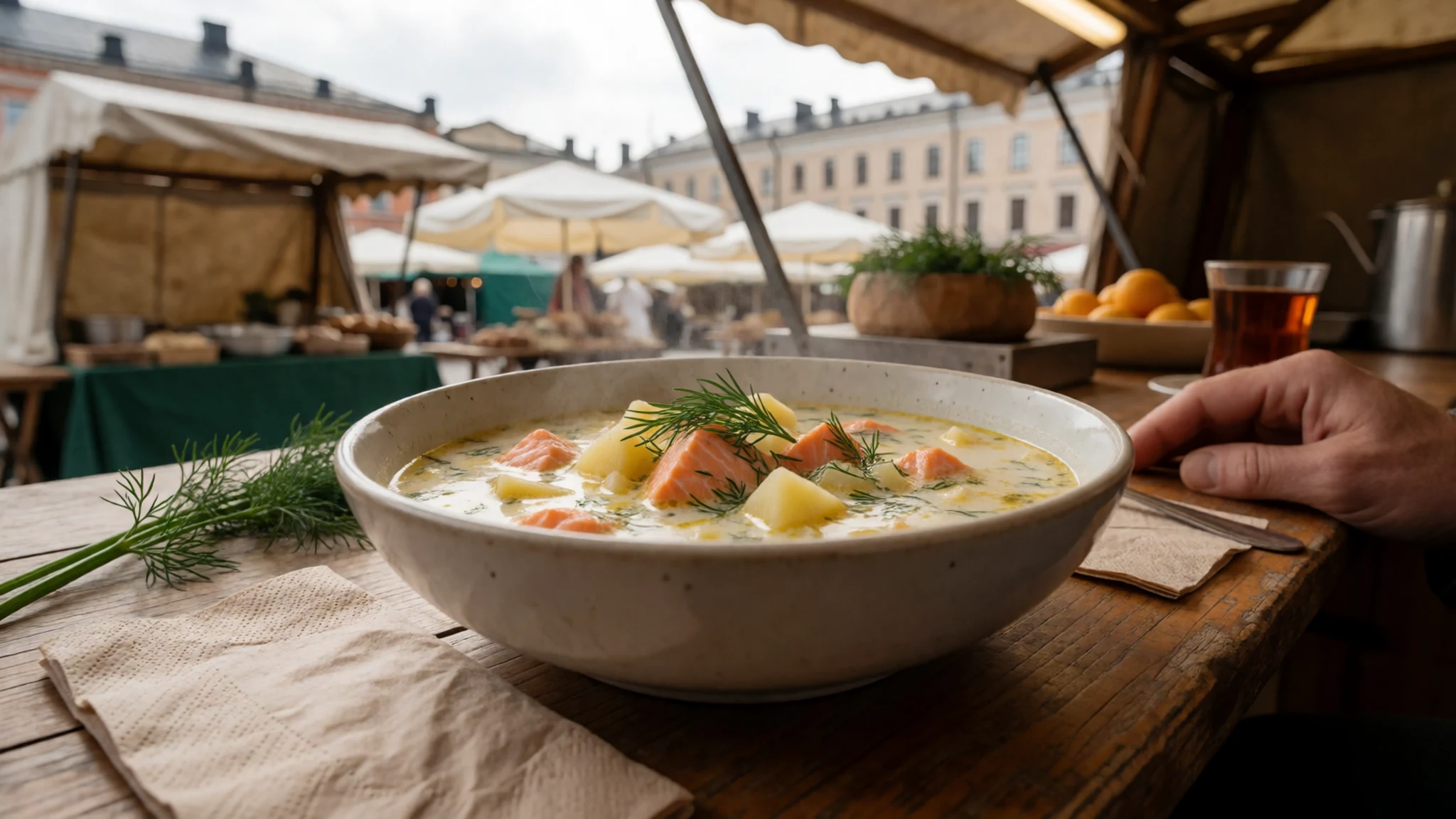
- Fried vendace (muikku) — Market square stalls and harbour-side cafés in summer
Small silvery fish rolled in flour or rye and fried until crisp, usually served with mashed potato and a sharp sauce. It is simple, salty comfort food and popular in summer by the water.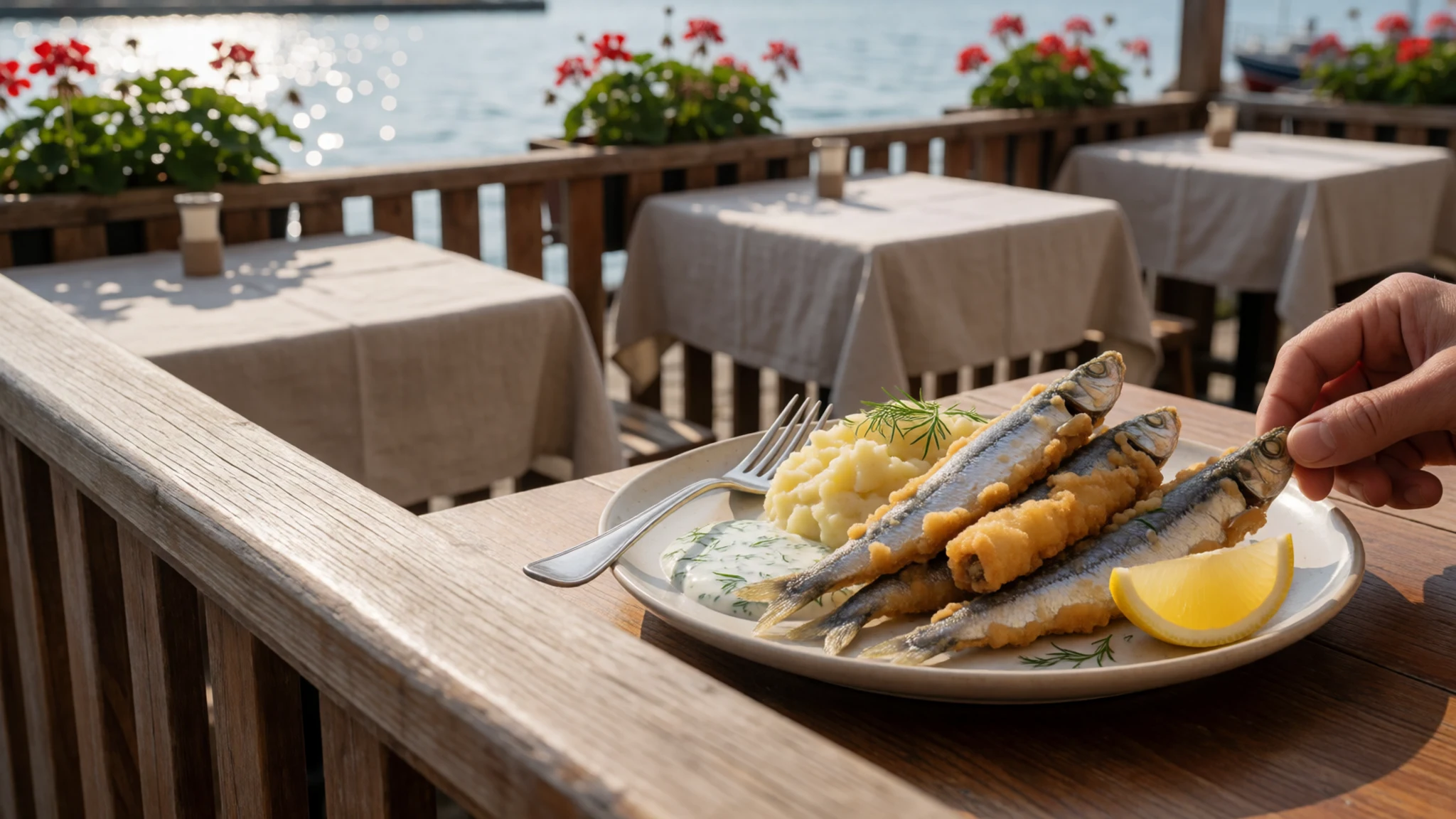
- Bakery lunch — Bakery-run lunch eateries in the centre and suburbs
Local bakeries run lunch eateries serving soup, savoury pies, filled rolls and salads, often with bread and coffee included. It is the practical, sociable way many residents eat on a working day, and easy on the budget. - Coffee and a cardamom bun (pulla) — Riverside cafés and park cafés, including Hupisaaret and the river bank
Finns drink a great deal of coffee, usually with a soft, lightly spiced bun. A pause like this is a daily ritual, and the riverside and park cafés are good places to slow down. - Karelian pie (karjalanpiirakka) — Bakeries, cafés and supermarkets
A thin rye crust wrapped around rice porridge, baked until the edges brown and often spread with egg butter. It is eaten as a snack or breakfast, plain and satisfying, and widely available. - Cloudberry dessert (lakka) — Cafés and dessert counters in the centre
The golden cloudberry grows in northern bogs and tastes tart and slightly floral. Look for it as jam with waffles, as a sauce over ice cream or in cakes, especially in late summer and autumn.
Plan it
Best time. June to August for long bright evenings, cycling, outdoor events and the Air Guitar World Championships in August; February and March for snow and returning daylight after the dark months. Winter is long, dark and cold, so pack properly if you come then.
How long. 2–3
Getting there. Oulu has its own airport with Finnair flights from Helsinki, a few international routes and some summer holiday flights; airport buses run into the centre. Trains on the main north–south line link Oulu with Helsinki, Tampere and Turku, and the main highways from the south also reach the city.
Budget. mid
Tips
- Pay for buses by contactless card or the local transport app, as cash fares cost more
- Hire a bike in summer; the flat terrain and riverside paths make it the easiest way to get around
- Book early if you want to attend the August festival season
- In winter, wear grip-soled boots and carry a headtorch for dark, icy paths
- Check official sites, starting with https://www.ouka.fi/, for museum hours and tickets
Etiquette
- Take off your shoes when invited into a Finnish home
- Keep your voice low on public transport and respect people's personal space
- Follow posted rules in saunas and wash before entering
Nearby
Sources
- Wikidata Q47048 (CC0)
- Wikipedia: Oulu (rev 1383871269) (CC BY-SA 4.0)
- Wikivoyage: Oulu (rev 5419897) (CC BY-SA 4.0)
- Photo: Oulu City Hall, Santeri Viinamäki (CC BY-SA 4.0)
- Photo: Montage of Pokkinen district in Oulu, Estormiz (CC0 1.0)
- Photo: Oulu1800.jpg, J. Boström (Public domain)
- Photo: Satellite image of the Oulu region, NASA (Public domain)
- Photo: Map of Oulu in 1886, Kjerrström and Liljeblad (Public domain)
- Photo: A view of Oulu city centre, Estormiz (CC0 1.0)
- Photo: Stora Enso Oulu mill at night, Estormiz (Public domain)
- Photo: Nokia premises in Peltola, Estormiz (Public domain)


