Osijek
Osijek, Croatia
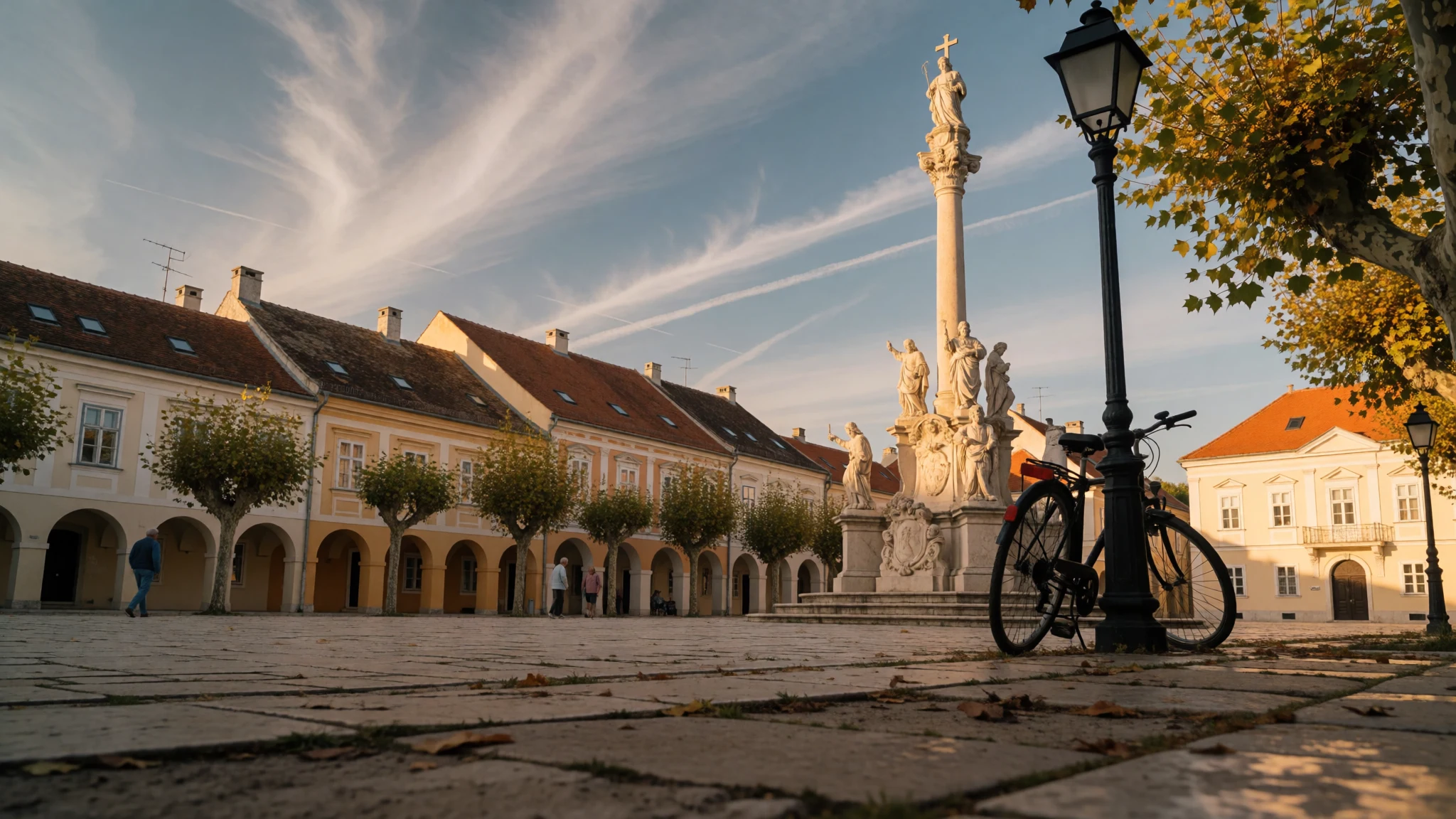
Osijek is a calm Slavonian river city with a preserved baroque fortress, secession façades and a vast wetland on its doorstep, far from Croatia's coast crowds.
The place
Osijek lies on the southern bank of the Drava, a little upstream of the point where that river meets the Danube. It is the main city of Slavonia, the flat, fertile farming plain of eastern Croatia, and the seat of Osijek-Baranja County. Just over ninety-six thousand people live here, and the ground is almost perfectly level, about 95 metres above sea level, which is why bicycles are everywhere. The Serbian border is a short drive east, and the city feels like a crossroads: Central European in its streets and cafés, Balkan in its appetite and humour.
The old centre is really three towns that grew together. Tvrđa is the walled baroque fortress nearest the river. Gornji Grad, the upper town, holds the grander nineteenth-century streets, and Donji Grad, the lower town, fans out beside the water. Between them run tram lines, tree-lined avenues and a long riverside promenade that fills on warm evenings.
Osijek is not a city of queues and tour buses. Mornings are slow, terrace cafés do most of the social work, and the pace suits anyone who likes to wander without a checklist. Summers are properly hot and winters properly cold, so the seasons matter more here than on the Adriatic. It is also the rail and road hub of the east, which makes it a practical base for the wetlands and villages of Baranja, as well as an easy stop between Zagreb and the Danube.
Its story
Osijek's history is layered, and much of it sits only a few metres below the pavement. People lived here in the Neolithic period. Later the Illyrian Andizetes held the site until Celtic Scordisci took it in the fourth century BC. Rome then arrived, and the settlement became Mursa, garrisoned by the Seventh Legion, which built a military camp and a bridge over the Drava. Hadrian is thought to have refounded it, and in 133 AD he raised it to a colony with special privileges. Mursa paid for its importance: major battles were fought around it, and migrating peoples pushed by the Huns shook the whole region.
The medieval town grew near the same spot, roughly where Tvrđa stands now, and the name Osijek first appears in records in 1196. It became a trading post linking the Pannonian plain with the Balkans. In 1566 the Ottomans built a famous bridge here for their campaigns against the Habsburgs. In 1685 Habsburg-Croatian forces beat an Ottoman army outside the town, and the frontier moved south.
The Habsburgs then rebuilt the place as a modern fortress. Maximilian de Gosseau drew up the plan for Tvrđa in 1721, a geometric baroque compound of barracks, offices and squares. In 1786 Tvrđa, Gornji Grad and Donji Grad were joined into a single city, and in 1809 Osijek became a Free Royal City. The fortress came through the conflict of the 1990s without damage, which is why its streets still read as the eighteenth-century plan.
What to see
- Tvrđa — Eastern edge of the centre, by the river
The baroque fortress district is the obvious first stop. Its regular streets, pastel barracks and arcaded squares were laid out by Habsburg military engineers and have survived intact. By day it is quiet, with museums, a university and schools. By night the cellars and courtyards turn into bars. Wear flat shoes; the paving is rough.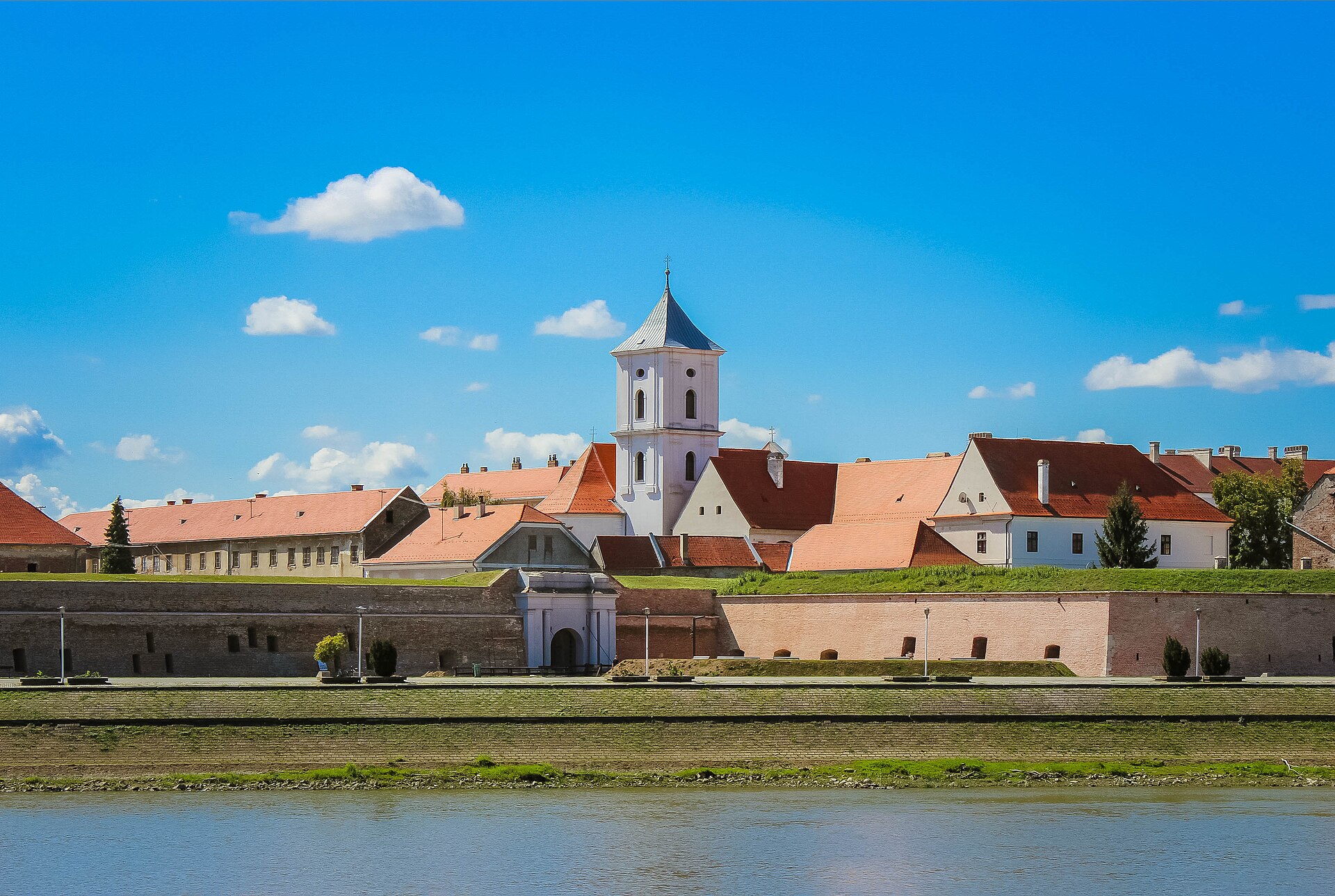
- Holy Trinity Square and the plague pillar — Centre of Tvrđa
The main square of the fortress is framed by officers' buildings, the Museum of Slavonia and a music school. In the middle stands a carved plague pillar, put up as thanks after an epidemic passed. Sit on a bench here early in the day, before groups arrive, and the square feels almost private.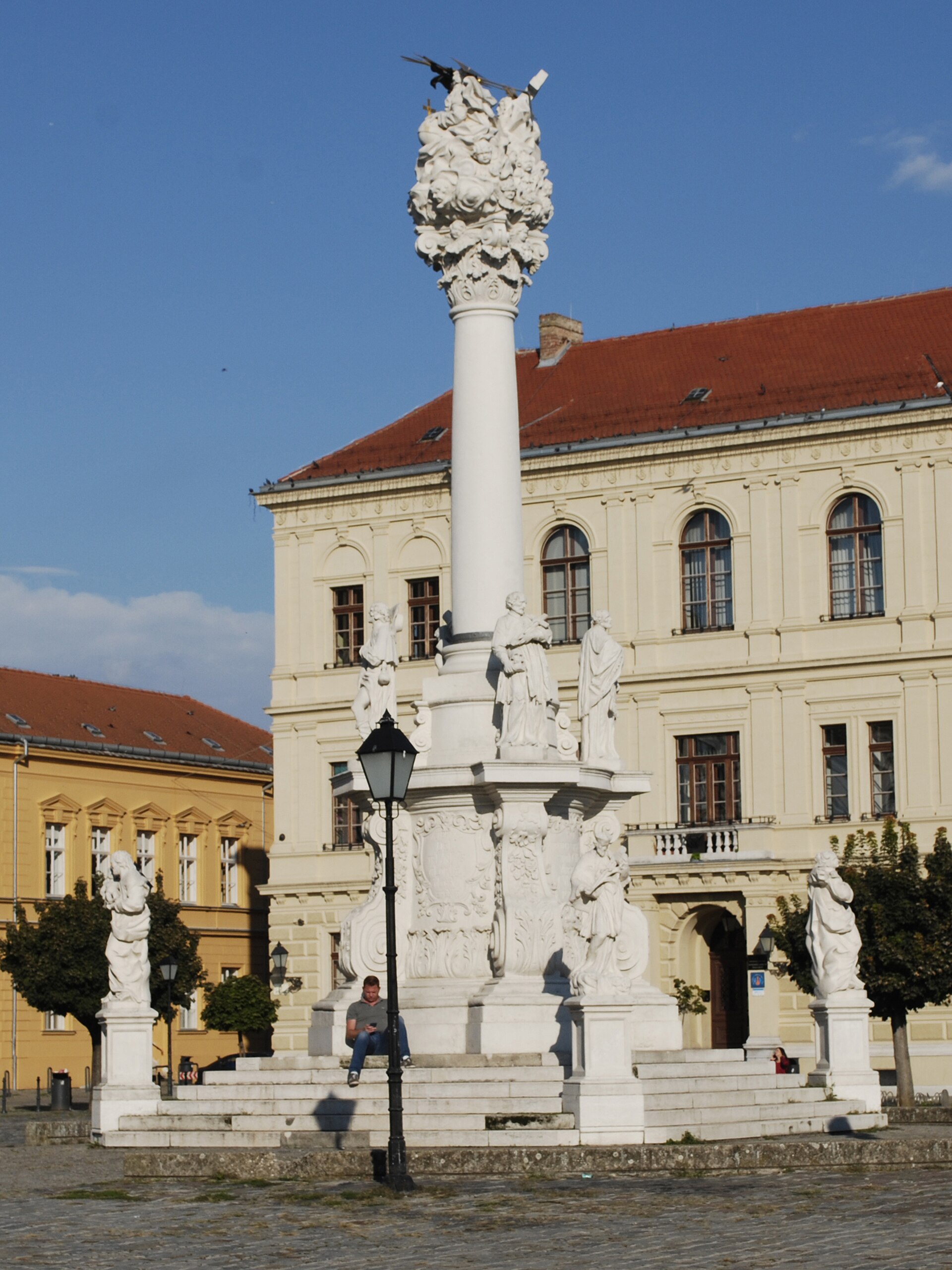
- Palace of the Slavonian General Command — Tvrđa
This large, formal building once ran the military affairs of the whole province under Habsburg rule, and its scale shows how important the garrison was. Today it houses part of the university. The exterior is the point: a long, ordered façade that sums up what the fortress was built to project.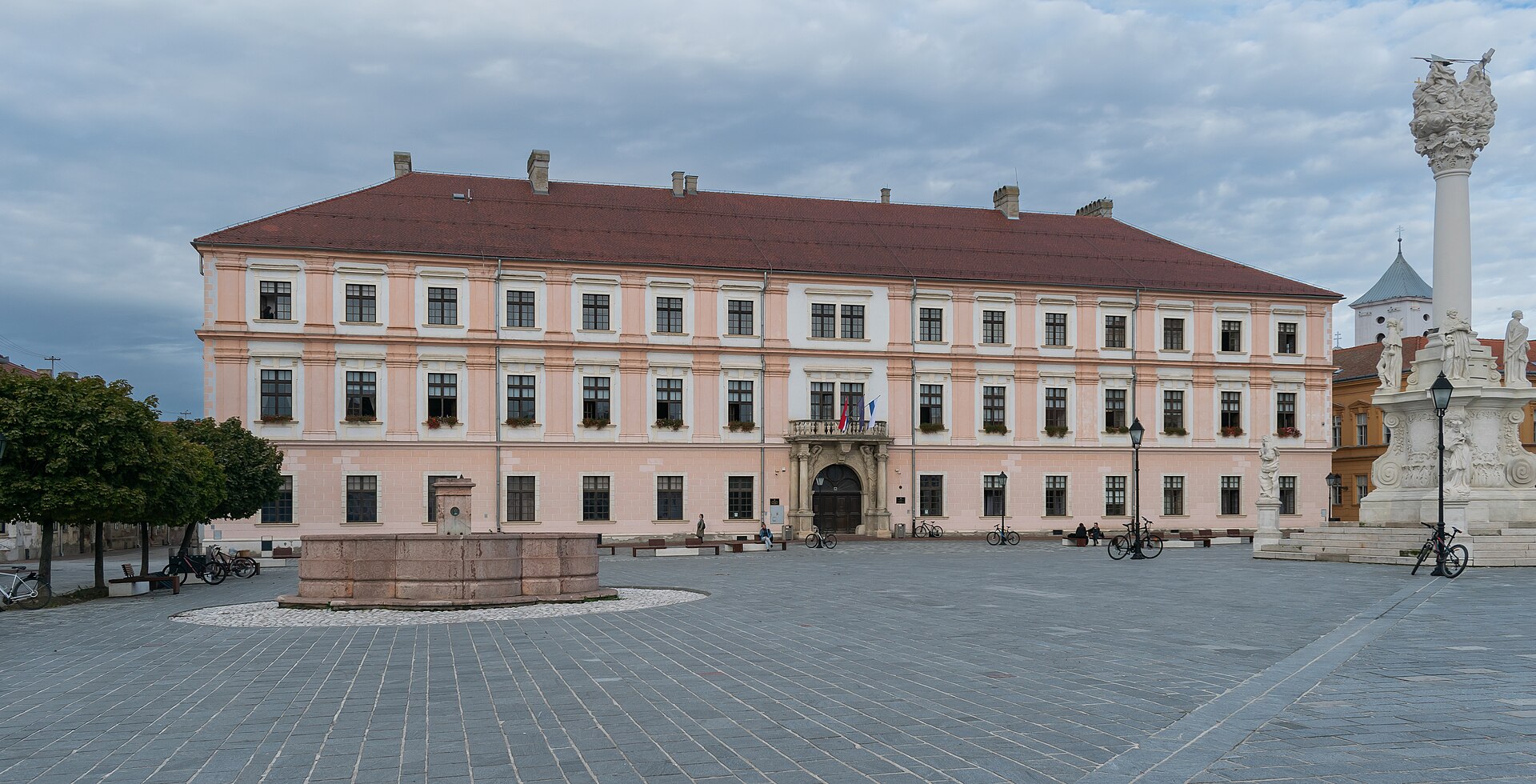
- Europska avenija — Between Gornji Grad and Donji Grad
A broad, leafy boulevard lined with villas and apartment houses in secession style, with curling ironwork, tiled gables and carved doorways. It rewards slow walking with your head tilted up. Nearby, the old cinemas Urania and Europa add secessionist and modernist touches. Cafés along the way make good rest stops.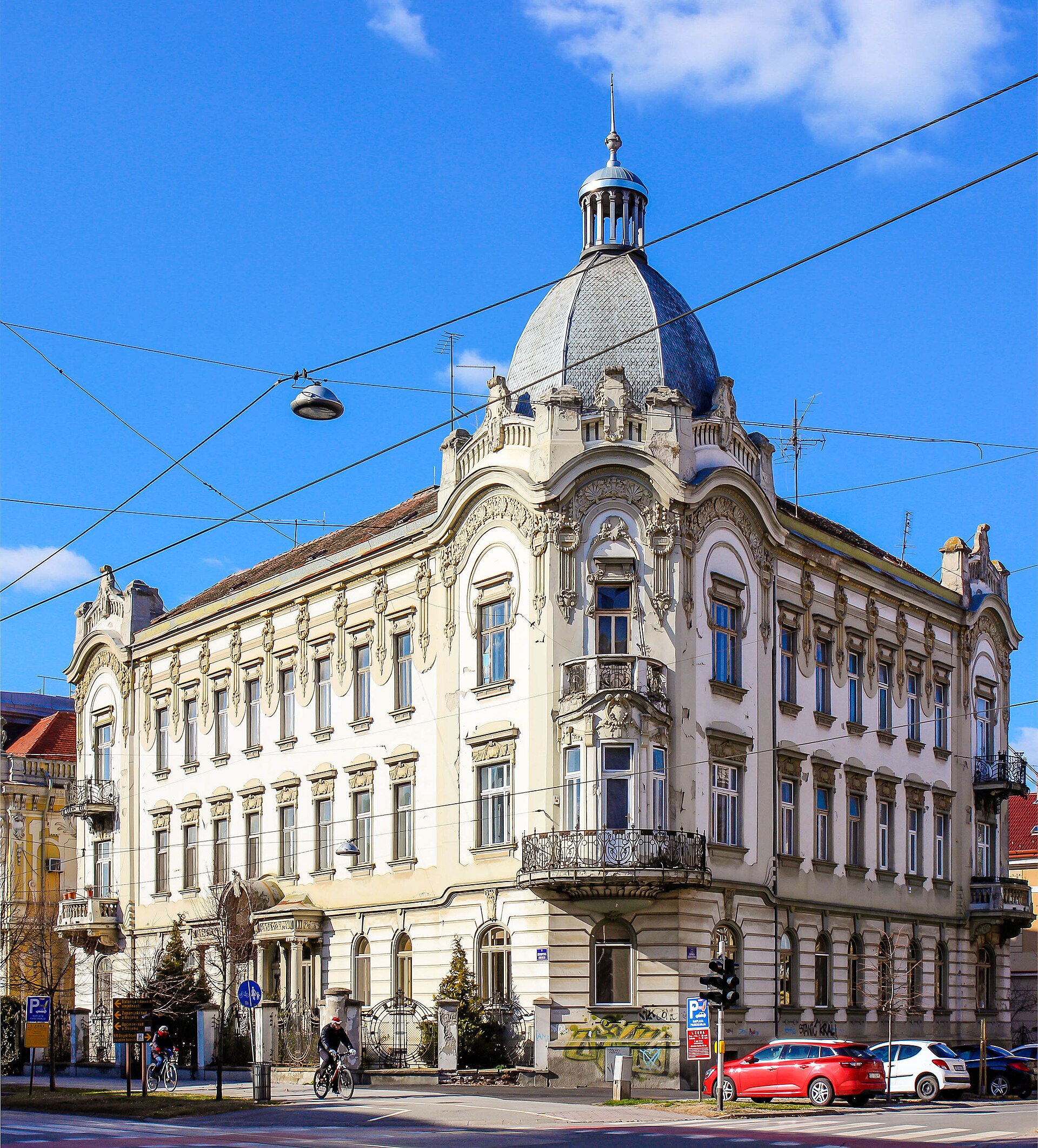
- Archaeological Museum — Holy Trinity Square, Tvrđa
Housed in the former City Guard building, the museum tells the story of the area before the baroque city: prehistoric finds, Roman Mursa and later periods. It is a small, focused visit and a good way to understand why this bend of the Drava has mattered for so long. Check the city website for opening times.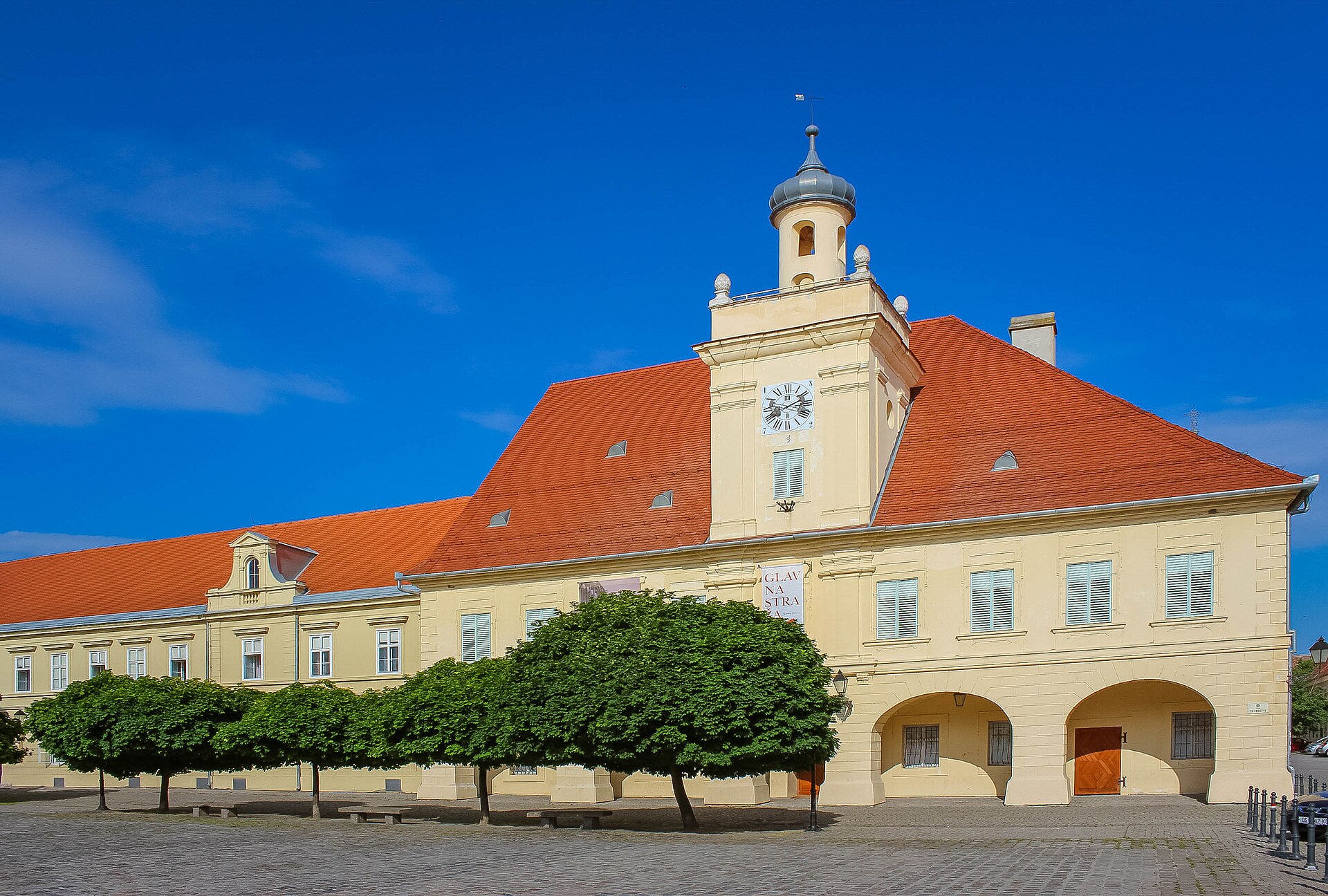
- Kopački Rit Nature Park — North-east of the city, where the Drava meets the Danube
A large floodplain wetland of channels, reed beds and willow woods, rich in birdlife. Boat trips and walking routes run through it, and spring and autumn are especially good for watching birds. The water level changes with the season, so check the park's own site for what is open before travelling.
Culture
Osijek's culture is public and outdoors. In late spring the city hosts the International Festival of Tambura Music, which brings ensembles from across Croatia and the region. The tambura is a small, plucked string instrument that sits close to the heart of Slavonian folk music, and hearing a band play it in a courtyard is one of the most local things a visitor can do. In summer, the Osijek Summer Nights programme fills streets and promenades with open-air concerts and events, running from June to August. The Day of the City falls on 2 December and is marked with exhibitions, concerts and public gatherings.
Daily life revolves around coffee. People meet on terraces for long, unhurried conversations, and ordering one drink and staying an hour is completely normal. The city is also a university town, which gives the evenings in Tvrđa a youthful energy, while the older generation keeps to the riverside and the Sunday church services. Religion here is mostly Catholic, with Orthodox and other communities too, and the memory of the 1990s is still part of conversation, so people appreciate visitors who listen rather than lecture.
The surrounding Baranja countryside adds a rural layer: fishing, hunting in permitted zones, wine cellars and village hospitality. Many locals have family in the villages and will happily tell you where to go.
When invited into a home or a cellar, accept a small drink and a snack if offered, and do not photograph people at church services or memorials without asking first.
What to wear
Traditional dress in Slavonia is among the showiest in Croatia. Women's festival costume centres on a white linen or hemp shirt with wide sleeves, heavily embroidered, often in gold thread, over a full pleated skirt and a decorated apron, with a headscarf or ornamented cap. Men wear white linen shirts and wide trousers, with waistcoats and hats. Every village has its variations in pattern and colour. These outfits come out for folk festivals, tambura concerts, weddings and religious feast days, and the folklore societies that perform them are proud of the stitching.
Everyday dress in Osijek is relaxed and Central European. Students and office workers wear jeans, trainers and light jackets, and on warm evenings people dress up a little for the promenade or a café, with linen shirts, summer dresses and good sandals. Cycling clothes are common because the city is flat. In winter, heavy coats, hats and boots are the norm, since the cold can be severe.
Visitors should pack for the season. Summer is hot, so light cotton or linen, a hat and sun protection are sensible, plus a light layer for the evenings. Winter needs a proper coat, gloves and warm footwear. Comfortable shoes with grip matter more than anything else, because the cobbles in Tvrđa are uneven and slippery when wet. Churches are active places of worship, so cover shoulders and knees when going inside. Smart-casual is fine almost everywhere.
What to eat
- Riblji paprikaš — Traditional restaurants in Tvrđa and riverside eateries
A fish stew built on paprika, cooked slowly until the broth turns deep red, and served with hand-made noodles. River fish are the usual base. It is spicy, rich and best shared. Locals eat it as a proper meal, not a snack. - Kulen — Delis, markets and traditional restaurants
Slavonia's famed spicy sausage, seasoned heavily with paprika and cured slowly. It is sliced thin and served as a starter with bread, cheese and a glass of local wine. Quality varies by maker, so ask a market stallholder for advice. - Burek — Any neighbourhood bakery
A flaky pastry filled with meat or cheese, sold hot by weight or by the piece in nearly every bakery. It is the standard breakfast on the go, usually eaten with plain yoghurt. Go early, when the trays are fresh from the oven. - Fresh bread and bakery pastries — Bakeries on almost every street
Osijek has a bakery on virtually every street, and the bread is baked daily. Buy a loaf or a sweet or savoury pastry for a cheap picnic by the river. It is the easiest way to eat well on a small budget. - Slavonian grill and pizza — Riverside restaurants and pizzerias around the city
Besides local specialities, the city has plenty of pizzerias, some in unusual spots such as the old winter port or along the upper riverbank. Grilled meat with local vegetables and peppers is also common. Order a Slavonian wine alongside.
Plan it
Best time. May, June and September are the most comfortable months, with warm days and long evenings for the riverside. July and August can be very hot, and the city has recorded temperatures above forty degrees. Winters are cold, with readings well below freezing in the coldest spells, though the festive season has its charm.
How long. 2–3
Getting there. Osijek has its own small airport, but most visitors arrive by train or road. Trains from Zagreb take about three hours on the fastest services, and the station is a grand nineteenth-century building at the bottom edge of the centre, a short walk or tram ride from the old town. Check Croatian Railways for current times and tickets.
Budget. low
Tips
- Check the official city website, https://www.osijek.hr, for event dates and museum opening times before you go.
- Wear sturdy flat shoes for the cobbles in Tvrđa.
- Visit Kopački Rit in spring or autumn for birdlife, and check the park's own site for boat tours.
- Carry some cash for bakeries, market stalls and small cafés.
- Bring sun protection and water in summer; shade is limited along the river.
Etiquette
- Greet staff and shopkeepers with a short hello when you enter a shop or café.
- Dress modestly inside churches and keep your voice low.
- Ask before photographing people at services or memorials.
Nearby
Sources
- Wikidata Q1640 (CC0)
- Wikipedia: Osijek (CC BY-SA 4.0)
- Wikivoyage: Osijek (CC BY-SA 4.0)
- Osijek panorama - Gornji grad po noći, Rp031 (CC BY-SA 4.0)
- Osijek, Nick Savchenko (CC BY-SA 2.0)
- Tvrđa Osijek, Roko Poljak (CC BY-SA 4.0)
- Osijek Archaeological Museum, Roko Poljak (CC BY-SA 4.0)
- Saint Michael church in Osijek, Tournasol7 (CC BY-SA 4.0)
- Zgrada Sekulić-Plavšić, Roko Poljak (CC BY-SA 4.0)
- Plague pillar in Osijek, Zveber2 (CC BY-SA 4.0)
- Palace of Slavonian General Command in Osijek, Tournasol7 (CC BY-SA 4.0)


