Ordu-Baliq
Ordu-Baliq, Mongolia
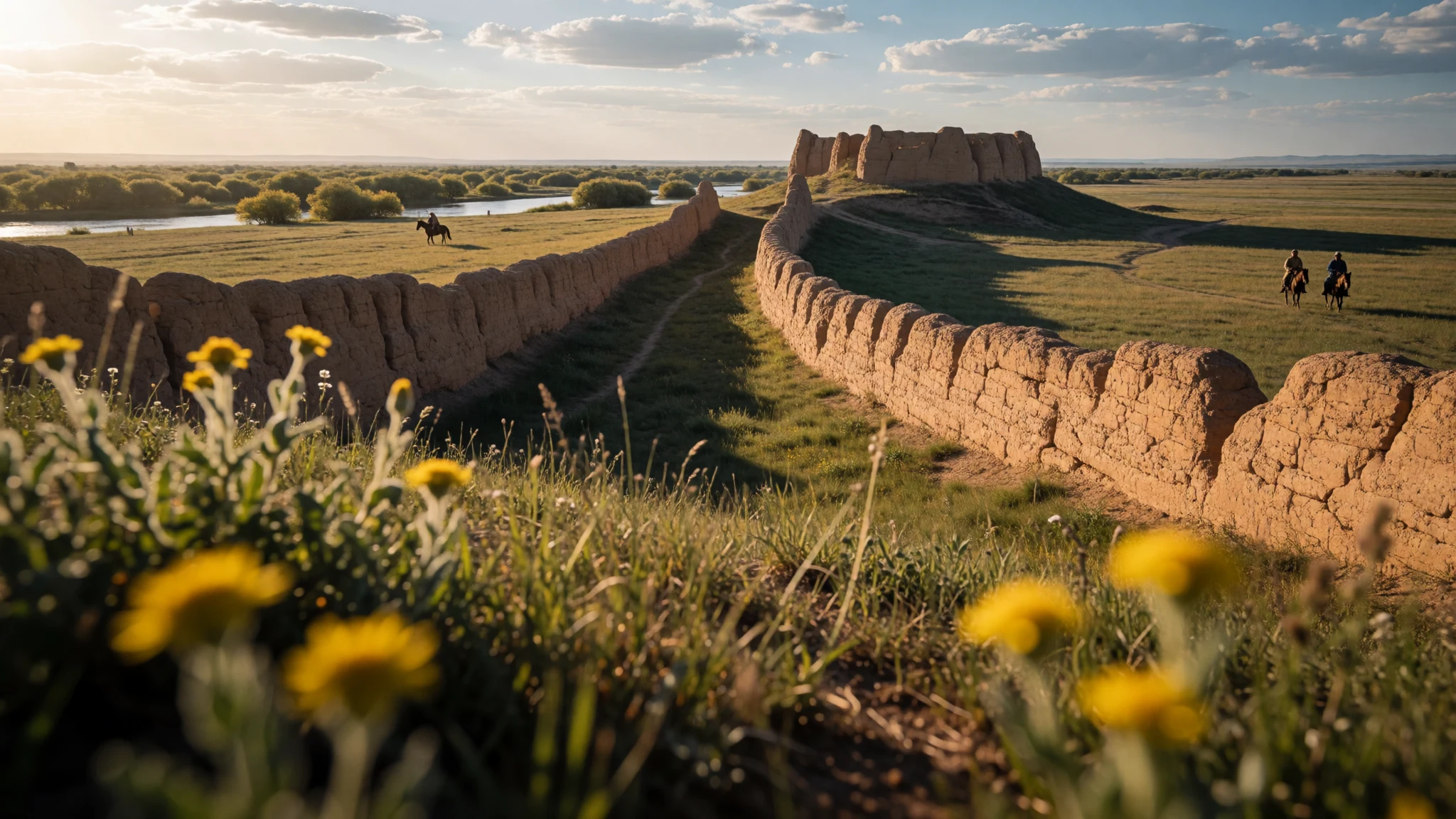
Ordu-Baliq is a quiet steppe ruin where an eighth-century Uyghur capital once stood, for travellers who like history read from grass and sky.
The place
Ordu-Baliq, also spelt Karabalgasun and called Kharbalgas in Mongolian, meaning 'black ruins', is the site of a vanished Uyghur capital in Arkhangai Province, central Mongolia. It stands on the western bank of the Orkhon River, on a grassy plain known as the Talal-khain-dala steppe, just where the river leaves the Khangai Mountains and turns north. The location made sense for a city of horse people. The pasture is good, the micro-climate is kinder than in much of the country, and the valley lies along the main east–west route across Mongolia. That is why power gathered here long before Genghis Khan. Karakorum, the later Mongol capital, lies about 27 km to the south-south-east, so the two places are normally visited together. What remains is not a skyline but a landscape: low clay banks, mounds and hollows in the grass, with the river nearby and a very large sky. Mongolia is nicknamed the Land of Blue Skies, with about 250 sunny days a year, and the light on this open ground is hard and clear. Winters are bitterly cold, falling to -40°C in some parts of the country, while summers are generally hot. Visitors should expect open grassland rather than rebuilt walls, and should read up beforehand, because the site makes more sense when the history is already in mind. The name is a small lesson in itself: 'Ordu-Baliq' means roughly 'city of the court' or 'city of the army'.
Its story
Ordu-Baliq began as a political statement. In 744 the Uyghurs, allied with the Karluks and Basmyls, defeated the last Göktürk kaghan, and their ruler Bayanchur Khan chose to set up his capital on the very ground where the Göktürks had kept their own nomadic court. Building there announced that the new power had inherited the old one. The city prospered for about a century, until 840, when invading Yenisei Kyrgyz wrecked it. The surviving remains describe a place far more settled than the usual picture of a steppe empire. Double clay walls ringed a palace or temple complex, with watch towers along them and two main gates, one facing east and one west. A citadel of about 12 m stood in a corner and a stupa about 14 m high rose at the centre. Stables, military and trade storehouses, administrative buildings and a drainage system point to a fortified garrison and market on the Silk Road, not merely a camp of tents. The khan's residential palace lay in the north-east, behind walls of its own. There the Russian archaeologist Nikolay Yadrintsev found a green granite monument topped with a carved dragon and bearing a runic inscription in praise of the khagans, a text that remains a key written clue to the city's story. After 840 the site was left to grass and grazing, and it has been read by scholars rather than visitors ever since.
What to see
- The ruin field on the steppe — Khotont area, Arkhangai Province
The ground itself is the main sight at Ordu-Baliq: banks and hollows of clay spread across the Talal-khain-dala plain beside the Orkhon. Walk slowly, since walls, gates and building platforms show best when low sun rakes across the grass. Bring the history with you; there is little else to look at, and that quiet is much of the appeal. - Citadel and stupa mounds — Centre of the walled complex
Within the walled core, the better-preserved remains include the corner citadel, once about 12 m high, and the central mound that carried a stupa of about 14 m. Standing on the higher ground gives the clearest sense of the plan: gates east and west, towers along the walls and the river beyond. A local guide or driver can point out each feature. - The Karabalgasun inscription — Former khan's palace area, north-east of the complex
The dragon-topped granite monument with runic text that Yadrintsev found is the city's signature discovery. Early scholars published drawings and plates reconstructing it from broken fragments, and that printed record is how many people first meet it. Do not assume any part can be seen at the ruins; ask museum or local staff before planning around it.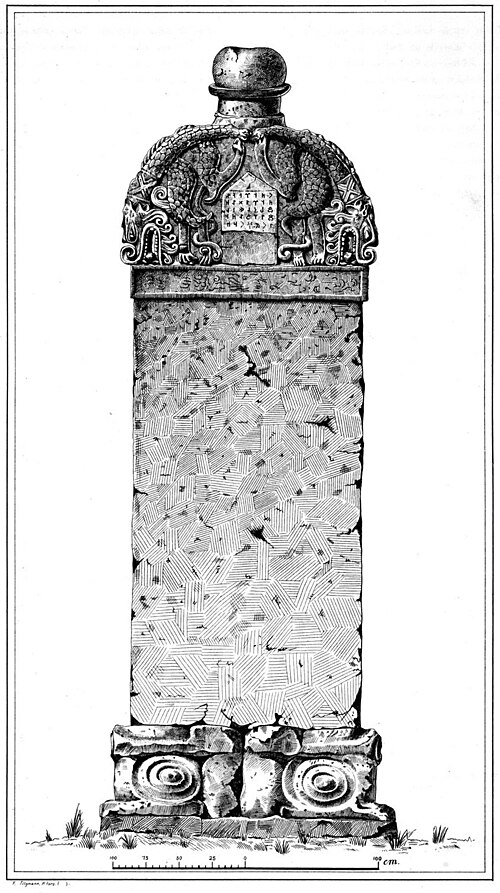
- Kharkhorin and the Karakorum site — Kharkhorin, Övörkhangai Province
Kharkhorin, the town beside the site of Karakorum, is the usual base for the Orkhon Valley and lies about 27 km from the ruins of Ordu-Baliq. Karakorum was the short-lived Mongol capital, and the Tibetan Buddhist monasteries built in later centuries give visible reminders of the region's past. Combine it with Ordu-Baliq over a day or two. - National Museum of Mongolia — Ulaanbaatar
The National Museum in Ulaanbaatar holds countless artefacts from across the country, including a gallery on the ancient states of the steppe, with archaeological sites shown alongside finds. It is a good first or last stop for context, placing the Uyghur city between the Göktürks before it and the Mongols after. Check opening arrangements locally before going.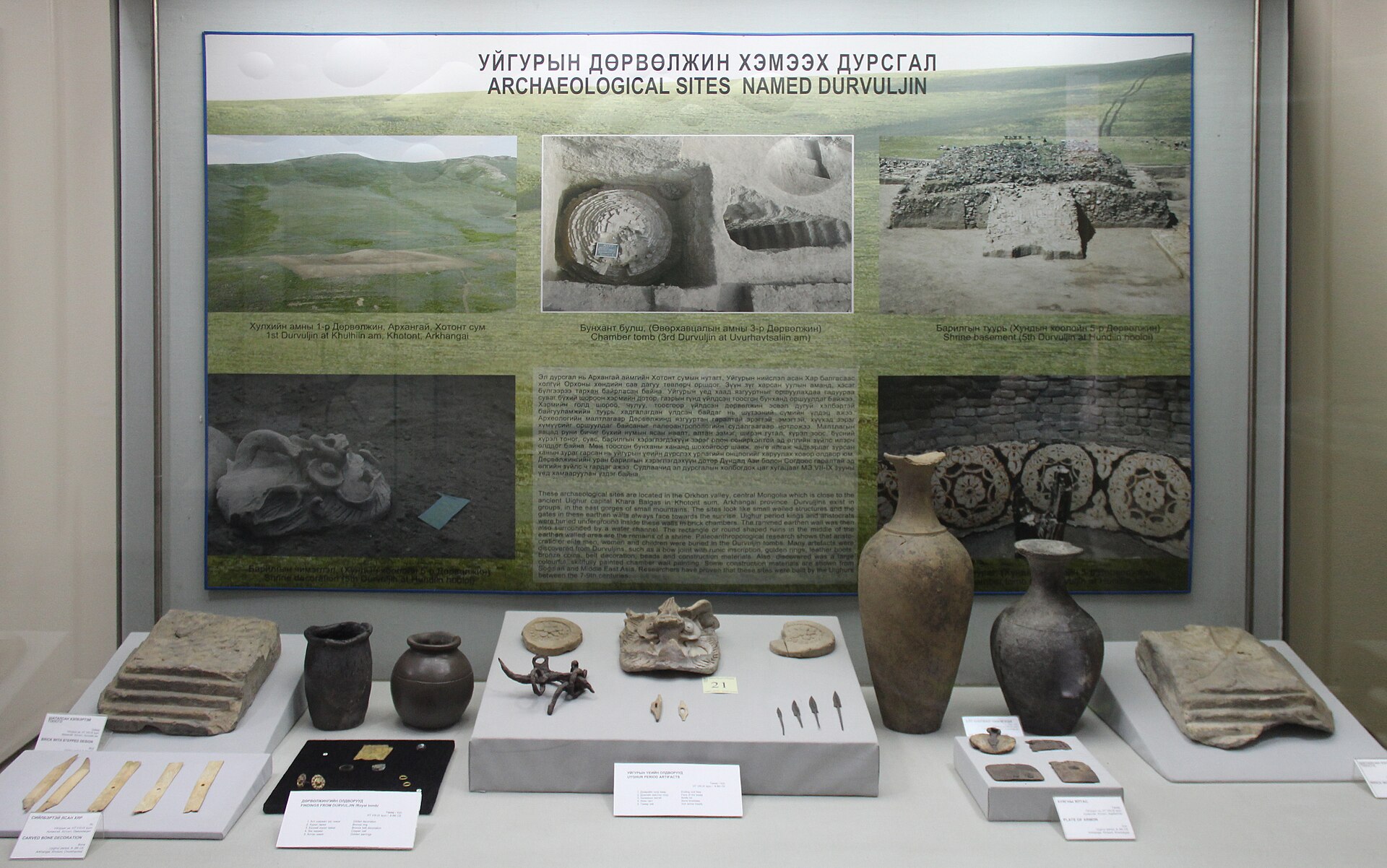
Culture
Ordu-Baliq sits in herding country, and the customs around it are those of the Mongolian steppe: horses, livestock and a strong code of hospitality. Mongolians are generally direct, and visitors should expect honest opinions rather than polite hedging, which is not rudeness. Western pleasantries often land differently, so following local manners works better. Gifts and food are received with the right hand, palm facing up, and drinks are taken the same way. Refusing a gift is considered very rude, and a plate of snacks offered by a host should at least be sampled. History is lived rather than archived here: the Uyghur, Göktürk and Mongol pasts are all part of how people see their land. One sensitive subject is China. Feeling against China runs high for historical and cultural reasons, so clothes or items associated with China are best left at home and the subject is best avoided. Inner Mongolia is commonly called 'southern Mongolia' in conversation. Remote ground also calls for practical caution: loose dogs, sometimes in packs, are common near settlements and are rarely as tame as pets elsewhere, so keep a distance. At a family's ger, receive any cup or dish with your right hand, palm up, and take at least a small taste before setting it down.
What to wear
Around Ordu-Baliq, traditional dress means the deel, a long wrap-over robe fastened at the side and tied with a broad sash. Everyday versions are made of wool or cotton, padded or sheepskin-lined for winter, while festival and wedding deels use silk or brocade in strong colours. Leather boots and felt or fur hats complete the outfit. Many herders still wear a deel for work, and almost everyone puts one on for Naadam, weddings and the lunar new year. In towns such as Kharkhorin, everyday clothing is mostly jeans, jackets and trainers, with the deel kept for the countryside and for occasions. Visitors should dress for weather before anything else. The steppe is exposed, hot in summer sun and cold at night, so layers, a windproof jacket, a sun hat, sunglasses and sun cream are all useful, with proper thermal clothing outside summer. Sturdy closed footwear matters on uneven, muddy or dusty ground, and also helps when loose dogs are about. At monasteries, cover shoulders and knees. Women should be aware of the problems common in conservative regions and dress with that in mind. Avoid anything that shows Chinese symbols or branding.
What to eat
- Boiled mutton — A herding family's ger, or any roadside canteen
Boiled mutton is the everyday centre of the Mongolian table, cooked simply and seasoned with little more than salt. Herders in the countryside eat it far more than anything else. It is offered in family gers and served in canteens and tea shops across the region. - Buuz — Canteens and tea shops in Kharkhorin
Buuz are steamed dumplings stuffed with minced meat, often called the national dish and descended from Chinese baozi. They are sold in sets and eaten by hand. They are easy to find at plain canteens, tea shops and station stops, especially in Kharkhorin. - Khuushuur — Roadside stalls and canteens
Khuushuur is deep-fried flatbread folded around meat and onion, once a festive dish and now sold everywhere. A few will make a full meal. It is greasy, hot and filling, and works well as a stop on a long drive across the steppe. - Tsuivan — Town canteens and tea shops
Tsuivan is a plate of fried noodles with meat and a handful of vegetables, sometimes served with ketchup on the side. It is simple, hearty cooking for cold weather, and one of the three dishes most canteen menus are built around. - Byaslag and öröm — Herding families' gers and small local shops
Byaslag is a mild fresh cheese, rather like paneer, and öröm is clotted cream. Both come from the dairy that herding families make from their own animals. They are often offered alongside tea or as part of a hospitality plate that should at least be tasted.
Plan it
Best time. June to September, when the steppe is green and days are warm to hot. Winter is bitterly cold, dropping to -40°C in some parts of Mongolia, and weather elsewhere in the year can swing widely.
How long. 2–3
Getting there. Fly to Ulaanbaatar, then travel west by road towards Kharkhorin in Arkhangai and Övörkhangai. The ruins lie on open steppe about 27 km from Karakorum, so a local driver or organised tour is the practical last leg. Check current road and transport arrangements locally.
Budget. mid
Tips
- Check entry rules before booking; visa-free access for several nationalities has been tied to dates, so confirm on the official Mongolian government site
- Base yourself in Kharkhorin and give the ruins a calm half day, ideally in morning or late-afternoon light
- Hire a local guide or driver who knows the tracks; the site is open steppe with little signage to assume
- Carry water, sun protection and warm layers, since shelter is scarce and the weather can turn
- Keep distance from loose dogs and avoid venturing far from shelter in poor weather
Etiquette
- Receive food, drink and gifts with the right hand, palm up, and do not refuse an offer
- Do not wear or discuss anything associated with China
- Do not take stones or fragments from the ruins
Nearby
Sources
- Wikidata Q2475401 (CC0)
- Wikipedia: Ordu-Baliq (rev 1364866835) (CC BY-SA 4.0)
- Wikivoyage: Mongolia (rev 5427090) (CC BY-SA 4.0)
- Photo: Ancient States Gallery, National Museum of Mongolia (Gary Todd) (CC0 1.0)
- Photo: Karabalgasun inscription, reconstruction of the stele (A. Heikel) (Public domain)

