Omsk
Omsk, Russia
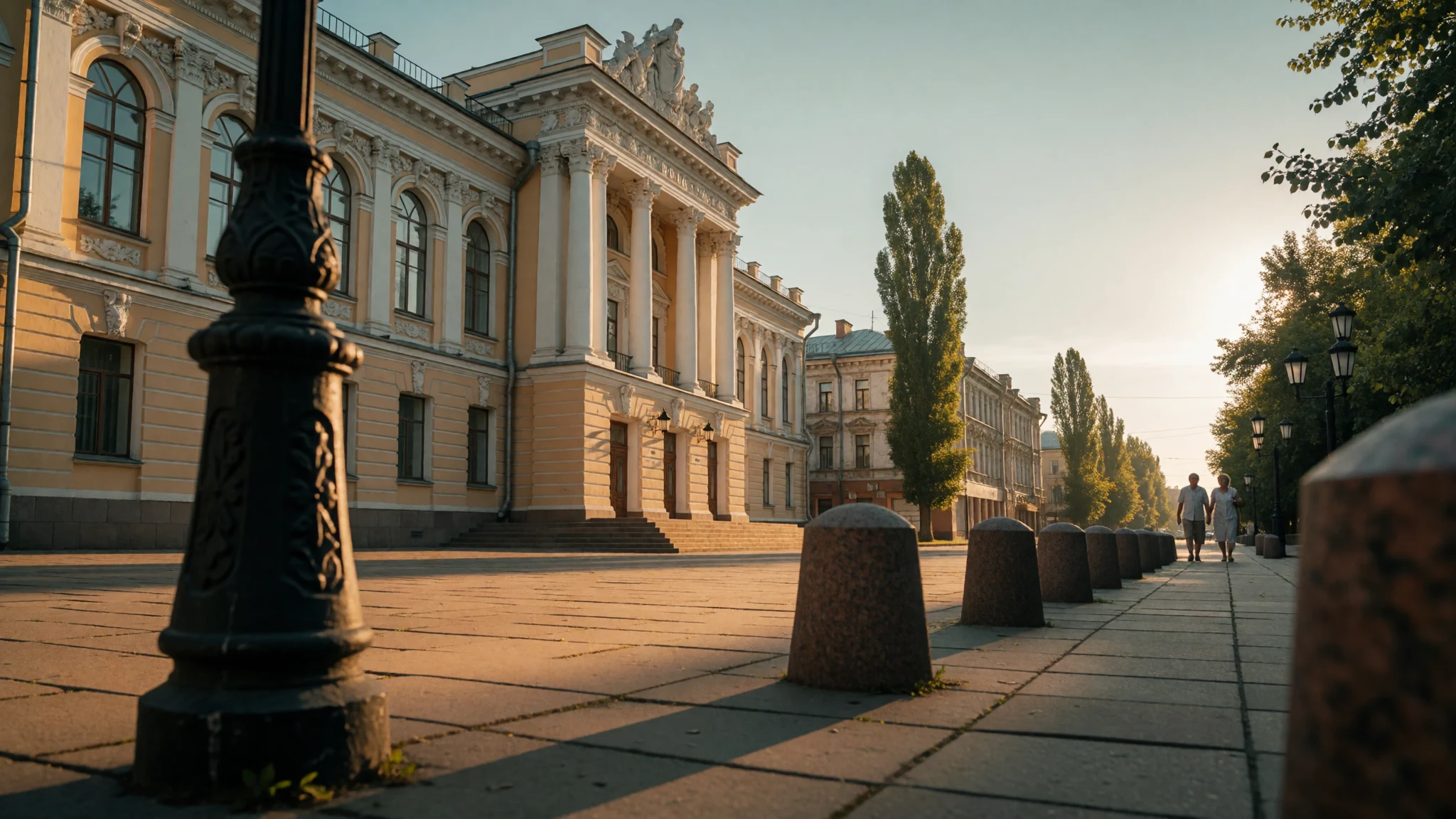
Omsk is a working Siberian river city on the Trans-Siberian line, with serious museums, grand theatres and almost no tourist polish.
The place
Omsk lies in the south of the West Siberian Plain, where the Om River joins the Irtysh, which flows northwards past the city. The land is flat, about 90 m above sea level, and the horizon is wide in every direction. Around 1.1 million people live here, and as the capital of its oblast the city behaves like a regional centre, with universities, theatres, hospitals, shopping streets and a busy station. The old core hugs the river, and its museums, churches and pedestrian street are close enough to cover on foot in a day. Beyond that, Soviet housing blocks and industrial districts spread across the plain. The economy leans on heavy industry: a large oil refinery is the main employer, and defence plants and an air base sit on the edges, so some outskirts are purely working places with little for a visitor. Omsk is also a railway junction, where the northern and southern branches of the Trans-Siberian line come together, which is why many travellers meet it as a stop between Moscow and the Far East. Religious life is mixed: it is the seat of an Orthodox bishop and also the administrative base of the Imam of Siberia. Few overseas tourists come, so English signs are scarce and the pace is local. It suits travellers who enjoy ordinary Russian urban life, a riverside walk and good museums more than a checklist of landmarks.
Its story
Omsk began in 1716 as a fortress, one of a string of forts built along the upper Irtysh to guard a trade route. The goods were heading to and from China, and the Siberian governor, Prince Gagarin, spent years organising that traffic. The established route was slow and costly, winding by river and portage through Tobolsk, the Ob and the Yenisei. A line up the Irtysh was far shorter and easier, and steppe leaders and Chinese merchants alike had a stake in it, so fortified posts along the river made sense. Gagarin is remembered both for the forts and for the troubles that came with them. Through the imperial centuries the garrison town grew into an administrative capital, first for Western Siberia and later for the governors responsible for the Steppe territories. Omsk then had a brief, dramatic moment on the national stage during the Russian Civil War, when it became the seat of an anti-Soviet government and the old empire's bullion was stored in the city. Soviet rule followed, bringing the heavy industry and railway growth that shaped the modern city. Today the fortress origins are mostly invisible, but the river junction and the trade-route logic explain why a large city stands on this flat plain at all.
What to see
- Omsk State Museum of Local History — Historic centre, near the river
Omsk State Museum of Local History occupies the former mansion of the West Siberian governor general, so the building is part of the exhibit. Look for the ebony Kalmyk throne and the displays of clothing worn by the region's nomadic peoples before Russian settlement. It is a good first stop for placing the city in its steppe and river setting. - Vrubel Museum of Fine Arts — Historic centre
The Omsk Regional Vrubel Museum of Fine Arts is housed in a former exchange building near the river. The collection mixes Russian and Siberian painting with a few works by Roerich, and it makes an easy indoor afternoon when the weather turns cold, wet or simply too hot.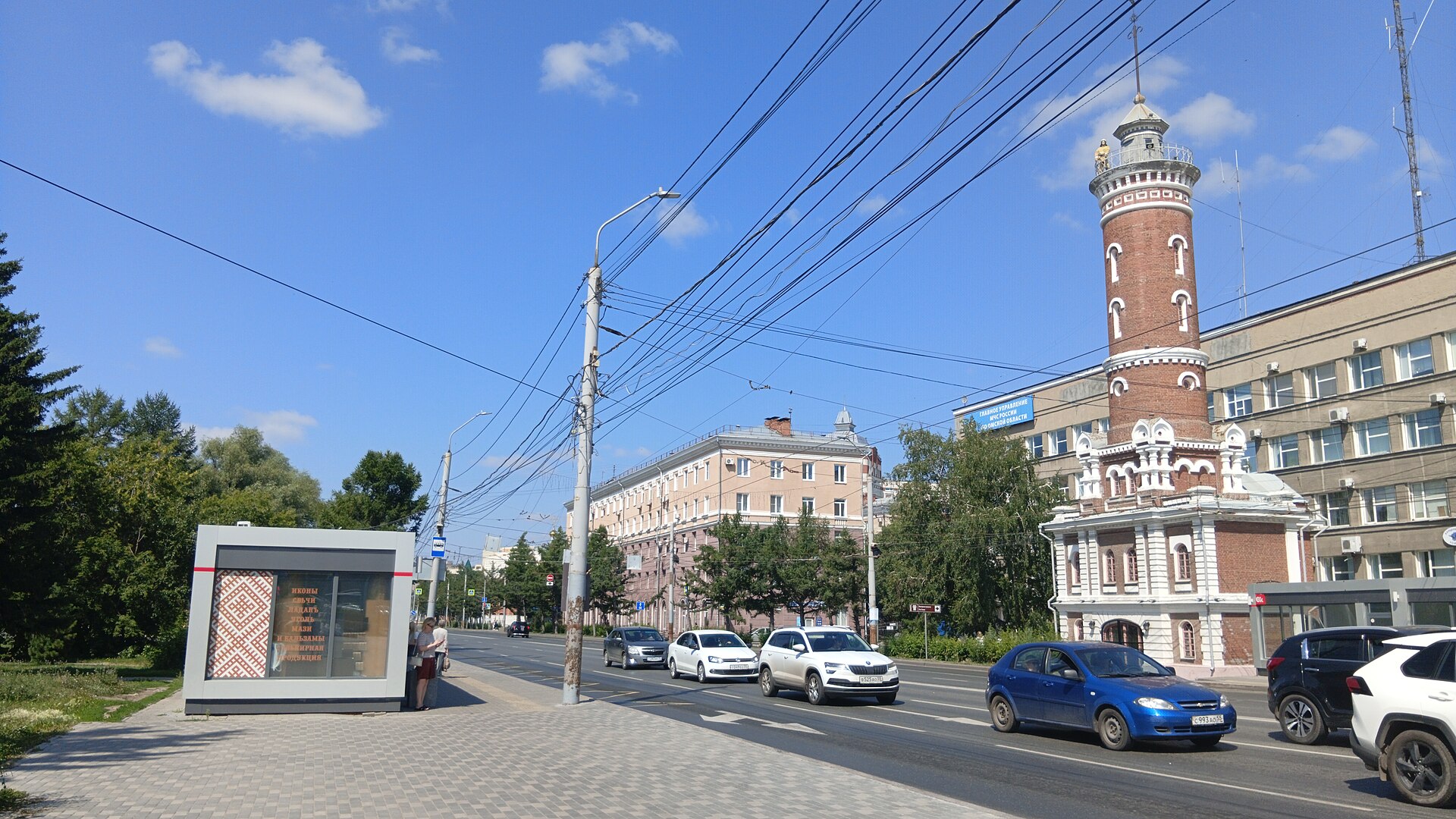
- Dormition Cathedral — Central Omsk
The Dormition Cathedral is a large Orthodox church in the city centre, with bright domes that stand out against the flat skyline. Services still take place, so it works as a living church as much as a sight. Expect icons, candles and quiet congregations inside; the exterior photographs best in clear evening light.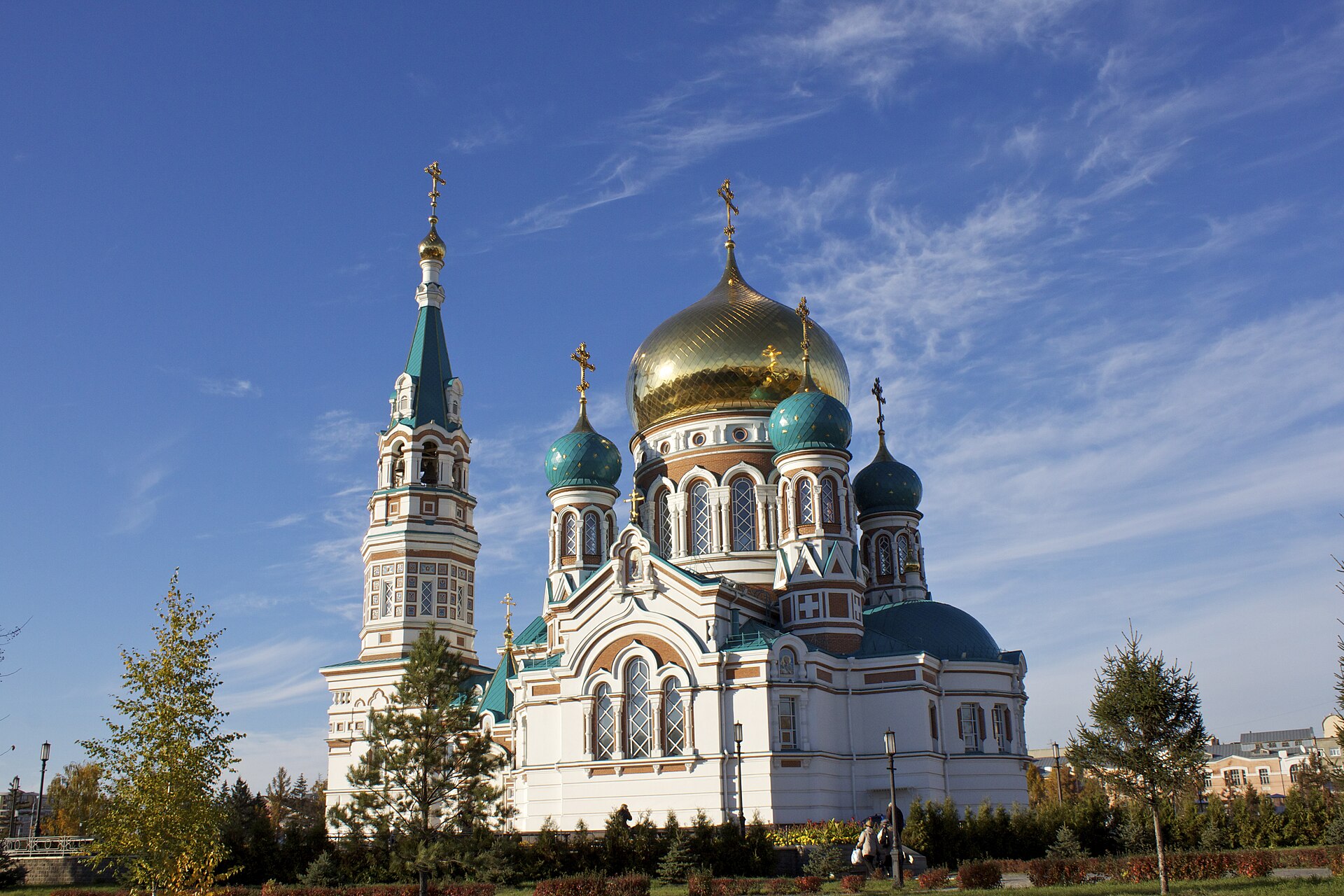
- Omsk Drama Theatre — Historic centre
The Omsk Drama Theatre is an ornate building in the historic centre and one of the city's recognisable landmarks. Performances are in Russian, but the façade and foyer reward a visit on their own. Popular shows fill quickly, so check the theatre's own site or ask locally before building an evening around a ticket.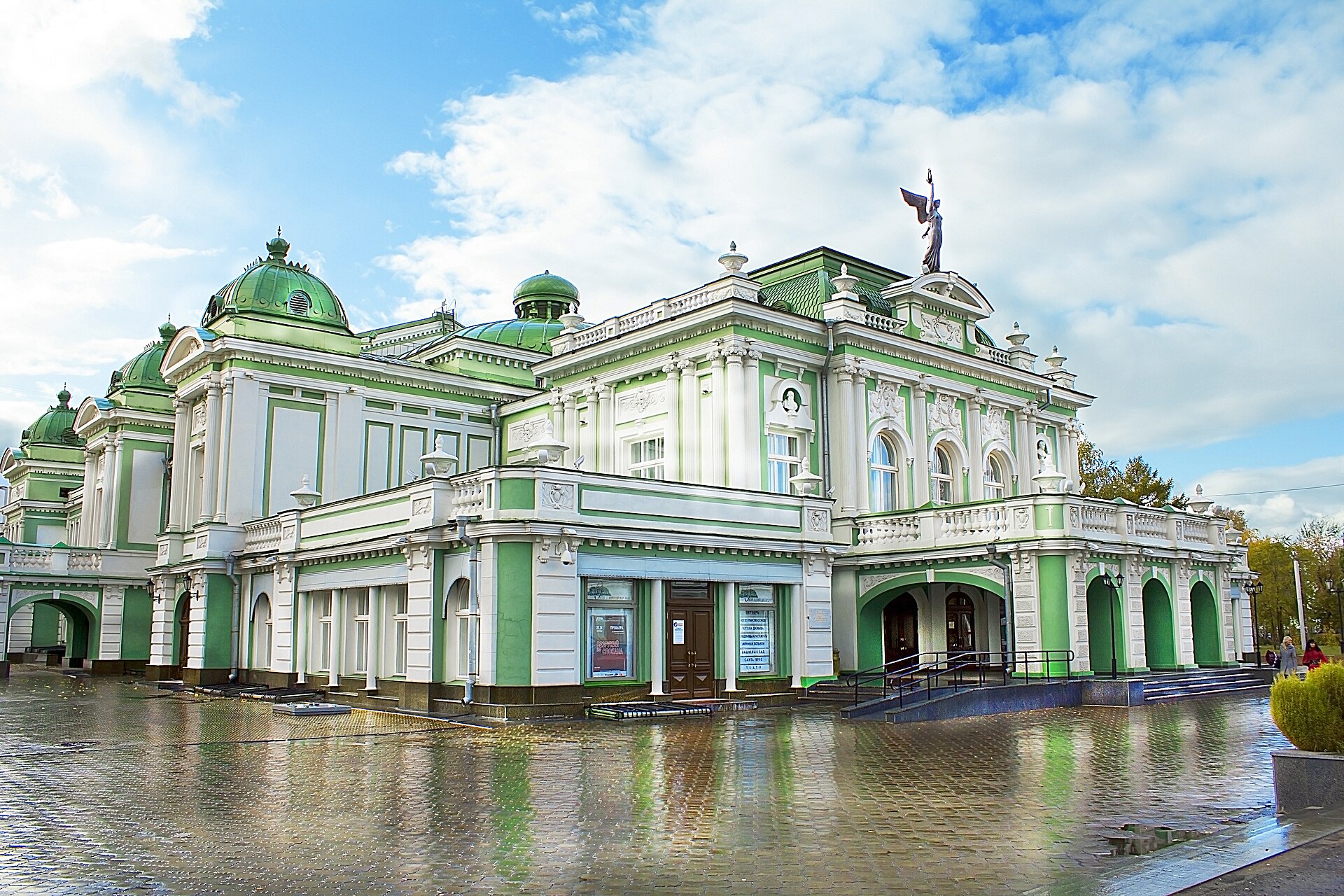
- Museum Complex of Military Glory — Near the river, central district
The Museum Complex of Military Glory gathers exhibits on the Second World War, the war in Afghanistan and the Chechen conflicts. The tone is commemorative, and school groups and families are common around public holidays. Labels are mostly in Russian, so a translation app helps if the history interests you. - Central pedestrian street and Lenin Street — Central district
Omsk's central pedestrian street, reached from Lenin Street, is the easiest place for a stroll past shopfronts, cafés and older merchant buildings. Residents walk here on summer evenings, which gives a feel for everyday city life. Nearby, the old cadet corps building recalls the town's garrison past.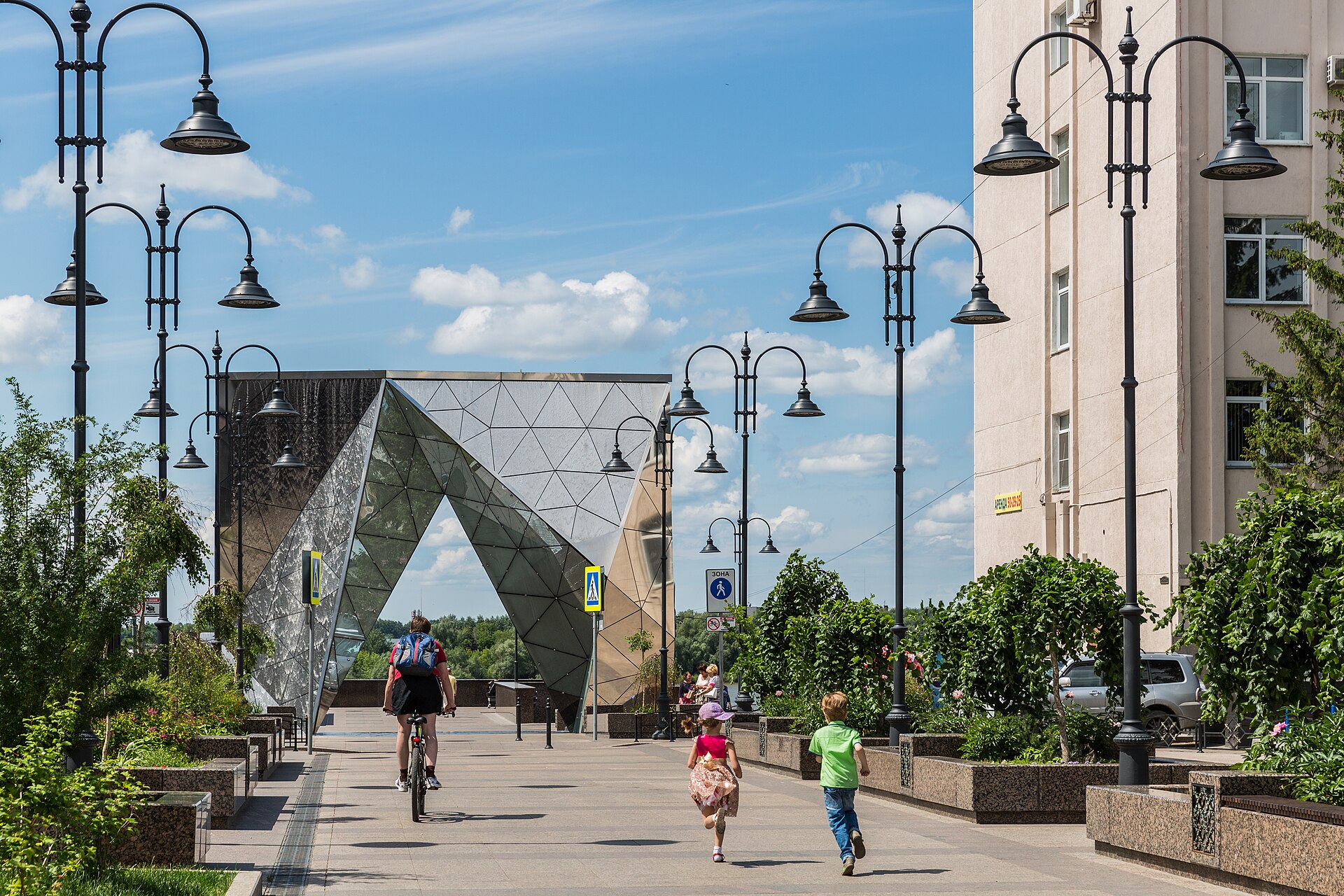
Culture
Omsk sees itself as an educational and cultural centre of Siberia, and the evidence is in the number of institutions packed into a modest centre. Besides the regional history and fine arts museums, there are a literature museum devoted to Dostoyevsky, who served a prison term in the town, a military museum, and smaller galleries such as the Liberov Centre and the Belov art museum. The performing arts are just as active, with an opera company, a drama theatre, a music theatre and a circus, and locals take theatre-going seriously. Sport matters too: the city is represented nationally by football and hockey clubs, and hockey nights are a lively way to meet people. The population is mostly Russian, with Kazakh, Tatar and German communities, and the religious map includes Orthodox parishes, a mosque community and a Cossack heritage visible in church names and local museums. Daily manners are formal at first and warm once a conversation starts: people greet shop staff, remove outdoor shoes in homes, and bring small gifts when invited. Conversation about politics and the military is best left to people you already know well. Cover your hair with a scarf if you are a woman, take off your hat if you are a man, and ask before photographing worshippers or icons when you enter the Dormition Cathedral.
What to wear
Omsk's traditional dress is a blend of Russian, Cossack and steppe influences. Russian village costume used linen and wool, with embroidered blouses and the sarafan, a sleeveless dress, worn at festivals and folk performances today. Cossack heritage shows in dark uniform coats and tall boots at parades, while Kazakh and Tatar communities keep embroidered skullcaps, padded robes and felt in ceremonial wear. Everyday clothing now is practical and urban: jeans, trainers and quilted jackets, with smarter outfits for the theatre, where many people still dress up. Winter defines the wardrobe, with long down coats, fur or knitted hats, felt-lined boots and thick scarves. Summer is warm and short, so light cotton and a sun hat are common, along with sandals on the river promenade. A visitor should pack by season. For winter, bring thermal layers, a windproof coat, insulated waterproof boots with a grippy sole, gloves and a hat that covers the ears. For summer, bring light layers, a rain jacket, comfortable walking shoes for uneven pavements, and long sleeves for evenings when insects are out near the river. For churches, carry a scarf for covering the head and clothes that cover the shoulders and knees. Smart casual is enough for theatres.
What to eat
- Pelmeni — Canteen-style cafés and family restaurants across the centre
Small meat dumplings boiled and served with sour cream, butter or vinegar, the standard comfort food of Siberia. Canteens and family cafés in Omsk serve generous bowls, and many households still make them in bulk and freeze them for winter. - River fish and ukha — Covered markets and riverside cafés
Freshwater fish from the Irtysh basin, fried, baked or cooked in ukha, a clear fish soup with potato and herbs. Smoked and salted fish also turn up on market counters, so ask the seller what is local. - Blini — Bakeries and tea cafés in the central district
Thin pancakes rolled around sour cream, jam, cured fish or minced meat. Bakeries and café chains around the centre sell them all day, and they make an easy breakfast before a morning of museums. - Shashlik — Summer terraces, park cafés and Central Asian-style eateries
Marinated pork or lamb grilled on skewers and served with onions and flatbread. It is mainly a warm-weather dish, cooked outdoors on summer terraces and in parks, and Central Asian-style eateries often do it well. - Pirozhki — Bakeries, station kiosks and market stalls
Baked or fried buns filled with cabbage, potato, egg or meat, eaten as a snack or alongside soup. They are handy on travel days, and bakeries and station kiosks sell them warm, often with tea.
Plan it
Best time. June to early September, when days are long and warm and the river promenade is busy. Winters are long and severe, so visiting then needs proper gear, and the spring thaw turns paths muddy.
How long. 2–3
Getting there. Omsk has an airport with domestic flights, and a licensed taxi into the centre is best, with the fare agreed in advance. Trains are the classic route: the northern and southern branches of the Trans-Siberian line meet here, with daily services from Moscow and the Far East. The station is south of the centre, and buses and trolleybuses run up Bolshoi Marxa Prospekt.
Budget. low
Tips
- Agree the taxi fare before setting off and use a licensed car, especially from the airport
- Ask your accommodation about areas to avoid after dark, such as Neftyaniki and the industrial districts
- Carry some cash for markets and small cafés, and a translation app for museum labels
- Book theatre tickets ahead and check opening days on the museums' own sites or the city site, https://www.admomsk.ru/
- Pack layers in any season, and insect repellent for summer evenings by the river
Etiquette
- Dress modestly in churches, with a headscarf for women and no hats for men
- Ask before photographing worshippers, military sites or people
- Take off outdoor shoes if invited into a home
Nearby
Sources
- Wikidata Q898 (CC0)
- Wikipedia: Omsk (rev 1384688311) (CC BY-SA 4.0)
- Wikivoyage: Omsk (rev 5427390) (CC BY-SA 4.0)
- Photo: Omsk, Pedestrian street — Ninaras (CC BY 4.0)
- Photo: Omsk Drama Theatre — Крылов Иван (CC BY 3.0)
- Photo: Omsk railway station — Алексей Задонский (CC BY-SA 4.0)
- Photo: Dormition Cathedral in Omsk — Chelsea Hicks (CC BY 2.5)
- Photo: Siberian Omsk cadet corps — Ogg-omsk (CC BY 3.0)
- Photo: Omsk 60 years of Victory bridge — G0rn (CC BY 3.0)
- Photo: Omsk, central district, Lenin Street — Сергей Михель (CC BY 3.0)
- Photo: Neftyaniki district — Ich komme aus Russland (CC0 1.0)


