Olsztyn
Olsztyn, Poland
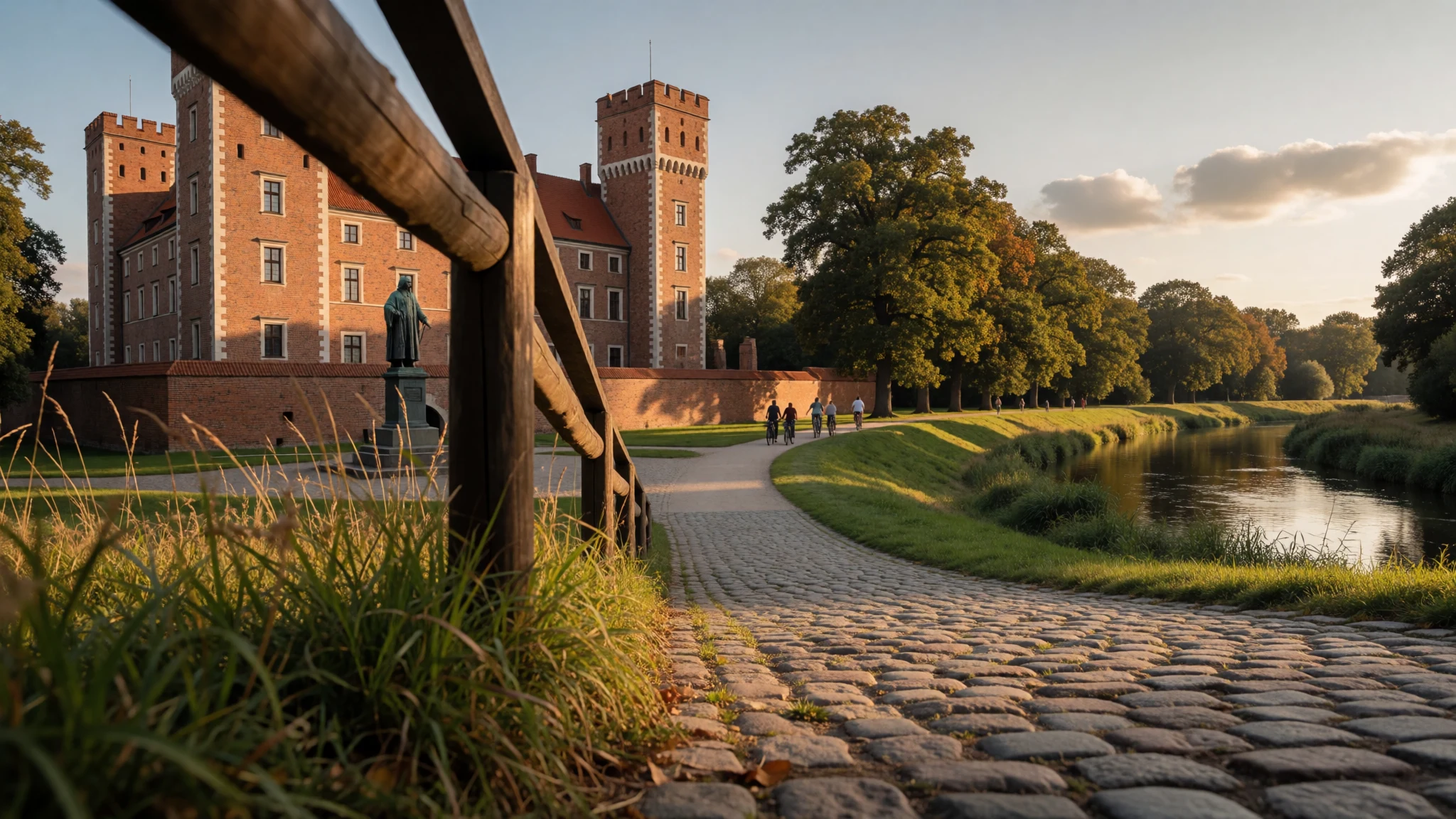
Olsztyn is a calm brick-Gothic lakeland capital where Copernicus once lived, with an easy old centre and Masurian water close by.
The place
Olsztyn lies on the Łyna River in northern Poland, 88 m above sea level, and is the capital of the Warmian–Masurian Voivodeship. Roughly 170,000 people live here, which makes it a regional city rather than a metropolis: easy to cross on foot, with a compact old centre and woods and lake shores at the edge of town. Warmia is the historic region around it, and Olsztyn is its main urban centre. The city took on its present administrative role in 1999, the same year the University of Warmia and Masuria was formed, and the students give the streets a younger feel than the medieval brickwork suggests. The Old Town is small. A market square, a castle, a Gothic church and a stretch of town wall can all be seen in a morning, and the river valley below them is good for slow walking. Beyond the centre the city is green, and locals head to the forest, the arboretum and the lakes at weekends. Most visitors are Poles from elsewhere in the country, so the place feels quiet by European city-break standards, and English is less widely spoken than in Warsaw or Kraków. Olsztyn also works as a base for the Masurian lakes further east. Its link with Nicolaus Copernicus, who lived at the castle, gives the town a thread of science and scholarship that it likes to pull on. Winters are cold and grey, summers green and warm, and the best outdoor weather runs from late spring into early autumn.
Its story
Olsztyn began as a frontier project. In the mid-fourteenth century the cathedral chapter of Warmia, a church body that governed its own lands, wanted a stronghold and a settlement beside the Łyna, and Teutonic Order builders raised a brick castle that was finished in 1397. The town received its charter in 1353. The name carries the mixed history: the German Allenstein draws on an old Baltic Prussian name for the river, linked to a word for a hind, while Polish-speaking settlers bent that German form into Olsztyn. Control changed often. Polish forces took the town in 1410 and again in 1414, but it went back to the Order both times. In 1440 it joined the Prussian Confederation, and in 1454 it rebelled against the Order and sought the Polish crown under Casimir IV Jagiellon. It was back under the Order for several years before settling under the Polish Crown in 1463. Prussia took over in 1772, and the town then passed through the German Empire, Weimar Germany and Nazi Germany before becoming part of Poland in 1945. Copernicus lived at the castle and organised the defence of the town when the Teutonic Order attacked in 1521. That layered past shows in the stonework: Gothic brick from the Order's era, a Neogothic church from around the turn of the twentieth century, and a modernist planetarium and a Jewish funeral house from the years between.
What to see
- Castle of the Warmian Chapter — Old Town, above the river
Olsztyn's castle is a Gothic brick fortress where Copernicus lived and worked, and it now houses the regional museum. A bronze statue of him stands at the entrance. Inside, look for the astronomical table associated with him. The castle also hosts concerts and exhibitions, so check the official site for the current programme.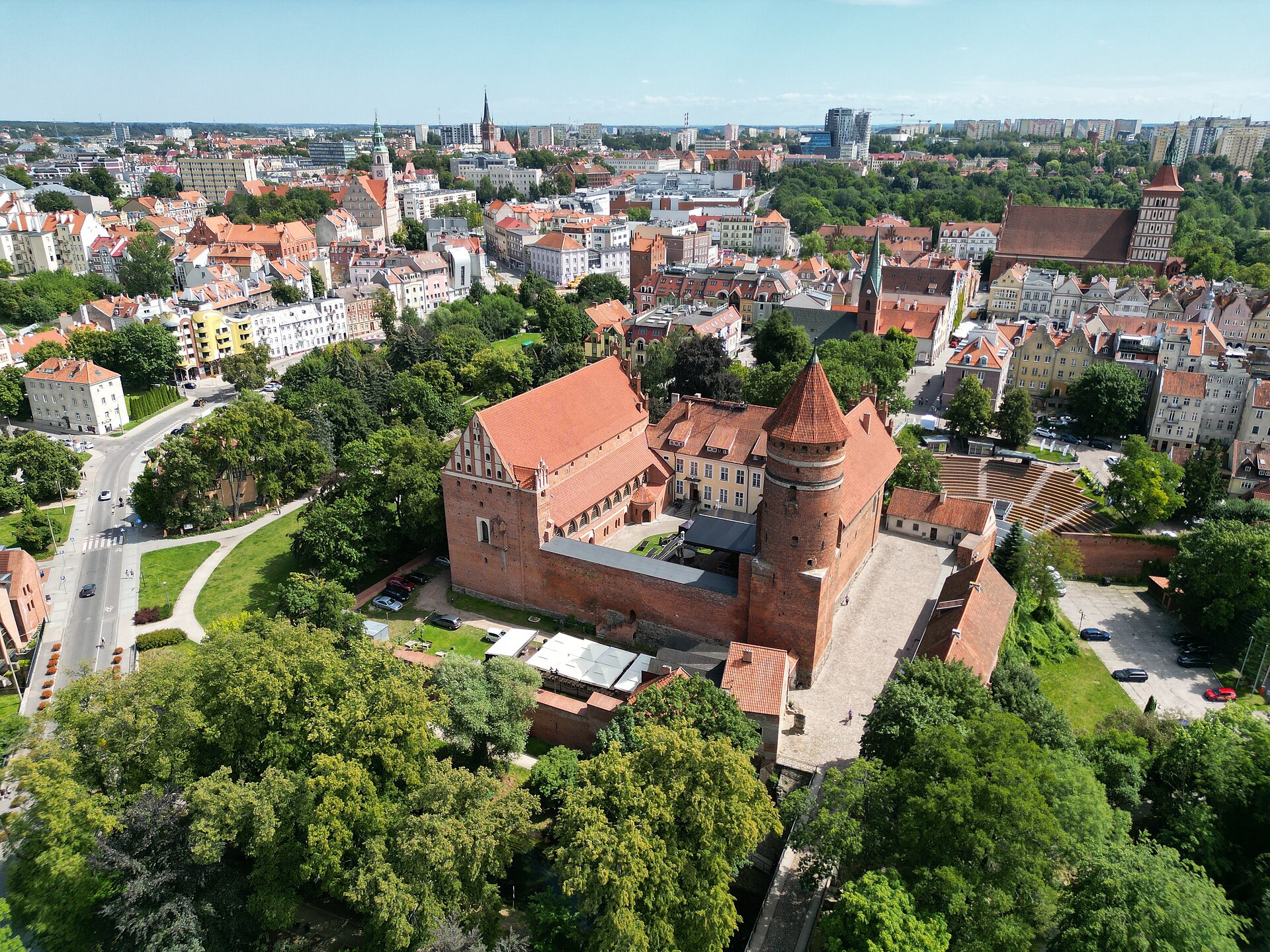
- Co-cathedral Basilica of St James — Old Town
Olsztyn's main church is a Gothic brick building with an interior that layers Gothic, Renaissance and Baroque work. Its tall tower anchors the skyline from most approaches to the Old Town. Go in for the vaults and side chapels, and avoid wandering during services, when the nave is in use.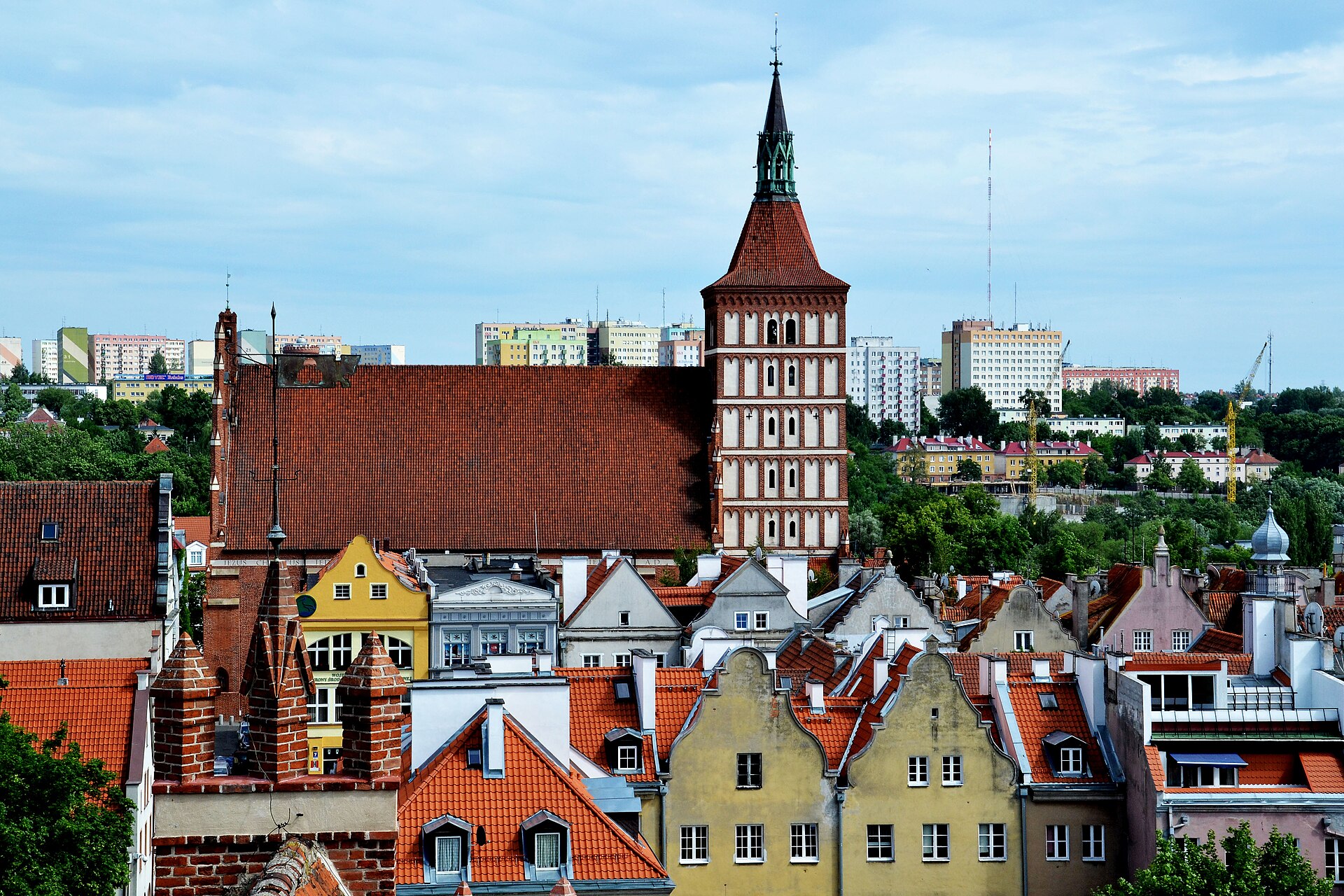
- Old Town Hall and market square — Market square, Old Town
The town hall stands at the centre of Olsztyn's market square, ringed by narrow, colourful townhouses with cafés on the ground floors. The square belongs to a Europe-wide brick Gothic route. It is the easiest place to sit with a coffee, watch the town go about its day, and get your bearings.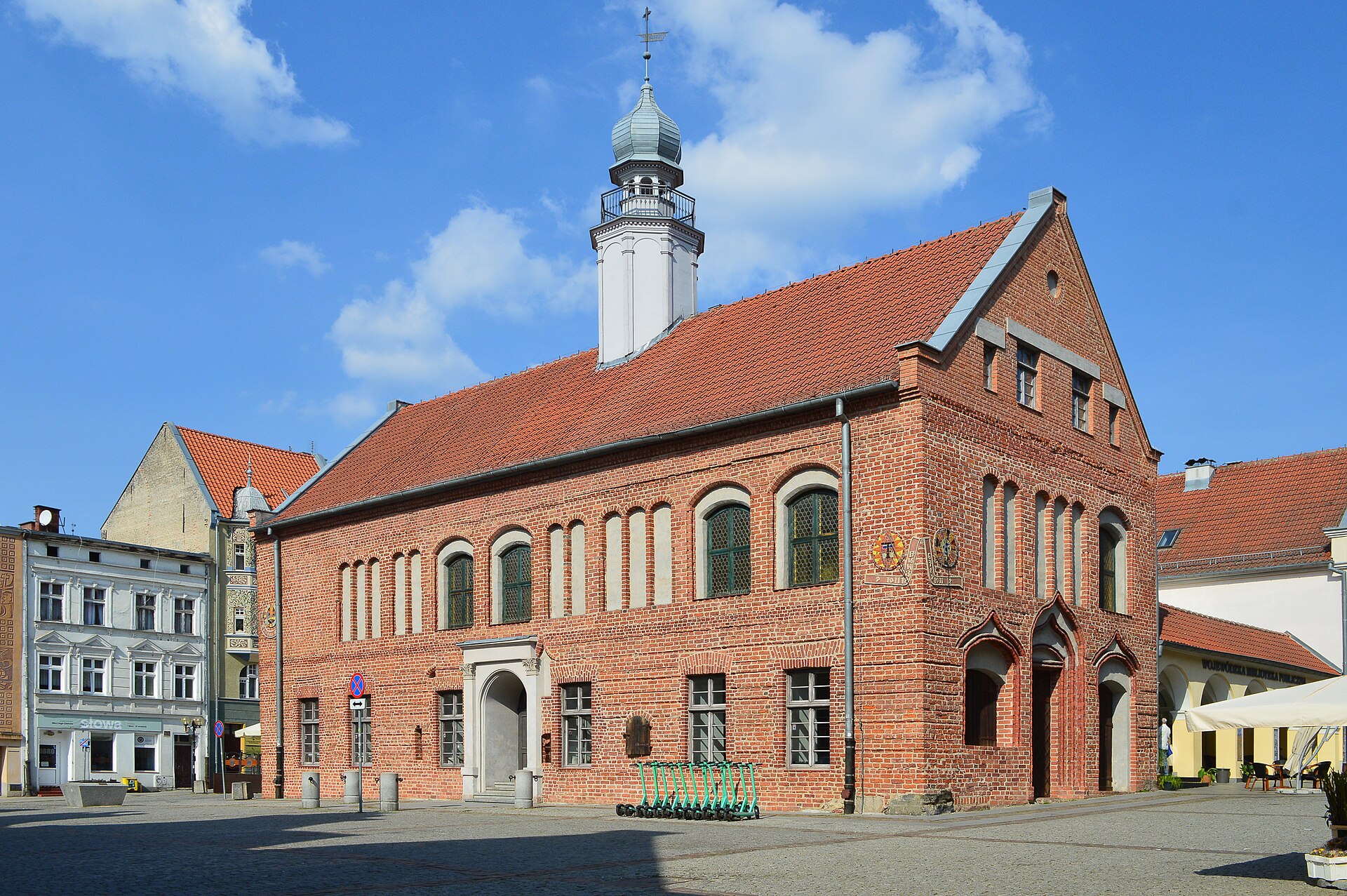
- High Gate — Old Town edge
The High Gate is a surviving fourteenth-century town gate and the best-preserved piece of Olsztyn's defences. Known as the Upper Gate until the mid-nineteenth century, it leads from the old street grid towards the castle. A short stretch of wall nearby shows how small the medieval town really was. - Planetarium and Astronomical Observatory — Outside the Old Town
Set outside the medieval core, this modernist planetarium is decorated with mosaics by Stefan Knapp and fits a town that proudly claims Copernicus. It suits a wet afternoon. Sessions and opening times change, so look at the official programme before heading out, and consider a taxi or bus from the centre.
Culture
Olsztyn's cultural life is that of a university and regional capital: serious, local and unshowy. The Stefan Jaracz Theatre, founded in 1925, hosts the international DEMOLUDY theatre festival, and there is also a puppet theatre, which is a long Polish tradition. Museums are many and small in scale. The Museum of Warmia and Masuria, based in the castle, is the largest, and others cover nature, sport and modern science and technology. The local newspaper, Gazeta Olsztyńska, has its own museum in a house on the old Fish Market. Religion matters here. Olsztyn is the seat of the Roman Catholic archbishop of Warmia, so churches are active places of worship, not just monuments, and many locals attend Mass on Sundays and holy days. The region's mix of Polish, German and earlier Baltic Prussian heritage appears in place names and in the way people talk about the past, usually with interest rather than defensiveness. Warmia and Masuria are also known for outdoor pursuits, so locals spend free time on the water and in the forest. Poles tend to be reserved at first but helpful once a conversation starts, and a few words of Polish, such as dzień dobry for hello and dziękuję for thank you, go a long way. When visiting a church such as St James, keep your voice low, cover bare shoulders if you can, and do not walk around or take photographs during a service.
What to wear
Olsztyn sits in a region where traditional dress survives mainly as festival and folk-group costume. Warmian and Masurian outfits drew on wool, linen and heavy cotton, with embroidered bodices, layered skirts and aprons for women and dark waistcoats and wide hats for men. Today they appear at parish fairs, harvest festivals and school or dance-ensemble performances rather than on ordinary streets. Everyday clothing is the same as in most Polish cities: jeans, trainers, practical coats, and neat but unfussy smart-casual for restaurants and theatre. Students make the centre feel youthful, and people dress up a little for church on Sundays and for evenings out. Cold is the main fashion factor. Winters need a proper coat, hat, gloves and boots with grip, because pavements can be icy, while summer calls for light cotton or linen layers, sunglasses and a thin waterproof for sudden showers. A visitor should wear comfortable shoes with a good sole, since the Old Town is cobbled and sloping in places, and bring walking shoes or light boots for forest and lakeside paths. For churches, shoulders and knees covered is the safe choice, and a scarf or light shirt in a bag solves it quickly. Spring and autumn are changeable, so take layers that can come off. Mosquitoes can be bothersome near water in summer, so repellent and long sleeves in the evening are worth packing.
What to eat
- Żurek — Old Town restaurants and traditional Polish eateries
A sour rye soup, often served with sausage and a halved boiled egg, sometimes in a hollowed loaf. It is warming, tangy and filling, and it suits cold days in northern Poland especially well. - Pierogi — Milk bars (bar mleczny) and simple canteens near the centre
Filled dumplings, boiled and sometimes pan-fried, with fillings such as potato and cheese, cabbage and mushroom, or meat. Many places also offer sweet versions with fruit. They are cheap, filling and a safe choice for vegetarians. - Lake fish — Lakeside eateries and fish stalls around the region
Freshwater fish from the nearby lakes, such as zander, pike-perch or carp, is served fried, baked or smoked. Smoked fish is good as a light lunch with bread and pickles. Ask what is local and seasonal. - Babka ziemniaczana — Traditional restaurants in the Old Town and regional cafés
A baked potato cake made from grated potato, onion and sometimes bacon, with a crisp crust and a soft centre. It is a classic of north-eastern Poland, heavy and satisfying after a cold walk by the river. - Sernik and bakery cakes — Cafés on the market square and local bakeries
Polish baked cheesecake is dense and lightly sweet, usually made with twaróg curd cheese. Alongside it, bakeries sell poppy-seed rolls and yeast cakes. Take a slice with coffee when stopping in the market square.
Plan it
Best time. May to September for warm days, long evenings and lake weather, with June to August the most pleasant for swimming and boating. Winters are cold and grey, though snow can look good around the castle. Late spring and early autumn are quieter and mild.
How long. 2
Getting there. Most visitors fly into Warsaw Chopin Airport and continue by train or by the Polski Express coach to Olsztyn. There are also train links from Gdańsk and Białystok, and some direct summer services from Kraków. Szczytno has a small airport nearby, but Warsaw has more flights. Once there, the Old Town is walkable from the station area.
Budget. mid
Tips
- Check train and coach times on the official operators' sites in advance, especially in winter.
- Start at the castle in the morning when it is quieter, and finish with a coffee on the market square.
- Carry some cash for small cafés and market stalls, although cards are widely accepted.
- Bring insect repellent in summer if heading to lakes or woods.
- Use the city's official tourism site for current museum and planetarium information: https://visit.olsztyn.eu/de/
Etiquette
- Keep voices low and avoid photographing people at prayer inside churches.
- Greet shop and café staff with dzień dobry when entering.
- Wait to be seated in traditional restaurants, and round up the bill or leave a small tip for good service.
Nearby
Sources
- Wikidata Q82765 (CC0)
- Wikipedia: Olsztyn (rev 1384601979) (CC BY-SA 4.0)
- Wikivoyage: Olsztyn (rev 5413300) (CC BY-SA 4.0)
- Photo: Zamek Olsztyn, Monika Towiańska (CC BY-SA 4.0)
- Photo: Nowy Ratusz w Olsztynie, Marek Mróz (CC BY-SA 4.0)
- Photo: Starego Miasta, Marek Mróz (CC BY-SA 4.0)
- Photo: Old Town Hall, Scotch Mist (CC BY-SA 4.0)
- Photo: Monument to Copernicus, Nol Aders (CC BY 3.0)
- Photo: Cathedral, Scotch Mist (CC BY-SA 4.0)
- Photo: Logo of Olsztyn, Olsztyn City Hall (Public domain)
- Photo: Bazylika konkatedralna św. Jakuba, Marek Lewiński (CC BY-SA 3.0 pl)


