Olomouc
Olomouc, Czech Republic
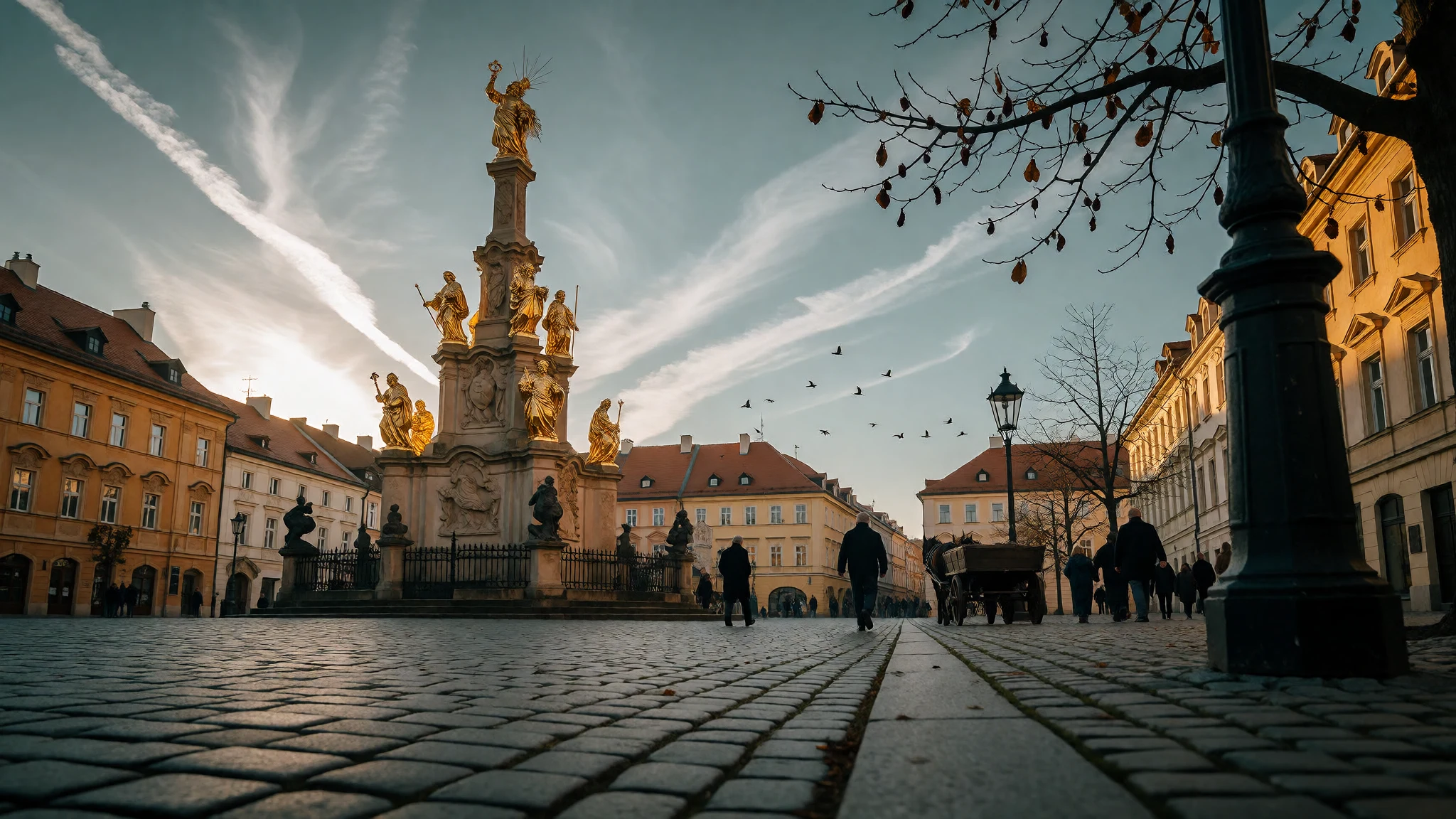
Olomouc is a Moravian university and church city with a Baroque centre, calm squares and river walks, and far fewer visitors than Prague.
The place
Olomouc sits on the Morava River in the Upper Morava Valley, in the east of the Czech Republic, at an elevation of 219 m. About 103,000 people live here, and the compact old centre can be crossed on foot in a quarter of an hour. The surrounding land is flat, fertile farmland. The city lies about 61 km northeast of Brno and 200 km southeast of Prague, so it works as a day trip from either but rewards a night or two. Water runs through the town in several strands: the Morava itself, its side channel the Mlýnský potok, and the Bystřice, which joins the main river close to the centre. That gives the edges of the old town a green, slightly marshy feel, with paths, bridges and willows. In the north the Litovelské Pomoraví Protected Landscape Area reaches into the municipal territory, and in the east the villages of Lošov, Radíkov and Svatý Kopeček climb into the Nízký Jeseník hills, where the highest point in the municipality stands at 444 m. The historic core is protected as an urban monument reservation, and the Holy Trinity Column was added to the UNESCO World Heritage list in 2000. The mood is that of a working regional capital: students, clergy, office workers and market traders share the same squares. The German name, Olmütz, still turns up on older maps and in history books. The city's official site is https://www.olomouc.eu/ for events and practical notices.
Its story
Olomouc's story begins before the city proper. Early Slavic settlers built a fortified settlement at Povel, now a city quarter, probably as the administrative hub of a wider district. That site was conquered and vanished, and the focus shifted to Předhradí, in the eastern part of today's inner city, where a governor of Great Moravia resided. The settlement outlasted the collapse of Great Moravia around 907 and slowly grew into the capital of the province of Moravia. The date given for the city's founding in the facts is 1017. The church shaped the place as much as the rulers did. A bishopric was established in 1063, perhaps as a re-founding, since earlier bishops of Moravia may already have sat here. The see moved to the church of Saint Wenceslas in 1141 under Bishop Jindřich Zdík, who also built a Romanesque palace. In 1777 the bishopric was raised to an archbishopric, which is why Olomouc is still called the ecclesiastical capital of Moravia. Its political importance faded after the Thirty Years' War, when the Swedish army occupied the city and it lost its role as co-capital of Moravia. What survived was a dense stock of churches, palaces and townhouses, many of them rebuilt in Baroque style, along with the university that keeps the centre young. The result is a city whose layers are easy to read: a hill-top church quarter, a merchant square, and a ring of green where fortifications once stood.
What to see
- Holy Trinity Column — Upper Square (Horní náměstí)
A Baroque monument rising 35 metres above the Upper Square, built in the early eighteenth century and consecrated in 1754. Its crowded sculpture of saints and its chapel inside the base made it the city's symbol, and its inscription on the UNESCO list in 2000 confirms that status. - Astronomical clock — Town hall, Upper Square
The town hall clock has medieval roots, but its present look comes from a refurbishment after Second World War damage. The face is in a socialist-era folk style, with workers and farmers rather than saints. It is worth reaching the square at midday for the figures to appear. - St. Wenceslas Cathedral — Church quarter, east of the centre
A very old cathedral whose spire dominates the skyline from most approaches to the city. It stands on the church quarter's rise, east of the main squares, and its setting among the clergy houses tells the story of Olomouc as a bishop's seat. Check opening and tower access on the official site. - St. Moritz church — Old town, near the Upper Square
A well-preserved Gothic church dating from 1398, with a high nave and tall windows. It is known for its large Engler organ, and organ concerts are sometimes held here. The building is plain in the way many Gothic halls are, so it suits a quiet half hour away from the square. - Morava riverside and the old town edge — Along the Morava, around the old town
The Morava and its branches give Olomouc a green fringe. A walk along the water, past parkland and bridges, shows the city's flat valley setting and its everyday life: joggers, students, anglers and cyclists. It makes an easy, free counterpart to the sights inside the centre.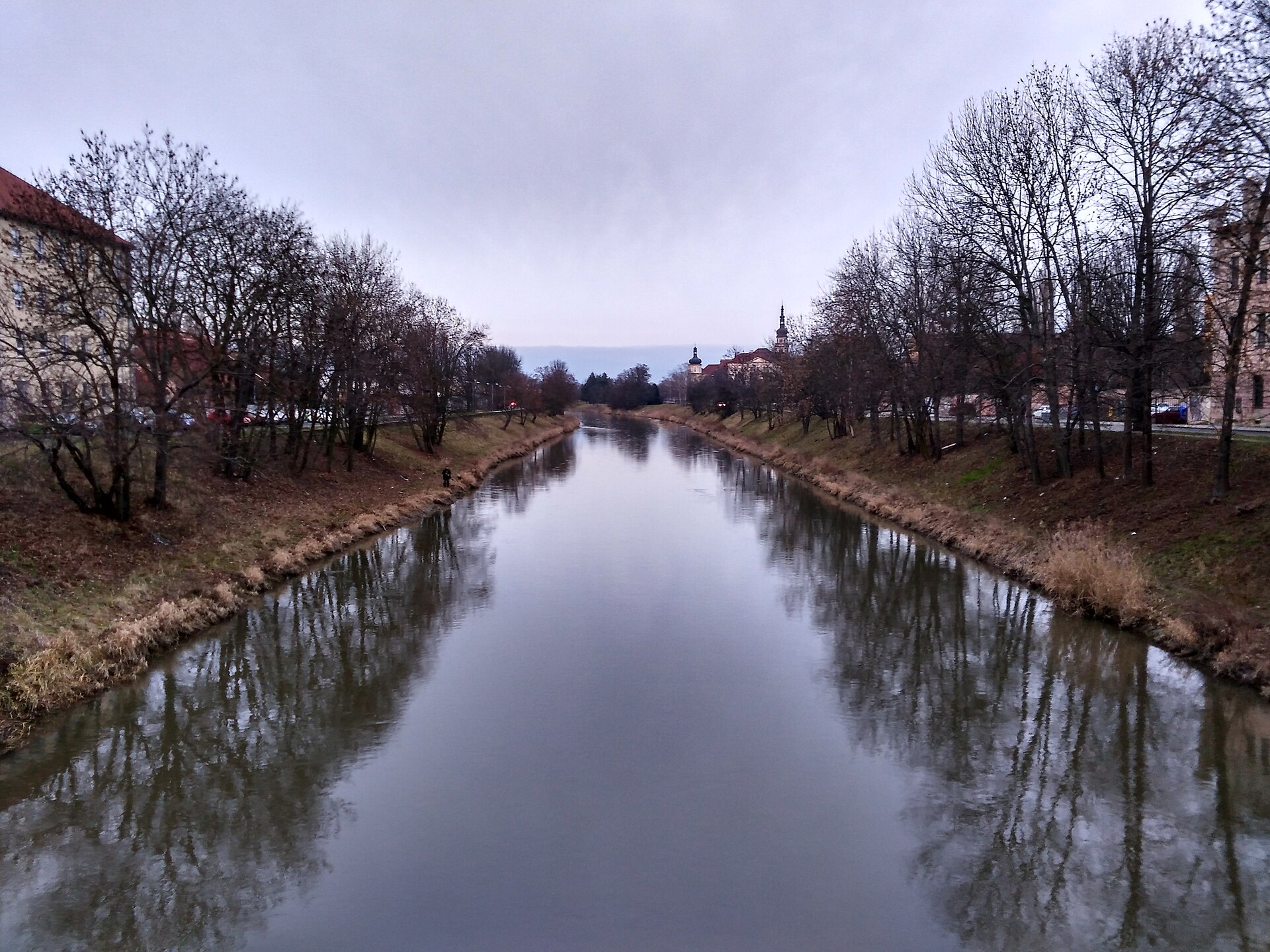
Culture
Olomouc is a city where culture is driven by students and the church. The university, described in the brief as the second oldest in the country, fills the centre with young people, and that supports a steady calendar of events. The Moravian Theatre Olomouc and the Moravian Philharmonic are based here, and in 2023 a decision was made to merge them into one institution. Smaller stages, including Divadlo na cucky, Divadlo Tramtarie and Divadlo K3, put on more experimental work. Film has a long local tradition, with Kino Metropol, a single-screen cinema opened in 1933, standing alongside multiplexes. Festivals include Academia Film Olomouc, the Festival of Animated Film (PAF) and the theatre festival Divadelní Flora. Olomouc is also the heart of Haná, a region with its own folk traditions, a fertile farming area with its own dialect, folk songs and costume, and local pride in that identity shows up at village fairs and folk events. The church remains a major presence: processions, bells and organ music belong to ordinary life, not only to tourism. Locals are generally relaxed with visitors but reserved in public, and conversation on trams and in squares tends to be quiet. Learning a few Czech words such as dobrý den (good day) and děkuji (thank you) is appreciated. When entering a church in Olomouc, keep your voice low, remove your hat, and do not use flash or walk about during a service.
What to wear
Traditional dress in Olomouc belongs to the Haná region around it. Haná costume is a folk dress, usually of cotton, linen and wool, with embroidered bodices, full skirts, white blouses and decorated aprons for women, and embroidered waistcoats and boots for men. It is worn mainly at folk festivals, church feasts, weddings and school or village celebrations, not in daily life. The detail and colour of the embroidery vary between villages, and local folk groups often keep the patterns alive. Day to day, Olomouc dresses like any central European university city. Students wear jeans, trainers and layers, office workers lean towards smart casual, and older residents are often neat and conservative. Dark colours dominate in winter, with coats, scarves and boots, and summer brings light cotton, shorts and sandals. Visitors should dress for weather that changes: warm layers and a proper coat from late autumn to early spring, and a light rain jacket in other seasons. Streets and squares are cobbled, so comfortable shoes with a good grip matter more than style. For churches, cover bare shoulders and knees when possible, and carry a light scarf or shirt for that purpose. Restaurants and theatres are casual, though people tend to dress a little smarter for the opera or a concert. Bring sun protection in summer, since the squares offer little shade.
What to eat
- Roast duck with red cabbage — Traditional Moravian restaurants near the Upper Square
A classic Moravian plate: crisp-skinned duck with red cabbage cooked with apple, usually served with bread dumplings. It is a hearty main course for cooler months and appears on menus of traditional restaurants around the centre. - Olomoucké tvarůžky — Pubs and local food shops in the old town
A small, strongly scented ripe cheese associated with Olomouc. It is eaten fried, baked or marinated in oil, usually with bread and beer. The smell is far more dramatic than the mild taste, and locals treat it as a point of pride. - Moravian pub dishes with local beer — Beer pubs in the old town streets
Pubs serve a wide selection of beer alongside Moravian standards such as goulash, pork with dumplings and fried cheese. Portions are generous, service is unhurried, and this is the easiest way to understand everyday local eating. - Weekday lunch soup and a main — Restaurants around the squares at midday
Many restaurants offer a set lunch with soup, which is the cheapest way to eat well in the centre. Soups are often thick and savoury, with potato, mushroom or beef broth, followed by a plain main course. - Vegetarian self-service lunch — Side streets just off the main square
A few canteen-style places let diners fill a plate from a counter and pay by weight. They are a practical choice for vegetarians, who can find Czech menus meat-heavy, and for a quick lunch between sights.
Plan it
Best time. Late May–June and September are the easiest months, with mild weather for walking the squares and river paths. Winters are cold and grey, and summer afternoons can turn hot, so check the forecast before booking.
How long. 2
Getting there. Olomouc's own airport is used only by a local flying club, so fly to Prague, Vienna, Brno or Ostrava and continue by rail. From Prague, hourly fast trains take about 2½ hours and Pendolino services about 2 hours (compulsory seat reservation); from Brno the direct route takes about 1½ hours. Trains stop at Olomouc hlavní nádraží, and the old centre is a short tram ride or walk away.
Budget. mid
Tips
- Book Pendolino and private-company trains ahead, since seat reservations are compulsory on those services
- Check the official site, https://www.olomouc.eu/, for festival dates and tower or cathedral opening times
- Arrive on the square before midday if you want to see the astronomical clock in action
- Wear shoes with a good grip for cobbles, which get slippery in rain
- Choose the lunch menu in restaurants for the best value
Etiquette
- Keep your voice low in churches and avoid flash during services
- Greet staff with dobrý den when entering a shop or restaurant
- Tipping is usual in restaurants: round up the bill or add a small amount
Nearby
Sources
- Wikidata Q81137 (CC0)
- Wikipedia: Olomouc (rev 1384668522) (CC BY-SA 4.0)
- Wikivoyage: Olomouc (rev 5413281) (CC BY-SA 4.0)
- Photo: Hauptplatz in Olmütz (Dominik Tefert) (Public domain)
- Photo: Český rozhlas Olomouc, aerial photograph (Lehky.cz) (CC BY-SA 4.0)
- Photo: Morava river in Olomouc (Poisl.matyas) (CC BY-SA 4.0)
- Photo: Pohled z výšky 180m (Geprt) (CC BY-SA 4.0)
- Photo: Historical map of Olomouc, 1686 (Michal Maňas) (Public domain)
- Photo: Olomouc Synagogue (Edition JMP, Violetta) (Public domain)
- Photo: Olomouc 1907 (scanned by cs:User:Pernak) (Public domain)
- Photo: Olomouc (Dezidor) (CC BY 3.0)


