Newcastle upon Tyne
Newcastle upon Tyne, United Kingdom
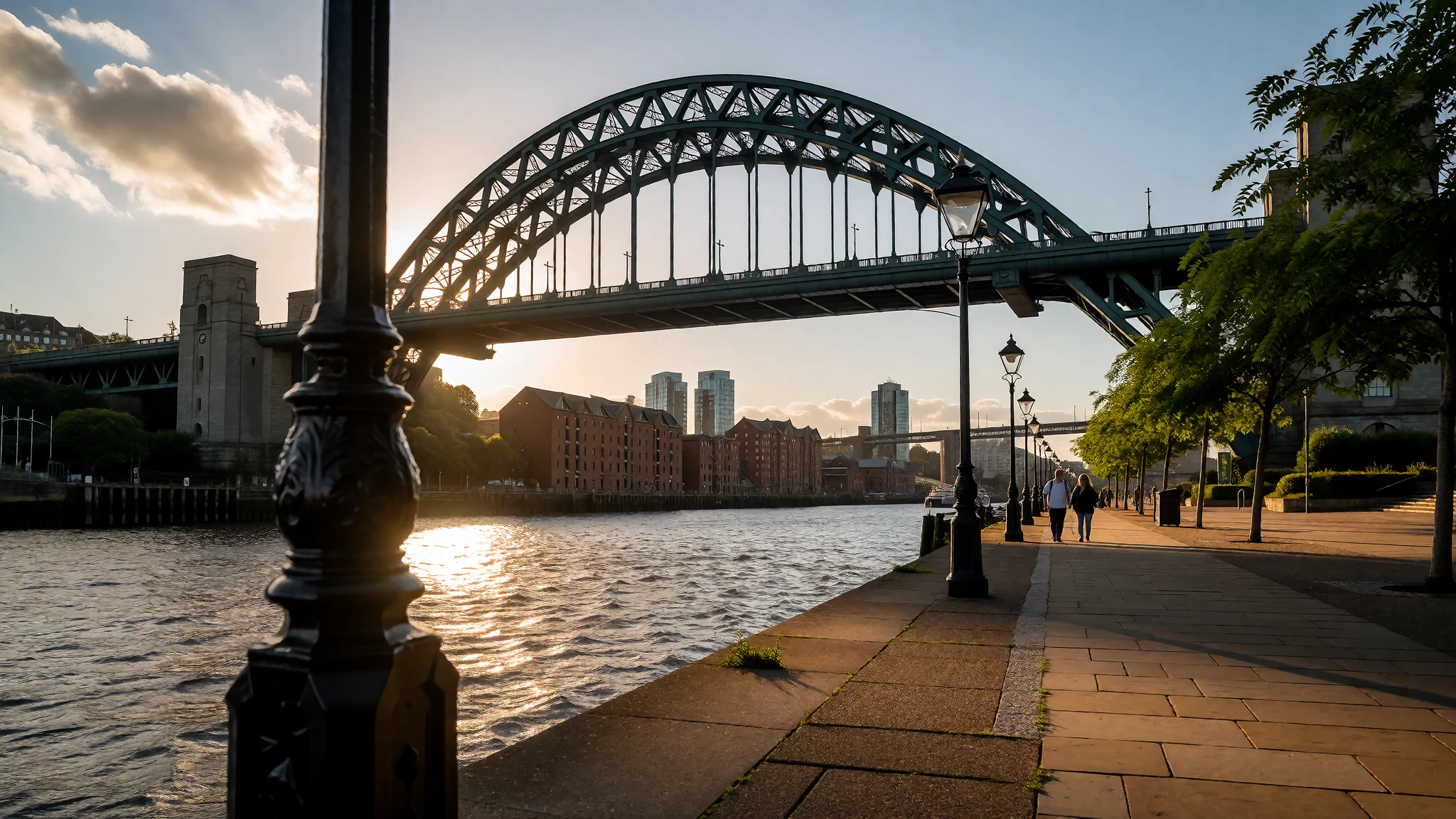
A compact, steep, hospitable river city where Roman, Norman and industrial layers meet under a row of bridges.
The place
Newcastle upon Tyne is England's northernmost city, strung along the north bank of the River Tyne with Gateshead facing it across the water. Its population is 320,605 and its elevation is listed as 30 metres, though that figure hides a sharp drop: the centre stands on a bluff, and the old Quayside lies far below, reached by steep lanes and flights of steps. A cluster of bridges of very different ages spans the gorge between the two towns, and they shape the view as much as any building does.
Within Tyneside and the wider North East, this is the main place for shopping, hospitals, universities, theatre and nights out, so people travel in from a long way around. The city is compact. The castle, the cathedral, the Quayside and the main shopping streets are all within a short walk of one another, and the Metro covers the rest. The central streets, laid out largely in the nineteenth century, are lined with pale, grand stonework, while the riverside keeps older, darker and narrower buildings.
The industrial past is still visible in the shape of the place. The river was once crowded with shipyards and coal staithes, and many former warehouses and mills now hold galleries, flats and bars. The football ground rises over the western edge of the centre, and on match days black-and-white shirts fill the streets.
Locals put the stress on the second syllable of the name and nearly always drop the 'upon Tyne'. The weather arrives off the North Sea: breezy, changeable and rarely hot.
Its story
Newcastle upon Tyne began as a Roman river crossing. In the second century, engineers working for the emperor Hadrian placed a fort and a bridge here and called the settlement Pons Aelius, after his family name. It was a small garrison town, and Hadrian's Wall passed through it. Short stretches of the wall survive beside West Road, and the wall's eastern end lies a few kilometres downriver at Segedunum, in Wallsend.
After Roman rule ended, the place faded. A monastic settlement grew up and was known as Monkchester, and for a long time the river crossing mattered more than the town around it. The turning point came in 1080, when Robert Curthose, eldest son of William the Conqueror, raised a fortress on the bluff above the water. People called it the new castle, and the name passed to the town. The stone keep standing today is a later rebuilding on the same ground.
Trade did the rest. Wool, and then coal shipped down the Tyne towards London, made the town wealthy, and from 1400 it was governed as a county in its own right, separate from Northumberland. During the Industrial Revolution, shipbuilding and ship repair along the river, together with engineering, drew workers from across the north and filled the hillsides with brick and stone terraces that still shape the city. The most recent change was administrative: in 1974 Newcastle was grouped with its neighbours in the new Tyne and Wear county, though the old loyalty to Northumberland still shows in local speech and place names.
What to see
- Newcastle Castle — Castle Garth, city centre
Only the keep and the Black Gate survive of the fortress that gave the city its name, tucked beside the railway viaduct. The roof gives a fine view over the river and bridges. The site also sits over the Roman fort, so it is a good first stop for grasping why the city exists. Check the official site for opening times and tickets.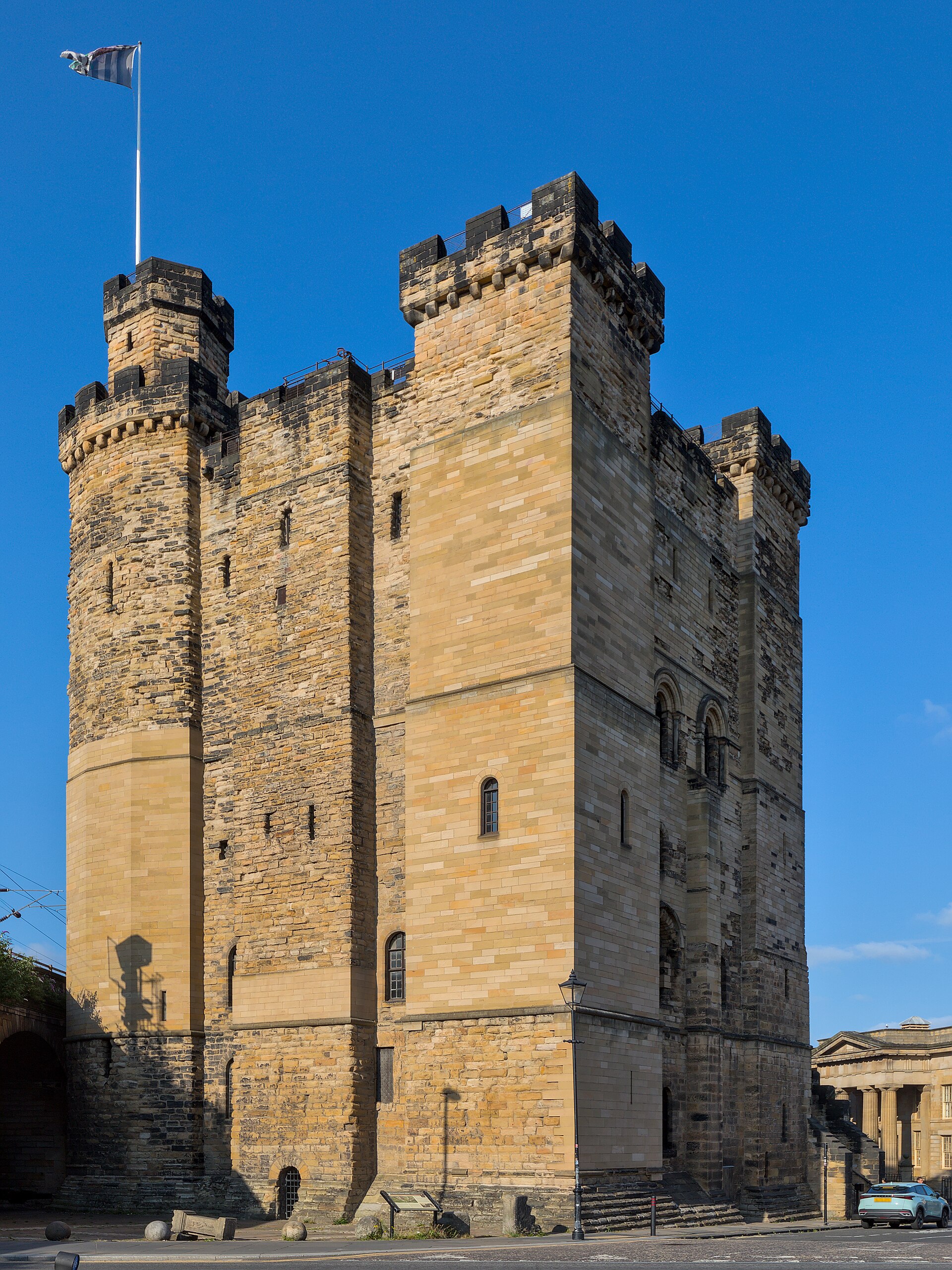
- Newcastle Cathedral — Near the castle, city centre
The Anglican cathedral is a medieval church in the Perpendicular style, topped by a stone lantern spire that works as a landmark from the river and the railway. Inside it is tall, calm and a useful pause from the busy streets outside. Check the cathedral's own website for services and visiting times. - Quayside and the Tyne bridges — Quayside, below the castle
Walk down the steps from the castle to see the bridges stacked along the river: the steel arch of the Tyne Bridge, the tilting Gateshead Millennium Bridge and older crossings beyond. Old merchants' buildings on Sandhill face the water, and the quay is pleasant for an evening stroll, especially when the lights come on.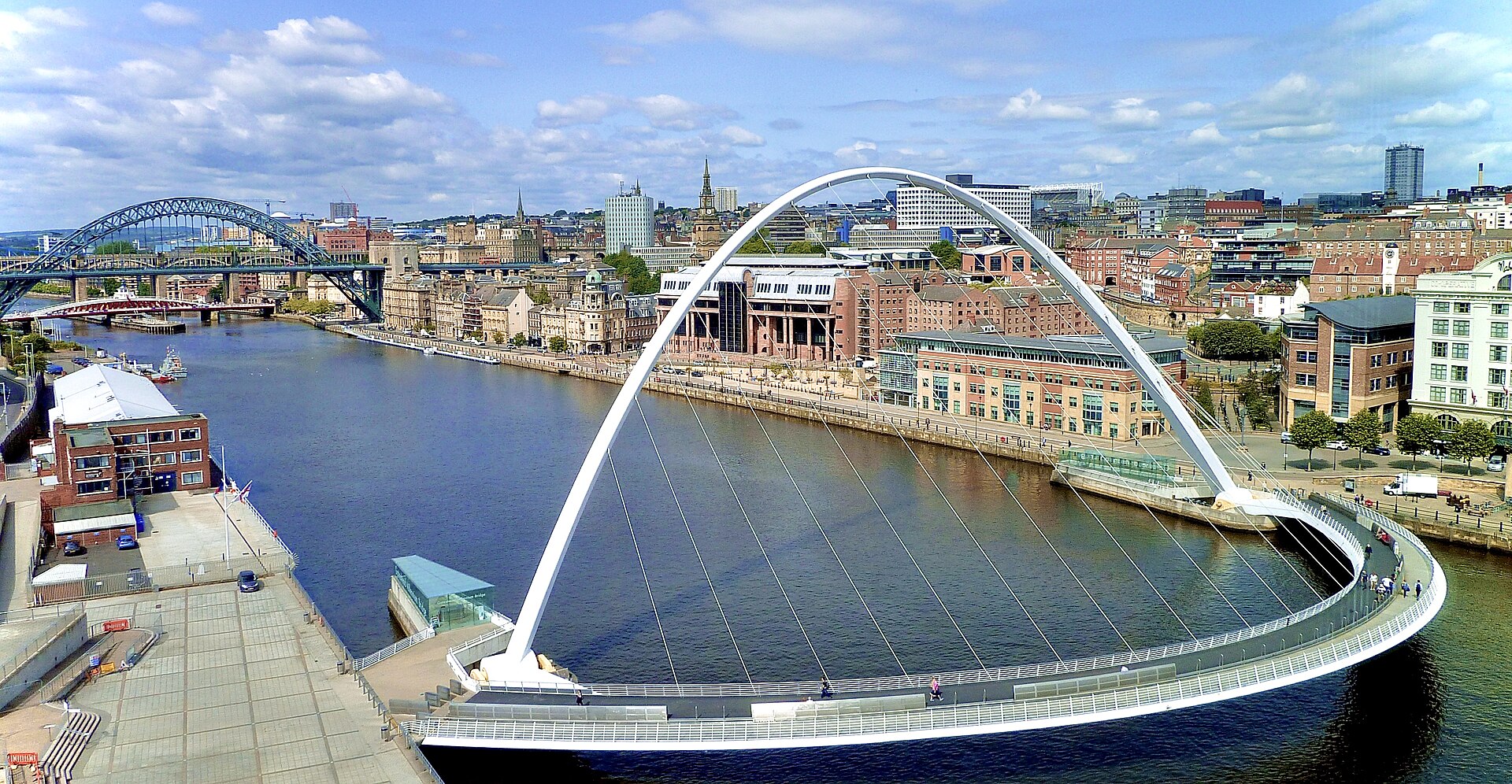
- Great North Museum: Hancock — Barras Bridge, near the university
The university's natural history and archaeology museum holds fossils, Egyptian mummies, stuffed animals and displays on local history, including the Roman frontier. It is a sensible choice for a wet or cold afternoon and works well for families. Check the official site for opening times and any charges. - Seven Stories — Ouseburn valley, east of the Quayside
A converted Victorian mill houses a gallery and archive devoted to the art and making of children's books, with original drawings and manuscripts. The Ouseburn valley around it is a good area for a wander, with converted workshops, studios, pubs and music venues along the stream. - Hatton Gallery — Newcastle University campus
This small gallery inside Newcastle University shows art from the medieval period to the present, and it was redeveloped in 2017. It is quiet and easy to fit around a walk through the campus. Exhibitions change, so check the university website before going.
Culture
The people of Newcastle upon Tyne are Geordies, and the word names the dialect as well as the nickname. Novocastrian is the more formal alternative, though in practice it is mostly heard from former pupils of the Royal Grammar School. Geordie has its own vocabulary and vowel sounds, many of them inherited from the Anglo-Saxon speech that spread after Roman rule ended. Expect 'bairn' for a child, 'canny' for nice or good, and 'howay' as a call to get a move on. The accent can be hard to follow at first for visitors from elsewhere in the UK, or from India, but people are usually glad to repeat themselves.
Social life revolves around football, pubs, live music and a cheerful readiness to talk to strangers. Newcastle United supporters fill the centre on match days, and the stadium is something of an emotional anchor for the whole region. Theatres such as the Theatre Royal, and the galleries attached to the universities, give the city a quieter cultural side. Humour is dry and teasing, and being gently teased is usually a sign that you have been accepted. The city also has a reputation for going out in very little clothing in winter, which locals regard as a point of pride rather than a warning.
In a pub, order and pay at the bar rather than waiting for table service, and when drinking with a group of locals, take your turn buying a round.
What to wear
Newcastle upon Tyne has no single national-style costume, but its working past left a few distinctive images. The keelmen, who loaded coal onto ships from small boats, are pictured in blue jackets and bonnets, and fishwives from the coast wore heavy shawls and layered skirts. Wool and tweed were the staple cloths, with oilskin and later waxed cotton for wet weather off the sea. Northumbrian piping bands still wear the district's black-and-white shepherd's check, usually for concerts, parades and festivals rather than daily life.
Everyday dress now is practical and casual: jeans, trainers, padded jackets and waterproofs, with plenty of black-and-white football shirts on match days. Nights out are the opposite extreme. People dress up, often in thin clothing regardless of the temperature, which surprises many visitors in January.
For a visitor, the main point is the climate. Even in summer, bring a waterproof and a warm layer, because the wind off the North Sea can turn a mild day cold. Winter calls for a proper coat, a hat and gloves. Wear comfortable shoes with a good grip, since the Quayside has cobbles and the lanes down from the centre are steep and sometimes slippery. No special dress is required in churches or the cathedral, though covering the shoulders and removing a hat is courteous, and at services quiet clothing is appropriate.
What to eat
- Stottie sandwich — Sandwich bars around Grainger Market and the city centre
The stottie is a dense, flat round loaf, baked to be split and filled with ham, bacon, egg or pease pudding. It is a filling lunch rather than a delicate one, and the best sandwich bars keep a queue at midday. - Pease pudding and ham — Traditional pubs and market stalls
A thick, savoury paste of boiled split peas, usually eaten with boiled ham, often in a stottie. It is plain, salty and warming, and it suits the cold, windy days when the Tyne feels very close. - Sardinian and other Italian cooking — Italian restaurants in the centre and on the Quayside
Newcastle has a lively Italian scene, including places that specialise in Sardinian food. Look for fresh pasta, seafood and simple grilled dishes, from relaxed trattorias on the Quayside to smaller family-run places near Grainger Town. - Chinatown dishes — Stowell Street
Stowell Street is the heart of the city's Chinese community, with restaurants serving noodles, dim sum and regional dishes, plus grocers selling ingredients. It is a dependable place for a late meal after the theatre or a match. - Tapas and burritos — Restaurants near the stadium; burrito bars on Grainger Street and Ridley Place
For casual eating, Spanish tapas places cluster close to the football ground, and Mexican burrito bars in the centre offer quick, filling and good-value meals. Both are handy for a stop between sights. - Fish and chips at the coast — Chip shops on the seafront at Tynemouth
A short Metro ride takes you to Tynemouth, where chip shops near the sea sell battered fish and thick chips to eat on the front. Wrap up and watch for gulls, which will go after anything unguarded.
Plan it
Best time. Late May to September is mildest, with long light evenings, though it stays cool by Indian standards and rain can come at any time. April and October are quieter and cheaper; winter is cold, windy and dark by mid-afternoon.
How long. 2–3
Getting there. Newcastle International Airport is linked to the centre by the Tyne and Wear Metro, a ride of roughly twenty minutes with frequent trains. Newcastle Central station is on the East Coast Main Line from London and Edinburgh. From Manchester Airport, trains take around three hours and may need a change at Manchester Piccadilly or York.
Budget. mid
Tips
- Pack a waterproof and an extra layer, even in summer.
- Book accommodation early for match days, big concerts and university graduation weeks, when rooms fill up and prices rise.
- Use the Metro and walking for most journeys; the centre is compact, but the steep lanes to the Quayside are tiring in wet weather.
- Check museum and castle opening times and ticket details on their official sites before going.
- Cards are widely accepted, but carry a little cash for market stalls.
Etiquette
- Queue in an orderly line at bars, bus stops and takeaway counters, and wait to be served.
- Keep noise down late at night on residential streets near the Quayside and Ouseburn after leaving a pub or venue.
Nearby
Sources
- Wikidata Q1425428 (CC0)
- Wikipedia: Newcastle upon Tyne (rev 1383418337) (CC BY-SA 4.0)
- Wikivoyage: Newcastle upon Tyne (rev 5412575) (CC BY-SA 4.0)
- Tagishsimon, Tyne Bridge, Newcastle upon Tyne (photo) (CC BY-SA 1.0)
- JimmyGuano, Newcastle-upon-Tyne bridges and skyline (photo) (CC BY-SA 4.0)
- Trevor Littlewood, Buildings on Sandhill (photo) (CC BY-SA 2.0)
- Benjamin Smith, Newcastle upon Tyne castle keep (photo) (CC BY-SA 1.0)
- Nigel Thompson, Monument Metro station (photo) (CC BY-SA 2.0)
- Chabe01, Théâtre Royal, Newcastle upon Tyne (photo) (CC BY-SA 4.0)
- Garcheva, St Mary's Cathedral, Newcastle upon Tyne (photo) (CC BY-SA 4.0)
- Chabe01, Centre civique, Newcastle upon Tyne (photo) (CC BY-SA 4.0)


