Neuschwanstein Castle
Neuschwanstein Castle, Germany
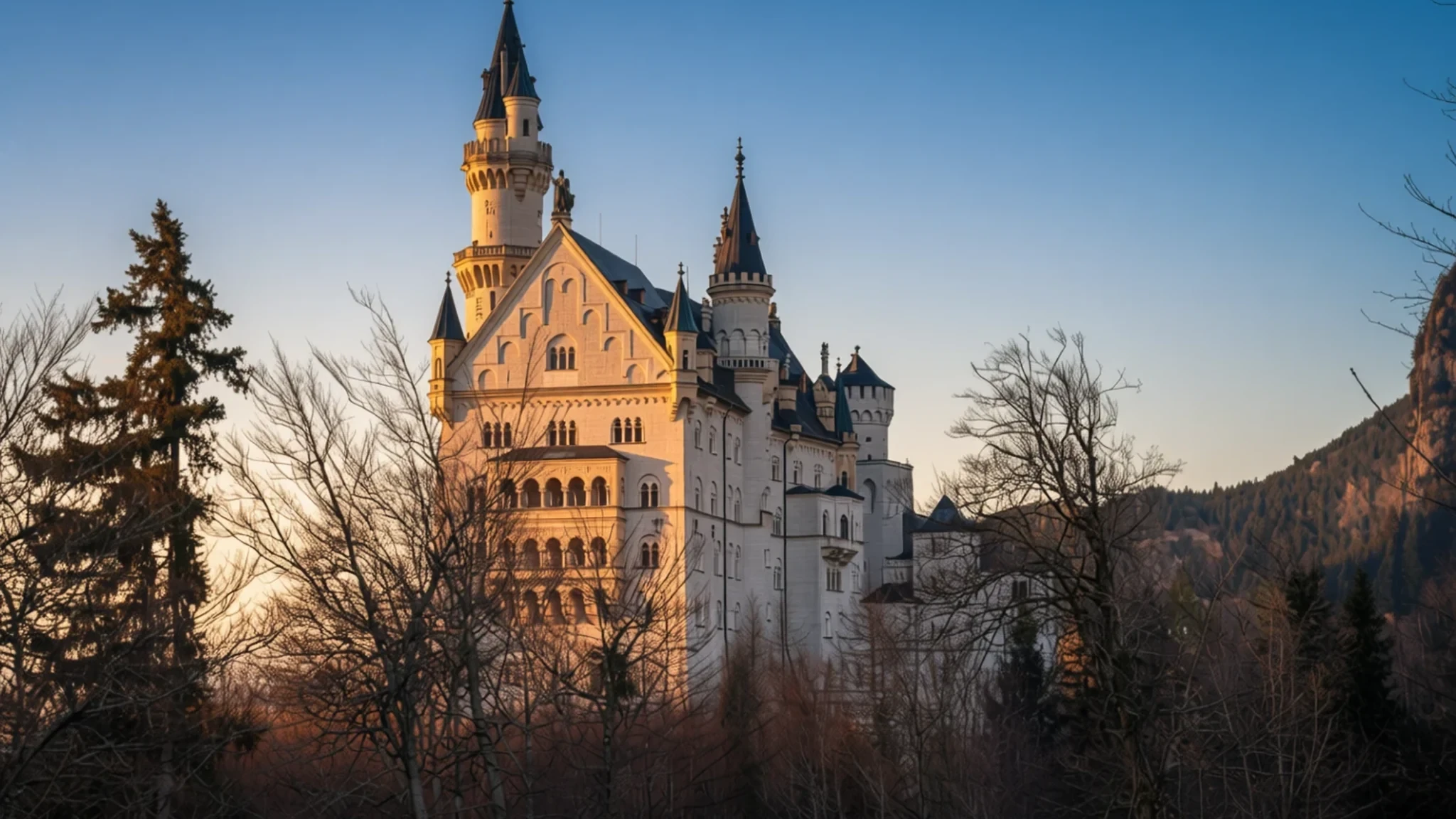
Perched high above the Bavarian foothills, Neuschwanstein Castle is a 19th-century royal retreat that brings romantic fairy-tale architecture into reality.
The place
Perched on a craggy hill in Germany's deep southern Alps near the Austrian border sits Neuschwanstein Castle. Located in the Swabia region of Bavaria within the municipality of Schwangau, the palace rises directly above the incorporated village of Hohenschwangau. The closest larger town is Füssen. Perched above the steep Pöllat gorge, this dramatic 19th-century castle sits just east of the Alpsee and Schwansee lakes, near where the Lech river flows into Lake Forggensee. Surrounded by dense woodland and sharp limestone peaks, the location was chosen specifically for its dramatic isolation and theatrical natural backdrop.
Commissioned by King Ludwig II of Bavaria, the three-winged complex was designed as a private sanctuary away from the constraints of court life in Munich. The king sought refuge from political pressures by retreating into a fantasy world inspired by medieval legends and the dramatic music dramas of composer Richard Wagner. Construction began following plans drafted by Eduard Riedel in the Neo-Romanesque style. Today, the palace forms part of a designated UNESCO World Heritage Site celebrating the architectural legacy of Ludwig II across Bavaria. Visitors approach the castle along steep uphill paths that wind through thick mountain forests, arriving at gates that have drawn travellers from across the globe for generations.
Its story
The creation of Neuschwanstein Castle was deeply rooted in 19th-century castle Romanticism, known in German as Burgenromantik, and King Ludwig II's intense obsession with the operas of Richard Wagner. During this era, various German states engaged in constructing or heavily restoring historicist castles to evoke a romanticized medieval past. Similar ambitious palace projects appeared elsewhere in the region, including Hohenschwangau Castle, Lichtenstein Castle, Hohenzollern Castle, and numerous picturesque structures along the Rhine, alongside Marienburg Castle for the King of Hanover.
Two specific journeys undertaken by Ludwig in the year of his planning provided the detailed artistic spark for the site. In May, he toured the reconstructed Wartburg near Eisenach, the legendary setting for the singers' contest featured in Wagner's opera Tannhäuser. In July, he travelled to inspect the Château de Pierrefonds, where architect Eugène Viollet-le-Duc was transforming a ruined medieval fortress into a fantastical historicist palace for Napoleon III. Ludwig viewed both buildings as supreme manifestations of a romanticized Middle Ages intertwined with Wagnerian mythology. The composer himself was deeply revered by the king, inspiring chambers dedicated to swan knights and operatic motifs throughout the palace walls while construction crews laboured for decades on the remote alpine heights.
What to see
- The Upper Courtyard — Main castle complex
The upper courtyard serves as the central architectural hub of the complex, framed by richly decorated multi-storey residential wings and vibrant architectural stonework that reflects the romantic vision of its royal creator. Visitors step directly into this stone-paved square after passing through the main gatehouse, surrounded by towering facades and intricate murals.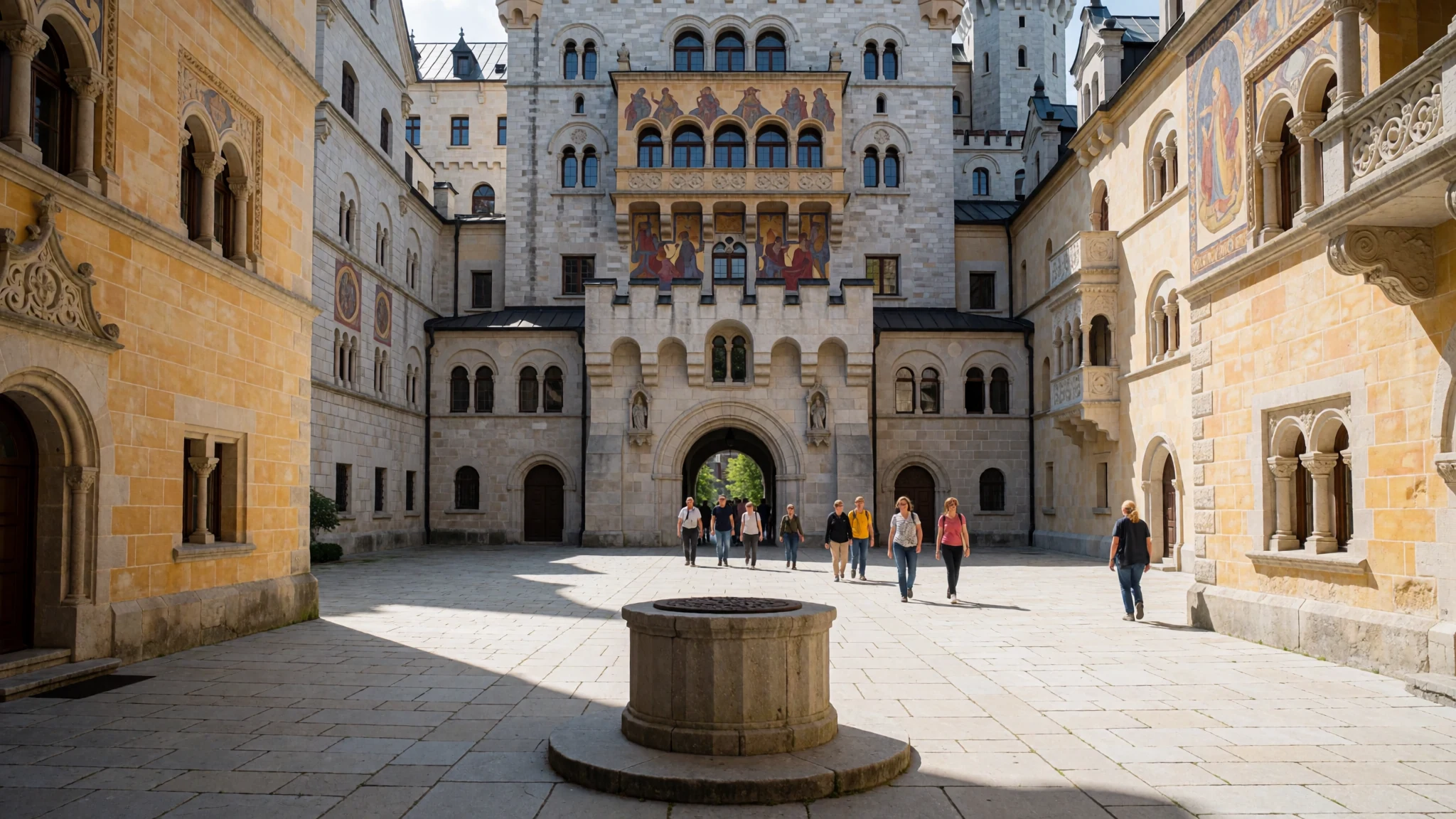
- Marienbrücke — Pöllat Gorge
Spanning a dizzying limestone gorge high above the Pöllat stream, this historic footbridge offers the most iconic, postcard-perfect vantage point of the entire castle complex against its dramatic mountain backdrop. Walking across the high suspension span reveals sweeping panoramic vistas down the rugged valley walls and across the forested alpine slopes.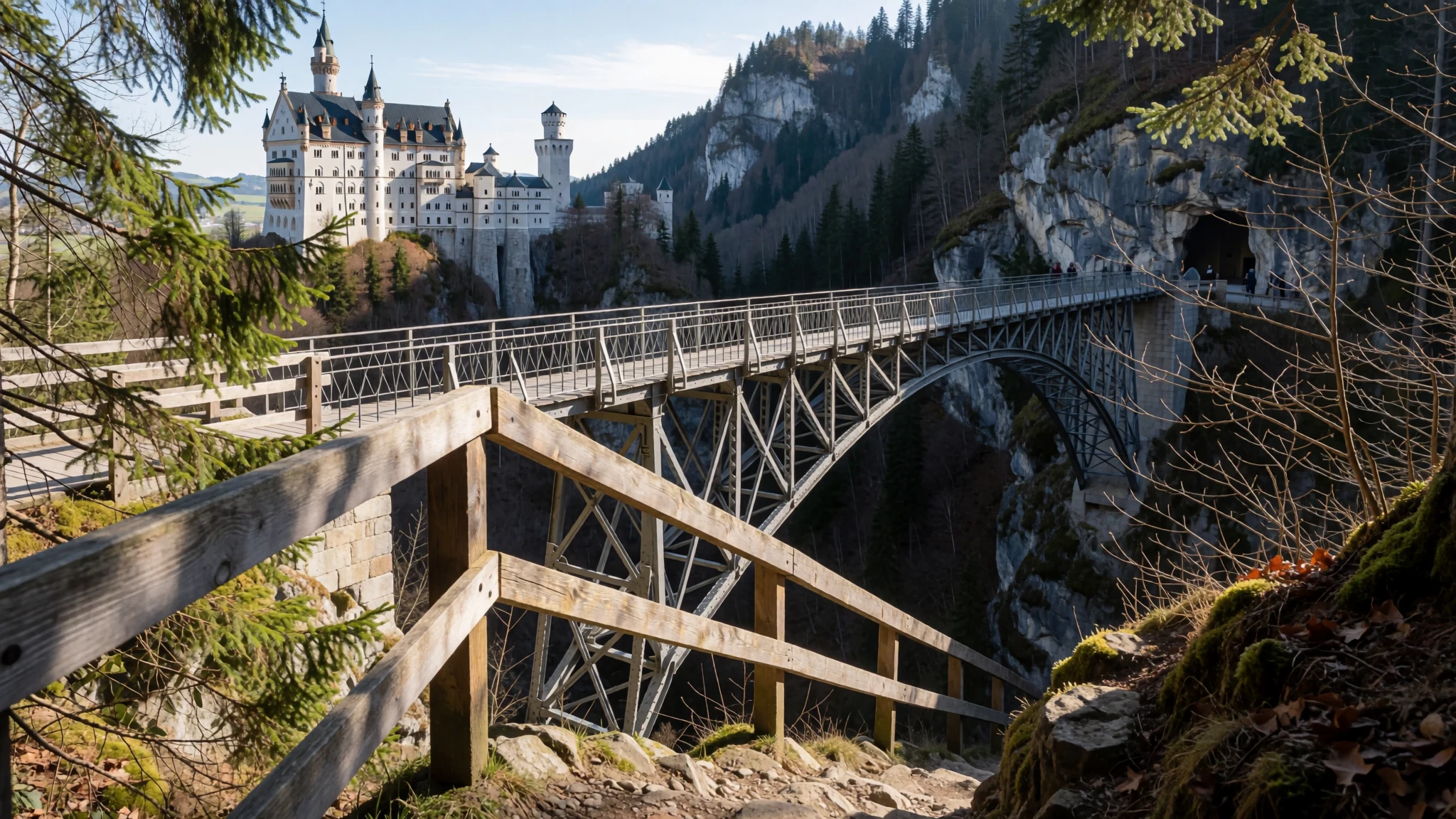
- Hohenschwangau Castle — Hohenschwangau village
Nestled on a lower wooded hill right beside the village, this vibrant yellow historicist palace served as King Ludwig II's childhood home and deeply influenced his romantic architectural ambitions. Exploring its historically preserved neo-Gothic rooms provides essential context into the royal upbringing that eventually inspired the creation of its grander sibling higher up the mountain.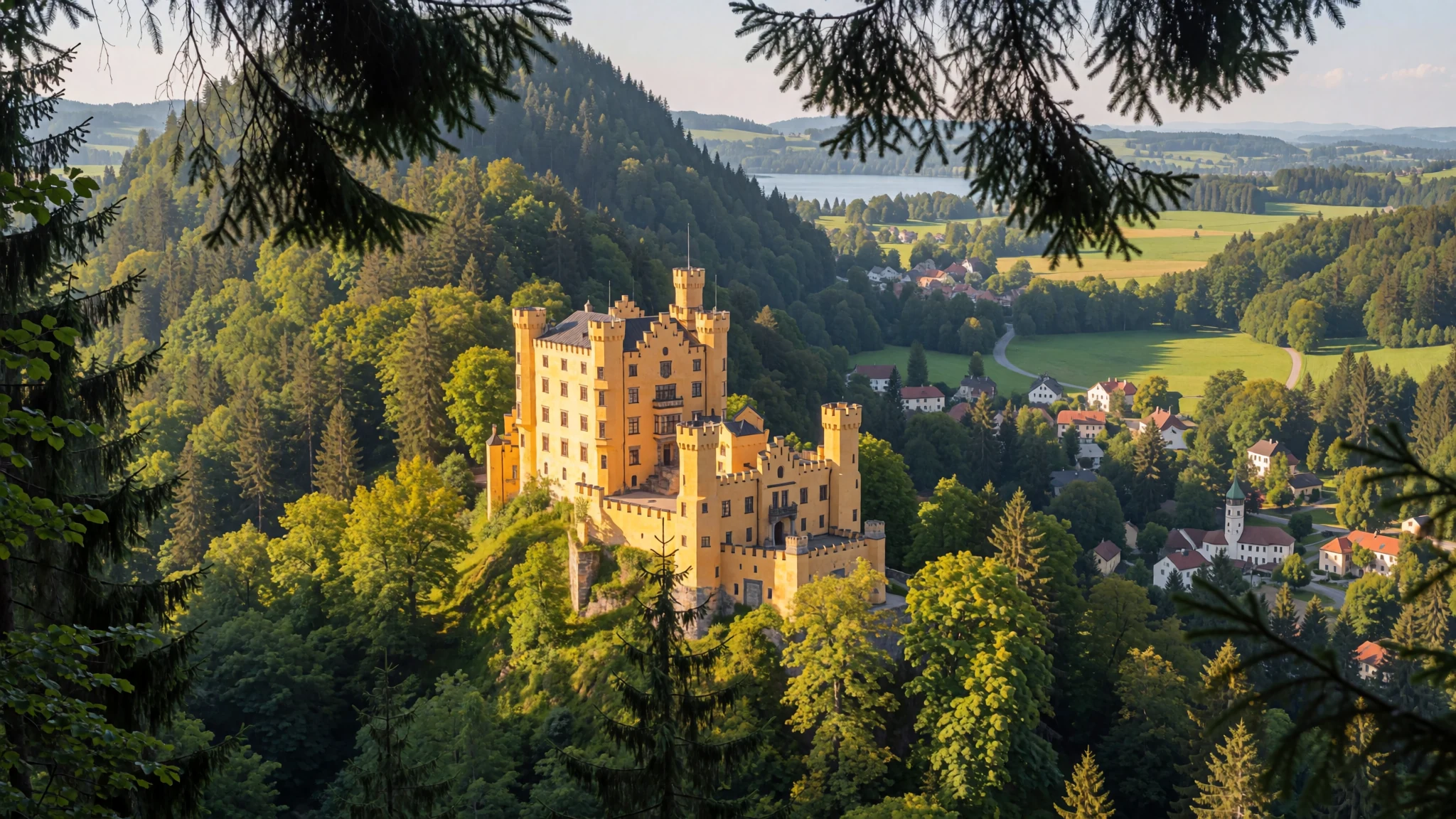
- Füssen Old Town — Füssen
Located just a short distance from the foot of the royal mountain, this charming historic town features cobbled medieval lanes, pastel-coloured townhouses, and the imposing Late Gothic High Castle. It serves as the primary base for travellers exploring the region, offering traditional inns, bakeries, and convenient transport connections into the surrounding Swabian countryside.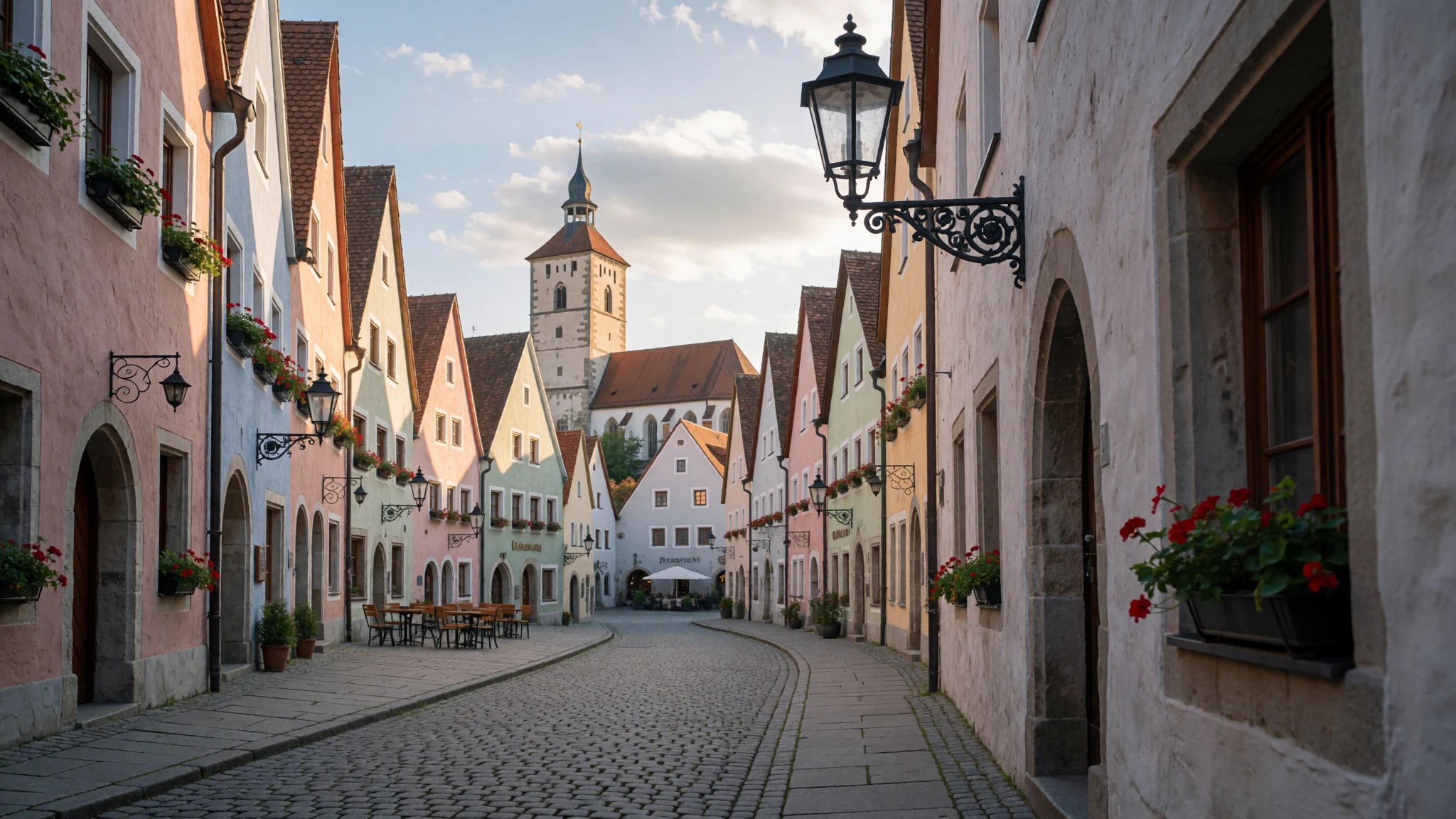
Culture
The cultural fabric of the Swabian region surrounding the castle is distinct from Munich-style Bavarian traditions, maintaining its own culinary heritage, dialect nuances, and rural customs rooted in Alpine agriculture and historic market towns. Local communities take immense pride in regional crafts, historic folk music, and community festivals that mark the changing agricultural seasons across the valleys. Hospitality here tends to be warm, direct, and grounded in traditional guesthouse culture where neighbours gather to share local food and conversation after a day working the land or guiding visitors. Visitors will notice a deep respect for the natural landscape, with well-maintained paths and strict conservation rules protecting the alpine flora and pristine lakes around Schwangau. When entering historic churches, small chapels, or traditional village rooms across the region, always keep voices modest and respect local quiet hours. Always purchase your castle entry tickets online well in advance and arrive precisely at your designated time slot to keep the visitor flow moving smoothly.
What to wear
Traditional dress in the Swabian alpine region reflects centuries of practical mountain life, featuring sturdy woollen garments, embroidered dirndls for women, and traditional leather trousers paired with knitted woollen stockings and heavy boots for men. These garments were originally designed to withstand harsh alpine weather while denoting local parish identities through specific embroidery colours and waistcoat patterns. Today, locals generally wear modern, practical European clothing for everyday life, reserving traditional Tracht for regional festivals, weddings, and cultural celebrations. For visitors exploring the castle and its surrounding mountain paths, functional outdoor gear is essential. Comfortable, sturdy walking shoes or hiking boots with good grip are necessary due to the steep uphill gravel paths and damp mountain weather. Layered clothing, including a waterproof jacket and a warm fleece, will keep you comfortable as temperatures shift rapidly between the shaded forest canopy and exposed alpine viewpoints.
What to eat
- Kässpätzle — Traditional Swabian gasthofs and mountain inns
A comforting Swabian staple consisting of fresh egg noodles layered generously with grated mountain cheese and topped with plenty of sweet, crispy fried onions. It is traditionally served piping hot in small iron pans at cosy village inns across the region.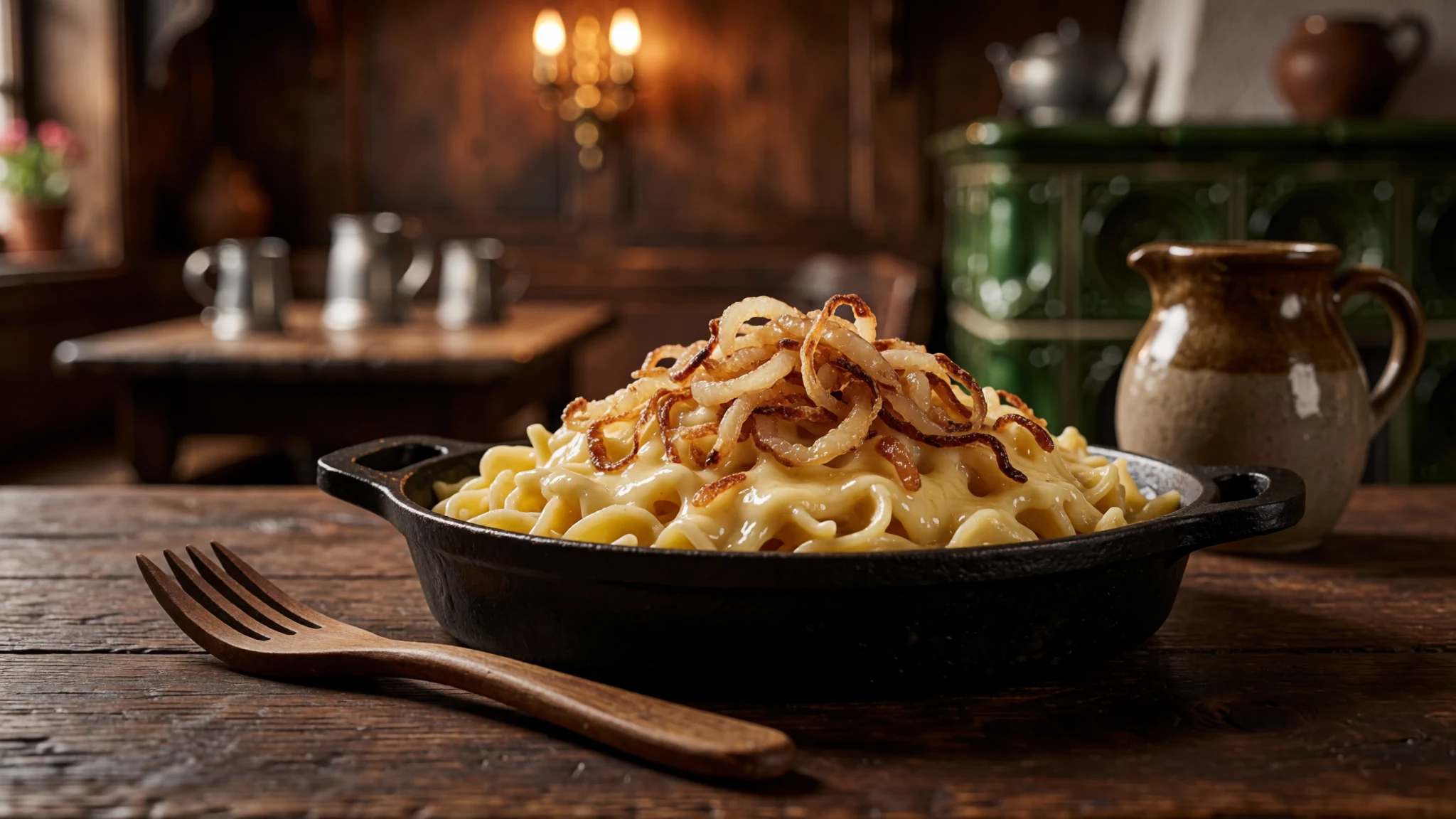
- Maultaschen — Local family-run restaurants throughout Swabia
Large regional pasta squares stuffed with a savoury filling of minced meat, spinach, breadcrumbs, and herbs. They are often served swimming in a rich beef broth or sliced and pan-fried with onions and butter.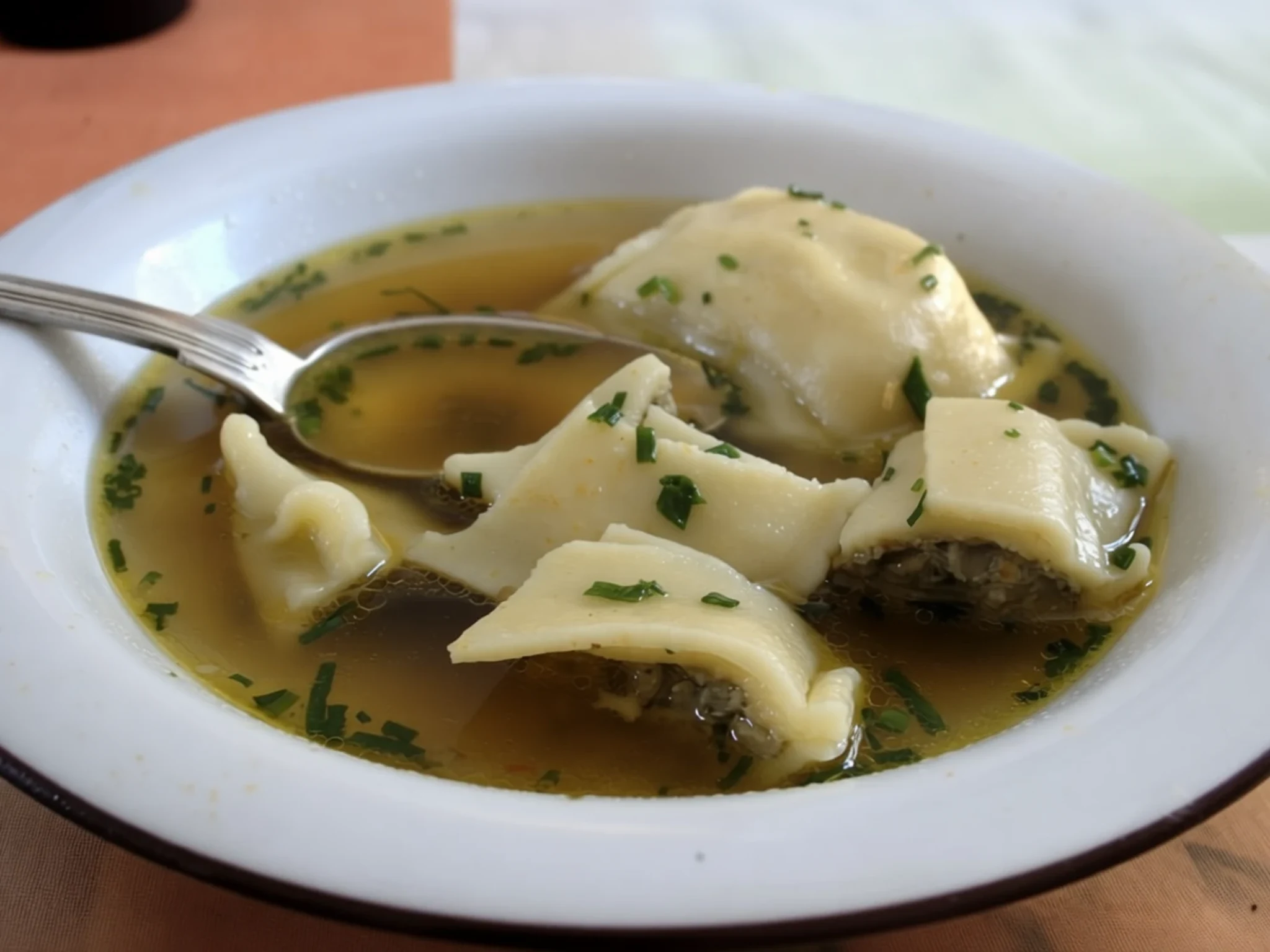
- Schupfnudeln — Country taverns and regional market stalls
Elongated finger-shaped potato dumplings pan-fried in butter until golden and crisp on the outside. They are commonly served savoury alongside sauerkraut and roast meat, or sweet with stewed apples and cinnamon.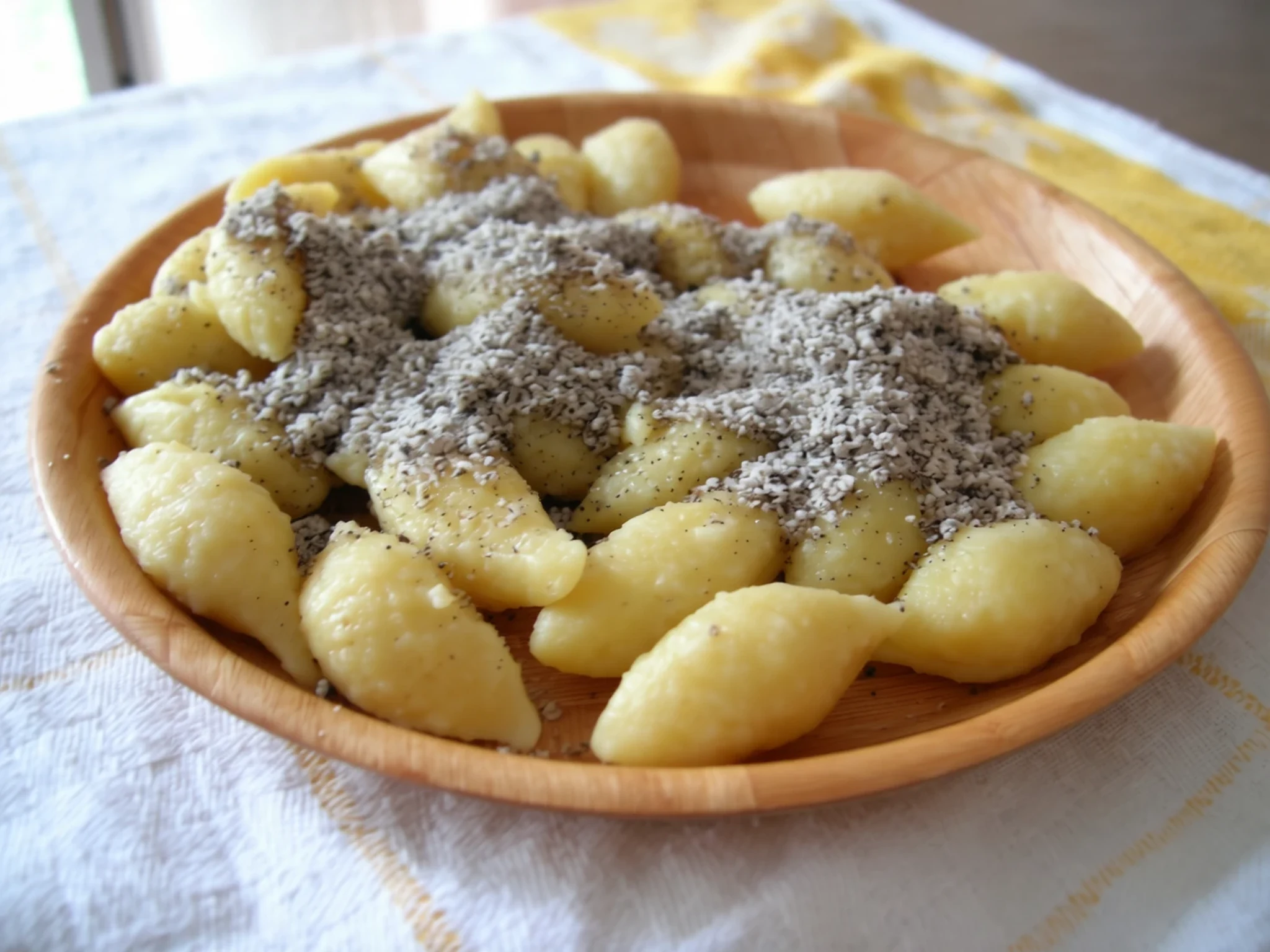
- Allgäu Bergkäse — Local cheese dairies and village markets
A robust, raw-milk hard cheese produced in the nearby alpine dairy pastures, offering a deeply rich and nutty profile. It is typically enjoyed on rustic wooden boards accompanied by crusty farmhouse bread and pickles. - Seelen — Local village bakeries throughout the region
Traditional Swabian bakery bread rolls made from spelt dough, characterized by a crisp, crackling crust and a soft, airy interior. They are often baked with coarse salt and caraway seeds, perfect for a morning snack.
Plan it
Best time. May to September offers pleasant weather for walking alpine trails, while late autumn brings striking foliage colours and fewer crowds.
How long. 2–3
Getting there. Fly into Munich or Stuttgart Airport, then take regional trains south via Buchloe or Augsburg toward Füssen station, followed by a short local bus ride to Schwangau.
Budget. mid
Tips
- Book castle entry tickets online weeks in advance because same-day tickets sell out instantly
- Arrive early in the morning to beat the heavy tourist crowds on the uphill trails
- Wear sturdy walking shoes for the steep 30-minute uphill hike from the ticket centre to the castle gates
- Carry cash for small purchases at local village bakeries and mountain kiosks
Etiquette
- Keep voices low and respect quiet hours in residential alpine villages
- Strictly follow all designated photography rules inside the castle rooms
Nearby
Sources
- Wikidata Q4152 (CC0)
- Wikipedia (rev 1378000679) (CC BY-SA 4.0)
- Wikivoyage (rev 5398670) (CC BY-SA 4.0)
- Photo 01 (CC0 1.0)
- Photo 02 (CC BY-SA 3.0 de)
- Photo 03 (CC BY-SA 4.0)


