Nekhen
Nekhen, Egypt
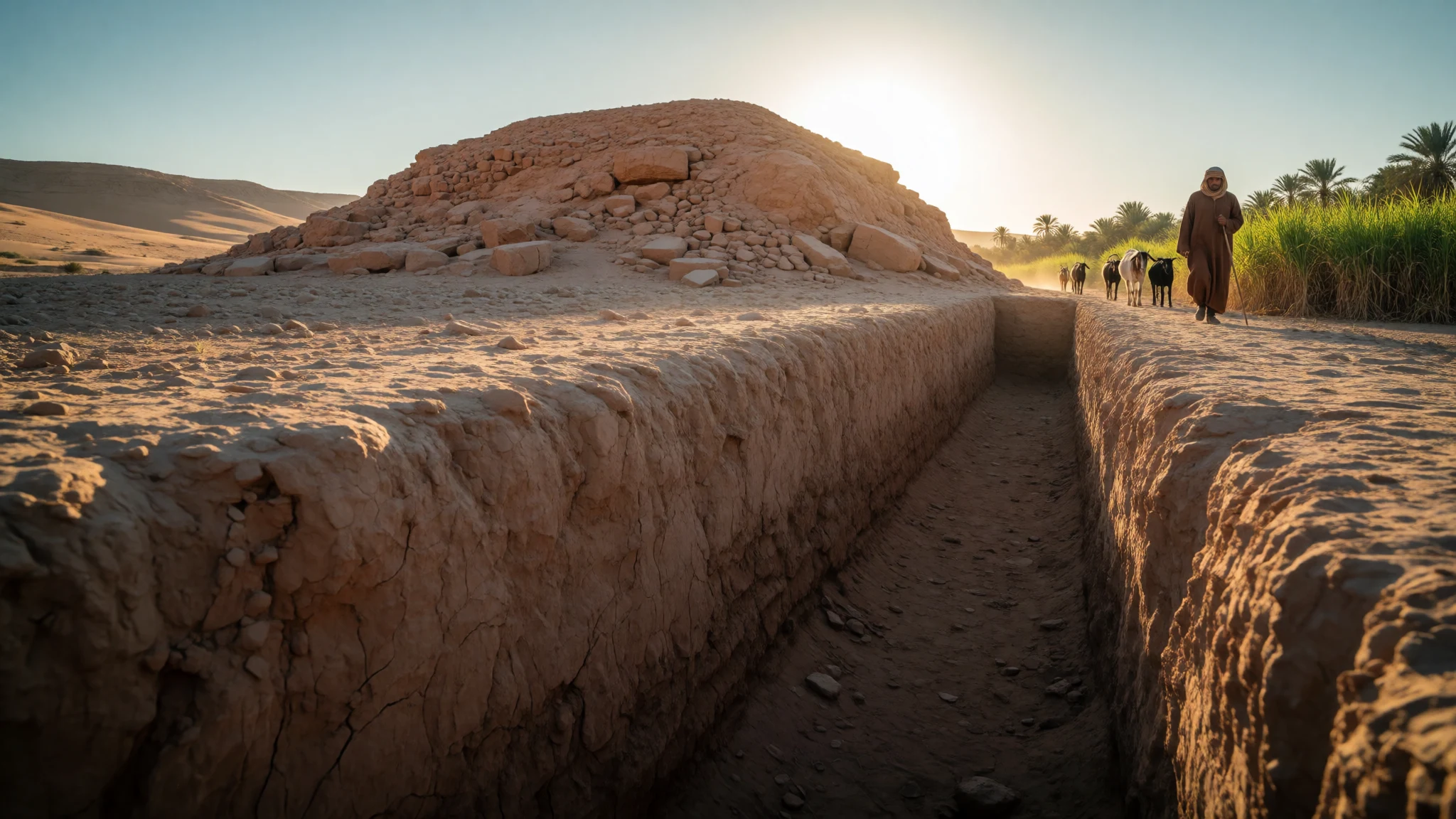
Nekhen is a quiet desert site where Egypt's earliest kings and the falcon god Horus took shape, long before the pyramids.
The place
Nekhen, better known by its Greek name Hierakonpolis, lies on the desert edge of the Nile valley in Upper Egypt, about 100 km south of Luxor. The Greek name means City of Hawks, a nod to Horus, the falcon god the town claimed as its own. Egyptian Arabic speakers call the main mound el-Kōm el-Aḥmar, the Red Mound, after the colour of its weathered earth.
The site is not a temple complex with towering columns and tour buses. It is a wide scatter of low mounds, dry wadis, cemeteries and excavation trenches, with green farmland and sugar cane not far off. Much of what remains is the footprint of everyday and ceremonial life: houses, workshops, breweries, tombs and the traces of early shrines. For anyone used to the grandeur of Luxor, the scale is modest and the atmosphere very different. The interest lies in what the ground has given up and in how little stands above it.
Nekhen matters because it belongs to the period just before and around the start of Egypt's pharaonic history, around 3200 BC, when rival towns along the river competed for power. Among its finds is a painted tomb thought to date to about 3500–3200 BC, with scenes of boats, animals and fighting figures. Many of the best objects are now in museums, above all in Cairo, so a visit works best as a mix of the open desert and a museum afternoon. Expect heat, glare, dust and almost no shade, and very few other visitors.
Its story
Nekhen's story begins with a village. Archaeologists place the first settlement in the fifth millennium BC, or possibly earlier, when farming and herding communities were spreading along the Nile. By around 3400 BC the town had grown into a substantial place, home to several thousand people and perhaps many more, with specialised crafts such as pottery, beer brewing and the working of stone and ivory.
The town's wealth shows in its cemeteries. Some graves are simple, while others hold fine pots, carved ivory, imported stone and early masks made for the dead. They hint at a society with ranked elites who controlled labour and trade. One tomb carries painted scenes on its plastered wall, a rare survival from so early a date.
Power in the south later shifted. Rulers based at Abydos came to dominate Upper Egypt, and Nekhen lost out as a rival centre. Scholars see echoes of that rivalry in carved and painted imagery of the period, such as the decoration of the painted tomb and objects like the Gebel el-Arak Knife.
Nekhen kept its religious prestige long after its political edge faded. It remained the cult centre of Horus of Nekhen, the falcon god, and tradition linked the town with his burial. Later kings continued to honour the shrine, and the falcon and its town became part of how Egyptians imagined the origins of kingship.
What to see
- The Red Mound and the town site — Kom el-Ahmar, desert edge west of the Nile
The main settlement area at Nekhen is a broad desert spread of low mounds and shallow hollows rather than standing ruins. Walking it shows how the town sat between the cultivated strip and the dry wadis. Look for pottery fragments, mud-brick lines and excavation trenches, and bring water and a hat, since shade is scarce. - The Painted Tomb (Tomb 100) — Elite cemetery area, Nekhen desert site
This tomb is known for wall paintings of boats, animals and struggling figures, thought to date to about 3500–3200 BC. Its imagery has fuelled debate about early rivalries and rulers. Access depends on excavation work and permissions, so ask locally before travelling. Early drawings and photographs give a sense of the scenes.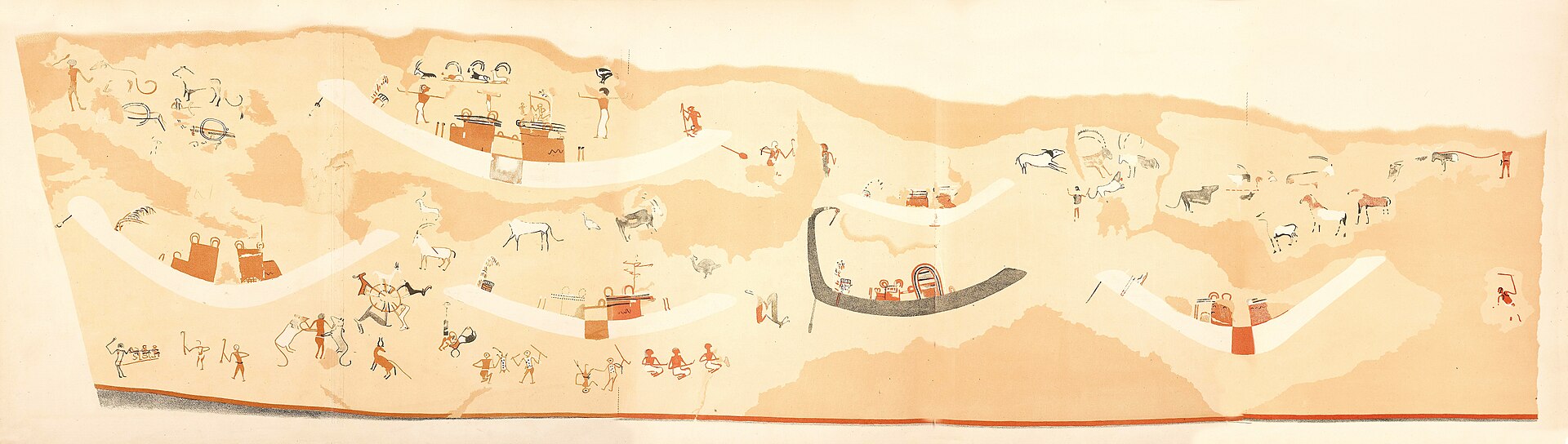
- The earliest death masks — Egyptian Museum, central Cairo
Graves from the elite cemetery produced some of the earliest known death masks, shaped to cover or represent a face. They show that people here were already thinking about identity and the afterlife. The masks are now kept in the Egyptian Museum in Cairo rather than at the site itself.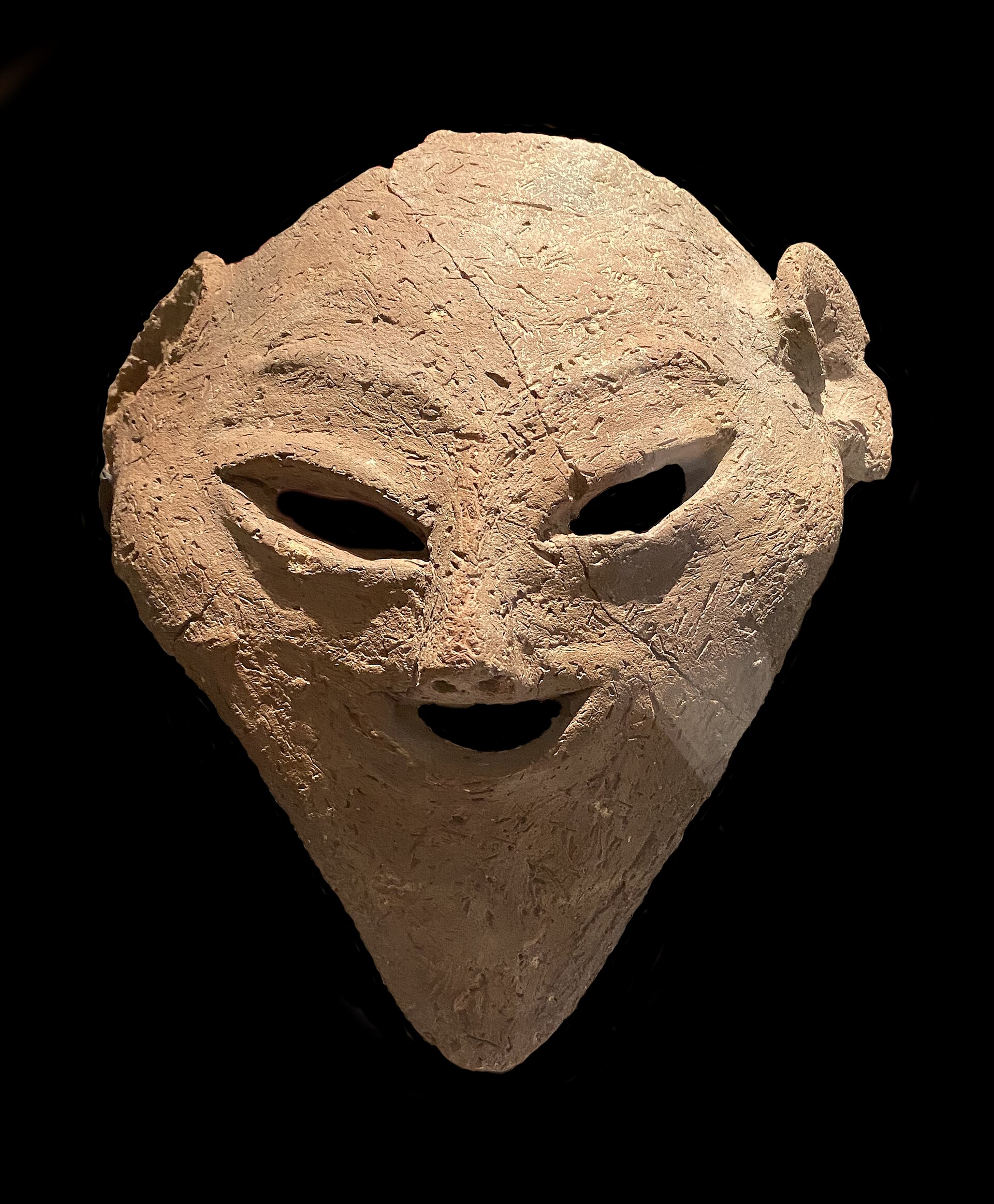
- The Main Deposit figures — Early temple area, Nekhen, with finds in museum collections
A cache of votive objects from the early temple area yielded ivory and stone figures, including a limestone head of a bearded man with tight curls and recessed eyes. These offerings suggest a busy shrine where worshippers left gifts. Many pieces are in museums, so a gallery visit helps to complete the picture.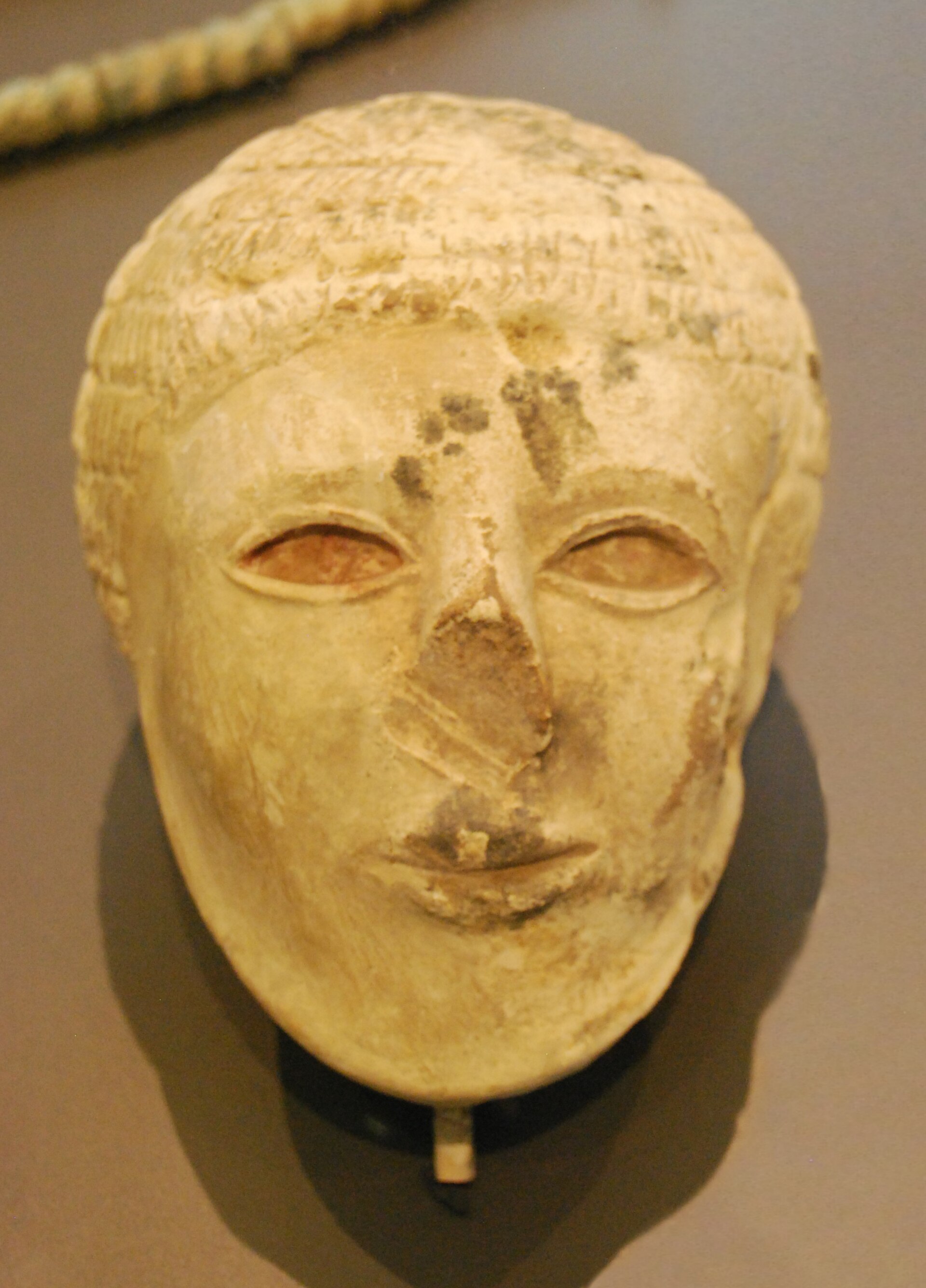
- The Narmer Palette — Egyptian Museum, central Cairo
This carved stone palette was found in the temple deposit at Nekhen and shows a king wearing the crown of the south and later the crown of the north. It is often read as an image of early unification. It is displayed in the Egyptian Museum in Cairo, and queues can be long.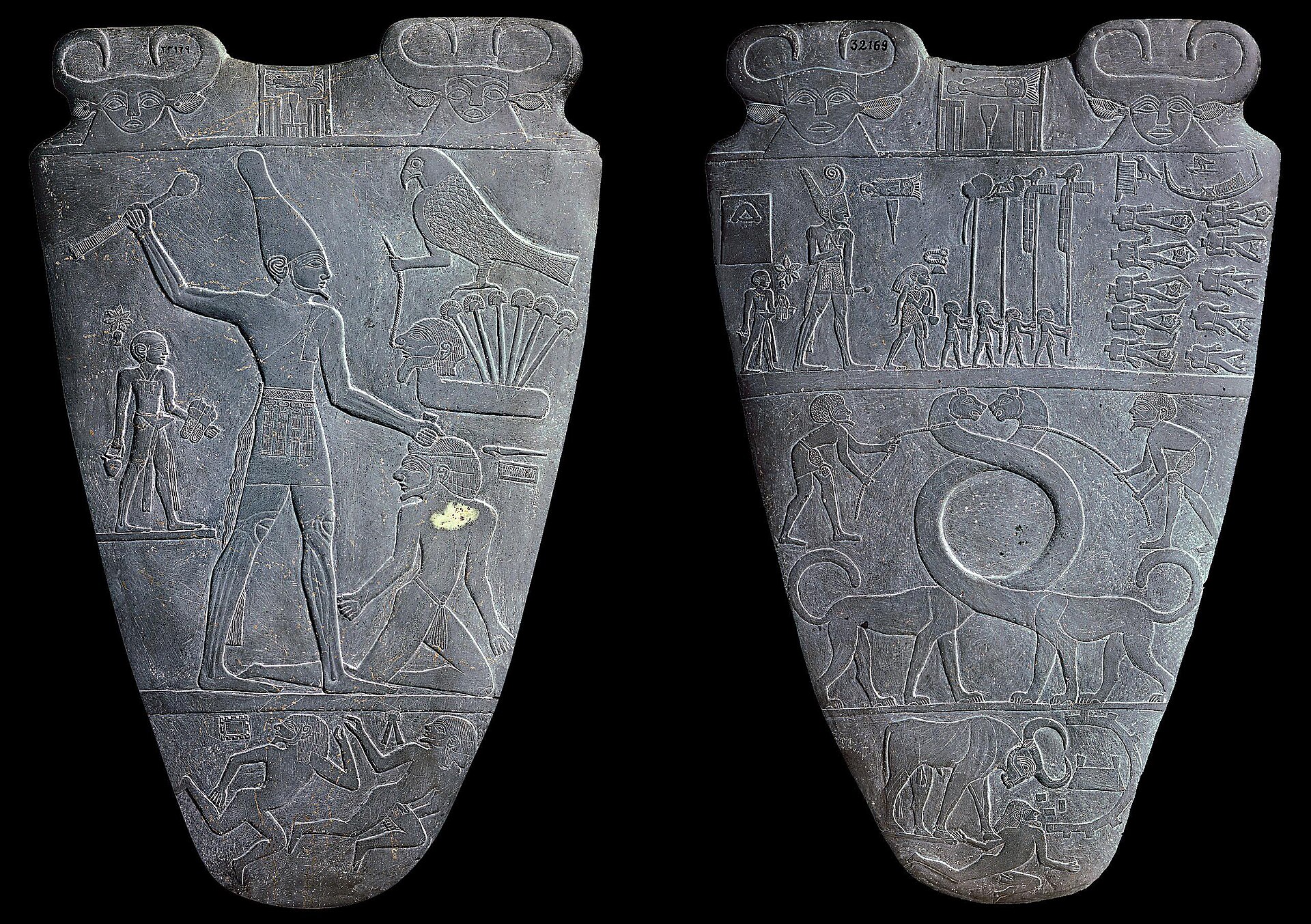
Culture
Nekhen sits in the Sa'id, as Upper Egypt is called, where life moves at a slower pace than in Cairo and village custom carries real weight. Hospitality is a point of pride here. A visitor who is invited for tea may be offered it more than once, and refusing outright can feel abrupt, so a polite word and a hand on the heart go a long way.
The site's culture is also ancient. Horus of Nekhen, the falcon god, was among the first deities linked with kingship, and the town's cemeteries show early ideas about death, status and the afterlife. Ordinary people today are proud of this heritage, though the area is quiet and visitors are few, so guides and local archaeological teams are important sources of knowledge. Many families in the surrounding villages farm sugar cane and other crops along the river, and daily life follows the rhythm of the fields, the heat and the call to prayer.
Social manners matter. Egyptians dislike open criticism and value saving face, so complaints are best made calmly and in private, and religion is a delicate subject to raise casually. Greeting people before asking questions is expected. Photography near homes and farmland should be handled with the same politeness.
When visiting Nekhen or nearby villages, ask permission before photographing people, especially women and children, and follow the instructions of site guards and excavation staff.
What to wear
Nekhen's earliest people wore simple linen, a cloth made from flax that became the standard fabric of ancient Egypt, along with leather, beads and ornaments of shell, stone and ivory. Surviving figures and grave goods suggest that dress marked status, with jewellery and carefully dressed hair among the signs of rank.
In Upper Egypt today, the traditional garment for men is the galabeya, a loose ankle-length cotton robe, often worn with a turban or a close-fitting cap. Women commonly wear long dresses or robes with a headscarf, and in rural areas darker colours and modest cuts are usual. Cotton, a crop long associated with Egypt, remains the everyday fabric because it breathes in the heat. Festival days bring brighter colours and embroidered details.
In towns, many younger people wear jeans or trousers with shirts, and football shirts are common. Dress in villages is more conservative than in big cities, and the rule of thumb is to cover shoulders and knees.
For visitors, the desert site calls for light, loose, long-sleeved cotton or linen, a wide-brimmed hat, sunglasses and sunscreen. Sturdy closed shoes are important, as the ground is sandy, stony and uneven, and trainers or light boots work well. Women may feel more comfortable with a scarf to hand, both for sun and for visits to villages or mosques. Winter evenings can turn cool, so a light layer is useful.
What to eat
- Ful medames — Breakfast stalls and small eateries in Luxor and Edfu
Slow-cooked fava beans mashed with oil, lemon, garlic and cumin, usually eaten for breakfast with bread. It is filling, cheap and found everywhere in Upper Egypt. Look for it at small breakfast stalls and street-side eateries in towns near Luxor and Edfu. - Ta'ameya — Street counters and sandwich shops in town centres
Egypt's version of falafel is made from crushed fava beans rather than chickpeas, with herbs such as dill and coriander. It comes crisp outside and green inside, often in a bread pocket with salad and tahini. - Aish baladi — Neighbourhood bakeries and village ovens
This is the country's everyday flatbread, made with wholemeal flour and baked until it puffs. It acts as plate, spoon and snack. In villages it is often baked fresh in the morning and shared at meals. - Molokhia — Family-run restaurants and home-style eateries
A green soup made from finely chopped mallow leaves, flavoured with garlic and coriander and served with rice or bread, sometimes with chicken or rabbit. Its texture is silky and surprises first-timers. It is a home-style dish found in family-run restaurants. - Koshari — Dedicated koshari restaurants in Luxor and other towns
A comforting mix of rice, lentils, macaroni and chickpeas topped with spiced tomato sauce, garlic vinegar and crisp fried onions. It is vegetarian, filling and inexpensive, and a handy lunch when travelling between sites.
Plan it
Best time. November to March, when days are warm and dry and the desert is bearable for walking; summer is extremely hot with little shade, so avoid it unless an early start is possible.
How long. 1
Getting there. Fly to Luxor International Airport, then travel south by road along the Nile for about 100 km toward Edfu, ideally with a hired driver or arranged guide. The last stretch is on desert tracks, so local help is useful.
Budget. mid
Tips
- Ask the antiquities authorities or a local guide about access before travelling, since parts of the site depend on excavation work
- Start early to avoid the midday heat and glare
- Carry plenty of water, snacks, a hat and sun protection, as there are no facilities on site
- Bring cash for drivers, guides and small purchases in villages
- Combine the trip with a visit to the Egyptian Museum in Cairo to see the finds
Etiquette
- Greet guards, guides and villagers politely before asking questions
- Ask before photographing people, and keep to marked paths at excavations
- Dress modestly in villages, with shoulders and knees covered
Nearby
Sources
- Wikidata Q278988 (CC0)
- Wikipedia: Hierakonpolis (rev 1378534023) (CC BY-SA 4.0)
- Wikivoyage: Egypt (rev 5410102) (CC BY-SA 4.0)
- Photo: Hierakonpolis death mask (elite cemetery) (CC BY-SA 4.0)
- Photo: Hierakonpolis limestone head (Public domain)
- Photo: Human figurine from the Hierakonpolis Main Deposit (CC BY-SA 2.0)
- Photo: Tomb 100 Hierakompolis, Naqada II culture (Public domain)
- Photo: Hierakonpolis Tomb 100 Boat (Public domain)
- Photo: Hierakonpolis ivory cylinders (Public domain)
- Photo: Hierakonpolis ivory cylinder with kneeling men, with impression (drawing) (Public domain)
- Photo: The Narmer Palette (Public domain)


