Nazca Lines
Nazca Lines, Peru
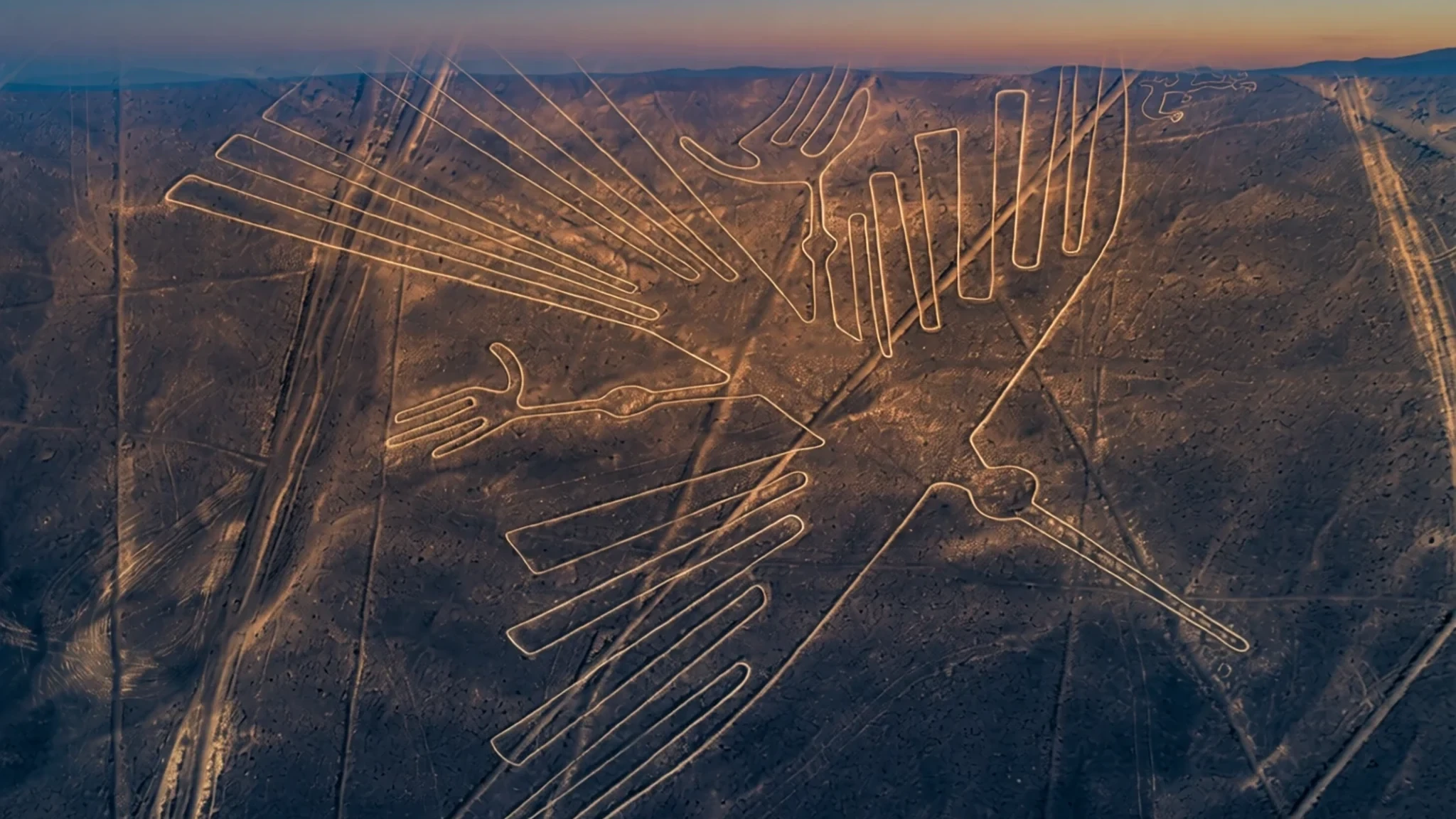
Etched across the southern Peruvian desert floor centuries ago, these colossal geoglyphs continue to baffle visitors viewing them from above.
The place
The Nazca Lines sit quietly across an arid plateau in southern Peru, forming an extraordinary expanse of ancient earthworks that can only truly be appreciated from the air. Spanning a vast landscape in the Nazca Desert, the site consists of countless straight tracks, geometric shapes, and massive representations of animals and plants carved directly into the earth. The soil here consists of a reddish-brown upper crust rich in iron oxide, which ancient artisans scraped away to expose a pale, yellowish-grey subsoil underneath. Because the region experiences almost no rainfall, wind, or significant temperature changes, these delicate incisions have survived largely undisturbed across the centuries.
Travellers arriving at the destination typically board small aircraft from the local airfield to loop over the designs. From the cabin windows, sprawling figures such as a towering spider, a hummingbird with a long curved bill, and a massive pelican emerge from the monochrome gravel. On the ground, the lines appear as subtle, shallow trenches running straight across the barren terrain, often disappearing over distant ridges. While modern technology like drones continues to uncover new figures hidden in the dust, the primary experience remains tied to the sweeping flight over the plateau, where the sheer scale of the ancient canvas becomes apparent against the backdrop of the surrounding foothills.
Its story
The history of the Nazca Lines unfolds across two distinct cultural phases rooted in the pre-Inca era. The earlier Paracas phase laid foundational artistic traditions in the region, followed by the Nazca phase which saw the creation of the most intricate geoglyphs on the desert floor. Archaeologists and researchers have debated the purpose of these monumental works for generations, moving from early theories about astronomical calendars to modern interpretations focused on ritual pathways, water supplication, and community gathering spaces.
Creating the lines required immense communal coordination and a sophisticated understanding of scale and geometry on an unmarked terrain. Workers removed surface pebbles along predetermined axes, piling the dark stones at the edges to create high-contrast borders that caught the desert light. While scholars continue to unearth settlements and ceremonial sites nearby, the makers left no written records to explain their motivations. Instead, the enduring legacy of the civilization survives entirely through these durable scars on the earth, preserved by the dry climate and the respectful distance kept by modern generations who view the plateau as an irreplaceable archaeological sanctuary.
What to see
- The Hummingbird — Nazca Desert
One of the most celebrated avian geoglyphs on the plateau, featuring a distinct long beak and balanced wingspan, best admired during morning flights when the low sun casts sharp shadows across the shallow trenches.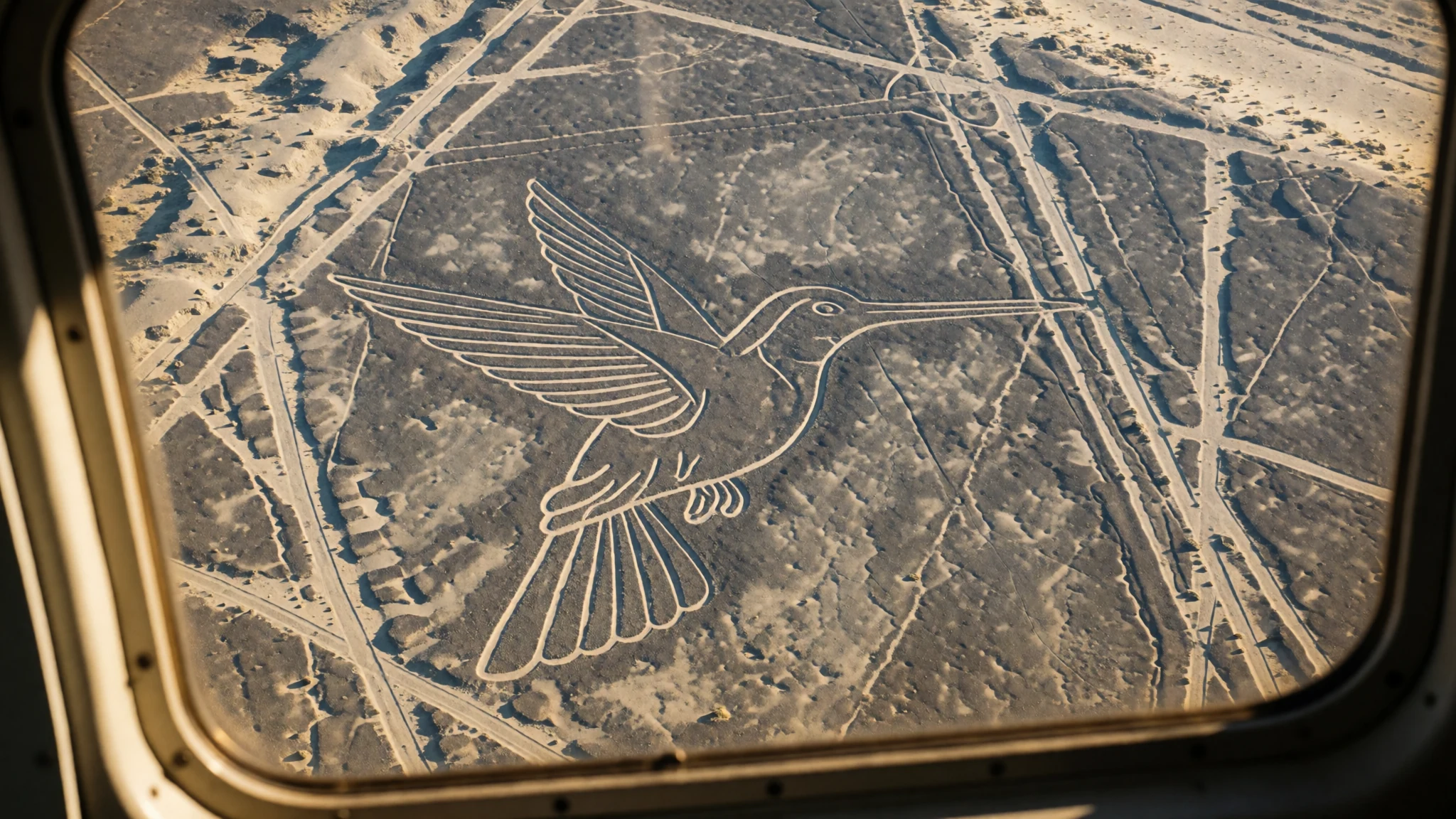
- The Spider — Nazca Desert
An intricate arachnid figure notable for its elongated legs and geometric precision, demonstrating the remarkable ability of ancient creators to map large proportions without aerial perspective.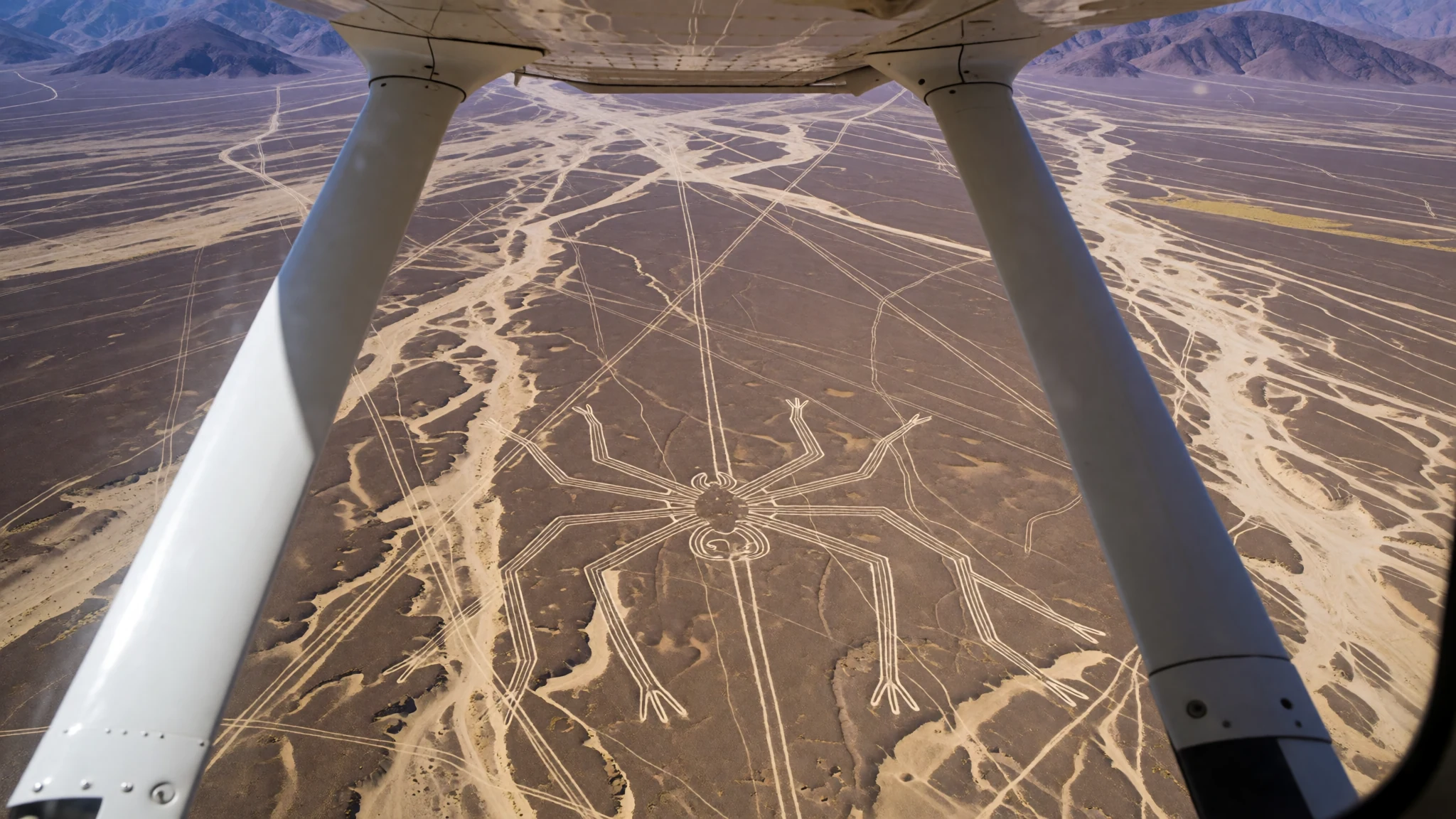
- The Condor — Nazca Desert
A sweeping representation of the Andean bird of prey with outstretched wings, showcasing how artisans translated mountain fauna into the coastal desert landscape.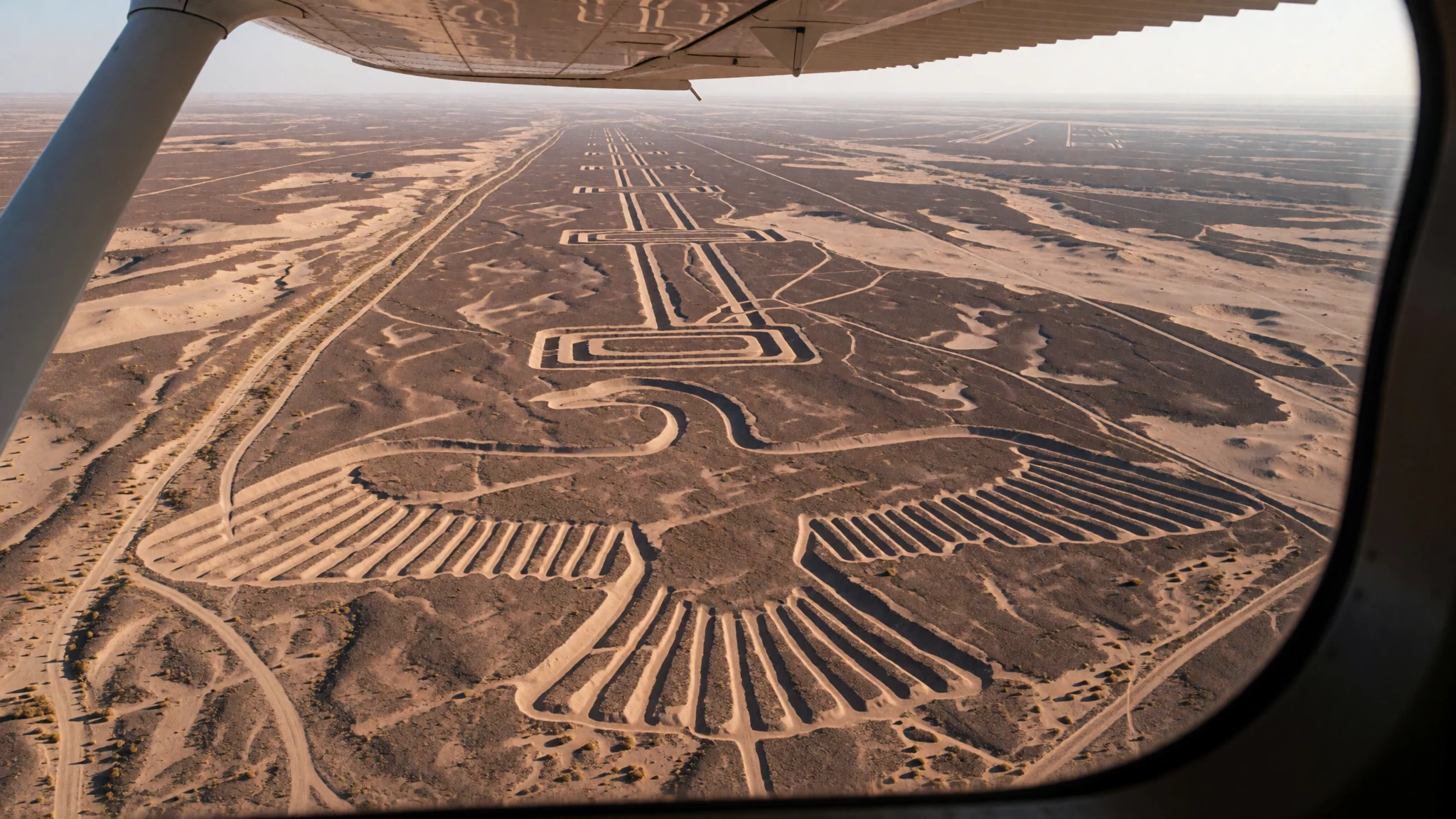
- The Astronaut — Nazca Desert
Often referred to as the owlman, this enigmatic humanoid figure stands out on a sloping hillside, holding up a hand in a gesture that has sparked countless modern theories about its origin.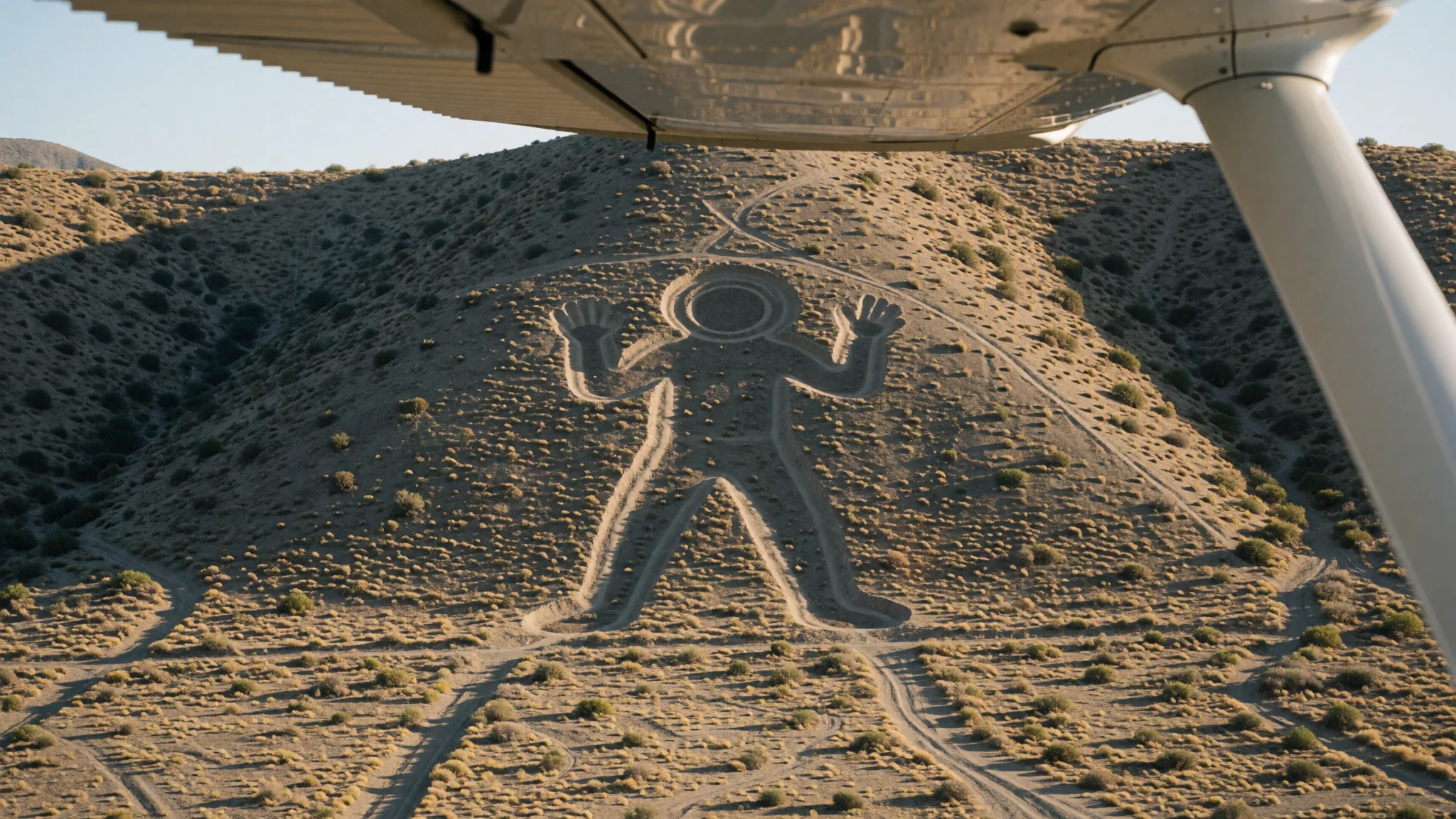
Culture
Peruvian society brings together a rich mosaic of Indigenous, Spanish, African, and Asian heritages, shaped by distinct regional geographies ranging from coastal deserts to high mountain valleys. Visitors should navigate local vocabulary with care; terms historically used by colonial conquerors carry heavy stigmas, so respectful descriptors such as el indígena are preferred when speaking about native populations. In rural communities and highland areas, ancient social customs remain deeply woven into daily life, including traditional practices like chewing coca leaves to cope with altitude and fatigue. This mild leaf is a legal, respected social stimulant rather than a narcotic, serving an important role in hospitality and ritual gatherings across the country. When exploring archaeological regions and local towns, always ask for permission before photographing individuals, especially elderly residents or children in traditional dress.
What to wear
Traditional Andean fashion relies heavily on hand-spun alpaca and sheep wool, dyed with natural pigments derived from plants and minerals to create vibrant patterned ponchos, llicllas, and woven hats that signal specific regional communities. In daily life across Peru's towns and cities, people wear practical, contemporary Western clothing, though older women in rural areas often maintain traditional layered skirts and embroidered hats. For visitors heading to the desert flats around Nazca, lightweight, breathable fabrics are essential to handle the intense daytime heat and glaring sun. Sturdy walking shoes or hiking boots are necessary for exploring dusty terrain and viewing platforms, while a warm fleece or windbreaker is vital for chilly desert evenings and early morning flights.
What to eat
- Platos Criollos — Traditional eateries and local markets in Lima
A diverse category of creole dishes found across coastal eateries and traditional markets, blending Spanish, Amerindian, African, and Asian culinary influences with rice as a daily staple.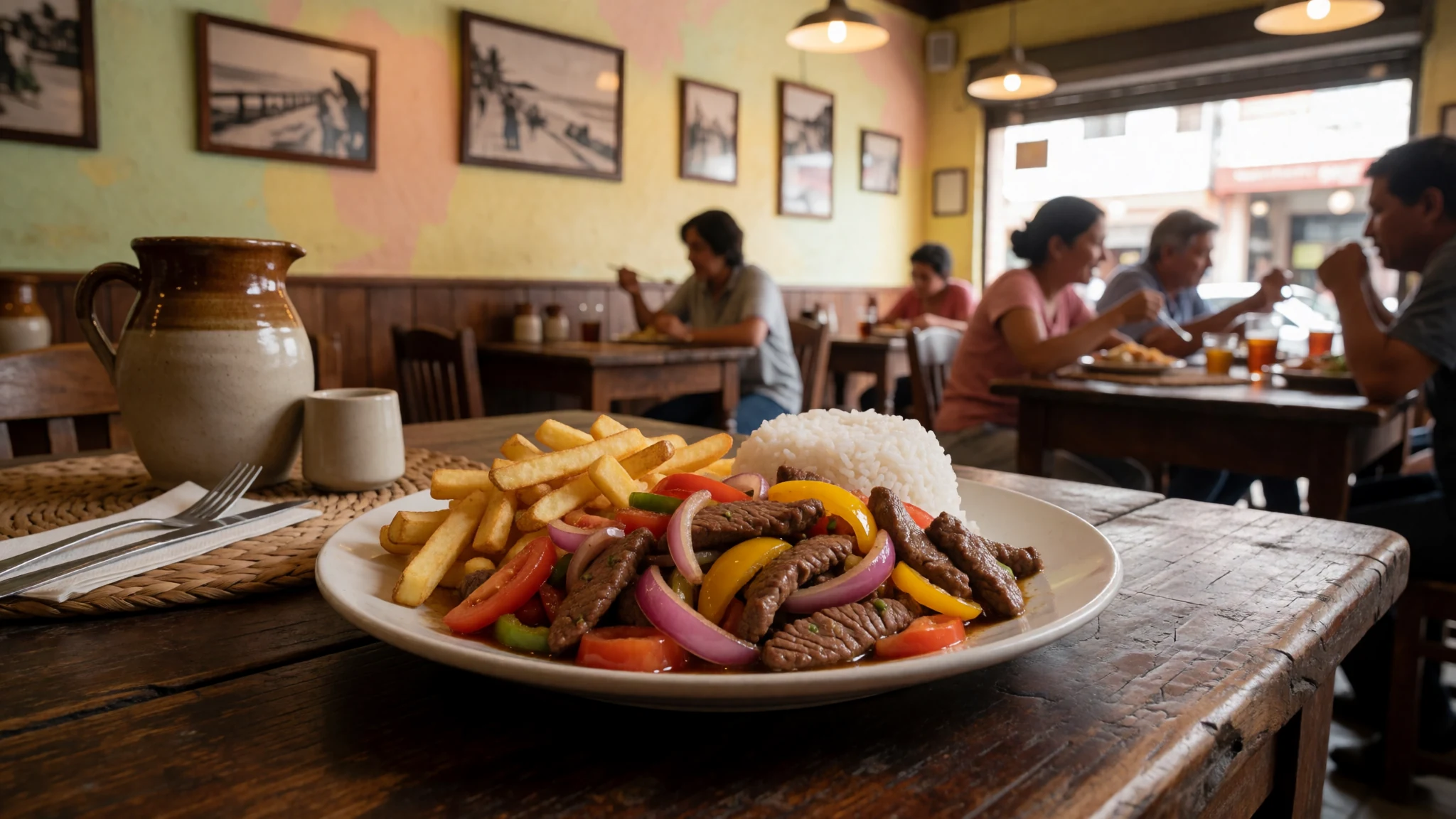
- Pollo a la Brasa — Pollerías throughout Peru
Spit-roasted chicken marinated in aromatic spices and soy sauce, served alongside crispy french fries and fresh salads, available in casual chicken restaurants nationwide.
- Cuy Chactado — Traditional restaurants in the Andean highlands
An Andean delicacy consisting of whole guinea pig flattened and fried crisp in oil, traditionally served with boiled potatoes and spicy corn salsa in mountain regions. - Alpaca Steak — Regional grills and Andean eateries
Lean, protein-rich meat prepared grilled or in stews, offering a distinct flavour profile found in regional menus across the southern sierra and tourist hubs.
Plan it
Best time. May to October offers clear skies and stable weather, which is ideal for flying over the desert plateau without weather disruptions.
How long. 2
Getting there. Arrive by long-distance bus from Lima along the Pan-American Highway (about 7 hours), as Nazca has no commercial airport for major passenger liners.
Budget. mid
Tips
- Book your desert flight for early morning when wind turbulence is lowest
- Carry cash in local currency for small entrance fees and local transport
- Drink plenty of bottled water to stay hydrated in the arid desert heat
- Wear UV-blocking sunglasses and sunscreen to combat the harsh glare off the sand
Etiquette
- Never step off designated pathways or metal observation towers near the geoglyphs
- Ask permission before taking portraits of local residents in nearby villages
Nearby
Sources
- Wikidata Q2620036 (CC0)
- Wikipedia (rev 1382732546) (CC BY-SA 4.0)
- Wikivoyage (rev 5386000) (CC BY-SA 4.0)