Natal
Natal, Brazil
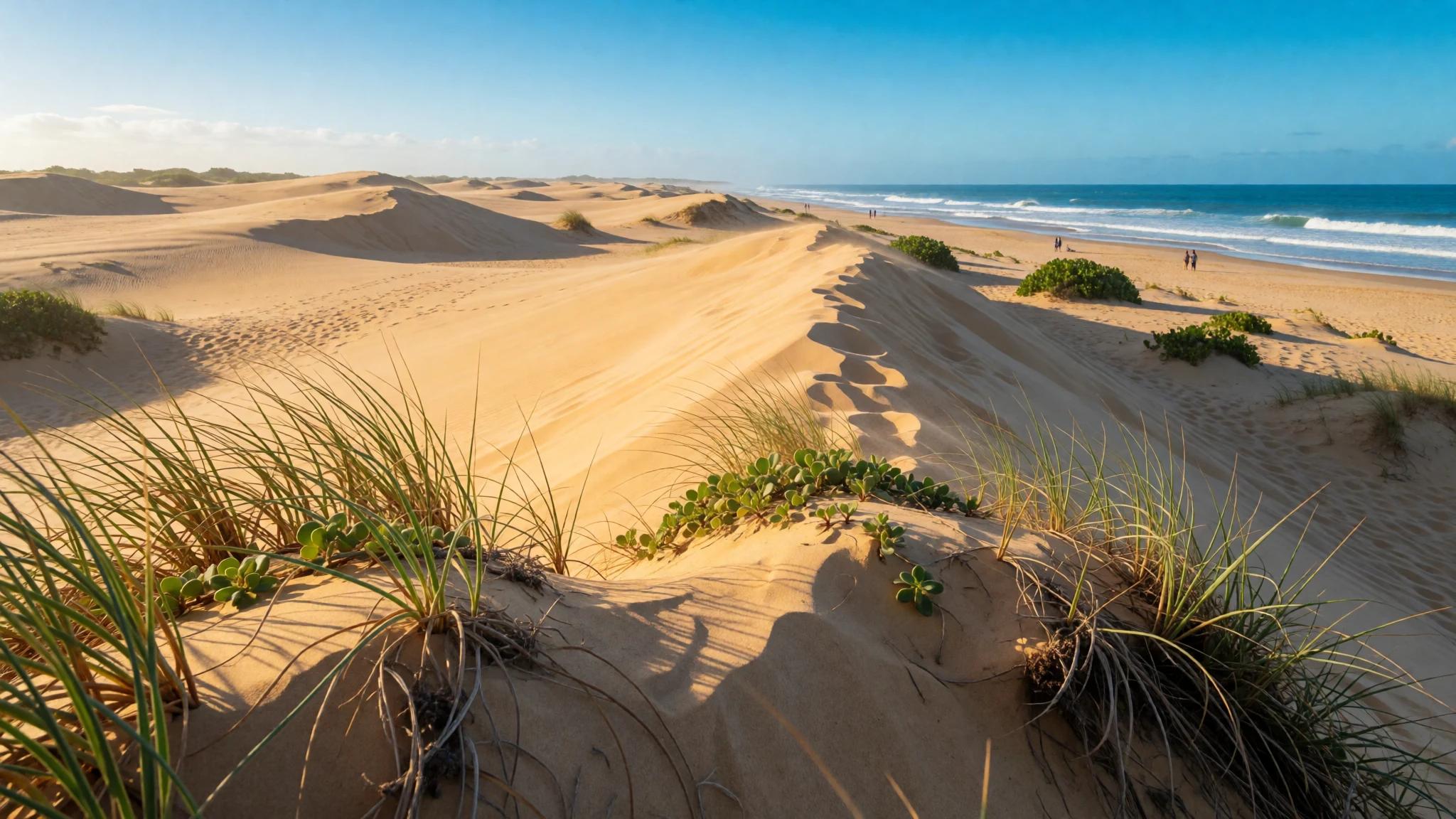
Positioned at the easternmost corner of South America, Natal offers sun-bleached coastal dunes, colonial military history, and warm Atlantic waters.
The place
Natal occupies the coastal corner of northeastern Brazil, serving as the capital of the Rio Grande do Norte state. Sitting roughly two thousand kilometres from Brasília, the municipality spans a modest area along the Atlantic seaboard. Home to just under eight hundred thousand residents, the city forms the core of a much larger metropolitan agglomeration housing well over one million people. The Potengi River cuts through the urban landscape, dividing the northern sector from the remaining districts. Founded on Christmas Day, the settlement grew slowly during its first centuries, eventually transforming into a bustling coastal hub defined by its proximity to sweeping sand dunes, continuous sunshine, and warm marine breezes. The local geography places the municipality at the most protruding eastern point of the South American landmass, making it historically significant for navigation and aviation alike. Visitors navigating the urban neighbourhoods encounter a mix of historic colonial architecture, bustling commercial avenues, and modern beachfront promenades where seafood stalls and palm trees line the thoroughfares. While the inner districts preserve quiet plazas and administrative buildings, the coastal fringes pulse with daily activity as beachgoers travel between urban stretches and the dramatic dune formations that edge the southern horizon. Public squares serve as gathering points for residents escaping the midday heat, and the surrounding residential zones reflect the steady, unhurried pace characteristic of Brazil's northern coastal capitals.
Its story
The historical trajectory of Natal is tied directly to the strategic geography of Brazil's eastern shoulder. European interest in the captaincy began when early expeditions arrived under Portuguese commissions to claim territory and trade resources. Colonisation faced staunch opposition from indigenous communities, particularly the Potiguara people, alongside persistent raids by French corsairs trading brazilwood. To secure the mouth of the Potengi River, expeditionaries constructed a massive star-shaped fortress near the coastal waterline. Work on the fortifications finished during the colonial era, establishing a permanent defensive outpost that shaped the surrounding region's destiny. Months later, a religious service marked the official establishment of the municipality on Christmas Day. Decades later, European rivalries drew foreign occupiers to the settlement; Dutch forces seized the territory, renaming the stronghold during their mid-seventeenth-century rule before Portuguese control was ultimately restored. For much of its early existence, the settlement remained a quiet garrison town and port, relying on fishing, small-scale agriculture, and salt extraction rather than rapid industrial expansion. The urban footprint expanded significantly only in later centuries, particularly when mid-twentieth-century developments turned the coastal location into a vital transatlantic aviation stopover during global conflicts. Today, the layered history of indigenous resistance, colonial fortification, and maritime trade remains visible in the stone bastions overlooking the river mouth and the weathered facades of the oldest urban quarters.
What to see
- Forte dos Reis Magos — Coastal estuary
This striking star-shaped fortress is the oldest historical landmark in the municipality. Positioned near the mouth of the river, the stone bastion was constructed during the colonial era to guard the coastline against foreign corsairs and rival European fleets. - Ponte Newton Navarro — Potengi River crossing
Spanning the broad waters of the Potengi River, this towering cable-stayed bridge connects the northern and eastern districts. Reaching significant heights above the water, the structure offers sweeping vantage points across the river mouth, harbour, and nearby coastal beaches. - Parque das Dunas — East and South border
Sprawling across a vast protected coastal nature reserve, this forested dune complex separates the eastern urban quarters from the southern beachfronts. Wooden walkways and marked trails wind through the native Atlantic forest vegetation, providing educational exhibits and quiet nature walks away from the city traffic. - Parque da Cidade — South and West border
Situated between the southern and western sectors, this expansive municipal park protects vital green spaces and urban watersheds. The reserve features environmental trails, exhibition areas, and a distinctive eye-shaped observation tower designed by a renowned Brazilian architect. - Memorial Câmara Cascudo — Historic centre
Housed in a nineteenth-century neoclassical building, this cultural museum honours the life and extensive research of the state's most celebrated anthropologist and folklorist. Exhibits display personal archives, regional artifacts, and literature documenting northeastern Brazilian traditions. - Igreja de Santo Antônio — Ribeira district
Constructed in the mid-eighteenth century, this historic house of worship displays classic baroque architectural details and ornate interior altars. A distinctive metallic bird sculpture adorns the bell tower, earning the religious landmark its affectionate local nickname.
Culture
Cultural life in the municipality blends coastal traditions with vibrant northeastern folklore, music, and large-scale public celebrations. One of the most famous events is the off-season carnival held annually around the arena district, where enormous sound trucks known as trios elétricos crawl slowly through cordoned streets while enthusiastic crowds dance and sing behind them. Additional cultural highlights include national pop rock gatherings and summer arts festivals that draw musicians and spectators from across the country. Catholicism remains a strong cultural pillar, with festivities honouring the patron saint of the city drawing traditional processions and community gatherings to historic parishes. Beyond major festivals, everyday social life revolves around outdoor dining, neighbourhood samba circles, and relaxed conversations along the beachfront. When visiting historic churches or religious sites, maintain a quiet demeanour and dress modestly by covering shoulders and knees.
What to wear
Traditional attire in this coastal region reflects the warm tropical climate, historically favouring lightweight cottons, linen shirts, and comfortable garments suited for humid weather and outdoor labour. While traditional ceremonial costumes are reserved for folkloric performances, regional textiles often feature vibrant prints and natural fibres reflecting northeastern Brazilian aesthetics. Contemporary daily wear for local residents is casual and practical, consisting of denim shorts, lightweight t-shirts, sandals, and surf-inspired apparel suitable for year-round heat. Beachwear is exceptionally common near the coastline, with boardshorts and swimwear worn openly along the sands and adjacent promenades, though swimwear is generally kept to the beach zones rather than city streets. Visitors should pack breathable linen or cotton clothing, sturdy sandals or walking shoes for uneven dune terrain, and a light jacket for breezy evenings. When exploring urban neighbourhoods, markets, or administrative areas away from the immediate sand, casual smart-casual attire with covered shoulders is recommended to blend in comfortably with local residents.
What to eat
- Ginga com tapioca — Redinha Public Market
Considered the quintessential local beach snack, this dish pairs small fried fish with a chewy, pan-fried cassava flour wrap folded into a crisp crescent. - Regional seafood platters — Outdoor seating along the beachfront
Fresh catches from the Atlantic, including grilled fish, shrimp stew, and crab, served with garlic butter, fried cassava, and palm oil sauce. - Carne de sol — Traditional northeastern eateries
Tender sun-cured beef served traditionally with fried manioc, mashed plantain puree, beans, and fresh curd cheese, representing classic sertanejo cooking. - Regional main dishes — Local street stalls and neighbourhood canteens
Hearty everyday plates featuring seasoned beef, rice, beans, and crispy fried potatoes prepared in modest neighbourhood food stalls. - Gourmet burgers and fries — Evening snack stalls in Ponta Negra
Handmade beef patties served in brioche buns with various house-made sauces, melted cheese, and seasoned crispy fries for evening dining.
Plan it
Best time. March to April and October to November offer pleasant temperatures and lower rainfall compared to the heavier precipitation months.
How long. 3–4
Getting there. Fly into the international airport outside the city, then take an airport bus or taxi directly to the coastal neighbourhoods.
Budget. mid
Tips
- Carry smaller local currency notes for bus fares, market stalls, and small purchases.
- Explore coastal dune reserves and outdoor historical sites during the cooler morning hours.
- Drink plenty of bottled water to stay hydrated in the tropical coastal heat.
- Book accommodation in advance if visiting during major summer music festivals or off-season carnivals.
Etiquette
- Greet shopkeepers and acquaintances politely when entering local businesses or restaurants.
- Ask permission before photographing local residents or performers during cultural events.
Nearby
Sources
- Wikidata Q131620 (CC0)
- Wikipedia (rev 1385019341) (CC BY-SA 4.0)
- Wikivoyage (rev 5416886) (CC BY-SA 4.0)