Muddus National Park
Muddus National Park, Sweden
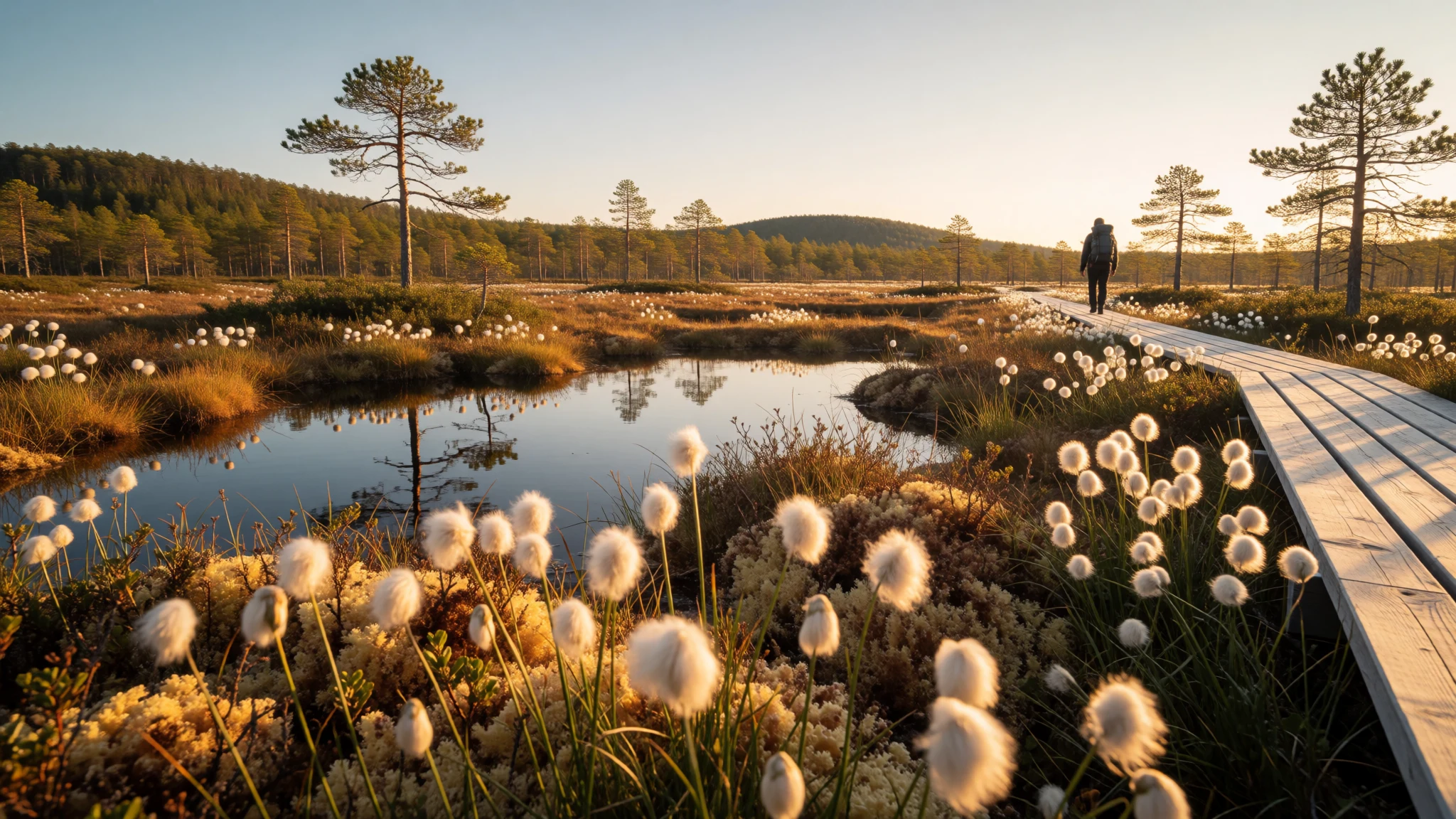
Muddus National Park is northern Sweden at its quietest: old pine forest, wide bogs, deep ravines and waterfalls, crossed on foot.
The place
Muddus National Park, called Muttos in Lule Sami, lies in Swedish Lapland, with most of its area inside Gällivare Municipality. It is a gentle landscape rather than a dramatic one. The ground is low and rolling, and much of it is bog: wide, flat, wet country where the horizon opens out and the light does most of the work. Between the bogs stand patches of old-growth forest, with big, slow-grown pines and spruces, some of them dead and still upright, others fallen and mossy. Where the rock breaks through, the land splits into narrow ravines, and a few rivers drop over ledges to make waterfalls such as Askasfallet.
The park holds a pine that Sweden's park descriptions treat as the country's oldest known, with a minimum age of about 710 years. That age rests on a scar showing it survived a forest fire in 1413. There are lakes too, among them Muddusluobbal, where a viewing tower gives a long look across the bog and treeline.
There are no peaks to bag here. People come to walk through quiet, to see how a northern forest ages, and to cover distance at an easy pace. The park became a national park in 1942, which makes it one of the longer-protected areas in the region. Summers are short and bright, winters are long, cold and dark, and the character of the place changes completely between them. Mosquitoes in midsummer are part of the honest picture.
Its story
The story of Muddus National Park is partly a forest story and partly a human one. The trees came first. Fire has passed through this country again and again, and the oldest pines carry scars from it. One pine here has been dated as having lived through a fire in 1413, which is why it is counted as the oldest known in Sweden. Because the forest was left to grow and rot in its own time, it holds standing dead wood, hollow trunks and layers of lichen that managed forests rarely keep.
People have used this land for far longer than the park has existed. Lapland is Sápmi, the homeland of the Sami, and Sami families have lived, herded reindeer and gathered food across it for generations. One trace still visible in Muddus is the bark stripped from pines. The inner bark was eaten, and the pale scars on certain trunks are a record of that practice. Swedish settlers pushed into the far north in later centuries, and a wave of colonisation in the late nineteenth century brought railways, mines and hydroelectric plants. Those industries reshaped Norrbotten, but the wet, hard-to-farm ground of Muddus was mostly left alone.
Protection came in 1942, when the area was made a national park. Since then it has been managed largely by being left to itself, with marked paths, a few shelters and little else. The result is a place where the human history is quiet and readable in single trees, not in buildings.
What to see
- Muddusluobbal and its tower — Muddusluobbal, central park
Muddusluobbal is a lake ringed by bog, and the tower beside it gives a wide view over water, wet ground and distant forest. It is a good first stop for understanding the park's flatness. Come on a clear morning, when the surface is still and the light is low.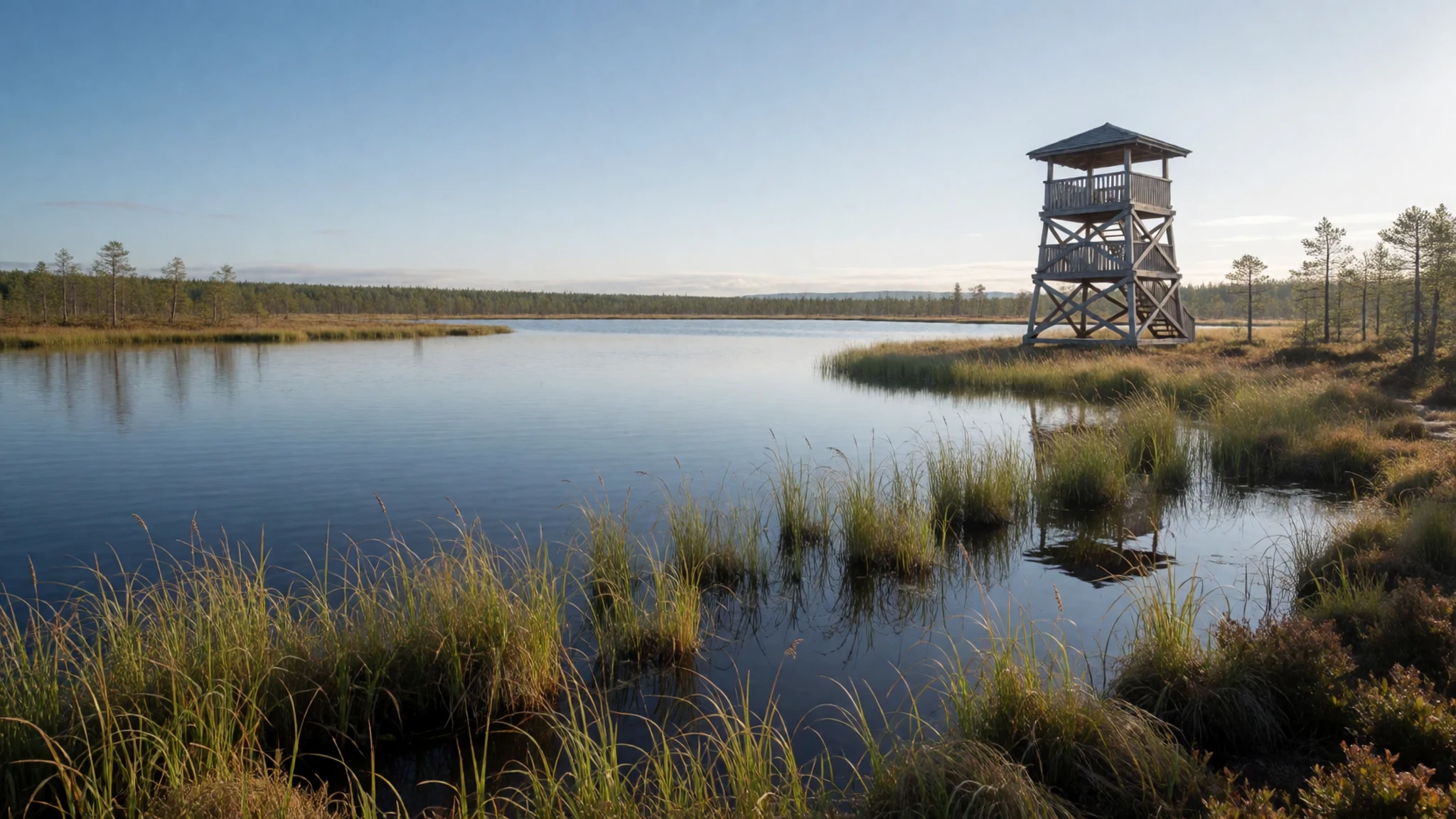
- Askasfallet — Askas area, park interior
Askasfallet is a waterfall set in a rocky cut in the forest, with spruce crowding the edges. Spring meltwater and rain make it louder and heavier, while late summer brings a thinner flow. The approach is on foot through woodland, so wear boots with grip, since the rock near the water stays slippery.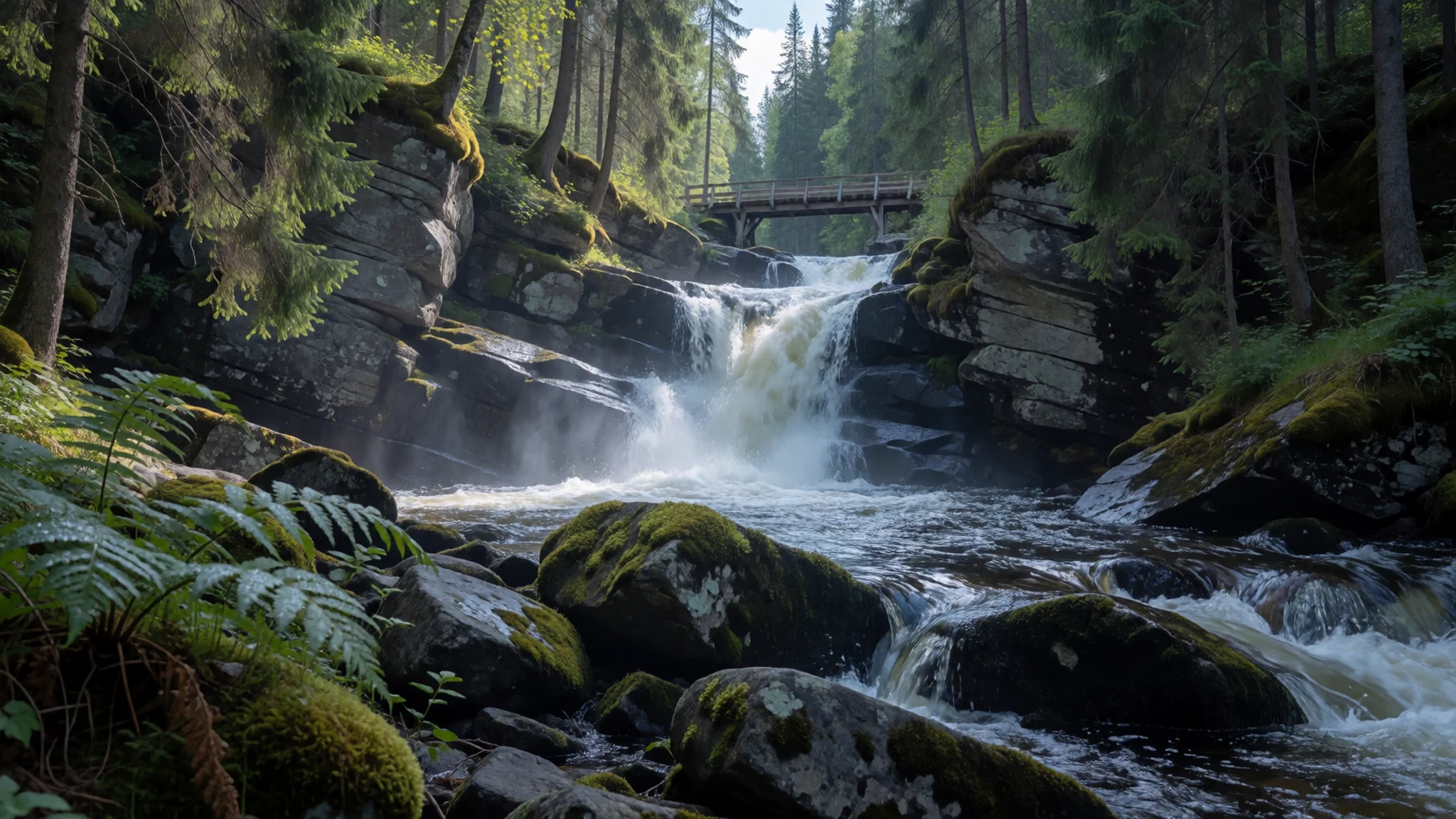
- The park's waterfalls and ravines — Ravines across the park
Beyond Askasfallet, the rivers drop through narrow ravines cut into the rock, with falls tucked between steep walls. These are small-scale sights, not roaring ones, and the reward is the setting: dark water, wet moss and old trees leaning in. Allow time, because paths are slow underfoot.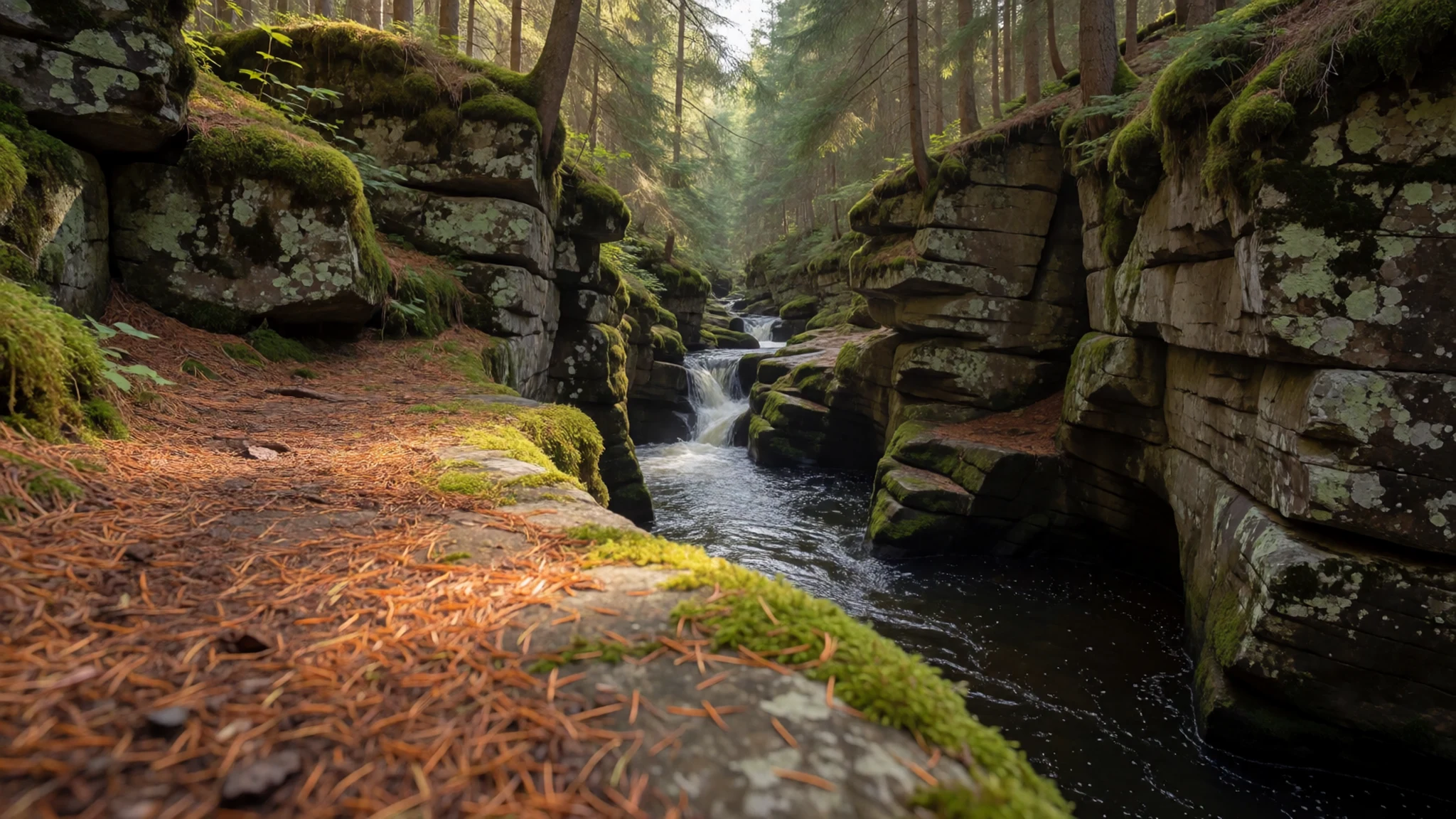
- The old pine and the old-growth forest — Old-growth forest, park interior
The oldest known pine in Sweden is in Muddus, and the surrounding old-growth forest is worth more time than the single tree. Look for standing dead trunks, fire scars and beards of lichen. Ask at the official site or a local information point about the current route and its condition before setting out.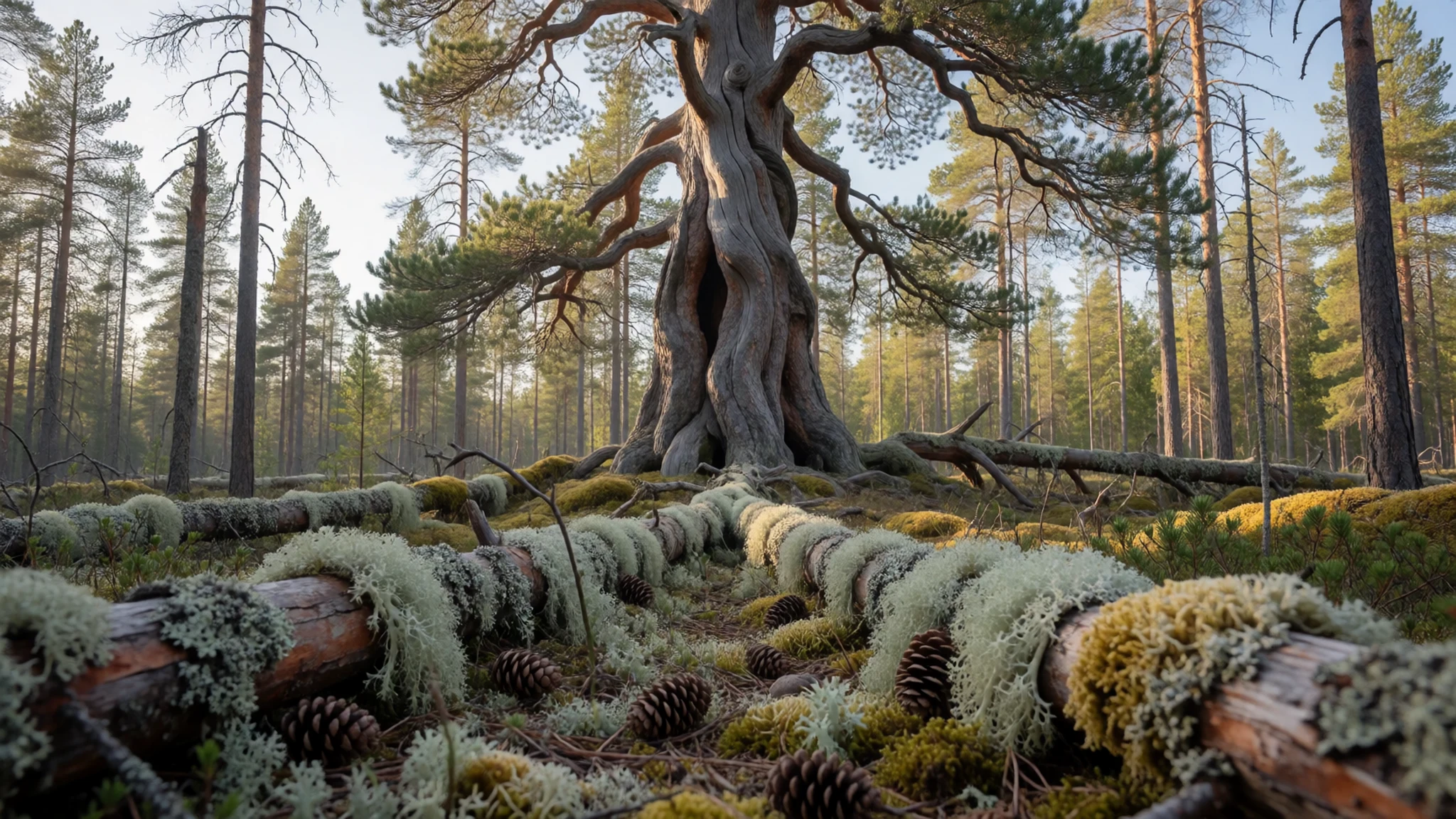
- Bark-stripped pines — Forest stands in the park
Some pines in the park show long pale scars where Sami people once took the inner bark as food. They are quiet evidence of how the forest was used, and they are easy to walk past without noticing. Look at the lower trunks, keep your hands off them, and photograph from a step back.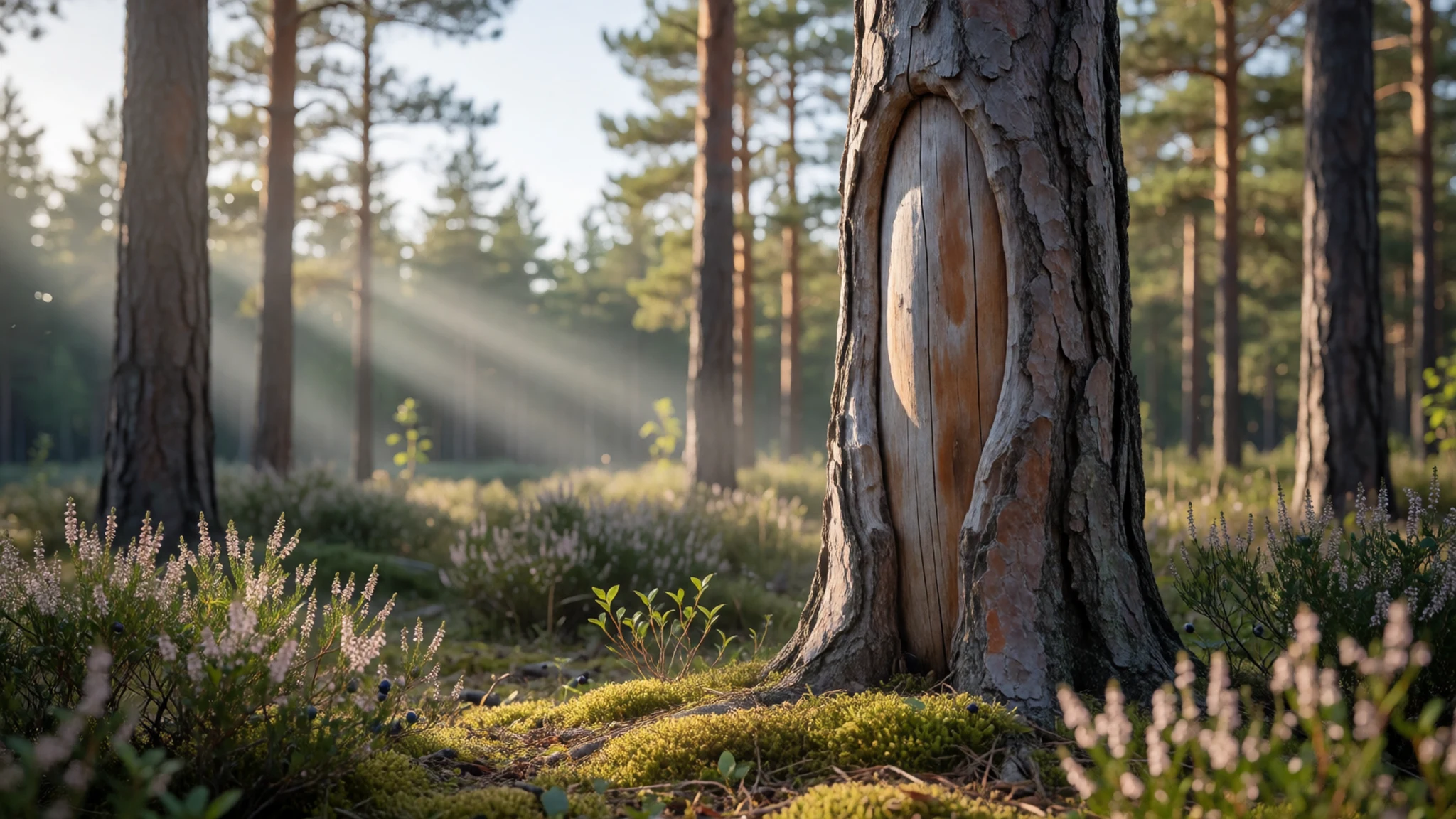
- The great bogs — Bog country across the park
Much of Muddus is open bog, and it is the part that surprises first-time visitors. Boardwalks and marked trails cross it in places, with cloudberry, cotton grass and small pools underfoot. Midsummer brings bright green and plenty of insects, while early autumn turns the ground red and gold.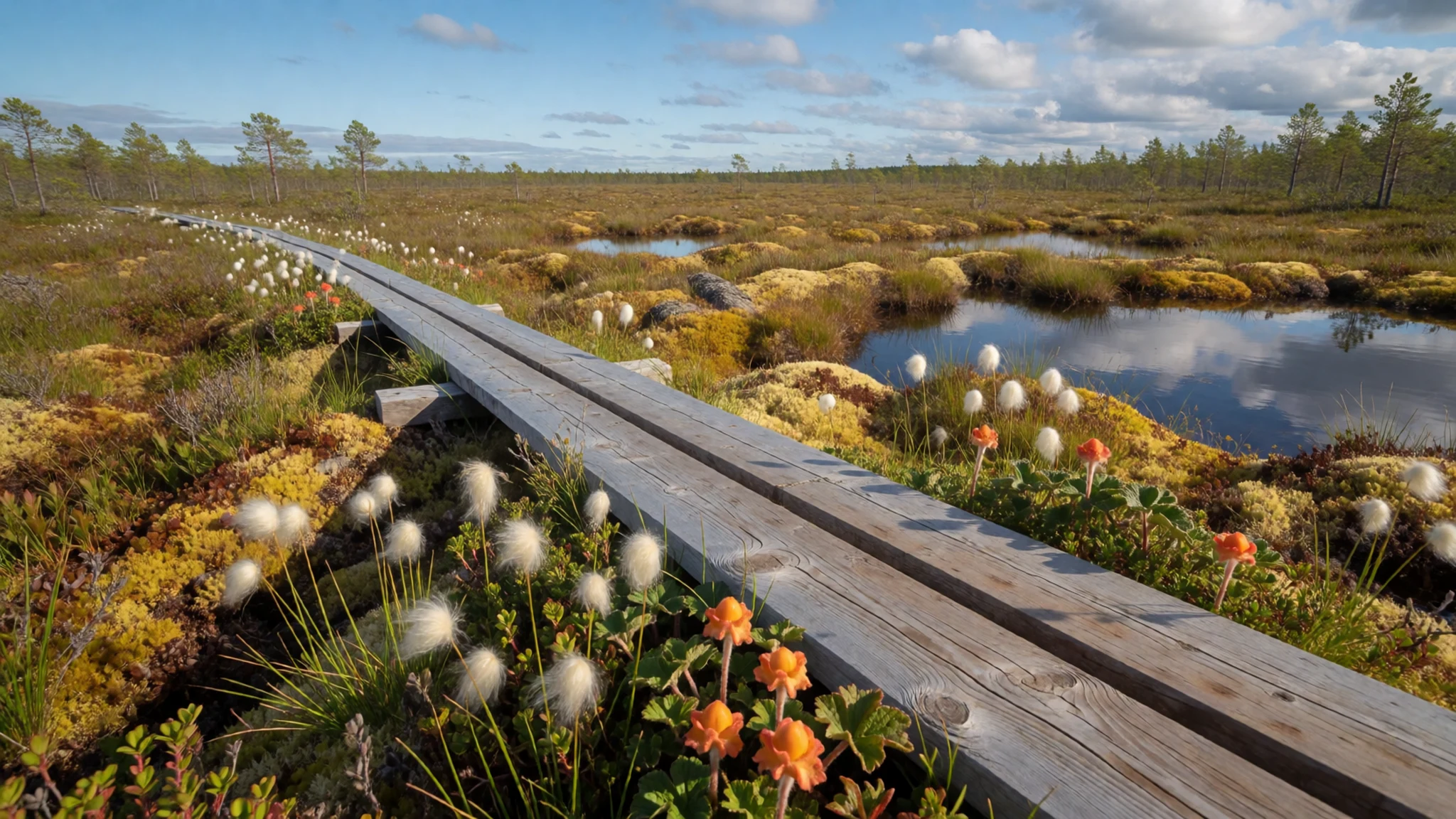
Culture
Muddus National Park sits in Sápmi, the homeland of the Sami, and its Lule Sami name, Muttos, is the older one. Sami communities have herded reindeer, fished and gathered across this region for generations, and the land is not empty wilderness in their eyes but a worked, remembered landscape. Traces such as bark-stripped pines make that visible. Elsewhere in the north, communities speaking Meänkieli, close to Finnish, and a dialect group called bondska have also long been part of the picture, and many of the villages around the park have a history of isolation that the railways and mines only partly ended.
The wider region went through heavy industrial change from the late nineteenth century, with mines, railways and hydroelectric plants, then lost population again as work was automated. Reindeer herding continues, and visitors can meet herding families who still work the land. Tourism and space science are newer sources of work.
Swedish outdoor life is built on a habit of care: walk lightly, camp briefly, leave nothing. The public right of access lets people roam, but national parks add their own rules on fires, camping and routes, which are set out on the official site. Visitors who treat the place as a lived-in landscape, not a backdrop, tend to get the best out of it, including friendlier conversations in nearby towns.
Carry out all your rubbish, keep to the marked paths, and do not touch or strip bark from the old pines.
What to wear
Muddus National Park lies in Sami country, where traditional dress is the gákti, a tunic worn with a belt. It is usually made of wool, often in blue, red, yellow and green, and trimmed with woven bands and sometimes pewter embroidery. Patterns, colours and cut differ by area and family, so an expert can read a lot from one. Gákti are worn at festivals, weddings, church occasions and national days, and by some people at work, especially in reindeer herding. Shoes and accessories, often leather or reindeer-skin items, complete the outfit.
Day to day, people in the Gällivare area dress for weather: layered wool or fleece, windproof shells, sturdy boots and a hat for most of the year. Winter calls for insulated parkas, thick gloves and good socks, since the region is the coldest in Sweden. Rural dress is practical and plain, and nobody dresses up for a restaurant or café.
Visitors in summer should wear quick-drying trousers and long sleeves against mosquitoes and ticks, plus a light rain jacket, because showers come without warning. Waterproof boots with ankle support are worth having, as trails cross wet ground and wooden boardwalks that turn slick. A head net can be a sanity-saver in midsummer. Bring a warm layer even in July, as evenings cool quickly. In winter, treat the cold seriously and take guidance from local operators before heading out.
What to eat
- Reindeer — Restaurants and cafés in Gällivare and nearby towns
Reindeer is the meat most tied to northern Sweden and to Sami food. It turns up as thin-sliced sautéed meat, smoked, dried or in stews. It tastes lean and a little gamey, and is often served with potatoes, lingonberry and sometimes mushrooms.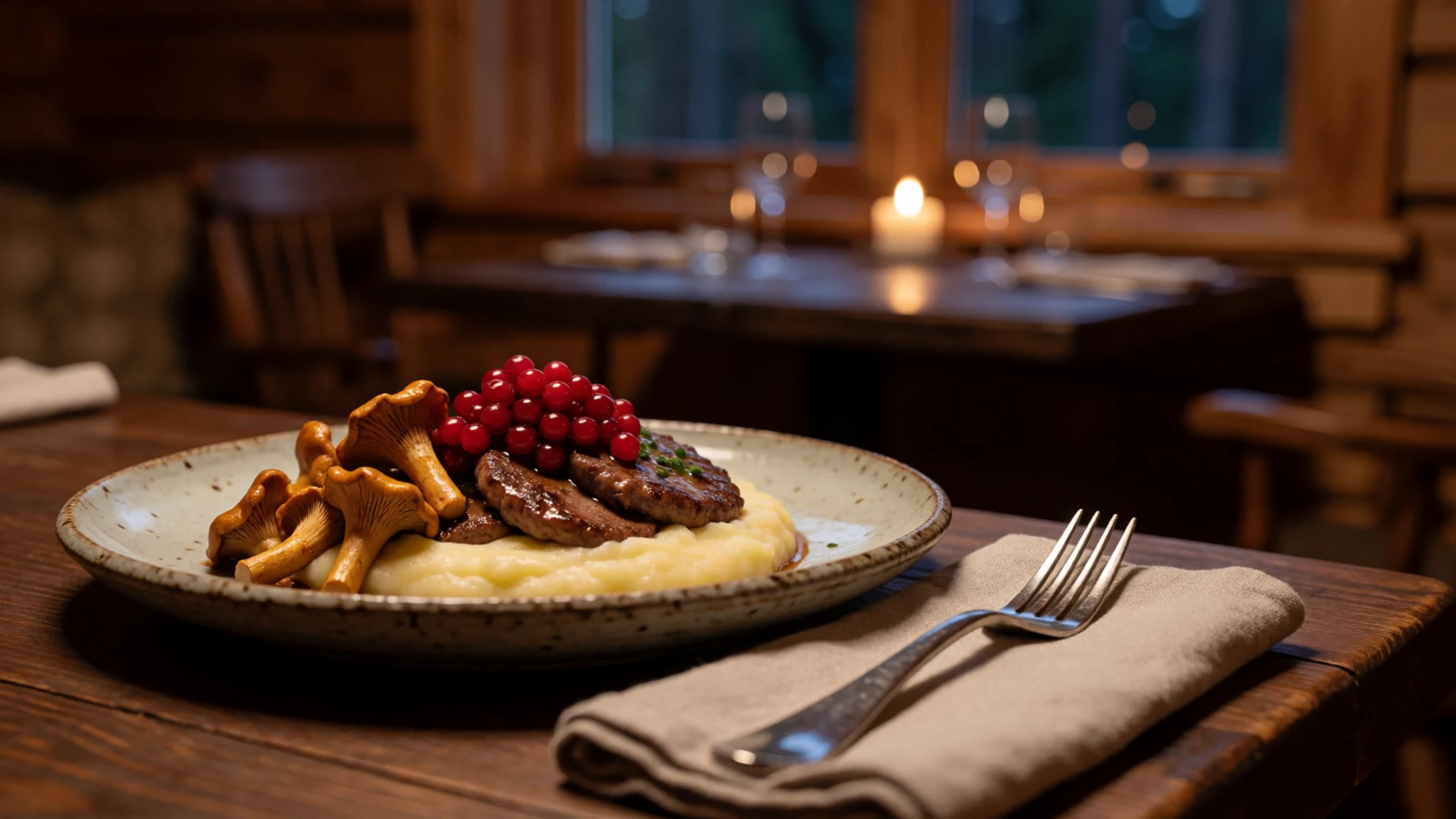
- Palt — Local eateries and home-style cafés in northern Sweden
Palt is a dense dumpling of flour and potato, boiled and usually stuffed with pork or other meat. It is filling, plain and made for cold climates. It is typically served with butter or lingonberry and suits a hungry walker.
- Kalix löjrom — Better restaurants and delicatessens in the Norrbotten region
Kalix löjrom is vendace roe, small orange eggs from the Bothnian coast, served on toast or with sour cream and onion. It is a regional speciality with a light, salty pop. It is a treat dish, so ask how it is served before ordering. - Surströmming — Local festivals and supermarkets, or at a host's table
Surströmming is fermented herring, famous for its powerful smell. It is traditionally eaten on thin bread with potatoes and onion, usually outdoors. Many visitors try it once for the story. The tin is opened with care, so go with someone who knows the routine. - Cloudberries — Cafés, farm shops and bakeries across Swedish Lapland
Cloudberries grow on northern bogs, including those in this part of Lapland, and ripen in late summer. The fruit is amber, tart and slightly floral. It appears as jam, with ice cream or in desserts, and picking rules and local custom apply, so ask before foraging.
Plan it
Best time. June to September. Summer is the easiest season for walking, with long daylight and the Midnight Sun in much of northern Sweden, though midsummer brings mosquitoes. Early autumn gives colour on the bogs and fewer insects. Winter is dark, cold and demanding, and suits only prepared visitors.
How long. 2–3
Getting there. Fly to Gällivare, or to Luleå or Kiruna, with most flights coming from Stockholm Arlanda. Sleeper trains from Stockholm and Gothenburg run to Luleå and Kiruna, and the Inlandsbanan line reaches Gällivare. The last leg to the park is by road, so check the official site for entrances and current access: https://www.sverigesnationalparker.se/en/choose-park---list/muddus--muttos-national-park/
Budget. mid
Tips
- Check the official park site before you go for current trail, shelter and fire rules, and for any closures.
- Carry a head net and repellent from midsummer, and tick protection if walking through undergrowth.
- Take water, food and a paper or offline map, since phone signal may drop out inside the park.
- Plan for wet feet: waterproof boots and a spare pair of socks help on bog trails.
- Winter days are short and the cold is serious, so travel with a local guide or operator then.
Etiquette
- Stay on marked paths and boardwalks to protect the bog and old forest.
- Take all rubbish away and follow the park's rules on fires and camping.
- Do not touch or damage the bark-stripped pines or other old trees.
Nearby
Sources
- Wikidata Q580404 (CC0)
- Wikipedia — Muddus National Park (rev 1340031857) (CC BY-SA 4.0)
- Wikivoyage — Norrbotten County (rev 5414038) (CC BY-SA 4.0)
- Wasserfall im Nationalpark Muddus — Uli doubleyou (Ulrike Wegner), Wikimedia Commons (Public domain)
- Askasfallet i Muddus nationalpark — Tobias, Wikimedia Commons (CC BY-SA 4.0)
- Bark stripping from Sami people to use as food in Muddus national park — Laponiatjuottjudus (Laponia management), Wikimedia Commons (CC BY-SA 4.0)
- Muddus fruktade myrar — Bernt O´Johan, Wikimedia Commons (Public domain)
- Bog around lake Muddusluobbal in Muddus national park — Laponiatjuottjudus (Laponia management), Wikimedia Commons (CC BY 4.0)
- Gällivare kommun - Muddus - Vattenfall — Jojoo64, Wikimedia Commons (CC BY-SA 4.0)
- Muddus 1 — Jojoo64, Wikimedia Commons (CC BY-SA 4.0)
- Muddus 2 — Jojoo64, Wikimedia Commons (CC BY-SA 4.0)


