Mount Rinjani
Mount Rinjani, Indonesia
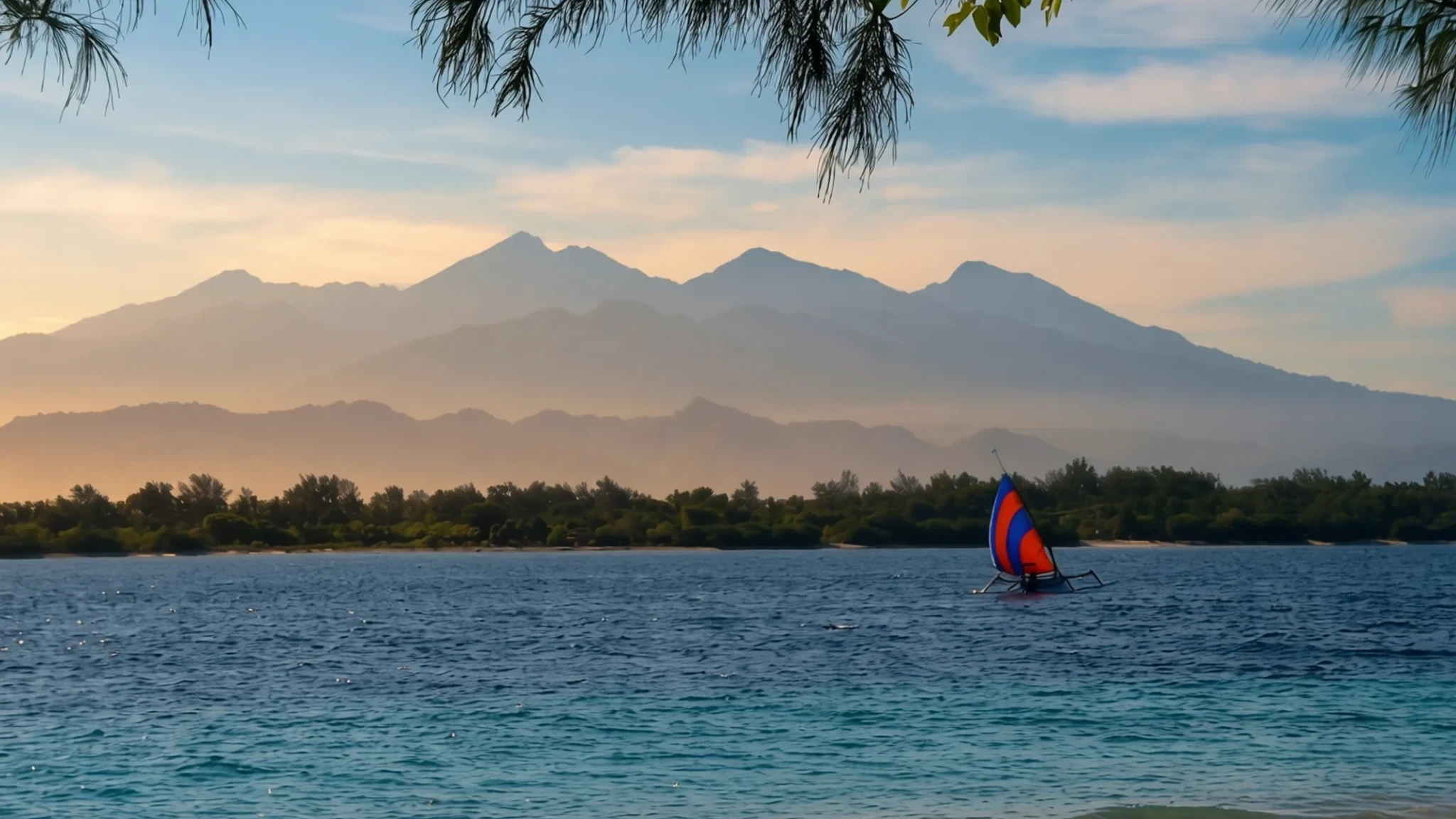
Indonesia's second-highest volcano, with a blue crater lake at its heart and deep spiritual meaning for the Sasak people.
The place
Rinjani is an active stratovolcano on the northern side of Lombok, an island in West Nusa Tenggara province that forms part of the Lesser Sunda Islands. Rising to 3,726 metres, it is the tallest peak in its province and the second-highest volcano in Indonesia, which makes it a serious mountain even in a country with more than a hundred active volcanoes. For most visitors the draw is less the summit than the caldera at its foot: a collapsed basin about 6 by 8.5 kilometres across, holding the crater lake Segara Anak. The water is a deep blue that resembles the sea, and the lake sits roughly 2,000 metres above sea level, with an estimated depth of around 200 metres. Hot springs rise around its edges, so parts of the basin feel warmer than the air outside it.
The mountain also carries religious meaning. The Sasak people and some folk religious communities treat the peak and the lake as places for ceremony, and those rituals remain part of local life rather than a show for visitors. Rinjani sits on the Sunda Arc, the chain of volcanoes that runs through this part of the Pacific Ring of Fire, and it is still active. That means the landscape is changing and is watched closely by the people who live beneath it.
Its story
The story of Rinjani is written in layers of lava, ash and water. Over long periods the volcano built itself up, and at some point in its past a large eruption emptied a magma chamber and left the great caldera behind. The record includes a major eruption in 1257, an event that geologists and historians point to as a marker of how powerful this mountain can be. Water later filled the basin, and Segara Anak took shape as a lake inside the rim.
For the Sasak people, the mountain is part of a wider world of meaning rather than only a landmark. Ceremonies have been held at the lake and on the mountain for generations, and the rhythm of those rituals still shapes how local communities understand the peak. One of the most visible is the Mulang Pakelem, an annual Hindu gathering at the crater lake, held before the rainy season, in which many pilgrims in white come to the water. The event commemorates a Balinese takeover of Lombok in the 18th century, and it shows how the island's religious life has absorbed influences from across the strait.
In more recent decades the mountain has become a trekking destination. Its caldera was recognised in 2018 as part of a global network of geoparks, which brought the volcano's science and its cultural life into the same conversation.
What to see
- Segara Anak — Rinjani caldera
Segara Anak is the crater lake at the heart of the caldera, and the reason most people make the walk into the basin. Its name means child of the sea in Sasak, a fitting label for water that looks so blue from the rim. The lake lies at about 2,000 metres above sea level. Go early, since afternoon weather can hide the water.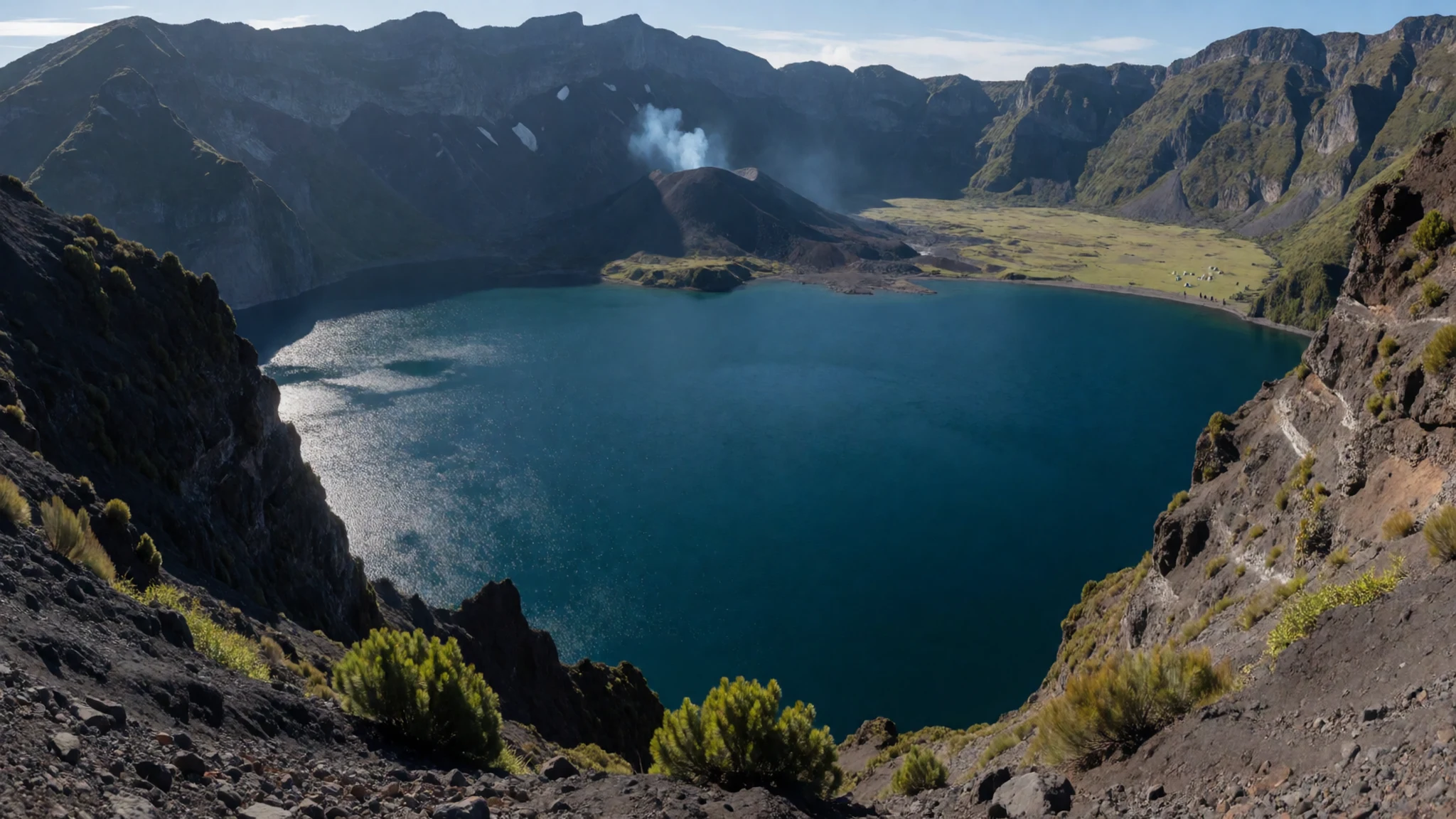
- Aik Kalak hot springs — Caldera, beside Segara Anak
The Aik Kalak hot springs are three warm pools close to the lake, and local people regard them as spiritually significant. Popular belief holds that bathing in one can slow ageing and refresh the body, a claim you can take with a pinch of salt. Keep your clothing modest, avoid bathing if you feel unwell, and ask locals before you enter the water.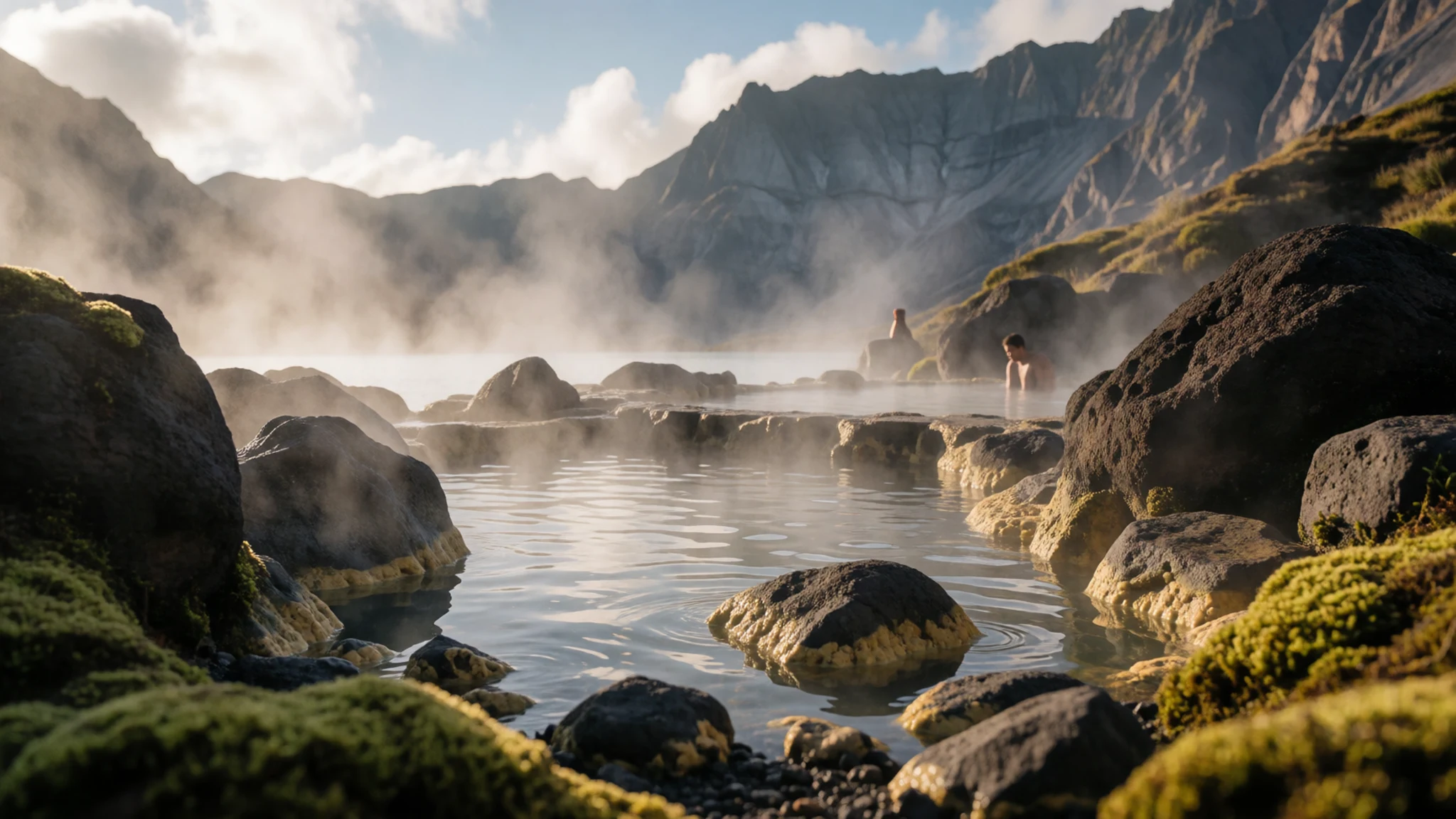
- Gua Susu — Rinjani's upper slopes
Gua Susu is one of the mountain's well-known caves, filled with hot steam and used by visitors for quiet meditation. It sits among the caves that also include Gua Payung and Gua Manik, which give the mountain some of its distinctive character. Steam can be strong inside, so move slowly, keep a torch handy and do not go in alone if you are unsure of the route.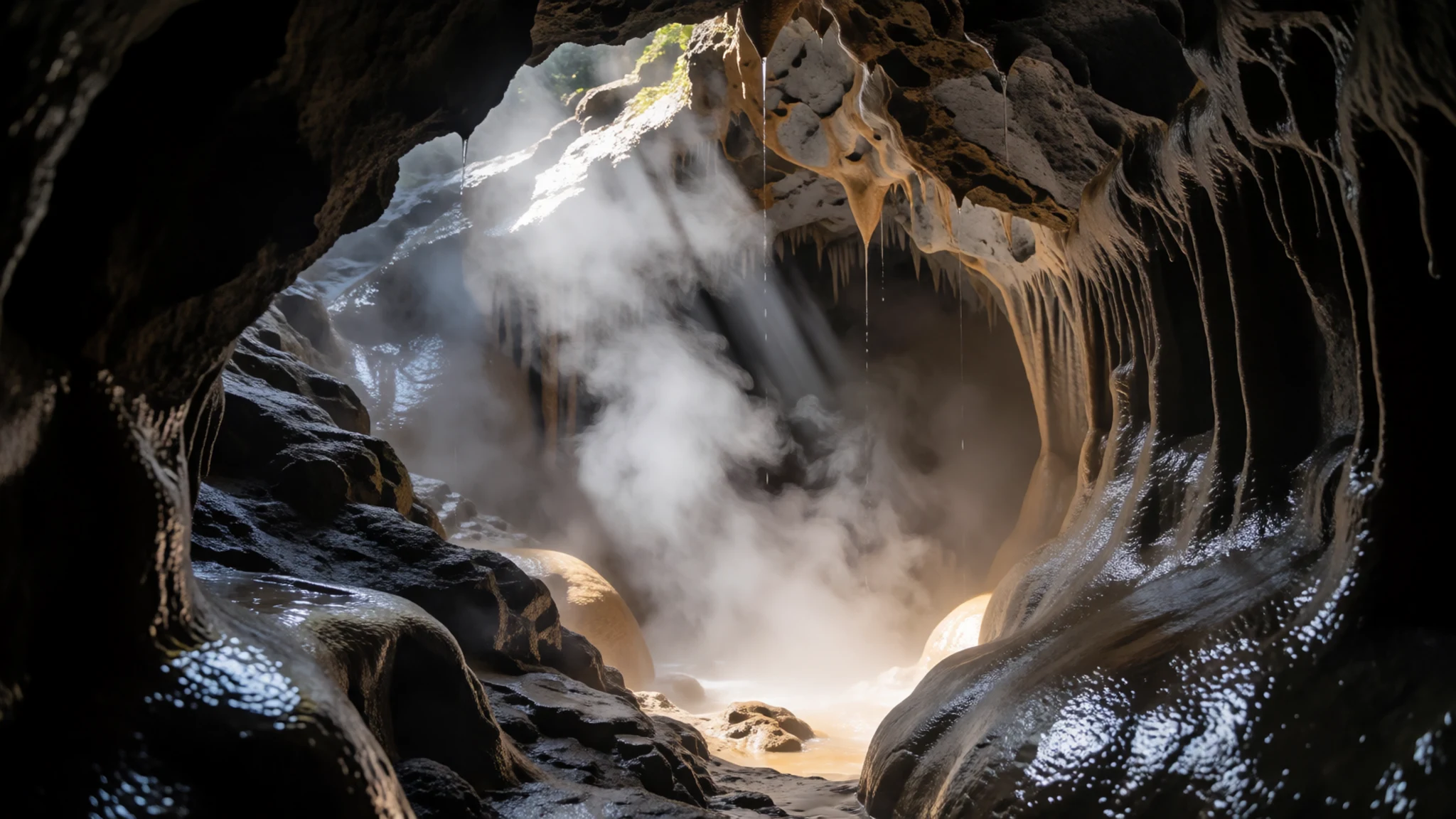
- Sendanggile Waterfall — Foot of the mountain
Sendanggile waterfall lies at the foot of the mountain, a short detour for anyone who wants a gentler walk before or after a trek. The views across the lower slopes are the main reward, so bring a camera and a light layer. Check road and path conditions with your guide, since the lower trails can be muddy after rain.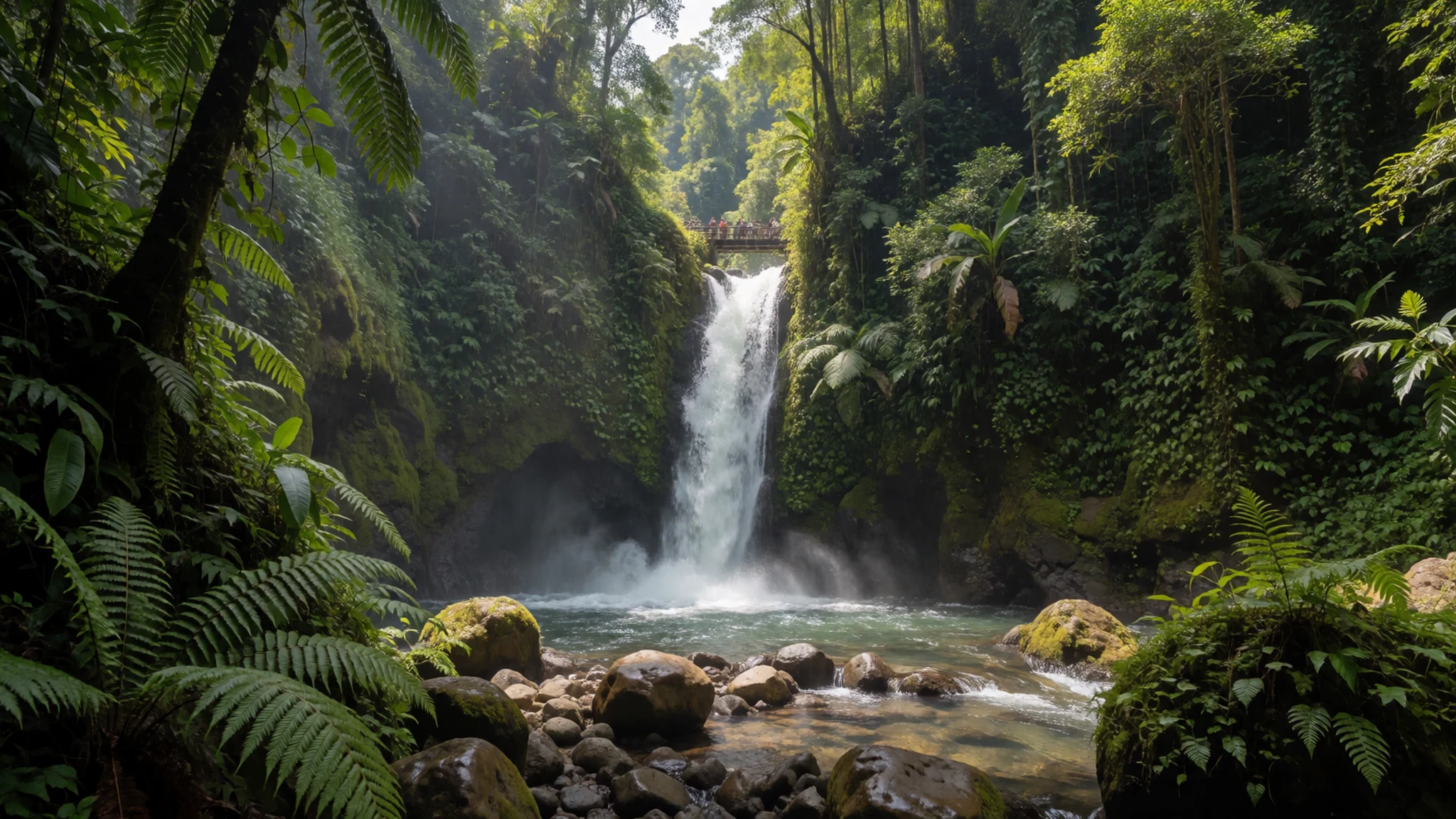
- Mulang Pakelem — Crater lake, Segara Anak
The Mulang Pakelem is an annual Hindu ceremony held at the crater lake before the rainy season, when hundreds of pilgrims in white clothing gather at the water. It commemorates a Balinese takeover of the island in the 18th century. You can only witness it respectfully: stand back, keep voices low, and ask before photographing people at prayer.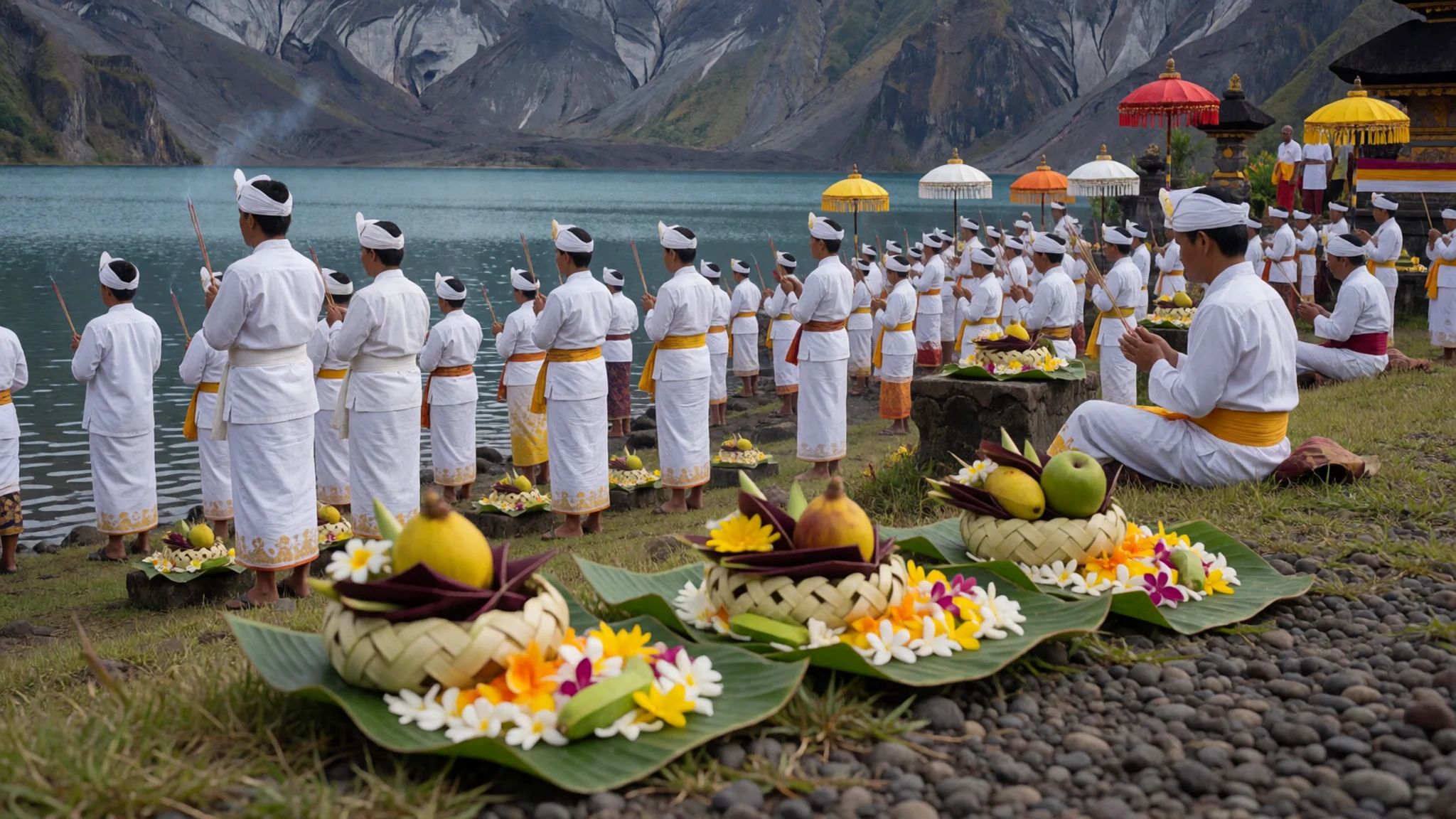
Culture
Rinjani is a working mountain and a sacred one, and both facts shape how visitors should behave. For the Sasak people and some folk religious communities, the peak and the lake are places for ceremony, and the Hindu pilgrims who gather at the crater lake for the Mulang Pakelem are there to pray rather than to pose. Local life around the trailheads at Senaru and Sembalun Lawang runs on hospitality. Guides, porters and village families are used to visitors, but a polite greeting and a patient manner go a long way. Dress modestly in villages, and remember that the springs and pools are treated with reverence by many local people. A few words of Indonesian are appreciated, and a smile matters more than fluency. Tipping porters and guides is normal practice, so ask your agency what is expected. The most useful habit is to leave the mountain cleaner than you found it, and to follow your guide at the crater rim. At the lake and the springs, do not wash, litter or photograph people at prayer without asking first.
What to wear
Traditional dress around Rinjani belongs to the Sasak people, whose weaving is one of Lombok's best-known crafts. The most important textile is tenun, hand-woven cloth made on backstrap looms, often patterned with geometric motifs in natural dyes. Songket, a cloth with metallic thread worked into the weave, is kept for weddings and ceremonial occasions. Men and women alike may wrap a length of woven cloth at festivals, and older villagers still wear traditional dress for ritual events. In villages around Senaru and Sembalun Lawang, everyday clothing is practical: long trousers or skirts, shirts with sleeves, and covered shoulders for many women.
What people wear now is a mix. Most people in the villages wear ordinary modern clothes, while trekking companies and their guides dress for the trail. Hindu pilgrims at the Mulang Pakelem wear white, which is worth noticing if you visit the lake at that time.
What you should wear depends on the altitude and the sun. The summit is cold, around 4–5°C, so pack a warm fleece, a windproof shell and a warm hat for the night and the dawn start. By day the sun is strong, so bring a hat, sunglasses, high-factor sun cream and long sleeves. Sturdy hiking boots with good grip suit the loose volcanic ground, and a headlamp is essential. In villages and near the springs, cover your shoulders and knees.
What to eat
- Ayam taliwang — Warungs and eateries around Senggigi and Mataram
Ayam taliwang is Lombok's signature grilled chicken, marinated in a fiery paste of chilli, shrimp paste and lime, then charred over coals. It is served with rice and raw vegetables. Look for it at the warungs and eateries around Senggigi and Mataram, where visitors eat before or after the trek.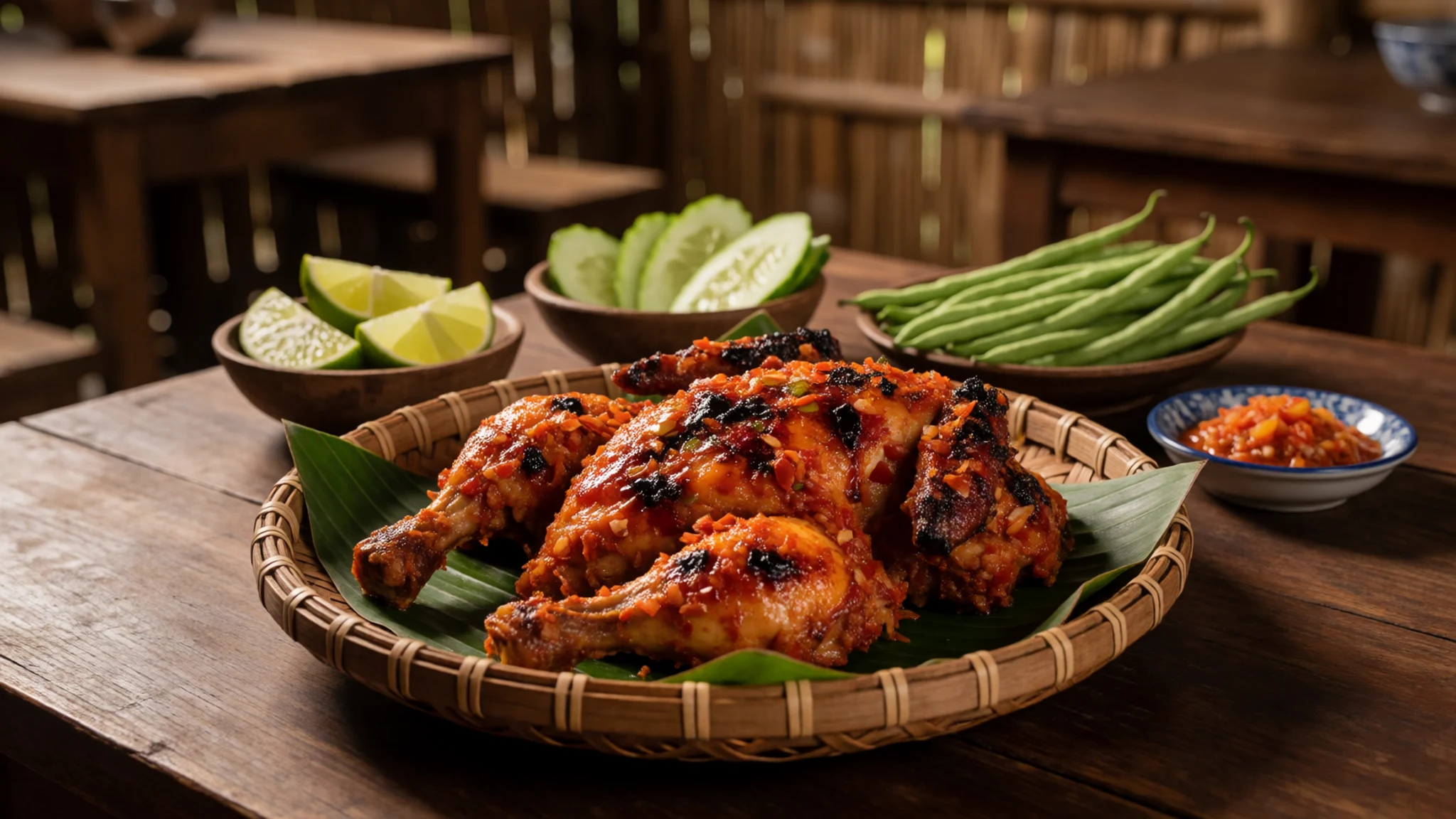
- Plecing kangkung — Small eateries and morning markets in Mataram
Plecing kangkung is blanched water spinach dressed with a sharp chilli and lime sauce, often with grated coconut. It is a light, cooling dish that suits the hot part of the day. Find it at small eateries and morning markets in Mataram, where it is usually made fresh.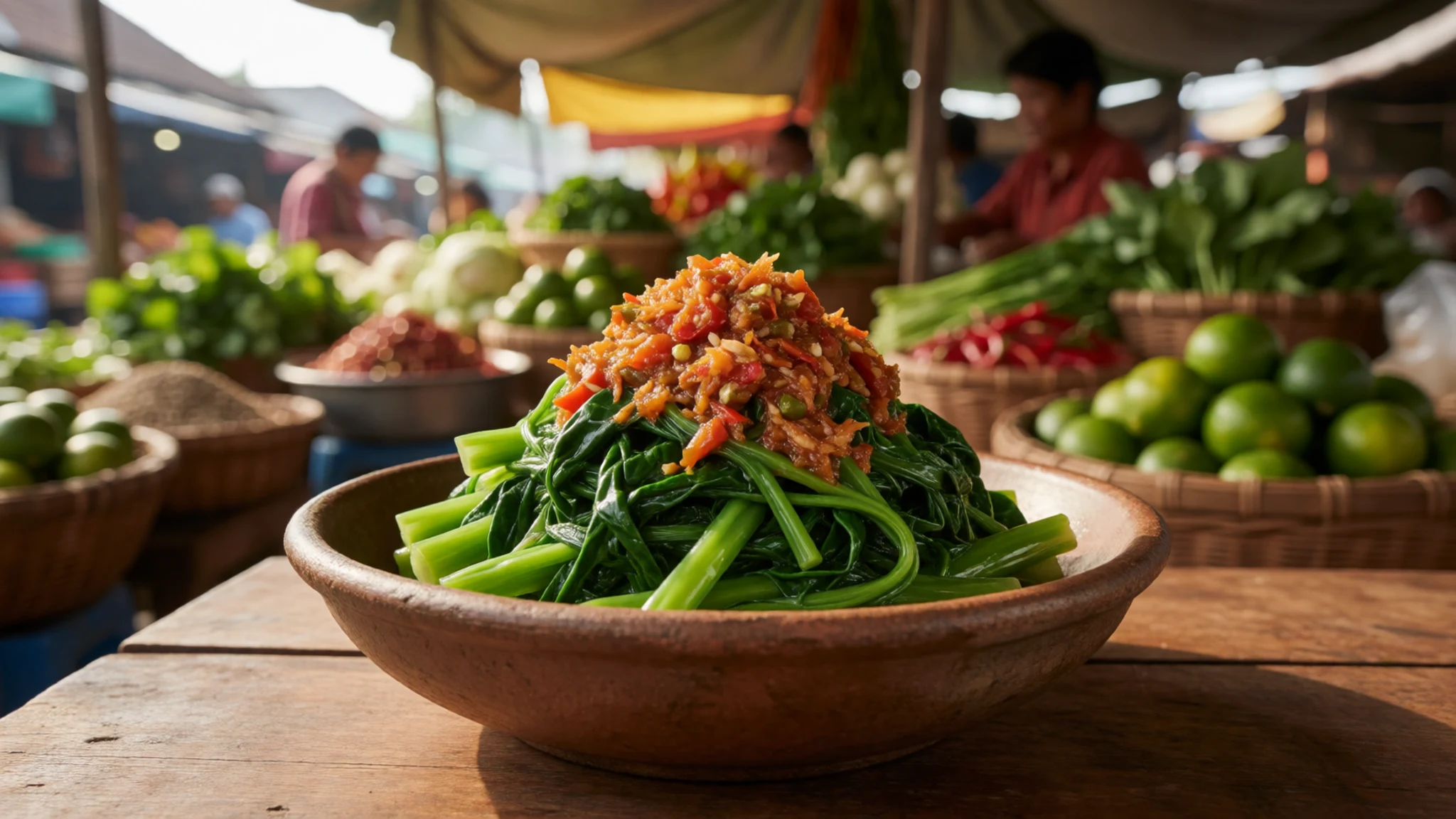
- Fresh fruit from village stalls — Roadside stalls in Senaru and Sembalun Lawang
Bananas, oranges and seasonal fruit are sold at stalls in Senaru and Sembalun Lawang, and they make good trail food. Buy it on the day you set off, since stalls are small and stock is limited. Fruit is light to carry and easy to eat while walking. - Hot tea or coffee from a flask — Simple lodges in Senaru and Sembalun Lawang
Hot tea or coffee poured from a flask is one of the most useful things on the trail. Fill it at the simple lodges in Senaru or Sembalun Lawang before you set off. It warms cold hands at dawn and makes a rest stop feel like a proper break. - Porter-cooked camp meals — The camp kitchen on an organised trek
Trekking packages usually include food that porters carry and prepare, and camp meals are often simple rice-based dishes with vegetables or egg. Ask your agency what is included, and whether vegetarian or other diets can be accommodated before you book.
Plan it
Best time. Roughly April to November is the dry season on Lombok, when trails are firmer and wet weather is less likely, with June to September the driest and most settled months. The rainy months bring slippery paths and sudden storms. Whatever month you choose, the summit is cold at night, so plan for warm layers.
How long. 3–4
Getting there. Fly into Lombok International Airport, then take a road transfer north to Senaru or Sembalun Lawang. Most visitors come from the west coast resorts, such as Senggigi, along the main north coast road.
Budget. mid
Tips
- Choose your trek organiser carefully and do not rely on their word alone for safety decisions
- Check current volcanic activity in local media and the Smithsonian's weekly Volcanic Activity Report before you go
- Confirm your guide has a radio that is fully charged and working
- Pack a headlamp, windproof layers and sun protection, since summit temperatures can drop to 4–5°C
- Tell your guide early if you feel unwell, as altitude sickness can develop quickly
Etiquette
- Keep to marked paths and stay with your guide near the crater rim
- Ask before photographing people at prayer or at ceremonies
- Carry out all your rubbish, including wrappers and fruit peel, and leave nothing at the springs
Nearby
Sources
- Wikidata Q847323 (CC0)
- Wikipedia: Mount Rinjani (rev 1380369915) (CC BY-SA 4.0)
- Wikivoyage: Mount Rinjani (rev 5411633) (CC BY-SA 4.0)
- Gunung Rinjani dari Jalur Sembalun (Giovari max) (CC BY-SA 4.0)
- KAGAGAHAN RIJANI (Suryanata budi) (CC BY-SA 4.0)
- Gunung Rinjani from the ferry terminal at Gili Meno (Felix Dance) (CC BY 2.5)
- Rinjani Summit (Petter Lindgren) (CC BY 3.0)
- Mount Rinjani Panorama (Jaccoob23) (CC BY-SA 4.0)
- Rinjani Volcano, Lombok (Massew64) (CC BY-SA 1.0)
- Post 2 Tengengean 1500 m Mt. Rinjani (Midori) (CC BY 3.0)
- Segara Anak (Petter Lindgren) (CC BY 3.0)


