Mount Bromo
Mount Bromo, Indonesia
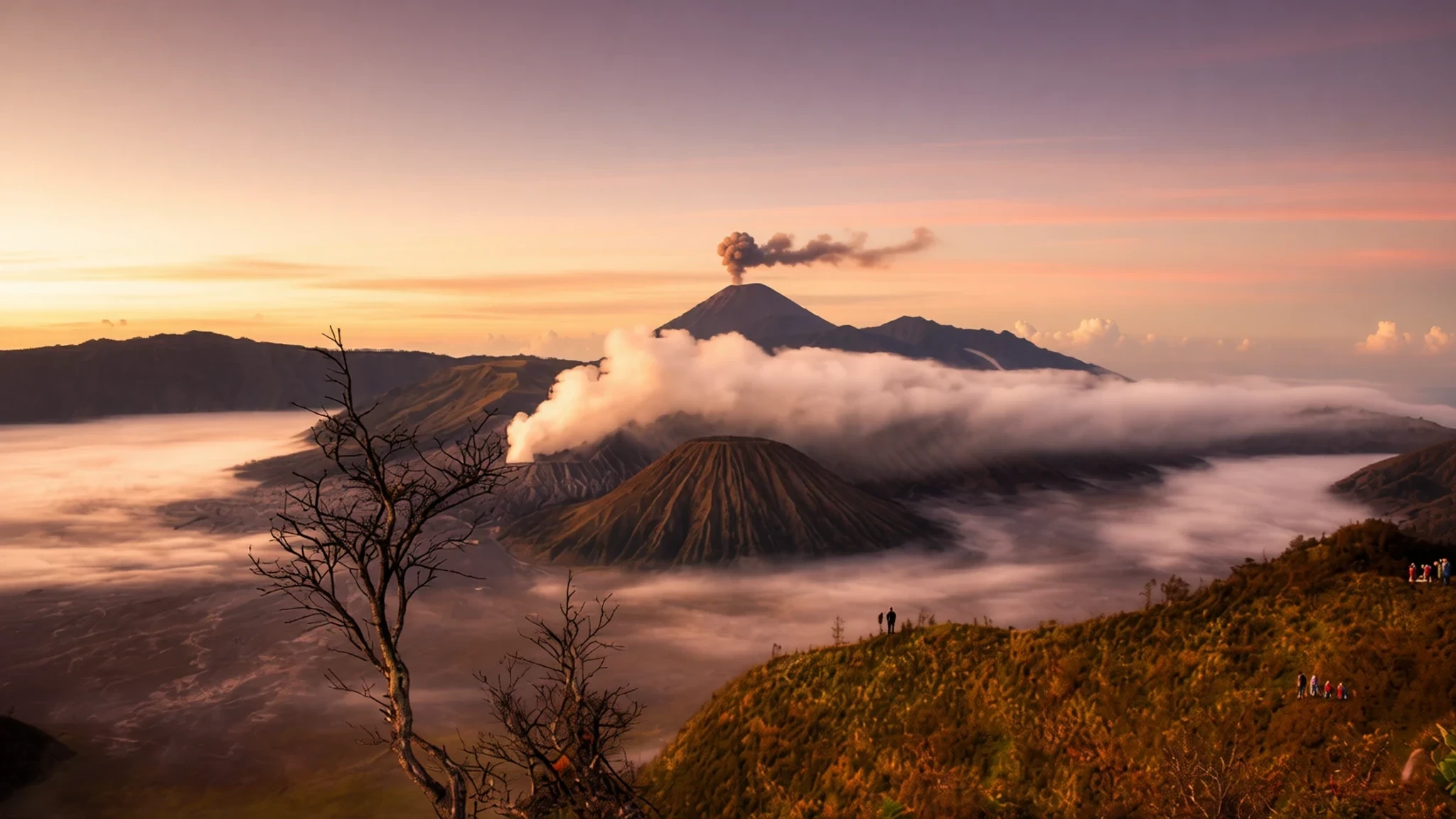
Go before dawn to watch the sun lift over a smoking caldera and a sea of sand, then walk across the ash to the crater.
The place
Mount Bromo is an active volcano in East Java, Indonesia, and the most active and best-known peak of the Tengger mountains. At 2,329 m (7,641 ft) it is not the highest summit in its range, which surprises many visitors who expect the tallest point to be the famous one. The cone rises from the middle of a flat expanse called the Sea of Sand, known locally as Segara Wedi or Lautan Pasir. That plain has been a nature reserve since 1919 and now lies within Bromo Tengger Semeru National Park. The name comes from the Javanese way of saying Brahma, the Hindu god of creation. Near the crater mouth stands an idol of Ganesha, worshipped by Javanese Hindus, so the mountain is a pilgrimage site as well as a viewpoint.
Most people base themselves in the village of Cemoro Lawang on the caldera rim. From there you can walk to the volcano in about 45 minutes, or join a jeep tour, which is how most visitors reach the Mount Penanjakan viewpoint at 2,770 m (9,090 ft). Walking is another way to get to Penanjakan, taking roughly two hours. It suits anyone who wants to set off early and skip the jeep convoy. Before sunrise the air is thin and cold, and the jeeps leave in the dark, so pack a warm layer even if the afternoon feels mild.
The landscape is grey and ochre volcanic grit rather than green, with the caldera walls rising behind. It is an unusual place to spend a day, and the crowds shape the experience as much as the scenery does.
Its story
Mount Bromo has a history of short, sharp eruptions. In 2004 an eruptive episode killed two people who were struck by rocks thrown out by the explosion, a reminder that the rim is never a place to linger without thought. Years later the monitoring picture changed again. On 23 November 2010 the Indonesian Centre of Volcanology and Geology Hazard Mitigation raised the status to alert, after tremors grew stronger and shallow earthquakes began under the mountain. Residents and visitors were told to keep three kilometres from the caldera, and refugee camps were set up for those who had to leave.
The volcano began to erupt violently on 26 November. By 29 November the aviation authority had closed Malang's Abdul Rachman Saleh Airport until 4 December, and the government volcanologist Surono reported ash columns rising some 700 m into the sky. The caldera stayed off-limits to visitors for the rest of 2010. Activity did not settle quickly. In late January 2011 the Tengger caldera was still erupting in fluctuating bursts.
The mountain also has older roots in belief. Each year the Tenggerese people climb to the caldera during the Hindu festival of Yadnya Kasada and throw offerings of fruit, rice, vegetables, flowers and livestock into the crater for the mountain gods. The ritual goes back to a legend from the fifteenth century. For a visitor, the story is more than a record of lava. It explains why the crater is treated with respect, even by people who came only to see the sunrise.
What to see
- Mount Penanjakan viewpoint — Penanjakan ridge, a short drive above Cemoro Lawang
Most visitors come here before dawn, by jeep or on foot, to watch the first light fill the caldera. At 2,770 m (9,090 ft) it looks down on the cone, the Sea of Sand and the wider massif. The best spots fill early, so arrive well ahead of sunrise and bring a windproof layer.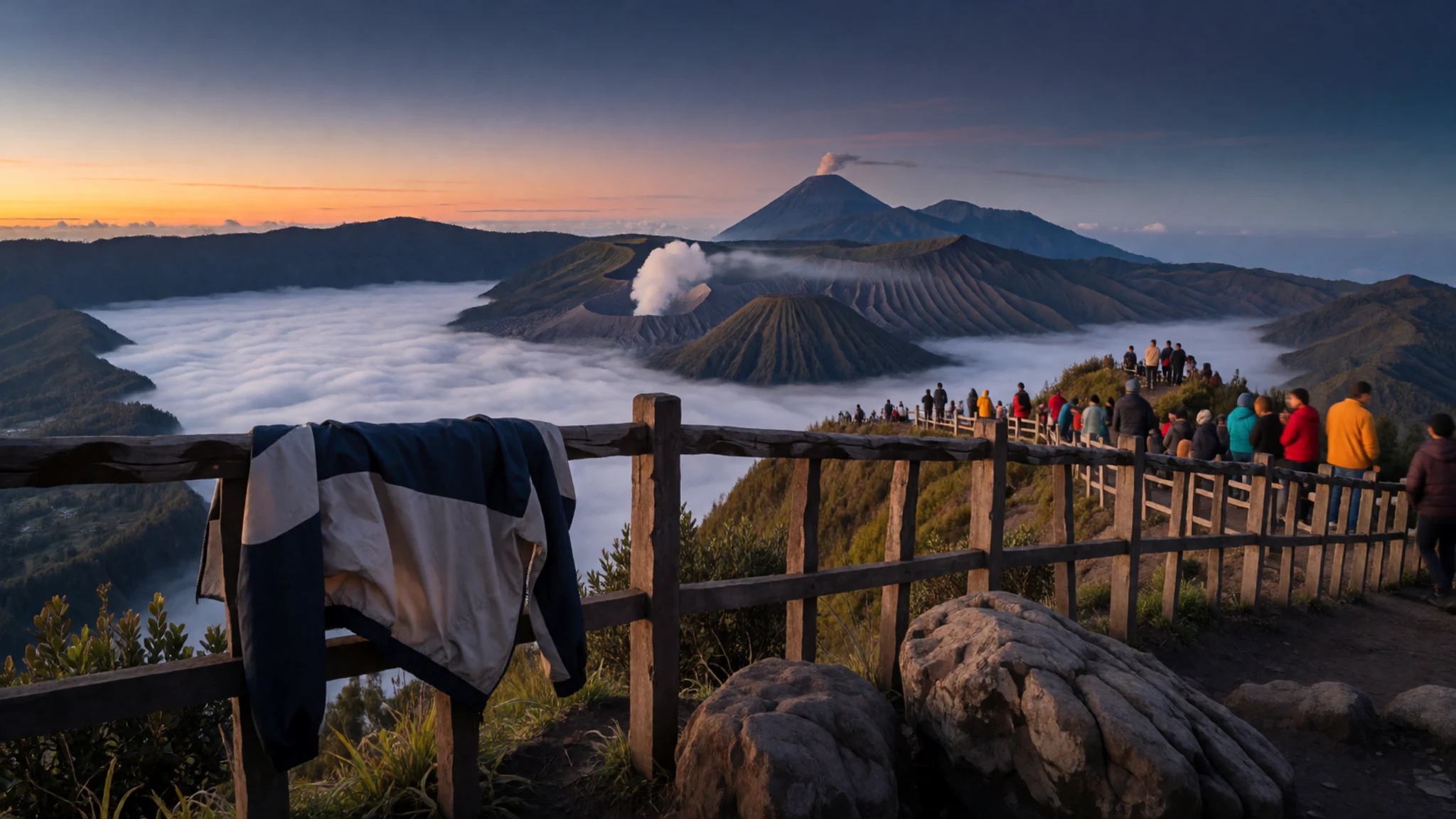
- Mount Bromo crater rim — Tengger caldera, reached on foot or by pony from Cemoro Lawang
The walk from the village takes about 45 minutes, but the rim is the reason most people come. Look down into the crater, where the active vent bubbles and steams. Ponies are available for the climb if your knees complain. Stay behind the barriers and check the alert level before you go, because activity changes.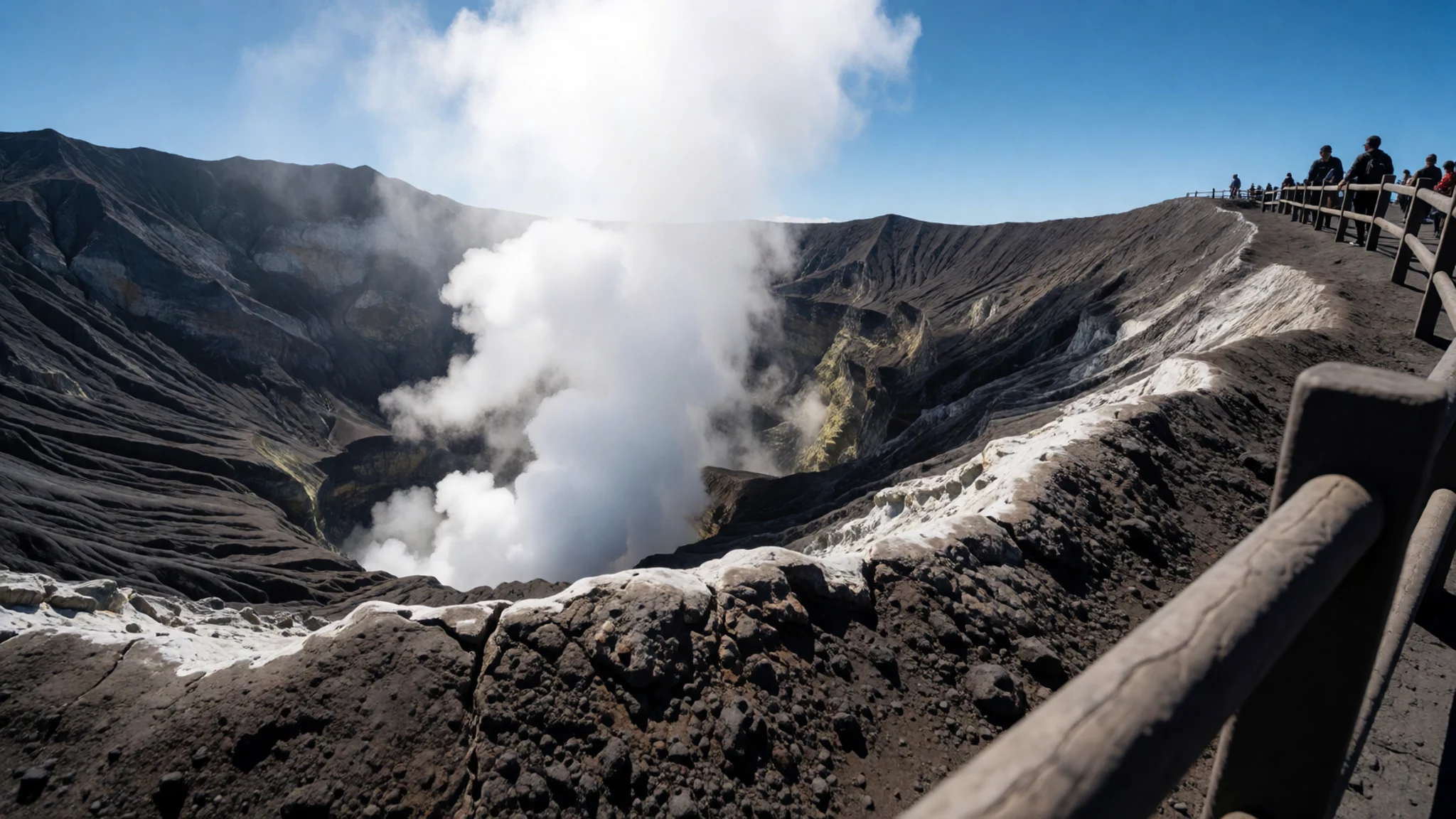
- Sea of Sand (Segara Wedi) — the flat plain below the caldera rim
The grey plain around the cone is called Segara Wedi, or the Sea of Sand, and it looks like a dried-out lake of ash. It has been a protected nature reserve since 1919. Ponies and jeeps cross it on the way to the crater, and on quiet mornings it is almost silent except for the wind and the distant rumble of the volcano.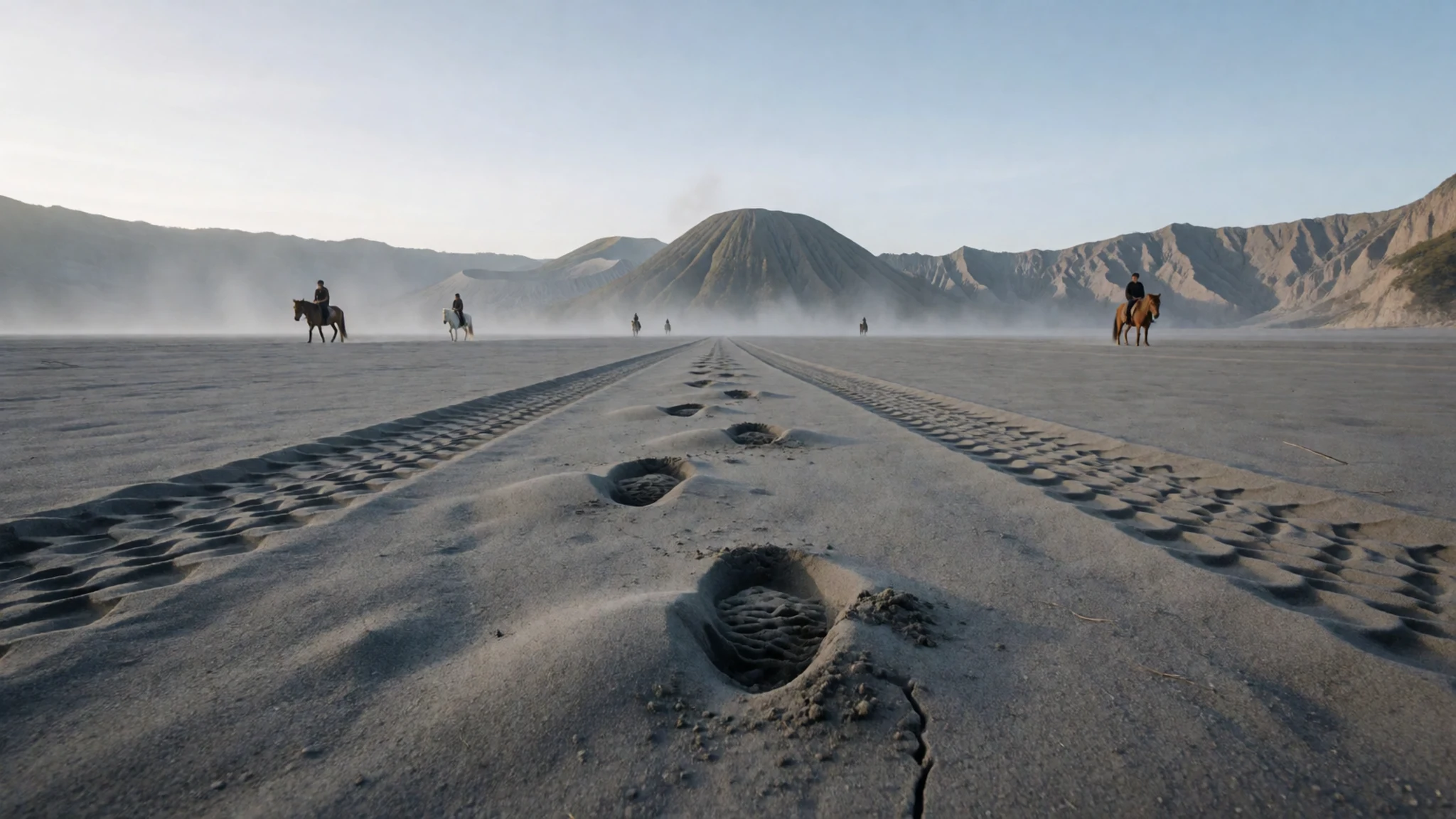
- Pura Luhur Poten — on the sand plain, reached from the caldera road
Pura Luhur Poten is a Hindu temple standing on the Sea of Sand, and it matters to the Tenggerese villages around the caldera. Built from natural black volcanic stone rather than the red brick of most Balinese temples, it organises the annual Yadnya Kasada festival. Dress modestly and keep your distance during ceremonies.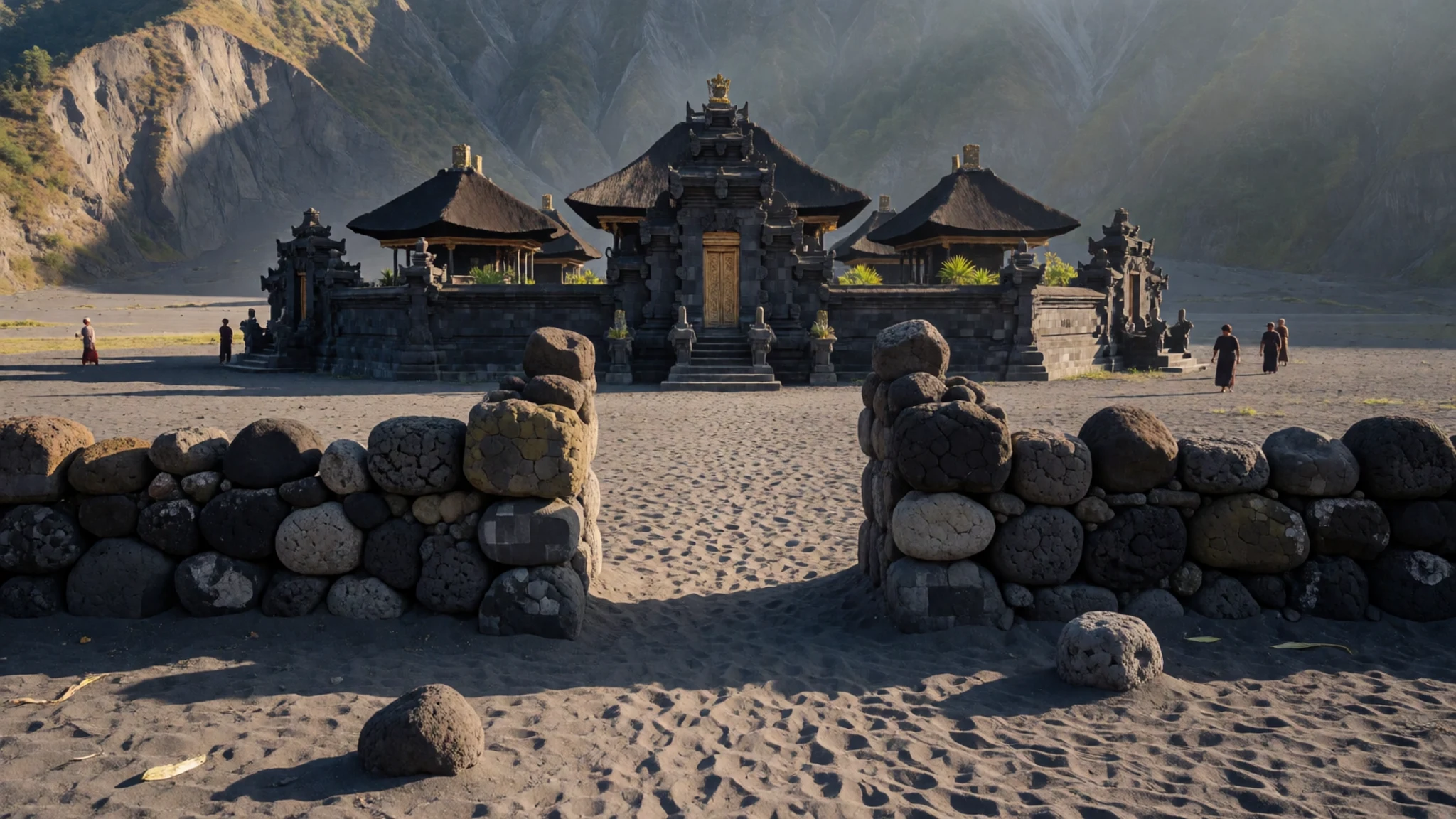
- Semeru and the wider caldera — the Tengger caldera, seen from the rim and from Penanjakan
Semeru, at 3,676 m, is the highest mountain in Java and one of Indonesia's most active volcanoes, and it is often closed to climbers. Batok and Widodaren sit in the same caldera and form a jagged skyline. From the rim you see the whole group at once, which is why the caldera feels so vast when the cloud lifts.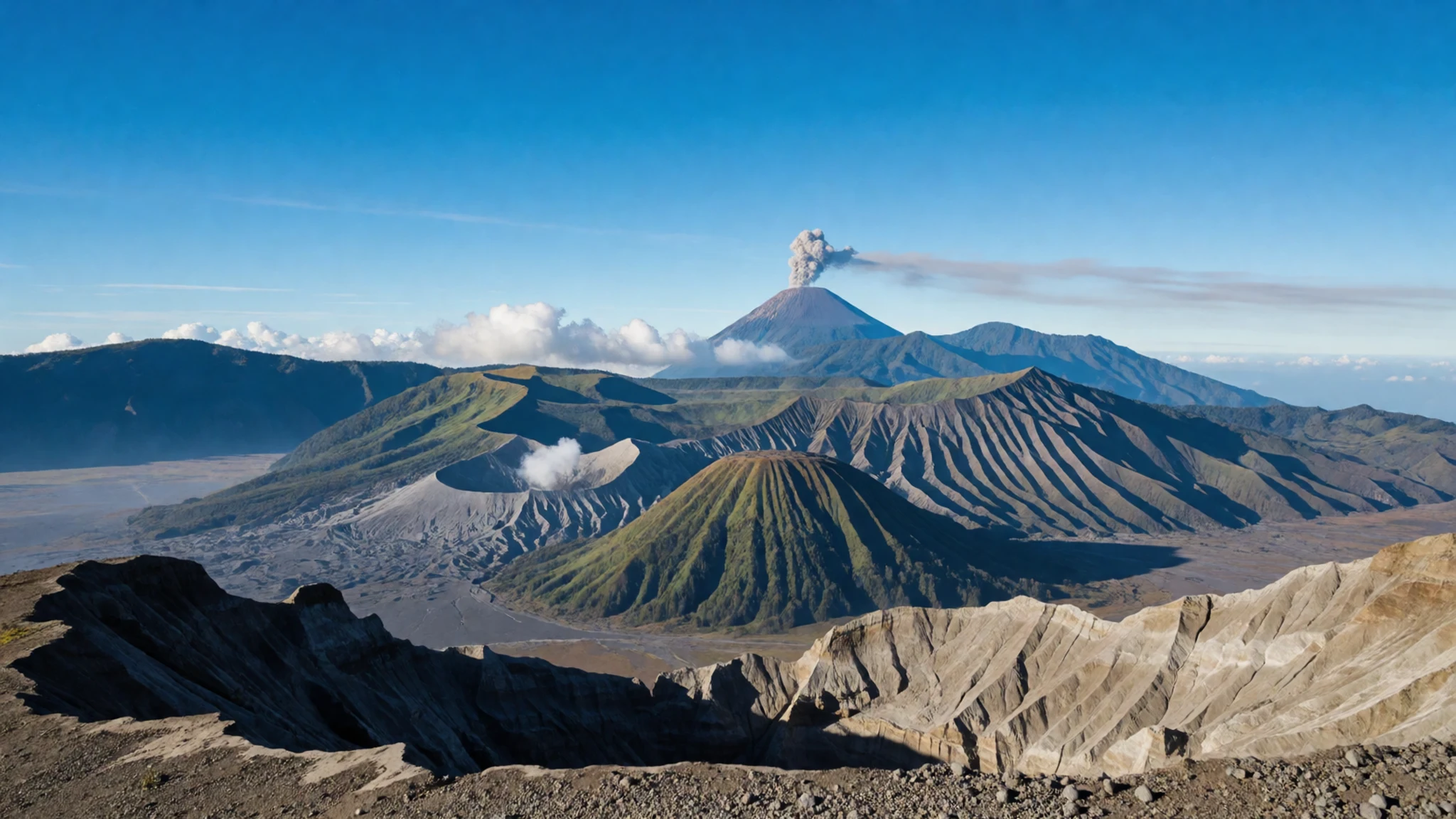
Culture
Mount Bromo sits inside a living Hindu landscape, and the Tenggerese people who live in the villages around it are its keepers. Each year, on the fourteenth day of Yadnya Kasada, they climb to the caldera and throw offerings of fruit, rice, vegetables, flowers and livestock into the crater for the mountain gods. The ritual is rooted in a fifteenth-century legend, and the festival runs for about a month around Pura Luhur Poten on the sand plain. The temple's black stone is a local choice, and it ties the ceremony to the land itself. Many Tenggerese families live in villages such as Ngadisari and Wonokitri, and visitors who come for the view often pass through streets where the mountain is part of everyday life. Ceremonies are religious occasions rather than shows, so the people you see are often praying rather than performing. Watch quietly and ask before you take a photograph. Do not photograph people at prayer without asking first.
What to wear
Mount Bromo is cold before dawn and dusty by midday, so what you wear needs to work for both. The traditional dress of the Tenggerese is worth seeing at ceremonies and in village life, but the sources I drew on do not describe its cut or cloth in detail, so ask a local guide before you buy anything sold as costume. Across Java, batik cotton is the everyday textile that many people wear to religious events and to work, and sarongs are common at Hindu temples across the island. In the villages around the caldera most people dress in ordinary modern clothes: jeans, jackets, and warm layers in the early morning. For your own packing, bring a windproof jacket and a fleece, because the jeep ride up is cold even on clear days. Long trousers and covered shoulders suit temple visits. Closed walking shoes with good grip work better than sandals on the volcanic grit and the steps to the rim. A light sarong or scarf helps at temples where you may be asked to cover your legs.
What to eat
- Rawon — warungs and morning eateries in Malang and Surabaya
A dark beef soup coloured by keluak nut, rawon is a breakfast favourite in East Javanese eateries. The broth is savoury and warming after a cold pre-dawn start. East Javanese cooking is generally less sweet and spicier than the Central Javan style, and local cooks will point out the difference.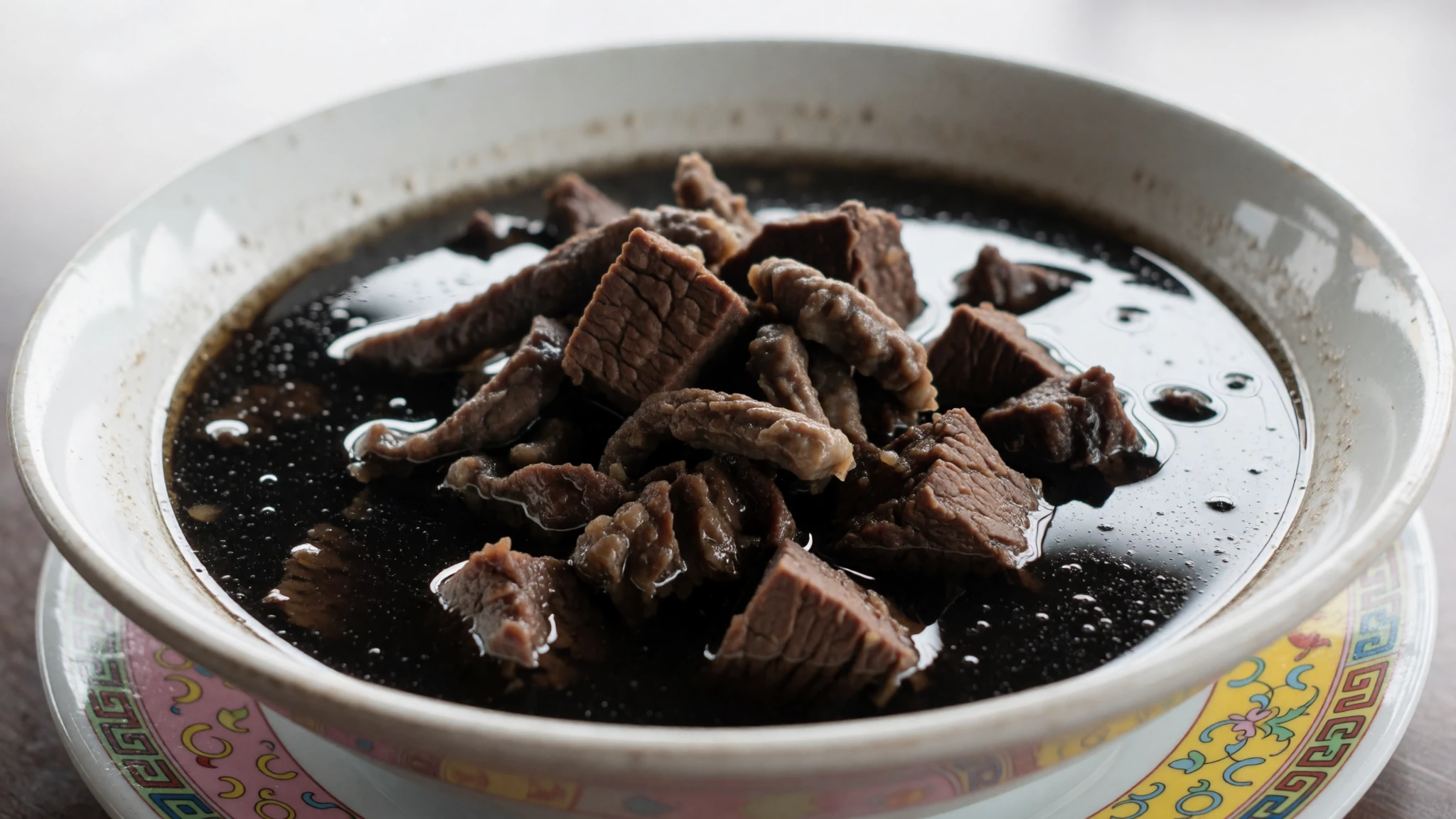
- Rujak cingur — street stalls in Surabaya, especially in the morning
A salad of vegetables and fruit tossed in a thick, sweet and spicy peanut dressing with shrimp paste. Traditional versions include slices of cow's lip for those who want the full local version. It is a snack that suits the heat of the afternoon.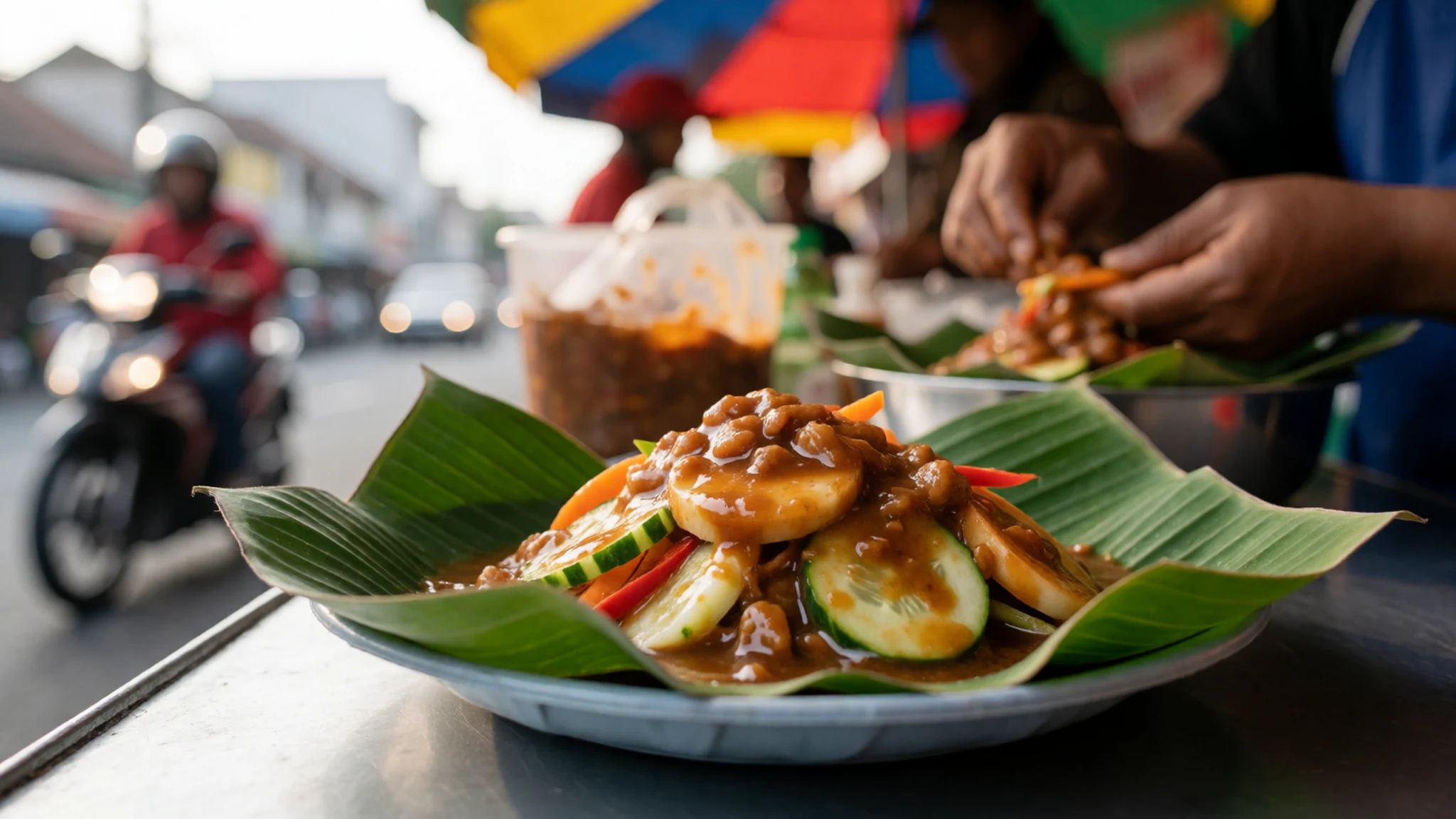
- Pecel — village warungs around the caldera and at morning markets
Blanched greens and beansprouts served with a warm peanut sauce, pecel is a simple vegetarian-friendly plate and an easy choice after a long walk. Ask for it with rice and a little extra sambal. It is often the cheapest filling meal on a small menu.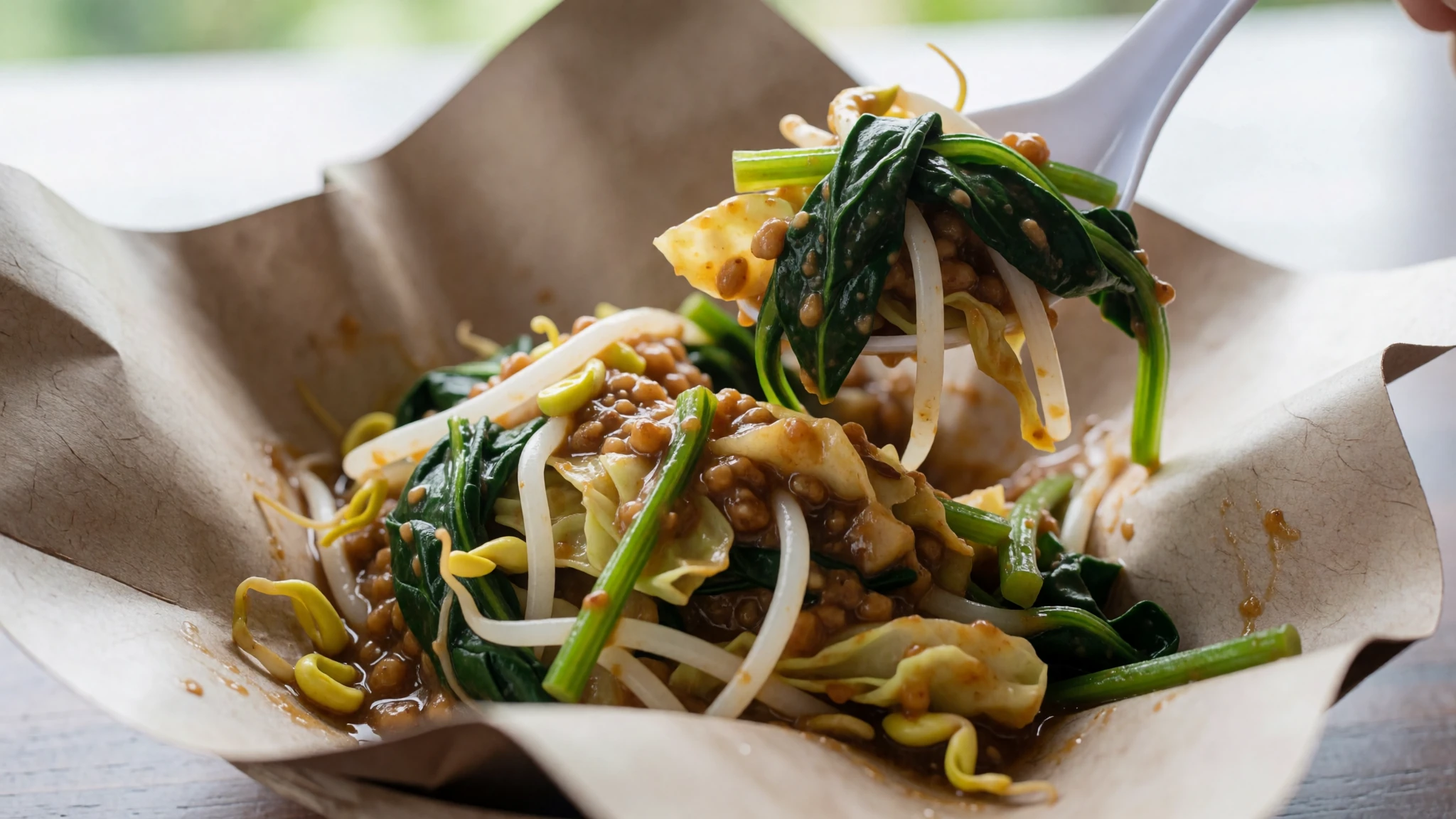
- Ikan bakar — roadside grill stalls on the coastal road towards Probolinggo
Fish grilled over charcoal and basted with spiced sauce, ikan bakar reflects how much fish and seafood matter in East Java. Order what the cook has fresh that day and eat it with rice and sambal. Grill stalls tend to be busiest in the evening. - Sambal terasi — the condiment table at any warung
Terasi, the dried shrimp paste, appears in sambal across the region, and East Java uses it a great deal. A small spoon of this chilli condiment is the quickest way to taste the local palate. Add it to noodles, rice or fish from any table that has a bowl of it.
Plan it
Best time. Aim for June to September, the driest months, when the weather is most likely to hold for a pre-dawn start, though the nights are also the coolest of the year. Cloud and rain can hide the caldera at any time of year, so build in a spare morning in case the first one is grey.
How long. 2–3
Getting there. Fly into Surabaya's Juanda Airport (SUB), which has frequent domestic flights and some international ones, or into Malang's Abdul Rachman Saleh Airport (MLG), which is closer. Trains link Surabaya with Jakarta, Semarang, Yogyakarta and Banyuwangi, but the national park is not on the rail network, so the last leg is by road, usually by jeep to Cemoro Lawang.
Budget. mid
Tips
- Book lodging in Cemoro Lawang well ahead, especially at weekends and holidays
- Set off in the dark for Penanjakan and allow time for the jeep queue
- Carry cash for jeeps, ponies and small stalls, and check the official site for current fees
- Pack warm layers and water, since the air is cold and thin at the viewpoint
- Check the alert status with local authorities before you go, because the area was closed to visitors in 2010
Etiquette
- Stay behind the railings at the crater rim and follow the guides' instructions
- Ask before photographing people at prayer or during ceremonies
- Keep voices low at the temple and in the village at dawn
Nearby
Sources
- Wikidata Q679590 (CC0)
- Wikipedia, Mount Bromo (rev 1380598140) (CC BY-SA 4.0)
- Wikivoyage, East Java (rev 5269873) (CC BY-SA 4.0)
- Photo 01, Mount Bromo closeup on sunrise (Hugo van den Bos) (CC BY 2.5)
- Photo 02, Bromo-Semeru-Batok-Widodaren (Riza Nugraha) (CC BY 2.5)
- Photo 03, Pura Luhur Poten (Respublika Narodnaya) (CC BY-SA 4.0)
- Photo 04, Mount Bromo panorama (Robert Machacek) (CC BY 3.0)
- Photo 05, Crater of Mount Bromo (Thomas K.-H. Nittel) (CC BY 3.0)
- Photo 06, Riding up the volcano Mount Bromo (Harri J) (CC BY 2.5)
- Photo 07, Mount Bromo eruption 2011 01 22 (Vladimír Rýpar) (CC BY 3.0)
- Photo 08, Bromo eruption MODIS 20110127pm (NASA) (Public domain)


