Montpellier
Montpellier, France
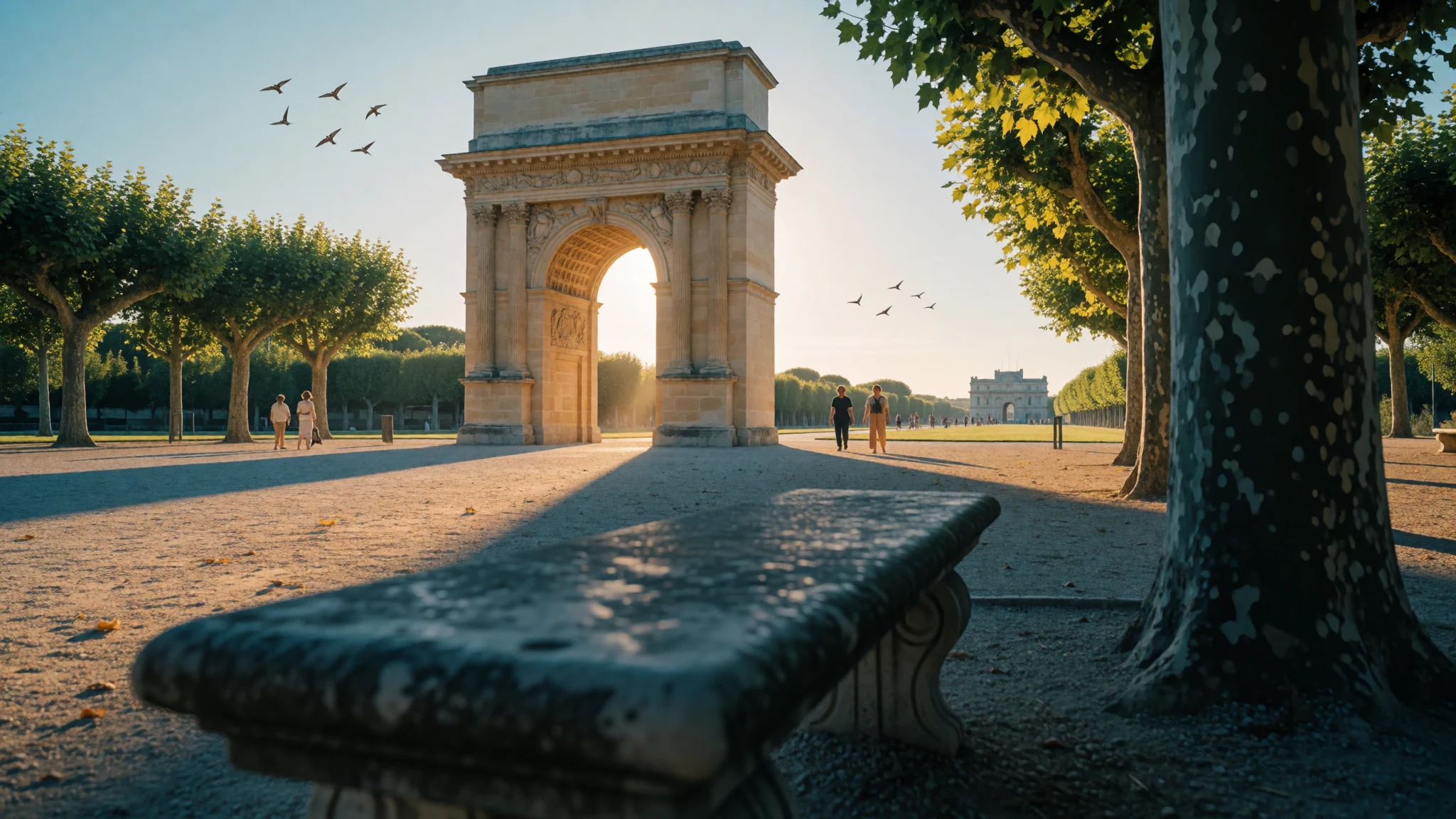
Montpellier is a sunny, student-filled Mediterranean city where a medieval core, grand squares and newer quarters sit close together.
The place
Montpellier sits in southern France a short way inland from the Mediterranean, in the department of Hérault, of which it is the prefecture. About 310,000 people live in the city proper, at an elevation of just 14 m, so the ground is flat and the centre is easy to cover on foot. Residents are called Montpelliérains or Montpelliéraines. The heart of the city is the Écusson, the old town, a tangle of lanes that bend under stone arches and carry the names of trades once practised there. The big open space at its edge is the Place de la Comédie, ringed with café terraces, where most days seem to begin and end. West of the Écusson, the Peyrou esplanade offers space, shade and long views. Beyond the old centre the city spreads into newer districts such as Port Marianne, where modern public buildings and a large basin show how quickly the place has grown since the 1990s. Students number about 70,000, which gives the streets a young, late-evening rhythm in term time and a slower, emptier feel in the summer holidays. The coast is close, so many visitors pair the city with a beach day, though Montpellier itself is a place of squares, courtyards and terraces rather than sand. Summers are hot and bright, and winters are mild enough for coffee outdoors on sunny days.
Its story
Montpellier has a younger history than many Mediterranean cities, and its beginnings are tied to pirates and dye. In the early Middle Ages the main settlement nearby was the episcopal town of Maguelone on the coast, but sea raids pushed people to settle a little farther inland, and Montpellier first appears in a document of 985. A local ruling family, the Guilhems, merged two hamlets and fortified them with a castle and walls. The name probably comes from medieval Latin for 'Woad Mountain'; woad was a plant used for blue dye, and the 'mountain' was really only a heap of stones. By the twelfth century the town was trading across the Mediterranean, and it had a name for tolerance, with Jewish and Muslim communities and later Protestants living and working there. Medicine became its calling card: teaching it was opened to all in 1180, and the university was established in 1220. Montpellier belonged to the Crown of Aragon and then to Majorca, and was the birthplace of James I of Aragon, before being sold to France in 1349. Of the medieval defences, only two towers remain, the Tour des Pins and the Tour de la Babote, both built around 1200. The seventeenth century added a citadel raised under Louis XIII above the old town, and in 1689 the royal Peyrou promenade.
What to see
- The Écusson — Old town
Montpellier's old town, the Écusson, rewards aimless walking. Its lanes bend beneath stone arches, and many keep names from the trades once carried on there. Expect small squares, courtyards glimpsed through doorways and welcome shade in the afternoon. It is compact enough to cross in minutes, but the pleasure lies in getting slightly lost.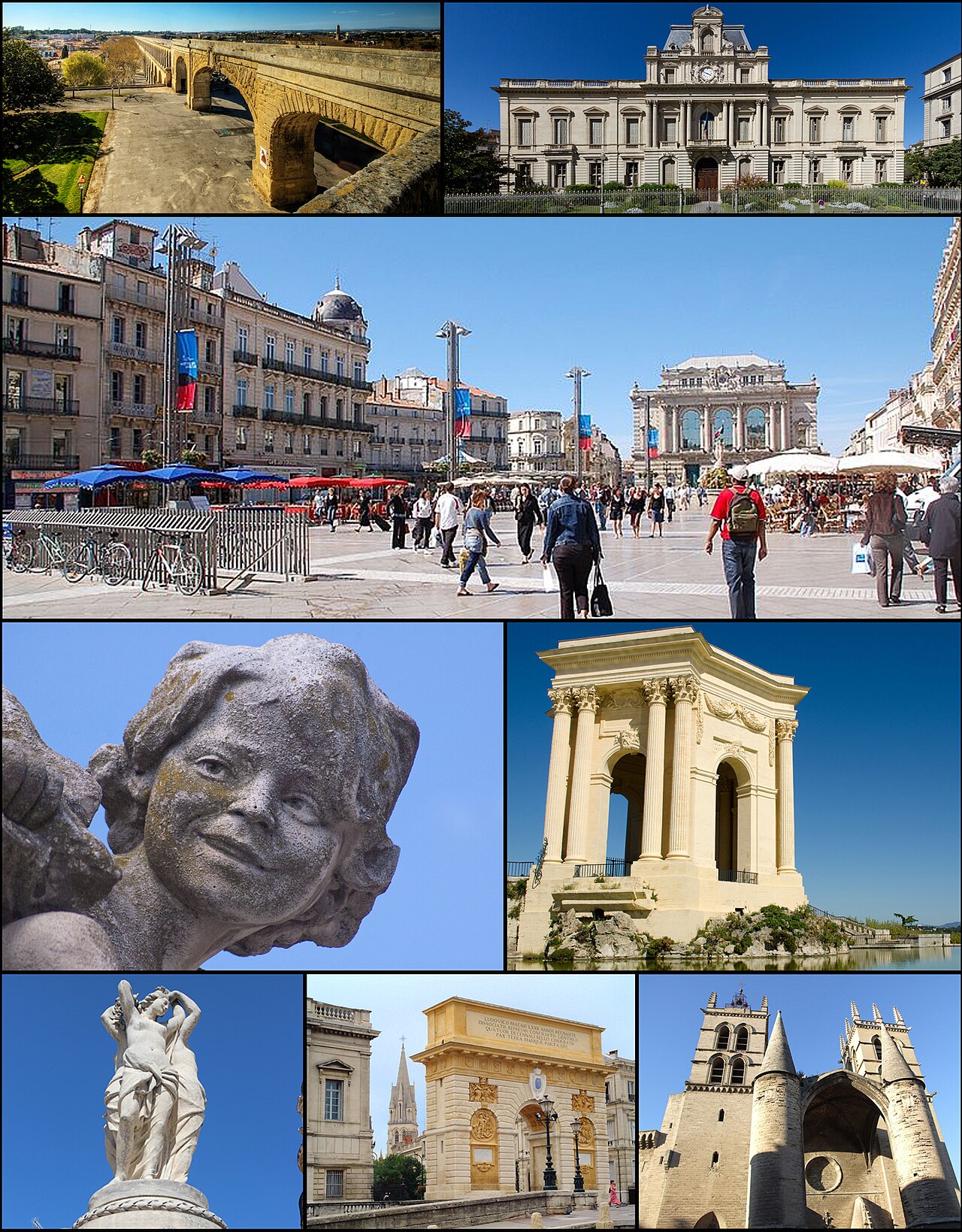
- Place de la Comédie — Edge of the Écusson
Montpellier's main gathering square, the Place de la Comédie, opens at the edge of the old town and is ringed by classic bistros and café terraces. It is a good first stop to get oriented, watch the city go by and decide where to eat. Evenings are lively, especially in term time when students fill the benches.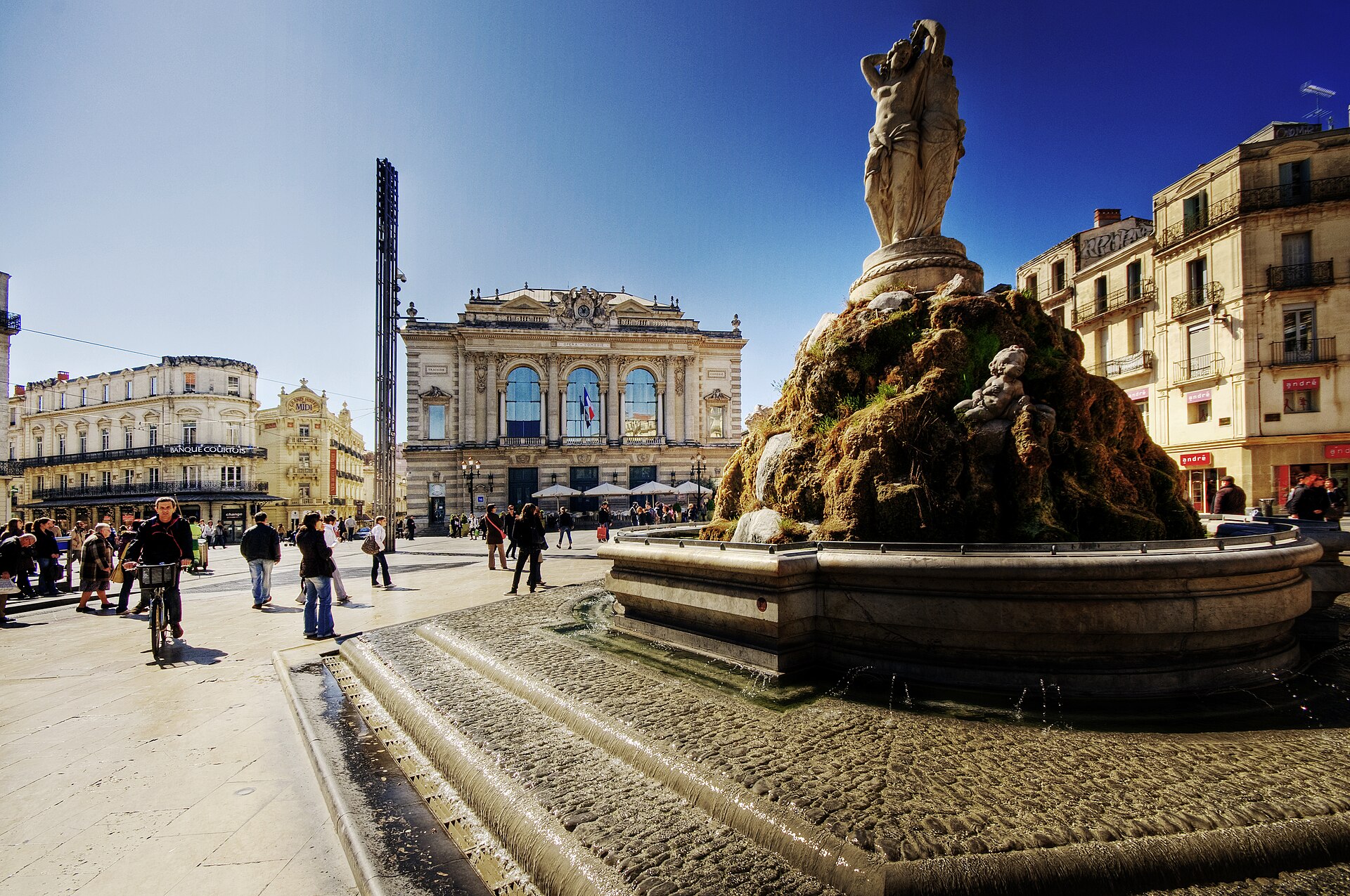
- Promenade du Peyrou — West of the old town
Montpellier's Promenade du Peyrou is a three-hectare esplanade laid out in 1689 on the western side of the Écusson. A large equestrian statue of Louis XIV stands here, and the Château d'Eau, the water tower, closes the vista. It is a pleasant place to sit at sunset and watch the light change.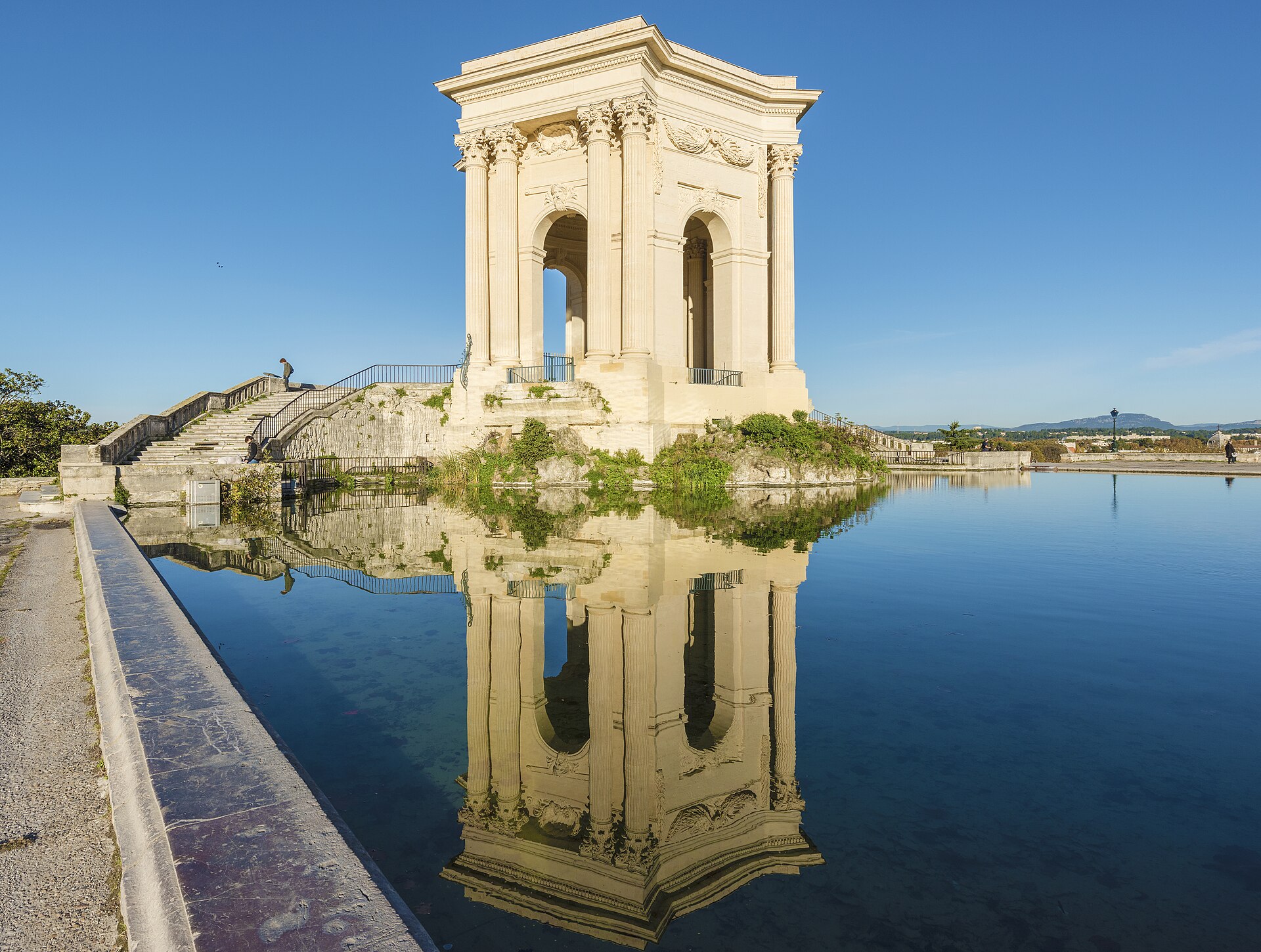
- Arc de Triomphe — Beside the Peyrou
Montpellier's triumphal arch, commissioned by Louis XIV and inspired by the Porte Saint-Denis in Paris, marks the entrance to the Peyrou side of the old town. The top is open only through guided walks run from the tourist information office, so ask there before planning. Even from the ground the stonework deserves a few minutes.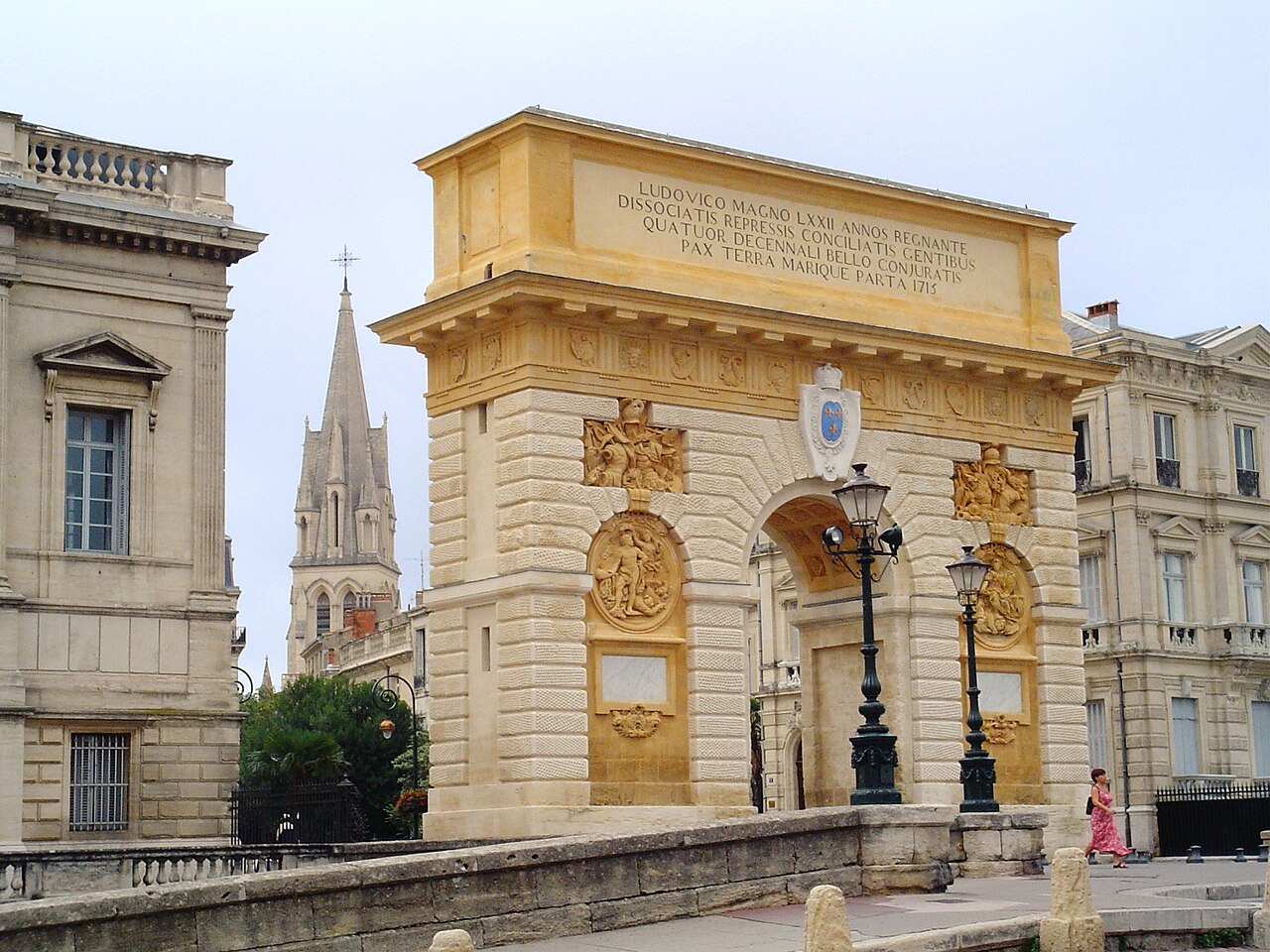
- Jardin des Plantes — North of the Peyrou
Montpellier's Jardin des Plantes dates from 1593 and is a botanical garden and arboretum a short walk north of the Peyrou. It is a quiet, shaded counterpoint to the busy squares, useful in the heat of the day, and a reminder of the city's long association with medicine and the study of plants. - Cathédrale Saint-Pierre — Old town
Montpellier's Cathédrale Saint-Pierre began as the chapel of a monastery, and its heavy, fortress-like frontage stands out among the lanes of the old town. It is worth a look inside and out. Opening times and any restrictions on visits vary, so check locally before going.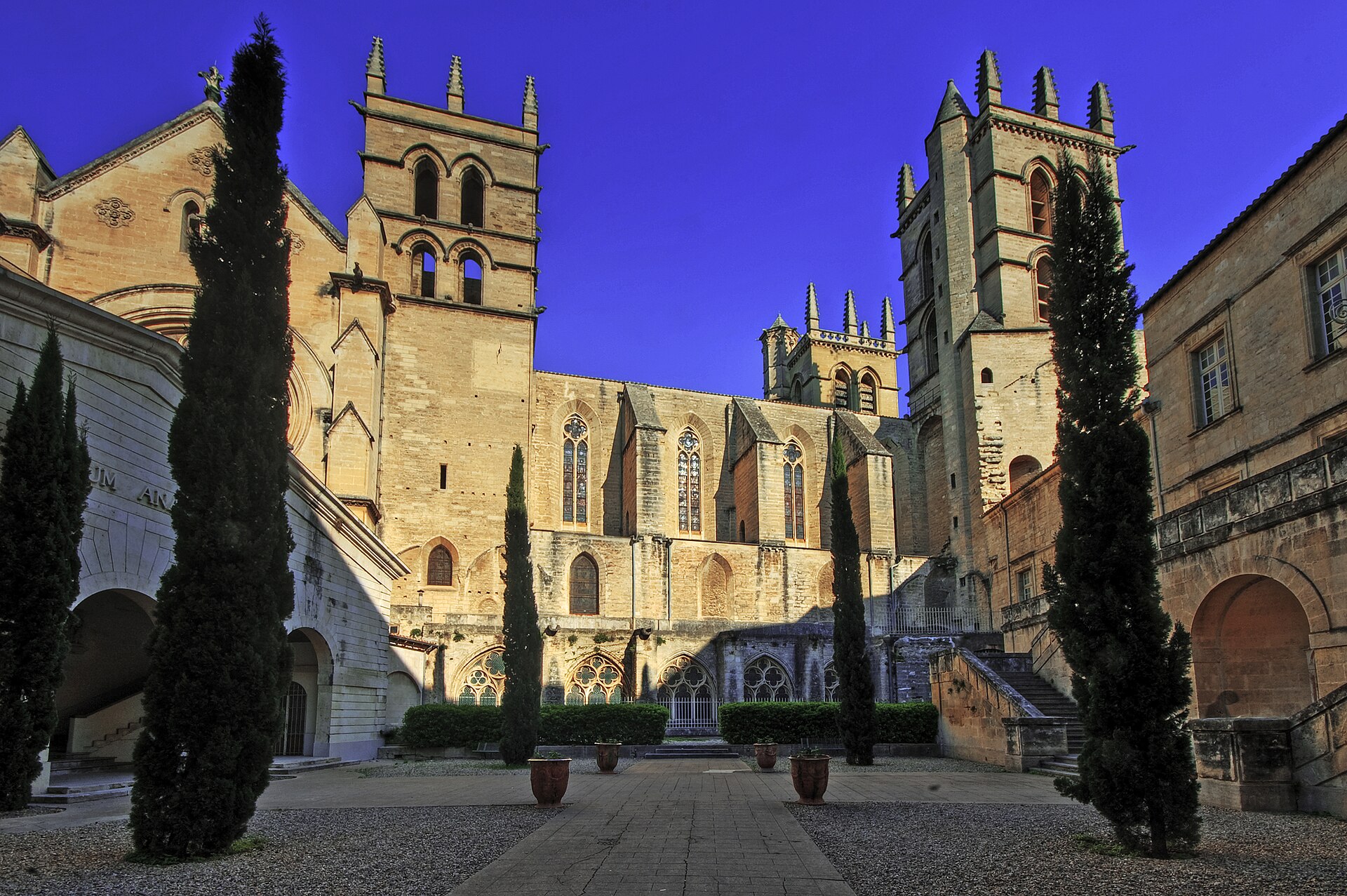
Culture
Montpellier's cultural life runs on its students and its summers. The city supports two large concert halls, Le Zénith Sud and L'Arena, for touring acts, while Le Corum, a cultural and conference centre, holds three auditoriums. In summer the Festival de Radio France et Montpellier fills historic courtyards and Le Corum with opera, classical music and jazz, and many of its events are free. In autumn the Cinemed festival, running since 1979, screens Mediterranean cinema from features and documentaries to student shorts. Away from the programmed events, daily life revolves around terraces, markets and long lunches. The city's Occitan heritage shows up in place names and local pride more than in everyday speech, and its Aragonese past and later arrivals from across the Mediterranean give it an outward-looking, easygoing character. Because so many residents are young, the old town can be loud late on warm nights, particularly around the bars. Some small shops close on Sundays and for part of the summer, so plan errands accordingly. Greet shopkeepers and café staff with a 'bonjour' before asking for anything, and keep your voice low on old-town terraces at night, since people live in the flats above the bars.
What to wear
Montpellier has no single costume that people wear day to day, but the region's traditional Occitan dress survives with folk dance groups and at festivals. It typically means long skirts, shawls and lace caps for women, and waistcoats, sashes and berets for men, made from cotton, linen and wool. The city's own link with cloth is the woad plant that gave it its name, a source of blue dye. Everyday style now is relaxed Mediterranean smart-casual: linen shirts, light dresses, jeans, trainers and sunglasses, with students dressing down and office workers dressing a notch up in the evenings. Visitors should pack light, breathable fabrics, a hat and sunscreen for the long hot summer, and comfortable shoes with good grip, since the old town's stone paving is uneven and polished by use. A light layer helps on breezy evenings, and winter days can feel cool when the wind blows. Swimwear belongs at the beach, not in the streets. When stepping into the cathedral or other churches, cover bare shoulders and avoid very short shorts, which is a courtesy rather than a strict rule.
What to eat
- Oysters and mussels from the Thau lagoon — Covered markets and seafood counters in the old town
Montpellier's nearest seafood tradition comes from the Étang de Thau, along the coast to the south-west, whose oysters and mussels reach the city's markets and fishmongers. They are eaten simply, with lemon and a glass of cold white wine, and suit a warm evening best. - Tielle sétoise — Bakeries and market stalls
A hand-sized pie from the port of Sète, filled with octopus in a spicy tomato sauce. It is a coastal snack rather than a Montpellier invention, but local bakeries and market stalls sell it, and it makes a sturdy lunch for a day of walking. - Brandade de morue — Traditional bistros near the Place de la Comédie
A creamy purée of salt cod, olive oil and garlic, a staple of Languedoc cooking. It arrives warm, usually with bread, and tastes best at a lunchtime table in a cool bistro. Menus often list it among the regional dishes. - Languedoc wines — Wine bars and wine shops in the Écusson
Crisp whites such as Picpoul de Pinet and sturdy reds from the hills inland are poured by the glass in most wine bars. Ask the staff for something from the Hérault and let them choose; the range is wide and rarely pretentious. - Plat du jour at a bistro — Café terraces around the Place de la Comédie
Steak-frites or the dish of the day, served at a pavement table, is the easiest way into the café life the city is known for. Midday menus are usually chalked on boards outside, and a coffee afterwards is part of the ritual. - Kebabs, sandwiches and Laotian cooking — Streets of the old town and its edges
Montpellier's centre has Laotian restaurants, kebab counters and sandwich shops side by side with French bistros. A counter-service sandwich or kebab does the job for a fast lunch between sights, while the Laotian places suit a slower evening.
Plan it
Best time. May–June and September–October bring warm, bright weather with terraces in full swing and less of the heat of July–August, when the city is hot and the coast draws crowds. Winters are mild but can be breezy and grey.
How long. 2–3
Getting there. Montpellier's airport has connections through Air France's Paris hubs and direct flights to several European cities; a tram or taxi covers the last leg into the centre. By train, high-speed services run from Paris in about three hours, with links from Barcelona and Madrid. Some fast trains bypass the central Saint-Roch station, so check which station your ticket uses.
Budget. mid
Tips
- Do the gardens, esplanade and museums in the morning in summer and rest through the hottest hours
- Book long-distance trains early for Paris or Barcelona, and reserve popular bistros for weekend evenings
- Cards are widely accepted, but carry a little cash for market stalls
- Check the official city site, https://montpellier.fr, for events, tours and the Arc de Triomphe climb
- Carry a water bottle; the old town has little shade at midday in summer
Etiquette
- Say 'bonjour' when entering a shop or café
- Cover shoulders and keep voices low inside the cathedral
- Keep noise down late at night in old-town lanes, where people live above the bars
Nearby
Sources
- Wikidata Q6441 (CC0)
- Wikipedia: Montpellier (rev 1383915596) (CC BY-SA 4.0)
- Wikivoyage: Montpellier (rev 5411417) (CC BY-SA 4.0)
- Montpellier photomontage, DePlusJean (CC BY 3.0)
- Montpellier Place de la Comédie, Wolfgang Staudt (CC BY 2.5)
- Cathédrale Saint-Pierre de Montpellier, Wolfgang Staudt (CC BY 2.5)
- Bassin Jacques Cœur, Fred Romero (CC BY 2.5)
- Nouvelle Mairie de Montpellier, Arnaudinvictus (CC BY 3.0)
- Tour de la Babote, Sebjarod (CC BY 3.0)
- Château d'eau du Peyrou, Christian Ferrer (CC BY-SA 4.0)
- Gate Montpellier, Empoor (Public domain)


