Minsk Sea
Minsk Sea, Belarus
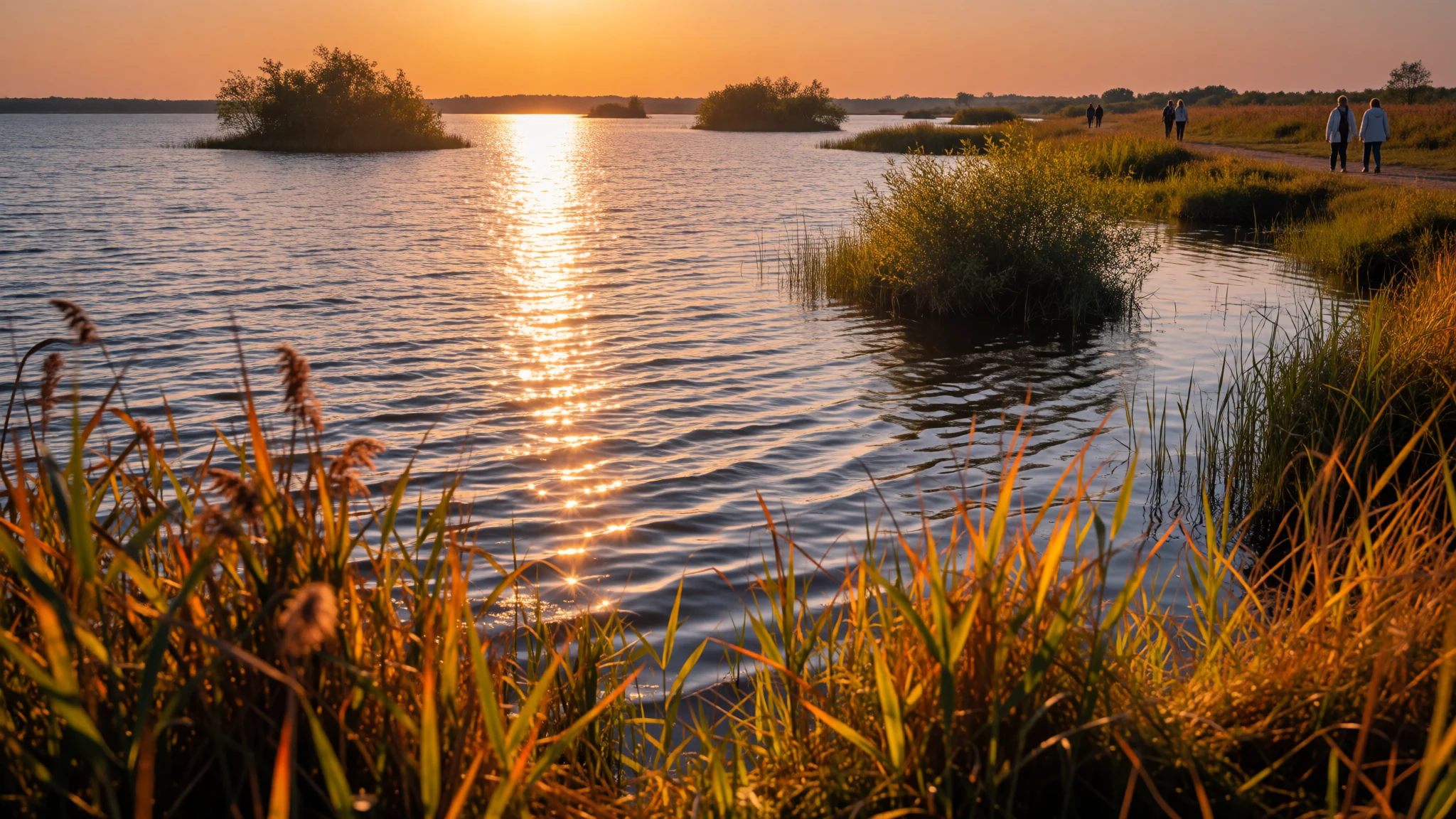
Minsk Sea is a quick getaway from Minsk: broad water, islands, and long walks that feel more open than the city.
The place
Minsk Sea is the nickname most people use for Zaslawskaye Reservoir (Belarusian: Заслаўскае водасховішча; Russian: Заславское водохранилище), an artificial lake in the Vileyka–Minsk water system. It sits just outside Minsk’s north-west edge and covers enough space that, from the right viewpoint, it reads like a real sea: wide water, floating islands, and big sky.
This is not a natural “pretty pond” tucked into a park. The reservoir was created in 1956 with a dam on the Svislach river, built for flood control in Minsk and to regulate the river flow. Before the basin filled, the area was a swampy floodplain connected to several rivers, which helps explain the marshy feel of some shoreline stretches.
Because it’s close to Minsk, the mood swings with the time of day. Early on, it can be quiet and reflective, with light catching the islands and the shoreline. In warmer months, families and locals drift out for the kind of day that doesn’t require a timetable: walking, sitting, and simply watching weather move across the surface.
Crowds are generally manageable compared with big city attractions, though it can feel busier during warmer weekends near easy shoreline access. The water and islands look especially vivid when the light is softer, such as at morning or evening.
In short: Minsk Sea is a water-and-landscape break. It’s close, it’s photogenic in a straightforward way, and it rewards patient wandering more than it rewards rushing.
Its story
Minsk Sea exists because Minsk needed water-management, not because someone planned a leisure coastline. Zaslawskaye Reservoir was created in 1956 by damming the Svislach river, tying into the Vileyka–Minsk water system that helps control flooding and regulate flow. That practical origin still shapes the place: a reservoir basin, a shoreline defined by engineered water levels, and a landscape that feels wide and functional rather than “designed for tourists”.
Locals kept the nickname—“Minsk sea”—because the scale does something to your perception. Standing at the right bend, with islands scattered across the water, the horizon looks too far for it to be “just a lake”. Even the way the reservoir is photographed from above supports this: from satellite views, the water reads like a patch of ocean cut into land.
There’s also an interesting contrast between the present and the past. The reservoir flooded a swampy floodplain of rivers that fed the Svisloch and other channels mentioned in local geography. So while the water is modern infrastructure, the ecosystem that surrounds it still carries the hint of wetlands: muddy edges in places, reed-like vegetation where it can settle, and a shoreline that changes feel as seasons shift.
For travellers, the story is simple: this is a place to slow down. Instead of lining up for a single attraction, visitors often build a small loop—walk until the water opens, pause at a viewpoint, then walk again. The “plot” is weather and light. When the sky clears, the surface becomes glassy and islands stand out; when clouds roll in, the same angles feel more dramatic and less serene.
If you come expecting a theme park, it won’t deliver. If you come ready to watch, walk and adapt to the day’s conditions, Minsk Sea offers a calm kind of satisfaction.
What to see
- Zaslawskaye Reservoir shoreline viewpoints — Minsk Sea / Zaslawskaye Reservoir edge
Look for stretches where the bank opens onto the water and the islands appear in front of you rather than to the side. In summer, the surface colour shifts quickly, so early or late light makes the islands feel closer and the horizon sharper.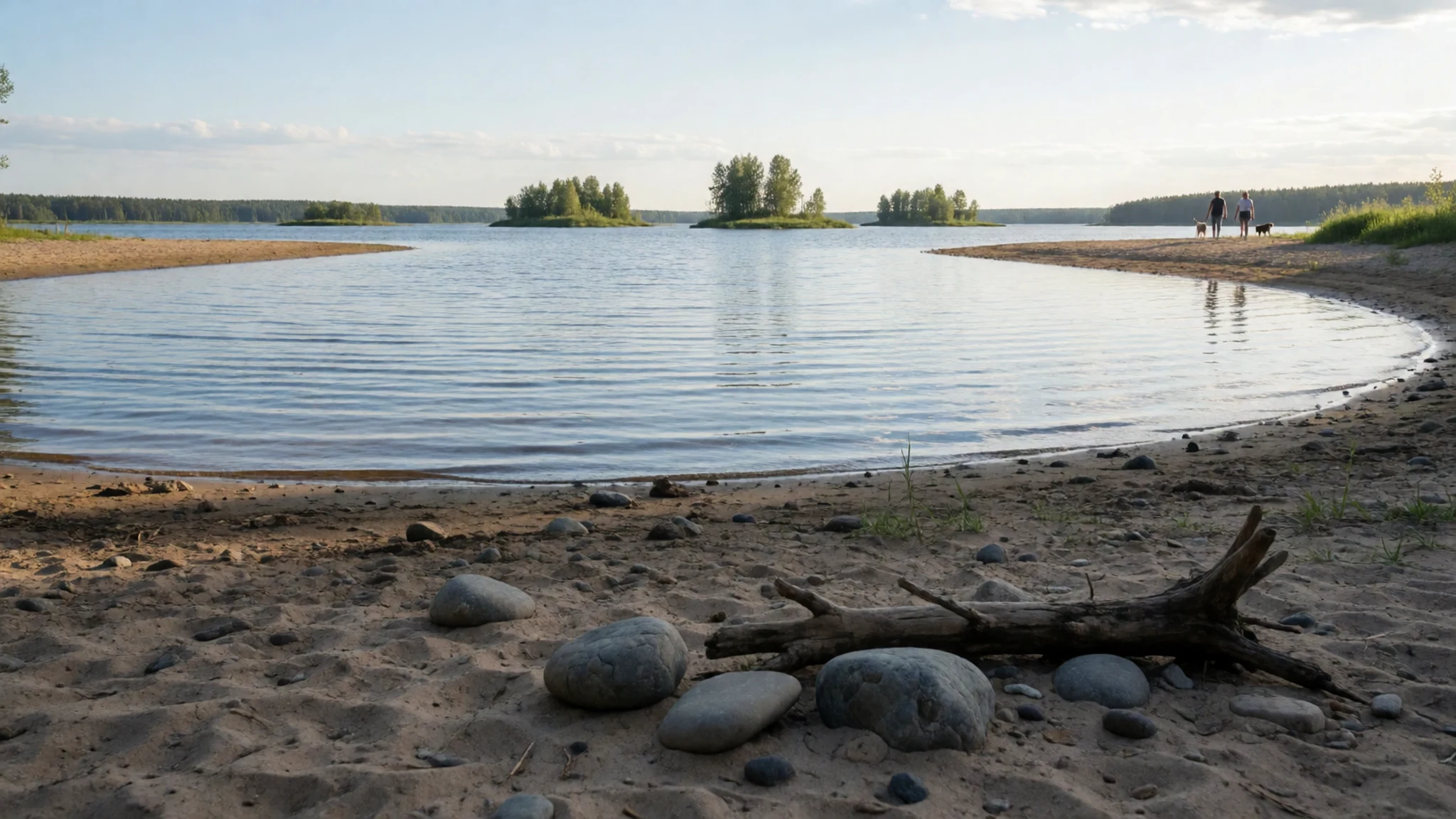
- Islands across the water (bird’s-eye perspective) — Across the reservoir water body
Minsk Sea is dotted with islands, and from elevated angles they read like small pieces of land floating in a larger bowl of water. Use the reservoir’s open views to frame the islands against the far shoreline for clean, simple compositions.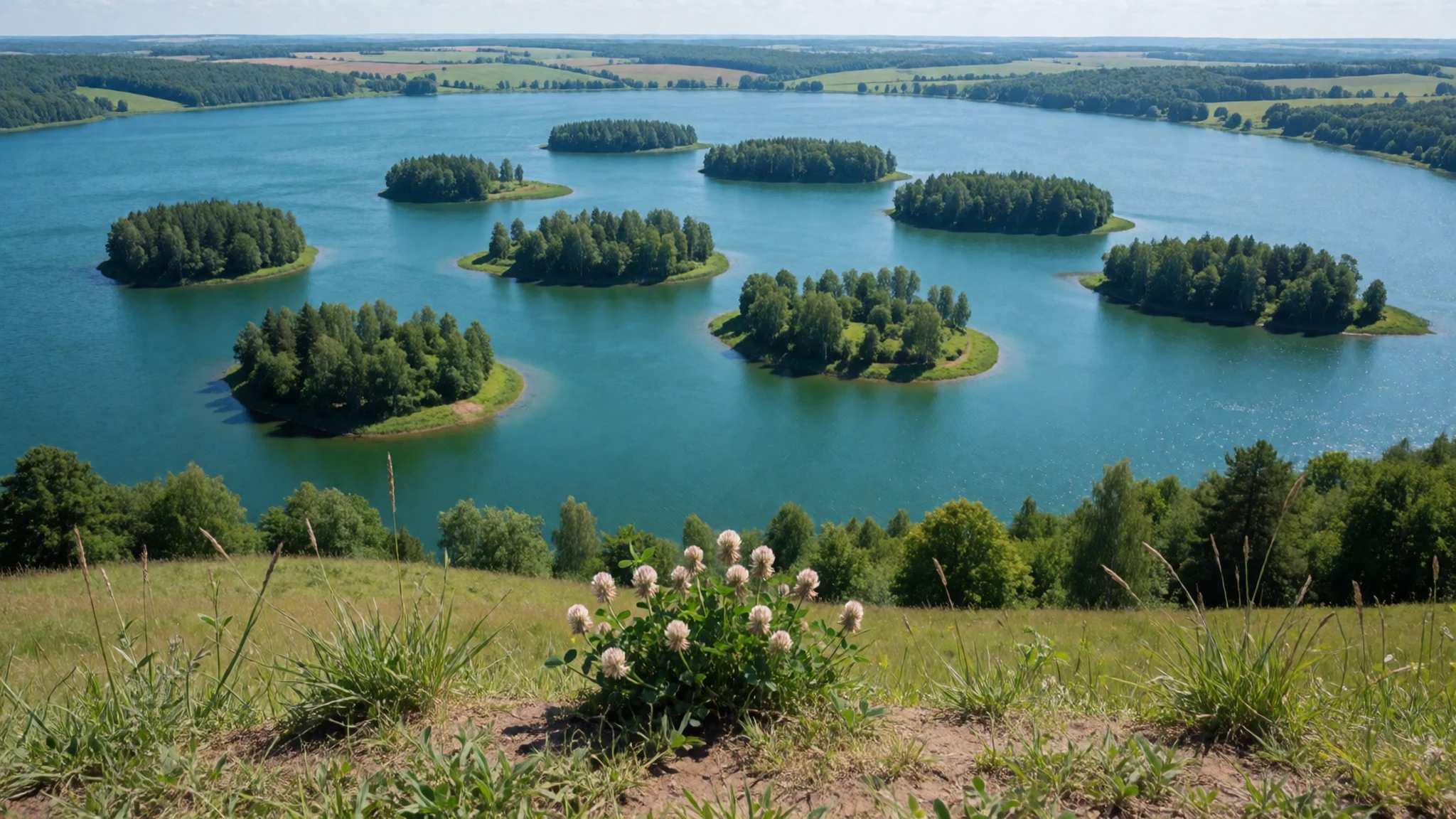
- Evening light from an open bank — Reservoir banks with open sightlines to the horizon
Evening often brings softer contrast: the water darkens, islands become silhouettes, and the shoreline textures show up better than at midday. This is a good time for a slower walk and a longer pause with fewer people around.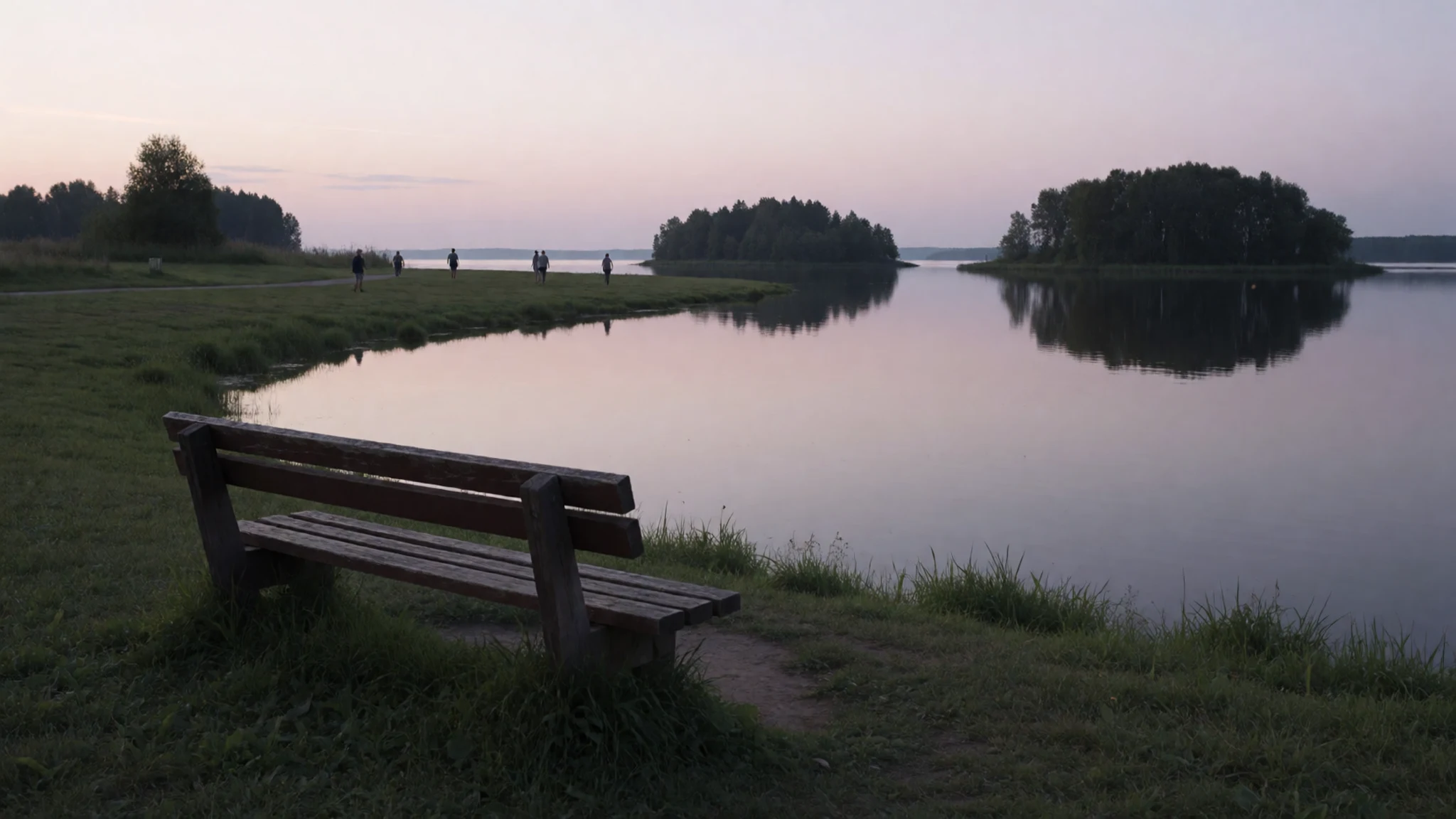
- Big-water scale from higher angles — Lookouts and vantage points around the reservoir
When the view is higher—whether via a vantage point or a clear photo angle—the reservoir’s “sea-like” breadth stands out. The water’s edges and islands form patterns that are harder to notice from ground level.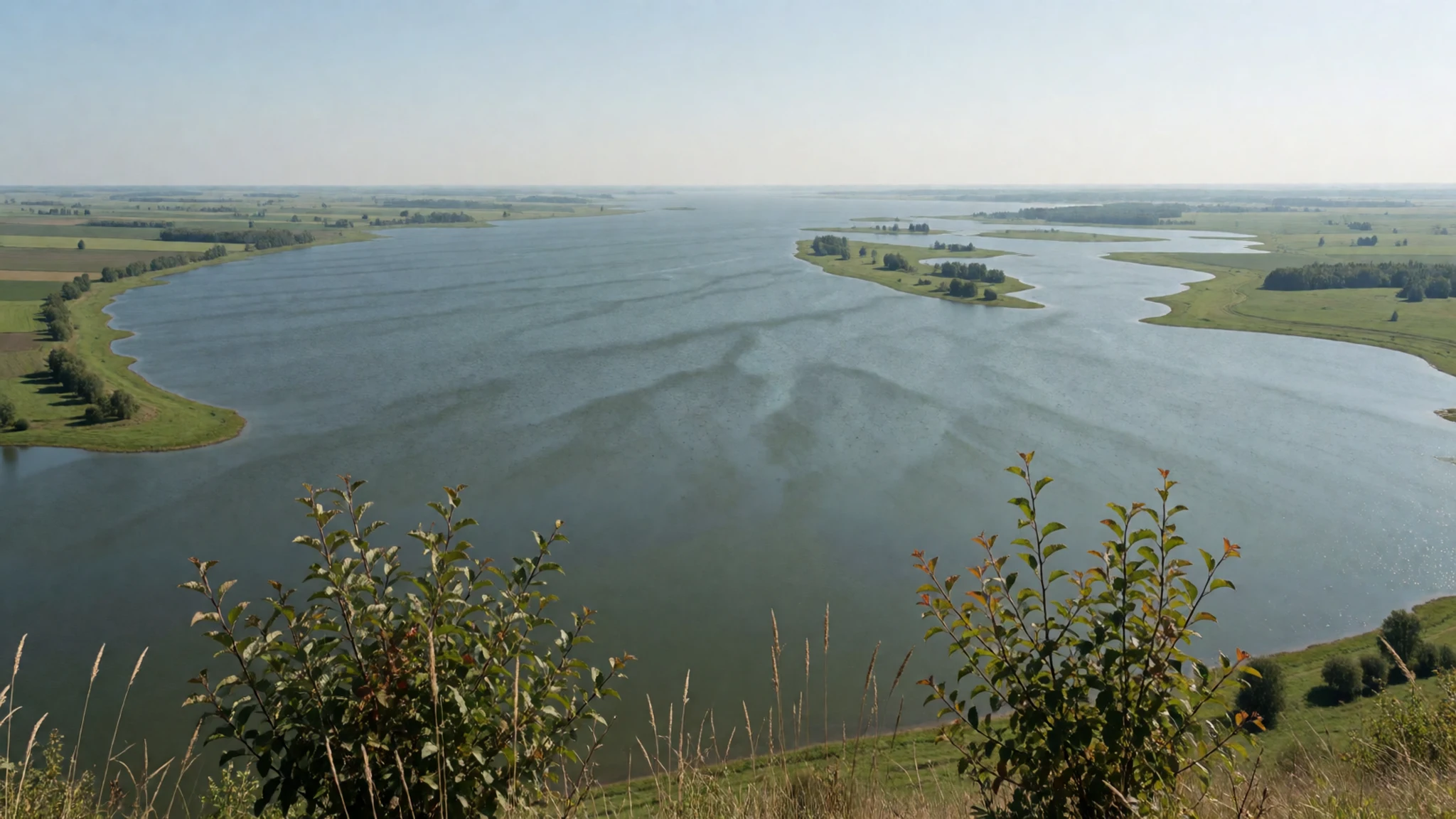
- Sunset over the fields by the reservoir — Nearshore areas where fields meet the water
As the sun lowers, the surrounding land turns warm while the water holds cooler tones. Sunset can make the reservoir feel more like a landscape scene than a utility lake, with long shadows stretching across nearby open areas.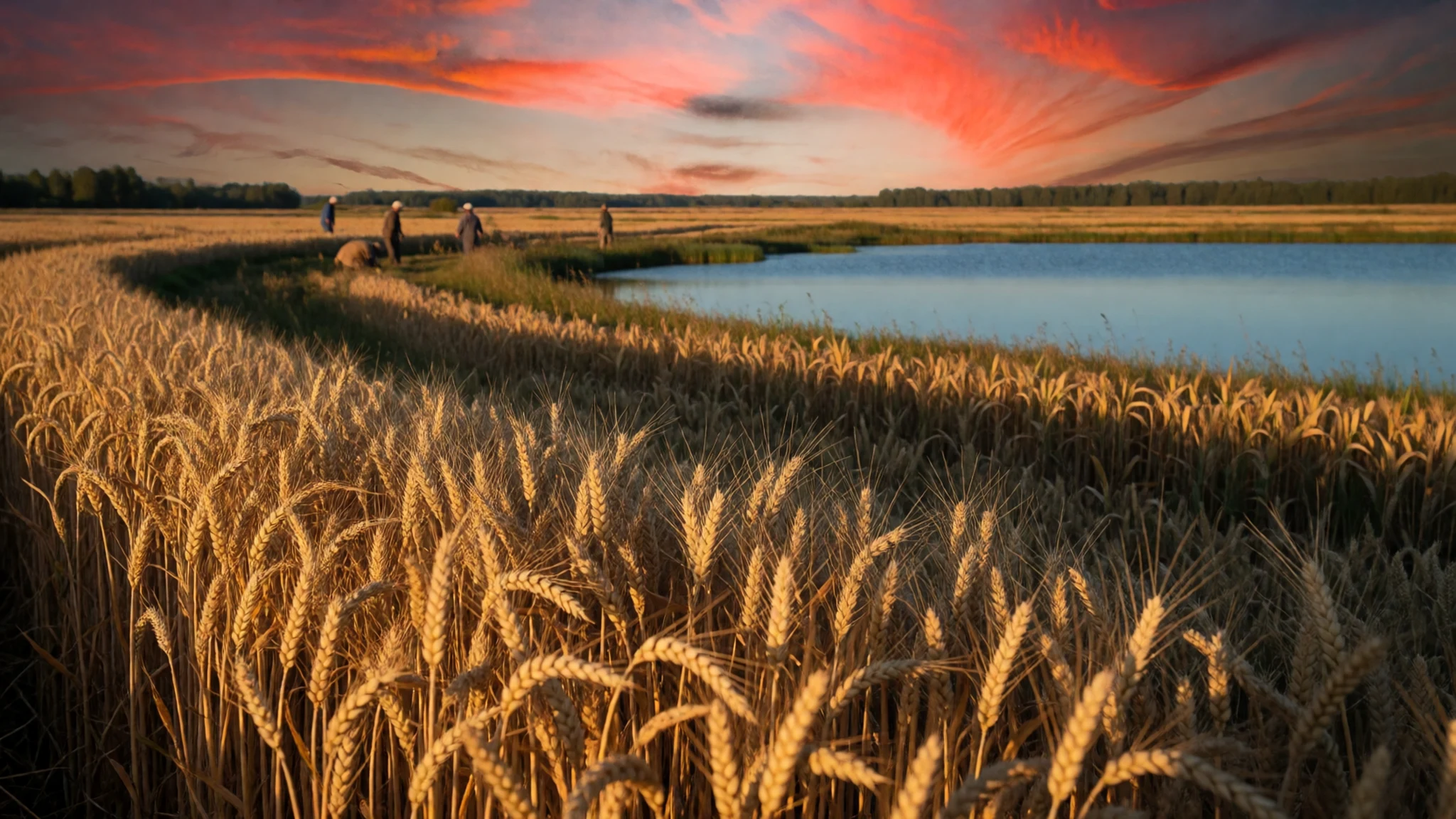
Culture
Minsk Sea doesn’t revolve around monuments; it’s a landscape people use. That means etiquette is mostly about sharing space—keeping paths clear, staying aware of cyclists and joggers, and respecting the calmer corners where locals go to sit and watch the water.
Because this is a working reservoir tied to the Vileyka–Minsk water system, the vibe is less “romantic promenade” and more everyday outdoor time. On busier warm-weather days, expect more families and groups near the most convenient shoreline access points. The best calm is usually a short walk away from the obvious spots.
In Belarusian and Russian culture, lakes and reservoirs are often treated as places for recreation and relaxation, so you’ll see people lingering with food, drinks and conversation. Keep noise down late in the day, and be mindful that some shoreline edges can be soft or uneven—especially after rain.
If swimming is happening locally, follow the example of where people enter and avoid areas that look disturbed or unsafe. It’s also worth remembering that wildlife around water can be sensitive; don’t approach nests or disturb birds for photos.
If the weather turns, don’t be surprised by wind off the water—bring a layer, and keep your bag secure in gusts.
Visitor etiquette: keep to marked paths where possible and avoid wading into muddy edges or approaching wildlife for photos.
What to wear
Traditional dress near Minsk Sea isn’t something you’ll “see on demand” by the shoreline, but Belarusian everyday clothing still gives clues about what locals consider practical. In past and festive contexts, traditional garments often feature linen and wool textures and are layered for the seasons; visitors should treat that as inspiration for materials, not a requirement.
What people wear now around the reservoir is straightforward: T-shirts and light jumpers in the warm months, long trousers or jeans for walking, and trainers that handle uneven ground. In cooler seasons, a warmer mid-layer and a proper outer coat make a big difference—especially with breeze coming off the water.
For visiting, dress for weather changes: bring a windproof jacket, expect bright sun in summer, and plan for occasional chilly evenings. Footwear matters more than fashion here. Choose shoes with decent grip for bank paths that can be slippery near the waterline. If a day of wandering stretches into evening, a hat and sunglasses help when glare off the reservoir surface is strong.
If someone’s heading to the water for a dip, they’ll typically wear swimwear under practical outer layers for the walk back—something easy to dry and not overly delicate.
What to eat
- Draniki (potato pancakes) — Casual restaurants in Minsk
Look for draniki at casual eateries around Minsk, often served hot with sour cream. They’re a comfort-food classic that fits well after a long walk by the reservoir.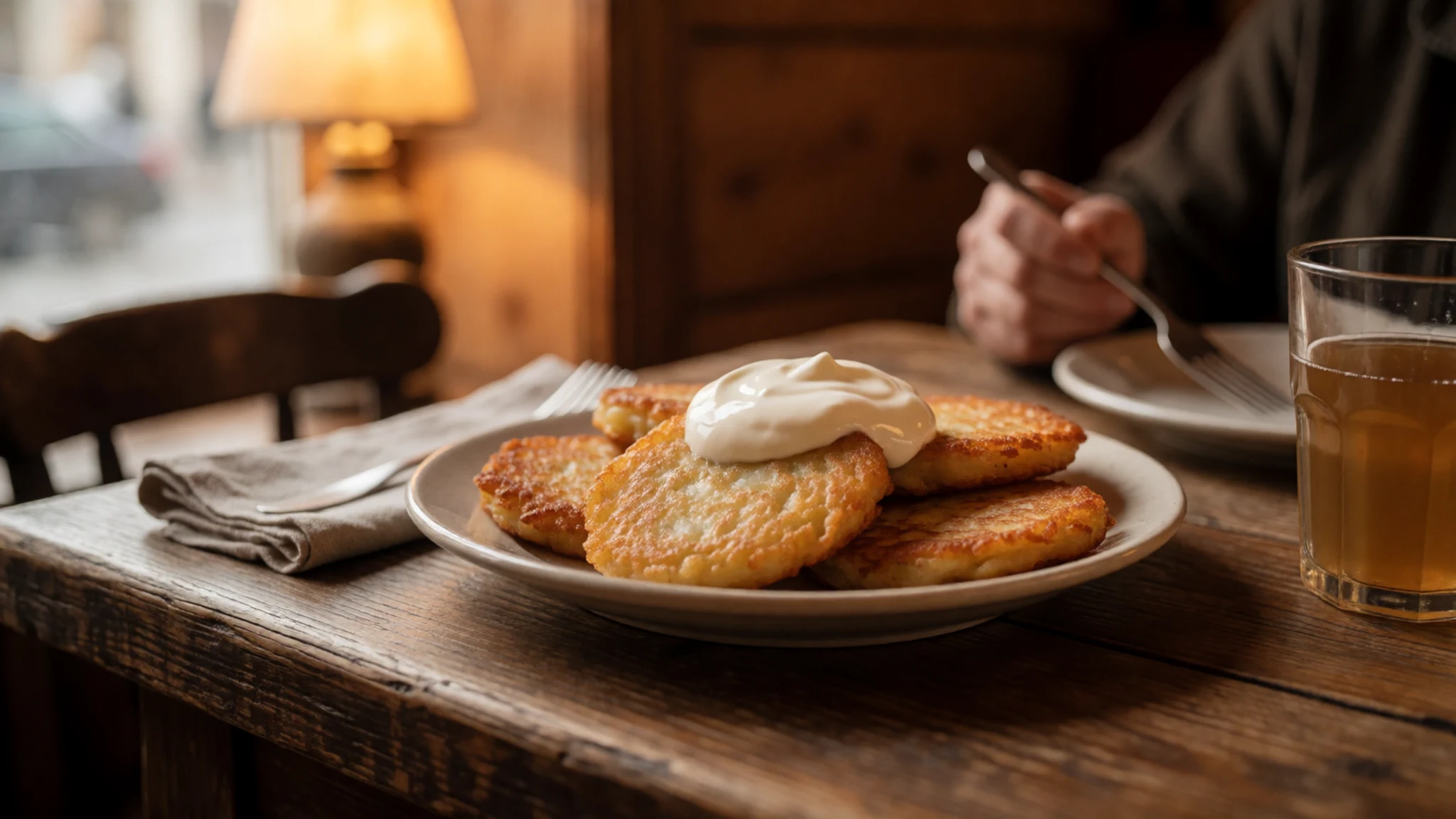
- Shchi (cabbage soup) — Local eateries and soup-focused places in Minsk
Shchi is a warming bowl of cabbage soup that shows up commonly in Belarusian menus, especially when the weather feels cool. It’s easy to pair with an easy day outside.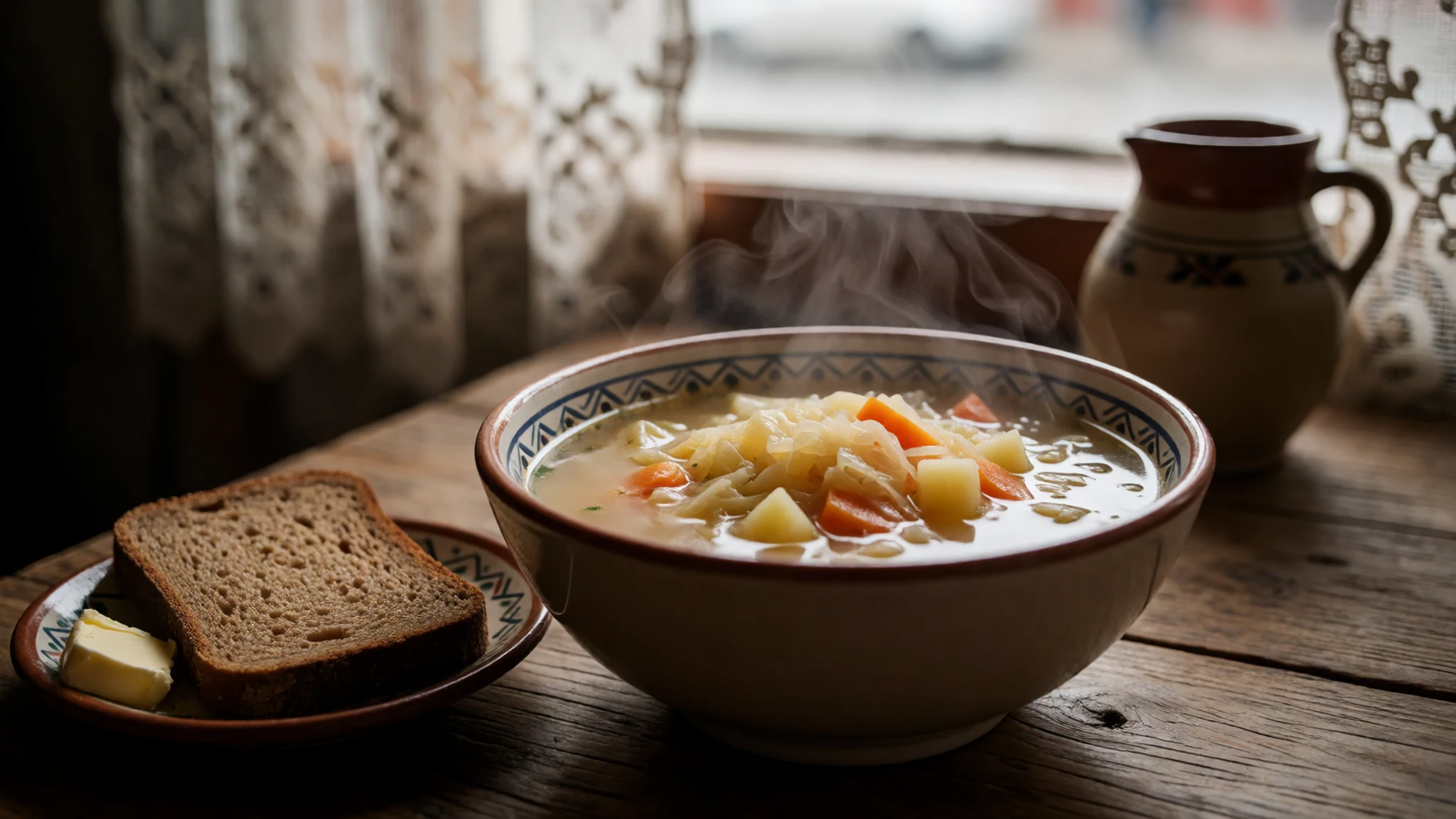
- Kasha (buckwheat or barley porridge) — Traditional-style restaurants in Minsk
Kasha is common across Belarus, usually served as a hearty side or base with butter or simple toppings. It’s the kind of meal that helps when a walking day runs long. - Pickles and pickled vegetables — Markets and food shops in Minsk
You’ll see jars of pickled cucumbers and mixed vegetables in Belarusian shops and some markets. They’re handy for a picnic-style snack if you’re spending the day near the water. - Kvass (fermented drink) — Drink stands, cafés and shops around Minsk
Kvass is a lightly fermented, tangy drink that’s a popular refreshment in warmer months. It’s a good pairing for outdoor time when you want something not-too-sweet.
Plan it
Best time. May–September is the warmest stretch, with July and August the hottest days; May is also the wettest month. For the most comfortable temperatures, go in April and October, when days are mild; September can feel comfortably warm too, with less rain than summer. Late October–November is cooler and can be a chill walk even though conditions are often steadier than in the depths of winter.
How long. 2–3
Getting there. Fly into Minsk (nearest airport in Minsk city area). From there, take local transport to the north-west edge of Minsk and then walk or use a short local ride to reach shoreline access points around Zaslawskaye Reservoir.
Budget. mid
Tips
- Aim for morning or late evening for softer light along the most convenient banks
- Pack a windproof layer for weather off the water, even when the day starts warm
- Bring water and snacks—there’s a local picnic rhythm here, but you may not find a shop right where you choose to stop
- If planning any water time, stick to places where locals enter and avoid muddy edges
Etiquette
- Keep to paths and avoid trampling soft shoreline vegetation
- Keep noise low in the evening, especially near quieter resting spots
- Don’t approach or disturb birds and wildlife for photos
Nearby
Sources
- Wikidata Q1775081 (CC0)
- Wikipedia (rev 1366935943) (CC BY-SA 4.0)
- Wikivoyage (rev 5089129) (CC BY-SA 4.0)
- Photo photos/01-zaslawskaye-reservoir-sentinel-2-satellite-image-2019-05-19.jpg (CC BY-SA 3.0 igo)
- Photo photos/02-.jpg (CC BY-SA 4.0)
- Photo photos/03-.jpg (CC BY-SA 4.0)
- Photo photos/04-.jpg (CC BY-SA 4.0)
- Photo photos/05-.jpg (CC BY-SA 4.0)
- Photo photos/06-.jpg (CC BY-SA 4.0)
- Photo photos/07-minsk-region-belarus-panoramio-10.jpg (CC BY 3.0)
- Photo photos/08-minsk-region-belarus-panoramio-16.jpg (CC BY 3.0)


