Milos
Milos, Greece
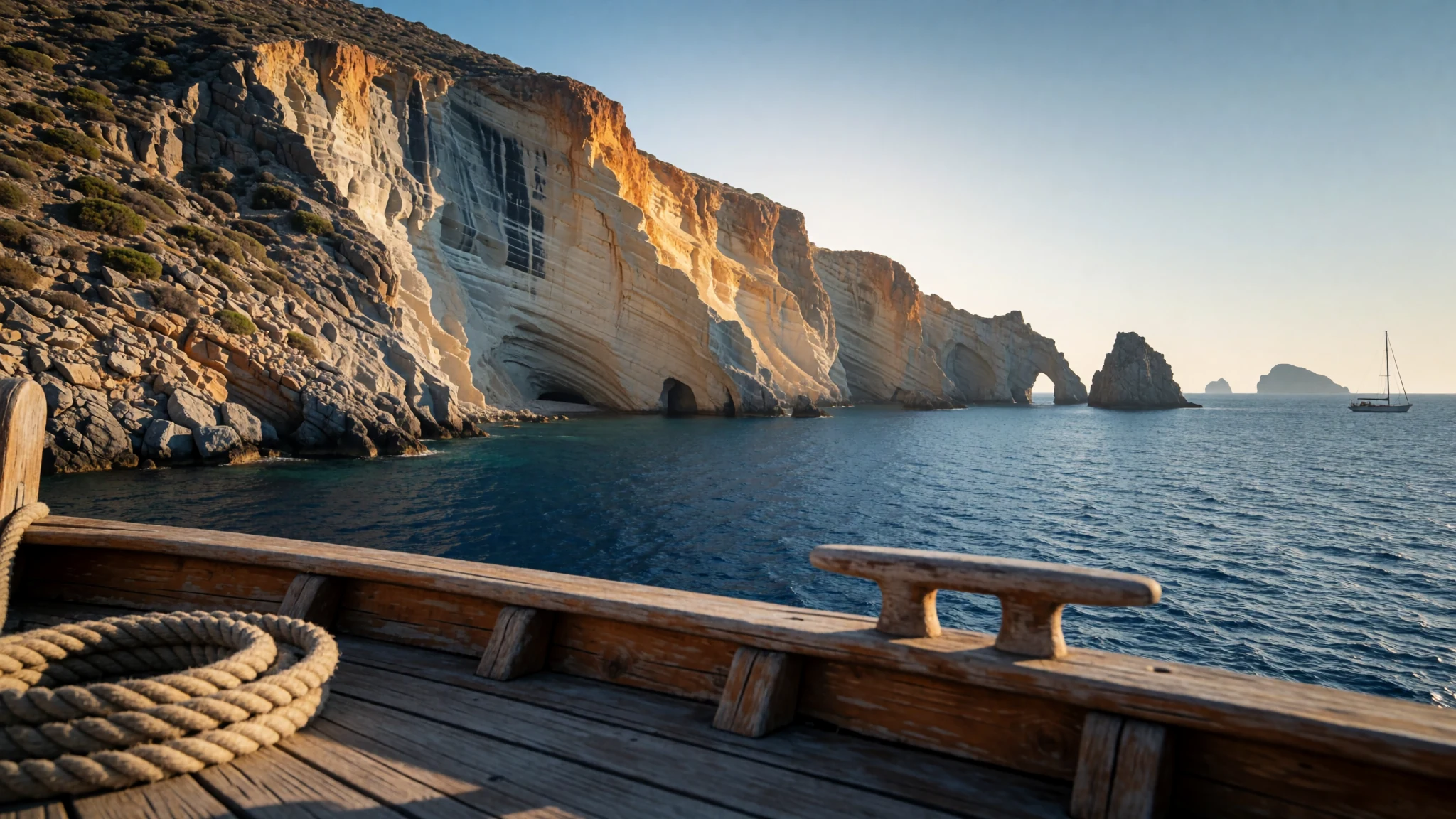
Milos gives you white wind-sculpted coves, volcanic cliffs and quiet villages, and it works best outside the July and August crowds.
The place
Milos is a volcanic island in the Aegean Sea, the south-westernmost of the Cyclades, and its landscape feels rugged rather than soft. Most of the land is hilly, rising to Mount Profitis Elias at 748 metres (2,454 feet) in the west, so roads twist and views open at nearly every bend. The coastline does the rest, with sea caves, rock arches, pebbled bays and cliffs streaked in ochre and grey. The rock is volcanic in origin, and in places the shoreline shows it directly, where wind and water have carved pale stone into smooth, rounded forms.
Most visitors base themselves near Adamantas, the port that handles most ferries and the island's bus services. From there the southern beaches are an easy drive, while the sea caves in the west usually mean a boat trip. Plaka, the island's best-known village, sits on a rocky outcrop above the port, with lanes of whitewashed houses, old churches and a Venetian castle at the top. Accommodation runs from small apartments to converted boat sheds and cave houses, and some stays are in the old windmills of Tripiti. High summer brings crowds to the beaches, tight parking and fully booked tavernas, while the shoulder months are cooler, quieter and easier to enjoy at a leisurely pace.
Its story
Milos first mattered for its obsidian, the dark volcanic glass that could be knapped into razor-sharp blades. Mining it was a seaborne affair. People arrived by boat, drew up on a suitable cove, and cut pieces from the quarries before leaving again, so the island saw no permanent settlement tied to the trade. Even so, the material travelled widely; by roughly 15,000 years ago obsidian from here was already in circulation far from the Aegean, and early farming communities in the Near East relied on it for their tools.
Its position between mainland Greece and Crete gave the island a useful role in early Aegean exchange, and its obsidian made it a valuable stop for seafaring traders. That value faded when bronze replaced stone as the preferred material for weapons, and the island lost much of its strategic weight.
The settlement at Phylakopi grew up on the north-east coast during the Bronze Age, as obsidian extraction was declining. Its first residents are thought to have been tuna fishermen. British excavations in 1896, and later work by the archaeologist Colin Renfrew in 1973, uncovered a town wall and a building with Minoan-style features called the Pillar room. Among the fragments of wall painting found there is a fresco of a flying fish, drawn with fine colour and a sharp eye for movement. Scholars have compared its style to Minoan work, and it may have been painted by a Cretan artist.
What to see
- Sarakiniko — north coast
Sarakiniko, on the north coast, is a stretch of smooth white volcanic rock that wind and sea have shaped into rounded dips, ridges and ledges. It looks almost lunar at midday and softer in the late afternoon. There is little shade, so water and a hat are essential, and the area gets busy in high season. Swimming is possible from the rock shelves when the sea is calm.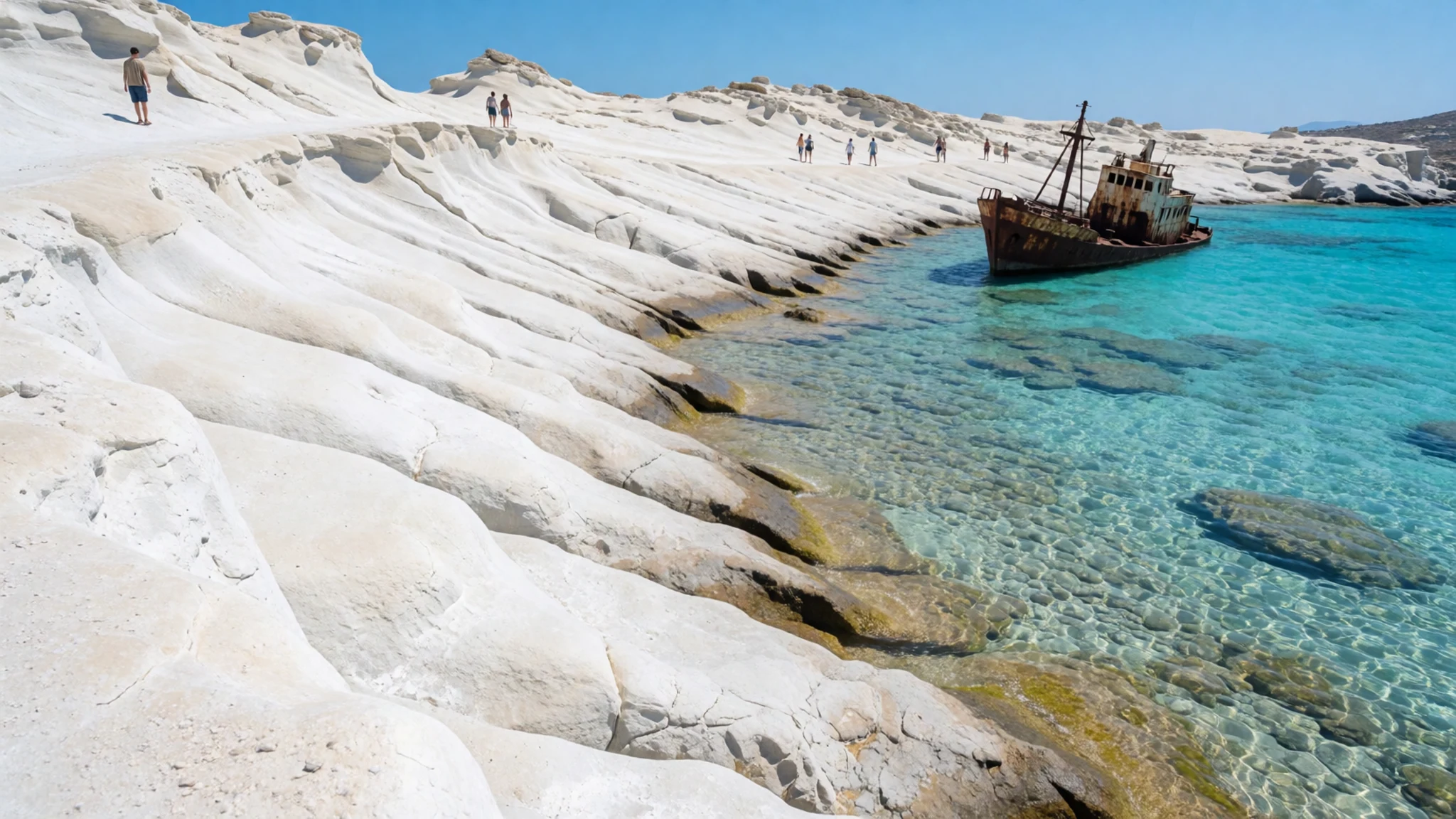
- Kleftiko — south-west coast, boat access
Kleftiko, on the south-west coast, is reached mainly by boat, which is how most visitors see it. Its white sea caves and tall rock arches reportedly sheltered pirates, and the water inside the grottoes is an intense blue. Boat trips usually pause for swimming, and calm weather decides whether landings go ahead.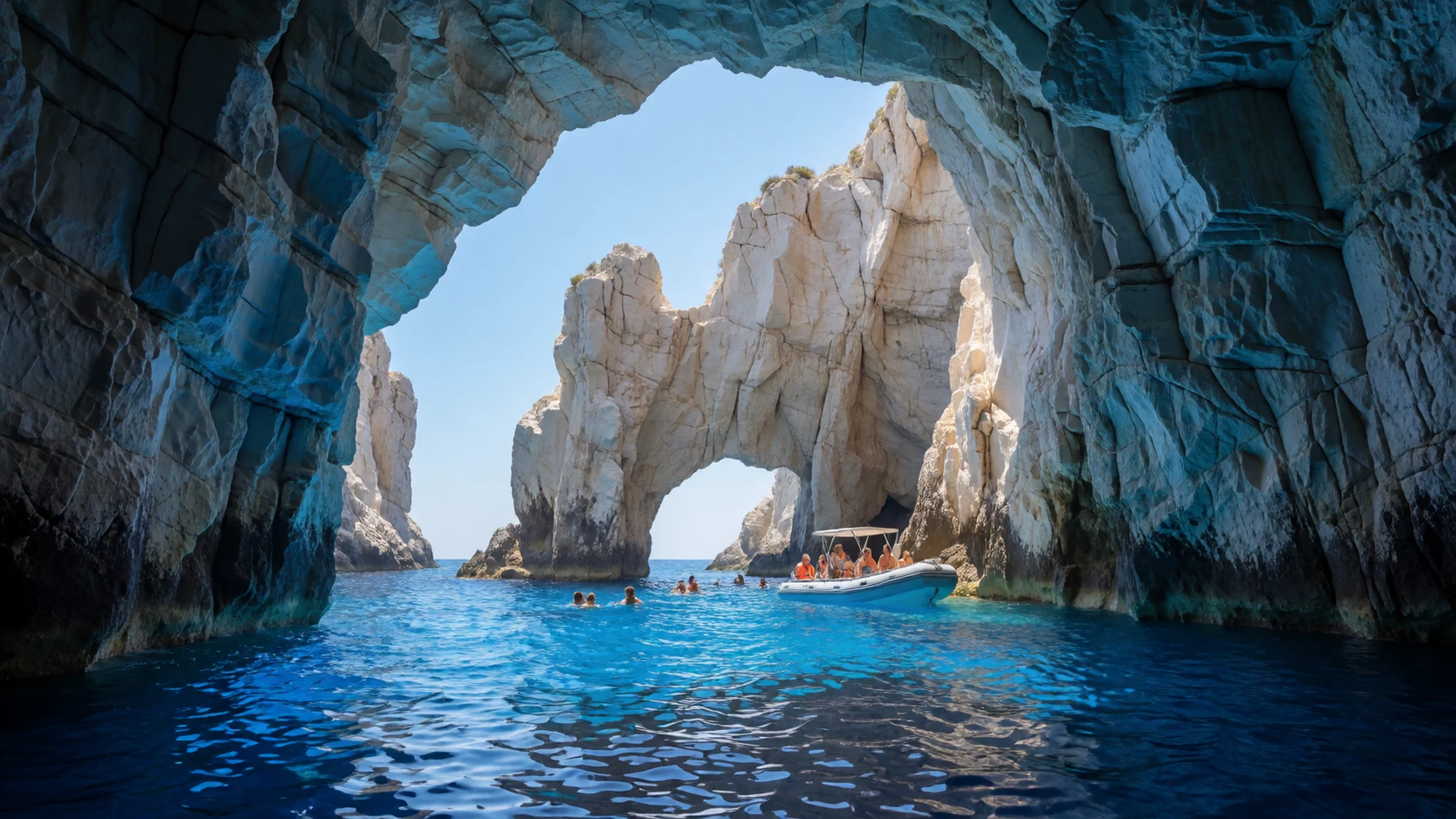
- Paliochori — east coast
Paliochori, on the east side of the island, is a sheltered bay set below colourful volcanic cliffs. The sand is mixed with fine pebbles, and the water is clear enough to see the seabed from the shore. Tavernas and rooms sit back from the sand. Parking is limited in July and August, so arriving early helps.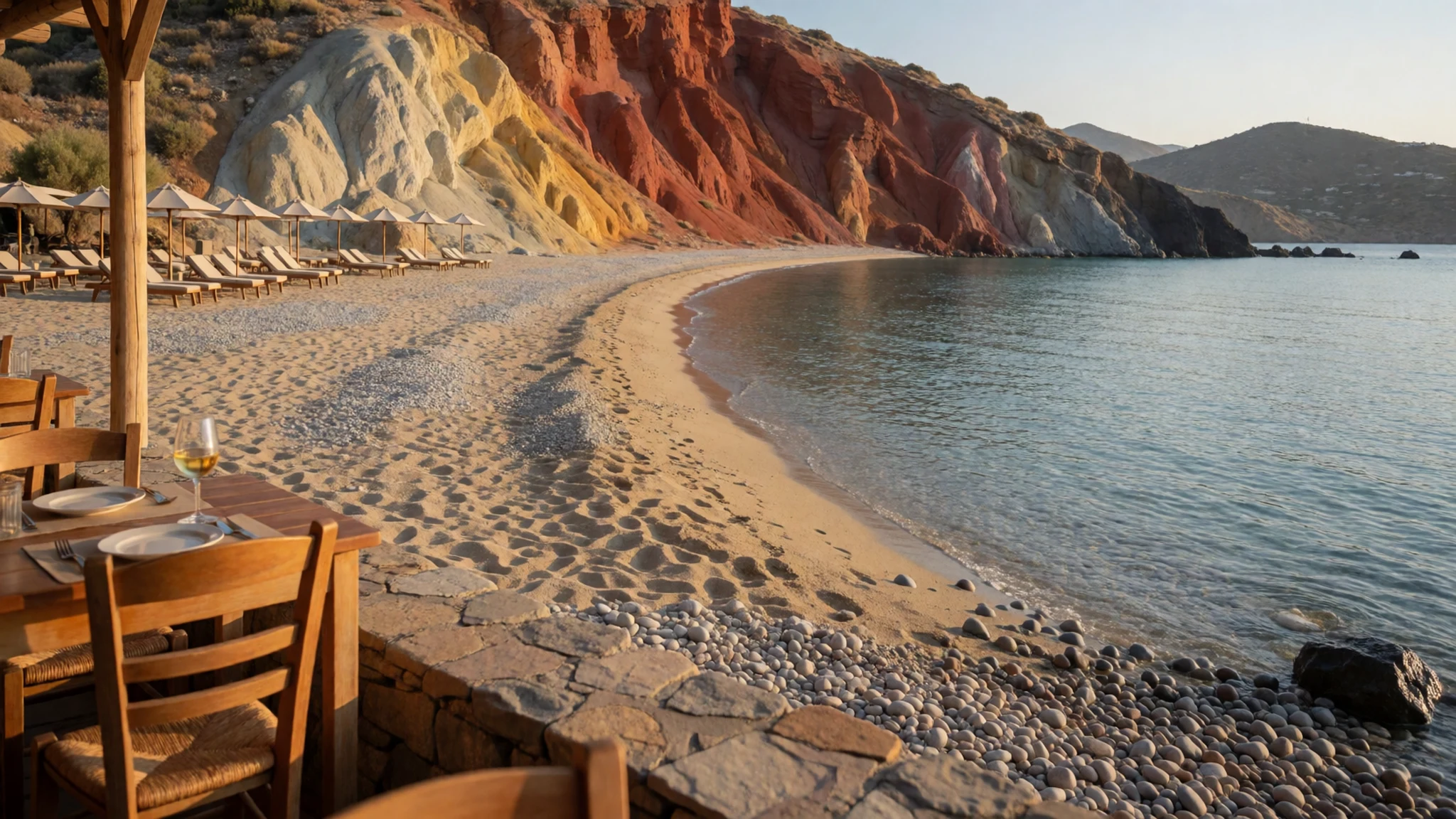
- Plaka — hilltop village above Adamantas
Plaka, the island's hilltop village above Adamantas, is built on a rocky outcrop of whitewashed houses and narrow lanes. A path climbs from the port to a Venetian castle at the top, which also holds the Church of Panagia Skiniotissa. The archaeological museum sits on a street below the village. Go early or in the evening, because midday heat and tour groups make the lanes hard going.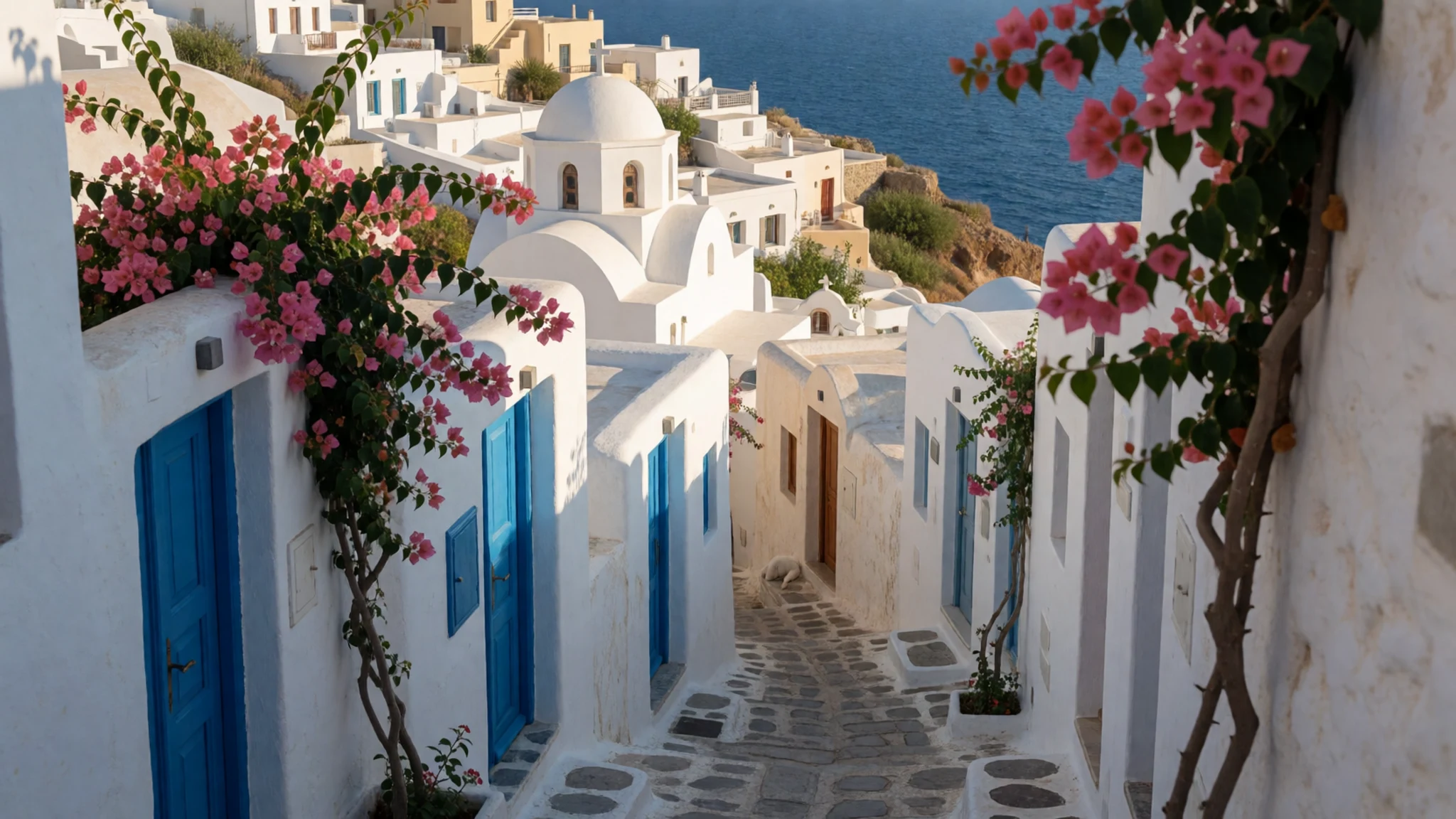
- Church of Panagia Thalassitra — on the approach to Plaka
The Church of Panagia Thalassitra lies on the approach to Plaka, and the walk up gives good views back over the port. It is a working place of worship, so keep voices low and dress modestly if going inside. The approach is steep in places, so sturdy shoes help.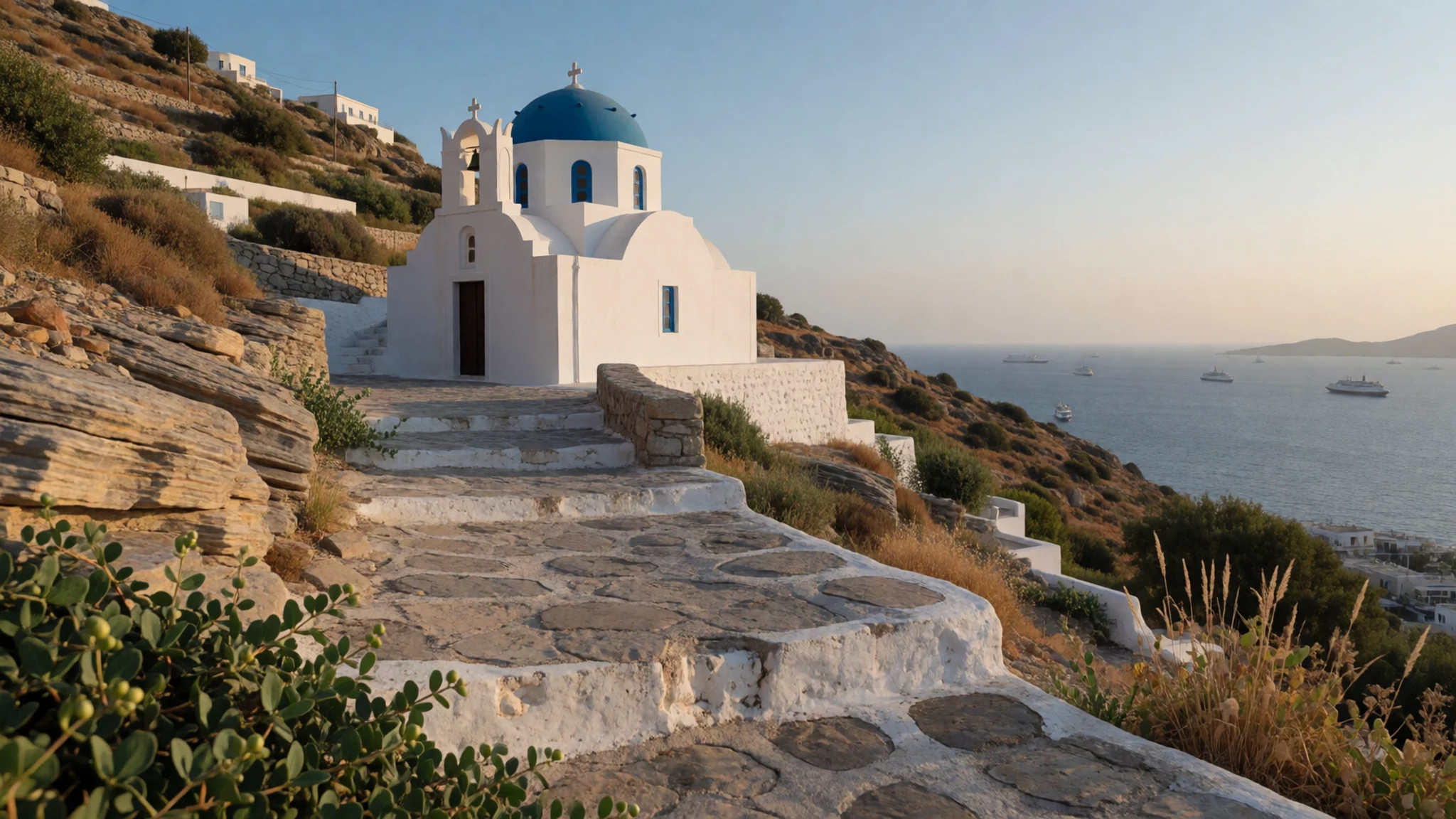
Culture
Milos is a Greek Orthodox island, and its churches are working places of worship as well as sights. Many of the white chapels are small, and worshippers may be lighting candles or kissing icons when visitors arrive. Easter is the high point of the religious year across Greece, and island villages mark it with processions, church services and family meals. Hospitality is a core value here. Locals often greet strangers with a coffee or a sweet, and a conversation with a taverna owner is part of the experience. Daily routines follow a slower rhythm outside the summer months, when the villages and harbour quieten and many businesses run to a seasonal timetable. Music and talk carry in the still evenings, so keep noise down in the lanes after dark. Beaches are lively in the afternoons, and while most stretches are relaxed, the rules on nudity vary between bays, so check local signs before undressing. When you enter a church in Plaka, cover your shoulders and knees, and keep your voice low.
What to wear
Traditional dress on Milos belongs mostly to the past and to festivals. Like other Cycladic islands, the older costumes were made from home-woven wool and cotton, with dark tones for everyday wear and brighter embroidered pieces for feast days. Black was the colour of widowhood and mourning, and many older women wore it for years. Embroidered aprons, headscarves and woollen shawls were common, and much of the work was done at home over the winter. Today, most people in Plaka and Adamantas dress much as they would anywhere in Europe. Summer clothing is light cotton and linen, with shorts, sundresses and sandals in the village and on the beach. In the cooler months, locals add jumpers and jackets against the wind. Visitors should pack for heat and sun: loose linen or cotton, a hat and sunglasses, and a light layer for the evening breeze on a boat. Sturdy sandals or trainers suit the rocky lanes of Plaka and the stony paths to the coves, since flat flip-flops slip on sharp rock. Covering shoulders and knees is expected in churches and monasteries, so a shawl or a long skirt is useful. Swimwear is fine on the beach, but a cover-up makes sense when walking into a village or a taverna.
What to eat
- Grilled fresh fish — waterfront tavernas, such as Gyalós facing Polonia beach
On Milos, fresh fish and seafood are often grilled simply with lemon and olive oil. Ask for whatever the kitchen has landed that morning, rather than a fixed menu. Gyalós, with its tables facing Polonia beach, is a good example of the style.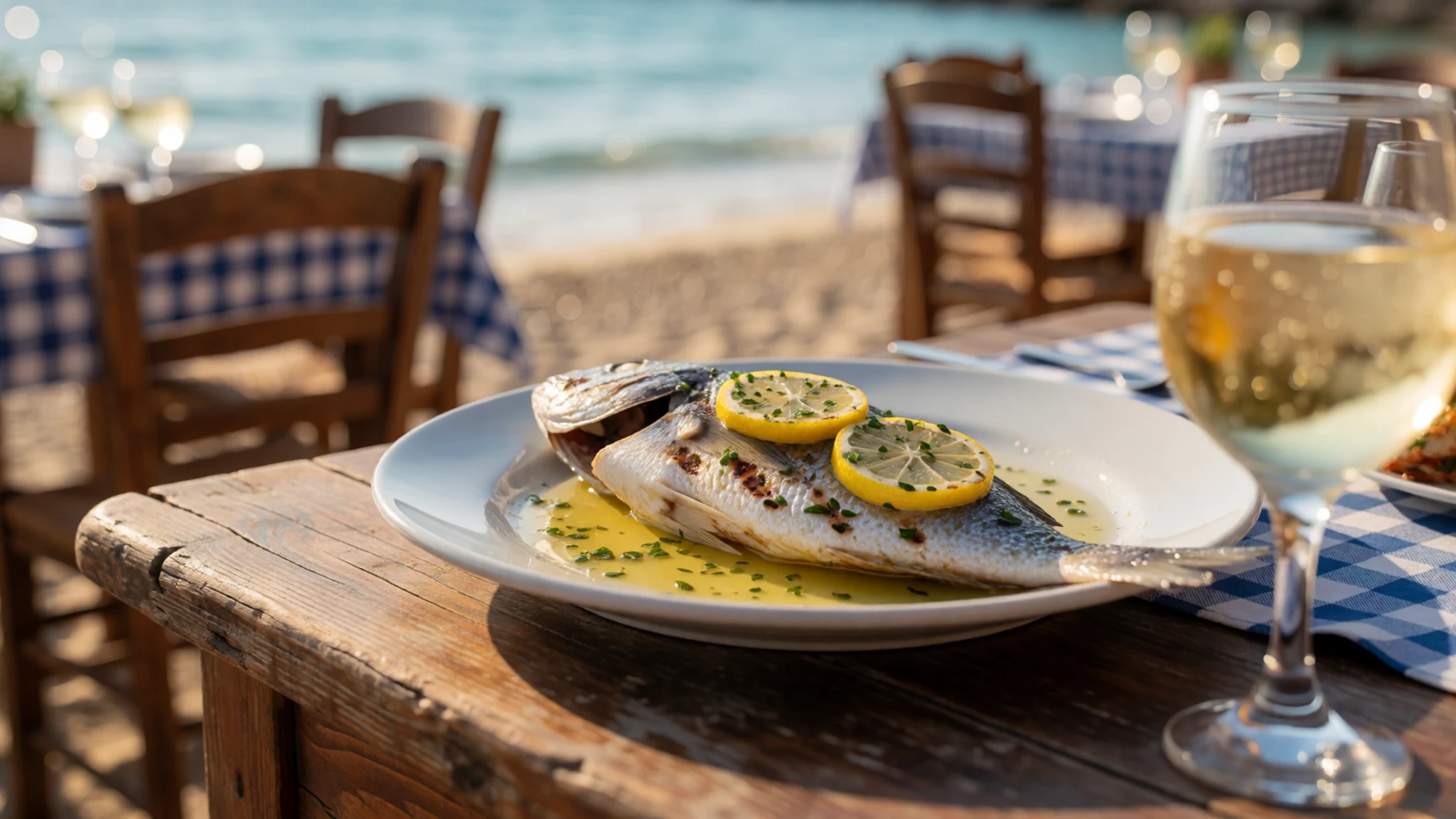
- Gyros — fast-food gyros counters near the Adamantas port area, such as Giakos
A quick, filling wrap of grilled meat, tomato, onion and tzatziki, sold at counters that work through lunch and dinner. Giakos is a well-known example and is one of the few places open all year, which makes it a practical choice outside the summer season.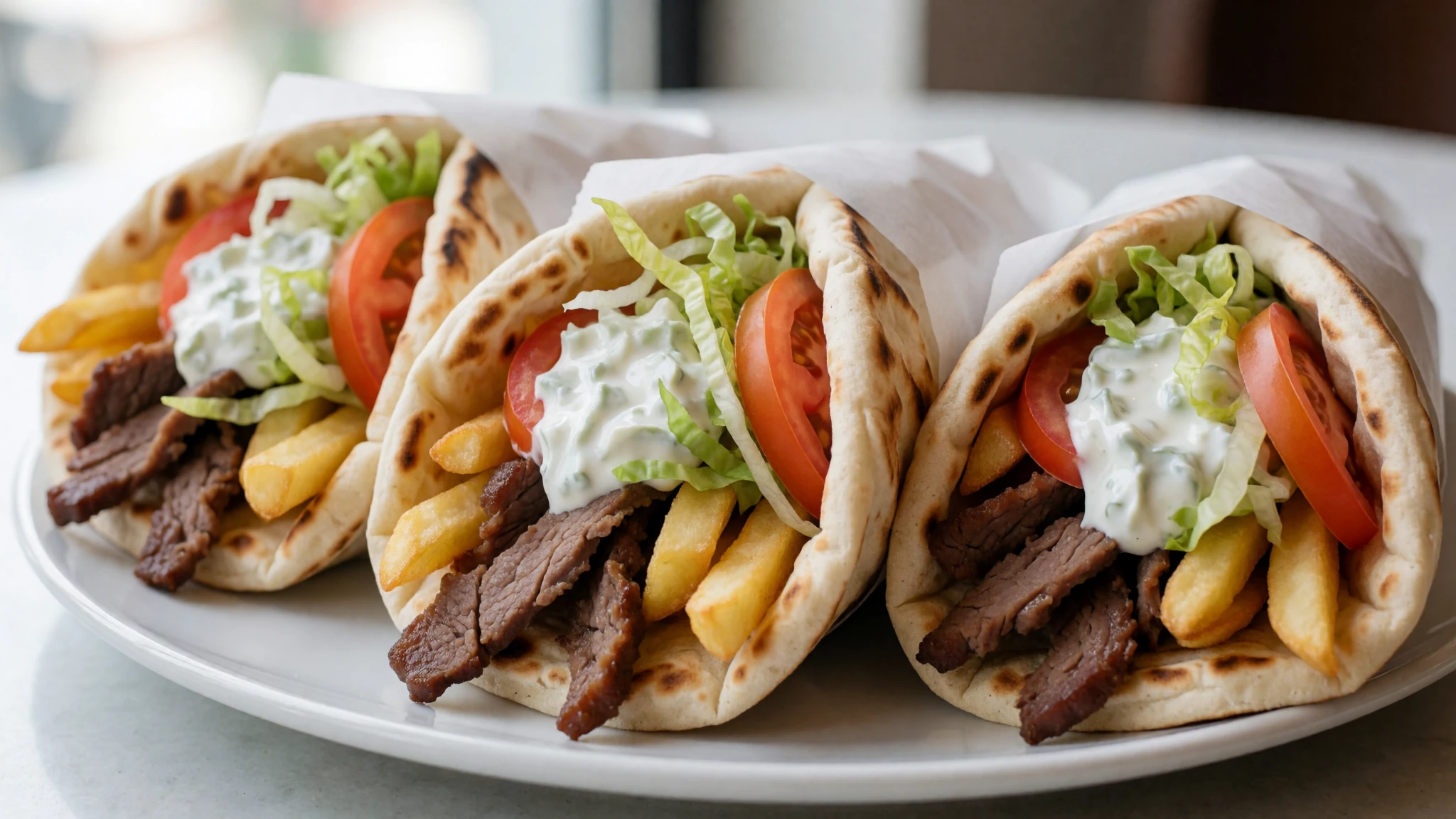
- Courgette and goat cheese fritters — village tavernas, such as O! Chamos
On Milos these are small fried fritters of courgette and goat cheese, usually served as a starter with bread and a glass of wine. They are a good way to begin a long meal with several plates shared at the table. - Goat roasted in a wood oven — traditional tavernas with a wood-fired oven, such as Empourio
Goat slowly roasted in a wood-fired oven is tender and smoky, usually served with potatoes and lemon. Rooster cooked in red wine is another traditional dish found on island menus. - Suckling pig with grape must — local restaurants with a spit or wood oven, such as O! Chamos
Suckling pig is slow-roasted in grape must and mustard, giving a sweet and sharp glaze over tender meat. It is a rich dish, best ordered for a shared table on a relaxed evening.
Plan it
Best time. April and May for mild temperatures before the heat builds, and September to October when the sea is still warm and the crowds thin. July and August are hot and at their busiest.
How long. 3–4
Getting there. Up to 5 flights a day run from Athens, year-round, operated by Olympic Air or Sky Express. Ferries also run mainly from Athens, with connections to Santorini, Naxos and Paros among others. Check local bus and taxi times from the port on arrival.
Budget. mid
Tips
- Book flights and ferries early for July and August, and check schedules on the official ferry sites
- Start beach days early, as the popular coves fill by late morning in high season
- Carry cash for smaller tavernas and village shops, and bring plenty of water for the exposed beaches
- Hire a car or scooter for the south and east coasts, but expect narrow roads and tight parking
- Book boat trips to Kleftiko ahead in high season
Etiquette
- Dress modestly for churches and monasteries
- Keep noise low in the villages after dark
- Ask before photographing people, especially at church services or festivals
Nearby
Sources
- Wikidata Q203979 (CC0)
- Wikipedia, Milos (rev 1380048897) (CC BY-SA 4.0)
- Wikivoyage, Milos (rev 5344895) (CC BY-SA 4.0)
- Milos Island, Greece (photo 01-milos-4.jpg) (CC BY 3.0)
- Plaka in den Bergen von Milos (photo 02-chora-milos.jpg) (CC BY 2.5)
- Milos Island, Greece (photo 03-milos-10.jpg) (CC BY 3.0)
- Abandoned sulfur mines, Milos (photo 04) (CC BY-SA 4.0)
- Klima on Milos (photo 05) (CC BY-SA 4.0)
- Cathedral Portiani, Zephyria, Milos (photo 06) (CC BY-SA 4.0)
- Plaka on Milos, street above the Archaeological Museum (photo 07) (CC BY-SA 4.0)
- Locator map, Milos municipality (photo 08) (CC BY 3.0)


