Mendocino, California
Mendocino, California, United States
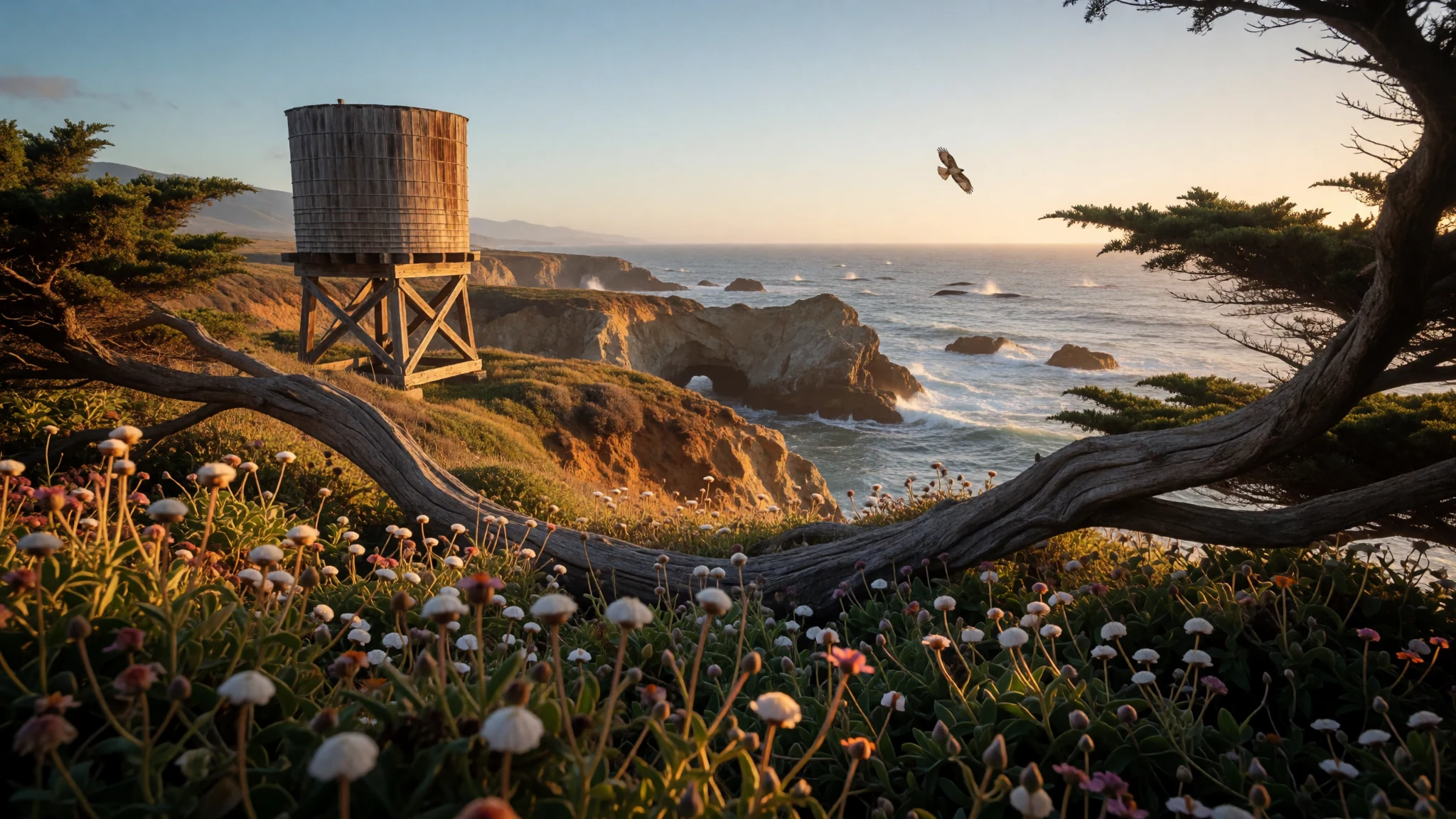
Perched on dramatic headlands above the Pacific Ocean, Mendocino offers weathered Victorian architecture, quiet coastal trails, and a rich legacy of creative independence.
The place
Mendocino is an unincorporated community situated on the dramatic headlands of Northern California, projecting boldly into the cold waters of the Pacific Ocean. The name itself derives from Cape Mendocino, located far to the north, which was named by early Spanish navigators to honour Antonio de Mendoza, Viceroy of New Spain. The community occupies a scenic promontory defined by rugged sandstone cliffs, salt-sprayed cypress groves, and pocket coves where ocean swells crash relentlessly against ancient rock formations. The Big River forms the southern boundary of the settlement, carving out a wide estuary before emptying into the sea at Big River Beach.
The layout of the village reflects its mid-nineteenth-century origins, featuring a compact grid of unhurried streets lined with preserved wooden architecture. Weathered water towers stand as sentinels across the landscape, relics of a time when gravity-fed systems supplied domestic water to every household. Unlike many modern coastal settlements, this place has resisted high-rise development entirely, preserving a low-slung profile that allows sweeping ocean views from nearly every vantage point. State Route 1 runs along the eastern perimeter of the downtown area, connecting the settlement to neighbouring coastal outposts while leaving the historic core largely pedestrian-scale and intimate.
Surrounding the village are protected headlands and state parks that provide miles of accessible walking paths through coastal scrub, pine forests, and dramatic lookouts. The climate is characteristically maritime, shaped by coastal fogs that roll in during summer mornings, cooling the air before burning off to reveal clear blue skies. It is an environment of stark contrasts: brilliant sunshine reflecting off white saltbox cottages one moment, and mystical maritime fog shrouding the cypress trees the next.
Its story
Mendocino began its recorded history as a Pomo settlement named Buldam, situated quietly on the north bank of the Big River before outside settlement reshaped the region. In the early eighteen-fifties, the commercial trajectory of the area shifted permanently when the merchant ship Frolic wrecked on the jagged rocks nearby, drawing the attention of industrial entrepreneurs to the wealth of nearby timber. Industrial development accelerated rapidly as a logging hub for the regional timber trade, originally named after the industrialist Henry Meiggs before local nomenclature settled on the present designation.
The demographic fabric of early Mendocino was woven by diverse migrations from across the globe. New Englanders arrived in large numbers, bringing with them the saltbox architectural styles and shipbuilding traditions familiar to northeastern coastal towns. Portuguese fishermen from the Azores made the rocky coast their home, establishing a maritime presence along the perilous waters. Simultaneously, immigrants from Canton Province arrived, contributing deeply to the cultural heritage by constructing places of worship such as the Taoist Temple of Kwan Tai, which remains a testament to the early Asian communities who laboured in the timber camps and surrounding territory.
Throughout the twentieth century, the economic base transitioned away from heavy logging towards creative preservation. Following the establishment of local art institutions, a decades-long cultural renaissance transformed the timber village into a haven for painters, sculptors, and writers seeking inspiration from the wild oceanic fringe. Much of the community was subsequently inscribed onto the National Register of Historic Places as a protected district, ensuring that the architectural legacy of the nineteenth-century pioneers remains intact for future generations to study and appreciate.
What to see
- Mendocino Headlands State Park — Surrounding the village
Encompassing the cliffs and trails that wrap around the village, this protected park offers dramatic paths overlooking crashing ocean waves, hidden sea caves, and expansive horizons where grey whales can often be spotted during their seasonal coastal migrations.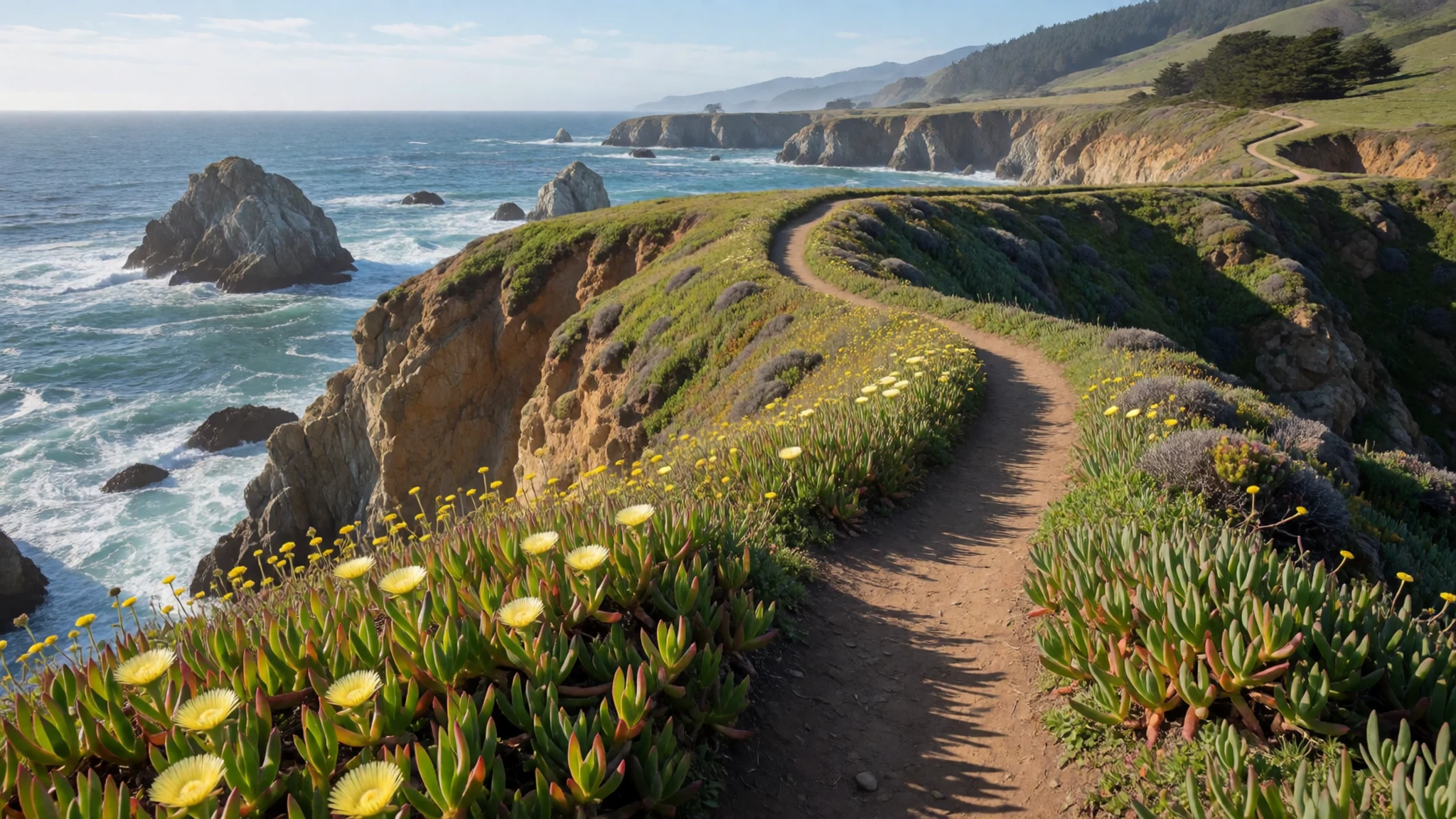
- Big River Estuary — Southern edge of the community
Stretching inland from the southern edge of the community, this tranquil waterway provides calm conditions for paddling on redwood outrigger canoes through pristine natural habitats flanked by towering forests and abundant native birdlife.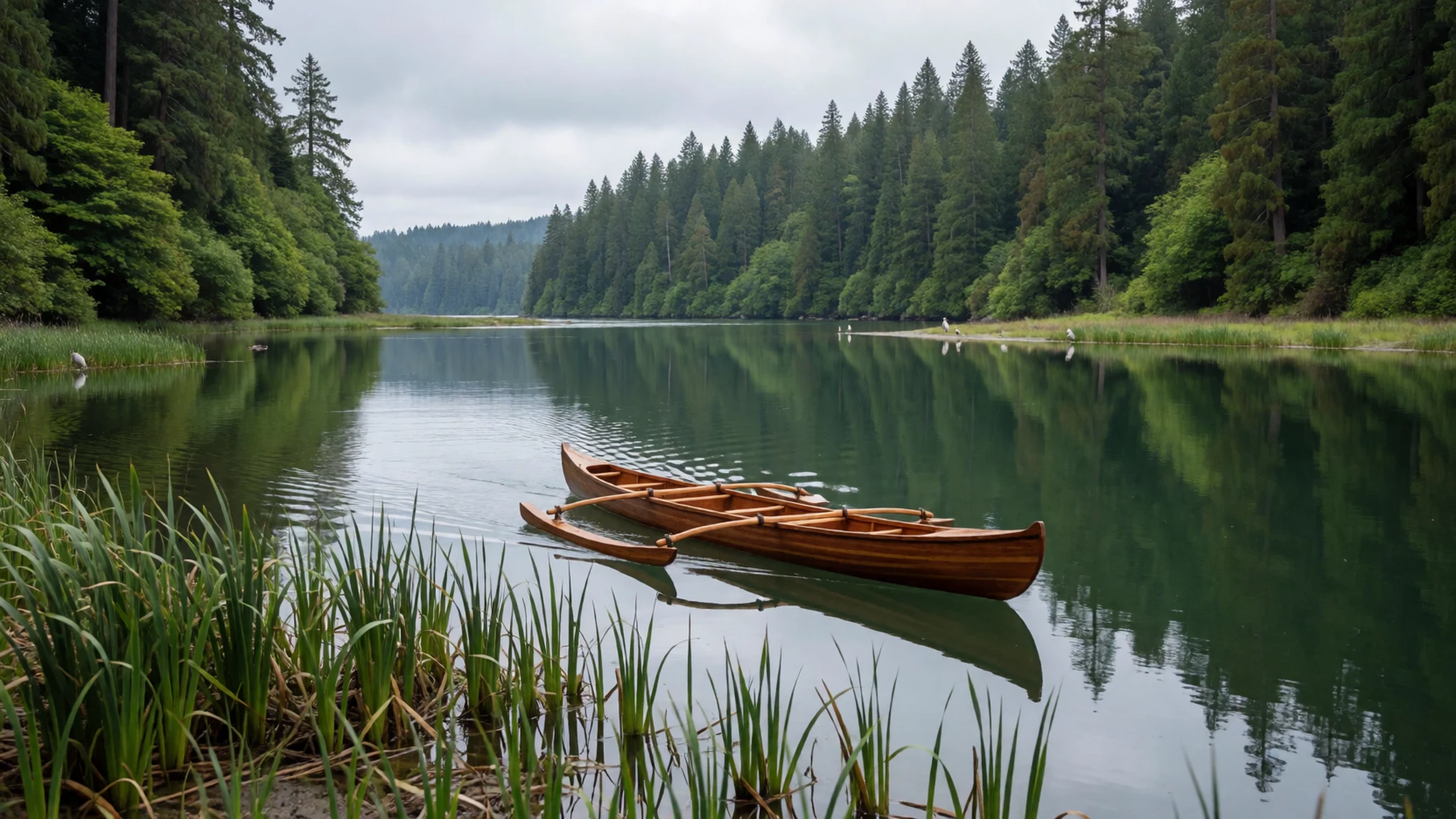
- Historic Village Architecture — Main and Lansing Streets
Walking through the core reveals a remarkably intact collection of nineteenth-century saltbox houses, weathered wooden water towers, and ornate fraternal halls built by early New England settlers and local craftsmen.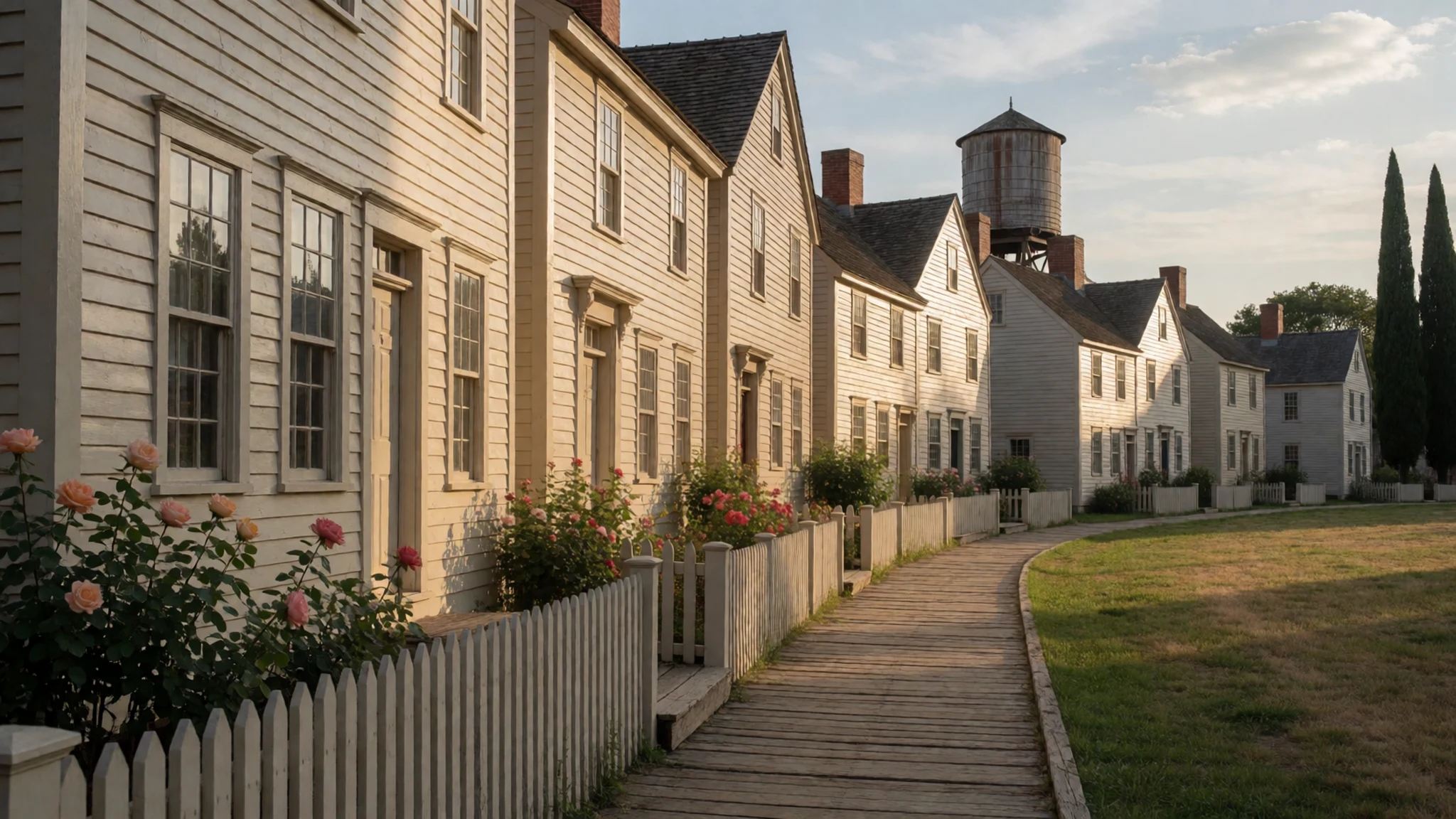
- Mendocino Presbyterian Church — Main Street
Dedicated in the late eighteen-sixties, this striking Gothic Revival structure on Main Street stands as one of the oldest continuously operating Protestant houses of worship in California, featuring a distinctive board-and-batten exterior.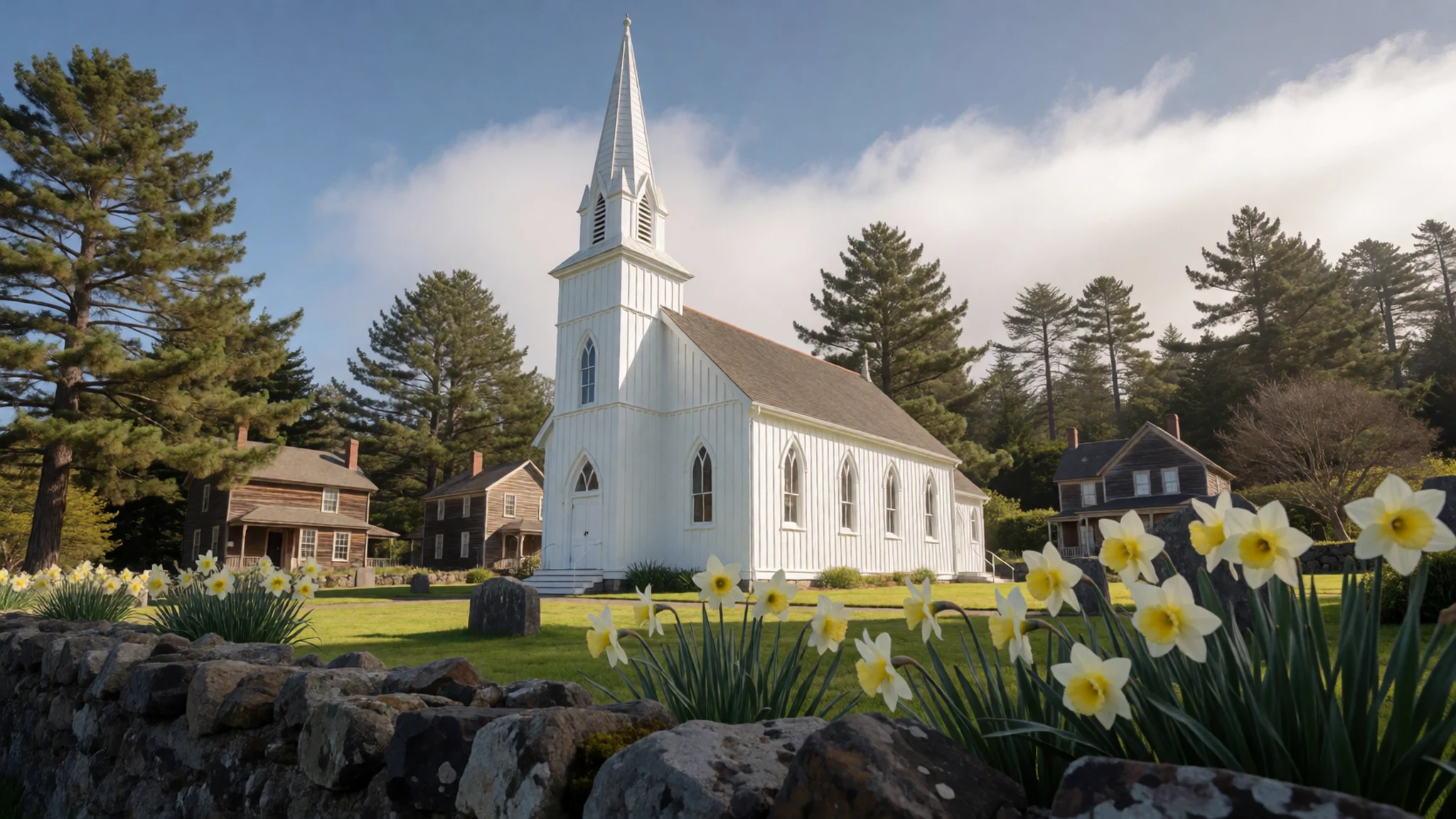
- Point Cabrillo Light Station — North of the village
Situated a short distance north of the village, this historic lighthouse complex features a restored lens, keeper residences, and rugged coastal trails tracing the windswept headlands where early maritime disasters once occurred.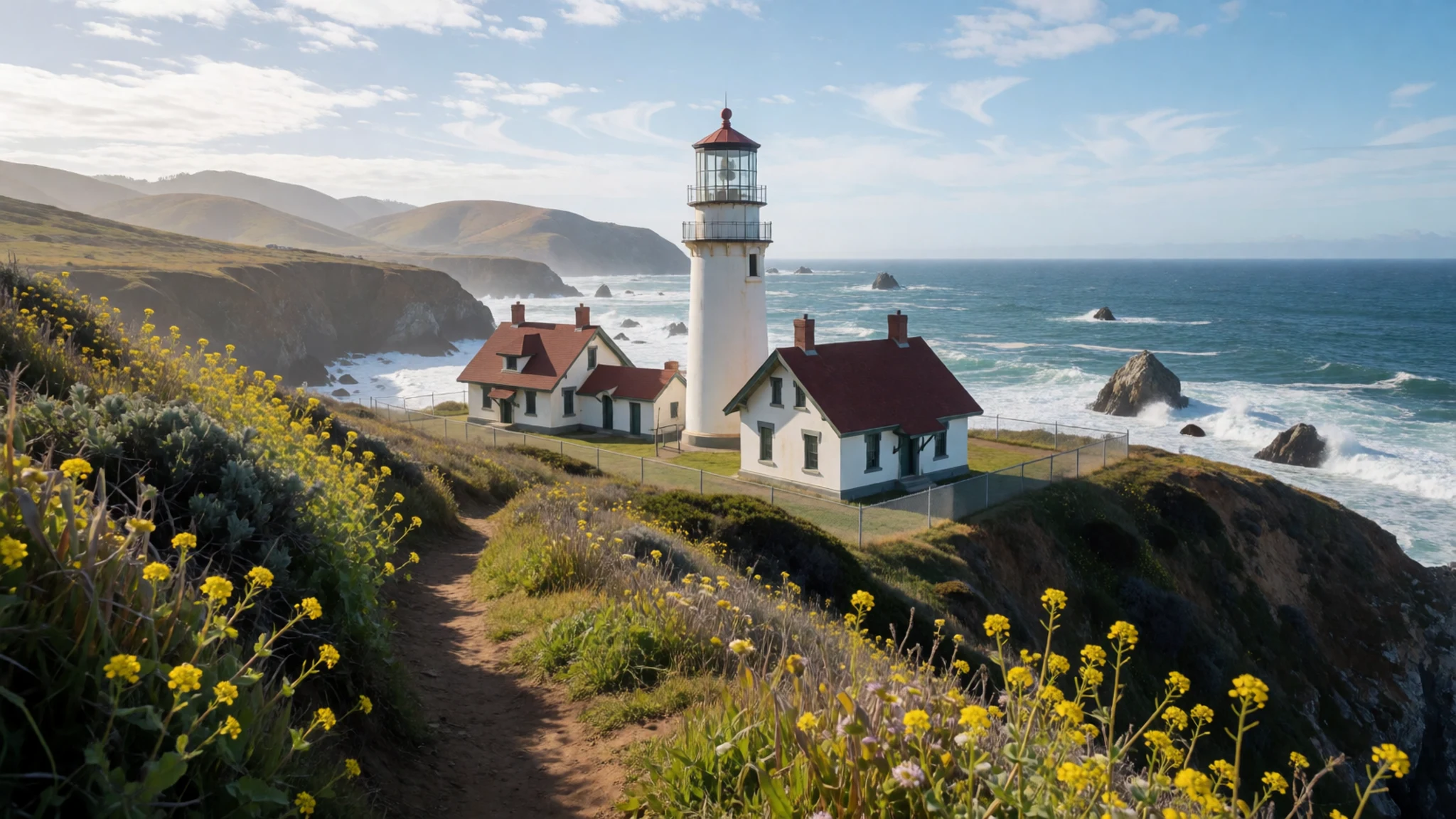
- Temple of Kwan Tai — Albion Street
This historic Taoist house of worship on Albion Street preserves the heritage of early Chinese immigrants, containing ornate altars, traditional art objects, and incense burners that honour historic deities.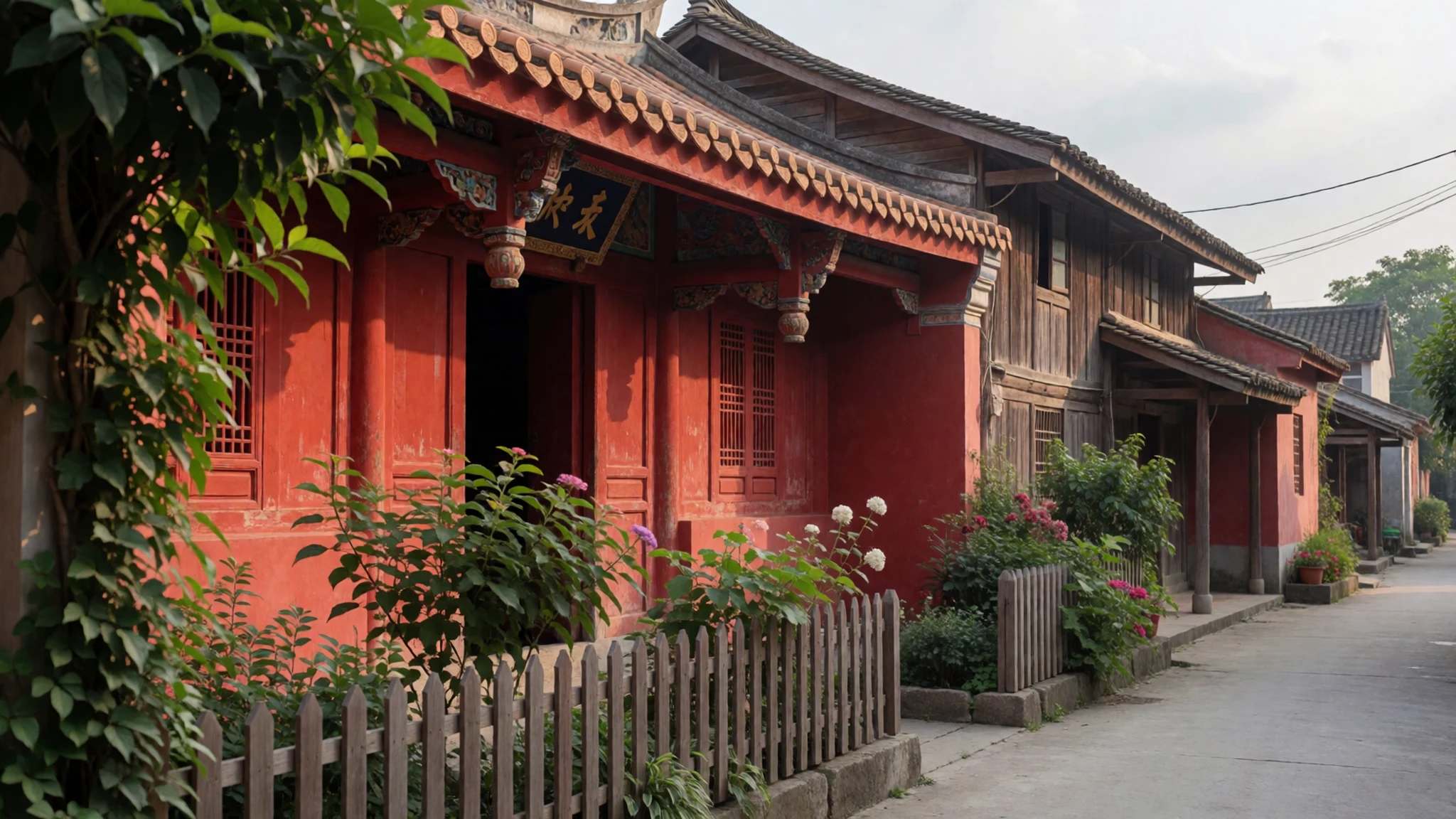
Culture
Mendocino functions as a tight-knit sanctuary of artists, craftspeople, and conservationists who value quiet contemplation and environmental stewardship. The social fabric is deeply anchored in community-led traditions, ranging from the annual summer music festival held inside a grand circus-style tent on the headlands to independent film celebrations that bring international directors together with local residents. Creativity here is not merely a hobby but a way of life, sustained by decades of artistic migration that followed the decline of the timber industry. Residents take immense pride in preserving their architectural heritage, fighting hard to maintain zoning laws that protect the uncommercialised character of the village streets. Visitors will notice an unhurried, polite pace of life where locals greet strangers warmly in local coffee shops and art galleries. Respect the quiet residential neighbourhoods by keeping noise levels low during evening hours and supporting local independent makers.
What to wear
The dress code in Mendocino is entirely practical, shaped by the bracing winds, chilly ocean fogs, and sudden temperature shifts characteristic of the Northern California coast. There is no traditional folkloric costume unique to the community; instead, everyday style reflects the utilitarian heritage of loggers and fishermen combined with the casual, creative aesthetic of an artists' colony. Locals and long-term residents typically favour durable, weather-resistant garments designed for outdoor life on the cliffs.
For daily wear, people rely heavily on layered clothing: heavy wool jumpers, fleece jackets, flannel shirts, and sturdy denim or canvas trousers. Footwear is built for utility rather than fashion, consisting of waterproof hiking boots, rugged walking shoes, or rubber boots suitable for muddy coastal paths and tide pools. A reliable windproof and waterproof outer shell is essential year-round, as ocean mists can saturate the air without warning.
Visitors should pack with climate and comfort in mind rather than formal elegance. Bring sturdy walking shoes with good grip for uneven headland trails, several warm layers for chilly mornings and foggy afternoons, and a dependable raincoat. Leave high heels and delicate garments behind, as the unpaved paths and coastal terrain reward practical, weather-ready attire.
What to eat
- Wood-Fired Pizza and Local Greens — Frankie's
Enjoy artisan pizzas topped with fresh seasonal produce and local salad greens served in a sunny garden courtyard setting right in the village centre.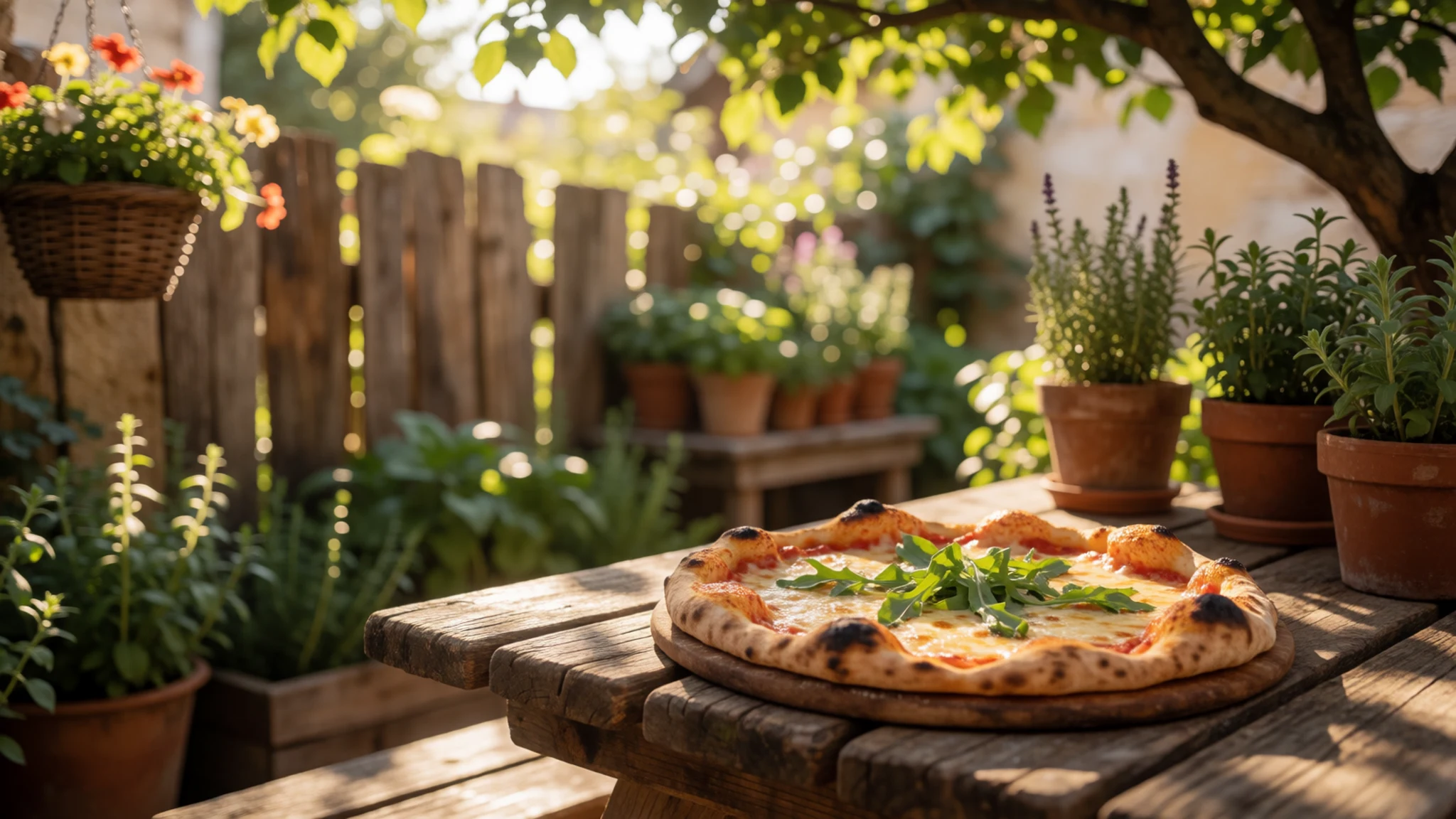
- Artisanal Deli Sandwiches — Mendocino Market
Pick up freshly prepared sandwiches crafted from high-quality local ingredients, artisan breads, and house-made spreads, ideal for a picnic on the nearby headlands.
- Coastal Fine Dining — MacCallum House Restaurant
Experience sophisticated dining inside historic nineteenth-century inn spaces, featuring contemporary California cuisine that highlights regional seafood, mushrooms, and garden-grown vegetables. - Plant-Based Dining — Ravens Restaurant
Savour creative, thoughtfully prepared vegetarian and vegan dishes that celebrate the bounty of local organic farms and sustainable regional agriculture. - Regional Wine Tastings — Mendocino Wine Co.
Sample cool-climate wines, including exceptional pinot noirs and chardonnays produced by vineyards in the nearby interior valleys, at a welcoming tasting room in town.
Plan it
Best time. May through October offers the most reliable weather, with clearer skies and milder temperatures, though winter brings dramatic storm-watching and quiet village streets.
How long. 2–3
Getting there. Fly into San Francisco or Oakland, then rent a car to drive north along scenic coastal highways or through the interior valleys.
Budget. mid
Tips
- Book accommodations well in advance if visiting during summer weekends or autumn holiday periods.
- Always carry an extra warm layer and a waterproof jacket, as coastal fogs and winds can lower temperatures quickly.
- Respect private property signs when exploring the paths winding around historic residential gardens.
- Use caution near cliff edges, as coastal sandstone can be unstable and lacks safety barriers in many spots.
Etiquette
- Keep noise levels low in residential areas, particularly during early morning and late evening hours.
- Support local independent businesses and artisan galleries rather than chain stores.
Nearby
Sources
- Wikidata Q1920378 (CC0)
- Wikipedia (CC BY-SA 4.0)
- Wikivoyage (CC BY-SA 4.0)