Maio
Maio, Cape Verde
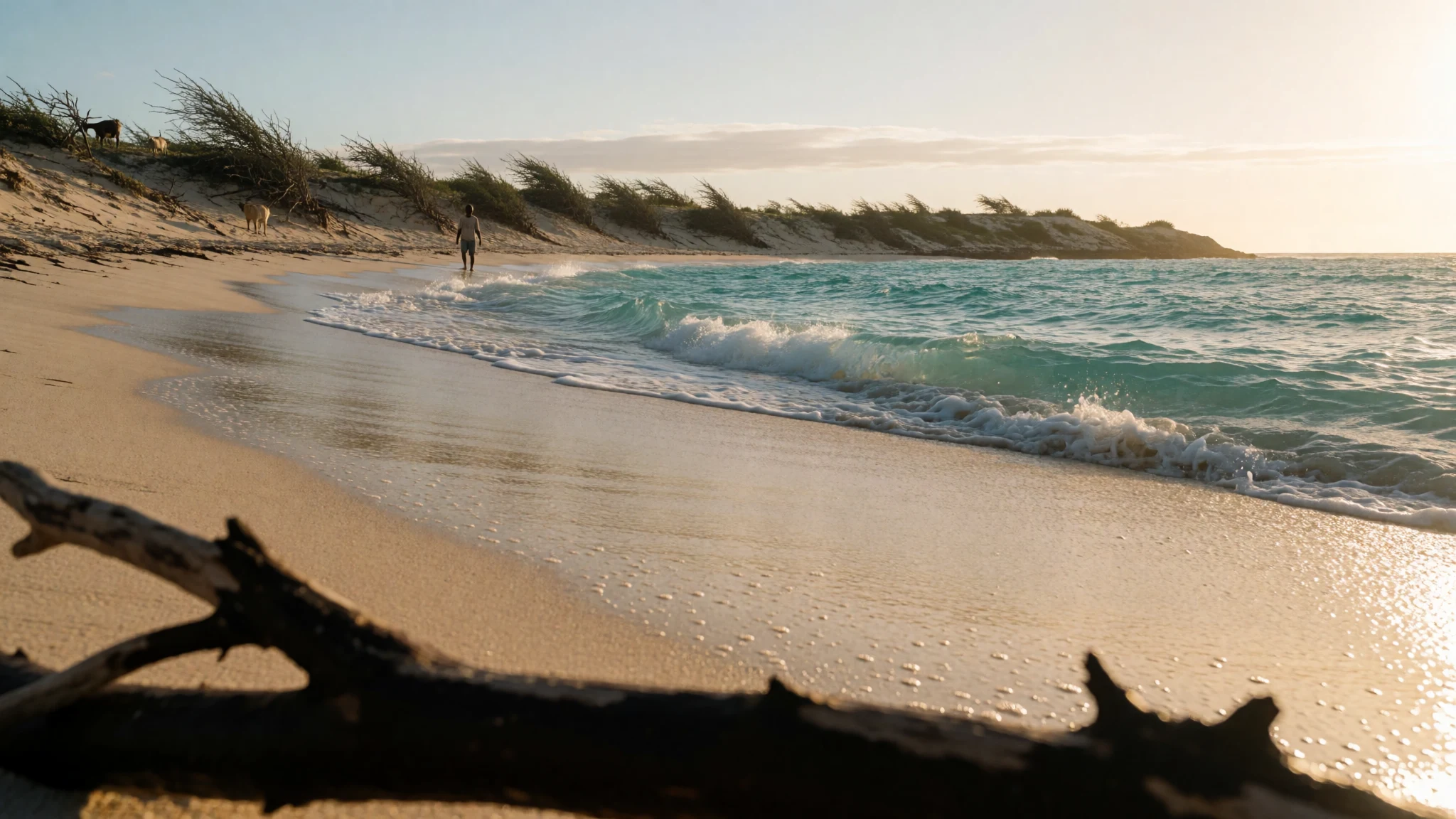
Maio is a quiet, flat Cape Verde island of empty beaches, salt flats and fishing villages, for travellers who want space more than nightlife.
The place
Maio is a low, dry island at the eastern edge of Cape Verde's Sotavento group, south of Boa Vista and east of Santiago. It forms a single municipality with about 6,812 residents, most of them in or around Porto Inglês, the main town, which lies close to the airport. The land is mostly flat and sandy, covered in scrub and thorny woodland, and the only real high ground is the Monte Penoso ridge near the east coast, topping out at 428 m. In the far north, the Terras Salgadas flats are crusted white where seawater has dried. The coast is a string of bays and open beaches, among them Baía do Galeão and Baía da Santana in the north, and a lagoon called Lagoa Cimidor in the southeast. A small uninhabited islet, Ilhéu Laje Branca, sits just off the northern shore. A sizeable share of the island is protected, and a fifth is wooded, though the trees are low and drought-hardy rather than lush. Daily life is unhurried. Goats, donkeys and chickens share the tracks, fishing boats pull up on the sand, and small farms cluster wherever water can be found. Water is the island's constant worry. Crime is reported to be very low, and the pace of life is slow enough that a day can pass with little more than a walk, a swim and a long lunch. Maio has few of the large resorts found on neighbouring islands, so crowds are thin, though so are shops, nightlife and choice.
Its story
Maio was found by Portuguese navigators in 1460, but it filled up slowly. Herders arrived towards the close of the 1500s and turned the dry interior over to livestock, goats above all. The island's fortunes changed in the 1600s, when salt-making took off on the shallow coastal pans. Ships came to load the white crystals for Europe, and English traders were especially active at the main anchorage. That trade is why the town is called Porto Inglês, the English Port. Salt brought workers and a larger population, but the wealth was narrow and depended on foreign buyers. Farming and grazing stayed modest alongside it, limited by thin soil and unreliable rain. The seas around Maio also drew naval attention. On 23 January 1814, in the closing phase of the Napoleonic Wars, British and French frigate squadrons fought off the island's southern coast, and the battle ended without a clear winner. Through the twentieth century, repeated droughts pushed many islanders to leave, and Cape Verde's emigrant communities abroad became part of the story of nearly every family. Money sent home still props up the local economy. Today the old salt pans, the weathered buildings of the port and the scattered villages are the visible remains of a history shaped by wind, sea, thirst and departure.
What to see
- Porto Inglês — Porto Inglês, south-west coast
Maio's main town is small enough to cover on foot. Colour-washed houses, a working waterfront and a plain central square give a feel for island life. Fishing boats come and go, and the old salt trade is the reason for the name. Go early, before the heat builds, and stay for a slow coffee.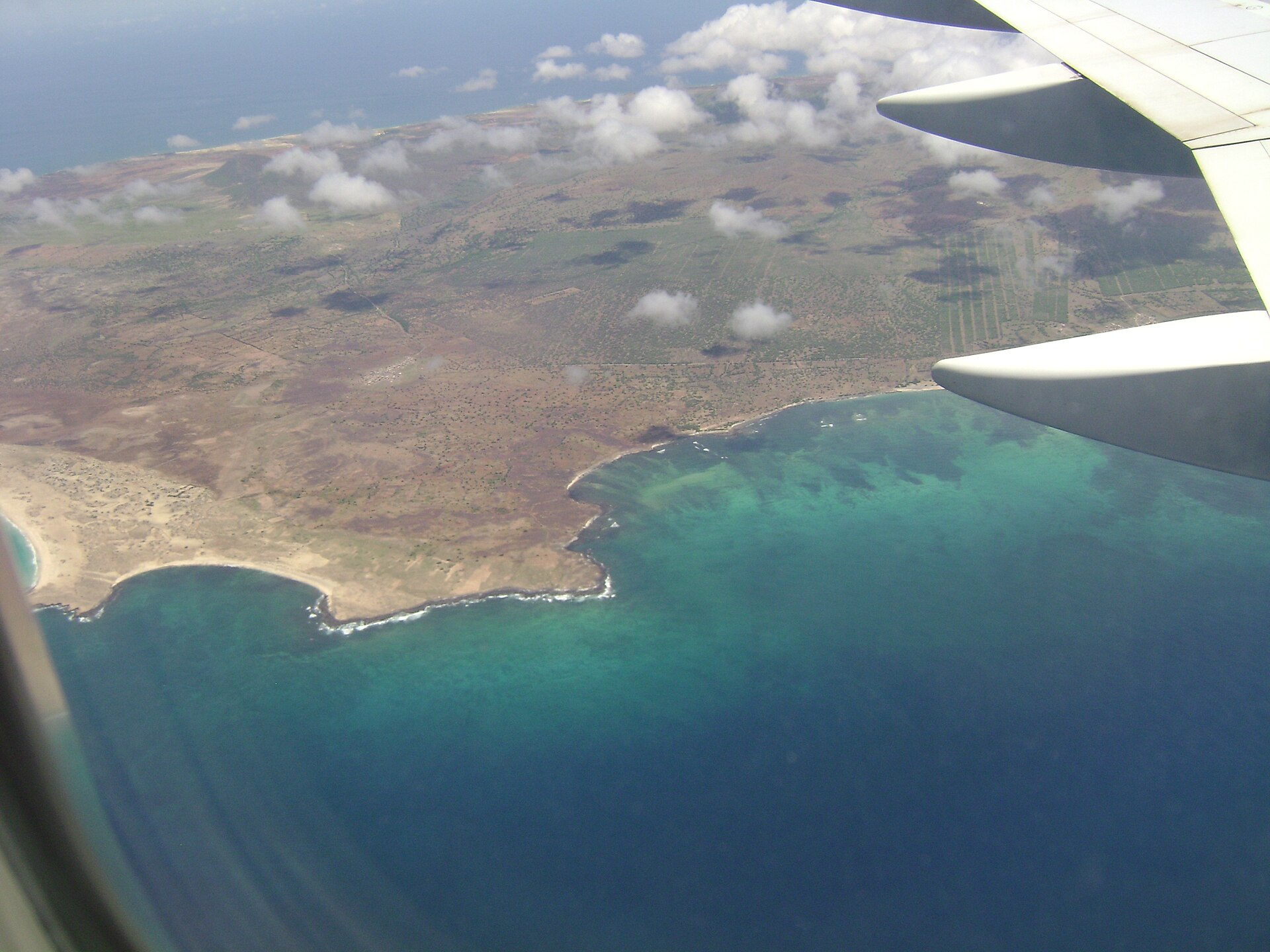
- Terras Salgadas — Far north of the island
These northern salt flats glare white under the sun, with pale crust, shallow pools and wading birds when conditions suit. The scenery is stark and open, with almost no shade. Visit in the cooler part of the day, wear a hat, and ask locally about access to the pans before walking out. - Monte Penoso — East coast
The island's high ground is a low ridge near the east coast, with a summit of 428 m. It is no alpine climb, but the views over scrub, plain and sea show how flat the rest of Maio is. Take water, go early, and avoid the middle of the day. - Lagoa Cimidor — Southeast coast
This lagoon in the southeast sits behind the shoreline and draws birdlife when water levels allow. It is a quiet place for slow walking, bird-watching and photography rather than for swimming. Tracks can be sandy, so a local guide or a sturdy vehicle helps. - Baía do Galeão — North coast
A broad northern bay with long stretches of sand and few buildings. Visitors come for walks, sunsets and the feeling of having a whole beach almost to themselves. Currents and wind can be strong, so take care in the water and carry shade and drinking water.
Culture
Maio's culture is Cape Verdean at its core: a Creole blend of Portuguese and African influences, spoken day to day in Kriolu, with Portuguese used for official business. Island life has been shaped by drought, emigration and the habit of looking after neighbours. Families here often have relatives in Europe or America, and money sent home helps keep the economy going. Music is part of the fabric of Cape Verde. Slow, wistful morna and livelier funaná or batuku-style rhythms turn up at village gatherings, in small bars and at festivals, usually with a guitar or cavaquinho and plenty of singing along. Maio has a smaller scene than the bigger islands, so evenings are more likely to be a quiet drink and a chat than a show. Religion is mostly Catholic, and church feast days, weddings and funerals are important community events. People are friendly but reserved with strangers, and greetings matter; a polite hello opens many doors. Fishing, goat-keeping and small-scale farming still shape the daily routine, and the pace is deliberately relaxed. Meals are often shared, and invitations to eat at someone's home are a real honour. When you meet people in a village, greet them with a "bom dia" or "boa tarde" before asking for anything, and ask before you photograph anyone.
What to wear
In Maio, as across Cape Verde, traditional dress centres on the pano, a rectangle of cotton cloth that women wrap around the waist as a skirt, tie over the shoulders as a shawl, or fold into a head covering. The patterned panos associated with the islands were historically woven in narrow strips and stitched together, and they are now most often seen at festivals, dances, weddings and church occasions rather than on an ordinary weekday. Everyday clothing on the island is plain and practical: T-shirts, jeans or shorts, football shirts, cotton dresses and sandals or trainers, chosen for heat and dust. Fishermen and farm workers wear hats or caps and old shirts against the sun. Dress is relaxed but tidy, and people usually put on cleaner clothes for church or a family event. Swimwear is for the beach rather than for the streets of Porto Inglês. A visitor should pack light, breathable cotton or linen, a wide-brimmed hat, sunglasses and high-factor sun cream, as shade is scarce and the sun is strong. A light layer helps in the wind on boats and in the evenings. Bring sturdy sandals or trainers for sandy tracks, and reef shoes if you plan to wade over rocky shallows. Cover shoulders and knees when entering a church.
What to eat
- Cachupa — Home-style eateries in Porto Inglês and village kitchens
Cape Verde's national comfort dish is a slow-cooked stew of dried corn and beans, usually with pork, sausage or fish. Leftovers are fried for breakfast, often topped with an egg. It is filling and plain. - Grilled tuna — Seafront eateries near the fishing harbour
Fishing is important on Maio, and tuna is among the catch. It is usually grilled simply with garlic, lemon or onion, and served with rice, boiled potato or manioc. The fresher the fish, the simpler the cooking. - Canja — Small family-run eateries in Porto Inglês
A light chicken and rice soup, often flavoured with lemon and herbs. It is eaten as a comforting meal on cooler evenings and when someone is unwell, and it makes an easy lunch after a day in the sun. - Pastéis — Bakeries, snack counters and village kiosks
Half-moon pastries with a savoury filling, commonly tuna or sometimes meat, deep-fried until crisp. They are a handy snack for a beach day or a walk, best eaten warm. - Goat stew — Village eateries, and family tables at celebrations
Goats have been raised on Maio for centuries, and goat is cooked slowly with garlic, onion and local spices. The meat is strongly flavoured and tender, often served with rice or maize at weekend gatherings.
Plan it
Best time. November to April is the usual choice, when conditions are drier and the heat is easier to bear; check the forecast, as the wind can be strong and the island is hot, dry and exposed. The rainy season comes later in the year and is short and unreliable.
How long. 3–5
Getting there. Fly from Praia, Cape Verde's capital, to Maio Airport, which is close to Porto Inglês; flights run a few times a week, so check with the airline. Ferries also run from Praia in about 2.5 hours, but not every day, so check the CV Interilhas schedule before planning.
Budget. mid
Tips
- Book flights or ferries early and keep a spare day, as services are not daily
- Carry enough cash, since cards and cash machines can be limited outside the main town
- Bring plenty of drinking water, as water is scarce and shade is rare
- Use sun cream and a hat, and plan walks for early morning or late afternoon
- Ask locally about currents before swimming, especially on open northern beaches
Etiquette
- Greet people before you ask a question or start a conversation
- Ask before photographing people, and be considerate at fishing landings
- Use water sparingly, as it is a precious resource for residents
Nearby
Sources
- Wikidata Q492551 (CC0)
- Wikipedia — Maio, Cape Verde (rev 1364049117) (CC BY-SA 4.0)
- Wikivoyage — Maio (rev 5410215) (CC BY-SA 4.0)
- Photo: Aerial view of Maio (Xandu) (Public domain)
- Photo: Image-Locator map of Maio, Cape Verde (CC BY-SA 2.5)
- Photo: Apollo 9 image AS09-20-3130 (Public domain)
- Photo: Apollo 9 image AS09-22-3429 (Public domain)
- Photo: Apollo 9 image AS09-22-3432 (Public domain)
- Photo: Wilderness near Morrinho village (Somada) (CC BY-SA 4.0)
- Photo: Calheta, Maio (Rob Oo) (CC BY 2.5)
- Photo: View of Maio from ISS Expedition 62 (Public domain)


