Luxor
Luxor, Egypt
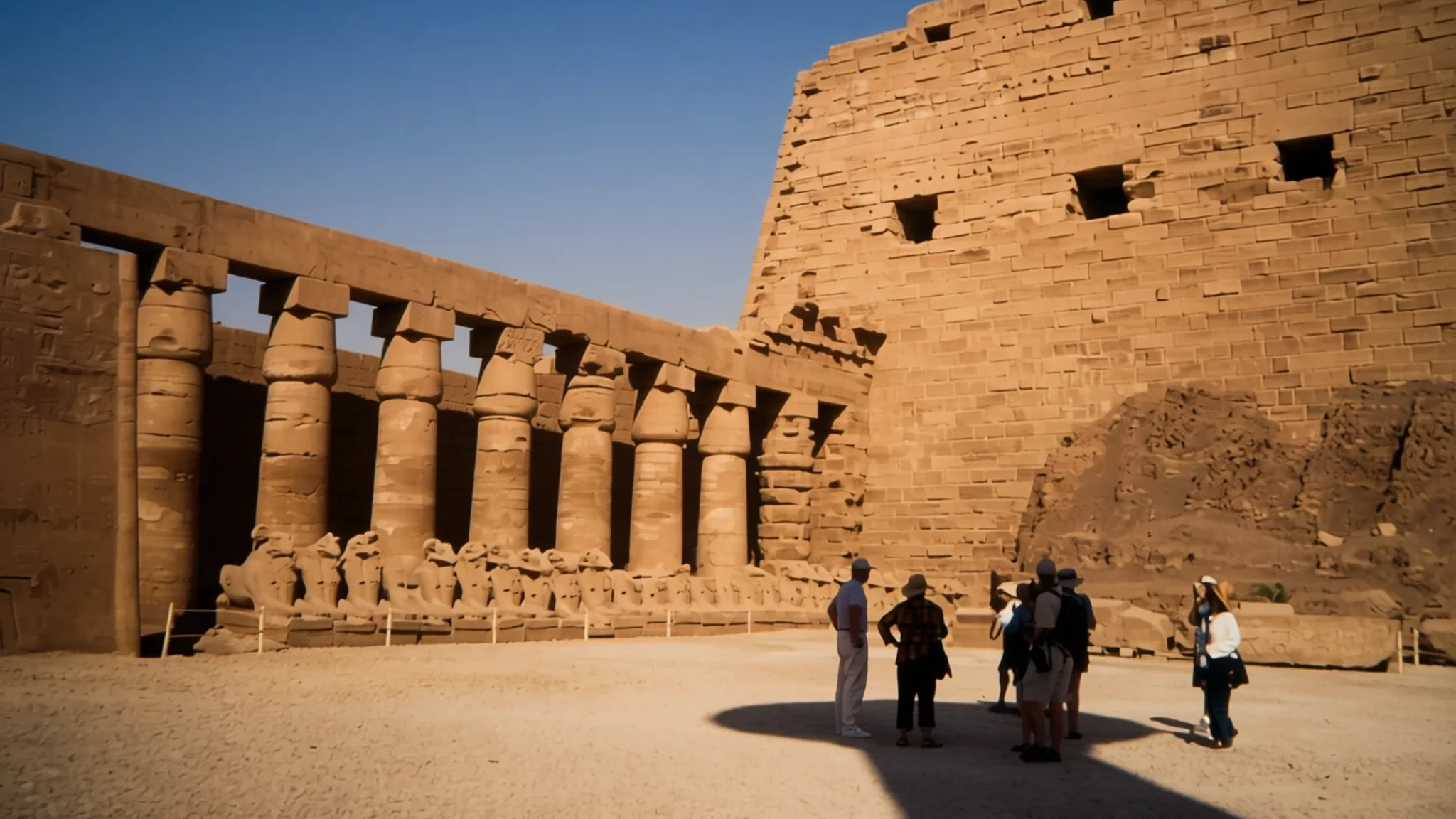
Go for the temples and tombs that stand inside and across from a working Nile city, ideally in the cooler months.
The place
Luxor is a city in Upper Egypt and the capital of Luxor Governorate, home to around 285,000 people. It is a low-rise, lively town on the east bank of the Nile, and the ruins sit within its streets rather than beyond its edge. The temples of Karnak and Luxor stand among ordinary houses, shops and cafés. Across the river, the West Bank holds royal tombs, funerary temples and the Valley of the Kings, which is why the city is often described as the world's greatest open-air museum.
Tourism is the main business. Large hotels and resorts line the river and the Corniche, and hot air balloons lift off over the fields at dawn and dusk. Peak season brings coaches to the major sites, and touts outside them can be persistent, so visitors who are not on an organised tour tend to find it easier to agree a fixed price for each journey in advance. Summer heat can become extreme by midday, which shapes the whole rhythm of a visit: early starts, a long rest in the afternoon, and walks along the river once the sun drops.
Churches and mosques share the old town with the temples, and daily life carries on around the monuments. The city lies about 670 km south of Cairo and roughly 220 km north of Aswan, so most people reach it by air or by the long road or rail routes along the valley.
Its story
The city that is now Luxor was once Thebes, a capital of Upper Egypt during the New Kingdom and the city of the god Amun, who later merged with Ra as Amun-Ra. Ancient Egyptian texts called it Waset, a name usually read as meaning city of the sceptre. In later Egyptian, a specific word was used to describe the massive temple that Arabic later called Karnak, a name that translates to fortified village. Greek speakers adapted the name as Thebai, and the Romans wrote it as Thebae.
The city was also called the city of the hundred gates, and it was sometimes set against the northern city of Heliopolis as a southern counterpart. Its prominence began well before the New Kingdom. In the Eleventh Dynasty the settlement grew into a busy urban centre, and the ruler Montuhotep II reunited Egypt after the unsettled years of the First Intermediate Period. Stability at home allowed the city to expand in stature.
The great wealth of the New Kingdom came from military campaigns. Pharaohs led expeditions south into Kush, in what is now northern Sudan, and east into Canaan, Phoenicia and Syria. The tribute and trade that followed made Thebes rich and prominent well beyond Egypt. The temples, tombs and palaces that survive on both banks date largely from this era, when the city was at the centre of Egyptian power.
What to see
- Karnak Temple Complex — East Bank, north of the town centre
Karnak is the sprawling temple complex on the east bank, built and rebuilt over many centuries and dedicated largely to Amun. Its great hypostyle hall is lined with massive columns, and its avenues of sphinxes link the separate enclosures. Allow at least half a day, and visit in the early morning when the stone is still cool and the crowds are thinner.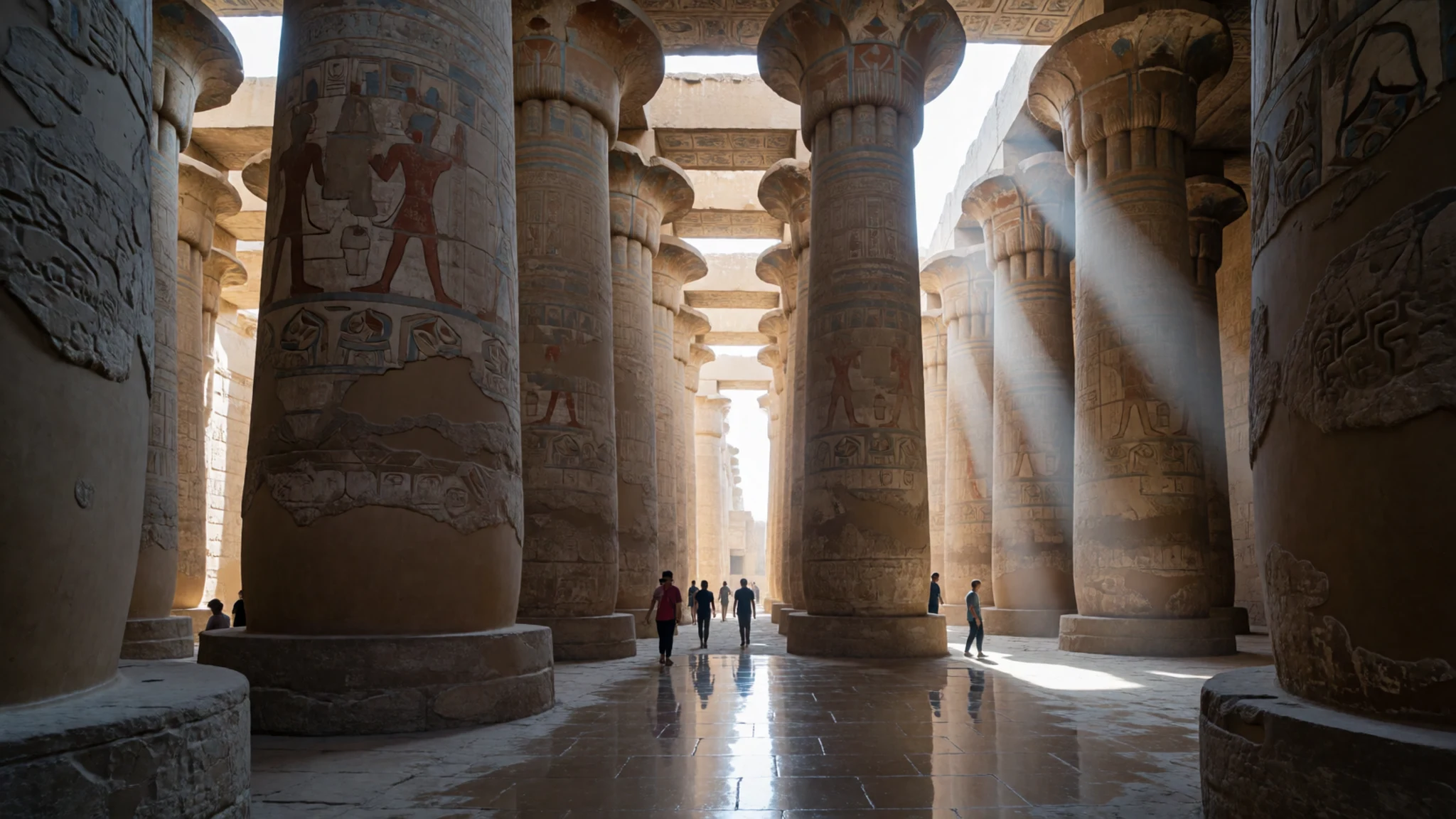
- Luxor Temple — East Bank, central Luxor
Luxor Temple sits close to the river in the middle of the modern town, so it is easy to reach on foot from the hotels. It was built mainly for the Theban gods, and its colonnaded court and tall entrance pylon are floodlit after dark. Late afternoon and evening visits are pleasant, and the site is a short walk from the Corniche.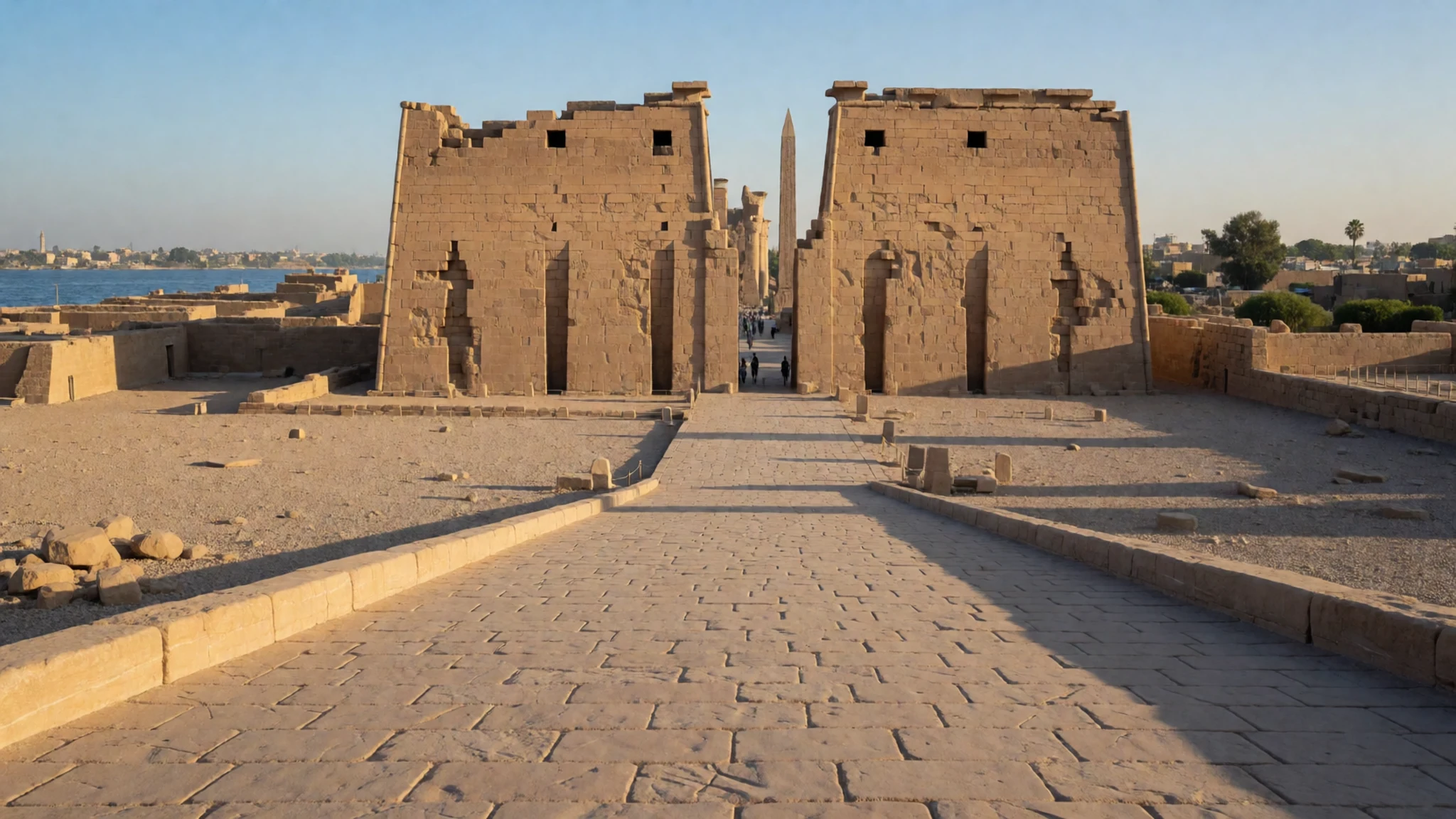
- Valley of the Kings — West Bank, Theban Necropolis
The Valley of the Kings is a desert wadi on the West Bank where many New Kingdom pharaohs were buried in rock-cut tombs. Tutankhamun, Seti I and Ramses VI are among those whose tombs are open to visitors. Most tombs carry colourful painted walls and inscriptions. A standard ticket covers several tombs, and special tombs usually need an extra ticket, so check the official site before you go.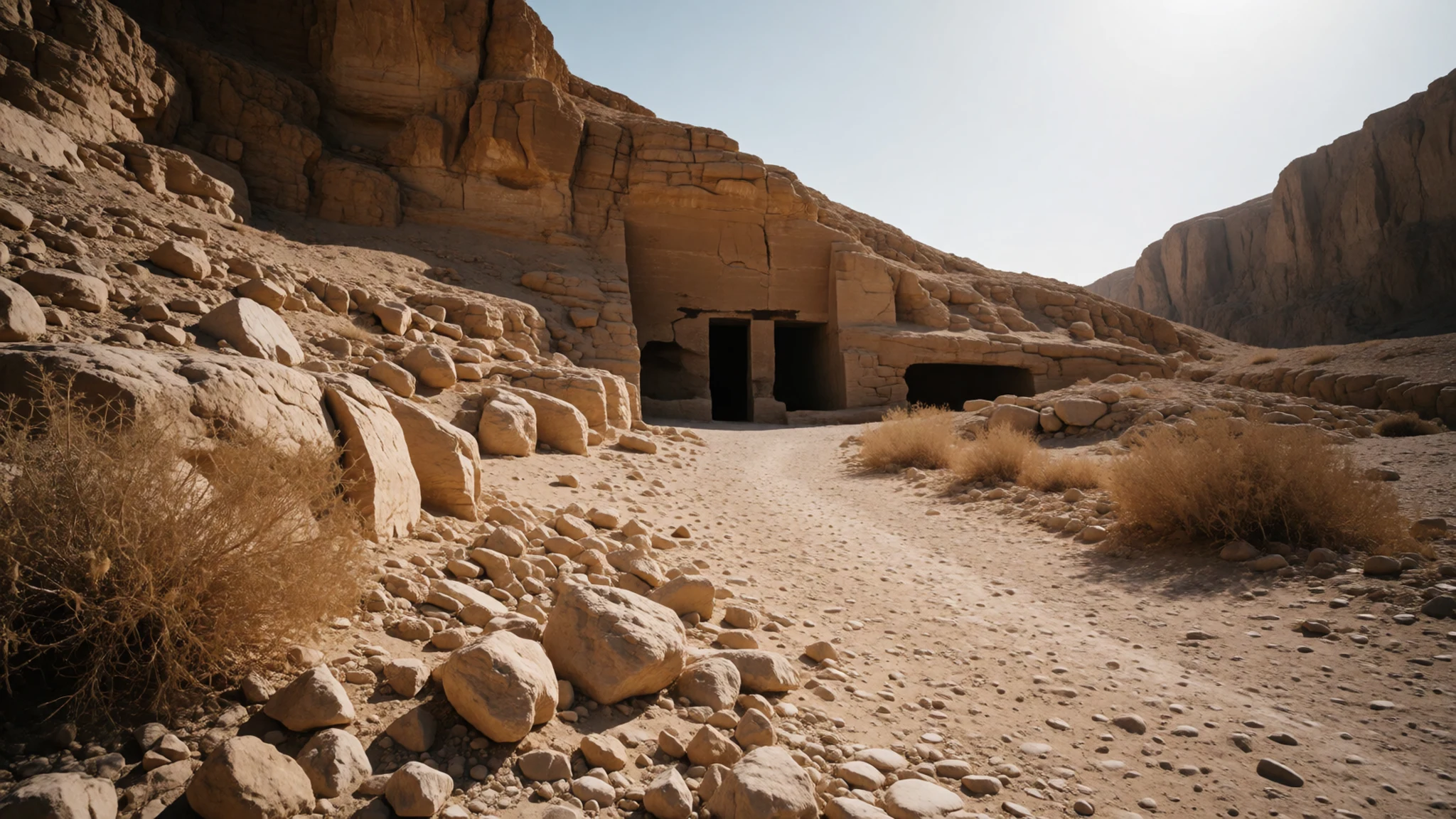
- Temple of Hatshepsut at Deir el-Bahari — West Bank, below the cliffs
Deir el-Bahari is a terraced mortuary temple built into the cliffs for Queen Hatshepsut. Its long ramps and colonnaded levels rise against the rock face and make a striking first view of the West Bank. The heat on the open terraces is intense by midday, so an early morning visit works best.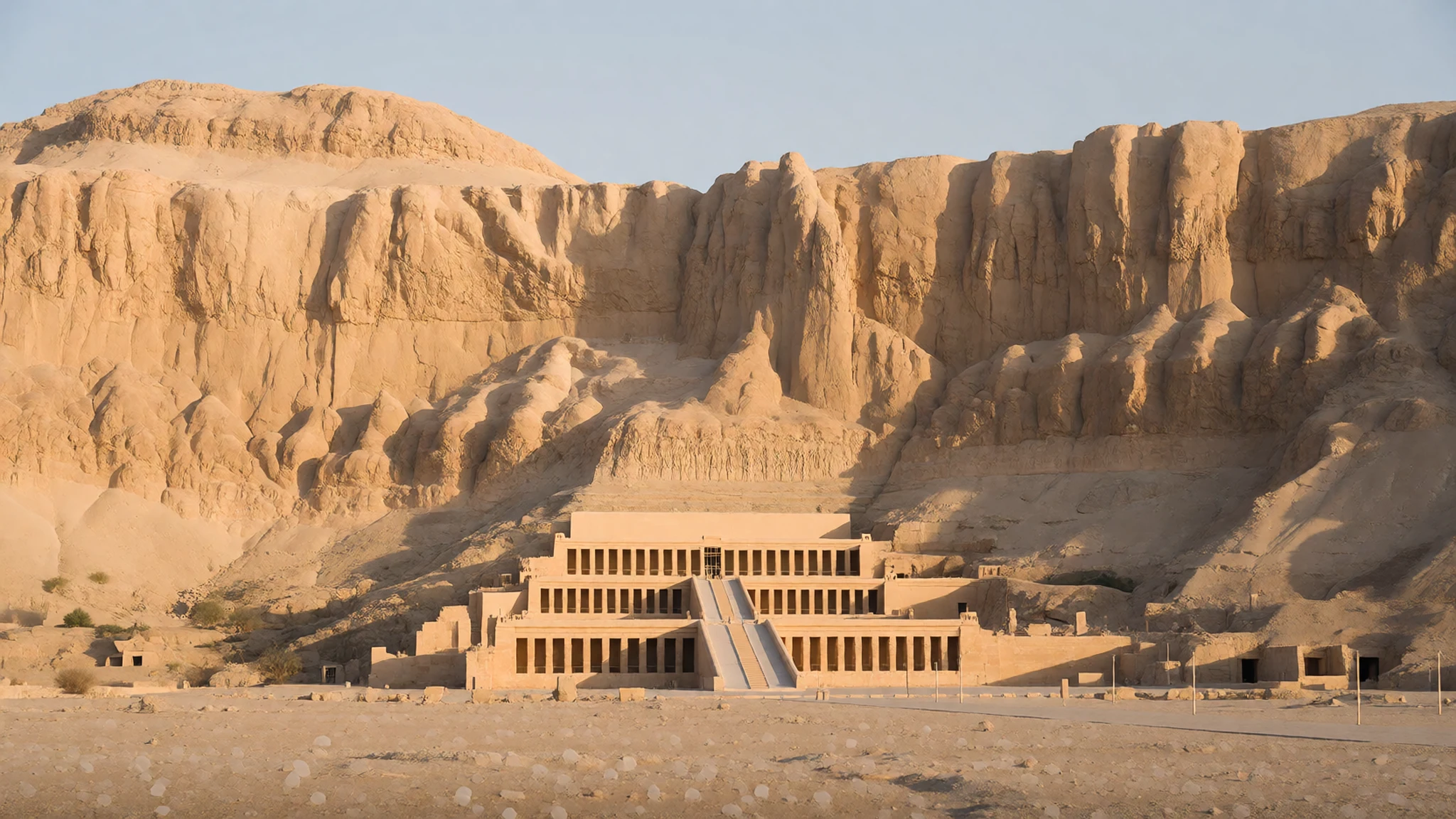
- Luxor Museum — East Bank, near the Corniche
The Luxor Museum is a smaller, calmer alternative to the outdoor sites, with carefully lit displays of statues, reliefs and objects from the Theban area. It works well as a half-day stop before or after the temples, and it offers a cool, indoor break in the hotter months.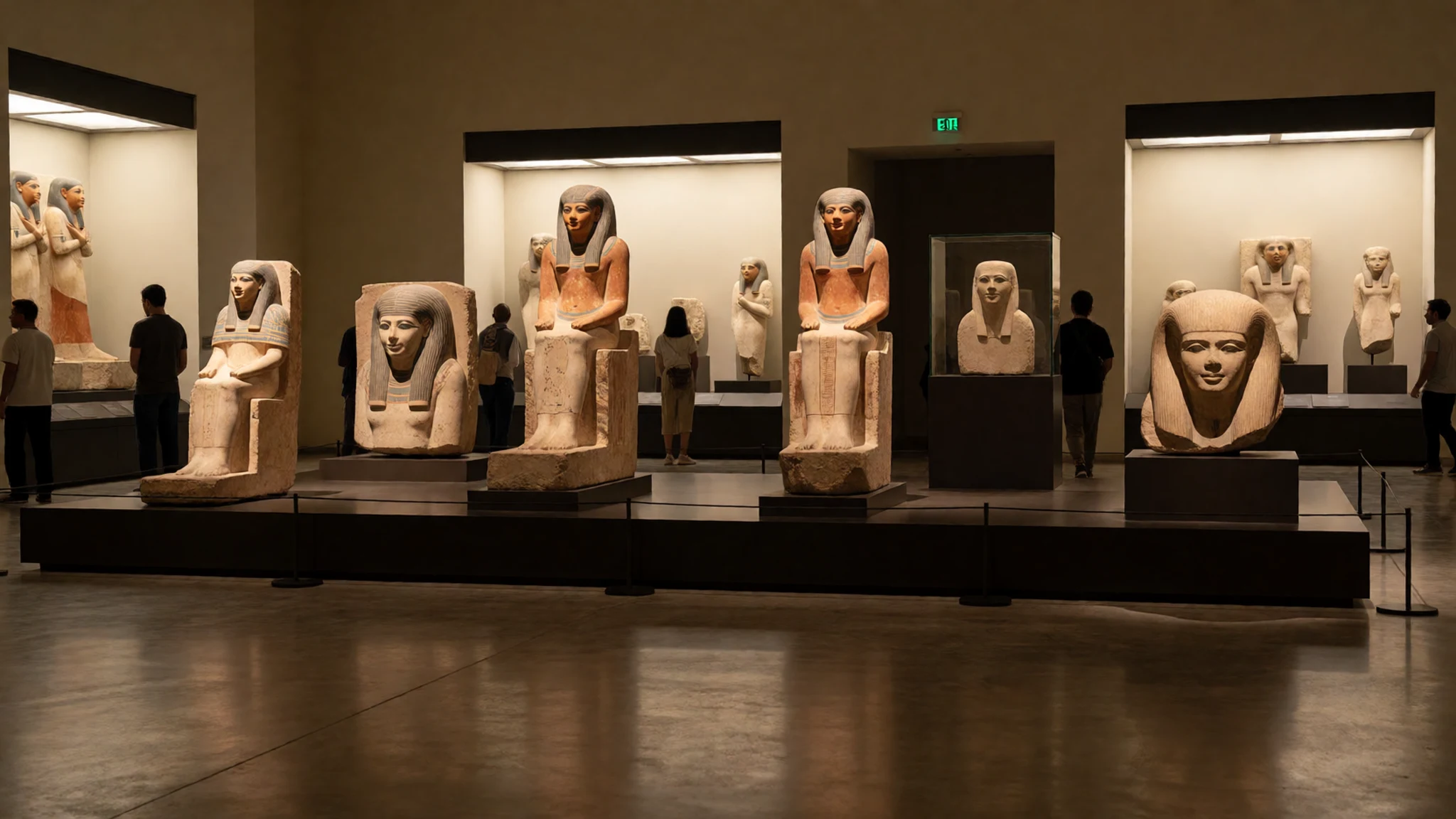
Culture
Luxor is a Muslim-majority city with a long Coptic Christian presence, and daily life here is more conservative than in the big coastal resorts. Local people are generally warm towards visitors, and a simple greeting goes a long way. Dress is the main point of care: men and women alike tend to cover shoulders and knees in town and in villages, and women may wish to carry a light scarf for mosque visits and for sites where it is appreciated. Tipping is expected for guides, drivers, boatmen and those who look after your bag or open a tomb door. Carry small notes for this, since change is often short. Photography is generally fine at the temples and tombs, though some tombs prohibit cameras, so check signs at each entrance. Ask before photographing people, especially women, and never photograph inside a tomb where it is forbidden or where guards signal to stop. Shoes are not usually required to be removed at the temples, but do keep to marked paths, since many ancient surfaces are fragile and climbing on walls is forbidden.
What to wear
Traditional dress in Luxor, as across much of Egypt, centres on the galabeya, a long, loose robe worn by men and women in towns and villages. Cotton is the usual cloth, chosen for breathability in the heat, and it may be plain, striped or lightly embroidered. Men often pair it with a skullcap or a turban in rural areas, while women traditionally wear a headscarf, and in some communities a fuller veil. These garments are still worn daily by older people and by many in the countryside.
What people wear now is a mix. In the city centre, western-style trousers and shirts or blouses are common, alongside galabeyas for many men and for women in more traditional households. Younger people often dress in jeans and t-shirts. Headscarves remain widespread among women, and modest clothing is the general expectation in public.
For a visitor, lightweight long trousers or a long skirt and a shirt with sleeves are the most sensible choice in both heat and sun. A light scarf is useful for mosques, churches and any village visit. Sturdy closed shoes suit the uneven stone, sand and steps of the temples and tombs, and a wide-brimmed hat and sunglasses are essential for the open West Bank.
What to eat
- Mezze with pita — a neighbourhood eatery near the Corniche or in the town centre
A meal often starts with warm pita bread and a spread of small dishes, such as smoky baba ganoush made from roasted aubergine and a bright parsley salad similar to taboulé. Fresh tomato and cucumber appear on most plates. Order a mezze platter to share, which suits vegetarians well.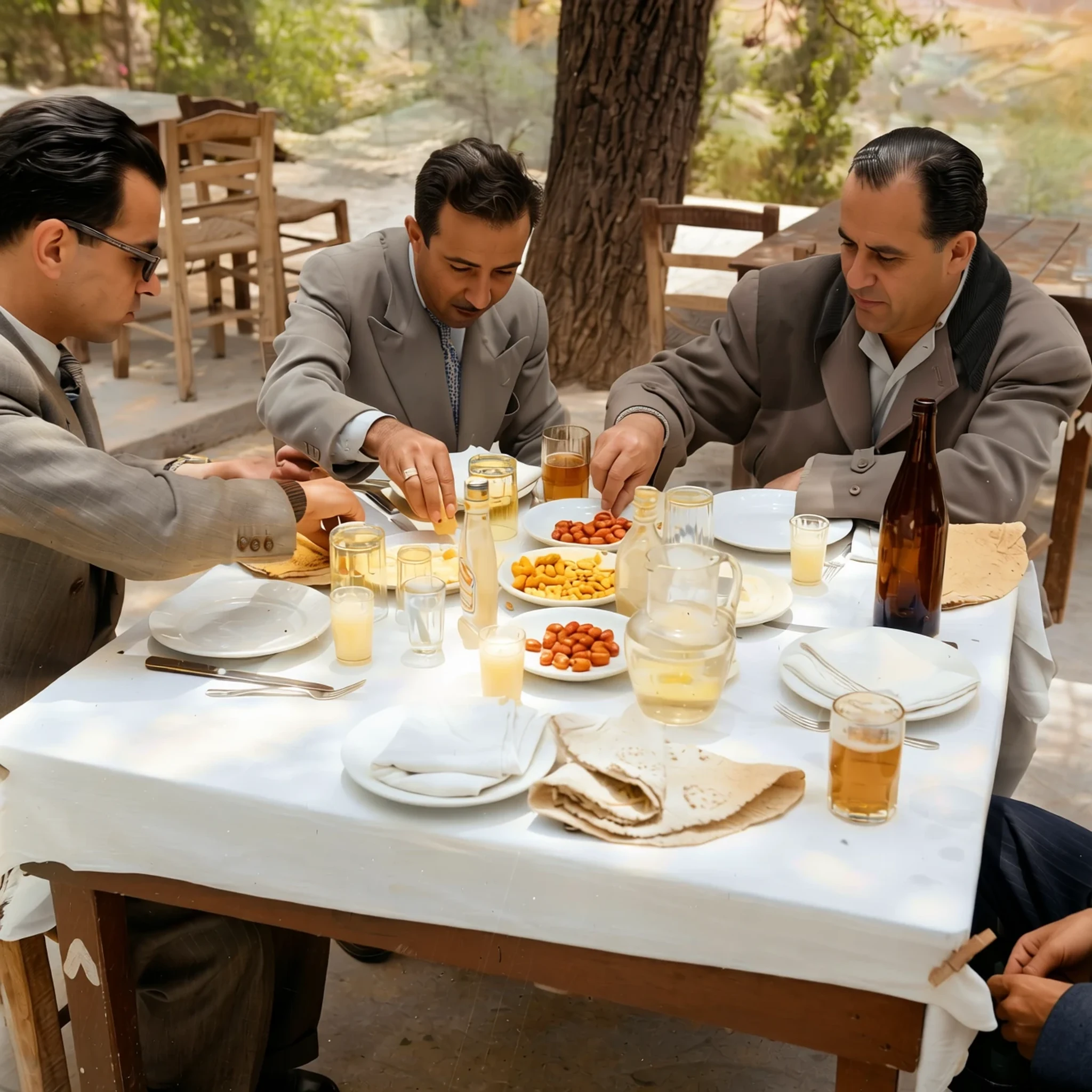
- Grilled beef or poultry — a local grill in the town centre, the kind with a smoky street front
Meat and poultry are served grilled over charcoal in simple eateries. Beef is often the safer choice for visitors who are worried about their stomachs, as the sources in this area suggest. Ask for it well cooked and eat it alongside salad and bread.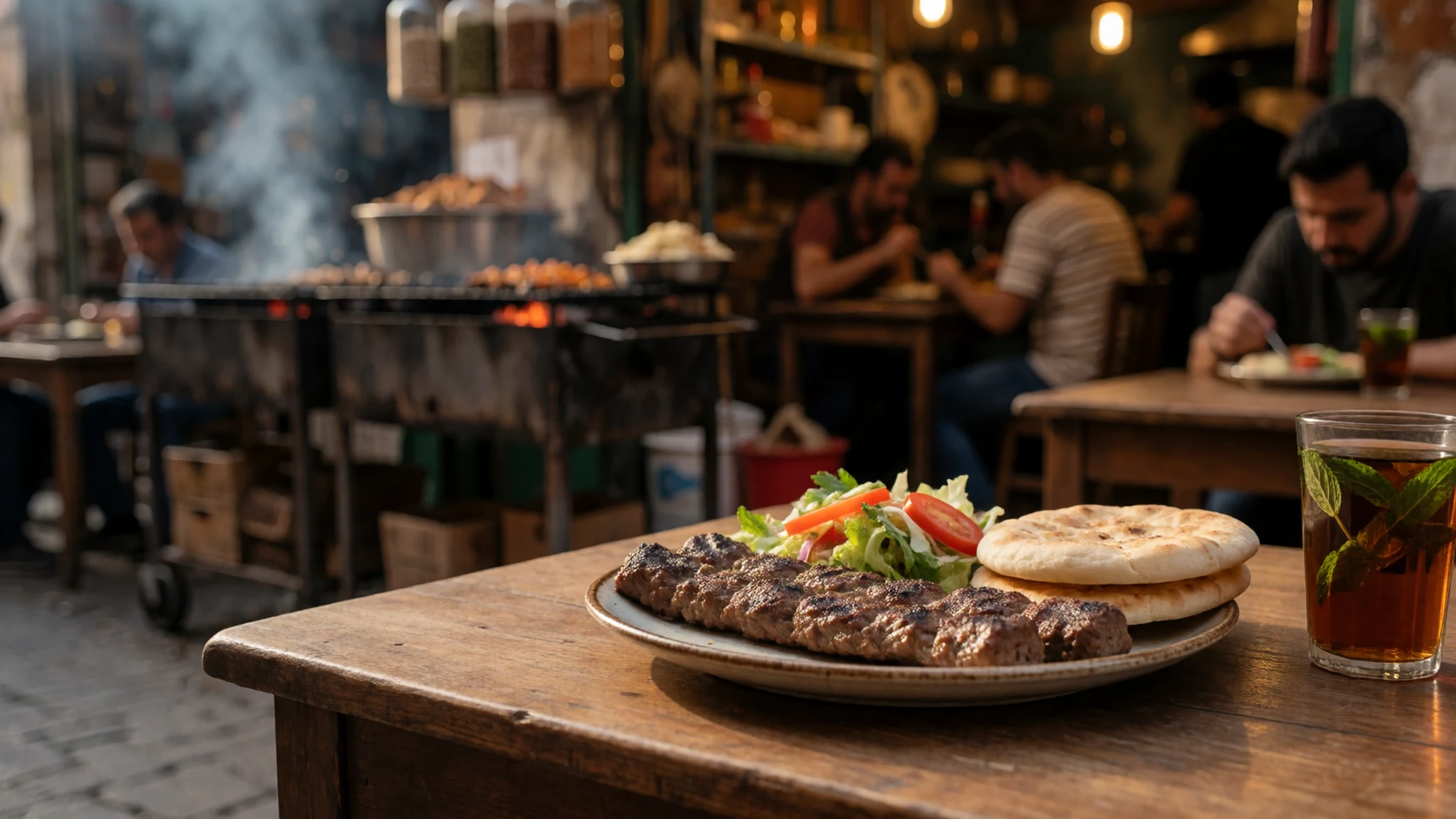
- Pigeon or rabbit — a family-run eatery away from the main tourist streets
Regional dishes such as pigeon or rabbit are part of the local repertoire, usually roasted or stewed. They are more traditional than the grilled options, so they may be harder to find on a standard menu. Ask a local eatery whether they are prepared that day. - Gibna bayda and yoghurt — neighbourhood grocery shops and any local eatery's breakfast or mezze menu
Gibna bayda is a white cheese, like feta but creamier, and it often sits alongside the main course with fresh bread. Plain yoghurt is served with meals as a cooling counterpoint to the spices. Both are widely available in small grocery shops and eateries. - Egyptian sweets — a sweet shop or bakery in the town centre
Many desserts are available, including syrup-soaked pastries and milk-based sweets. Some can be very sweet for western tastes, so ask for low or medium sweetness where possible. A small portion goes a long way after a heavy evening meal.
Plan it
Best time. November to March offers the most comfortable temperatures for walking the sites and riding balloons, while the summer months are very hot and can make the midday hours hard going. There is no long spring or autumn here, as the move from cool winter days to scorching summer heat happens quickly.
How long. 2–3
Getting there. Luxor International Airport is the nearest airport, with direct flights from Cairo of about an hour and some seasonal routes from Europe and the Gulf. There are no public buses from the airport to the centre, so take a hotel shuttle or a taxi, and agree the fare before setting off.
Budget. mid
Tips
- Start at the temples before 8 am to avoid the midday heat and coach groups
- Book balloon flights in advance and confirm whether the sunset tour includes the sunset itself, as this depends on the wind
- Carry cash in small notes for tips, small entrance fees and tea at the sites
- Drink bottled water in the heat, and buy it from shops rather than from unlabelled sources
- Check opening times and ticket rules on the official site before you go
Etiquette
- Ask before photographing people and keep to posted camera rules inside tombs
- Dress modestly in town and carry a scarf for mosque and village visits
Nearby
Sources
- Wikidata Q130514 (CC0)
- Wikipedia: Luxor (CC BY-SA 4.0)
- Wikivoyage: Luxor (CC BY-SA 4.0)
- Photo: Hotels in the Khaled Ibn el-Walid St, Luxor (Roland Unger) (CC BY-SA 2.5)
- Photo: Luxor Museum (Michiel1972) (CC BY 3.0)
- Photo: Temple of Hatshepsut (Holger Uwe Schmitt) (CC BY-SA 4.0)
- Photo: Luxor Corniche (Vyacheslav Argenberg) (CC BY 4.0)
- Photo: Karnak temple complex (Hamerani) (CC BY-SA 4.0)
- Photo: Luxor Temple, Thebes (David Broad) (CC BY 3.0)
- Photo: Luxor Temple (Marc Ryckaert) (CC BY 3.0)
- Photo: Plan général de la Vallée du Nil, Thèbes (Impr. impériale) (Public domain)


