Lumbini
Lumbini, Nepal
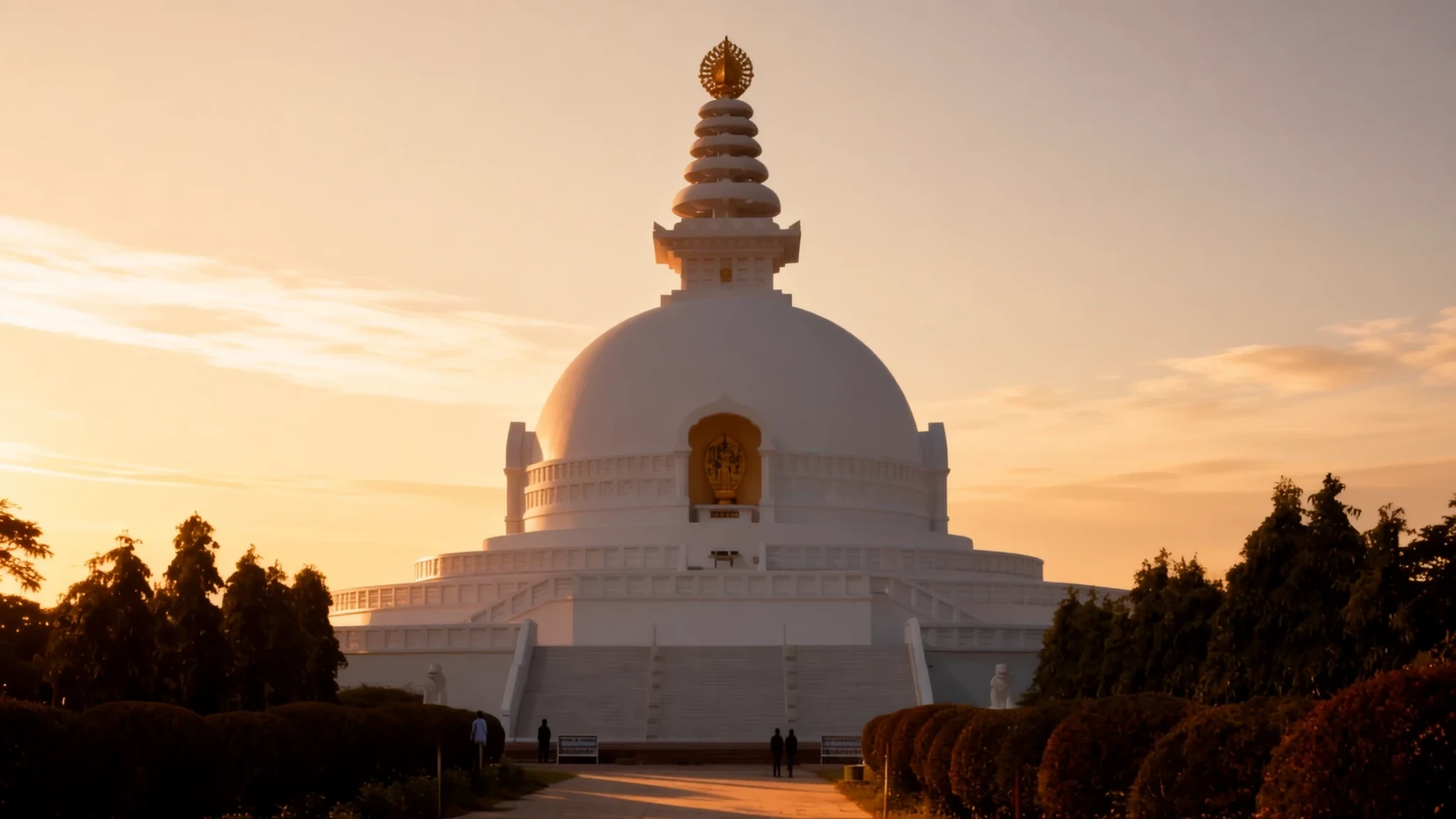
Journey to the serene plains of southern Nepal to walk through the ancient gardens where the Buddha was born.
The place
Lumbini lies flat and green across the Rupandehi District of southern Nepal, close to the Indian border. It is a vast, orderly sanctuary split into distinct monastic zones connected by canals, walkways, and tree-lined paths. Unlike crowded urban pilgrimage hubs, the sacred master plan creates a profound sense of quiet across the flat Terai landscape. Visitors arrive from dusty rural roads into a calm enclave where international Buddhist communities have built sprawling temples reflecting their own architectural traditions. Monasteries from China, Japan, Myanmar, Germany, and Sri Lanka sit quietly side by side, turning a rural corner of Nepal into a global map of Buddhist devotion. At the heart of the site stands the sacred garden, where quiet pathways wind past ancient brick foundations, spreading banyan trees, and the mirror-like surface of the holy pond. The air carries the low murmur of chanting, the flutter of colourful prayer flags in the breeze, and the footsteps of robed monks and pilgrims who travel from every corner of the earth. Though small in local population, the area receives a steady stream of travellers seeking stillness, historical reflection, and spiritual grounding in the very earth where Buddhist philosophy first took root over two millennia ago.
Its story
The story of Lumbini begins in sacred narrative and ancient texts that recount the birth of Siddhartha Gautama around the middle of the first millennium BCE. According to tradition, Queen Maya was travelling towards her parental home when she paused in this fragrant, flowering grove to rest. Near the tranquil waters of the puskarini pond, she gave birth to the child who would renounce worldly privilege, seek enlightenment under a pipal tree, and become the Buddha. Centuries later, the great Mauryan Emperor Ashoka journeyed to these sacred plains to pay his respects, ordering a monumental sandstone pillar carved with an inscription to mark the birthplace of the sage and grant the settlement tax-free status. As dynasties rose and fell across the Gangetic plains, the precise location of the grove was slowly reclaimed by dense jungle and forgotten by all save local keepers of the soil. Rediscovered by archaeologists through careful excavation of the ancient bricks and the weathered Ashoka pillar, Lumbini emerged once more from the overgrowth. It was carefully restored through international efforts led by UNESCO, transforming a forgotten forest clearing back into one of the most revered pilgrimage destinations in global history.
What to see
- Mayadevi Temple
The central archaeological shrine protecting the exact birthplace of Siddhartha Gautama. Inside, visitors view ancient brick foundation layers and a sacred marker stone preserved beneath glass, while the exterior looks out towards the tranquil holy pond where the infant and his mother were bathed.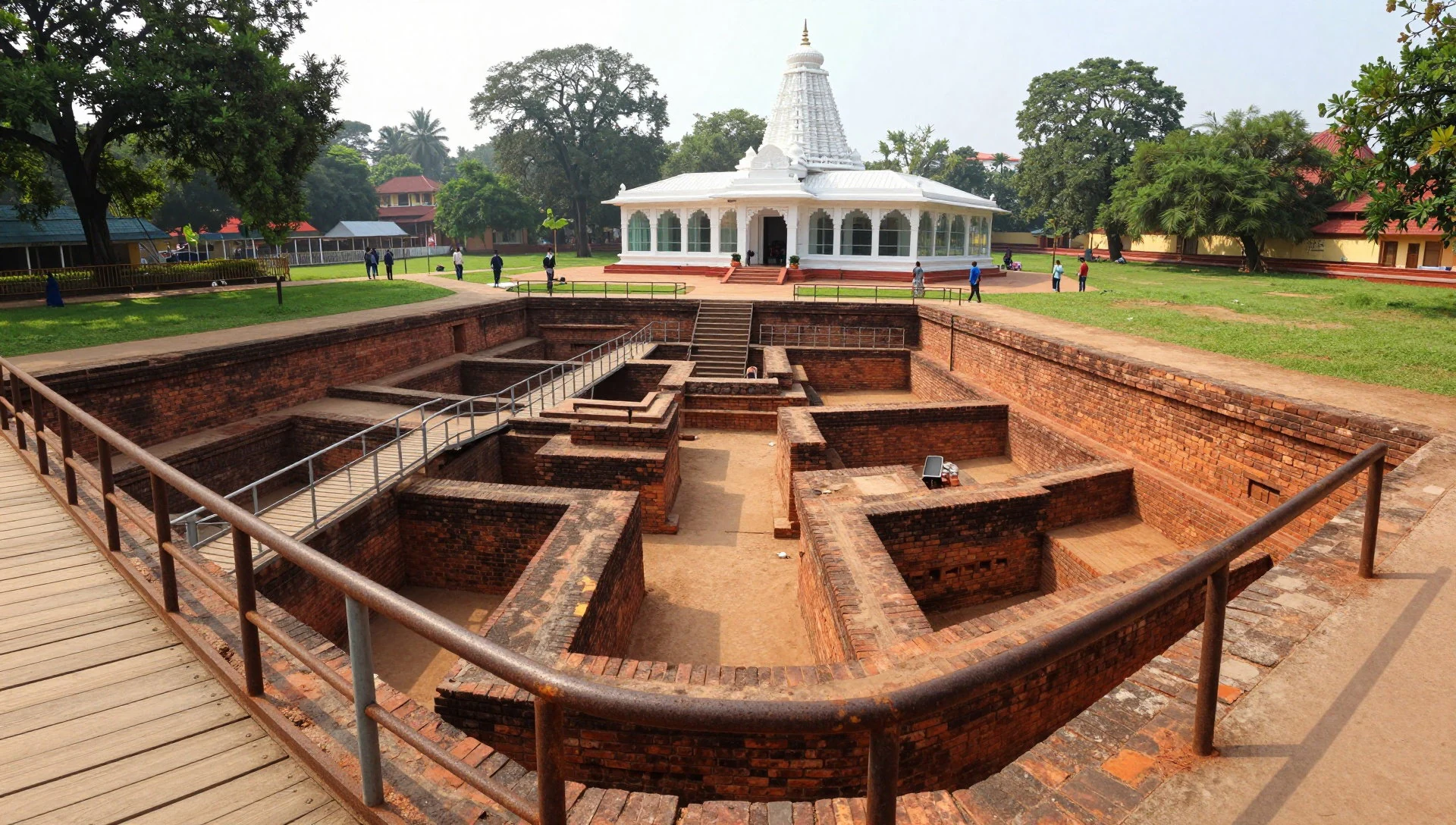
- Ashokan Pillar
An ancient monolithic sandstone pillar erected by Emperor Ashoka during his historical pilgrimage to the site. The weathered stone bears ancient Brahmi inscriptions that confirm Lumbini as the birthplace of the Buddha and commemorate the imperial exemption from local taxes.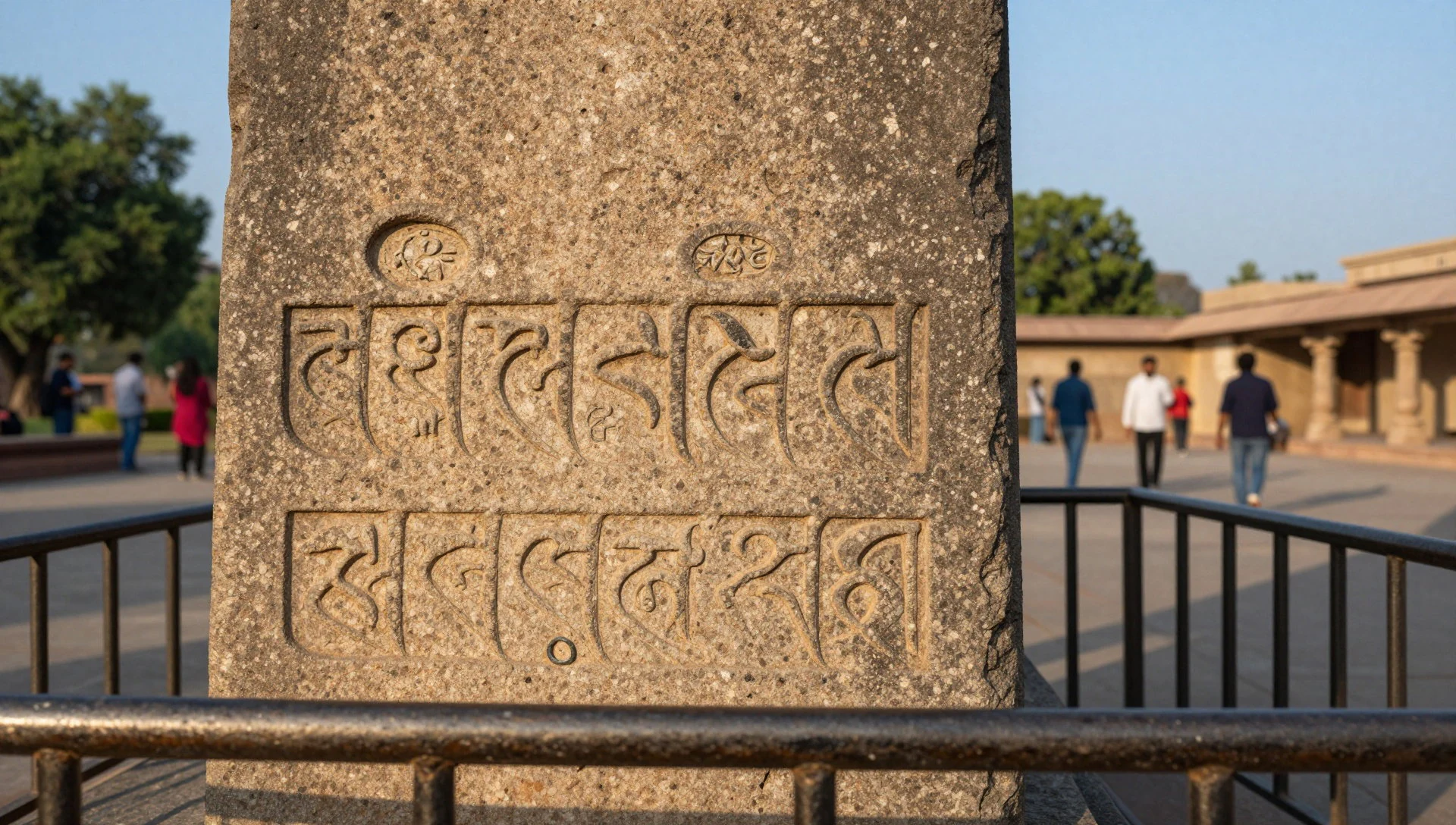
- World Peace Pagoda
A towering white stupa built by Japanese Buddhist devotees at the northern end of the master plan. The imposing structure rises high above the flat plains, surrounded by manicured lawns where visitors can sit and listen to the wind chimes suspended from its golden tiers.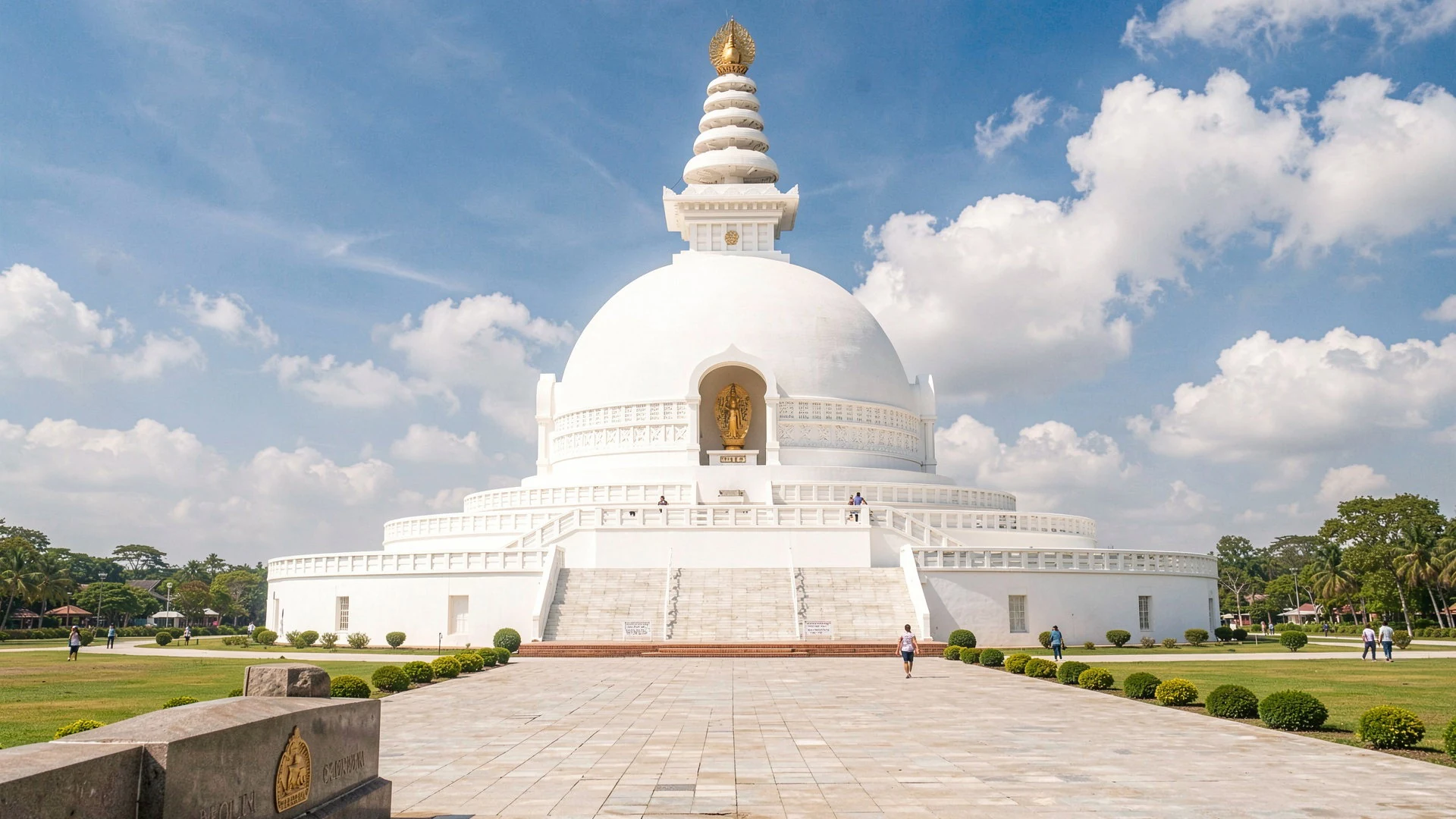
- Lumbini Museum
An institutional repository housing archaeological finds, terracotta figurines, and ancient coins recovered from regional excavations dating back to the Mauryan and Kushana periods. It provides a helpful historical context for the artefacts scattered across the broader monastic zone.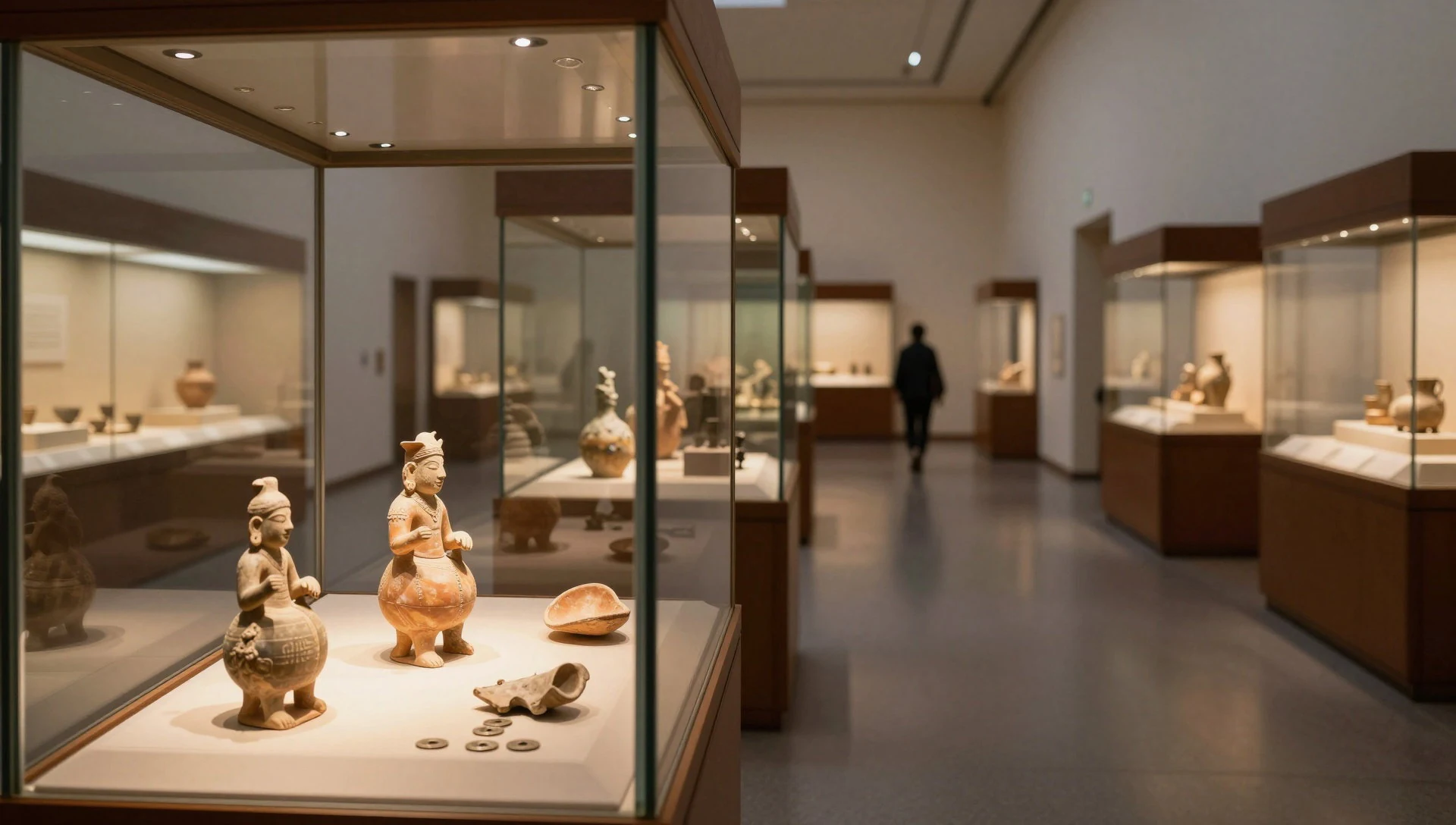
- International Monastic Zones
A sprawling collection of temples and meditation centres built by different nations across the eastern and western monastic monastic precincts. Each structure showcases distinct architectural styles, from Tibetan multi-tiered rooftops to Chinese temple gates and Thai gold-leaf rooflines.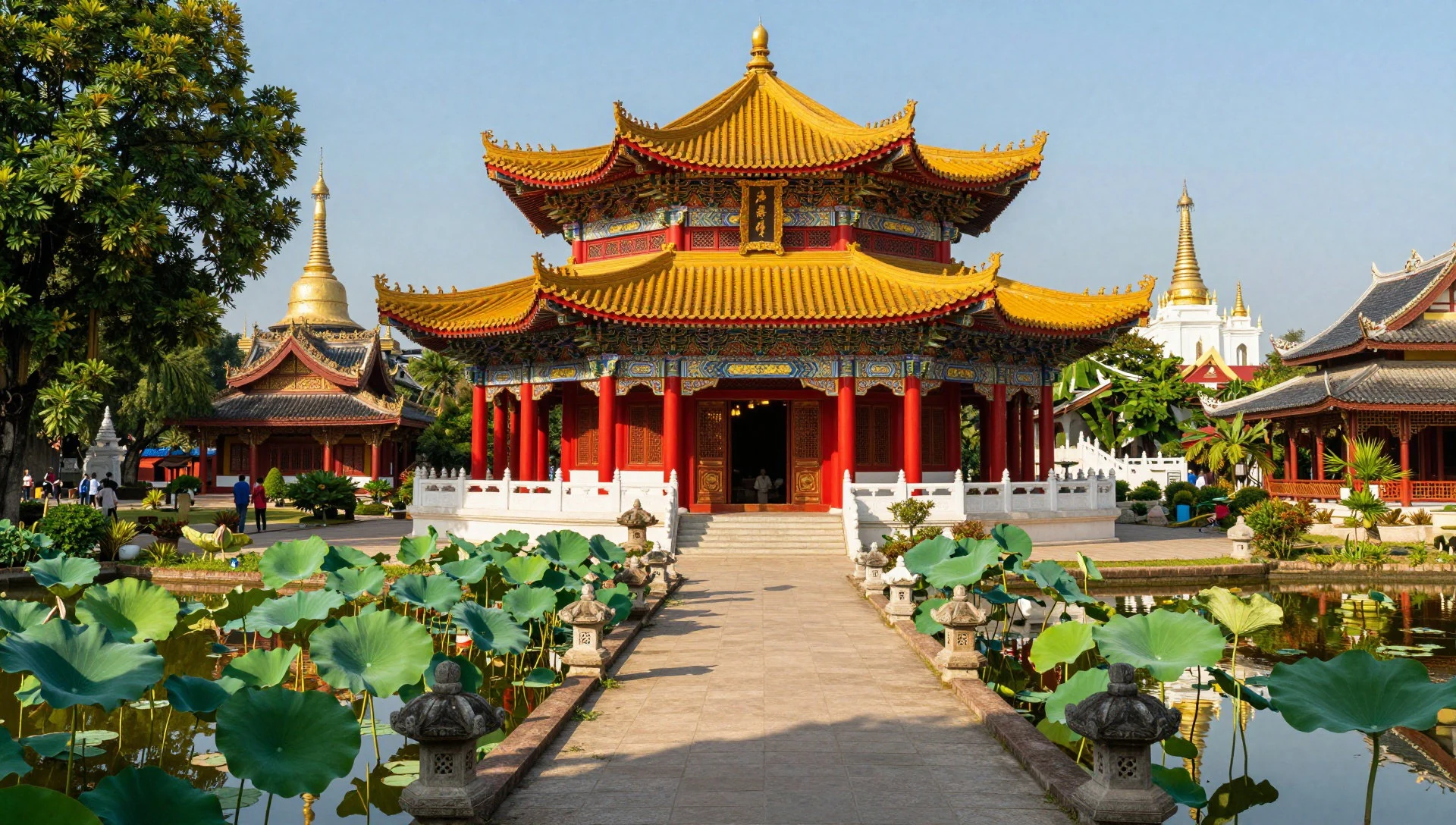
Culture
Lumbini operates as a quiet sanctuary shared by monastics, scholars, and international pilgrims. Daily life in the wider district is grounded in traditional rural Nepali customs, while the monastic zone observes a deeply contemplative atmosphere governed by Buddhist practices of mindfulness and respect. Monks and nuns in saffron, maroon, and white robes move quietly along the pathways, while visiting lay practitioners engage in quiet circumambulation and meditation. Local residents maintain close ties to agriculture and small commerce, welcoming travellers with quiet warmth and hospitality. Visitors are expected to maintain a peaceful demeanour, speak softly, and respect the meditative atmosphere of the gardens and meditation halls. Always remove your shoes before entering temple sanctums, and never climb upon statues or ancient monuments. Dress modestly with shoulders and knees covered out of respect for the sacred nature of the site.
What to wear
Traditional dress across the rural Terai plains includes lightweight cotton kurtas, loose trousers, and draped sarees for women, alongside simple shirts and trousers or traditional dhotis for men. In everyday modern settings, younger locals lean towards casual shirts and trousers, while traditional garments remain common during festivals and family gatherings. For visitors exploring the sacred complex, practical modesty is essential. Lightweight, breathable cotton clothing that covers the shoulders and knees is appropriate for both men and women, ensuring comfort in the humid lowland heat while showing proper reverence inside temples and meditation zones. Because you will spend much of your time walking barefoot across polished marble floors, courtyard stone, and temple entryways, slip-on shoes or sandals that can be removed and put back on quickly are ideal footwear.
What to eat
- Morning Puri and Dhaba Fare — Village dhabas near the main bus stop
Simple, comforting breakfast plates served at local dhabas near the village bus stop, featuring freshly fried puri bread paired with spiced potato curry to start the morning.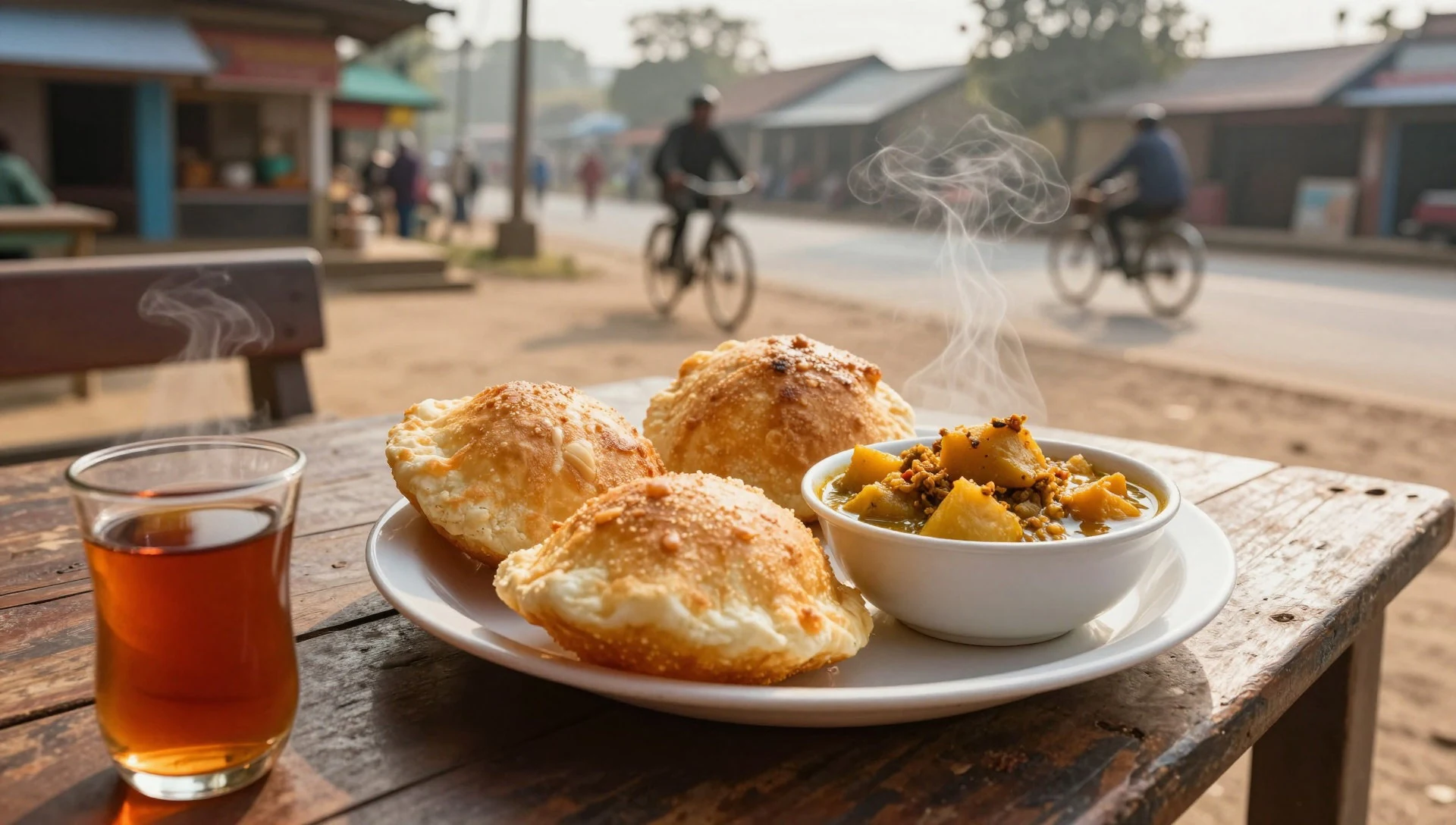
- Rooftop Nepali Thali — 3 Foxes rooftop restaurant in Lumbini village
Hearty evening meals featuring steamed rice, lentil dal, seasonal vegetable curries, and house-made pickles served in a relaxed rooftop setting overlooking the village street.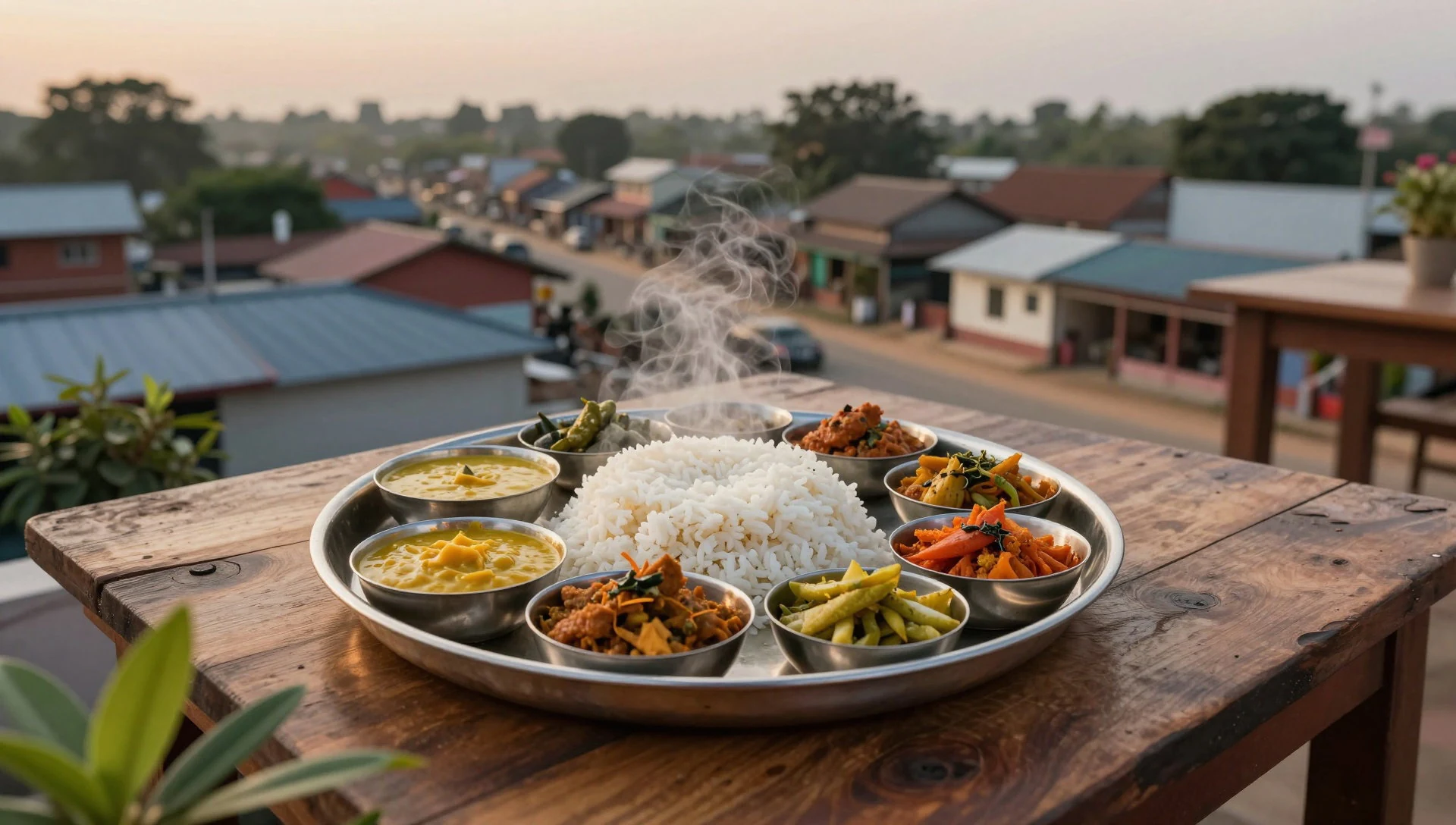
- Local Village Dal Bhat — Small family eateries along the village street
The quintessential Nepali staple of spiced lentils poured over rice with vegetable accompaniments, prepared simply in family-run eateries around the outskirts of the market. - Pilgrimage Tea and Snacks — Teashops near the monastic gate
Hot masala chai and spiced milk tea served alongside local biscuits and sweets at small stalls dotted along the walking paths leading towards the monastic zone.
Plan it
Best time. November to February offers the most pleasant weather with comfortable daytime temperatures, avoiding the intense heat from March to October and the monsoon rains.
How long. 2–3
Getting there. Fly into Gautam Buddha Airport at Bhairahawa, then take a short taxi or bus ride of about thirty minutes to reach the site.
Budget. low
Tips
- Start your walks early in the morning to enjoy the quietest hours and avoid the midday heat.
- Carry small denominations of cash for local buses, simple meals, and modest temple donations.
- Wear slip-on shoes or sandals as you will frequently take them off when entering temples.
- Drink bottled or filtered water and protect yourself from the strong lowland sun with a hat.
Etiquette
- Always circumambulate stupas and sacred shrines in a clockwise direction.
- Remove your footwear before stepping inside any temple building or meditation hall.
- Maintain a quiet, respectful voice and never climb onto statues or ancient ruins.
Nearby
Sources
- Wikidata Q9213 (CC0)
- Wikipedia (rev 1382635670) (CC-BY-SA 4.0)
- Wikivoyage (rev 5409905) (CC-BY-SA 4.0)