Luleå
Luleå, Sweden
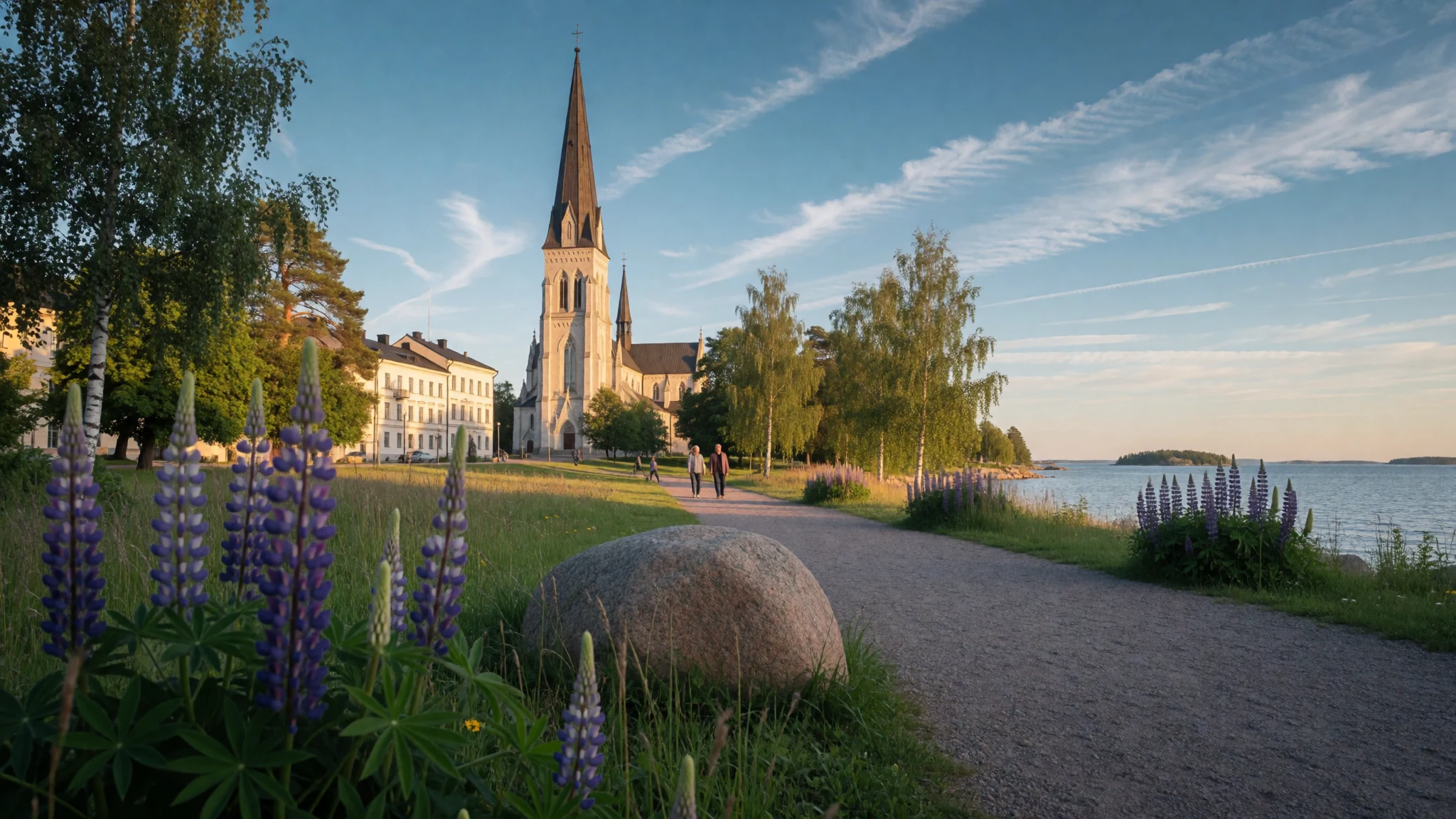
Luleå offers an Arctic-edge city where the sea freezes into winter ice, summer nights barely darken, and a UNESCO church town sits nearby.
The place
Luleå is a coastal city in northern Sweden and the capital of Norrbotten County, with about 50,000 people in the urban area. It sits just 6 m above sea level on the Gulf of Bothnia, where the water is brackish and the shoreline breaks into a scatter of islands and skerries. The centre is compact and flat, with the harbour on one side and shopping streets behind it. Around it spread residential districts such as Hertsön, Porsön and Örnäset, and the old parish village of Gammelstad lies a short way inland. Working life here rests on steel, shipping and research. The port handles cargo, the Air Force keeps a wing at the airport, and the technical university brings students to a town that would otherwise be quite small. That mix gives Luleå a practical, unfussy feel rather than a showpiece one. The sea is the main attraction in every season. In summer people head out to the islands by boat; in winter the bay freezes and the ice becomes a place to walk and skate. Light shapes the year: summer nights hardly get dark, while midwinter days are short and low. Visitors come for the archipelago, the church town, the northern lights and as a starting point for the Iron Ore Line north. Expect a working Swedish town rather than a museum piece, and choose the season carefully, because the city is a very different place in July and in January.
Its story
Luleå began further inland than it stands today. Records mention a settlement on the site of present-day Gammelstad in 1327, where a market and a parish church served a vast stretch of the north. A royal charter in 1621 made it a town. Then the land itself intervened. Ground in this part of Sweden is still rising after the weight of the ice sheets lifted, and the bay silted up until ships could no longer reach the harbour. In 1649 the town was moved to its present coast. The new site was not an easy one. Fires struck in 1653 and 1657, and a far worse one in 1887 destroyed most of the town, leaving only a few buildings standing. The neo-Gothic cathedral, dedicated in 1893 in the aftermath, rises 67 m and is the tallest building in town. Growth was slow. Luleå took over from Piteå as the county town in 1865, and industry began to take root in the 1860s. Steel, the harbour and the railway that brings iron ore from the mountains to the coast turned a small northern port into the main city of the region. The older layers are still visible. Gammelstad's church and cottages mark where the first town stood, while the newer centre follows the plan of a place rebuilt after fire. Both tell the same story of a town that has repeatedly had to move, rebuild and adapt.
What to see
- Gammelstad church town — Gammelstad, north-west of the centre
Gammelstad is the old parish village on the site of the first Luleå, a short trip north-west of the modern centre. It is a World Heritage site, and the pull is the stone church ringed by rows of small wooden cottages. Walk the lanes slowly and leave time for the church itself and a coffee nearby.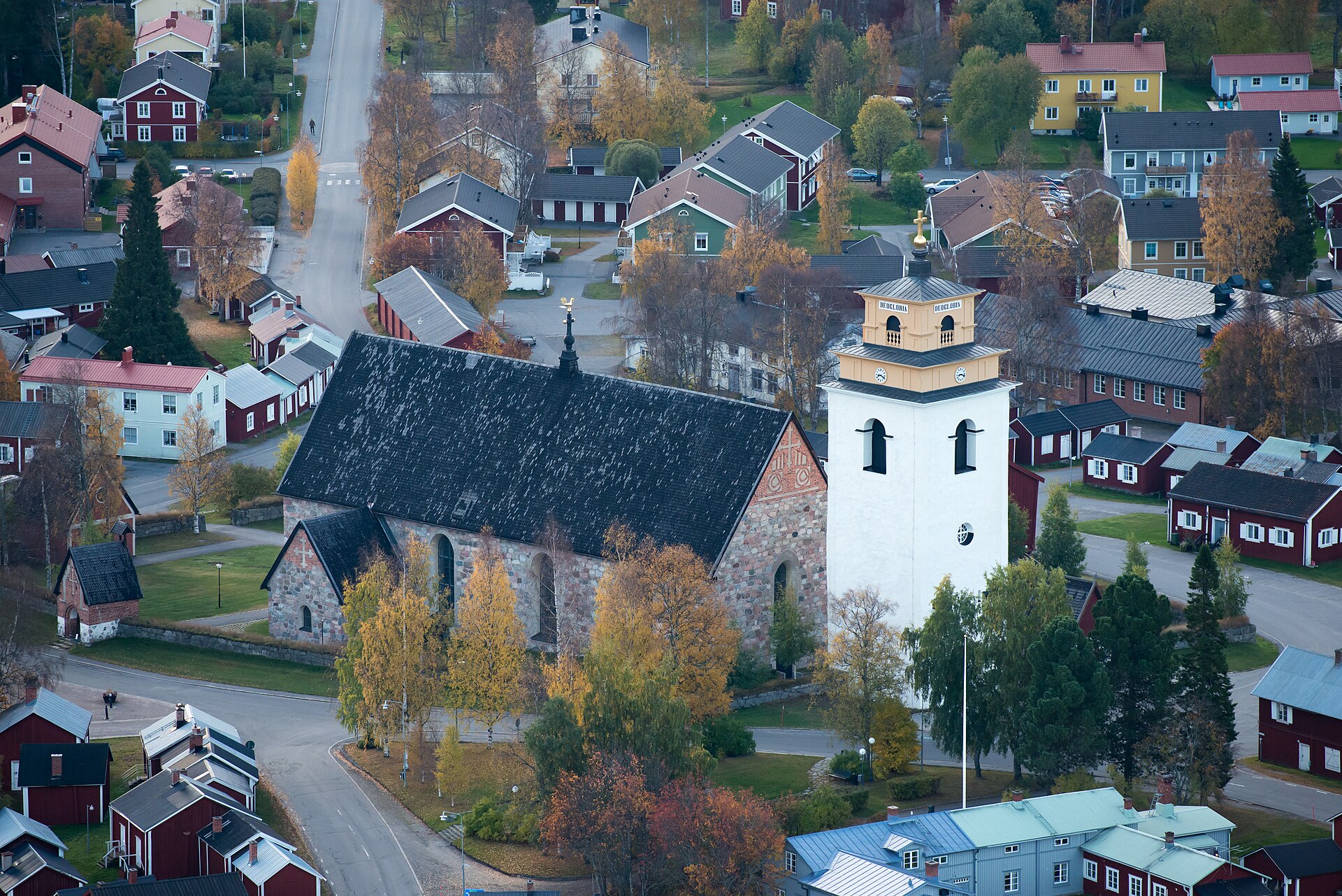
- Luleå archipelago — Islands off the coast, east of the centre
The archipelago is the sea side of the city, a spread of islands reached by tour boat in summer. Sandön, with its sheltered beach at Klubbviken, is a pleasant stop for a swim or picnic. Boats run seasonally, so check the municipality's website, and note that the water stays cold even in July. - Norrbottens museum — Central Luleå
The county museum holds archaeological finds and tells the story of the people of the region. It suits a grey or very cold afternoon, when the islands are out of reach and the streets are best left to the wind. Opening times change by season, so check the official site before you go. - Norrbottens järnvägsmuseum — West of the centre
The railway museum explains why Luleå matters on the map: it is the coastal end of the system built around the Iron Ore Line, which carries ore down from the mountains. Pair it with a look at the harbour to see the same chain from the other end. Check opening days in advance. - Cathedral and harbour front — Centre and north harbour
The central streets and harbour front are where Luleå feels like a working town. The neo-Gothic cathedral, dedicated after the great fire, makes an easy landmark for finding your way, and the waterfront is the setting for the July harbour festival. In winter the bay beside the harbour freezes over and the whole view turns white.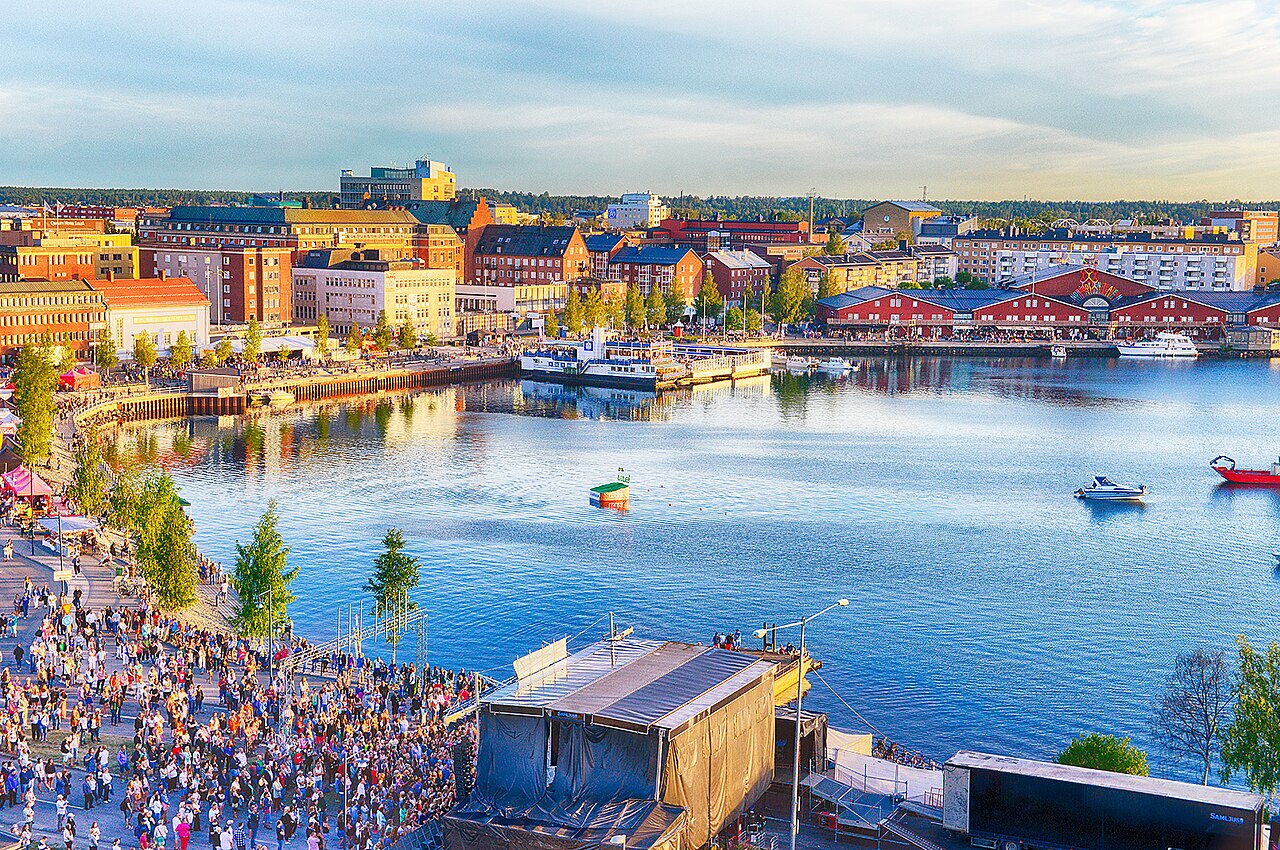
Culture
Luleå has a cultural life far larger than its size suggests, helped by a university and a long, dark winter that pushes people indoors. The county theatre, Norrbottensteatern, and the Norrbotten Big Band anchor the formal side, and Kulturens Hus, opened in January 2007, hosts a library, concerts and exhibitions under one roof. The city is also known for loud music: hardcore punk band Raised Fist and power metal band Machinae Supremacy both come from here. The calendar follows the seasons. The indoor Minus 30 festival fills Kulturens Hus on a Saturday in mid-March, a deliberate celebration of the cold. In July the free Hamnfestival takes over the north harbour, successor to a line of summer festivals that began in 1988. Musikens makt, a smaller free music event, runs each August. Ice music is a newer art form here, with musicians playing instruments carved from ice inside a large igloo. Beyond the stage, the older culture of the region shows in Gammelstad's church town and in the Sami and Finnish-speaking heritage reflected in the Lule Sami and Meänkieli names for the city. In Gammelstad, treat the church and cottages as part of a living parish: speak quietly, stay on the paths and ask before photographing anyone.
What to wear
Luleå's traditional dress belongs to two traditions. The Sami of the region wear the gákti, a tunic of wool or felt trimmed with woven bands in strong colours, worn at family gatherings, Sami national day and other celebrations rather than every day. Swedish regional folk costume, with wool skirts, embroidered bodices and linen blouses, appears at midsummer and on national day. Everyday clothing is practical and quiet in colour: dark and neutral layers, wool jumpers, down jackets and good boots, with a stylish edge among students and younger people in the centre. Locals dress for the weather first and the occasion second. A visitor should do the same. In winter, bring a thermal base layer, an insulated and windproof coat, a warm hat, proper gloves and boots with a grippy sole, since pavements and the sea ice can be slippery. In summer, pack light layers, a rain jacket and sunglasses, because days can turn warm, with some reaching around 30 °C, and the nights are bright. Mosquito repellent helps near water. No special dress is required at the church in Gammelstad, but covered shoulders and a calm manner are appreciated. Comfortable walking shoes suit the lanes and the island paths.
What to eat
- Palt — Traditional lunch eateries and delis in the centre
Palt is a dense potato dumpling from Norrbotten, traditionally filled with pork and served with butter and lingonberry jam. It is hearty cold-weather food. Look for it on lunch menus at traditional northern Swedish eateries, or ask at a deli that stocks local produce. - Reindeer, renskav style — Restaurants serving northern Swedish cooking near the harbour
Thinly sliced sautéed reindeer is a northern staple, usually served with mashed potato, lingonberries and a creamy sauce. It tastes mild and slightly gamey. Restaurants focusing on local northern Swedish ingredients often have it on the menu, especially in winter. - Kalix löjrom — Better restaurants and delis in the centre, mainly in autumn
This pale orange roe from vendace, a small whitefish from the Bothnian coast, is served on toast or blini with red onion and sour cream. It is seasonal and not cheap, so treat it as a single indulgent course. Ask where it was sourced. - Cloudberries — Cafés, dessert menus and food shops around the centre
Cloudberries, called hjortron in Swedish, are a golden northern berry with a tart, slightly honeyed flavour. They appear as jam with waffles, in desserts or with ice cream. Summer is the season, though jars are sold year-round in food shops. - Fika with a cinnamon bun — Any café in the centre or near Gammelstad church
Fika is the Swedish coffee break, and the cinnamon bun, kanelbulle, is its standard companion. It is also a pleasant way to warm up between outdoor walks. Almost every café in the centre and the church town serves coffee with a bun or cake.
Plan it
Best time. Late June to August for bright nights, island boats and the July harbour festival, with some days warm enough to reach around 30 °C. February and March for snow, ice and the Minus 30 festival in mid-March. Northern lights can appear from September to March on clear nights.
How long. 2–3
Getting there. Luleå Airport at Kallax is about 5 km from the centre, with buses on routes 4 and 104, or a taxi. Flights run from Stockholm and other Swedish towns, with some international links, so check current schedules. Trains from Stockholm use the Northern Trunk Line, and the station is in the centre.
Budget. mid
Tips
- Book winter ice and aurora tours ahead, because group sizes are small and the best dates fill up.
- Boats to the archipelago run seasonally, so check timetables on the official site, https://www.lulea.se.
- Cards are accepted almost everywhere, so you will rarely need cash.
- In winter, dress for the cold before you plan the day, and expect darkness for much of it.
- In June and July, bring an eye mask, since nights stay bright.
Etiquette
- Queue calmly and wait your turn at counters and bus stops.
- Speak quietly in churches and in Gammelstad's church town.
- Ask before photographing people, especially at festivals and on the ice.
Nearby
Sources
- Wikidata Q26268 (CC0)
- Wikipedia: Luleå (rev 1382880162) (CC BY-SA 4.0)
- Wikivoyage: Luleå (rev 5417369) (CC BY-SA 4.0)
- View over Luleå during Luleå hamnfestival 2014 — Andreas Harnemo (CC BY-SA 2.0)
- Suecia 2-073 ; Luleå Civitas Nova — Unknown author (Public domain)
- Nederluleå kyrka — Tortap (CC BY 3.0)
- Luleå cityscape, 2019 — steffen l (CC BY 2.5)
- Industrial district of Luleå — Markus Bernet (CC BY 3.0)
- Lulea Facebook datacenter building — Christopher Down (CC BY 4.0)
- Luleå airport — Andreas Harnemo (CC BY-SA 4.0)
- The shopping mall 'Shopping' in Luleå — Qrtan (Public domain)


