Lublin Castle
Lublin Castle, Poland
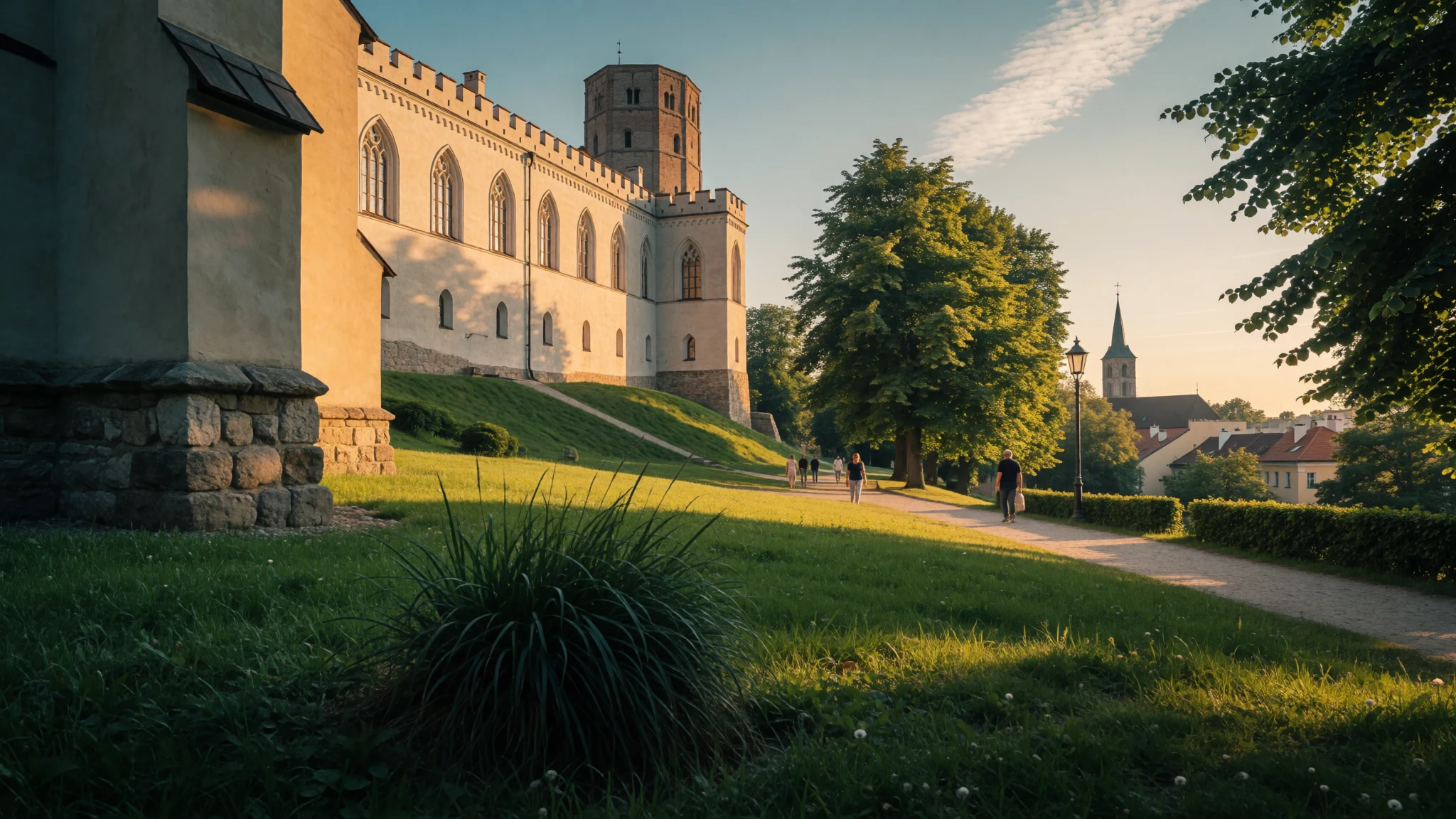
Lublin Castle pairs a Gothic Revival exterior with a medieval keep and a frescoed chapel, set beside the Old Town of eastern Poland.
The place
Lublin Castle stands on a hill at the edge of the Old Town in eastern Poland, a short walk from the city centre. From a distance it reads as a pale Gothic Revival fortress with pointed windows and crenellated walls, a look that comes mostly from a rebuilding in the 19th century. Inside the courtyard the picture changes. A Romanesque keep and a small royal chapel sit among later wings, so several centuries of building share one enclosure. The site also served as a prison, and that chapter is still visible in some of the plainer buildings. Today the complex belongs to the Lublin museum, whose official site (http://www.muzeumlubelskie.pl/) is the place to check opening arrangements before a visit.
The castle makes more sense when set against its city. Lublin lies between Kraków and Vilnius, and that middle position made it a meeting point for the Polish and Lithuanian realms. Its Crown Tribunal heard appeals from the whole nobility, so lawyers, litigants and petitioners were a regular part of street life. Merchants, reformers and a large Jewish community added their own layers, and the Old Town's mix of churches, gates and narrow lanes still reflects that.
Lublin is a student city, so evenings are lively without being rowdy, and the centre is compact enough to cover on foot. It is generally regarded as safe by day and night. Crowds tend to be gentle, with summer weekends and school groups the busiest moments, and the courtyard and chapel reward an unhurried visit.
Its story
Lublin Castle began as a fortified hilltop in the 12th century, ringed by an earthen bank strengthened with timber. In the first half of the 13th century a stone keep rose on the site, and that tower is the part of the castle that still survives from the period. Under Casimir III the Great in the 14th century, stone walls replaced the earlier defences, and a royal chapel dedicated to the Holy Trinity was probably added around the same time.
In 1418 painters finished a set of frescoes in the chapel for King Władysław II Jagiełło. Their author, a Ruthenian called Master Andrej, signed one of the walls. The paintings draw on both Western and Eastern Orthodox traditions, a mixture that has earned them attention well beyond Poland, and they can still be seen.
The Jagiellon kings favoured the castle. Jan Długosz tutored the sons of Casimir IV within its walls, and in the 16th century Italian masters brought from Kraków rebuilt it on a grand scale. In 1569 the Union of Lublin was signed here, binding the Kingdom of Poland and the Grand Duchy of Lithuania into the Polish–Lithuanian Commonwealth, and it remains the single most consequential event in the castle's story.
The wars of the 17th century, known as the Deluge, left the buildings in poor repair, and only the keep and the chapel came through intact. Later use as a prison, and then the Gothic Revival rebuilding of the 19th century, produced the castle's present outline.
What to see
- Castle courtyard and Chapel of the Holy Trinity — Castle hill, beside the Old Town
The courtyard is where the castle's layers sit side by side: Gothic Revival wings from the 19th century, a Romanesque keep from the 13th century and the small royal Chapel of the Holy Trinity. The chapel holds the frescoes finished in 1418, so allow time to look slowly. Check the museum's official site for entry arrangements.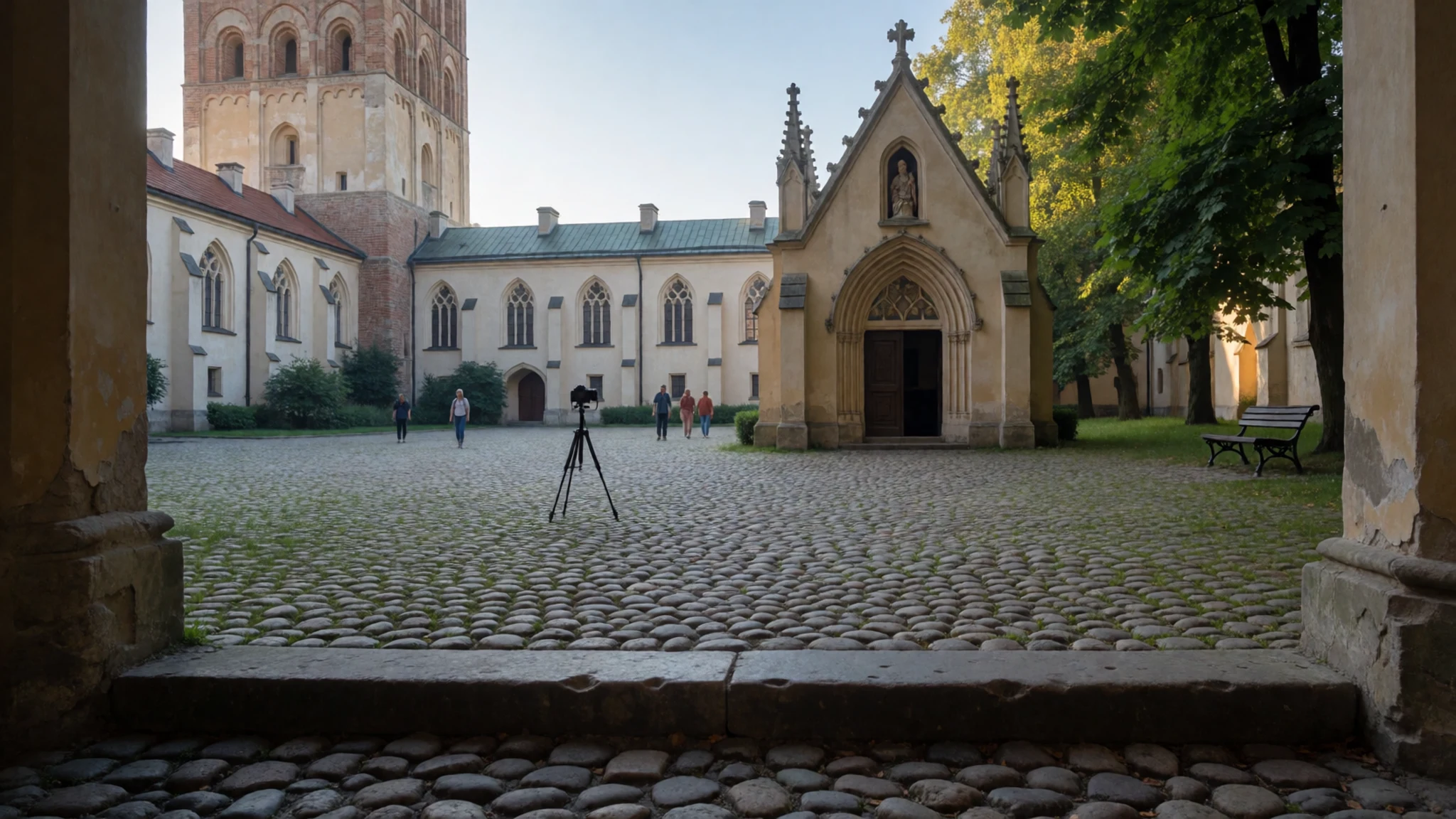
- Po Farze square — Old Town, below the castle
Po Farze is an open square where the excavated foundations of a 14th-century church, St Michael's, are left exposed at ground level. It makes a quiet place to pause between the Old Town lanes, and the view across to the castle on its hill is among the better spots for photographs in soft morning or evening light.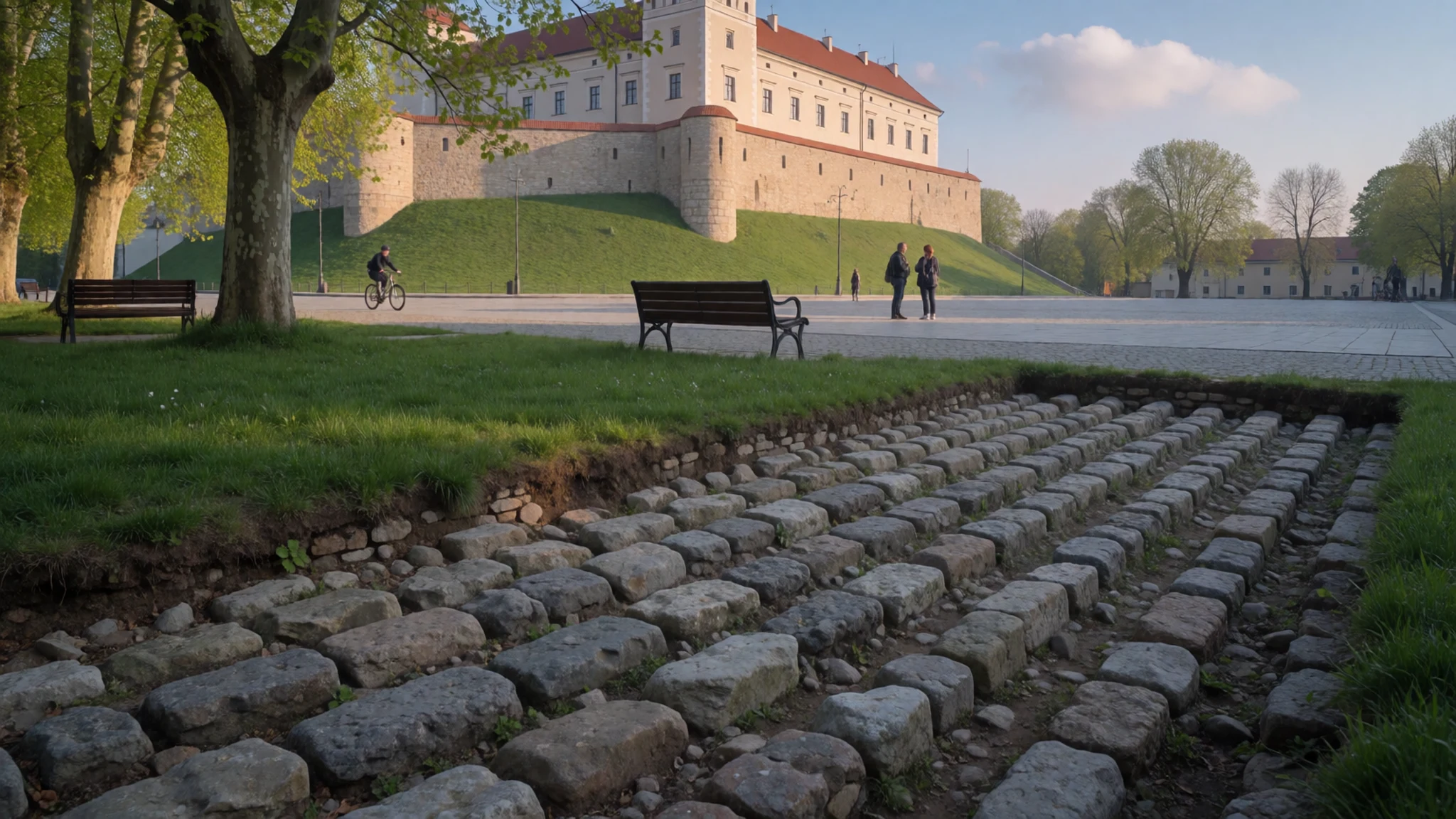
- Crown Tribunal — Old Town centre
The Crown Tribunal building, dating from the 1400s, housed the court that heard final appeals for the Polish nobility. It stands in the Old Town and gives the lanes around it a sense of purpose: for generations this was a city where lawsuits, as much as trade, brought people through the gates.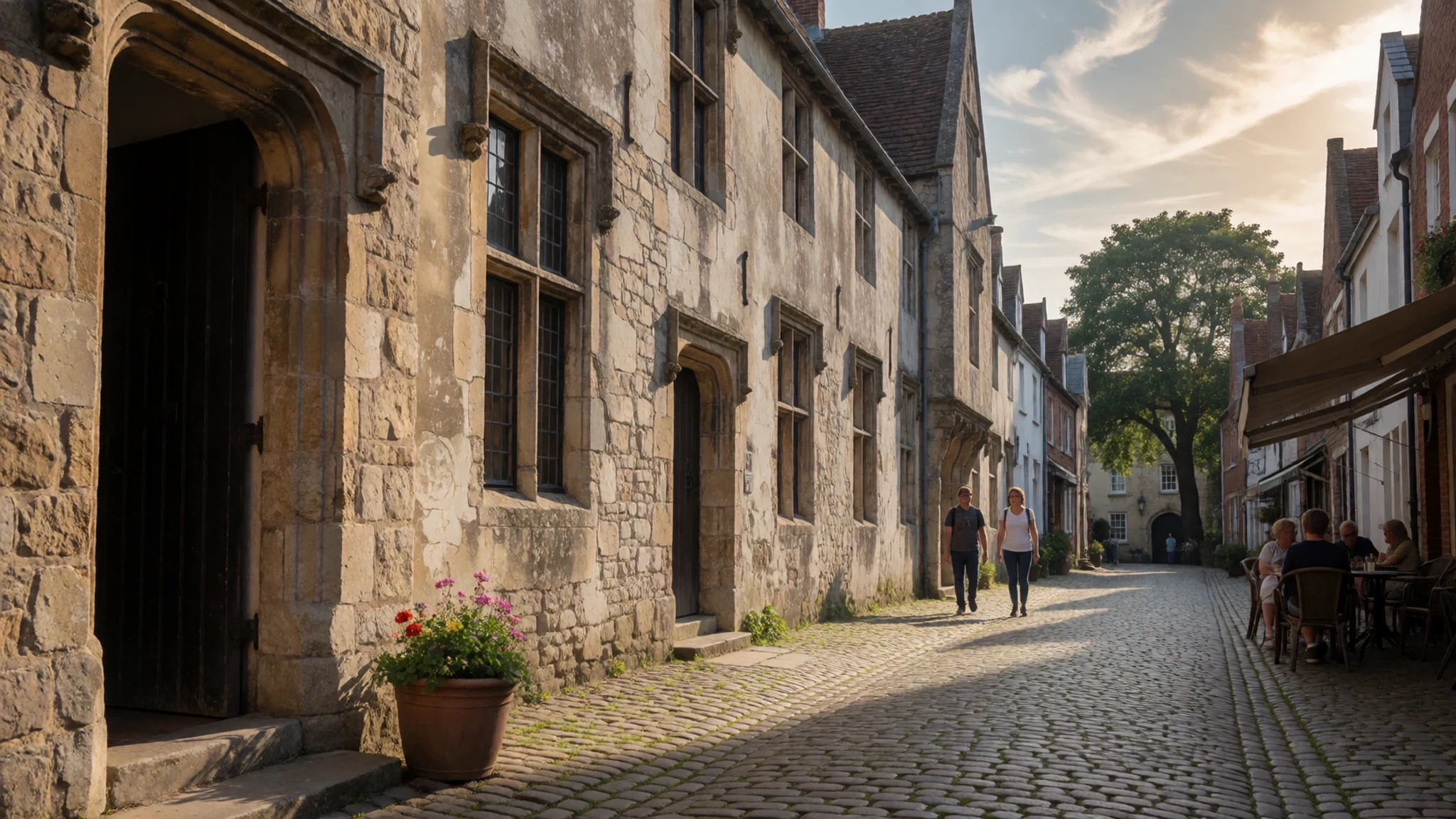
- Grodzka Gate — Between the castle hill and the Old Town
Grodzka Gate was rebuilt in 1785 and once divided the Old Town from the Jewish district, which earned it the nickname Jewish Gate. Walking through it is a simple way to move between the castle hill and the Old Town while picturing how the two communities lived side by side.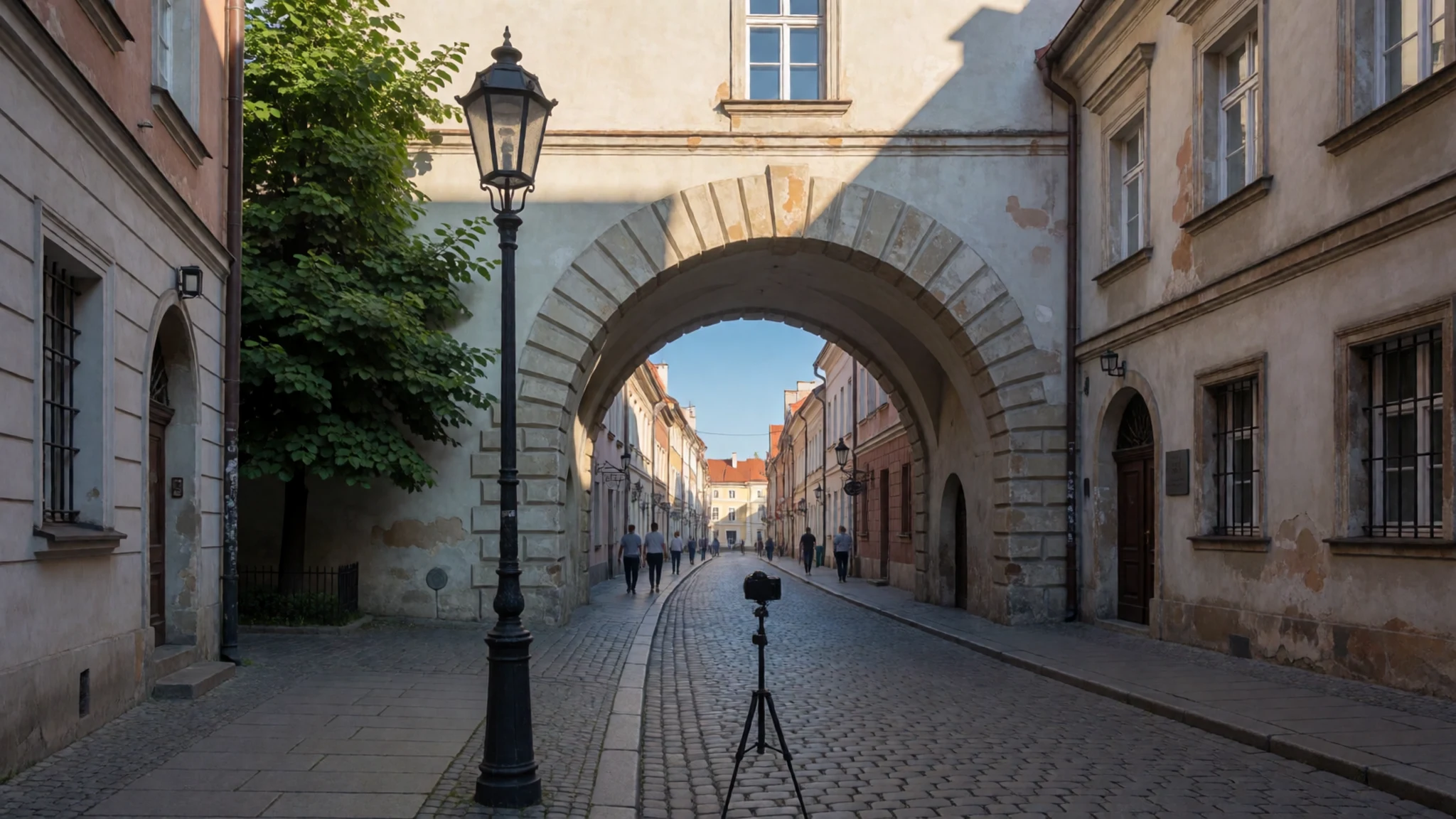
- Kraków Gate — Western edge of the Old Town
Kraków Gate went up in the 14th century in Gothic style and was reworked in the Baroque period. Locals treat it as the symbol of Lublin, and it is a handy landmark for finding one's bearings. City buses from the station area stop nearby, so it also works as a starting point for the walk to the castle.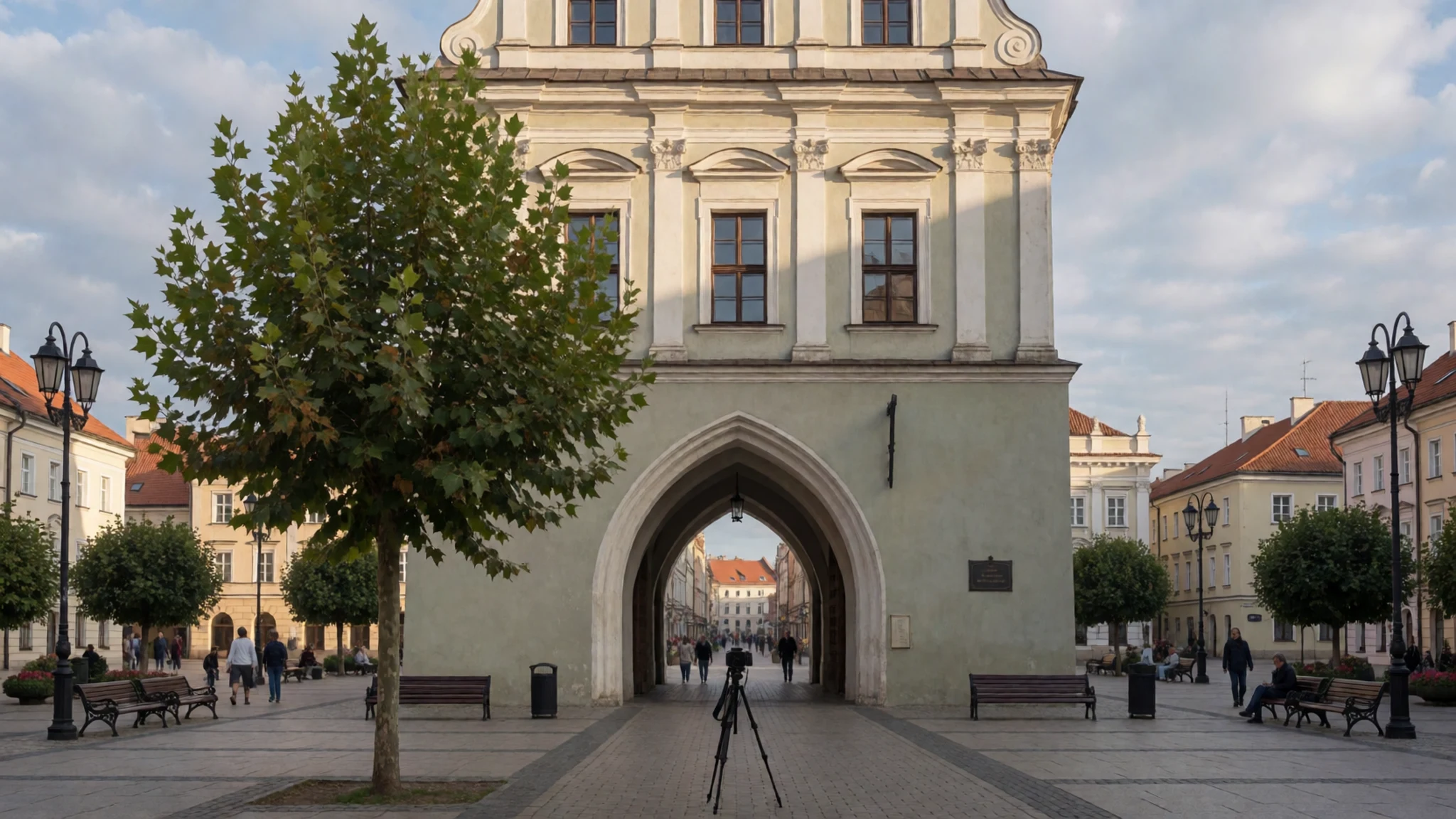
- Lublin Cathedral and Trinity Tower — Old Town
Lublin Cathedral is a Baroque church with painted walls, and its Trinity Tower offers a panorama over the Old Town roofs and towards the castle hill. Check locally before climbing, as tower access can depend on season and day. The interior is quiet outside services and rewards a slow look.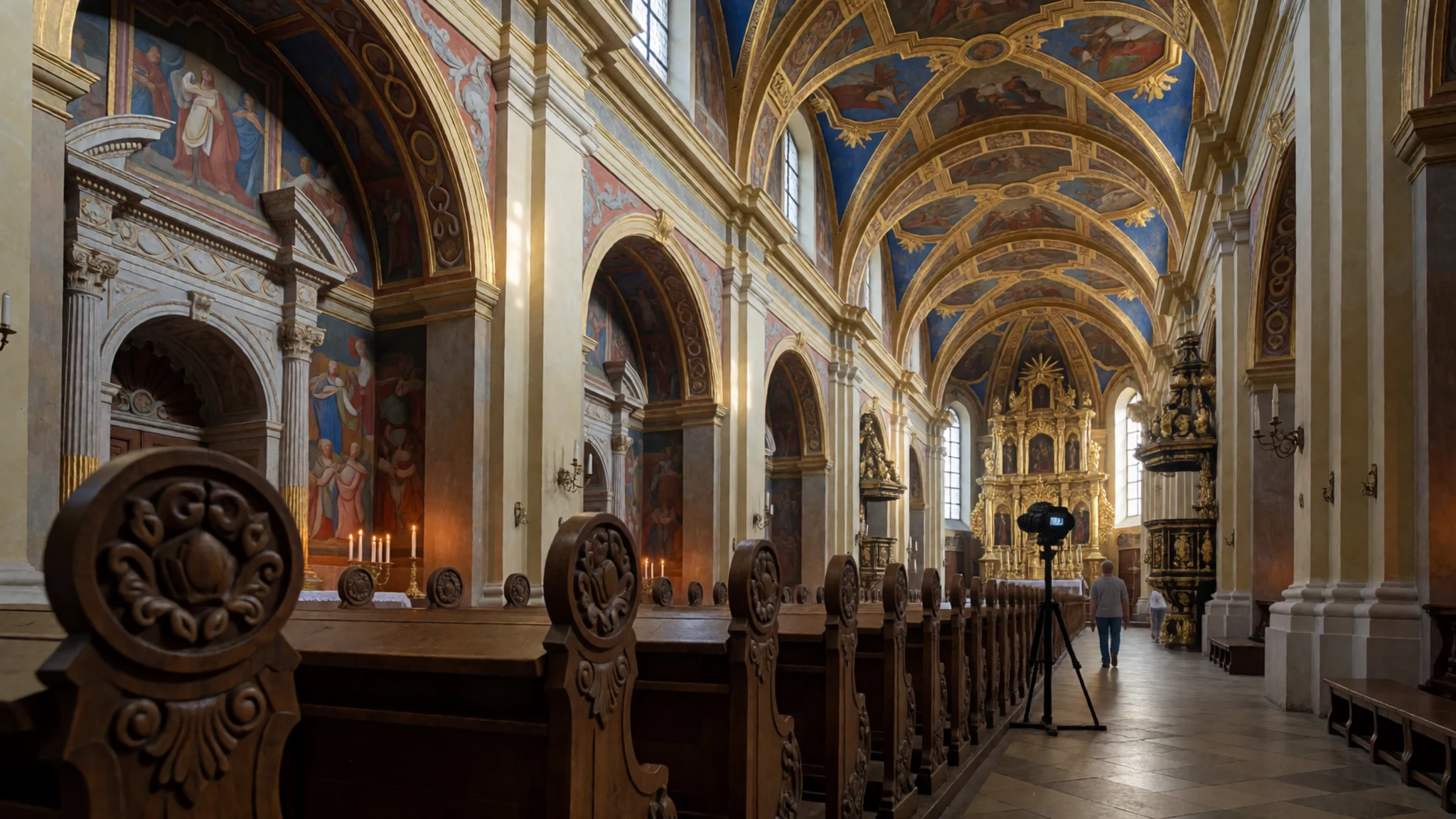
Culture
Lublin Castle sits in a city that long served as a meeting point of Polish, Lithuanian, Ruthenian and Jewish life, and local culture still carries that mix. The Union of 1569 is a point of civic pride, and the chapel frescoes, with their blend of Western and Orthodox styles, show the same border-country character in paint. The Old Town's churches are mostly Catholic, with Baroque and Renaissance fittings, and Mass and feast days remain part of the weekly rhythm.
Jewish Lublin was a major presence until the Second World War. Both the Jewish and the Polish communities suffered severely under Nazi occupation, and Majdanek camp, on the city's edge, was a place of internment and killing. Memorial sites, plaques and museum exhibits reflect this, and visitors who want to understand that history can pair the castle with the Majdanek memorial, though it needs a half day and a quiet frame of mind.
The city is also a university town, so cafés, small galleries and cultural festivals are part of daily life. Conversation in the Old Town tends to be relaxed, and a few Polish words, such as dzień dobry (good day) and dziękuję (thank you), are warmly received.
In the chapel and in churches, keep your voice low, remove your hat and follow any signs about photography or flash.
What to wear
Lublin Castle sits in a region where folk dress was once everyday wear and is now mostly festival costume. Traditional outfits in eastern Poland typically combine, for women, a linen blouse with embroidered collar or cuffs, a laced bodice, a pleated or striped wool skirt and an apron. Men wore linen shirts, long coats of felted wool and sturdy boots, often with a felt or cloth cap. Linen and wool were the working fibres, and colours and stitching varied from village to village. Today these outfits appear at harvest festivals, church feast days, weddings and folk ensemble performances, and in museum displays.
Daily dress in Lublin is much as in any central European university city: jeans, trainers, practical jackets and dark layers in winter. People dress neatly rather than flashily for restaurants and concerts, and the student population adds a relaxed, casual note.
A visitor should plan for the weather first. Winters are cold, so a warm coat, hat and gloves matter, while summer calls for light cotton and a sun hat, with a rain layer useful in any season. The Old Town's cobbles and the slopes of the castle hill suit comfortable closed shoes with grip. For churches and the chapel, cover shoulders and knees, and carry a scarf or light shirt for the purpose.
What to eat
- Pierogi — Self-service canteen-style eateries in the Old Town and city centre
Pierogi are filled dumplings, boiled and often finished with fried onion or butter. Common fillings are potato and cheese, meat or cabbage, and fruit in summer. They are a reliable, inexpensive meal and suit vegetarians when the filling is chosen with care.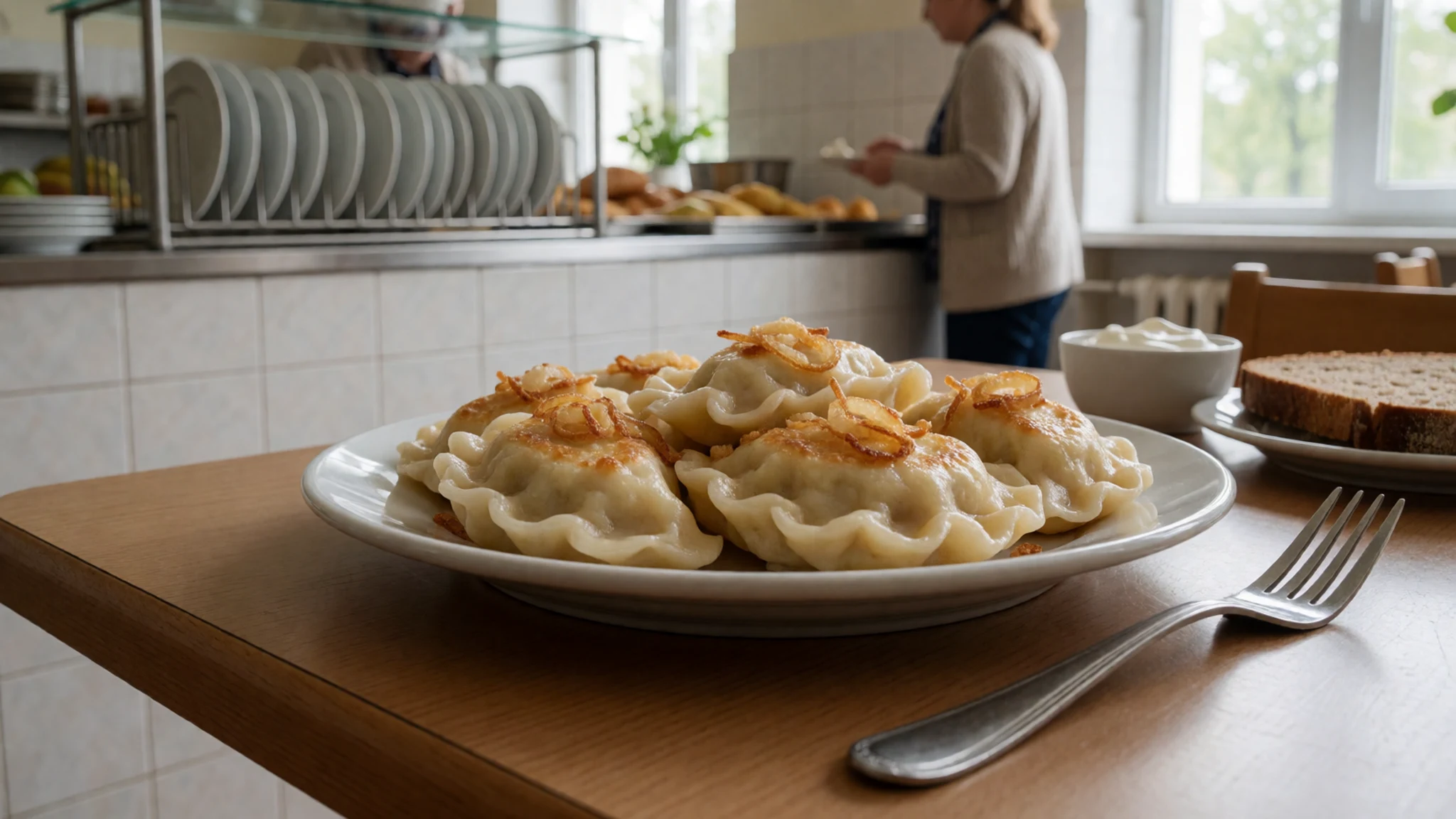
- Fixed-menu lunch — Cellar eateries in the Old Town
Some budget eateries offer a single set lunch rather than a menu: a main course with sides, sometimes with soup. There is no choosing, which keeps prices low and the queue moving. It is a quick, honest taste of everyday Polish cooking.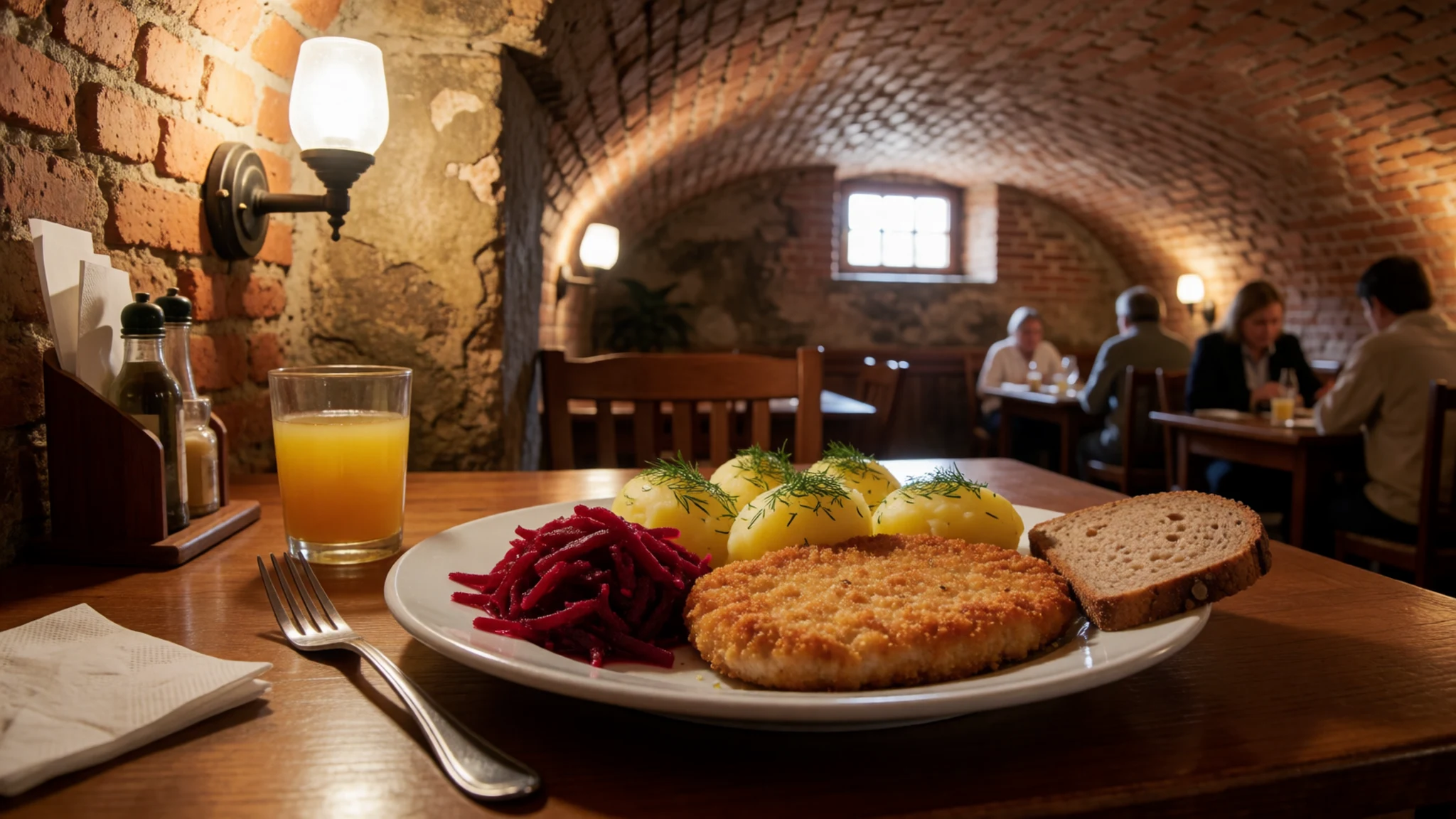
- Cebularz — Bakeries and market stalls around the city centre
Cebularz is a flat, round yeast bread topped with baked onion and poppy seeds, regarded as a local speciality of the Lublin area. It is best eaten fresh and warm, as a snack while walking between the castle and the Old Town. - Żurek and regional fare — Rustic-style regional restaurants in the Old Town and just outside it
Żurek is a sour rye soup, often served with sausage and egg, and sits alongside bigos, a slow-cooked cabbage and meat stew. Rustic regional restaurants serve both in a country-inn setting, and the popular ones fill up at weekends, so reserve ahead. - Jewish-style dishes — Restaurants near Grodzka Gate in the Old Town
A few restaurants in the Old Town cook from the city's Jewish culinary tradition, which often leans on soups, fish and baked sweets. The setting is usually small and atmospheric, and it connects the table to the history seen on the walk down from the castle. - Ice cream — Parlours near Kraków Gate and along the main street of the centre
Ice cream is a surprisingly serious pastime here, with queues forming even on cool days. Local parlours offer both classic and seasonal flavours, and a cone is a pleasant reward after climbing the castle hill and wandering the lanes.
Plan it
Best time. May to September for long days and open-air cafés in the Old Town, with late September calmer and often pleasant. December to February is cold and short on daylight, though the Old Town is atmospheric when lit up.
How long. 1–2
Getting there. Fly into Warsaw, Kraków or Rzeszów, then continue by train or coach to Lublin; Lublin Main Station is the usual arrival point. Trains from Warsaw take about two hours. From the station area, city buses run to the stop named for the castle (Muzeum Narodowe – Zamek), and the Old Town is walkable.
Budget. low
Tips
- Check the museum's official site (http://www.muzeumlubelskie.pl/) for opening times, tickets and any limits on the chapel before going
- Allow half a day for the castle and chapel, and add time for the Old Town on foot
- Wear shoes with grip for the cobbles and the slope of the castle hill
- Reserve at popular rustic restaurants at weekends
- Carry a card, with a little cash for small bakeries and market stalls
Etiquette
- Keep your voice low and follow photography signs in the chapel and in churches
- Cover shoulders and knees when entering churches
- Treat memorial sites, including Majdanek, with quiet respect
Nearby
Sources
- Wikidata Q2604117 (CC0)
- Wikipedia: Lublin Castle (rev 1364680312) (CC BY-SA 4.0)
- Wikivoyage: Lublin (rev 5426677) (CC BY-SA 4.0)
- Photo: Lublin, zamek (Pankrzysztoff) (CC BY-SA 3.0 pl)
- Photo: Lublin, D. więzienie (AndrzejTru) (CC BY-SA 4.0)
- Photo: Dombeck, Arrival of General Zajączek to Lublin (detail) (Public domain)
- Photo: Lublin Castle main entrance gate (Marek and Ewa Wojciechowscy) (CC BY-SA 2.5)
- Photo: Castle in Lublin, Poland (Marcin Białek) (CC BY-SA 4.0)
- Photo: Dziedziniec zamku w Lublinie (Sylwpak) (CC BY-SA 4.0)
- Photo: Marsz Równości w Lublinie (CC BY 2.5)
- Photo: November 2021 in Lublin (Rakoon) (CC0 1.0)


