Loch Ness
Loch Ness, United Kingdom
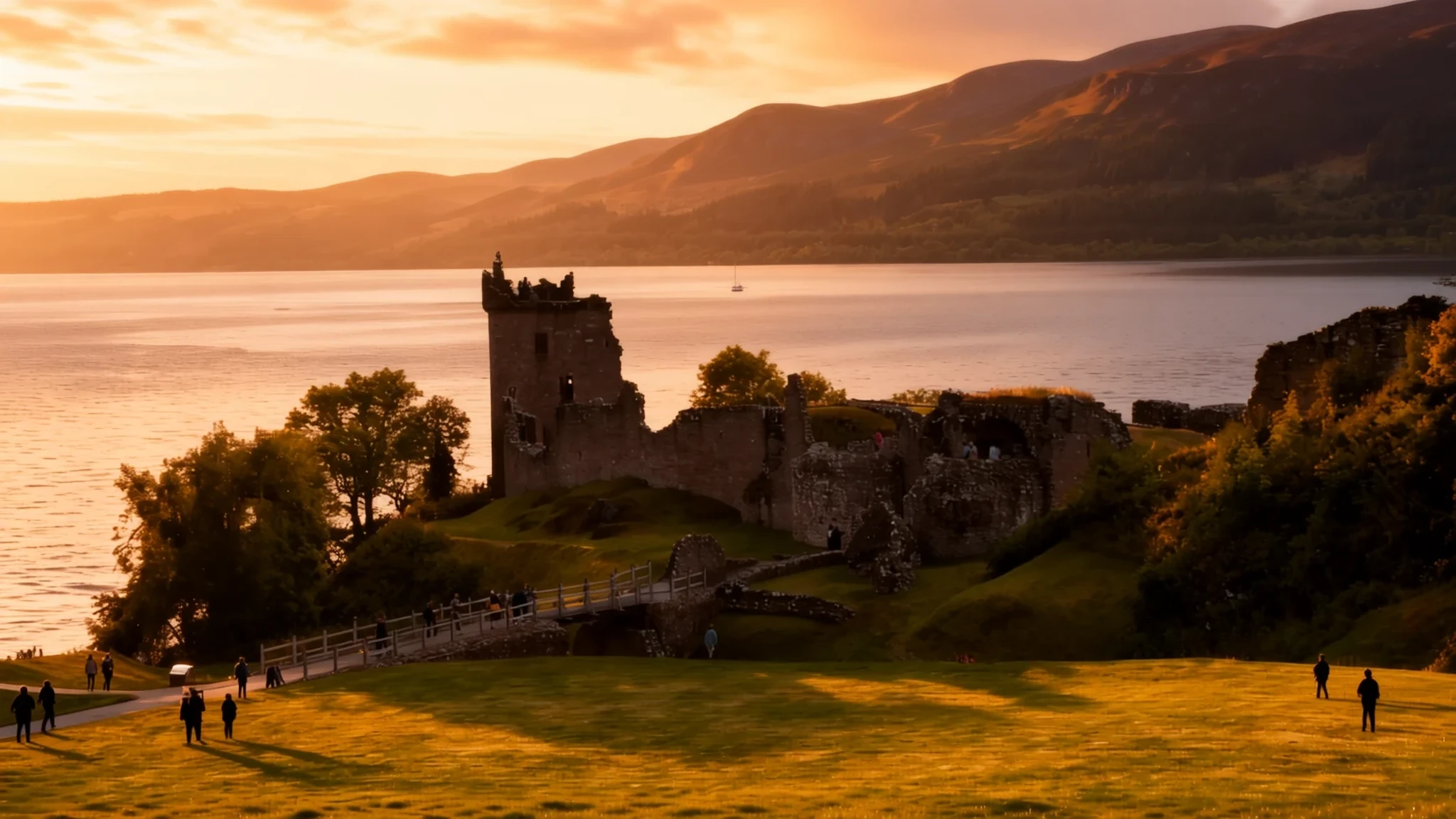
Loch Ness is a deep, peat-dark lake in the Great Glen, best for the scenery, the old castle ruins and a boat trip, whatever you think of the monster.
The place
Loch Ness is a long freshwater loch in the Scottish Highlands, lying in the Great Glen, the deep trench that cuts diagonally across the country from Inverness towards the west coast. The river that gives the loch its name leaves from its northern end, while the River Oich feeds it at the south, so water moves through a chain of connected lochs that the Caledonian Canal uses for its route. By volume, Loch Ness is the largest body of water in the British Isles, and it holds more water than every lake in England and Wales put together. Its surface sits about 16 metres above sea level, having been lifted a little when the canal was built.
Size is only part of the story. Peat in the surrounding hills stains the water so heavily that visibility is very poor, and a torch barely reaches a few feet into the upper layers. The loch is deep, with its deepest point about 230 metres down, which makes it the second deepest in Scotland after Loch Morar. Its long axis runs roughly south-west to north-east, so the prevailing winds funnel down its length and can raise a steep chop, even on a day that looks calm from the shore.
The A82 follows the western shore between Inverness and Fort William, linking the villages of Drumnadrochit and Invermoriston. There is no railway along the water itself, so most people arrive by car, bus or boat. The surrounding country is a mix of woodland, farmland and heather hill, and the Great Glen Way keeps close to the western bank through the main villages. The loch looks different from every viewpoint: grey and still in one hour, whipped white in the next.
Its story
The loch's modern fame rests on a creature that has never been caught. Sightings of a large animal in the water have circulated in local talk for centuries. The affectionate nickname Nessie has a Gaelic form, Niseag, and sits alongside the loch's own Gaelic name, Loch Nis. What turned the talk into a wider phenomenon was the growing ease of reaching the shore. As roads along the water improved, drivers and walkers began reporting shapes, wakes and humps, and newspapers gave the sightings headlines. Photographs followed, some of them famous and most of them blurry.
Scientists have tried to settle the question with sonar, nets and cameras, and none of these efforts has produced a convincing animal. The murky water makes any search hard. Peat-stained water blocks light a short way down, so a camera or a sonar ping reveals little beyond what sits close to the lens. A later survey reported a deep crevice that turned out to be a sonar anomaly, a reminder of how easily instruments mislead in deep, dark water.
What the loch does have is a real and fascinating past. The Great Glen was shaped by ice and fault movement, and the water it holds has influenced the canal, the villages and the trade that once moved along the route. Visitor life grew up around the legend, with centres, boat trips and themed attractions on the shore. Whether you come for the monster or the mountains, the story is a way of seeing the loch as a place people have looked at for a very long time, and still look at with a mixture of humour and genuine curiosity.
What to see
- Urquhart Castle — Headland south of Drumnadrochit
Urquhart Castle sits on a headland a little south of Drumnadrochit. Its ruined walls and towers date from the thirteenth to the sixteenth century, and the view down the loch from the top is the reason most people climb up. Wear sturdy shoes for the paths. In summer the car park fills by late morning, so arrive early for a quiet walk.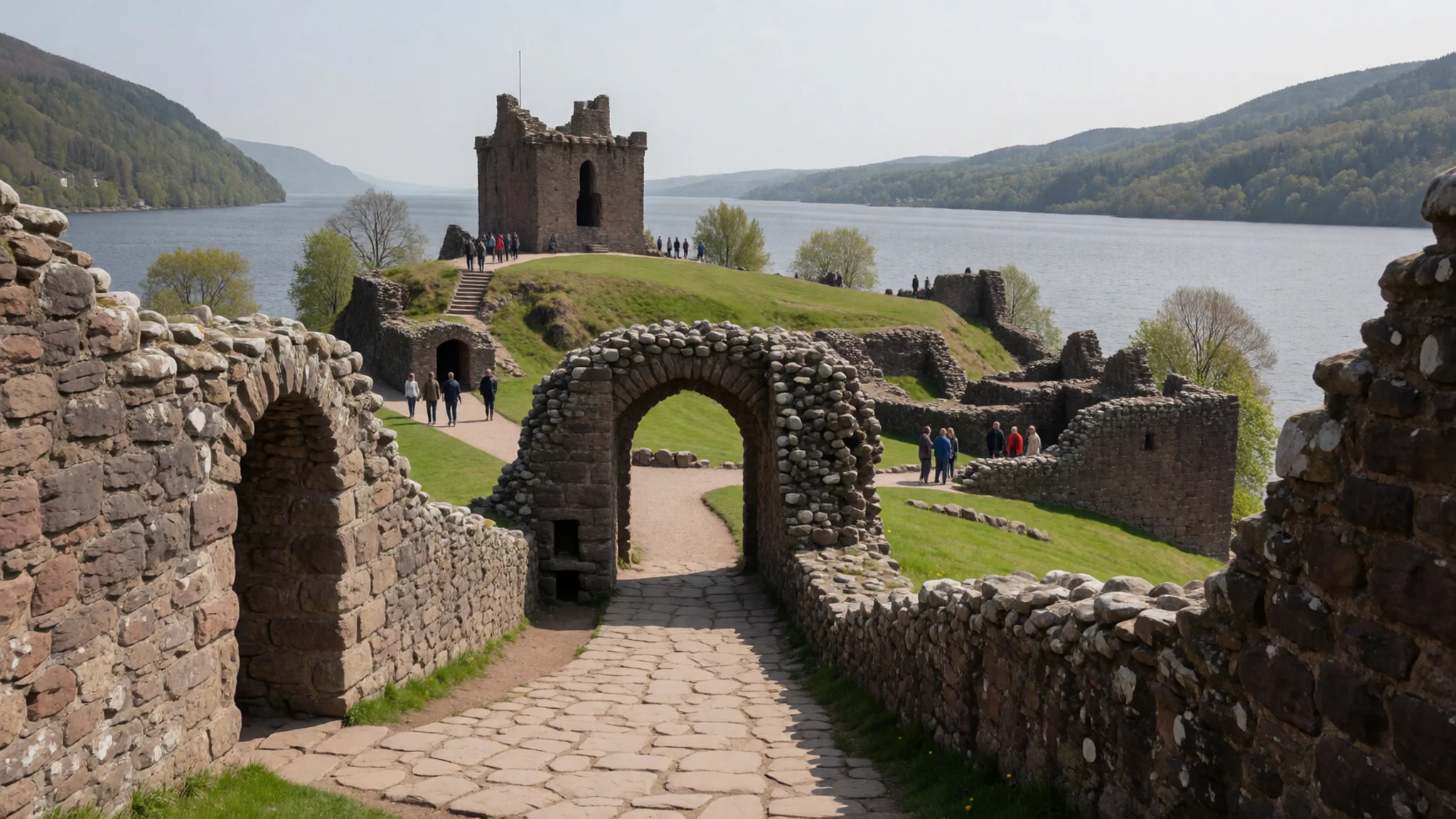
- Loch Ness Centre — Drumnadrochit, on the western shore
The Loch Ness Centre in Drumnadrochit takes the loch seriously as a natural place. Its exhibits explain the glacial history of the Great Glen, the peat that makes the water so dark, and the life in and around the water. Monster fans will find that story too, but the science leads. Check the official site for opening times.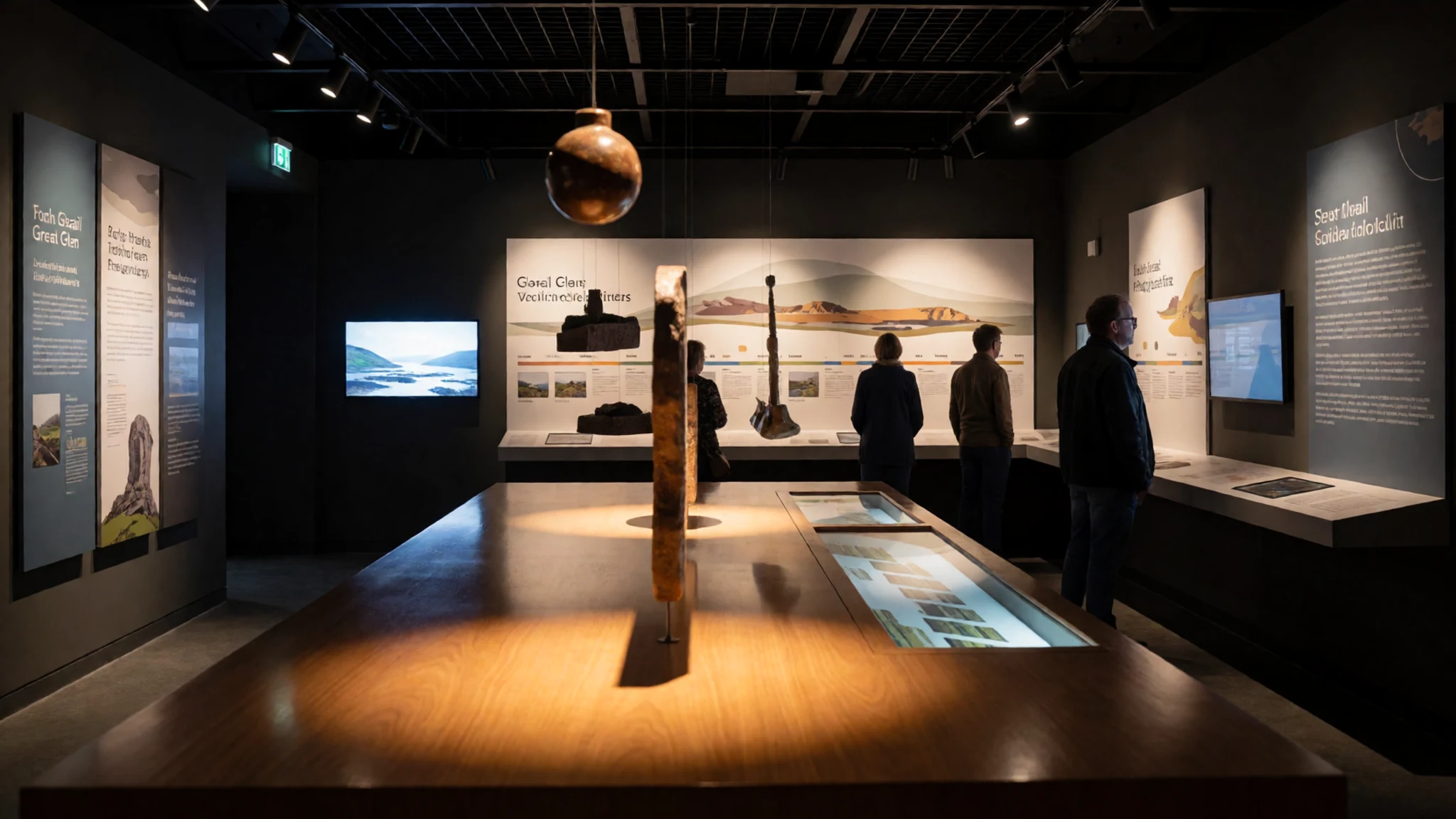
- The Fort Augustus locks — Fort Augustus, southern end of the loch
At the southern end of the loch, Fort Augustus is where the Caledonian Canal climbs through a flight of locks beside the village. Boats rise or drop in stages, and you can stand on the bank and watch the gates work. Give the boats room, and expect a queue of waiting craft in peak summer.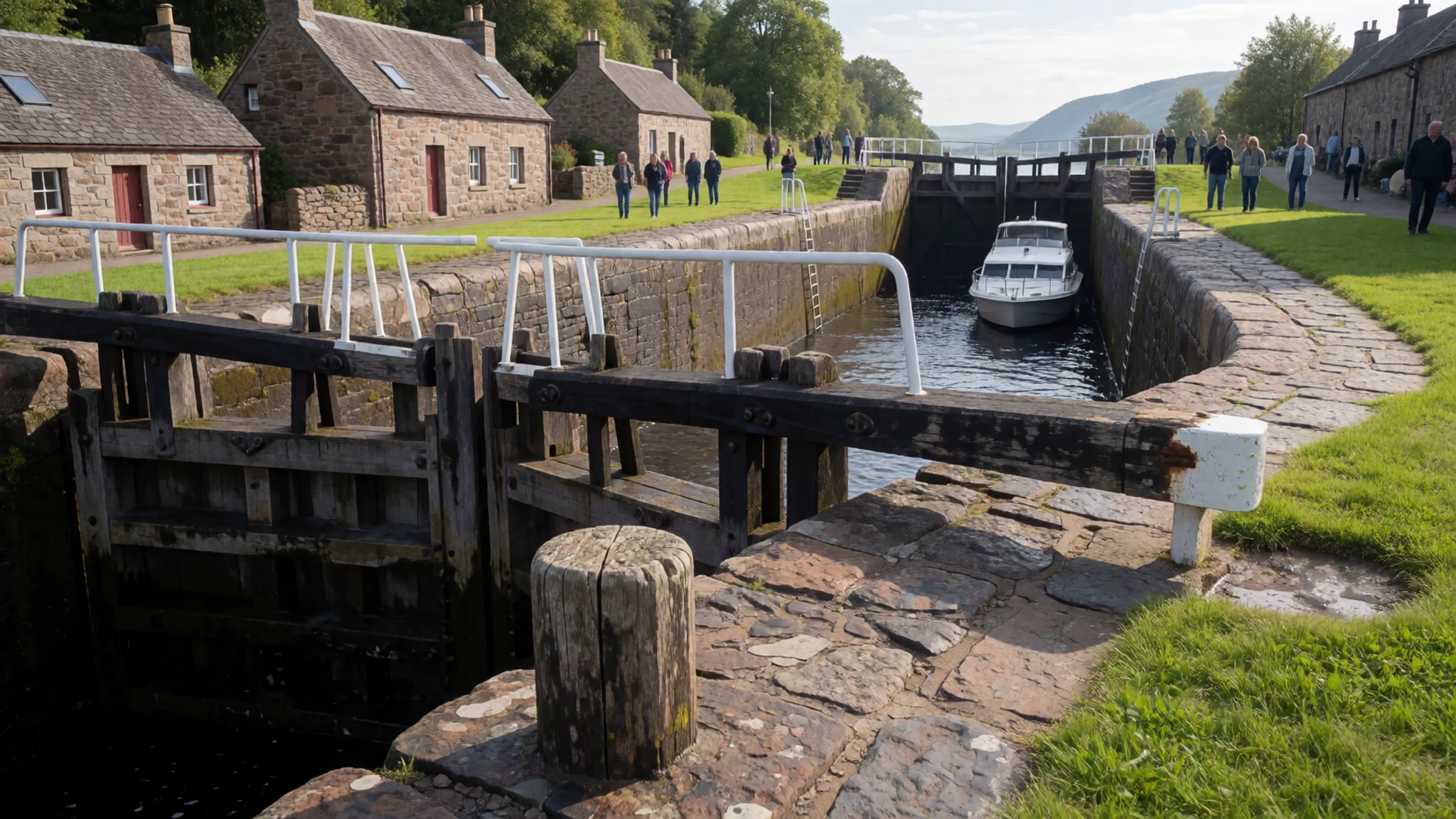
- Boat trips on the loch — Jetties at Fort Augustus and Drumnadrochit
Boat trips leave the loch from Fort Augustus, Drumnadrochit and Inverness, and they give a view that the shore walks cannot. Some sailings pick up in Inverness town centre; otherwise you reach the jetty yourself. Small boats can feel exposed when the wind gets up, so bring a warm layer even in summer. Book ahead for popular afternoon sailings.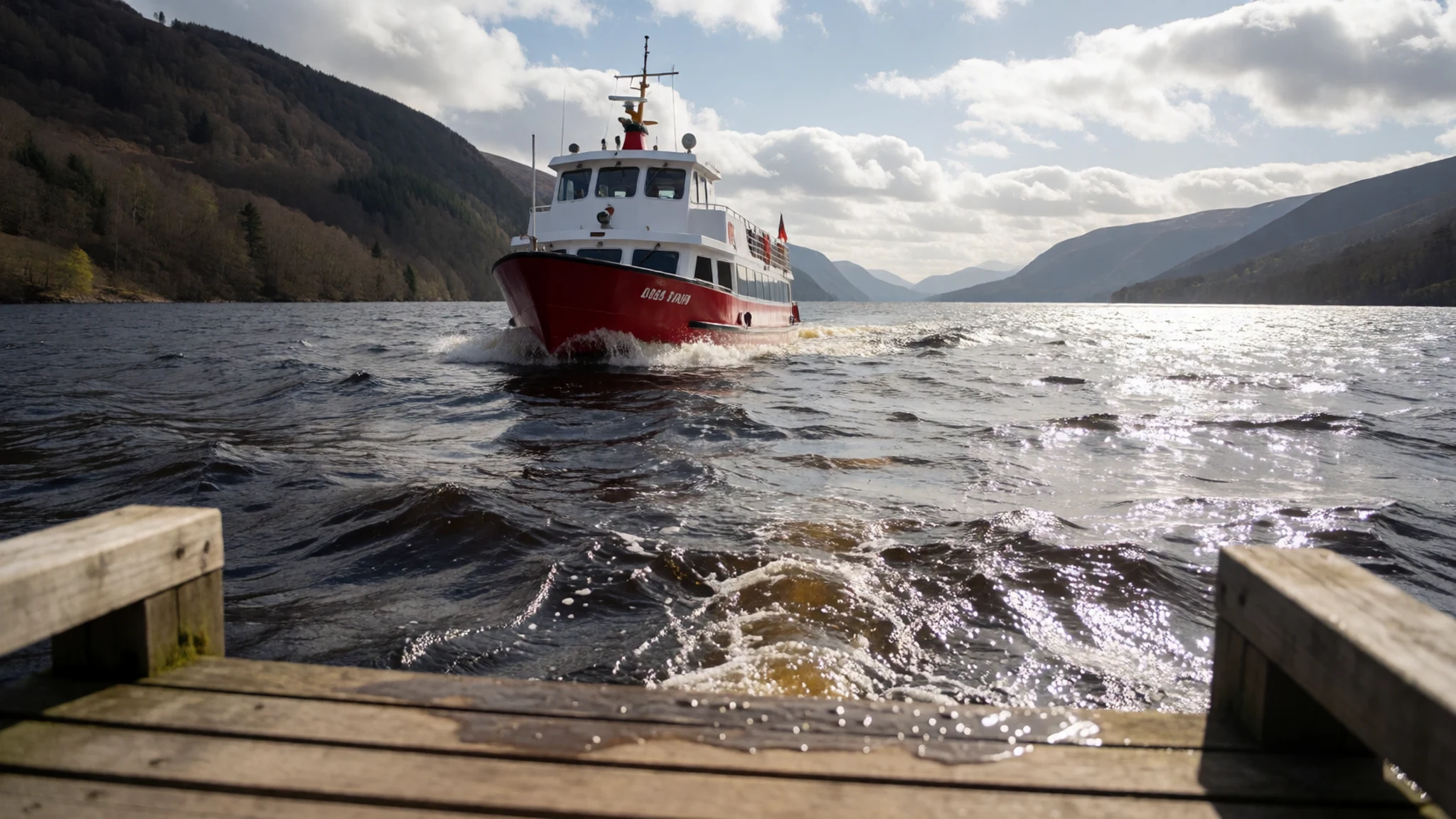
Culture
Loch Ness sits in a culture that is Highland first and Scottish second. Gaelic survives in place names and on some signs, and much of everyday life here runs on farms, small hotels, boatyards and the canal, so the people you meet are often working rather than performing. Hospitality is warm but unfussy. Local people take pride in the monster, and many shopkeepers enjoy a joke about it, but a joke is not an invitation to pose for hours. The lochshore includes farmland, private gardens and crofts, and Scotland's access rules give walkers real freedoms that come with responsibilities. Keep dogs under control near livestock, and take care with fires and camping in the wider countryside. Take your litter home and close gates behind you on farm tracks.
What to wear
At Loch Ness, the traditional dress is the Highland outfit: the kilt, woven from tartan wool, worn with a jacket, a sporran and a sgian-dubh tucked into the sock. Tartans came to be associated with clans and districts over time, and the wool was often dyed with plant colours. Tweed, a thick woven wool, is the other classic textile of the north, and Harris tweed from the Outer Hebrides is the best known. Today most people around the loch dress for weather rather than ceremony, in waterproof jackets, fleece, jeans and walking boots. Kilts appear at weddings, ceilidhs and Highland games rather than on an ordinary day in Drumnadrochit. A visitor should pack for wind and rain even in summer, with a windproof outer layer, a warm mid layer and shoes with grip for wet grass, stony paths and castle steps. Gloves and a hat help on the water, where the air feels colder than the forecast suggests.
What to eat
- Cullen skink — Village pubs and inn dining rooms along the shore
A thick smoked haddock soup with potato and onion, named after a fishing town on the Moray coast. It is the classic starter in a Highland pub, usually served with bread for mopping. Ask for it after a cold walk, when it is most comforting.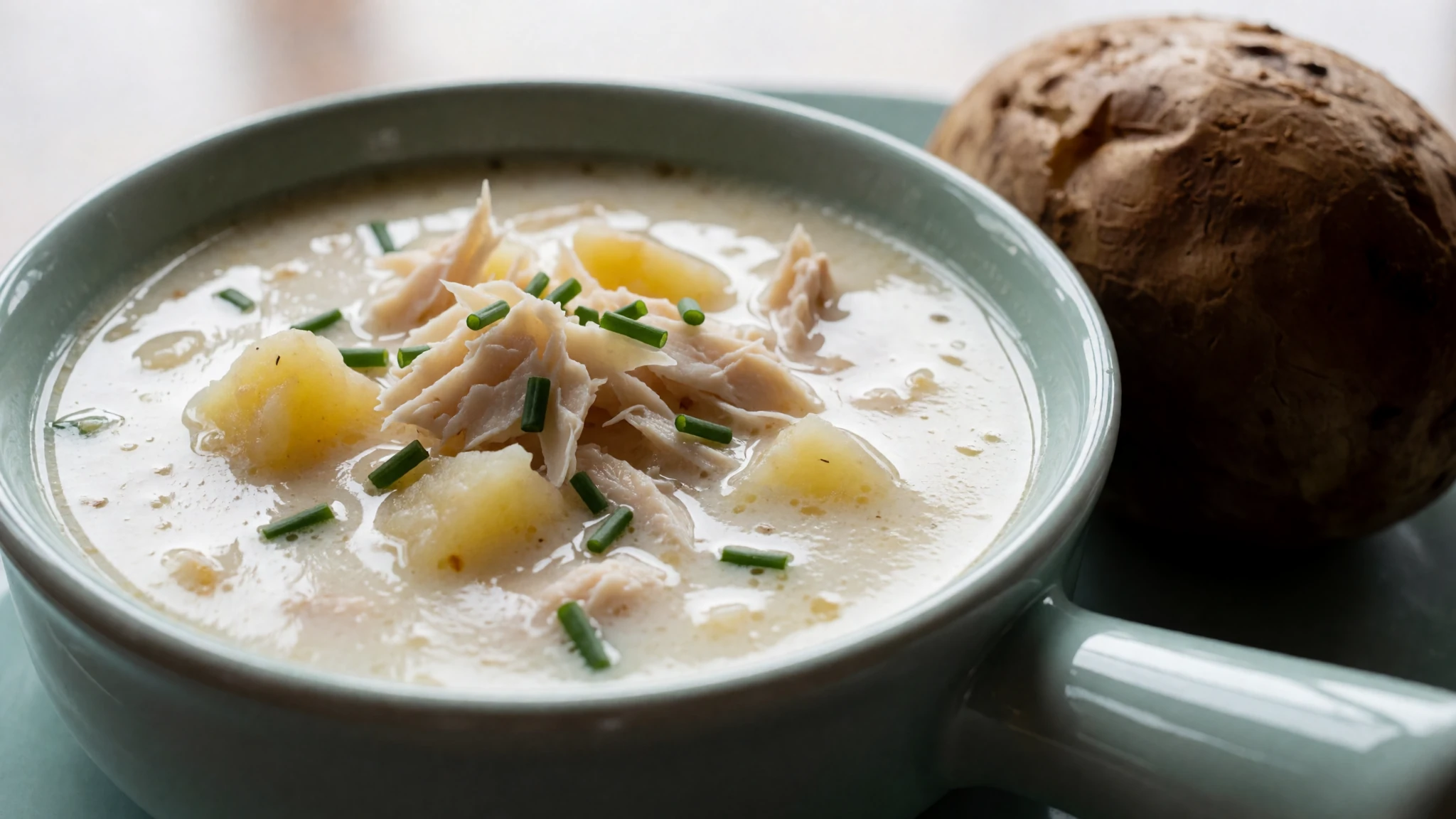
- Scotch broth — Village cafés and bakeries in Drumnadrochit and Fort Augustus
A barley and lamb broth thickened with vegetables, the sort of soup that suits a grey day by the loch. Many village cafés serve it with bread and cheese. It is filling, good value and often the honest choice on a menu.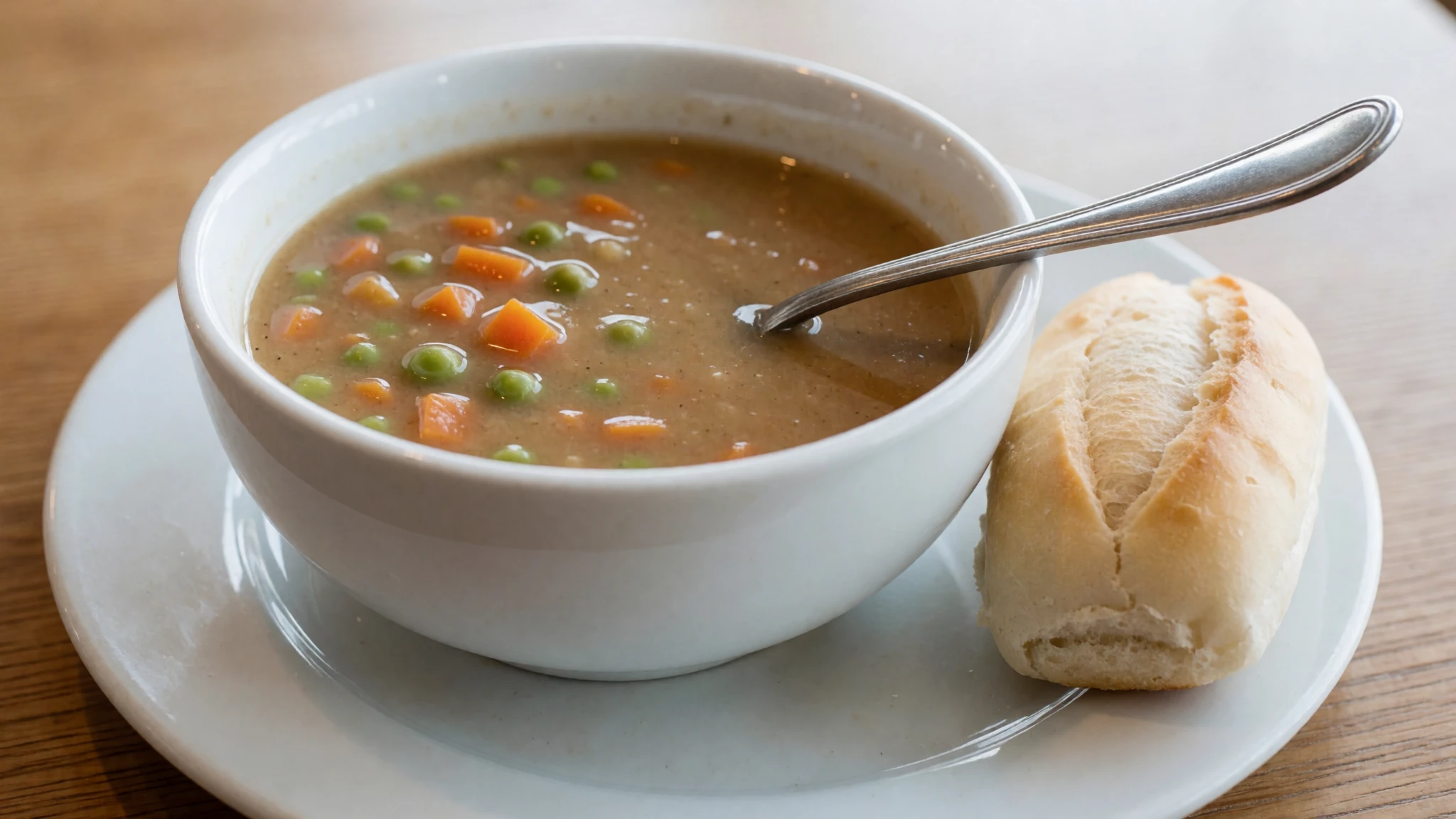
- Haggis, neeps and tatties — Pub kitchens and inn dining rooms along the A82
Haggis is a spiced sheep's pluck mixed with oats and suet, served with mashed swede and potato. It can sound challenging, but it is savoury and peppery. Try it at a pub supper, and ask for whisky sauce if the menu offers it.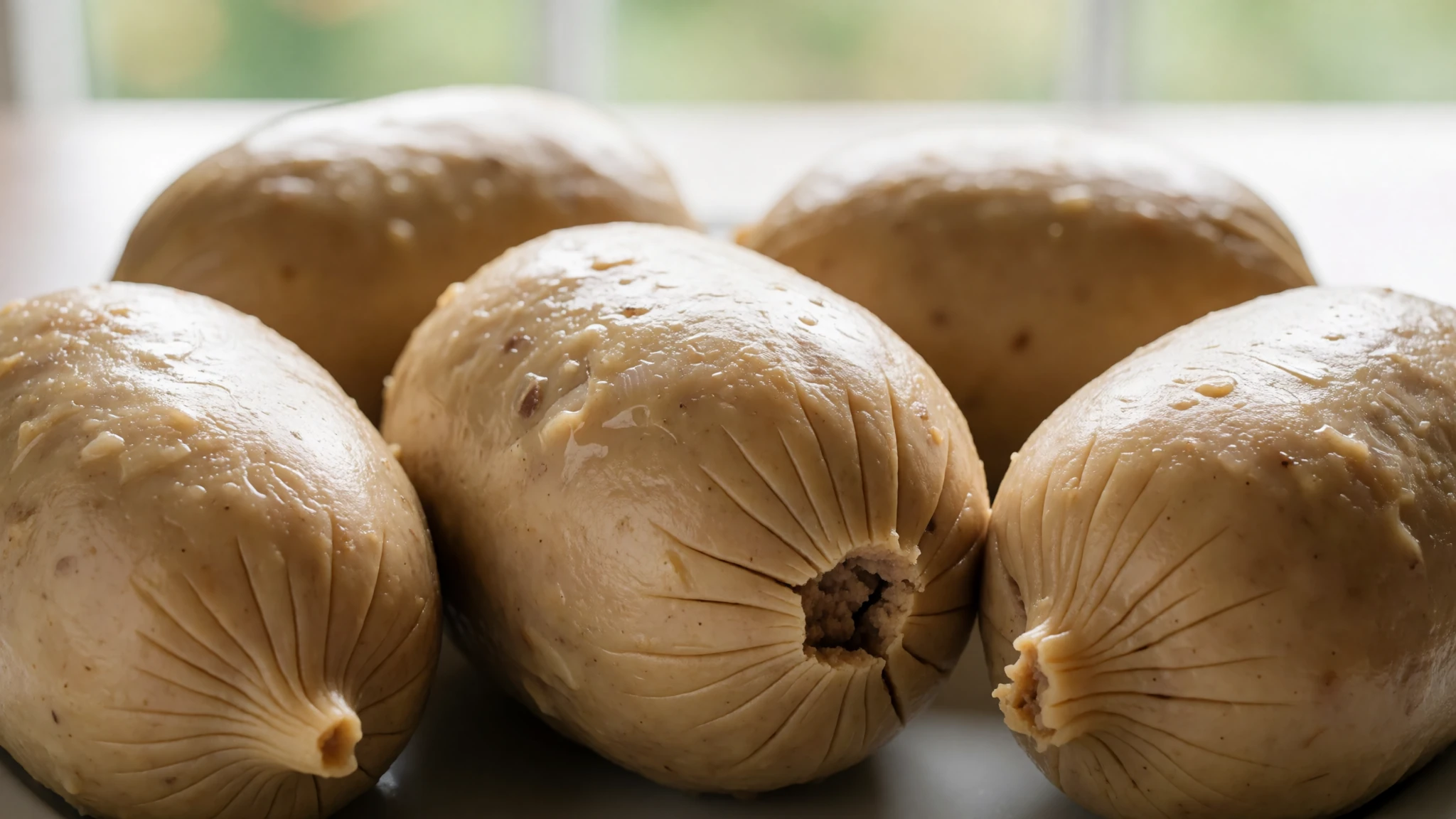
- Hot-smoked salmon or trout — Farm shops and smokehouses on the roads around the loch
Hot-smoked salmon and trout are sold across the Highlands, often flaked onto bread or salads. The fish is usually from nearby waters or farms, and the flavour is rich and woody. Buy a portion from a farm shop for a picnic by the water. - Cranachan — Restaurants and tearooms in Inverness and along the shore in summer
A dessert of cream, toasted oats, raspberries and whisky, layered in a glass. It is light, tart and sweet, and it turns up at summer dinners and festivals. Order it in season, when the fruit is at its best.
Plan it
Best time. Late spring to early autumn, roughly May to September, when the days are long and boat trips and roads run most reliably. Scottish weather can turn quickly at any season, so check forecasts and pack for wind on the water. Winter is quieter and cheaper, but the water is cold and the light short.
How long. 2–3
Getting there. Inverness Airport is the nearest, with flights from London, Amsterdam and several UK cities, and a short bus or taxi ride takes you to the loch. Glasgow and Edinburgh have a wider choice of flights, followed by a long drive north. Trains reach Inverness from Edinburgh and Glasgow, but there is no railway along the loch itself.
Budget. mid
Tips
- Book boat trips ahead in peak summer, when afternoon sailings fill
- Arrive at Urquhart Castle early for quieter paths and parking
- Carry layers and a waterproof even on warm days; the water feels much colder than the air
- Carry cash for small cafés and village car parks, as cards are not universal in rural spots
- Allow extra time on the A82 in summer, when coaches and campervans slow the traffic
Etiquette
- Keep dogs under control near farmland and nesting birds
- Stay on paths and leave gates as you found them
- Take litter home and leave nothing at the lochside
Nearby
Sources
- Wikidata Q49650 (CC0)
- Wikipedia (rev 1382748155) (CC BY-SA 4.0)
- Wikivoyage (rev 5059449) (CC BY-SA 4.0)
- Photo 01-lochnessurquhart.jpg, Sam Fentress (CC BY-SA 2.0)
- Photo 02-loch-ness-from-urquhart-castle-kingsley-30-jun-09.jpg, Gregory J Kingsley (CC BY 3.0)
- Photo 03-fort-augustus-locks-2017.jpg, aeroid (CC BY 3.0)
- Photo 04-loch-ness-0406.jpg, User:Paste (Public domain)
- Photo 05-loch-ness-panorama.png, Jcx (CC BY-SA 1.0)
- Photo 06-loch-ness-panoramin-july-2008.jpg, Carlesmari (CC BY 3.0)
- Photo 07-05-dr-jeremy-leggett-ceo-and-founder-highlands-rewilding.jpg, Sarah Fourcheraud (CC0)
- Photo 08-2002-06-loch-ness.jpg, Gunnar Klack (CC BY-SA 4.0)


