Linz
Linz, Austria
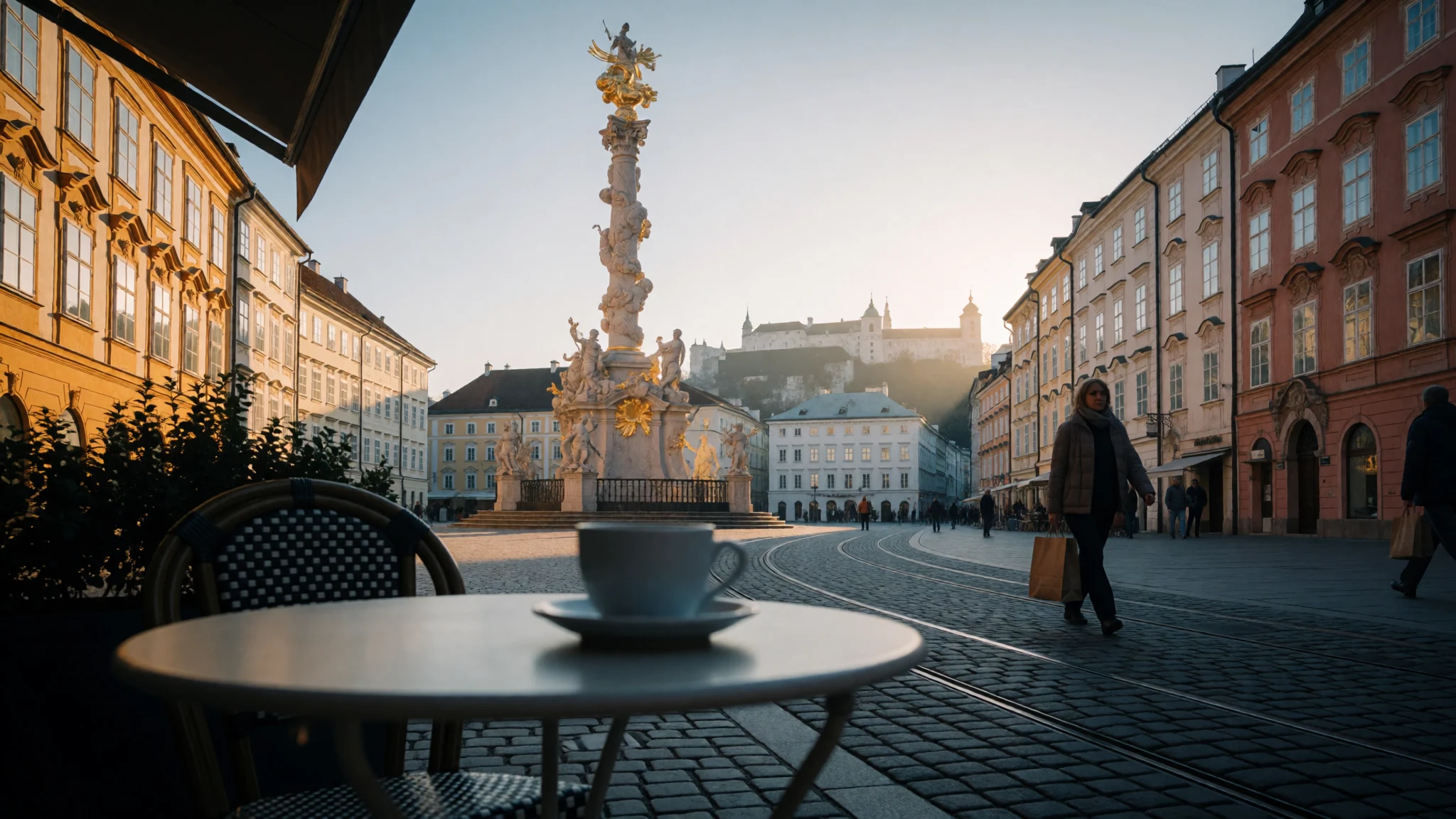
Linz is an unshowy Danube city where Baroque squares, a riverside culture mile and a hilltop pilgrimage church fit into two or three easy days.
The place
Linz is the capital of Upper Austria, a river city on the Danube about halfway between Salzburg and Vienna, with roughly 212,000 residents and an elevation of 270 m. It has never drawn the crowds of its two famous neighbours, and that is part of its appeal: the old town is walkable, the cafés are full of locals, and nobody queues for a photograph. Steelworks and chemical plants still line parts of the river, a reminder that this is a working industrial city first and a postcard second. Look past the chimneys, though, and the picture changes. The centre is a set of Baroque façades around a large main square, the Danube embankment has been turned into a long park, and a pilgrimage church sits on a hill above the rooftops. Universities and research institutes keep the population young, and a strong arts scene, boosted by the city's year as a European Capital of Culture in 2009, gives the place more energy than its size suggests. Czechia lies not far to the north, and the Danube cycle route runs through town, so cyclists are a regular sight on the embankment. Summers are warm and winters properly cold. The best views are from the wooded hills on the north side of the river. Linz works well as a stop on a Vienna–Salzburg journey, or as a base for the Upper Austrian countryside.
Its story
Linz began in the first century as a Roman fort called Lentia, placed where the Danube bends. The Celtic root of the name is usually taken to mean something like 'bendable', which suits the river. The fort guarded an important transport route in the province of Noricum. The modern spelling first turns up in records from 799, the same year that documents both the castle and St Martin's Church. By 1236 Linz was being described as a fortified town, and in 1324 it received formal city rights, which helped it grow as a Danube trading point on the road towards Vienna and Hungary. Under the Habsburgs it became a commercial and administrative centre, with salt, iron, gunpowder and wool among its trades. The astronomer Johannes Kepler taught mathematics here for several years, and on 15 May 1618 he made a breakthrough in his work on planetary motion. The city's university carries his name today. The nineteenth and twentieth centuries brought heavy industry, above all steel and chemicals, which shaped the skyline along the river. Since then the economy has widened into services, teaching and research, and the old furnace-and-chimney identity has gradually made room for festivals, museums and a reputation for digital arts.
What to see
- Pöstlingbergkirche — Pöstlingberg, north-west of the centre
The Pöstlingbergkirche is a pilgrimage church dedicated to the Seven Sorrows of the Virgin Mary, standing on a hill above the rooftops and serving as the city's landmark. Most visitors come for the view back over the Danube and the old town, which is clearest on dry mornings. Bring a spare layer, as it is cooler up there than by the river.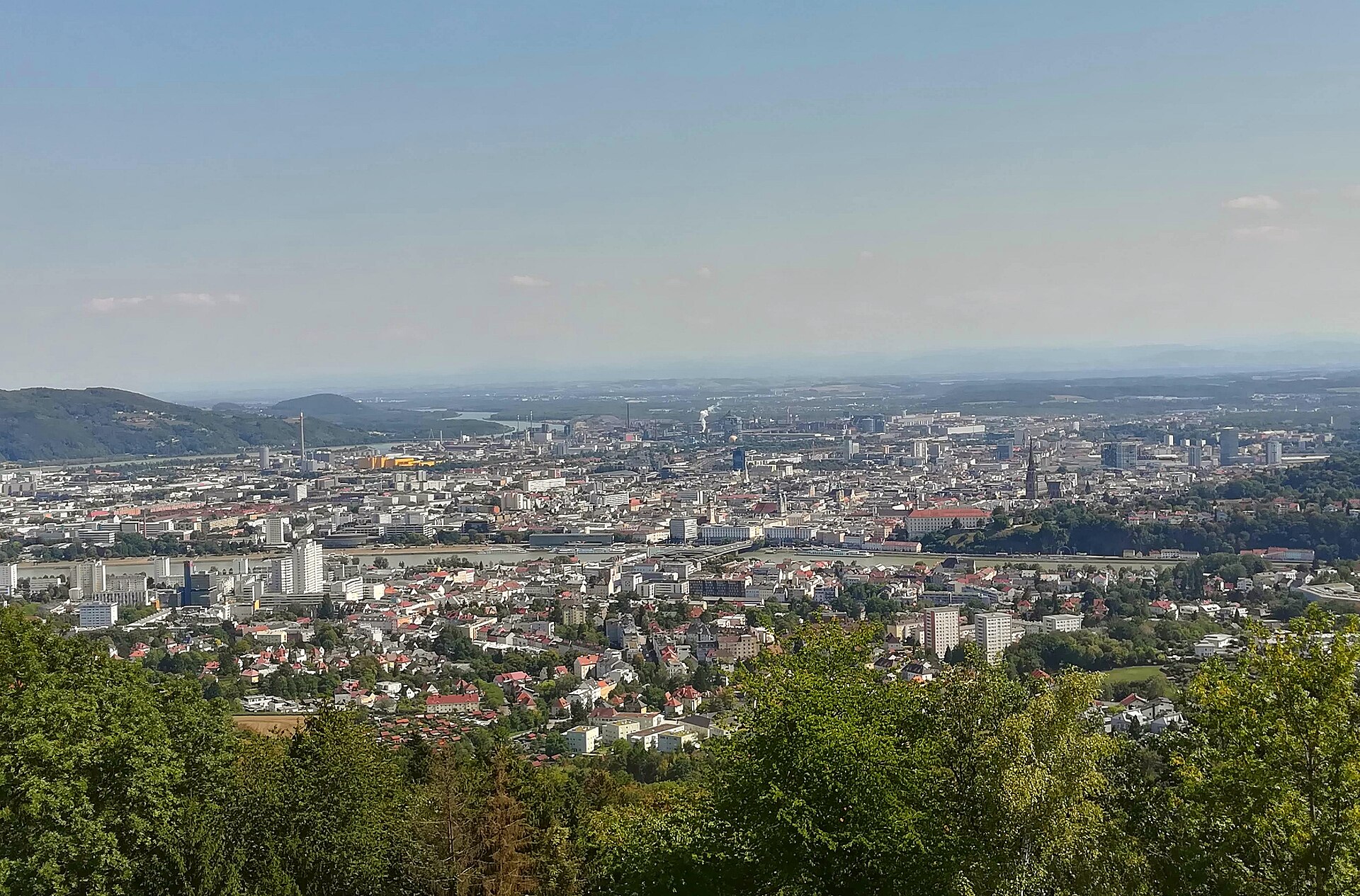
- New Cathedral — Just south of the old town
The New Cathedral is a neo-Gothic church begun in 1855 under Bishop Rudigier, with its foundation stone laid in 1862. Its tall pointed arches and spire make it easy to spot from across the old town. Step inside for a quiet half hour out of the weather, and check the diocese website for visiting times. - Old Cathedral — Old town
The Old Cathedral was built between 1669 and 1678 from drawings by Pietro Francesco Carlone, in the Baroque style that defines the centre of Linz. It served as the diocese's cathedral from 1785 until 1909, when the neo-Gothic church took over. It is a calmer, warmer interior than its newer neighbour. - Trinity Column — Main square, old town
The Baroque Trinity Column, finished in 1723, rises 20 m in the middle of one of the enclosed squares of the old town. Cafés and Baroque façades frame it on every side. It is a good place to sit with a coffee and watch the city go about its day, and the square is busiest on market mornings.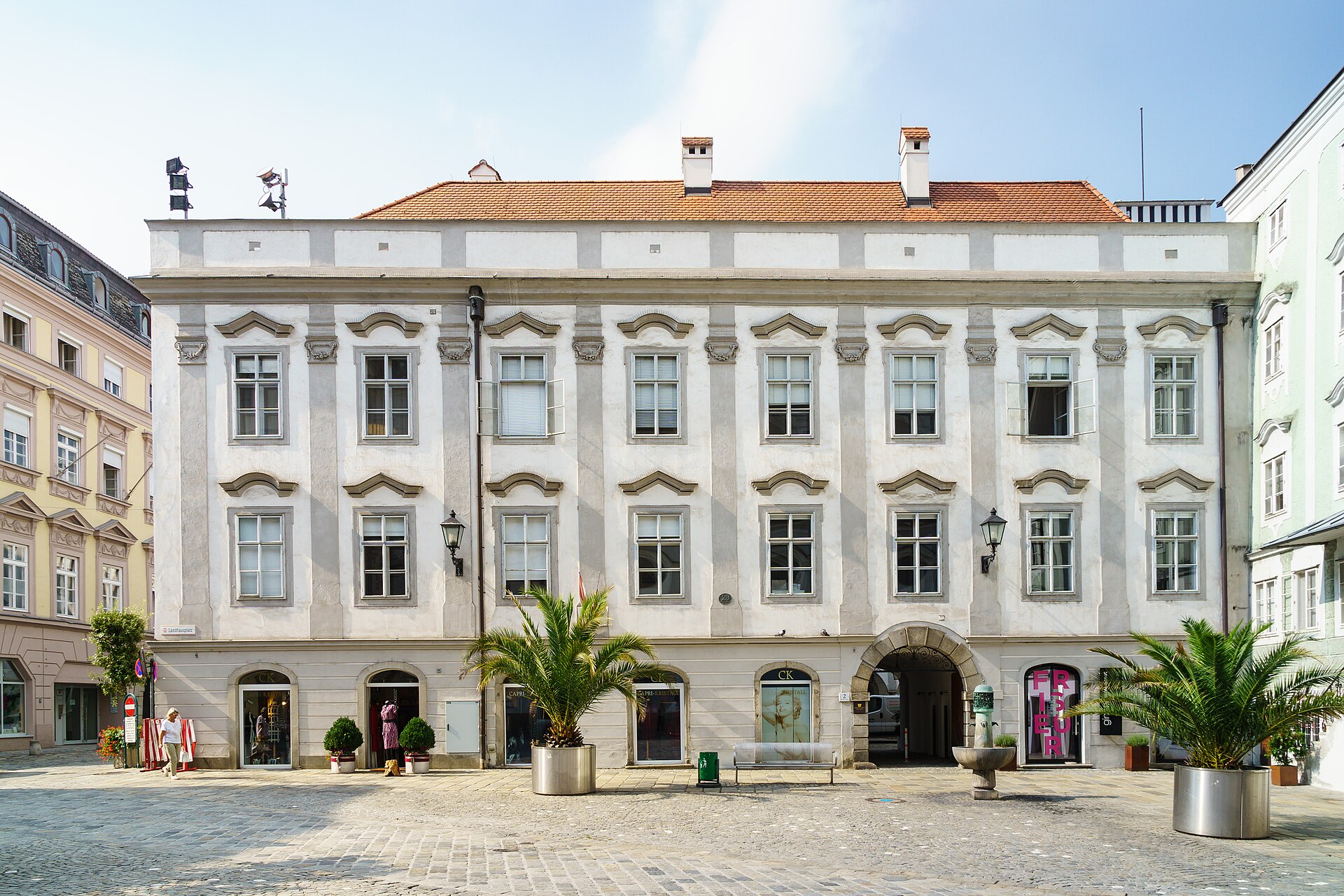
- St Martin's Church — Beside the castle, western old town
St Martin's Church is an early medieval chapel first documented in 799, tucked close to the castle on the western edge of the old town. It is small, plain and easy to miss, which is part of its charm. Visit it for a sense of how far back Linz reaches, then continue to the castle terraces for a view over the river.
Culture
Linz has put real money into the arts, with support from both the city and the state of Upper Austria, and it shows. The stretch of Danube embankment between the Lentos Art Museum and the Brucknerhaus is known as the Kulturmeile, the culture mile. In summer it fills with students and families lying on the grass, and in June, July and August a music pavilion hosts free concerts from Thursday to Sunday. Early September belongs to the Ars Electronica Festival, which turns the city into a showcase for digital art and technology and makes accommodation harder to find. In July the Pflasterspektakel, an international street-art festival, takes over the main square and the long shopping street running from it, with acrobats, musicians and performers on the cobbles. Smaller venues such as the Posthof near the harbour and the Stadtwerkstatt by the river keep a more experimental scene going through the year. Alongside all this sits an older, quieter culture of Catholic feast days, coffee-house afternoons and brass bands, and the two coexist without fuss. Locals are polite, a little reserved at first and generally happy to help if asked. Keep your voice low in the Old Cathedral and the Pöstlingberg church, and step aside for worshippers before you start taking photographs.
What to wear
Linz has its own part in Austria's Tracht tradition, the regional costume worn at festivals, weddings, church holidays and village events. For women this means a dirndl, a bodice-and-skirt dress usually in cotton, linen or wool, with a silk or cotton apron. In Upper Austria the best-known piece is the Linzer Goldhaube, a gold-embroidered bonnet that appears at formal parades and celebrations. Men wear jackets of loden, a dense, water-shedding wool, often with felt hats and leather trousers. Everyday dress in the city is far simpler. People wear jeans, sensible coats and trainers, and the look is practical rather than showy, with plenty of cycling kit near the river. Smarter clothes appear for the opera, concerts and evenings out, but there is no strict dress code. A visitor should dress in layers, since the climate is mild in summer but cold in winter and rain can arrive at any time. Pack a waterproof jacket, a warm hat and gloves for winter, and light cotton for July and August. Comfortable shoes matter more than anything else, as old-town cobbles are uneven and the Pöstlingberg slope is steep. Churches ask for no special dress, but covered shoulders and knees are polite.
What to eat
- Linzer Torte — Traditional cafés and bakeries in the old town
Linz gave its name to this crumbly nut pastry filled with redcurrant or other tart jam and topped with a lattice. Eat a slice with coffee, and expect the dense, spiced texture to be quite filling. It is worth tasting in a traditional café before you buy a boxed one. - Wiener Schnitzel — Traditional inns and beer halls around the old town
Thin, breaded, pan-fried veal or pork, served with potato salad and a wedge of lemon. It is a staple of Austrian menus and a safe, satisfying choice. Order it in a classic inn, where portions are usually generous enough to share with a hungry friend. - Beuschel — Classic Austrian restaurants in the centre
A rich, creamy ragout of offal in a sharp sauce, usually served with a bread dumpling. It is an old Austrian dish and not for everyone, but local cooks take pride in it. Try it where the menu is short and the regulars look like they know what they want. - Leberkäse roll — Butcher counters and snack stands near the main square
A hot slice of baked meatloaf, despite the name containing no cheese, served in a crusty roll with mustard. It is the standard quick lunch and costs little. Locals eat it standing at a counter, so follow their lead and enjoy it fresh and warm. - Heuriger-style home cooking — Garden restaurants on the eastern edge of the old town
Rustic restaurants with a shaded garden serve plates of cold meats, cheese, salads and hearty hot dishes, often with local wine or beer. Sit outside under the trees on a warm evening, order a mix of small plates and share. The mood is relaxed and unhurried.
Plan it
Best time. May–June and September for mild, usually pleasant weather, long evenings and the free summer concerts; early September also brings the Ars Electronica Festival, so book early. July is warm and lively with the street-art festival. Winters are cold, which suits Christmas markets but not long walks.
How long. 2–3
Getting there. Blue Danube Airport at Horsching, just outside Linz, has limited international routes, mainly to Vienna, Frankfurt, Düsseldorf and London Stansted. Most visitors fly to Vienna instead and take a direct fast train from the airport, a journey of under two hours. From Munich Airport, take the suburban train to Munich Hbf and change there for a long-distance train to Linz, which takes a good deal longer.
Budget. mid
Tips
- Book accommodation well ahead for early September, when Ars Electronica fills the city
- Go up to the Pöstlingberg on a clear morning for the best views
- Hire a bike for the Danube path, which is flat and well used
- Carry a light waterproof, as showers can arrive quickly in any season
- Check the official city site, https://www.linz.at/, for event dates and opening times
Etiquette
- Greet shop staff and café waiters with a friendly 'Grüß Gott' or 'Guten Tag'
- Keep to the walking side of the riverside path and give cyclists room
- Stay quiet in churches and avoid photographing worshippers
Nearby
Sources
- Wikidata Q41329 (CC0)
- Wikipedia: Linz (rev 1384374392) (CC BY-SA 4.0)
- Wikivoyage: Linz (rev 5409266) (CC BY-SA 4.0)
- Placo de Linz — Kani (CC BY-SA 4.0)
- Blick vom Standort Kollegium Aloisianum, Freinbergstraße 32 auf Linz — Radler59 (CC BY-SA 4.0)
- Ehemaliges Starhemberger Freihaus, Mozartpalais, Altstadt 17 in Linz — Radler59 (CC BY-SA 4.0)
- Linz (Austria) — Jorge Franganillo (CC BY 2.5)
- Linz (Austria) — Jorge Franganillo (CC BY 2.5)
- LINSVM AVSTRIAE vulgo LINTZ — Lucas van Valckenborch (Public domain)
- Blick über Linz von der Franz-Josefs-Warte — Thomas Ledl (CC BY-SA 4.0)
- Blick über Linz, vom Pöstlingberg aus gesehen — Lemur1000 (CC BY-SA 4.0)


