Lincoln Castle
Lincoln Castle, United Kingdom
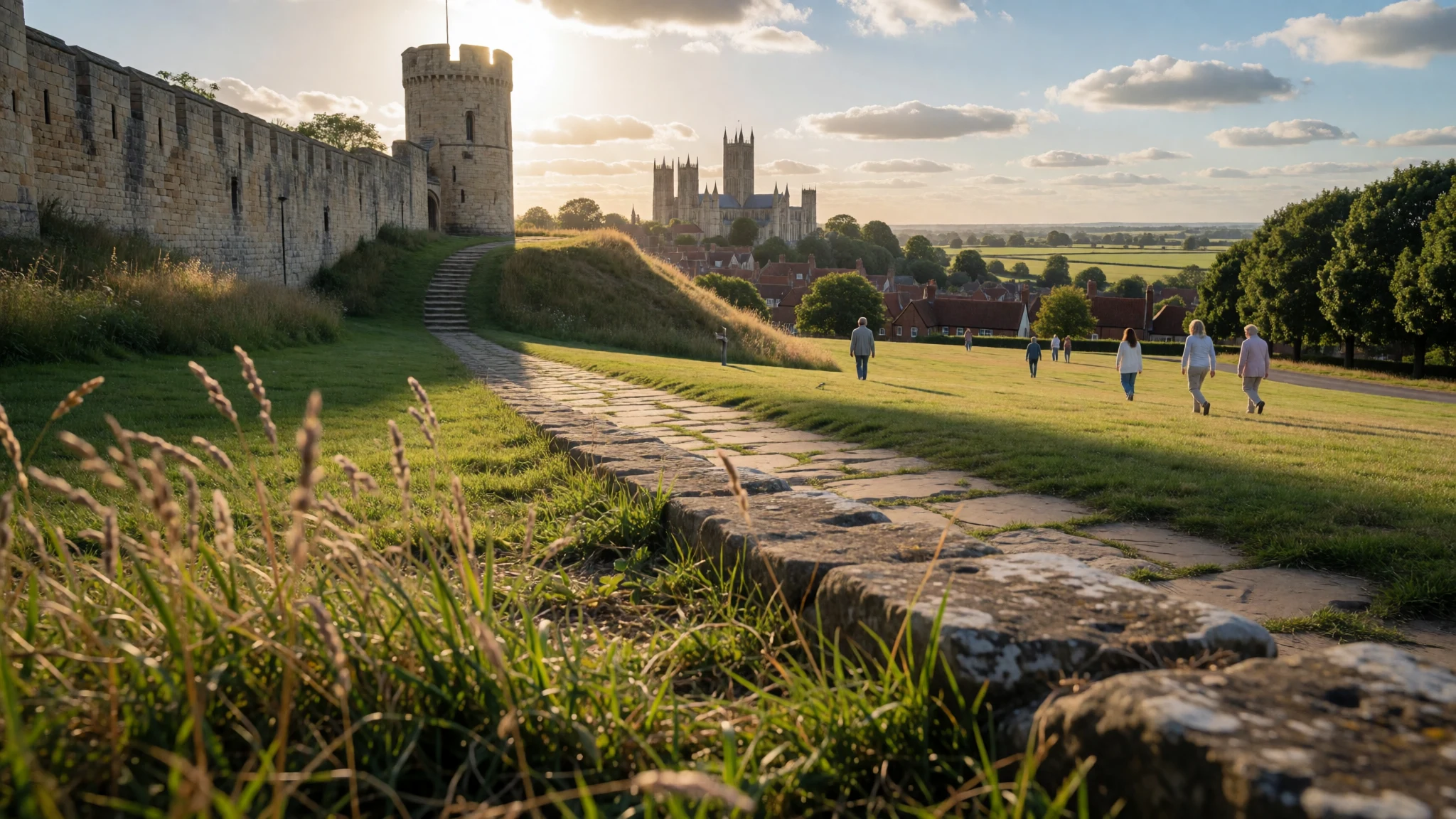
Lincoln Castle lets visitors walk a complete medieval wall circuit, see two mottes, and stand before a surviving 1215 Magna Carta.
The place
Lincoln Castle sits on the hilltop above the city of Lincoln, in Lincolnshire in the East Midlands of England. It was founded in 1068 on ground where a Roman fortress had already stood. The walls enclose a broad open lawn, and the whole circuit can be walked at parapet height, with views over the cathedral, the red-roofed city and the flat farmland beyond. The design is a motte-and-bailey, with an unusual twist: two mottes, the artificial mounds that once carried timber and later stone towers. Only one other castle in the country shares that arrangement, Lewes in East Sussex. For centuries the enclosure was not simply a fortress but a working centre of justice. A prison operated here into modern times, and the Crown Courts still sit on the site, so a visit is partly a visit to a living institution rather than a ruin. The castle is owned by Lincolnshire County Council, protected as a scheduled monument and Grade I listed. Inside, one of four surviving copies of the 1215 Magna Carta is on display. The surrounding county is low-lying farming country, which is why the hill and its walls are visible from so far away. Lincoln is a small city, so the castle, the cathedral and the old streets between them are easy to cover on foot, though the climb up from the lower town is steep. Opening days and ticket arrangements change, so check the official site, https://www.lincolncastle.com/, before travelling.
Its story
Lincoln Castle was a product of conquest. After William the Conqueror defeated Harold Godwinson at Hastings in October 1066, he found the north of England slow to accept him, and his hold on the country stayed shaky for several years. To project power towards the Danelaw, the region once ruled by Scandinavian settlers, he built a chain of major castles across the North and Midlands, among them Cambridge, Huntingdon, Nottingham, Warwick, York and Lincoln. Lincoln was a sensible choice. It was already one of the country's major settlements, a busy Viking trading centre with a population in the thousands. The ridge above it carried the remains of a Roman walled fortress, Lindum Colonia, the origin of the name Lincoln, and the high ground gave commanding views over the land to the south and west. The Norman builders reused that Roman site rather than starting from nothing, and raised their castle there in 1068. The second motte, topped in the 12th century by what is now called the Lucy Tower, is part of what makes the layout unusual. In later centuries the castle changed from a garrison into a place of law: it held courts and a prison, and the courts still operate. That long use is a large part of why so much of the fabric survives, since a building that stays useful tends to be maintained.
What to see
- The wall walk — Castle walls, Lincoln
The circuit of the castle walls is the main reason to come. Walking it takes in the lawn below, the roofs of Lincoln, the cathedral towers and the farmland stretching away. The steps are steep in places and the stone can be slippery after rain, so sensible shoes matter. Go slowly and look both inward and outward.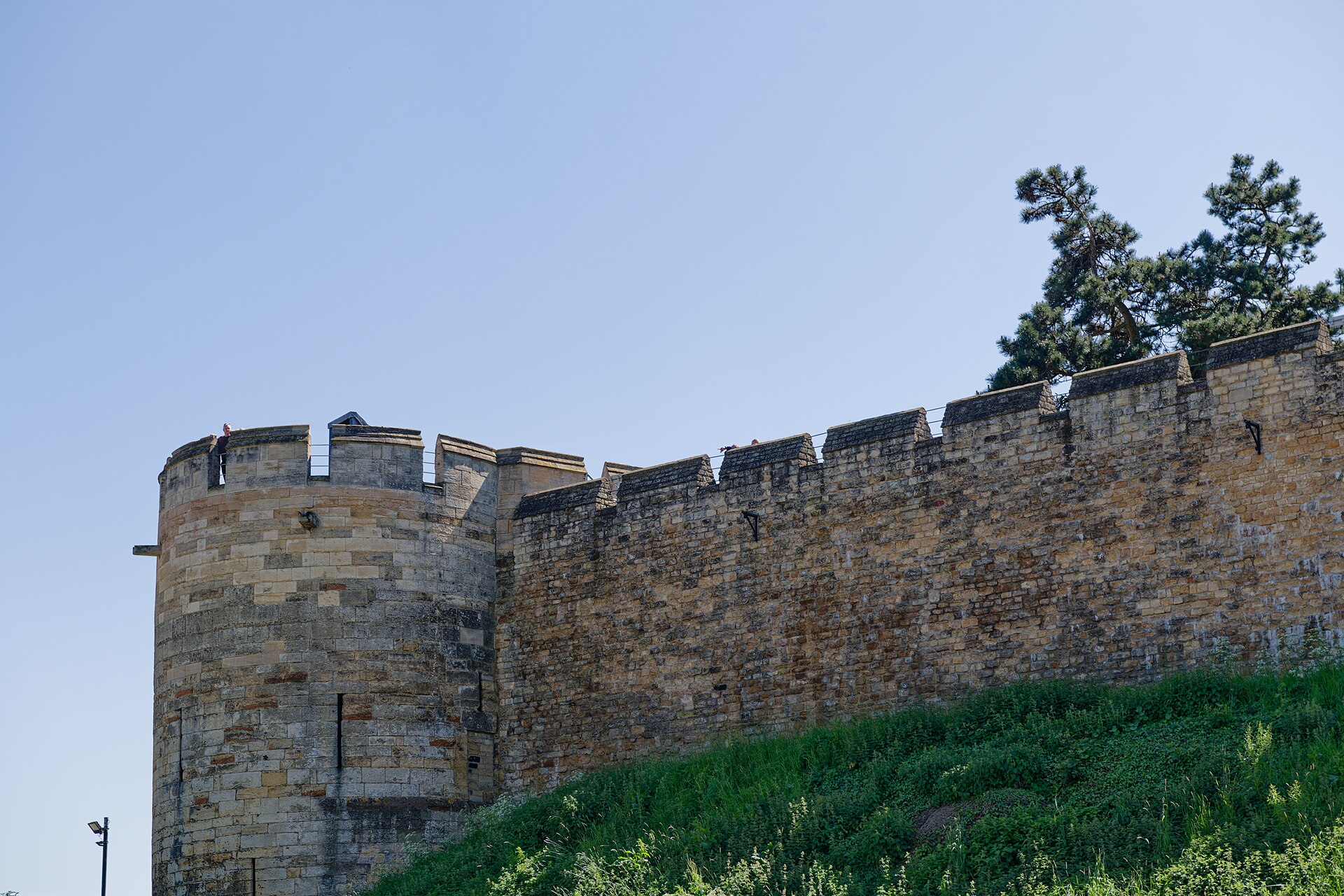
- Lucy Tower and the second motte — Castle grounds, south-west side
The Lucy Tower stands on the smaller of the castle's two mottes and dates from the 12th century. Its ring of stonework is a good place to understand why two mounds make this castle unusual. Looking at the earthworks from the lawn shows how the Normans shaped the hill itself into a defence.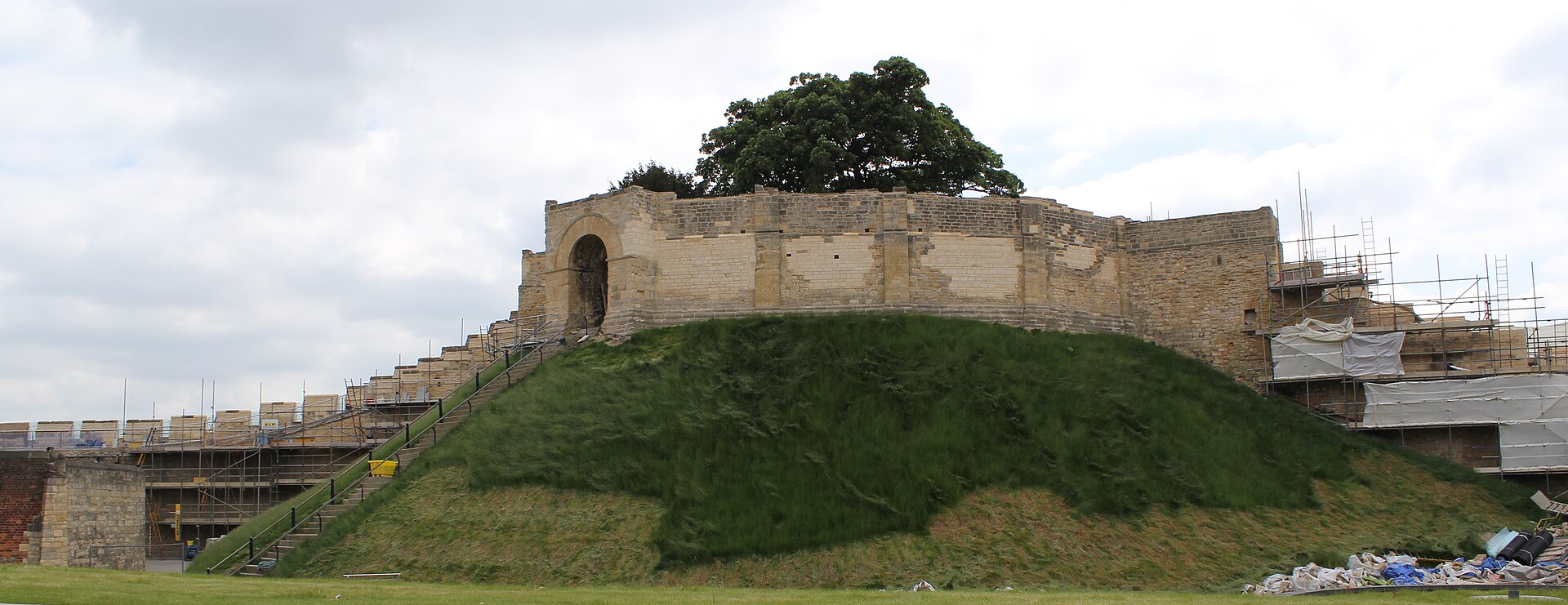
- The Magna Carta vault — Inside the castle grounds
A purpose-built display room holds one of the four surviving copies of the 1215 Magna Carta. The text is small, faded and handwritten in Latin, so reading the panels and listening to the guides helps. Lighting is kept low to protect the parchment, and queues can build on busy weekends and school holidays. - The courts and prison buildings — Castle grounds
Because the Crown Courts still sit within the walls, the castle feels used rather than preserved. The former prison buildings show how justice was administered here into modern times. Access to some areas depends on court business, so check the official site for what is open and when.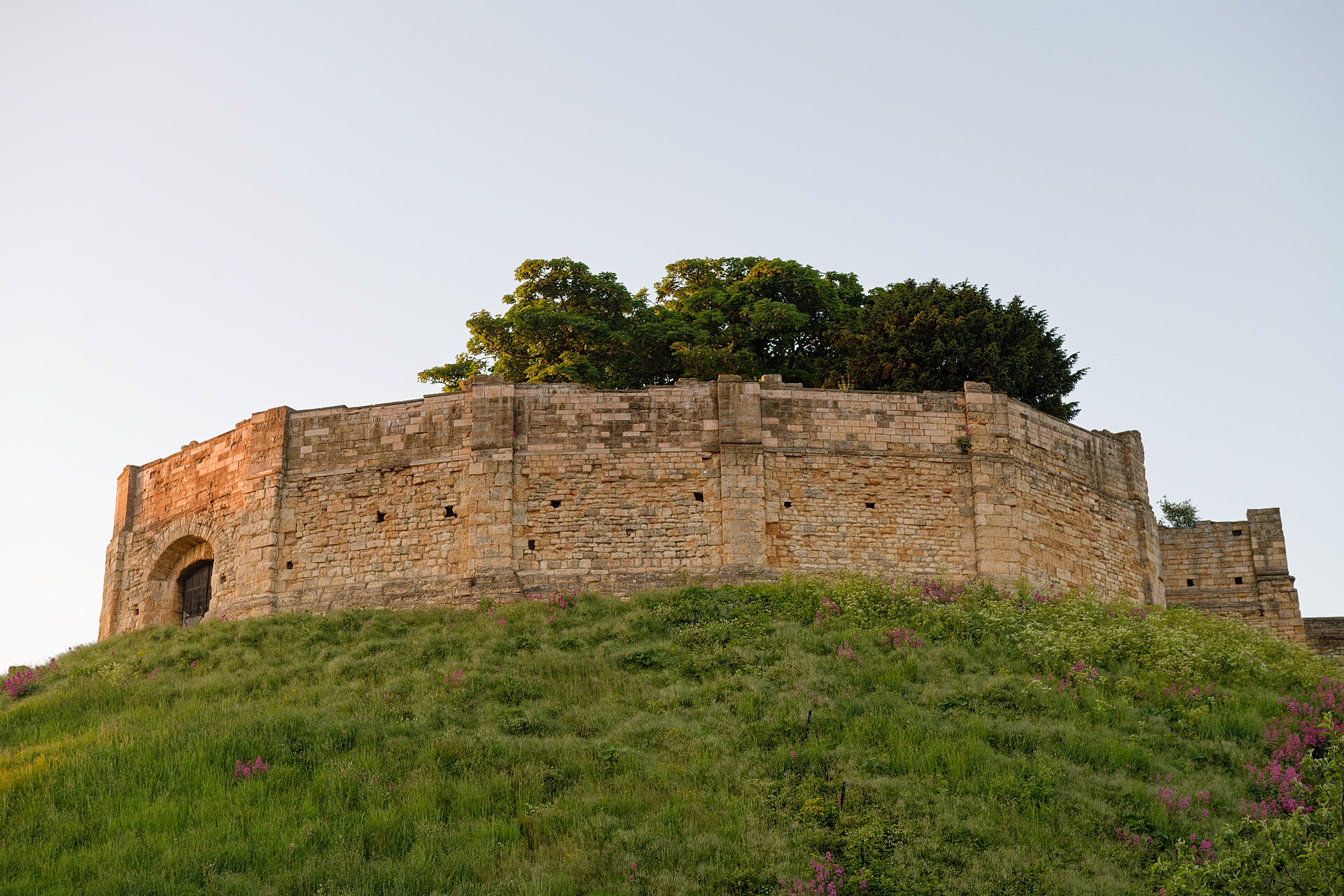
- Lincoln Medieval Bishop's Palace — Beside Lincoln Cathedral
A short walk downhill from the castle, the ruins of the Medieval Bishop's Palace are run by English Heritage. They sit on a terrace below the cathedral, with views over the lower city. Together with the castle, they show the two centres of power, military and church, that shaped medieval Lincoln.
Culture
Lincoln Castle carries a culture built around law, authority and the memory of conquest. The Normans built it to control a restless region, and the building has spent most of its life afterwards as a place where the law was applied: trials, sentences and imprisonment all happened inside the same walls. That heritage gives the castle a sober character. Visitors meet it as a record of how power was imposed and then slowly limited, with the Magna Carta, the charter that put limits on royal authority, as its centrepiece. Local pride in that document is real, and guides tend to tell its story carefully and without exaggeration. Lincoln as a city shares the sense of layers. Roman, Viking, Norman and later buildings sit within a short walk of each other, and residents are used to visitors asking about each period. The castle and the cathedral together dominate the skyline, and people often speak of the hilltop as the old heart of the city, with the lower town as its working side. The county itself is farming country, and an unfussy, practical manner is typical. Events in the grounds, such as living-history days, reflect that pride in the past without turning it into a show. Keep voices low and phones silent near the working courts, and follow staff instructions about where photography is allowed.
What to wear
Lincoln Castle sits in a part of England with no single regional costume, so the useful story is about cloth and climate rather than a national dress. Historically, ordinary people in this farming county wore wool and linen, and wool from local sheep fed the medieval trade that made Lincoln prosperous. Today those materials survive in tweed, wool coats and waxed cotton jackets, which are common in the countryside around the city. Living-history events at the castle sometimes put on period dress, usually wool tunics and gowns, but this is performance rather than daily wear. What people actually wear now is casual and practical: jeans, trainers or boots, waterproof jackets, and smarter clothes for the courts and for evenings out. Students from the city's universities add a younger, more varied look. For a visitor, the priority is weather. Lincolnshire is open and often windy, and the wall walk is exposed, so bring layers, a waterproof and a hat in cooler months, and sun protection in summer. Shoes should have good grip, since there are steep steps, uneven stone and cobbled streets, especially on the climb between the lower town and the hilltop. Nothing about the castle requires special dress. At the neighbouring cathedral, shoulders and knees covered is a courteous choice, and hats are normally removed inside.
What to eat
- Lincolnshire sausage — Local butchers and farm shops
A coarse, sage-seasoned pork sausage that is a local staple. It is usually grilled or fried and served with mash or in a bap. Look for it at traditional butchers and farm shops in the old streets around the castle, and at the farmers' market. - Stuffed chine — Independent butchers and delis
A regional speciality of salted pork neck, stuffed with parsley and sliced cold. It has a bright, herby flavour and appears in sandwiches and on cold platters. Look for it at independent butchers and delicatessens, particularly around Christmas and Easter. - Lincolnshire Poacher cheese — Cheese shops and tea rooms
A hard, nutty cheese made in the county, with a flavour often compared to cheddar crossed with Swiss types. It works in a ploughman's lunch with bread and pickle. Cheese counters and delicatessens in the city sell it, and tea rooms often serve it. - Plum bread — Bakeries and market stalls
A dense, lightly spiced fruit loaf from the county, eaten sliced and buttered, often with cheese. It is not very sweet and goes well with a cup of tea after a climb. Bakeries and market stalls usually stock it. - Haslet — Butchers and pub lunch boards
A pressed, seasoned pork loaf, similar to a terrine, served cold in thin slices. It is eaten in sandwiches or with pickles and salad. Traditional butchers and deli counters sell it, and some pubs add it to lunch boards.
Plan it
Best time. May to July and September are the easiest months, with longer days and the best chance of dry weather for the open wall walk; spring and early autumn are quieter. Winter is cold, short on daylight and often windy on the exposed hilltop.
How long. 1–2
Getting there. The nearest major airport is East Midlands Airport, then train or road onward to Lincoln. By train, East Midlands Trains has run a daily service between Lincoln and London St Pancras via Nottingham; check current timetables. By car, the A46 is a direct dual carriageway into the city. The last leg from the station is a steep walk uphill.
Budget. mid
Tips
- Check the official site, https://www.lincolncastle.com/, for opening days, ticket arrangements and any court closures before travelling
- Arrive early on weekends and school holidays to avoid queues at the Magna Carta display
- Wear shoes with grip, as the wall walk and the hill up from the lower town are steep
- Bring a waterproof layer, because the walls are exposed to wind and rain
- Combine the castle with the cathedral and the Medieval Bishop's Palace, all within a short walk
Etiquette
- Keep noise low near the working courts and follow staff instructions
- Ask before photographing staff or other visitors up close
- Stay on marked paths and off the earthworks
Nearby
Sources
- Wikidata Q727760 (CC0)
- Wikipedia: Lincoln Castle (rev 1384068505) (CC BY-SA 4.0)
- Wikivoyage: Lincolnshire (rev 5409233) (CC BY-SA 4.0)
- Photo: Lincoln, UK, Dmitrij M (CC BY 3.0)
- Photo: Lucy Tower, Richard Nevell (CC BY 3.0)
- Photo: Lincoln 128a, Neddyseagoon (CC BY 3.0)
- Photo: Lincoln 124, Neddyseagoon (CC BY 3.0)
- Photo: Lincoln Castle oriel window, Rodw (CC0 1.0)
- Photo: Lincoln Castle, Motte, South Wall, Tilman2007 (CC BY-SA 4.0)
- Photo: Lincoln Castle, South Wall, Tilman2007 (CC BY-SA 4.0)
- Photo: Lincoln Castle, walls, northeast corner, Tilman2007 (CC BY-SA 4.0)


