Lille
Lille, France
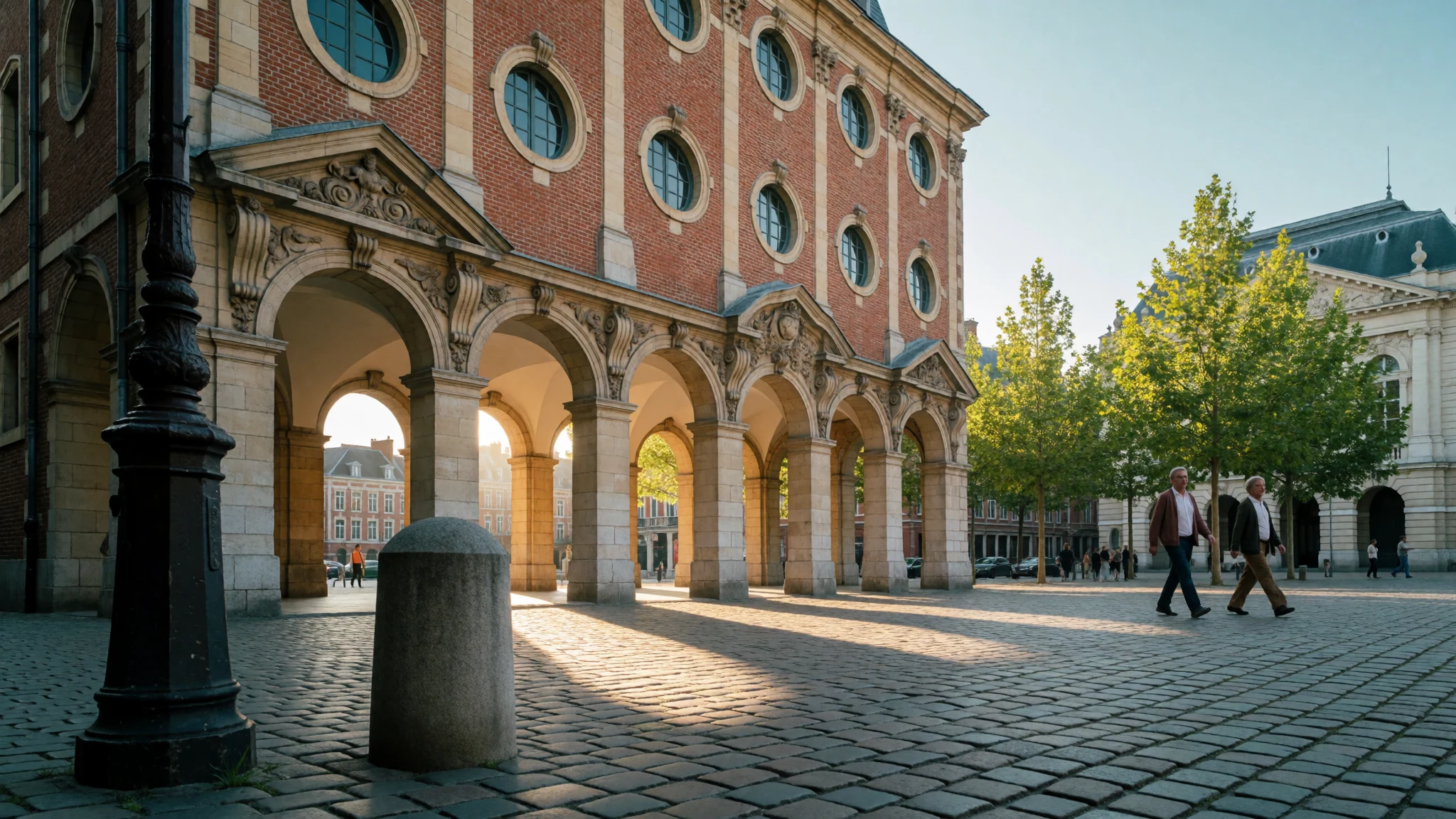
Lille is a compact, walkable Flemish-French city of brick façades, broad squares and hearty food, reached straight off the Eurostar.
The place
Lille is the main city of northern France's Hauts-de-France region and the administrative seat of the Nord department. It sits on the Deûle river, a few kilometres from the Belgian border, and its everyday feel is closer to Flanders than to Paris: brick and stone gables, a big central square, and a habit of putting beer and strong cheese on the table. The city proper is small, with about 238,000 residents, and it lies around 30 m above sea level on flat ground, which makes it easy to cross on foot. The wider urban area is far larger, and Lille works as a hub for the towns around it and for Belgian neighbours such as Kortrijk and Tournai, with which it forms a cross-border grouping. French speakers sometimes call it the "Capital of Flanders", a nod to the old county that once covered this corner of Europe. Its Flemish name is Rijsel.
The centre is tight. Vieux Lille has narrow cobbled streets and restored townhouses; the grand squares lie just to its south; and beyond them are the two railway stations, Lille Flandres and Lille Europe, the latter used by Eurostar. Wazemmes, to the south-west, is the lived-in, multicultural quarter. The Citadelle and its green surroundings mark the western edge. The climate is temperate and oceanic: mild summers, winters that can dip below freezing, and rain at any time of year, so a waterproof layer is never wasted. Lille is also a university and business city, which gives it a younger, busier feel than many historic towns of similar size. Weekends bring crowds to the old squares, but the centre rarely feels overwhelmed.
Its story
Lille's name means "the island", and the story starts there. The Latin insula became Old French l'Isle and then Lille, while the Flemish and Dutch Rijsel carries the same idea in another tongue. Low, damp ground beside the Deûle left islets of drier land on which to build. Digs point to settlement around 2000 BC in what are now the quarters of Fives, Wazemmes and Vieux Lille. Gauls were the early inhabitants, followed by Germanic groups including the Franks, and Old Low Franconian was spoken here by the eighth century.
A local legend, Lydéric and Phinaert, places the city's founding in 640. It pits a hero against a tyrant, and historians treat it as folklore rather than record. The first written mention comes later, in 1066, as apud Insulam, "at the island", when the place lay inside the County of Flanders. That county was among the wealthy regions of medieval Europe, living on cloth and trade, and Lille grew as one of its towns alongside Ghent and Bruges. Vikings raided Flanders from 830 until around 910, and local princes filled the gap afterwards.
Later centuries moved Lille between Flemish, Burgundian, Spanish and French rule, which explains why brick Flemish gables stand beside French classical stone on its squares. Its place on the frontier also made it a fortress town: the Citadelle, designed by Vauban in the reign of Louis XIV, is the best-known result, and a painting of the Siege of Lille is in the British Royal Collection. The Flemish-French double identity never quite went away.
What to see
- La Vieille Bourse — Central squares
The Vieille Bourse is a Flemish-baroque former exchange, built in 1653, with an arcaded inner courtyard. It sits between Place du Général-de-Gaulle and Place du Théâtre, so it is easy to pass through while crossing the centre. Check the official site, lille.fr, for what is on inside.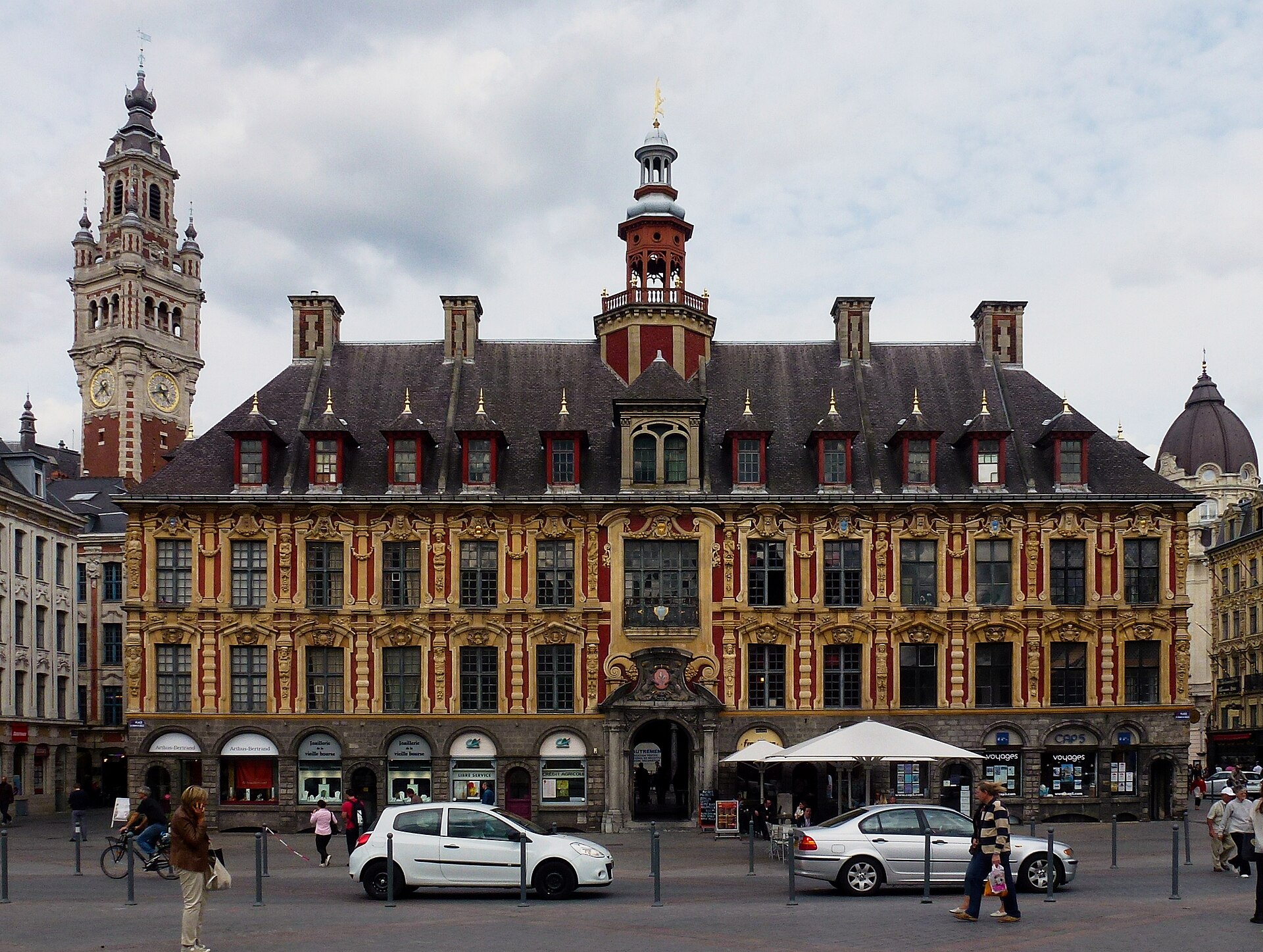
- Place du Général-de-Gaulle — Central squares
Place du Général-de-Gaulle is the city's main square, known locally as the Grand'Place. Flemish-style façades surround it, including the offices of the regional newspaper La Voix du Nord, and the Grande Déesse monument, dated 1843, stands at its centre. It is a good place to sit and watch the city go by.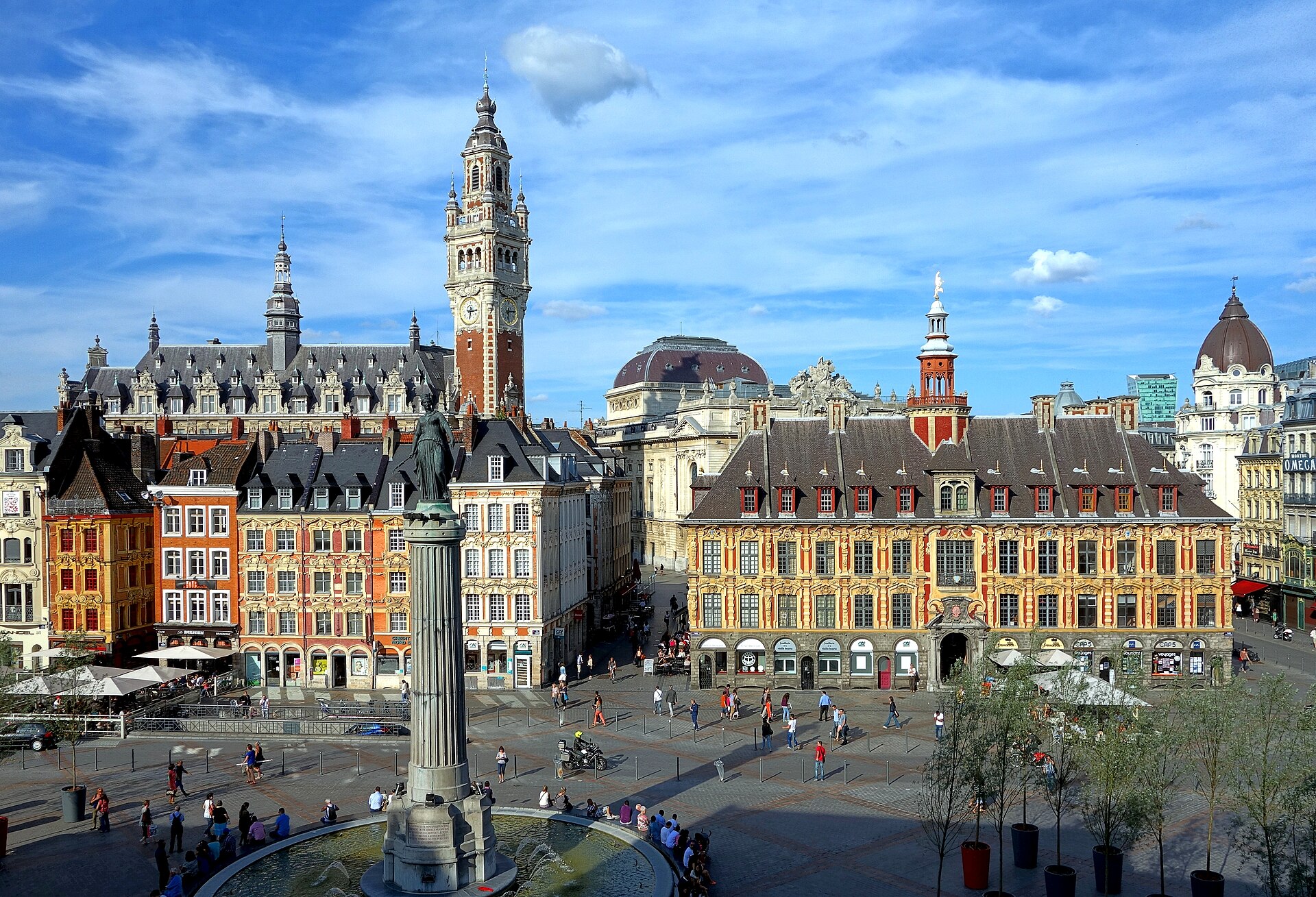
- Town hall and belfry — Town hall quarter
Lille's town hall (hôtel de ville) is topped by a belfry 104 m tall that rises over the surrounding streets. Visitors can go up the tower on set days, and the view takes in the flat plain around the city. Check the official site, lille.fr, for opening days and tickets.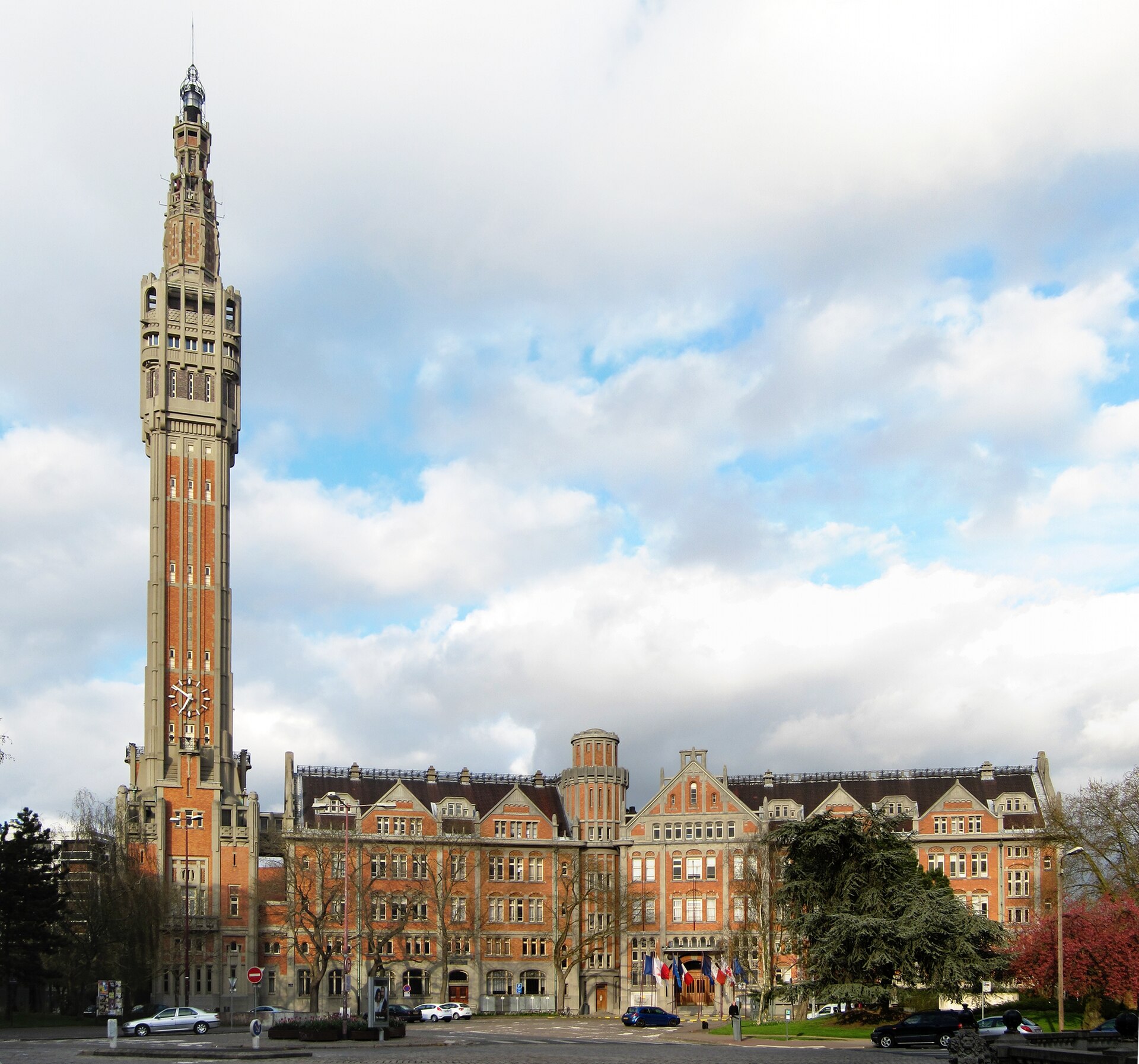
- The Citadelle — Western edge of the centre
The Citadelle is a star-shaped fortress built in the reign of Louis XIV and designed by Vauban, the famous military engineer. It still has military use, so access to the interior may be limited and is worth checking beforehand. The green space around it suits a walk when the squares feel busy. - Place Rihour and Palais Rihour — Central squares
Place Rihour is a lively square lined with restaurants, a few steps from the main square. The Palais Rihour, from 1453, is a surviving piece of the old ducal palace and houses the tourist information centre, a handy stop for maps and local advice. - Chamber of Commerce and Opera — Central squares
The Chamber of Commerce, built in 1921, now holds offices and co-working space, so it is a building to admire from outside. Its belfry-topped façade looks best when lit after dark. The opera house beside it dates from 1923, and the two make a handsome pair on the same block.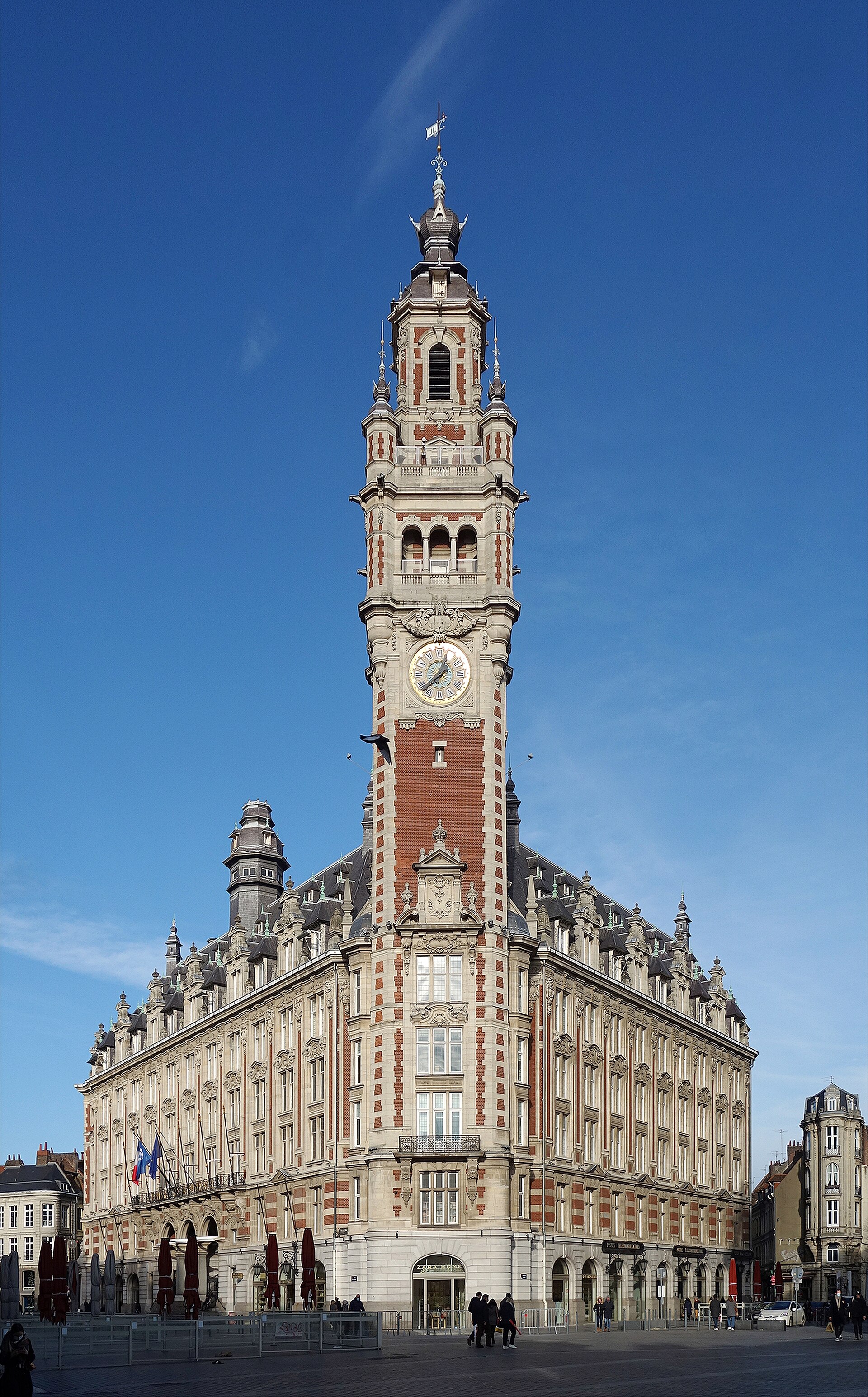
Culture
Lille has a Flemish heart and a French manner, and the mix shows in small things. Rijsel, the Flemish name, is still known, a few Picard words survive in older speech, and the north likes to describe itself as warmer in welcome than its grey, damp weather suggests. Social life runs through cafés, brasseries and long lunches, and beer sits beside wine as an everyday drink. The city is a university and business centre, so the squares fill with students and office workers as well as visitors, and evenings are lively without being rowdy. The Flemish inheritance also shows in the brick architecture, in hearty cooking built around cheese and beer, and in the belfry, a symbol of civic independence in old Flemish towns. Markets, football and open-air events draw big local crowds; the city's official site, lille.fr, is the place to check what is on during a visit. Greet staff with a clear "bonjour" when entering any shop, café or restaurant, and say "merci, au revoir" on leaving, since skipping the greeting is taken as rude.
What to wear
Lille has no single costume worn every day, so the traditional side is mostly about cloth. The north grew rich on textiles, chiefly wool, linen and lace, and older festival and folk-group dress reflects that: long wool skirts, linen aprons, shawls and lace-trimmed caps, seen now at parades and heritage events rather than in the street. Everyday dress today is urban and practical: dark coats, jeans, scarves and trainers or leather boots, relaxed rather than showy. Students and office workers set the tone, and brighter colours appear mostly in summer. A visitor should dress for changeable weather: a waterproof jacket, layers that suit mild summers and cold winters, and a warm hat and gloves from late autumn. Shoes matter more than clothes, because the old streets of Vieux Lille are cobbled while the squares are wide and flat, so comfortable soles with some grip are best. Churches welcome visitors, but covered shoulders and knees are polite when going in. Smart casual is enough in almost every restaurant, and a light scarf is useful all year.
What to eat
- Carbonnade flamande — Estaminets and brasseries in Vieux Lille
A slow-cooked beef stew in a sweet-sour sauce of beer, onions and brown sugar or gingerbread, usually served with chips or boiled potatoes. It is a staple of Flemish cooking. Look for it at traditional estaminets and brasseries around Vieux Lille. - Welsh — Estaminets and brasseries across the centre
A hot dish of toast soaked in beer, layered with ham and mustard, then buried under melted cheese and served with chips. The name is borrowed from Welsh rarebit, but this version is a northern French comfort dish found in estaminets and brasseries. - Moules-frites — Brasseries around the central squares
Mussels steamed in white wine and shallots, served with a heap of chips. The dish is shared with nearby Belgium and turns up on brasserie menus around the central squares, most often in the cooler months. - Tarte au maroilles — Bakeries, market stalls and traditional restaurants
A savoury tart filled with maroilles, a strong, orange-rinded cow's-milk cheese from the north, often mixed with cream. The smell is bold, though the taste is gentler than expected. Try it at a bakery, market stall or traditional restaurant. - Potjevleesch — Traditional eateries in the old town
A cold terrine of several white meats, such as chicken, rabbit and veal, set in jelly and eaten with chips. Its name is Flemish for pot of meat, and it suits a casual lunch at a traditional eatery in the old town. - Gaufre fourrée — Pastry shops and bakeries in Vieux Lille and near the Grand'Place
Gaufres fourrées are thin waffles filled with a soft, vanilla-flavoured sugar paste, a sweet treat linked with Lille. Pastry shops and bakeries in Vieux Lille and around the Grand'Place sell them, and they are easy to eat while walking.
Plan it
Best time. May, June and September for mild weather and long light evenings. Summers rarely get hot, winters can fall below freezing, and rain is plentiful year round, so pack a waterproof layer whatever the month.
How long. 2–3
Getting there. Lille has two main stations in the centre, a short walk apart: Lille Europe, used by Eurostar through the Channel Tunnel from London, and Lille Flandres for regional and Paris services. Lille's own airport is served mostly by Mediterranean and domestic flights; many visitors fly to Paris Charles de Gaulle or Brussels and continue by train. Paris Beauvais has no rail link.
Budget. mid
Tips
- Check the SNCF or Eurostar sites for timetables and book ahead for busy weekends
- Carry a waterproof layer in any month, as rain can come at any time of year
- Visit the main squares early in the morning or at dusk for better light and fewer people
- Stay near the two stations or Vieux Lille, as the centre is compact and walkable
- Cards are widely accepted, but keep a little cash for market stalls
Etiquette
- Say "bonjour" when entering shops, cafés and restaurants
- Keep voices low and cover shoulders when going into churches
- Ask before photographing people at markets
Nearby
Sources
- Wikidata Q648 (CC0)
- Wikipedia: Lille (CC BY-SA 4.0)
- Wikivoyage: Lille (CC BY-SA 4.0)
- Velvet, Lille vue gd place, via Wikimedia Commons (CC BY 3.0)
- Cereol89, Lille Collage, via Wikimedia Commons (CC BY-SA 4.0)
- Pierre André Leclercq, Lille, la Vieille Bourse (PA00107639), via Wikimedia Commons (CC BY-SA 4.0)
- John Wootton, The Siege of Lille, RCIN 407182, Royal Collection, via Wikimedia Commons (Public domain)
- Louis Joseph Watteau, Lille a bien mérité de la patrie, via Wikimedia Commons (Public domain)
- Bundesarchiv Bild 183-S30293, Frankreich, Lille, Militärparade, via Wikimedia Commons (CC BY-SA 3.0 de)
- Under, Lille mairie face, via Wikimedia Commons (CC BY 3.0)
- Velvet, Lille chambre de commerce, via Wikimedia Commons (CC BY-SA 4.0)


