Liberec
Liberec, Czech Republic
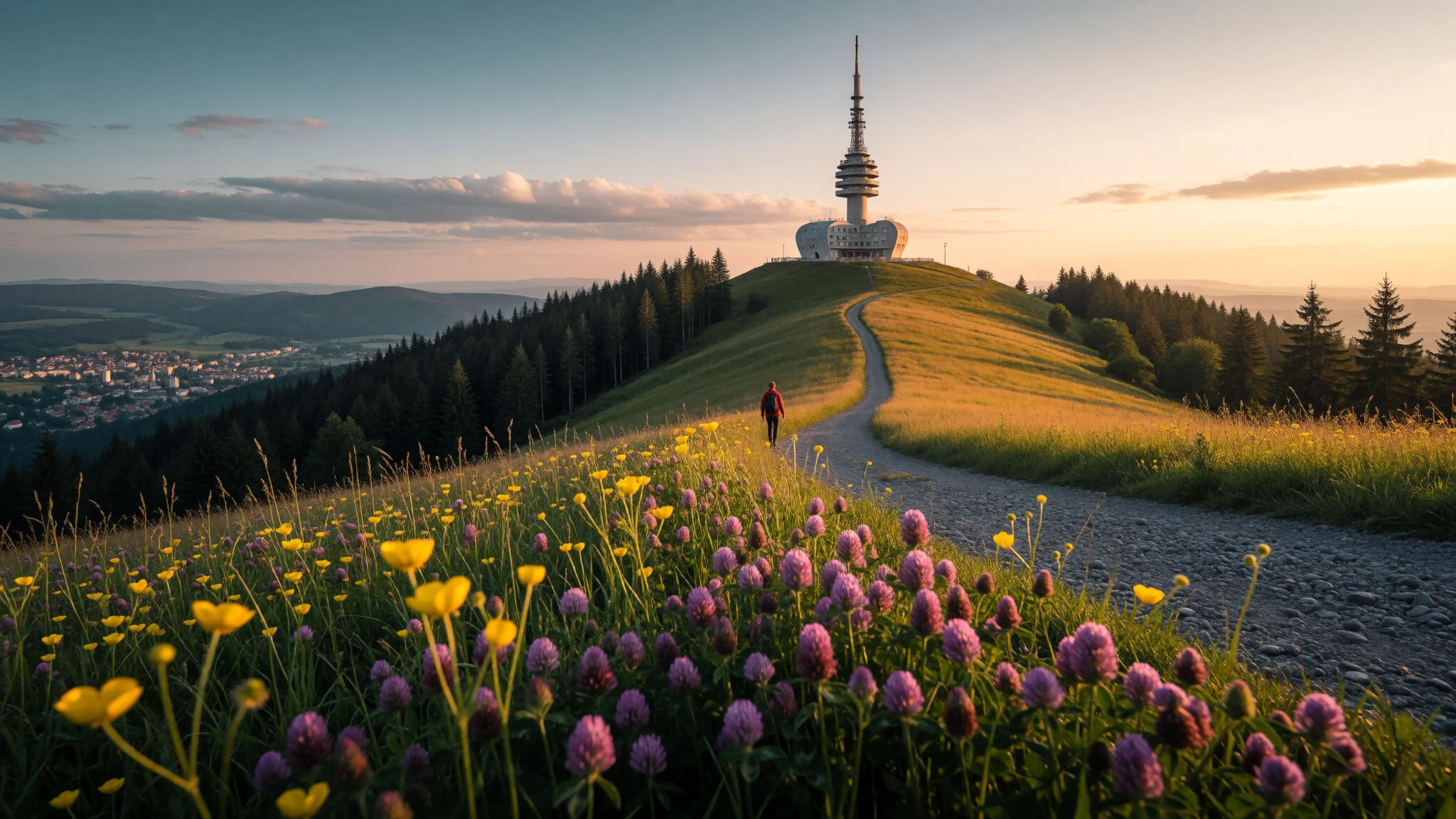
Liberec is a mountain-rimmed Bohemian mill city with a grand town hall, a famous hilltop tower and the Jizera forests on its doorstep.
The place
Liberec sits in a basin in northern Bohemia, ringed by mountains, with the Lusatian Neisse running through it. About 108,000 people live here, at an elevation of 359 metres, and the city feels like a working regional capital rather than a postcard. The compact centre is protected as an urban monument zone, and its streets hold a neo-Renaissance town hall, a theatre and a cluster of nineteenth-century civic buildings. Above everything stands Ještěd, a ridge-top mountain of 1,012 metres whose tower is the city's emblem and is visible from many streets. To the north-east the municipal land climbs into the Jizera Mountains, a protected landscape of forest and open plateau, while the west follows the Ještěd–Kozákov ridge. Harcov Reservoir, also called Liberec Dam, lies inside the built-up area, so water and woods are only a short tram ride from the centre. The city was long nicknamed the "Manchester of Bohemia" because of its textile mills, and that industrial weight can still be read in the stone and brick of its larger buildings. Liberec runs together with neighbouring Jablonec nad Nisou into one conurbation, so the edges blur. It lies north-east of Prague and close to the German and Polish borders, which gives it a Central European crossroads feel; the German name Reichenberg still turns up in old signs, maps and books. Mountain weather changes quickly here, so the day's forecast matters more than the season's reputation.
Its story
Liberec grew from two small settlements on a trade route between Bohemia and Lusatia. Habersdorf came first, founded by Czech settlers and German colonists, and Reichenberg appeared nearby a little later. The two merged, and the earliest written record under the German name Reichenberg dates from 1352. From 1278 the land belonged to the noble Bieberstein family. The Hussite Wars sent troops through the area, and in 1469 a battle against the army of King George of Poděbrady left the town burned. After the Bieberstein line ended, the Redern family bought the Frýdlant estate in 1558, Reichenberg with it. The Rederns built new houses, modernised the settlement and, most importantly, laid the foundations of the textile trade that would shape the place for centuries. Emperor Rudolf II raised it to a town in 1577 and granted the coat of arms it still uses. From 1600 the town was run by Kateřina of Redern, who secured the right to trade in salt, added a chapel to the castle and helped pay for the town hall. Cloth made the town rich, and the mills, merchants' villas and grand civic buildings of later periods all grew from that wealth. Liberec later merged with its suburb Vratislavice nad Nisou and with Jablonec nad Nisou into the single built-up area seen today.
What to see
- Liberec Town Hall — Dr. Edvard Beneš Square, city centre
The neo-Renaissance town hall is the building locals are proudest of, a richly decorated pile that dominates the square in front of it. Its tower gives one of the clearest views over the red roofs to Ještěd. Check the official city site for tower opening arrangements before planning around a climb.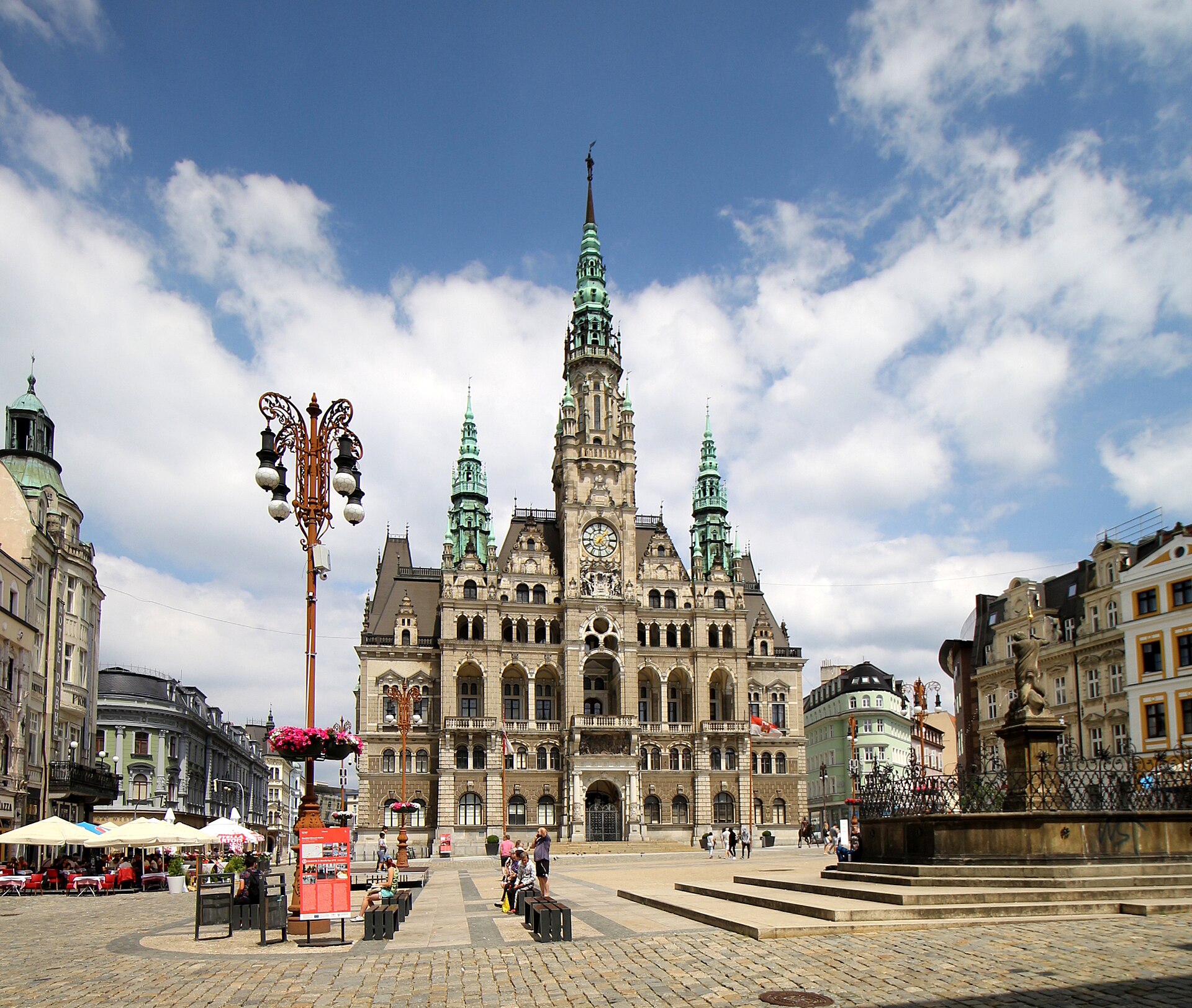
- Ještěd Tower and ridge — Ještěd–Kozákov ridge, west of the centre
The tower on Ještěd is the symbol of Liberec and the focus of nearly every skyline photograph. The ridge rises to 1,012 metres, and a cable car runs up from the foot of the hill. Mist and wind can be sharp on top even when the town below is mild.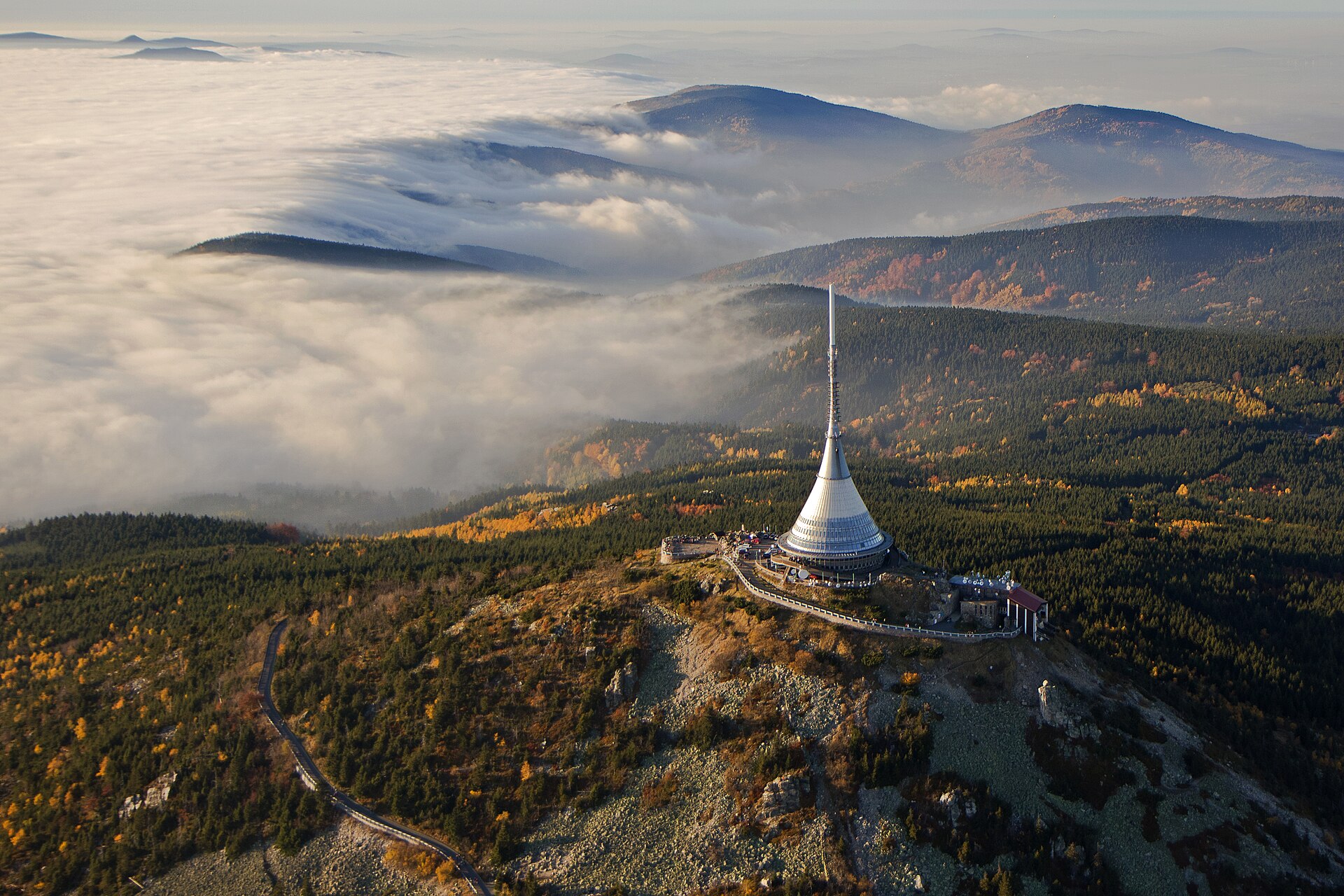
- Liberec Castle — Eastern edge of the centre
This Renaissance chateau holds a glass collection, but the inside is not open to the public, so the visit is about the exterior and the grounds. It is a useful reminder of the Redern era, when the estate's owners began shaping the town's fortunes.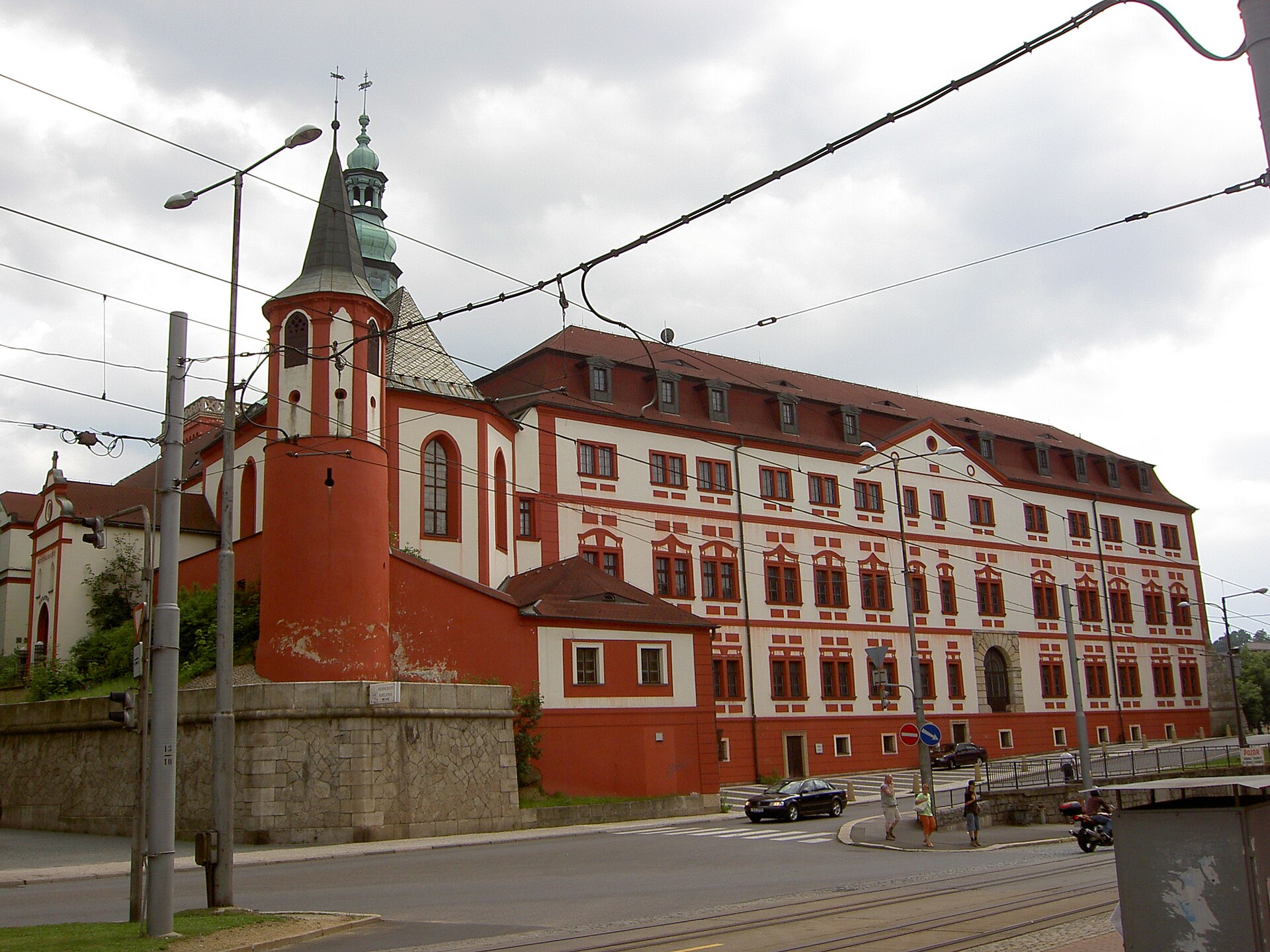
- Theatre of F. X. Šalda — Near the city centre
Built in 1883, the theatre is named after the avant-garde critic and playwright František Xaver Šalda. It is the grandest cultural building near the town hall and worth seeing from outside even without a ticket. Programmes and bookings are on the venue's own site. - Zoo and botanical garden — North of the centre, near the museum and gallery
Liberec's zoo, founded in 1919, is the first in what was Czechoslovakia. The botanical garden lies nearby, and together they make an easy half-day for families or anyone wanting green space after the town centre. Both sit in the north of the city. - Feast of Giants — Central Liberec
A sculpture by David Černý that doubles as a working bus stop, so locals use it daily without ceremony. It is a quick, quirky stop that shows the city's sense of humour alongside its formal architecture.
Culture
Liberec has the manner of an industrial city that has turned towards the arts. Its theatre tradition is visible in the Šalda theatre and in Mateřinka, a theatre festival held every second year in June. Animated cinema gets its own showcase too: Anifilm, an international festival devoted to animation, has become a regular part of the calendar in recent years. Both bring visitors from elsewhere in the country and from abroad, and the centre fills with a younger crowd while they run. Beyond the festivals, daily life leans outdoors. Locals head up Ještěd and into the Jizera Mountains at weekends, walking or cycling in summer and cross-country skiing in winter, and the habit of leaving town early on Saturday is strong. German heritage lingers in place names and in the city's old name, Reichenberg, which still appears in historical material. The mill-town past shows in the solid civic architecture and in a certain plain-spoken pride in work. Czech hospitality is polite but reserved at first, and a few words of Czech such as dobrý den (good day) are received warmly. Sundays are quiet, and some smaller shops and eateries keep short hours then. When entering a small shop, café or museum, greet the staff with a brief dobrý den and say na shledanou when leaving.
What to wear
Liberec's clothing story starts with cloth. The textile industry that earned the city its nickname worked mainly in wool and linen-type fabrics, and the wider region of northern Bohemia has its own folk dress: a bodice and full skirt with an apron for women, and waistcoat, breeches and a hat for men, often in heavily embroidered or printed cotton and wool. These costumes now appear mainly at folklore events, festivals and family occasions rather than daily life. Everyday dress in the city today is practical and casual: jeans, jackets, trainers and waterproofs, with a smarter, darker look for the theatre or an evening out. Outdoor kit is entirely normal on the street, because so many people are on their way to or from the hills. Visitors should dress for the mountains rather than the town. Bring layers, a waterproof jacket and comfortable shoes with grip for the cobbles and forest paths. For winter, add a warm hat, gloves and boots that cope with snow and slush. In summer, light clothes suit town days, but carry a fleece for the ridge, where it is cooler and windier than in the basin. Churches here are mostly closed to the public, but modest dress is wise if you do enter one, and there is no special code for restaurants or cafés.
What to eat
- Pizza and pasta — Eateries on and around the main square
Italian-style plates are a dependable staple in the centre, with several eateries serving pizza and pasta across more than one floor. They suit a quick, filling dinner after a day on the hill and usually have vegetarian options. - Viennese-style coffee and cake — Traditional cafés in the city centre
Liberec has café rooms in the Central European tradition, with coffee, cakes and a slower pace. Some host dance evenings at the weekend, sometimes with an entry charge, so ask when ordering. - Indian and Nepalese dishes — A dedicated Indian and Nepalese restaurant in town
For something different, a restaurant here serves Indian and Himalayan cooking, including curries, dal and momo-style dishes. It is a welcome option for vegetarians and for anyone missing spice after days of heavier Central European food. - Scandinavian-style bakery pastries — Café-bakery in the south-west of the city
A cosy café with its own bakery brings Nordic-style bread and sweet pastries to the south-west of the centre. It is a good start to the morning before heading out to the hills with a packed snack. - Hotel-café vegetarian plates — Café and restaurant in central hotels
A café attached to a central hotel offers a few vegetarian dishes alongside standard Czech menu items. It is useful for mixed groups, and the restaurant and bar in the town hall hotel suit a longer evening meal.
Plan it
Best time. Late May to September for walking and cycling in the Jizera Mountains and up Ještěd, with long daylight and the best chance of clear views. Winter suits cross-country skiing, but expect cold and snow; June also brings the Mateřinka theatre festival in alternate years.
How long. 2–3
Getting there. From Prague, the bus is the easy option: Regiojet and Flixbus run roughly hourly, taking about an hour from the northern edge of the capital. Trains from Prague are slower and need a change at Turnov. From Dresden there are direct trains taking about two hours, and from Wrocław the train needs a change near the Polish border. Liberec railway station is about a kilometre south-west of the centre, with the bus station beside it, and trams run into the centre.
Budget. low
Tips
- Check the official city site (https://www.liberec.cz/) for opening arrangements before planning the town hall tower or museums
- Go up Ještěd on a clear morning and carry a warm layer, as it is colder and windier than the town
- Look for split-ticket deals on the Dresden route
- Allow for quiet Sundays, when smaller shops and eateries may close early
- In the Jizera Mountains, head away from the car parks to find the quieter paths
Etiquette
- Greet staff with dobrý den when entering shops and cafés
- Keep to marked paths and take litter away in the mountains
- Ask before photographing people at festivals or events
Nearby
Sources
- Wikidata Q146351 (CC0)
- Wikipedia: Liberec (CC BY-SA 4.0)
- Wikivoyage: Liberec (CC BY-SA 4.0)
- Photo: Die Stadt Liberec (Thalion77~commonswiki assumed) (CC BY-SA 2.5)
- Photo: Liberec, radnice, výhled 01 (Daniel Baránek) (CC BY 3.0)
- Photo: Městské části Liberce (Wu-lung) (Public domain)
- Photo: Ještěd, letecký pohled (Zdeněk Fiedler) (CC BY 3.0)
- Photo: Liberecká radnice (VitVit) (CC BY-SA 4.0)
- Photo: Liberecký zámek (Rawac) (CC BY-SA 2.5)
- Photo: Liberec, lázně císaře Františka Josefa I. (VitVit) (CC BY-SA 4.0)
- Photo: Seilbahn zum Jeschken (Hejkal) (CC BY-SA 2.0 de)


