Lezhë
Lezhë, Albania
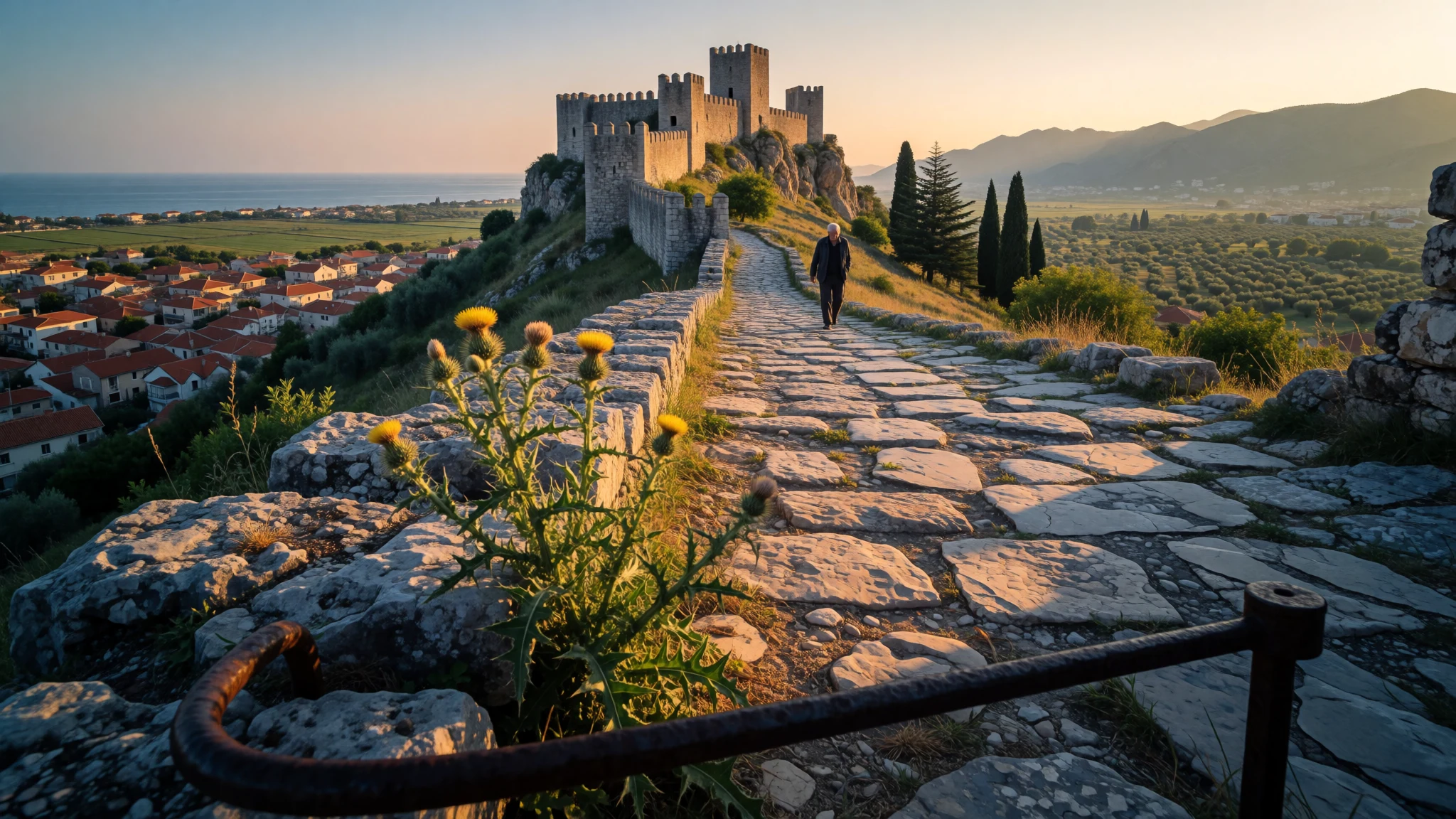
Lezhë is a small, unhurried Albanian town where Illyrian walls, Skanderbeg's memorial and a castle view sit within a short walk, near a good beach.
The place
Lezhë sits on flat, green ground in northern Albania, 10 m above sea level, with a castle hill rising abruptly over the town centre. It is a small city of roughly fifteen thousand people and the seat of Lezhë County, and it feels more like a working market town than a tourist stop. The municipality is wide. Farmland of the Zadrima plain lies to the north, the Pukë-Mirditë highlands to the east, the mouth of the Mat river to the south and the Adriatic coast to the west. That mix explains the place: orchards and vineyards on the flat, mountains always in view, and a sandy shoreline a short drive away at Shëngjin (St John), where many Albanians go for a summer swim. The centre is compact and walkable. Cafés cluster around the main square, the riverside is pleasant in the evening, and the Skanderbeg Memorial and the ancient ruins sit close together at the foot of the hill, so a first visit can be done on foot in a morning. Most travellers treat Lezhë as a pause between Shkodër in the north and Tirana in the south, helped by the newer motorway that passes beside the town. That undersells it, because the layers here are easy to read in a small space: Illyrian walls, Roman and Byzantine remains, a national hero's memorial and a castle with a long view. Crowds are rarely a problem except on summer weekends, when the coast fills up and traffic towards Shëngjin slows.
Its story
Lezhë has been occupied for a very long time, and the evidence is layered on one hill and the ground beneath it. Bronze Age swords found locally point to trade with Mycenaean Greece, and fortified settlement on the hill shows an Illyrian character from at least the eighth century BC. Walls of Illyrian construction survive, dated to the late fourth century BC, when the town, then called Lissos, was a stronghold of the Labeatai and a key place for the Illyrian kingdom. Its position near the mouth of the Drin mattered. Philip V of Macedon seized it to gain a route to the Adriatic, the Illyrians later won it back, and Rome took it after the fall of King Gentius. An ancient writer credits Dionysius of Syracuse with founding a city called Lissos, though modern scholars now place that colony elsewhere, near the island of Pharos. The best-known chapter came in 1444, when Skanderbeg gathered Albanian lords here in the League of Lezhë to resist the Ottoman Empire. He died in the town in 1468, and his memorial now stands on the site. Excavations around the acropolis and the memorial have uncovered Hellenistic, Roman and early Byzantine buildings and tombs, so the story is still being added to.
What to see
- Lezhë Castle (Kalaja e Lezhës) — Castle hill, above the town centre
The castle crowns the hill above the town and has been used by many rulers over the centuries. The climb is steep and exposed, but the reward is a full circle of views over the town, the Adriatic and the mountains. A few English information panels help. Go early or late in summer.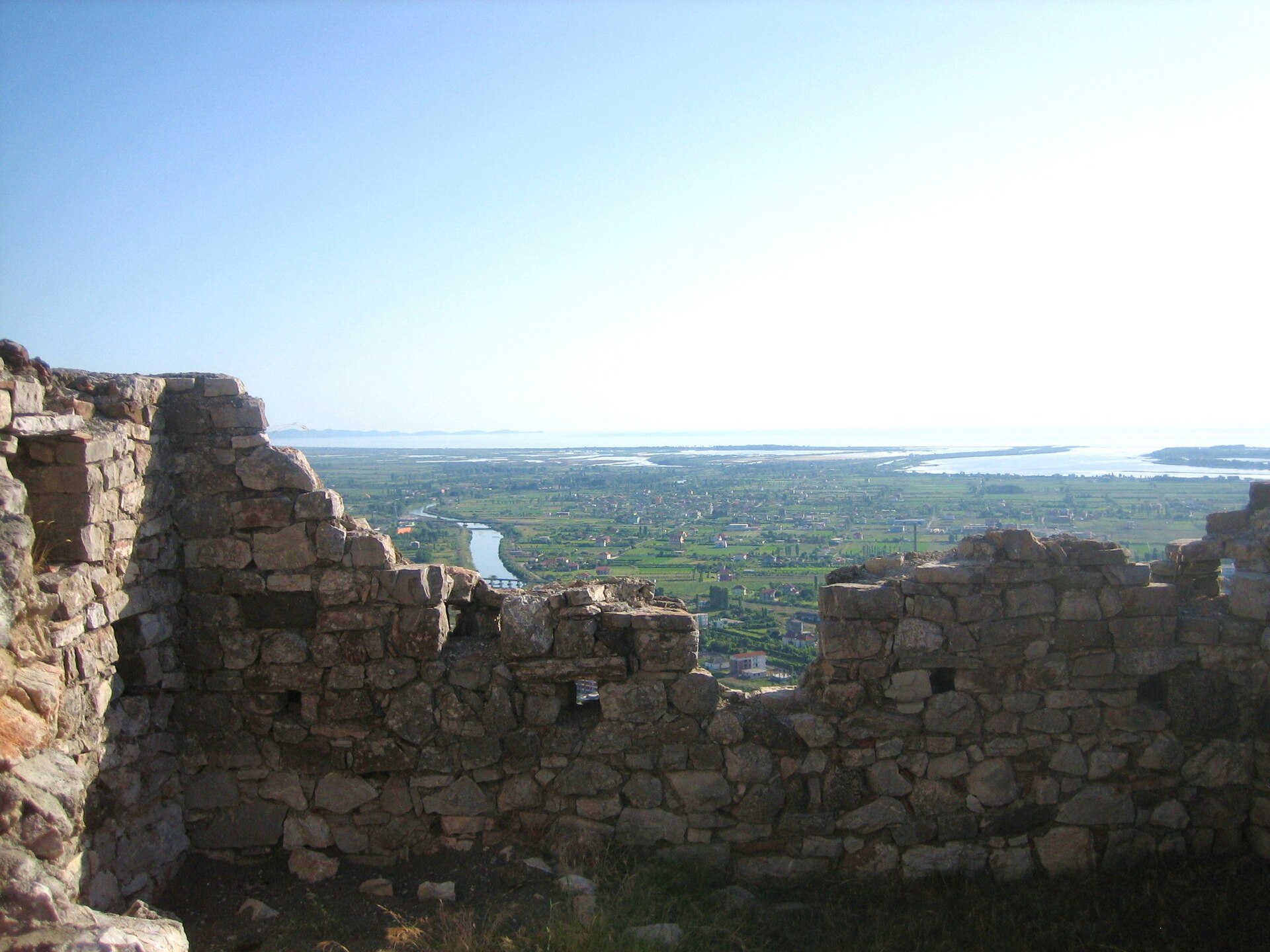
- Skanderbeg Memorial — Town centre, below the castle hill
This is the mausoleum of Skanderbeg, Albania's national hero, who died in Lezhë in 1468. The building was a church at one point and a mosque at another, and that double history is part of why it feels so quiet and plain inside. Allow time to read the displays around it.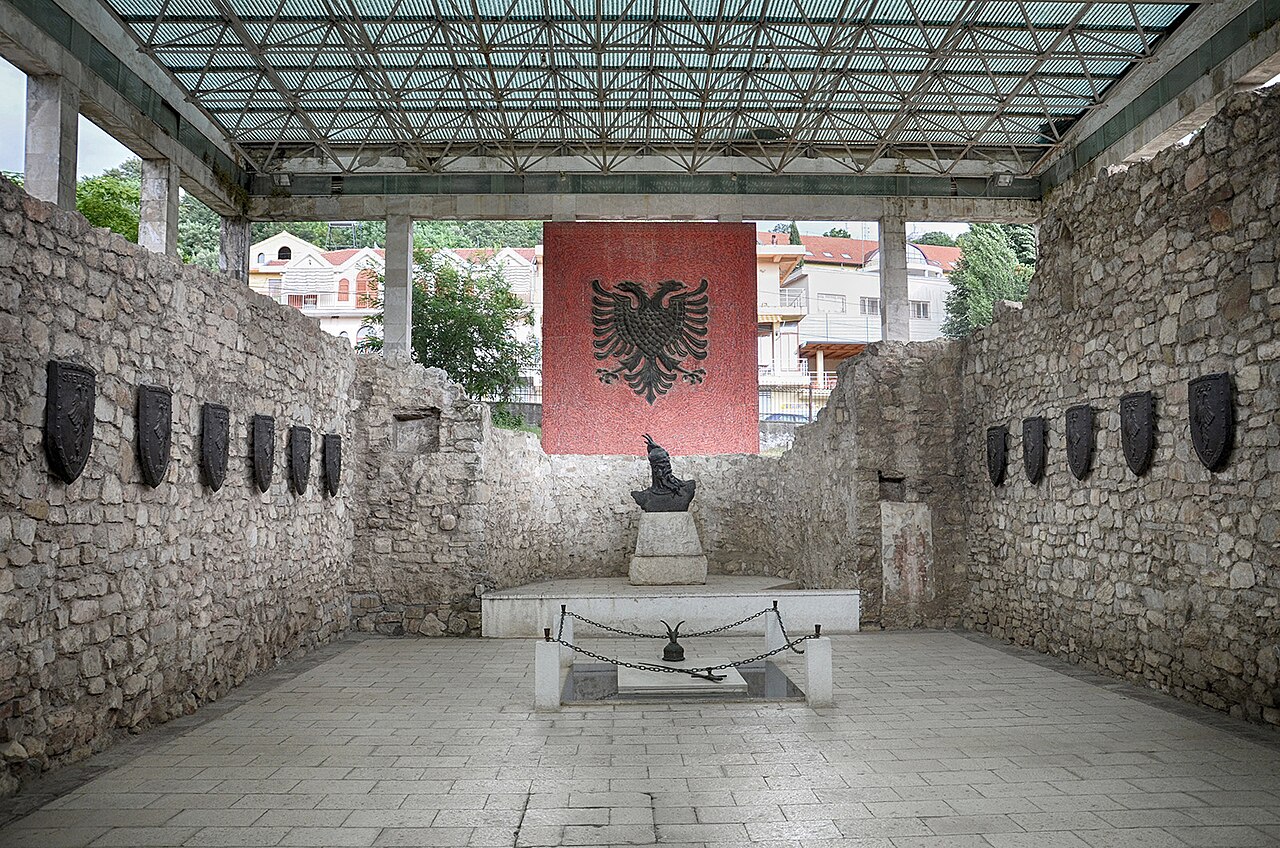
- Ruins of Lissos — Beside the Skanderbeg Memorial
Beside the memorial lie the excavated remains of ancient Lissos, a city held by many powers. Foundations, walls and tombs from Hellenistic, Roman and early Byzantine times can be traced on the ground. It rewards slow walking more than a quick look, and a couple of English panels give context. - Ethnographic Museum — Town centre, near the memorial
The town's ethnographic museum introduces local traditions, crafts and everyday life, which makes a good counterweight to the military and ancient history elsewhere. It is small, so it fits easily between the memorial and a coffee. Opening times change, so check the municipality website before going. - Tale beach — Coast, south-west of Lezhë
South-west of town, Tale has a long public beach with clean water and plenty of bars and eateries serving fresh food. It is quieter than the busiest resort strips, though weekends in July and August still draw families. A car or taxi makes the trip easiest.
Culture
Lezhë is bound up with Skanderbeg, and the town wears that lightly but proudly. The League of Lezhë in 1444 is remembered as a moment when separate Albanian lords agreed to act together, and the word besa, a pledge of honour, runs through local life. The local football club, KS Besëlidhja Lezhë, takes its name from that alliance, and the club also fields teams in basketball, wrestling and beach volleyball. The religious mix is visible too: the memorial has served as both church and mosque, and a Franciscan church stands in the town. Literature has a place here as well, and the house of the Franciscan writer Gjergj Fishta, in the countryside north of town, is protected as a cultural monument. Day-to-day culture is café-centred. Men and women alike spend long evenings over coffee or raki in the squares, and the evening stroll along the main street is a ritual in warm months. Archaeology is an ongoing local project, and residents tend to be glad when visitors take an interest in the ruins rather than only the beach. At the Skanderbeg Memorial, dress modestly, keep your voice low, and ask before photographing anyone who is praying or visiting the grave.
What to wear
Lezhë and the northern Albanian highlands have a strong tradition of wool and felt clothing. Men's dress has long included the white felt cap, the qeleshe, with woven wool trousers and embroidered waistcoats. Highland women wore layered wool dress, with aprons, sashes and, in the far north, the bell-shaped wool skirt known as the xhubleta. Today these outfits appear mainly at weddings, folk festivals, school performances and national days, often with silver or gold-thread embroidery. Everyday dress in town is much like elsewhere in southern Europe: jeans, shirts and trainers for most people, with noticeably smarter clothes for the evening promenade and for church or mosque. Football shirts are common on match days. Visitors need little special clothing, but a few choices help. Summers are hot, so light cotton, a hat and sunscreen matter, especially for the exposed castle climb. Shoes with grip are wise on the worn stone paths. Cover shoulders and knees for the memorial and any church or mosque, and carry a light scarf or shirt for this. Swimwear belongs on the beach at Shëngjin or Tale, not in town. In winter, bring a waterproof layer, because the plain can be wet.
What to eat
- Kallmet wine — Kallmet vineyards and village restaurants nearby
Kallmet is a local red wine made in the villages around Lezhë. It is often served simply, with grilled meat or cheese. Ask for it by name at a family-run restaurant or a roadside producer in the Kallmet area, and try a small glass before buying a bottle. - Fresh Adriatic fish — Harbour and seafront eateries in Shëngjin
Shëngjin, the seaside village close to Lezhë, is the place for grilled or fried fish and other seafood. Choose from what is on the day, and ask how it is sold before ordering. Summer evenings by the water are busy, so arrive early for a table. - Grilled meat and traditional plates — Grill restaurants around the town centre
Meat restaurants in Lezhë serve grilled lamb, beef and sausages with salad, bread and local sides. Traditional Albanian dishes appear alongside them. Portions are generous, so sharing works well. Vegetarians can usually assemble a meal from salads, cooked vegetables and cheese. - Byrek — Bakeries and corner shops in the town centre
Byrek is a flaky baked pastry filled with cheese, spinach or minced meat. It is a cheap, quick breakfast or snack and easy to eat on the move. Bakeries sell it warm in the morning, and it pairs well with plain yoghurt or strong coffee. - Zadrima farm specialities — Country restaurants north of Lezhë
Some restaurants in the countryside north of town focus on organic produce from the Zadrima and Kallmet farmland, including vegetables, cheeses, preserves and home-style cooking. The menu follows the season. It is worth the short drive for a slow lunch.
Plan it
Best time. May–June and September–October, when it is warm enough for the beach but less fierce than July and August. Summer afternoons on the castle hill are hot, and winters are wetter and quieter, with some coastal places closed.
How long. 1–2
Getting there. Fly to Tirana airport, then take a bus from Tirana's bus station towards the north; Lezhë is on the main road and motorway corridor to Shkodër. From Shkodër, a minibus (furgon) heading for Tirana can drop you in Lezhë. The train is intermittent, so do not rely on it. A hire car makes the coast and countryside easier.
Budget. low
Tips
- Climb the castle early morning or late afternoon in summer, and carry water
- Carry some Albanian lek in cash for buses, cafés and small eateries
- Ask locally about return bus times, as services change
- Summer weekends fill the coast, so reach Shëngjin or Tale before midday
- Check the municipality website, https://lezha.gov.al/, for museum and site hours
Etiquette
- Dress modestly and speak quietly at the Skanderbeg Memorial and in churches or mosques
- Ask before photographing people, especially at religious sites
- Accept a coffee or raki offered by a host, and a polite sip is welcome
Nearby
Sources
- Wikidata Q169160 (CC0)
- Wikipedia: Lezhë (rev 1384692697) (CC BY-SA 4.0)
- Wikivoyage: Lezhë (rev 5426431) (CC BY-SA 4.0)
- View of Lezhë from Lezhë Castle hill — Belgian man (Public domain)
- The Skanderbeg Memorial in Lezhë — Pasztilla aka Attila Terbócs (CC BY-SA 4.0)
- Biblioteka Lezhë — Xhevahir Bushpepa (CC BY 3.0)
- The memorial of the 1444 Lezhë Assembly — Pasztilla aka Attila Terbócs (CC BY-SA 4.0)
- Kisha françeskane Lezhe — Xhevahir Bushpepa (CC BY 3.0)
- Lezhë Castle with a view on the city — Gertjan R. (CC BY 3.0)
- Varri i Skënderbeut & Kalaja — ShkelzenRexha (CC BY-SA 4.0)
- View of hill with Lezhë Castle — Belgian man (Public domain)


