Lesbos
Lesbos, Greece
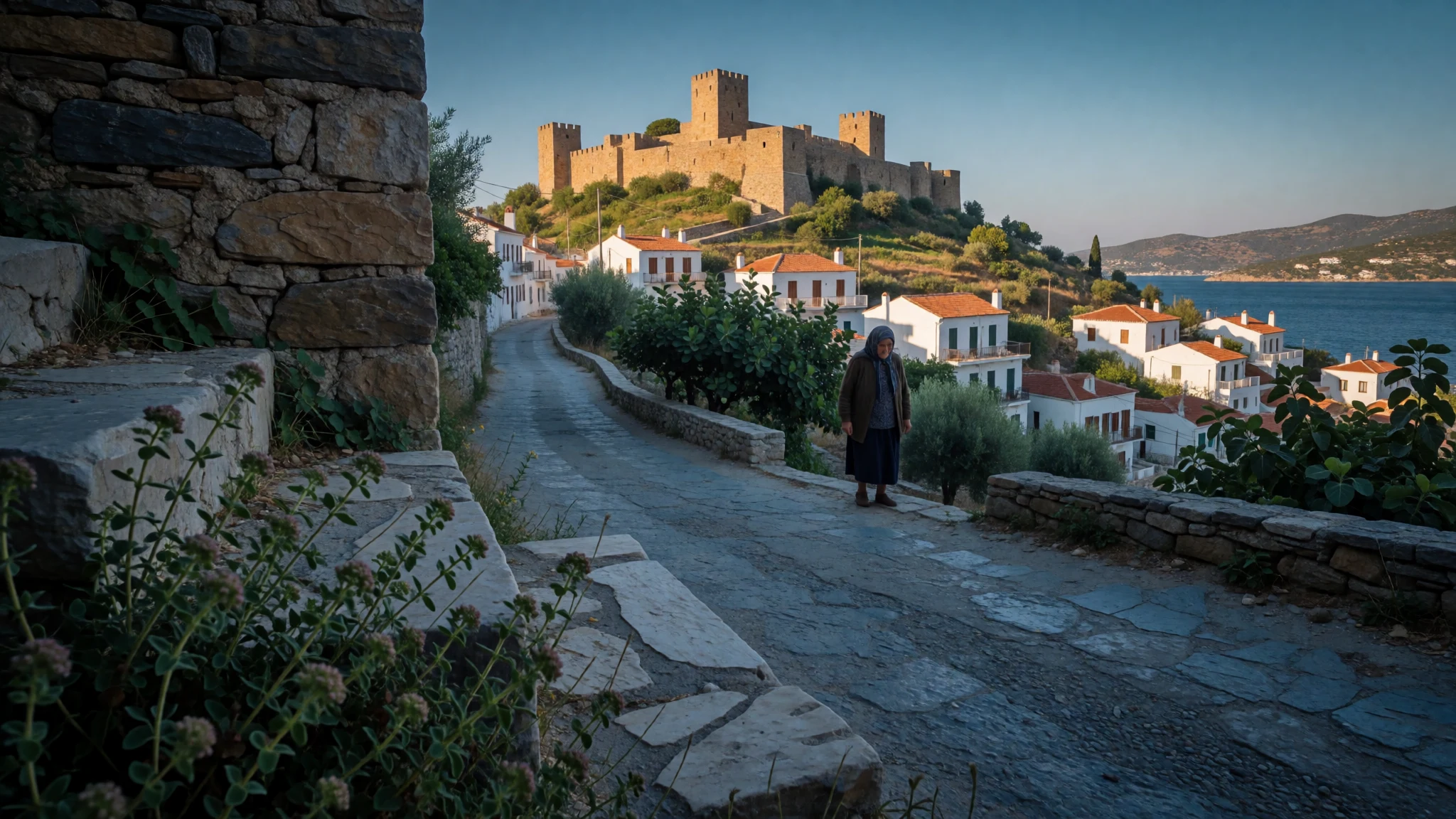
Lesbos is a large, unhurried Aegean island of olive groves, ouzo distilleries, hot springs and a fossil forest, facing the Turkish coast.
The place
Lesbos lies in the north-eastern Aegean, so close to Turkey that only the narrow Mytilini Strait separates the two shores. It is a big island with a deeply indented coastline, and it feels like several places stitched together: a busy port town on the east, hill villages under pine and chestnut, olive terraces that seem to go on for ever, and a dry, treeless west of volcanic rock. The highest point reaches 968 m. Mytilene (Μυτιλήνη) is the capital and largest town, and its name is often used for the whole island. About a third of residents live there, and the island's population is roughly 83,800, so everywhere else life is spread across small towns and villages such as Plomari, Agiasos, Eresos, Molyvos and Polichnitos. Mytilene is also the seat of the wider North Aegean region, which takes in Chios, Samos, Ikaria and Lemnos. The climate is hot-summer Mediterranean: long sunny days, dry heat from June to September, and mild, wetter winters in which snow is rare. Distances are real. Driving from the capital to the far west takes a good part of a morning on winding roads, so most visitors choose one base and explore from there. Molyvos in the north suits those who want a castle and stone lanes. Plomari in the south has distilleries and beaches. Eresos in the west has a long shore and a literary reputation, as it is traditionally linked with the poet Sappho. Tourism is gentler here than on the Cyclades, and many visitors are Greek families. Even so, August brings heat and crowds, while spring and autumn are calmer. The island has also been a landing point for refugees crossing from Turkey, which residents discuss openly.
Its story
Lesbos has been inhabited for several thousand years. Excavated sites include a Neolithic cave used by shepherds, the Bronze Age settlement at Thermi, and a coastal settlement at Lisvori that is now partly underwater. In documents dating back to the Late Bronze Age, the Hittites referred to the island as Lāzpa, and a single letter mentions a group of purple-dyers who fled from a monarch on the mainland. Greek myth gave the island its own founding figures, among them Macareus of Rhodes, whose many daughters were said to have lent their names to towns. Later writers held that Mytilene was settled by the Penthilid family from Thessaly. They ruled the city-state until a popular revolt led by Pittacus ended their hold. Lesbos then became known for its poets. Sappho and Alcaeus wrote here, and Victorian painters such as Lawrence Alma-Tadema liked to imagine them together. Early coins struck by the island's league of cities survive in museum collections. Afterwards the island passed to the Roman and Byzantine empires, and traces of the Roman period remain, including the arches of an aqueduct near Moria. The medieval fortress above Mytilene recalls the Genoese era, when Italian merchants and lords controlled much of the Aegean. In the modern period the island joined Greece, and its position beside the Turkish coast has shaped everything from trade to migration. Layers of that long history sit close together, so a single day can take in a Bronze Age site, a Roman arch and a Genoese wall.
What to see
- Mytilene Castle — Mytilene, east coast
The Genoese-era fortress stands on a wooded promontory beside Mytilene's harbour, with thick walls, towers and open lawns running down towards the sea. It makes an easy half-day alongside the old town below. Check the official site for opening arrangements, and bring a hat, since shade inside the walls is patchy in summer.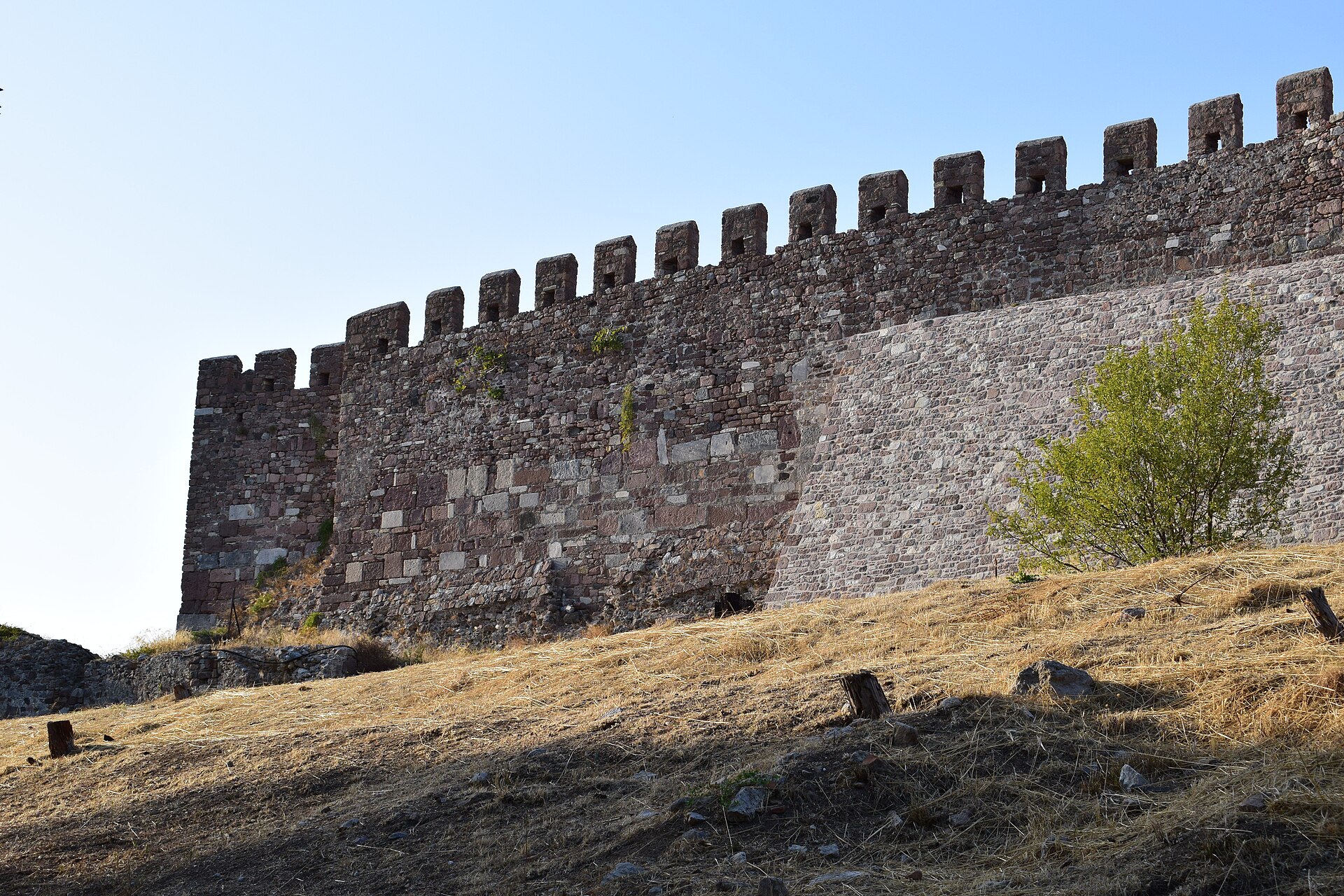
- Molyvos — North coast
Molyvos, the ancient Mythimna, is a stone village climbing a hill towards a medieval fort. Lanes of old houses drop to a small harbour lined with cafés, and the castle looks across the strait to the Turkish coast. It is polished and popular, so summer evenings get busy; mornings are quieter. - Agiasos — Mount Olympos, centre-south
Agiasos clings to the north-eastern slope of Mount Olympos, a village of steep cobbled lanes, old balconied houses and shaded cafés. It is cooler than the coast in summer, which makes it a good lunch stop on an inland drive. Shoes with grip help, as the stones are worn smooth. - Petrified forest and Sigri — West coast
Fossilised tree trunks lie scattered across the dry volcanic ground of the west, near the fishing village of Sigri. A small geological museum in the village explains how the forest was preserved. Allow a long day for the slow road, and carry water, because there is almost no shade. - Eftalou thermal baths — North coast, near Molyvos
A short drive from Molyvos, hot spring water feeds old stone bathhouses beside a pebble beach. Bathing in the warm pools after a swim in the sea is a local habit, and it suits cooler months best. Check the official site or ask locally about opening times before going.
Culture
Lesbos has a strong village culture built around the kafeneio, the coffee house where men and increasingly everyone else sit for hours over a small coffee or a glass of ouzo. Coffee is served almost everywhere, and alcohol is sold in most village cafés as well as in the bars near Mytilene's ferry quay. Ouzo is the island's signature spirit, and Plomari is the town most associated with its distilleries. Daily rhythm follows the heat: shops close in the afternoon, and evenings are long, social and late. Church festivals in summer bring music, shared food and dancing in village squares, and visitors who join in politely are usually welcomed. Poetry is part of the island's identity, from Sappho and Alcaeus in antiquity to the twentieth-century poet Odysseas Elytis, whose name the airport carries. The island has also appeared on screen, in films such as Daphnis and Chloe and in the video game Assassin's Creed Odyssey. Because Lesbos sits so close to Turkey, there are military installations along parts of the coast, and the arrival of refugees has made the subject of migration a sensitive one in conversation. Locals tend to be direct about it, and listening works better than offering opinions. Do not photograph military compounds or bases, and ask before photographing people in village cafés.
What to wear
Lesbos has a tradition of village costume, worn mainly at church festivals, folk-dance performances and national holidays rather than daily. Typical pieces in Aegean island dress include embroidered bodices, long pleated skirts, aprons, and head-scarves, made from wool, linen, cotton and sometimes silk, with colour and embroidery varying from village to village. Older women in some villages still favour dark, practical clothes and a scarf, but costume is now mostly a matter of pride and display. Day to day, people on Lesbos dress as they would elsewhere in Greece: linen shirts and light trousers in summer, jeans and jackets in winter, and smart-casual clothes for an evening in Mytilene. Fishermen and farmers wear work boots and caps. Visitors will be comfortable in light, breathable clothes in summer, with a hat and sunglasses, because the sun is strong and shade is scarce. Bring a layer for windy evenings and for spring and autumn. Footwear matters more than fashion: the castle paths, village lanes and fossil sites reward sturdy sandals or trainers with grip. Swimwear is for the beach and hot springs only, so cover up in villages and cafés. For churches and monasteries, wear shoulders and knees covered; carry a light scarf or shirt in your bag.
What to eat
- Ouzo — Plomari distilleries and village kafeneia
The aniseed spirit is the island's calling card, and Plomari is the town best known for making it. It is usually sipped with water, which turns it cloudy, alongside small plates of seafood, olives or cheese rather than on its own. - Sardeles from Kalloni — Seafront tavernas around the Gulf of Kalloni
Small sardines from the shallow Kalloni gulf are grilled or fried and eaten whole with lemon and bread. They are best at simple harbourside tavernas, where the catch is local and the menu is short. Order them with a glass of ouzo. - Ladotyri Mytilinis — Village dairies, delicatessens and Mytilene market shops
A firm, salty cheese traditionally stored in olive oil, with a sharp flavour that works grated over pasta or eaten in thick slices with tomatoes. Buy it from shops in Mytilene or directly from producers in the villages. - Skafoudes and sougania — Family tavernas in inland villages
Stuffed aubergines and stuffed onions are home cooking at its most generous, filled with rice, herbs or minced meat and baked until soft. They appear in village tavernas and are usually the best choice for vegetarian-leaning diners when made without meat. - Kydonato and selinato — Traditional tavernas and home-style kitchens
Slow-cooked meat dishes, with quinces in kydonato and celery in selinato, are cold-weather food that shows how local produce shapes the table. Ask what is cooking that day, as these dishes appear more in autumn and winter. - Finikia and amygdalota — Pastry shops in Mytilene and village bakeries
Finikia are sweet, spiced biscuits and amygdalota are soft almond sweets, both made for celebrations and eaten with strong coffee. Pastry shops in Mytilene sell them by weight, which makes them easy to share or take home.
Plan it
Best time. May–June and September–October, when the days are warm, the sea is swimmable and crowds are thinner. July and August are hot and busy, and winters are mild but wetter, with many seasonal businesses closed.
How long. 5–7
Getting there. Odysseas Elytis airport lies just south of Mytilene, with regular flights from Athens and Thessaloniki and charter flights in season; a local bus runs from Sappho Square in the capital. Ferries from Piraeus call at Chios and take a long daytime or overnight crossing. A seasonal ferry links Ayvalık in Turkey, so check current operators and timetables before booking.
Budget. mid
Tips
- Hire a car if you want to see more than one area, because bus links to the west and north are limited
- Book summer ferries and flights early, especially around the August holiday period
- Carry cash for small village shops and cafés, and fill water bottles before long drives
- Start walks and sightseeing early, as midday heat in summer is strong and shade is scarce
- Check the island website, lesvos.gr, for local events and opening arrangements
Etiquette
- Cover shoulders and knees when entering churches and monasteries
- Do not photograph military compounds or bases
- Greet people when entering a village café or shop
Nearby
Sources
- Wikidata Q128087 (CC0)
- Wikipedia: Lesbos (rev 1383638130) (CC BY-SA 4.0)
- Wikivoyage: Lesvos (rev 5336940) (CC BY-SA 4.0)
- Mytilene 2010-04-03, Koutrolm (Public domain)
- Locator map for Lesbos municipality, Pitichinaccio (CC BY 3.0)
- Lesbos Koinon coin, Classical Numismatics Group (CC BY 3.0)
- Sappho and Alcaeus, Sir Lawrence Alma-Tadema (Public domain)
- Roman aqueduct of Moria, PanosMtln (CC BY-SA 4.0)
- Map of Lesbos (Metileme), Giacomo Franco (CC BY 3.0)
- Mytilene Castle, ProtecTOR (CC BY-SA 4.0)
- Topography of Lesbos, Zamonin (CC BY 3.0)


