Leicester
Leicester, United Kingdom
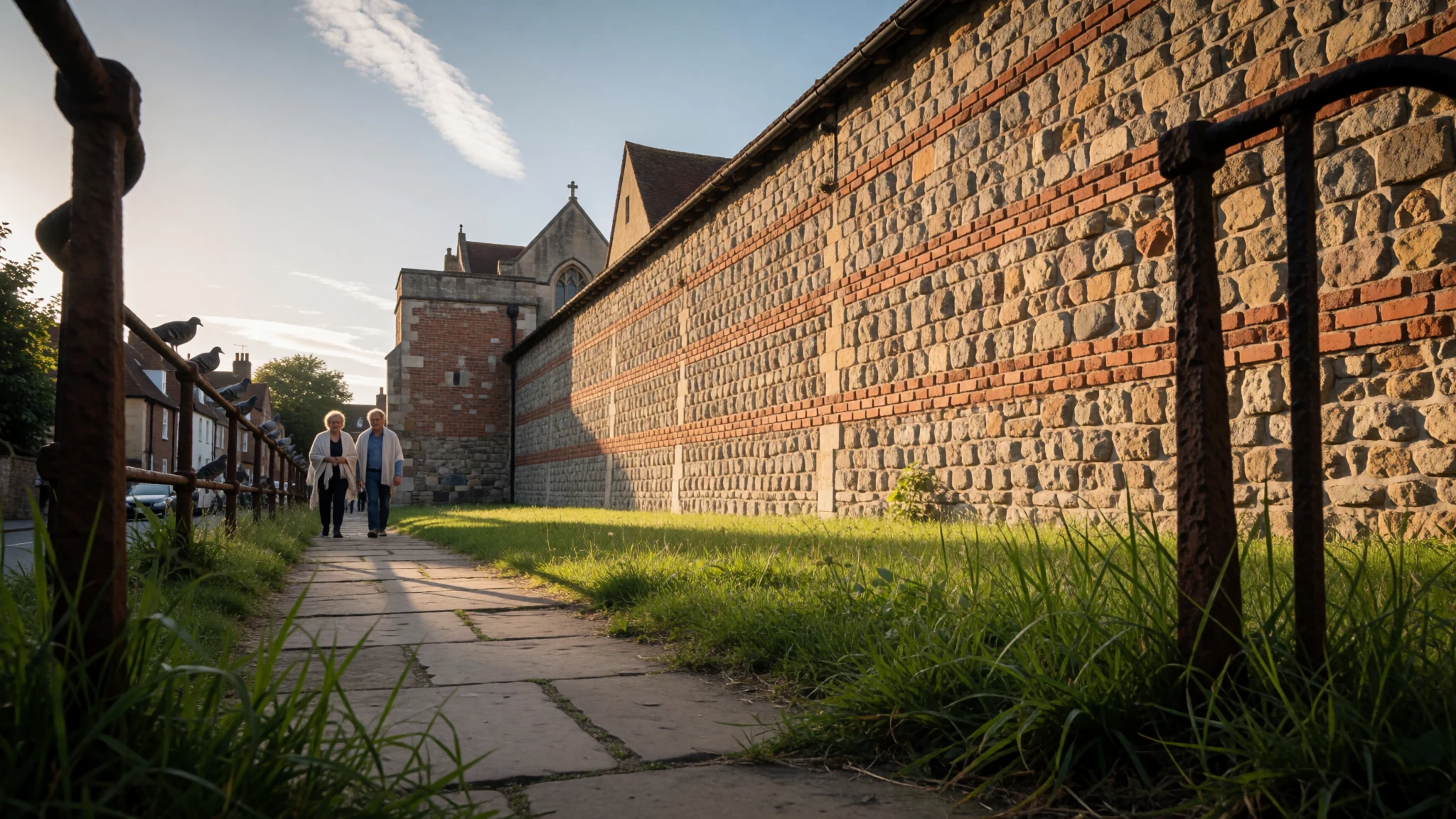
Leicester is a compact East Midlands city where Roman walls, a king's tomb and Gujarati street food all sit within easy reach.
The place
Leicester sits on the River Soar in the East Midlands of England, about 140 km north-north-west of London and 67 m above sea level. Around 370,000 people live in the city, and the built-up area runs well beyond its boundary, which gives the place the feel of a busy regional centre rather than a postcard town. Nottingham, Derby, Coventry and Birmingham all lie within about 53 km, and the eastern end of the National Forest is close by. The middle of the city is compact and flat enough to cover on foot. A medieval cathedral, a stretch of Roman bath-house wall, timber-framed halls and Victorian civic buildings stand within a short walk of one another, with shopping streets and a market threading between them. Further out, the city's character comes from its communities. A large South Asian population, many with Gujarati roots, shapes the east side, where sari shops, jewellers and snack counters line Belgrave Road and the road that continues from it. Older industry, mainly hosiery, knitwear and shoes, left brick mills and canal-side warehouses, some now turned into flats and studios. Leicester is not a city of one headline sight, and anyone expecting one will be puzzled. Its appeal is accumulation: Roman, medieval, Victorian and modern fragments side by side, a food scene built around its migrant history, and a pace that is easier than London's. The weather is typically English, meaning mild, changeable and often grey, so a day here works best with a few indoor stops planned in.
Its story
Leicester's story starts before the Romans. An Iron Age settlement grew here in the last couple of centuries BC, with round houses clustered on the east bank of the Soar, where the river split into two channels around a marshy island and a ford gave control of the crossing. The Roman name, Ratae Corieltauvorum, joins a Celtic word usually read as 'ramparts' to the name of the local tribe, whose spelling was garbled in later records until an inscription found in 1983 set it straight. Under Rome the settlement became a proper town with streets, a forum and public baths, and the tall fragment of masonry now called the Jewry Wall is what survives of the bath complex. After the Roman centuries the town passed through Anglo-Saxon and Danish hands before the Normans built a castle, and the churches of St Nicholas and St Mary de Castro preserve strands of that long medieval thread. The best-known medieval footnote came in 1485, when Richard III was killed at the Battle of Bosworth, a short distance to the west. His body was brought to Leicester and buried locally, and the grave was forgotten until archaeologists found a skeleton beneath a car park in 2012 and DNA tests confirmed his identity. Hosiery, knitwear and shoe-making drove the Victorian expansion, and in the twentieth century families arriving from South Asia and East Africa added the layer that defines the city today.
What to see
- Leicester Cathedral — City centre, The Cathedral Quarter
Leicester Cathedral, formerly the parish church of St Martin, was heavily rebuilt in the Victorian period and became a cathedral in the early twentieth century. Its main draw is the grave of Richard III, an unfussy block of pale stone in the chancel. Midweek the nave is often quiet, and the stained glass rewards a slow look.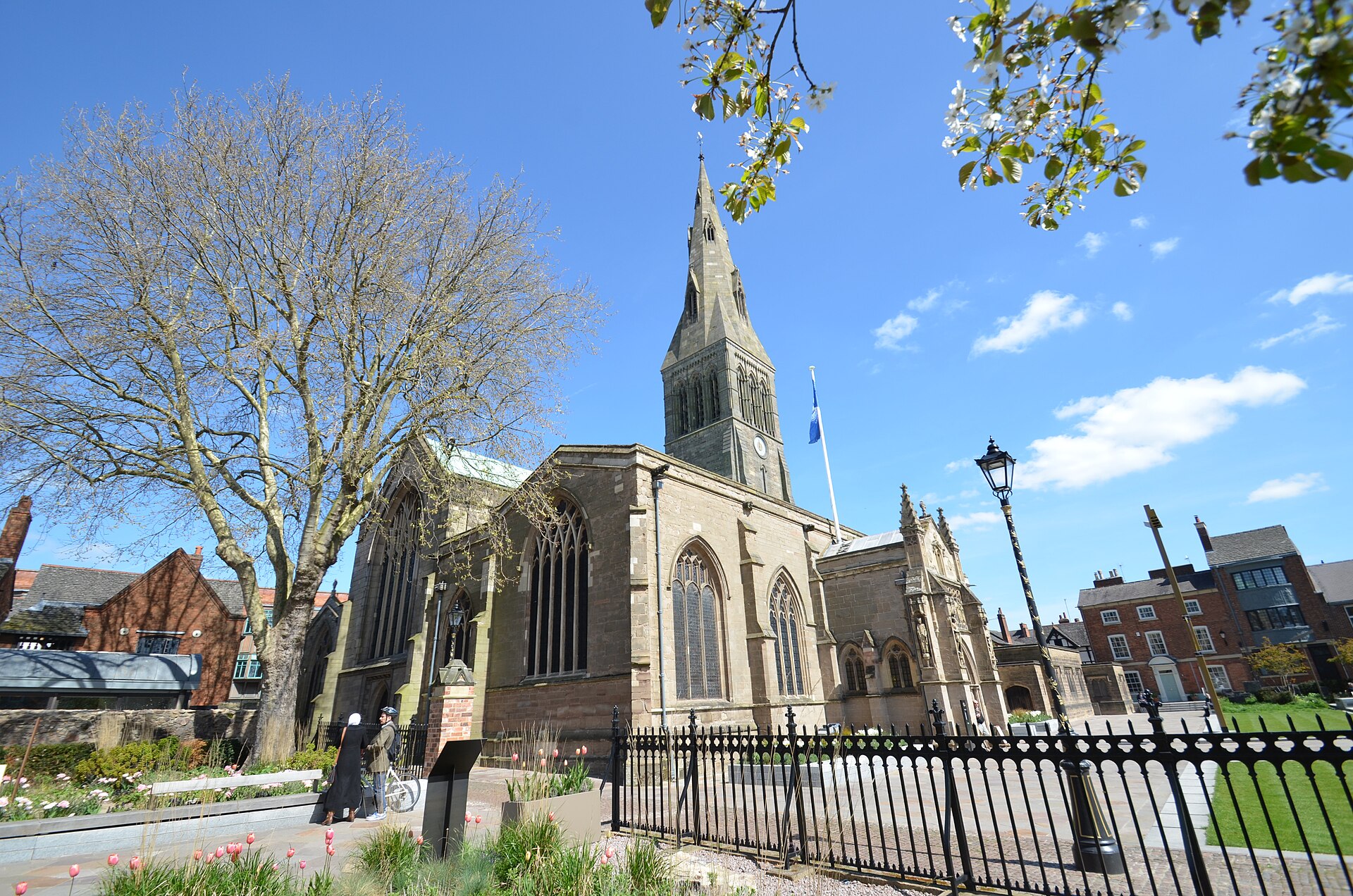
- King Richard III Visitor Centre — City centre, next to the cathedral
The King Richard III Visitor Centre stands beside the former car-park site where the king's skeleton was found, in a converted school building. Exhibits follow his short reign, the battle of 1485, and the 2012 detective work that identified him from his bones and DNA. It makes a useful first stop before seeing the tomb. - Jewry Wall and museum — West of the centre, by the River Soar
The Jewry Wall is a tall run of Roman masonry beside St Nicholas Church, left over from the public baths of the old town of Ratae. The name is medieval and says nothing about who built it. The adjoining museum tells early Leicester through finds dug up nearby. Check the council site for opening days.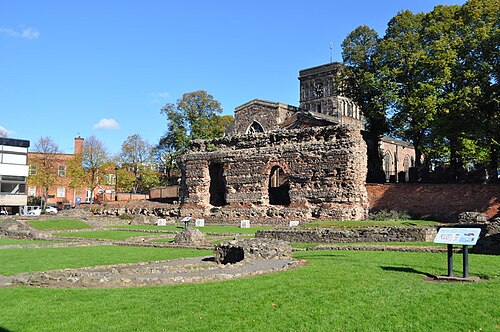
- Guildhall — City centre, Cathedral Quarter
The Guildhall is a timber-framed hall from the late fourteenth century, tucked beside the cathedral. Over the centuries it has served as a town hall, a meeting place, a performance space and a jail. Small rooms, uneven floors and dark beams give it more character than size. Opening days change, so check leicester.gov.uk first. - National Space Centre — Belgrave, north of the centre
The National Space Centre sits on the northern edge of the city, its rocket tower visible from some distance. Real spacecraft, hands-on galleries and planetarium shows suit families and anyone curious about spaceflight, and a visit can take most of a day. Ticket details and times are on its official site.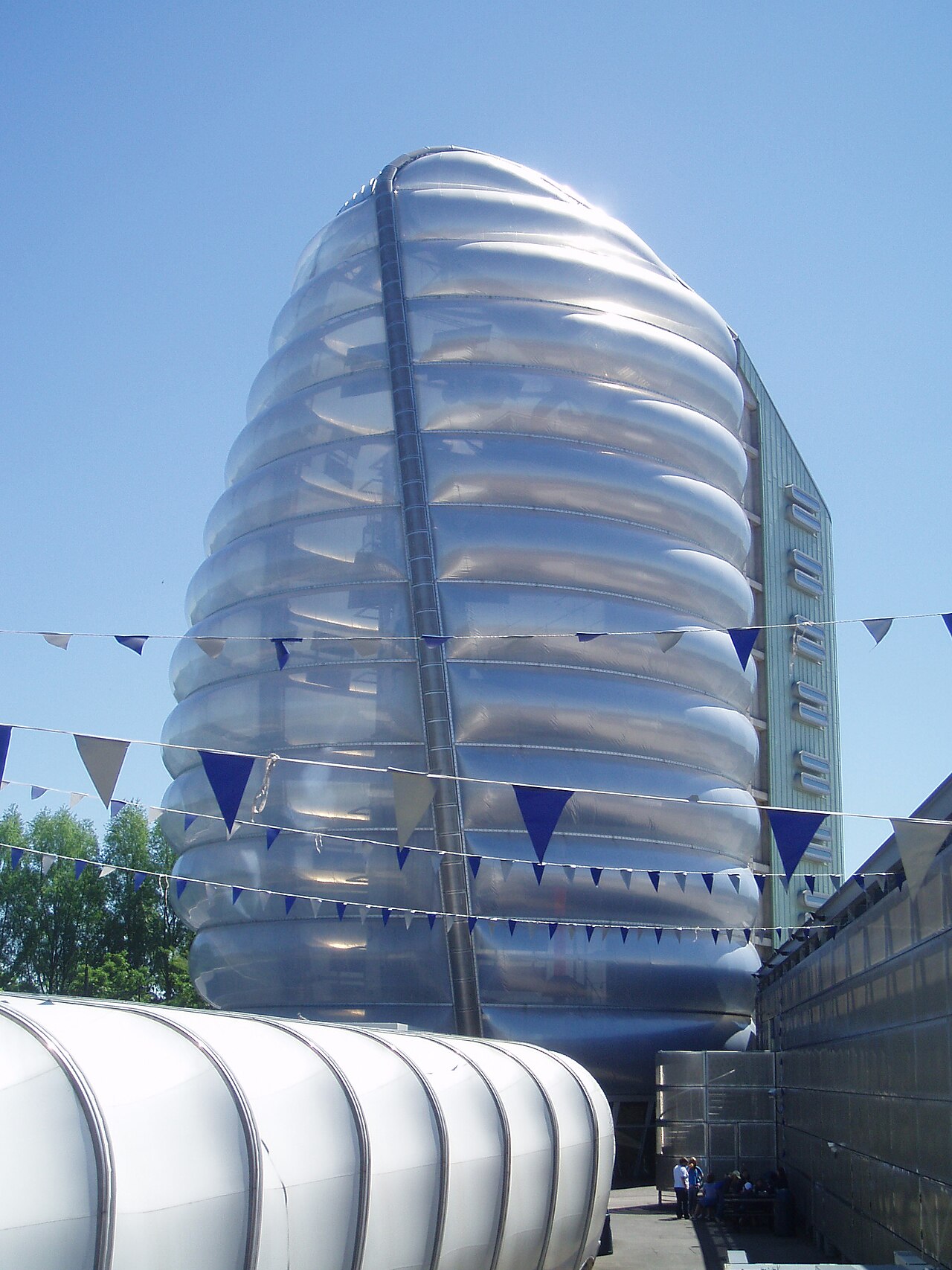
- Newarke Houses Museum and Magazine Gateway — Newarke, south-west of the centre
Newarke Houses Museum fills two historic houses near the old castle precinct and follows local life from Tudor rooms to a street scene from the 1950s, with the story of the county's regiment. Close by, the Magazine Gateway once formed the grand entrance to the religious enclosure called the Newarke. Check opening days online.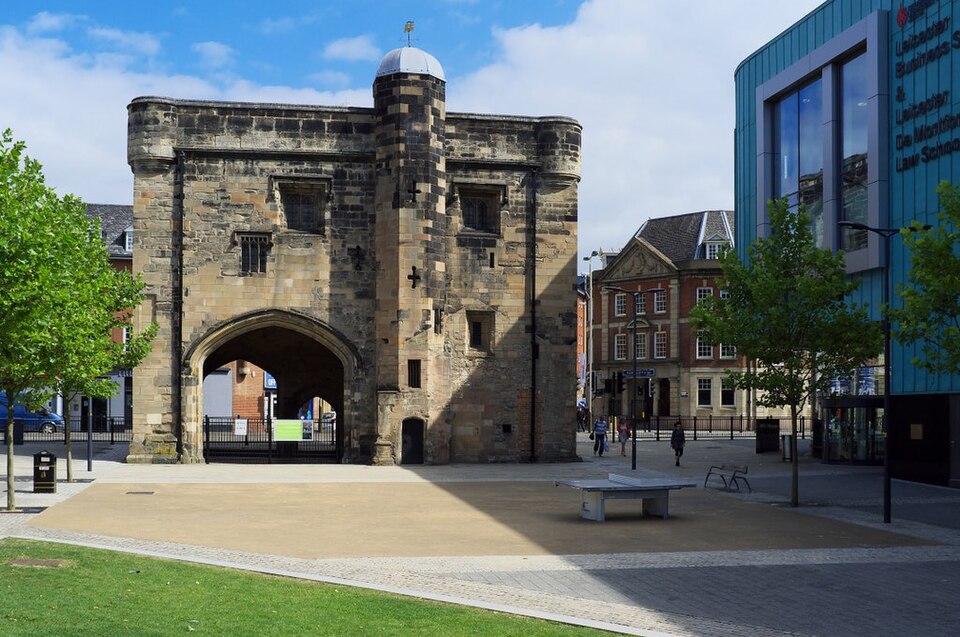
Culture
Leicester's culture is best understood as layers of faith, trade and community packed into one compact city. Churches set the older tone: the cathedral is the seat of the Church of England's Bishop of Leicester, and St Nicholas, beside the Roman wall, keeps traces of building work from before the Norman Conquest. Alongside them stand Hindu temples, mosques, gurdwaras and Jain centres, a sign of the large South Asian presence that has shaped the city since the later twentieth century. The calendar reflects this. In autumn, Diwali brings lights, music and crowds to the Belgrave Road area, and in summer a Caribbean carnival fills the streets with sound systems and costumes. The performing arts have a modern home at Curve, a glass-fronted theatre designed by Rafael Viñoly that opened in 2008, while football and rugby give the city its weekend rhythm. The Richard III story has become a point of local pride, and guides, cafés and shops lean on it cheerfully. Conversation is usually direct and friendly, with a dry East Midlands humour, and older locals may still call a stranger 'duck' without meaning anything by it. When visiting a temple, mosque or gurdwara, remove your shoes where others do, cover your shoulders and knees, and ask before photographing worshippers.
What to wear
Leicester's traditional dress comes mostly from its South Asian communities. Women wear saris in silk, cotton or georgette, often with zari (metallic thread) borders, and salwar kameez or lehenga for weddings, Diwali and temple visits. Gujarati families favour bandhani, the tie-dyed cotton and silk made by pinching and binding the cloth before dyeing. Men wear kurta or sherwani at weddings and festivals. The city also has a local textile story of its own, since hosiery and knitwear were its great trades, and knitted goods still turn up in shops. In daily life most people dress as they would anywhere in England: jeans, trainers, practical coats, and football or rugby shirts on match days. Students from the city's two universities add a casual, cheap-and-cheerful look. On Belgrave Road, bright festival clothes mix with ordinary office wear, especially in the weeks before Diwali. Visitors need layers and a waterproof, since the weather changes quickly in every season, plus comfortable shoes for a day on paved streets. Light cotton and sun cream suit the warmer months, and a proper coat is needed from late autumn. For temples, mosques and gurdwaras, bring clothes covering shoulders and knees, a scarf for covering the head where asked, and shoes that slip off easily.
What to eat
- Gujarati thali — Vegetarian eateries along the Golden Mile on Belgrave Road
A thali is a steel plate of small servings: dal, a couple of vegetable dishes, rotli or puri, rice, pickle and something sweet. Leicester's Gujarati vegetarian eateries serve it generously, and one plate makes a full meal that changes with the season. - Chaat and street snacks — Snack counters and small cafés on Belgrave Road
Chaat is the savoury snack course: crisp puris filled with potato and chickpea, samosas under yoghurt and chutneys, or steamed dhokla made from fermented gram flour. Order a few plates to share and expect sweet, sour and hot notes in every bite. - Indian sweets (mithai) — Sweet shops along Belgrave Road and Melton Road
Sweet shops sell jalebi, barfi, gulab jamun and milk-based laddus by the box. Boxes are given as gifts at Diwali and weddings, and the counters are busiest then. Sampling a few pieces is easier on the stomach than buying a whole box. - Red Leicester cheese — Delicatessen counters and stalls in the city's market
Red Leicester is the county's best-known cheese, hard, crumbly and tinted deep orange with annatto. The flavour is gentle and nutty, and it suits a ploughman's lunch or cheese on toast. It travels well, so it makes an easy edible souvenir. - Melton Mowbray pork pie — Butchers, bakers and market stalls; also pub menus
The pork pie from nearby Melton Mowbray has a bow-sided hand-raised crust and grey, peppery, uncured meat, and it is usually eaten cold with mustard or pickle. It is a pub-lunch and picnic staple across the county. - Afternoon tea — Tea-rooms and cafés in the city centre
A pot of tea with scones, jam and cream, plus sandwiches and cake, is a gentle way to rest tired feet between sights. The centre has traditional tea-rooms alongside modern cafés, and many are quieter on weekday afternoons.
Plan it
Best time. May to September is the mildest stretch and best for walking between sights. Diwali, in October or November, brings lights and crowds to the Golden Mile. Winters are cold, damp and short on daylight, and rain can fall in any month.
How long. 1–2
Getting there. Trains from London St Pancras run about every 30 minutes and take around an hour; trains from Birmingham New Street also run every 30 minutes and take about an hour. For flying in, Birmingham Airport (BHX) has the widest range of routes, with a train via New Street, while East Midlands Airport (EMA) has a bus link. The station is a short walk from the centre.
Budget. mid
Tips
- Check opening days and ticket details for museums on the council's site, leicester.gov.uk, before setting out.
- Walk the cathedral, Richard III centre, Guildhall and Jewry Wall in one day; the Space Centre deserves a separate half day.
- Go to the Golden Mile on a weekday for a calmer look, or on a weekend or at Diwali for the busiest atmosphere.
- Carry a waterproof layer in any season, as the weather changes quickly.
- Keep a little cash for market stalls and small cafés, though cards and contactless are widely accepted.
Etiquette
- Remove shoes at temples, gurdwaras and mosques where others do, and cover shoulders and knees.
- Ask before photographing worshippers or people at their market stalls.
- Keep voices low in the cathedral and stand back from the tomb of Richard III when services are in progress.
Nearby
Sources
- Wikidata Q83065 (CC0)
- Wikipedia: Leicester (rev 1384633071) (CC BY-SA 4.0)
- Wikivoyage: Leicester (rev 5388007) (CC BY-SA 4.0)
- Leicester landmarks montage (CC BY 3.0)
- Leicester Clock Tower wide view, NotFromUtrecht (CC BY 3.0)
- National Space Centre, Leicester, Ned Trifle (CC BY-SA 2.0)
- Leicester Cathedral, Jules & Jenny (CC BY 2.5)
- Jewry Wall - Roman Baths, Ashley Dace (CC BY-SA 2.0)
- Curve Leicester full panorama, NotFromUtrecht (CC BY 3.0)
- Town Hall and Horsefair Street, Ruth Sharville (CC BY 2.0)
- The Magazine Gateway, Leicester, Daveleicuk (CC BY-SA 4.0)


