Lahti
Lahti, Finland
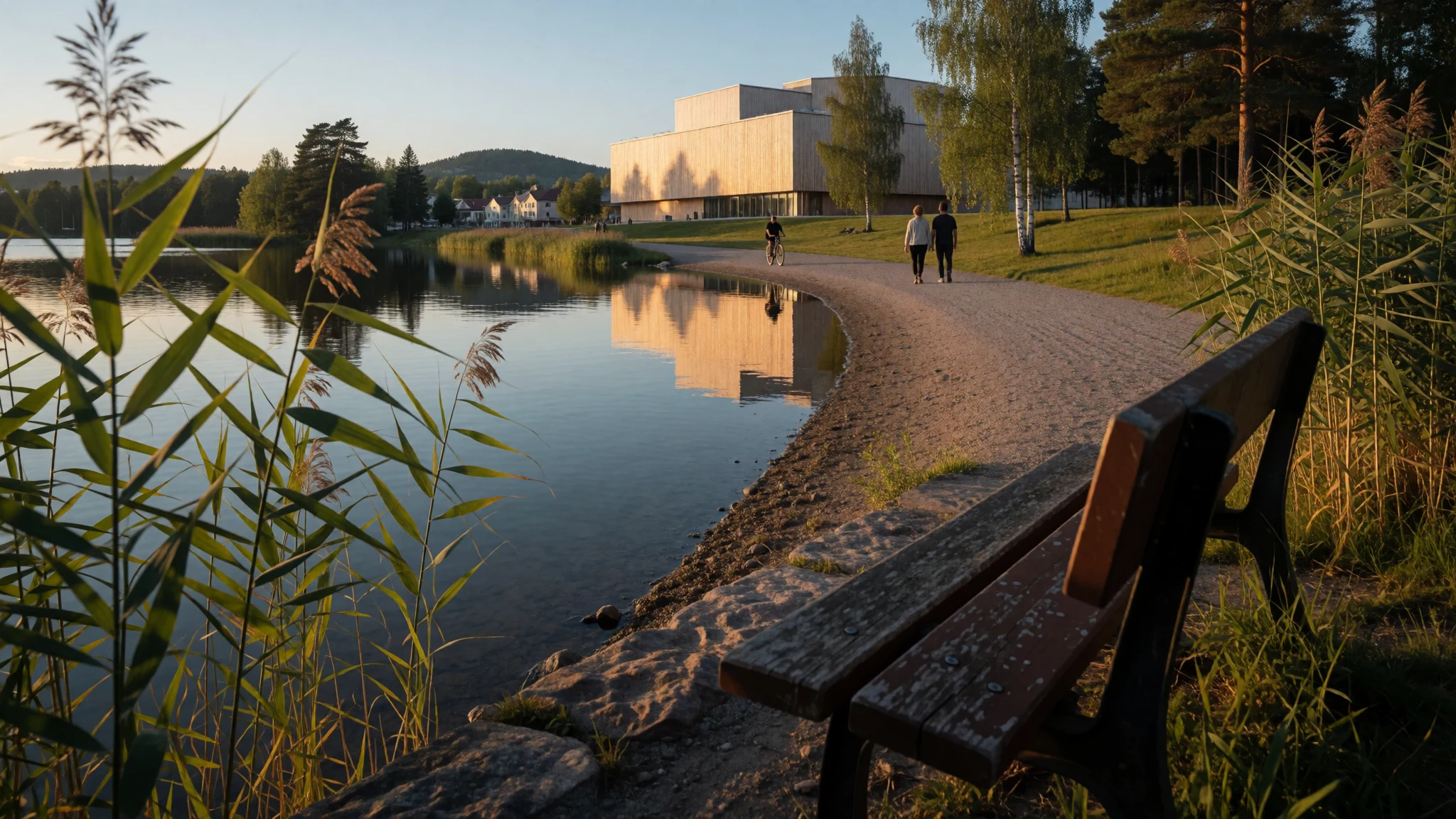
Lahti is a lakeside Finnish city of ski jumps, a wooden concert hall and an Aalto church, an easy hour from Helsinki.
The place
Lahti sits at the southern tip of Lake Vesijärvi, in the Finnish Lakeland, about 100 km north-east of Helsinki. Its name means 'bay', which suits the setting: the town grew where the water curls into a sheltered inlet, with low ridges rising behind it. It is the regional capital of Päijät-Häme, with a population of about 122,000 and an elevation of 122 m. Two major roads cross here, one running between Helsinki and Jyväskylä and the other between Tampere and Kouvola, so plenty of people pass through and far fewer stop. That is a pity, because the centre is compact and walkable. A grid of wide streets, laid out in the nineteenth century, still organises the middle of town, with the harbour on the lake side and the ski-jump towers watching from the ridge. Distances are short, and a day on foot covers the harbour, the centre and the lakeshore. Lahti has built a reputation for environmental policy and was European Green Capital in 2021. It is also the base of the Salpausselkä UNESCO Global Geopark, added to the world list in 2022, which takes in the ridges of glacial gravel running across southern Finland. Expect a working city rather than a postcard: concrete and brick sit beside timber, and the best views are of water and forest rather than old streets. Summer brings long light, paddle steamers and harbour markets. Winter brings snow, ski sport and early darkness. Spring and autumn are quiet and damp.
Its story
Lahti first appears in documents in 1445, as a village in the parish of Hollola on a medieval trade route linking Hämeenlinna with Viipuri. For centuries it stayed small and farming-based. Transport changed that. The railway from Riihimäki to St Petersburg opened in 1870 and a canal joining the lake to the wider waterways followed in 1871, so the station beside the harbour soon became a busy junction. Factories and workshops appeared around it, and craftsmen, traders, a handful of officials and many industrial workers settled among the older farming families. In June 1877 fire destroyed almost the whole village. It was a disaster, but it also pushed the authorities to resume their discussions about creating a proper town here. Alexander II of Russia, whose empire then included Finland as a grand duchy, granted market-town rights in 1878 and approved a grid plan drawn up by Alfred Caween, with a big market square and wide boulevards. That grid still organises the centre, although the first streets were lined mostly with low wooden houses. The timing was awkward, with the empire's war against Turkey straining the economy of the grand duchy. Wikidata gives 1905 as the founding year of the city. A map by Nils Westermark from the early 1750s survives as a record of the settlement long before the railway arrived.
What to see
- Sibelius Hall — Harbour area
Sibelius Hall, opened in 2000, is a concert and congress building in which timber is the main material, with Finnish forests as the inspiration. It is home to the Lahti Symphony Orchestra. Check the official site for concert dates. Even without a ticket, the building and its lakeside setting show how seriously the city takes music. - Church of the Cross — Central Lahti
The Church of the Cross was designed by Alvar Aalto in a Modernist style and completed in 1978. Aalto's approach favours plain surfaces and the handling of daylight, and the church rewards a slow visit. It is a working church, so access varies with services; check the parish website first. - Salpausselkä ski jumps and Sports Centre — Sports Centre, west of the centre
The Lahti Sports Centre holds the ski-jumping hills, a ski museum and the stadium. The towers are visible across town, and the viewpoint at the hills looks over the city and Lake Vesijärvi. In summer there is an outdoor swimming pool. Winter competitions draw crowds, so book travel early if one is planned.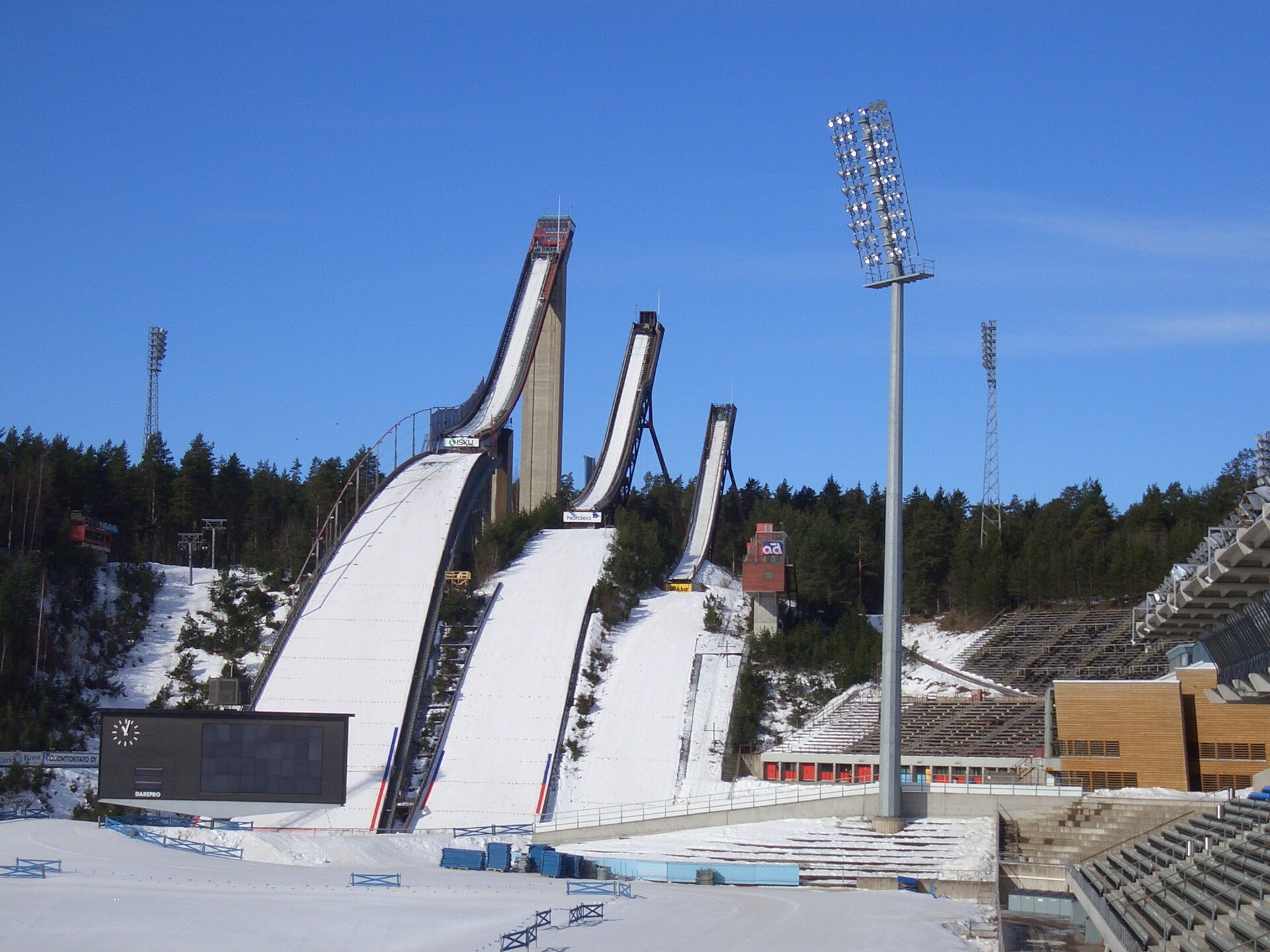
- Lake Vesijärvi and the harbour — Harbour
Lake Vesijärvi and its harbour are the town's summer front room. Paddle-steamer cruises operate in the warm months, and the harbour hosts a flea market and a piano-shaped pavilion. Leave time for an ice cream on shore. Sailing dates change each year, so check the official site, lahti.fi.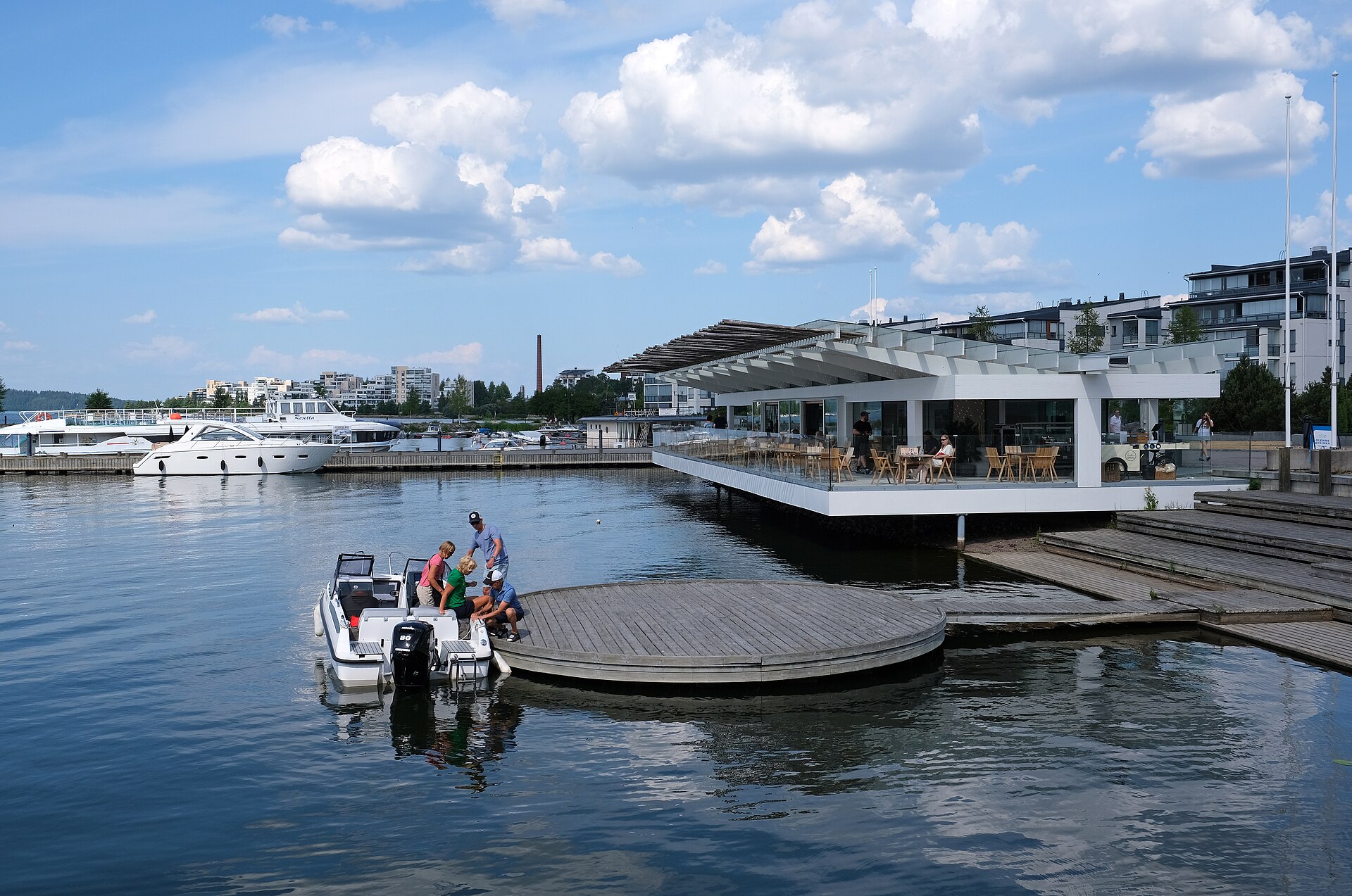
- Radio and TV Museum — Radiomäki
Lahti's radio and television museum stands on Radiomäki, literally Radio Hill. Inside is receiving and transmitting equipment from the 1920s up to modern times, while outdoors the two tall long-wave masts are impossible to miss. It suits a rainy afternoon, and opening times are on the museum's own site.
Culture
Lahti has put music at the centre of its civic identity. The Sibelius Hall, completed in 2000 to designs by Kimmo Lintula and Hannu Tikka, is the base of the Lahti Symphony Orchestra, known in Finnish as Sinfonia Lahti. The orchestra plays both classical and popular programmes, with a special interest in Jean Sibelius, and its recordings are often heard on BBC Radio 3. The calendar includes the Lahti Organ Festival, a jazz festival held in the market square, and the Sibelius Festival, so a summer or early autumn visit can easily be built around a concert. Beyond music, the city's character comes from its industrial past and its lake. Locals are generally reserved with strangers, value quiet and personal space, and are friendly once a conversation starts. Sport is part of everyday life, from ski jumping on the ridge to swimming and cross-country skiing in the surrounding forest. Design and architecture matter here too: Alvar Aalto's church and the timber concert hall both show a taste for natural materials and plain, carefully lit interiors. Public spaces are clean and orderly, and people queue patiently for buses and ticket counters. Sauna remains a normal part of home and social life across Finland, though visitors are unlikely to meet it outside a hotel, spa or private invitation. At Sibelius Hall, arrive before the start, silence your phone and hold your applause until the music has completely finished.
What to wear
Lahti, like the rest of Finland, has a national-dress tradition known as kansallispuku, with regional variations that took shape in the nineteenth century. Typical pieces are wool skirts or trousers, linen blouses, embroidered bodices, aprons and silk ribbons, often in regional colours. Today they appear mainly at weddings, folk festivals, graduations and midsummer events rather than in daily life. What people actually wear in Lahti is practical and understated: dark or neutral colours, good knitwear, waterproof jackets and sturdy shoes. Sportswear is common because outdoor life is common, and nobody will look twice at hiking boots on a city street. For evenings at the concert hall, smart casual is usual, and people dress up a little for premieres and festival nights. Visitors should plan around the weather. In summer, bring light layers, a rain jacket and sun protection for long daylight hours by the lake. In winter, insulated boots with good grip, a warm hat, gloves and thermal underlayers are essential, and the exposed viewpoint at the ski-jump hills feels colder than the town below. Spring and autumn call for waterproofs and shoes that cope with wet paths. Churches, including the Church of the Cross, have no strict dress code, but covering bare shoulders and removing hats is respectful. Comfortable footwear matters, since most sights are reached on foot.
What to eat
- Kebab roll — Kebab and pizza shops near the railway station and central streets
A kebab roll is the standard quick lunch in Finnish towns, and Lahti has plenty of small kebab-and-pizza places near the station and along the central streets. Meat is wrapped with salad and sauce in thin bread. It is filling, cheap by Nordic standards, and open late. - Pizza — Pizzerias in the centre and around the station
Pizza is a Finnish fast-food staple, and Lahti's pizzerias often combine it with kebabs and burgers on one menu. Toppings can be unfamiliar, with kebab meat and sauces popular. It is a reliable option for families, late arrivals and anyone on a tight budget. - Steak and Mediterranean plates — Steakhouse restaurants in the town centre
For a sit-down dinner, Lahti has a Spanish-inspired steakhouse tradition: large cuts of beef served with Mediterranean sides and a list of wines. It suits a cold evening after a day at the ski hills, and booking at weekends is sensible. - Seasonal Nordic menu — Fine-dining restaurants in the town centre
Lahti's fine-dining kitchens work with seasonal Finnish and Nordic ingredients, so menus change through the year and may feature local fish, mushrooms, berries and root vegetables. One acclaimed restaurant occupies a stylish former pharmacy. Reserve ahead and check the current menu online. - Cinnamon bun (korvapuusti) — Cafés and bakeries around the centre and harbour
Korvapuusti is Finland's classic cinnamon bun, soft, spiced and often flavoured with cardamom. Locals take one with coffee as an everyday pause. It makes a good break between museums or after a lakeside walk, and most cafés bake their own.
Plan it
Best time. June–August for long daylight, lake cruises, harbour markets and festivals; February for snow and ski-sport atmosphere, with cold, dark afternoons. Spring and autumn are damp and quiet.
How long. 1–2
Getting there. Fly to Helsinki Airport, then take a train to Lahti Station, about an hour, with a short walk or bus ride into the centre. Direct buses also run from Helsinki and other Finnish cities, and Highway 4 gives a drive of roughly an hour from the capital.
Budget. mid
Tips
- Check the official site, lahti.fi, for museum hours, cruise dates and event programmes before travelling
- Book concert tickets and weekend restaurant tables ahead, especially in festival season
- Walk up to the ski-jump viewpoint on a clear day for the best view of the lake and town
- Carry a card; most places take them, but pack a waterproof layer in any season
- Trains are the quickest way from Helsinki, and day trips are easy
Etiquette
- Keep your voice low on trains, in churches and at concerts; Finns value quiet
- Queue in order and leave personal space at bus stops and counters
- Take your shoes off if a Finnish host's home has a shoe rack by the door
Nearby
Sources
- Wikidata Q28911 (CC0)
- Wikipedia: Lahti (rev 1379926837) (CC BY-SA 4.0)
- Wikivoyage: Lahti (rev 5426353) (CC BY-SA 4.0)
- Photo: View from Lahti Ski Jumping Hills (kallerna) (CC BY-SA 4.0)
- Photo: View to Lahti from Lahti Ski Jumping Hills (kallerna) (CC BY-SA 4.0)
- Photo: Alfred Caween's town plan for Lahti, 1878 (satama) (Public domain)
- Photo: Lahti, Nils Westermark, 1750-1752 (Public domain)
- Photo: Lake Vesijärvi panorama (kallerna) (CC BY-SA 4.0)
- Photo: Flea market in Lahti harbour (kallerna) (CC BY-SA 4.0)
- Photo: Piano pavilion in Lahti harbour (kallerna) (CC BY-SA 4.0)
- Photo: Salpausselkä ski jumps, Lahti (Stephen Johnston) (CC BY 2.5)


