Kukës
Kukës, Albania
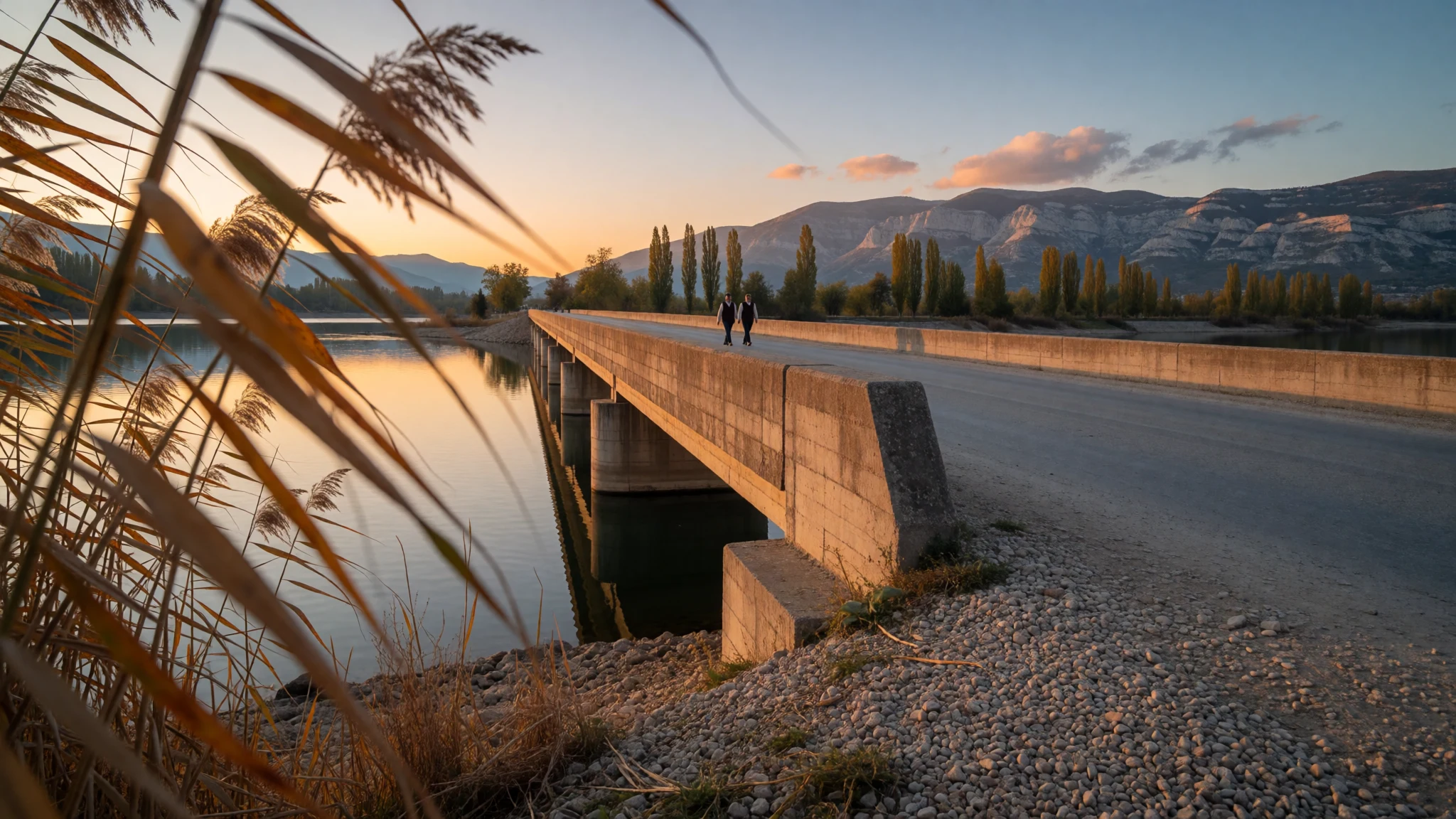
Kukës is a rebuilt lakeside town in northeast Albania, ringed by mountains and a quiet base for exploring the Drin valley.
The place
Kukës sits in the northeast of Albania, on a plateau about 320 metres above sea level, with the waters of Lake Fierza on one side and high ground on the others. The Albanian Alps, the Korab range and the Sharr range all gather around the Luma Plain where the town spreads out, and the Drin river begins close by, where its Black and White branches meet. From above, the new town looks like a peninsula pushed into the reservoir, and bridges and roads tie it to the rest of the country. About 15,600 people live here, so Kukës is a small city rather than a busy one. The streets are broad, the buildings mostly plain mid-century and later blocks, and the pace is slow outside market hours. The setting is the real draw: Mount Gjallica stands over the basin, and in winter snow turns the whole view white. The climate is continental in character, with cold, snowy winters and hot summers. Kukës lies close to the Kosovo border and on the main road between Tirana and Pristina, which makes it a natural pause for anyone crossing between the two. It works best as a base for the lake, the mountain villages and the country behind it, rather than as a place with a long checklist of monuments. Some visitors find it austere at first. The quiet, the views and the hospitality tend to win them round.
Its story
Kukës has a history of over a thousand years, though little of the old town can be seen today. The area was home to Illyrian tribes, among them the Dardani, and tombs found at Këneta and Kolsh near the town are traces of that period. Later it was a small Roman settlement on a branch road leading to the Via Egnatia, the route that linked the Adriatic coast with Constantinople. Under the Ottomans it was a minor market and trading post on the road towards southern Kosovo. In 1912, at the Qafa e Kolosjanit pass, Albanian fighters stood against a retreating Serbian army. The biggest change came in 1976, when the old town, built where the White and Black Drin meet, was flooded beneath the Fierza Reservoir behind a hydroelectric dam. A new town, Kukësi i Ri, was built on higher ground, and that is the Kukës people visit now. Then, in 1999, the town became a refuge. Kosovo Albanians fleeing the war arrived in large numbers, and archive photographs show the main square crowded with newcomers and visited by international officials. That chapter still shapes how locals speak about their town, and a memorial records it. A drowned town, a planned replacement and a place of shelter: few towns of this size carry so many layers.
What to see
- Kukës bridges — Drin crossing, west of the centre
Two bridges carry traffic over the Drin here: a concrete span from the communist period and a newer metal one. Both are good places to stop for open views across the water to the mountains and the edge of town. Late afternoon light is kindest, and a slow walk across takes only minutes.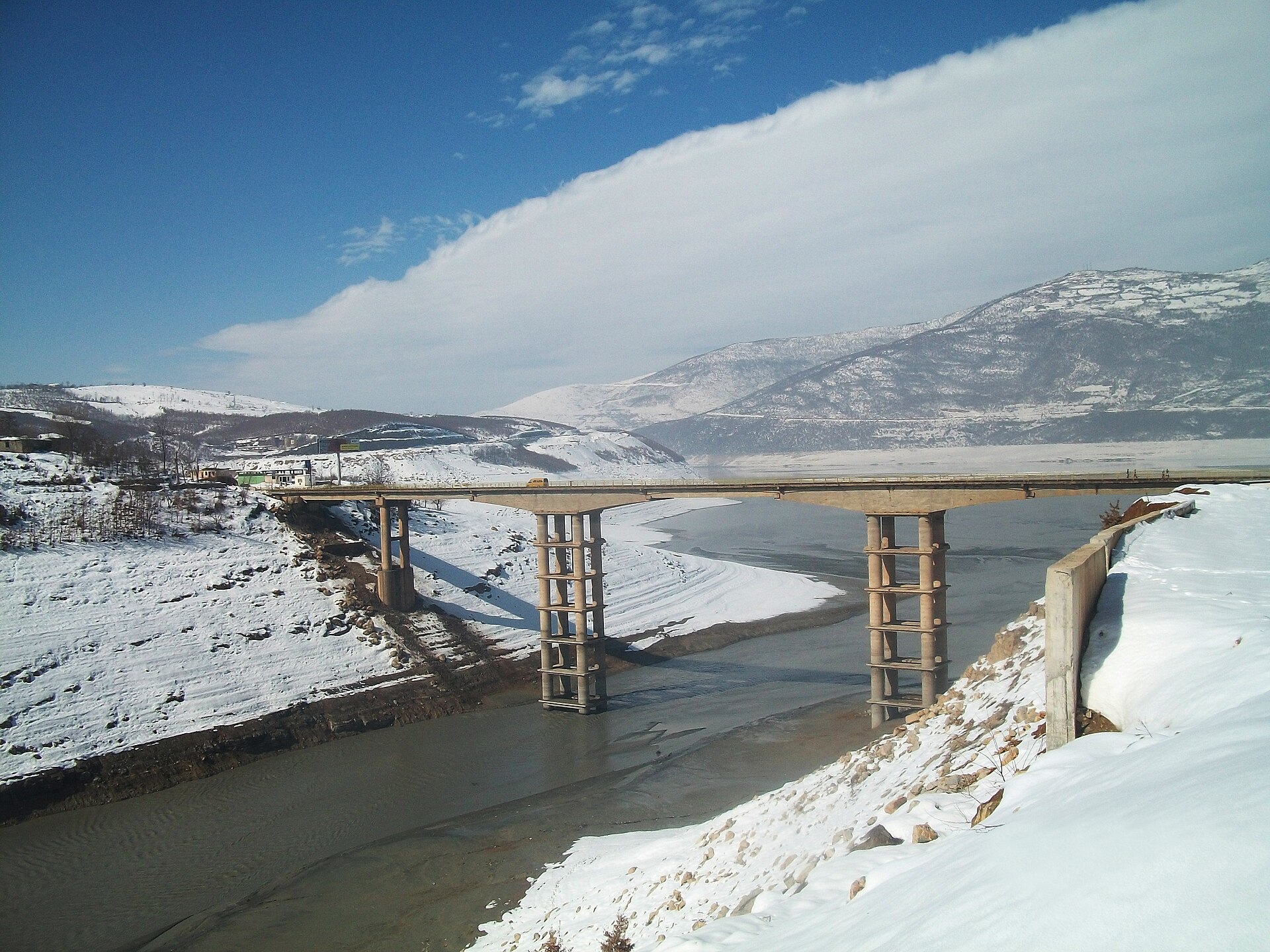
- Lake Fierza — Reservoir around the town
The reservoir behind the Fierza dam wraps around Kukës and holds the old town beneath it. Viewpoints and lakeside restaurants on the roads north of the centre look over the water, with Mount Gjallica beyond. Bring a jacket outside summer, since wind off the water can be sharp.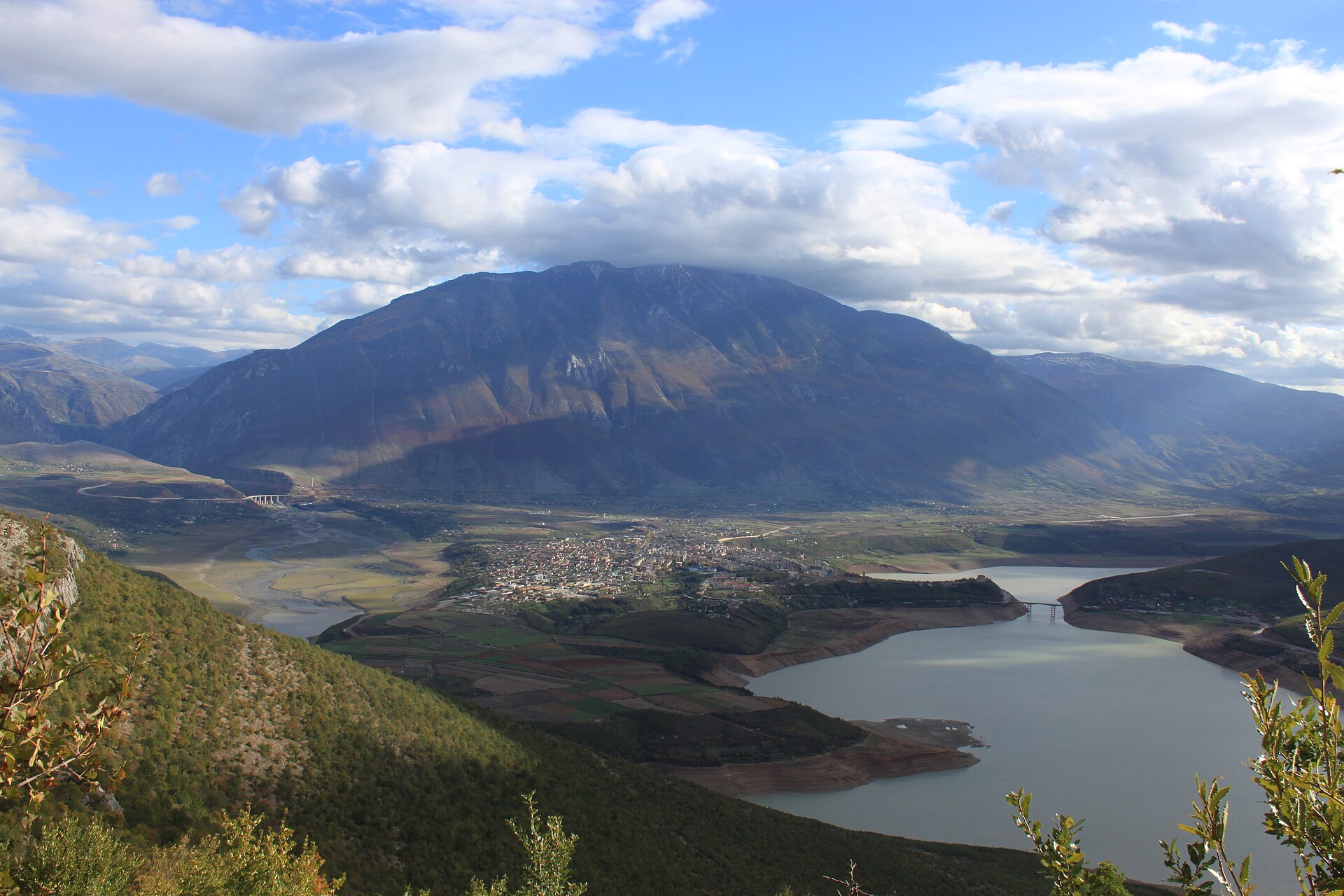
- Kukës Museum — Town centre, near the main square
A modest building in the middle of town, the museum gathers local history, ethnography and natural history under one roof. It is a useful first stop for understanding the flooded old town and the surrounding highlands. Opening times vary, so check the municipality website before planning around it.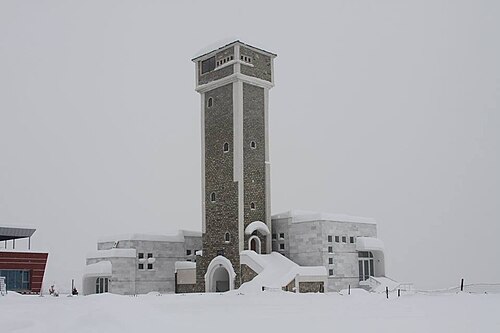
- Kosovo Exodus Memorial — Town centre, beside the museum
This memorial recalls the Kosovo Albanian refugees who crossed to Kukës during the war of 1998–1999 and the townspeople who took them in. It is small and quiet rather than grand. Old photographs of the square in 1999 make a useful comparison with the calm streets of today.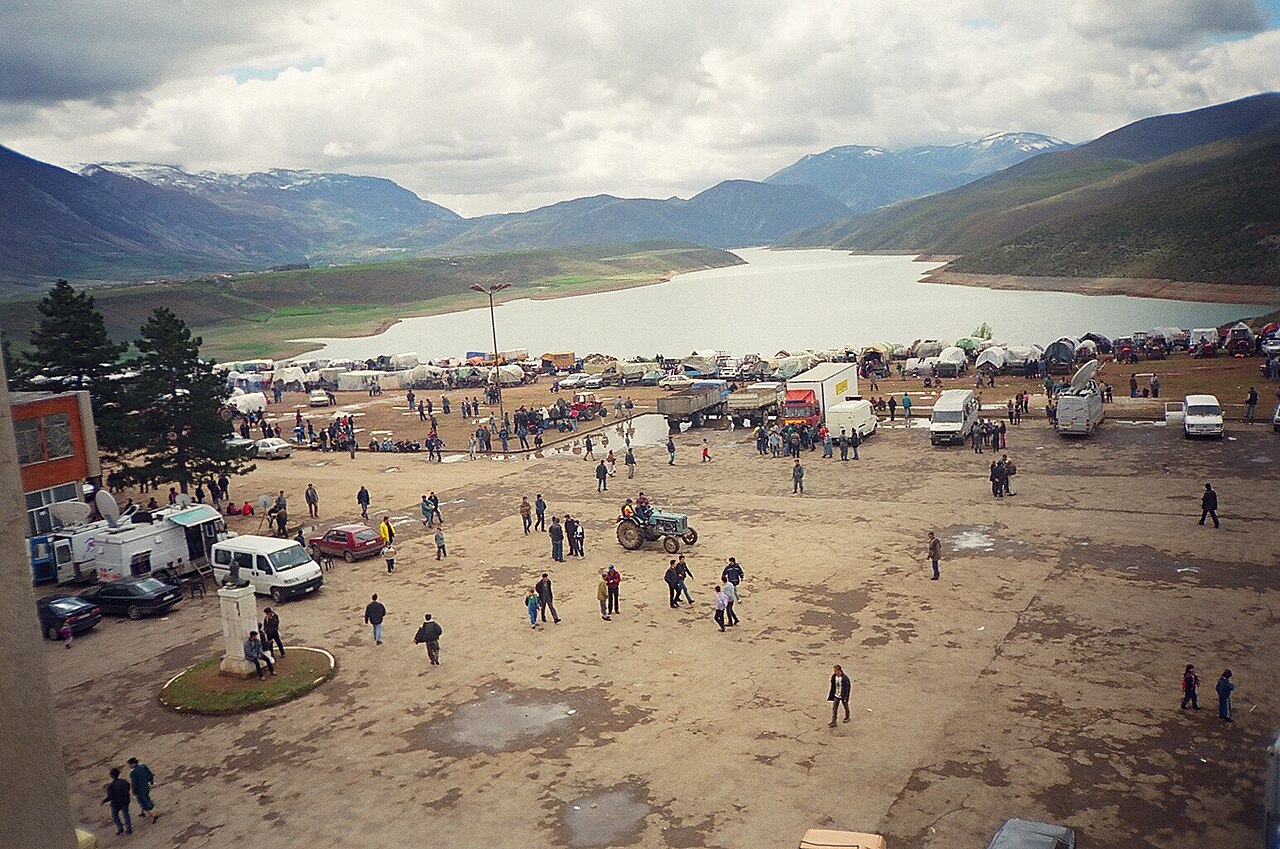
- The derelict Turizmi i Ri hotel — Lakeside, near the bridges
The former Turizmi i Ri hotel was once a showpiece of Albanian tourism and now stands ruined above the water. It is best seen from outside, as a stark reminder of the planned-town era and a strong foreground for photographs. The structure is unsafe, so do not go inside.
Culture
Kukës is a northern highland town where mountain habits of hospitality still matter. A mosque stands on a street of its own in the centre, halal food is easy to find, and a tekke, a Sufi lodge, draws visitors to the village of Buzmadh. Family and neighbours count for a lot, and guests are often offered coffee or a meal before anyone asks what they want. Accepting a small cup and a few minutes of conversation is usually the best way to meet people. Recent history is close to the surface. In 1999 the town took in great numbers of Kosovo Albanian refugees, and many families still have relatives on both sides of the border. Locals speak about it with pride but also with feeling, so listen first and ask gently. Football is the shared passion: the local club, FK Kukësi, plays at the Kukës Arena, and match days bring the town out. Radio has its own place in local memory, since Kukës Radio first went on air in 1959 and became a voice for the region. Evenings revolve around cafés and walks along the main streets, and life is unhurried. Remove your shoes when entering a mosque or a private home, dress modestly at religious sites, and ask before photographing anyone.
What to wear
In Kukës and the highlands around it, traditional dress was shaped by cold winters and farm life. Men's costume centred on heavy woollen trousers and waistcoats, often with the white felt cap, the plis, that is common across northern Albania. Women wore wool and linen layers with embroidered aprons and bright woven sashes, and the patterns differed from village to village. These outfits now appear mostly at weddings, festivals and folk performances, and in museum displays. Day to day, people in town dress as they would in much of Europe: jeans, jackets, trainers and smart-casual clothes, with older men often in dark coats and flat caps in winter. Women dress with a mix of fashion and modesty, and head coverings are a personal choice that varies from family to family. Visitors should pack for weather first. Winters are cold and snowy, so bring a warm coat, gloves and waterproof boots. Summers are hot, so choose light, breathable fabrics and a hat. Sturdy shoes matter for village lanes and mountain paths. At a mosque or tekke, cover shoulders and knees, and women should carry a scarf for the head. In town, shorts and T-shirts draw no comment, but covering up is wise in villages.
What to eat
- Tavë dheu — Traditional Albanian eateries serving home-style cooking, called gjellore
A baked casserole cooked in an earthenware dish, usually with meat and a rich, savoury sauce. It is slow, hearty mountain food and suits cold days. Look for it at simple restaurants that cook from the daily pot rather than an extensive menu. - Tavë perimesh — The same gjellore-style eateries in the centre
A vegetable casserole baked until soft and lightly browned, a good choice for vegetarians. It is made with seasonal produce, so it changes through the year. Served with fresh bread, it makes a filling and inexpensive lunch. - Qofte — Street food stalls and snack places along Rruga Dituria
Local meatballs, grilled or fried and served with bread, salad or a spicy side. They are quick, savoury and easy to eat on the go. Rruga Dituria is the street to try, where small places cook them fresh in front of you. - Roast chicken in a bun — Snack shops on Rruga Dituria
A simple street meal of roast chicken tucked into a soft bun, often with sauce and salad. It is a casual lunch for locals and travellers moving through. Halal pizza from the same street gives a similar fast option. - Grilled meat or lake fish — Lakeside restaurants on the roads north of town
Restaurants with views over the reservoir offer grilled meat and fish alongside Albanian and European dishes, with wine on the list. Go for the view as much as the food, ideally at sunset, and ask what is freshest that day.
Plan it
Best time. May–June and September–October bring mild weather and clear mountain views. July and August are hot, while December to February is cold and snowy, which is pretty but slows travel.
How long. 1–2
Getting there. Fly to Tirana, then take a bus to Kukës; services run through the daytime, so check current times locally. Buses from Kosovo and Prizren use the A1 highway and often drop passengers outside the city, so plan a short onward ride. By car, the A1 toll road links Kukës with Tirana and Pristina.
Budget. low
Tips
- Check bus times in Tirana on the day, as services change and some routes run only a few days a week
- Book rooms ahead in summer and around holidays, when diaspora families return
- Carry some cash, since small places may not take cards
- Pack warm layers even in spring, as the lake and mountains keep evenings cool
- Rent or arrange a car for the lake and villages, because buses to them are infrequent
Etiquette
- Remove your shoes at a mosque, a tekke or inside a private home
- Dress modestly at religious sites and in villages
- Ask before photographing people, and be respectful at the refugee memorial
Nearby
Sources
- Wikidata Q210197 (CC0)
- Wikipedia: Kukës (CC BY-SA 4.0)
- Wikivoyage: Kukës (CC BY-SA 4.0)
- Pikellima, Gjallica dhe Pellgu i Drinit (CC BY-SA 4.0)
- Visar Kola, Qyteti Kukes ne vere (CC BY-SA 4.0)
- Lori Elezi, Pallati i Kultures Hasan Prishtina (CC BY-SA 4.0)
- Leonora Bajraktari, Rruga e xhamise (CC BY-SA 4.0)
- Lori Elezi, Kulla e kosovareve dhe muzeu i qytetit (CC BY-SA 4.0)
- Aurora Doci, Pamje e Ures se Drinit, Kukes (CC BY-SA 4.0)
- Jonuz Kola, Kofi Anann ne Kukes gjate Krizes Kosoves 1999 (CC BY-SA 4.0)
- Jonuz Kola, Sheshi Skenderbej Bashkia Kukes gjate Eksodit te kosovareve 1999 (CC BY-SA 4.0)


