Książ Castle
Książ Castle, Poland
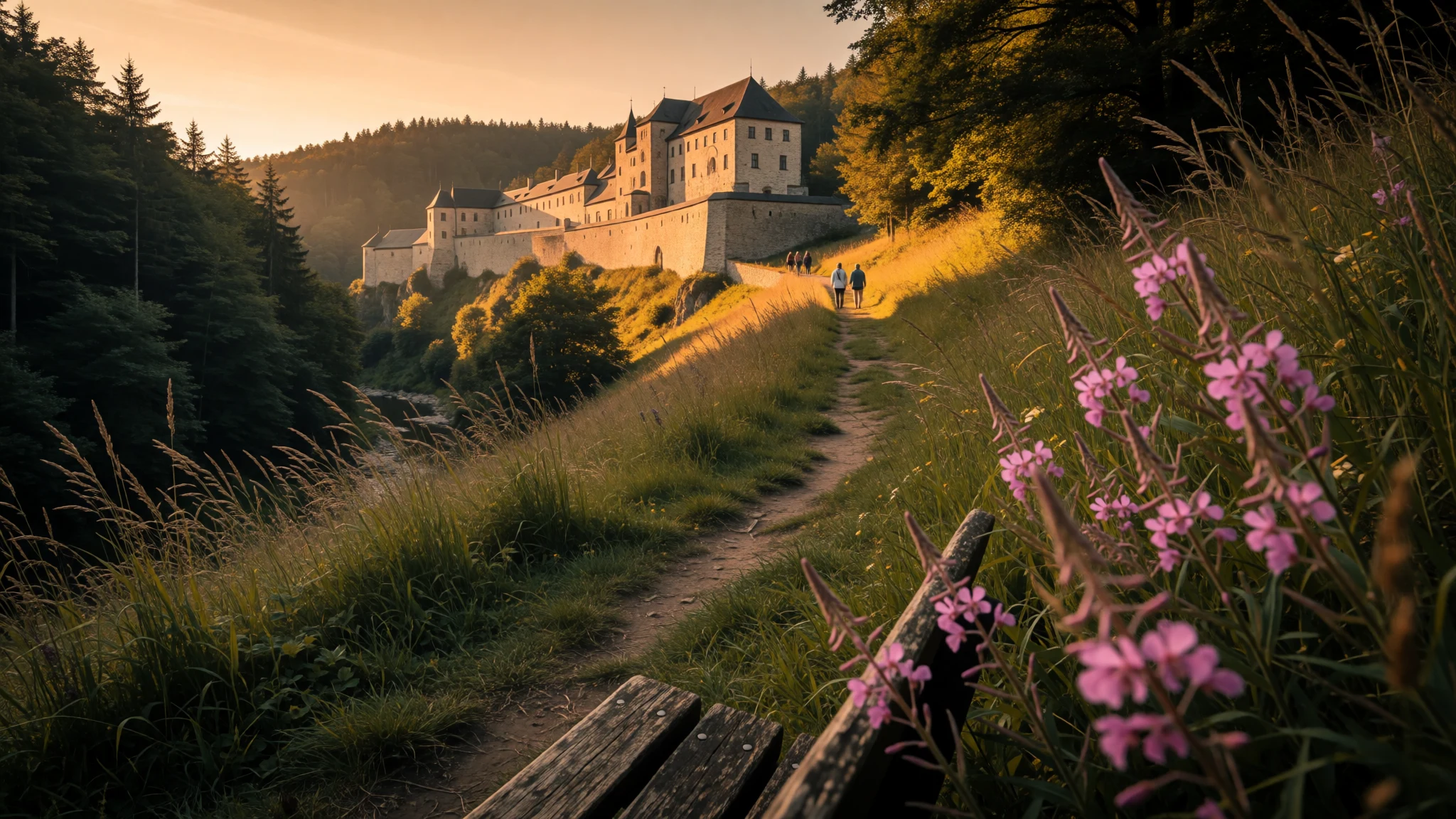
Książ Castle crowns a wooded gorge above Wałbrzych, a Silesian palace shaped by medieval dukes, German nobles and Polish custodians.
The place
Książ Castle stands on a rocky spur in the north of Wałbrzych, a former cloth and coal town in Lower Silesia, in south-west Poland. Sources describe it as the largest castle in Silesia, and the setting does much of the work: the building looks down on the gorge of the Pełcznica river, inside a protected landscape park that spreads across the foothills of the Sudeten Mountains. Its Polish name is Zamek Książ, and for most of its history it was known by the German name Schloss Fürstenstein. Seen from across the valley, it is a long, layered mass of terraces, towers and roofs, the product of centuries of rebuilding rather than a single plan. Opposite it sit the faux-Gothic ruins of an 'old castle', a landscaped folly, and further along the park there is a palm house that a noble family built as a tribute to a duchess. Today the castle serves as a cultural and exhibition centre for the region, with rooms to walk through, events and cafés. The town below has a harder edge. Wałbrzych grew on cloth, then coal and pottery, and it has struggled since those industries faded, so the contrast between the polished castle grounds and the town centre is part of the visit. Most people come for a day. The castle and park deserve a few unhurried hours, and the market square and neo-Gothic church fill an extra afternoon. Wrocław, the regional capital, is about an hour away by train or road.
Its story
Książ Castle took its recognisable form around 1300, when Bolko I the Strict, a Silesian duke ruling from Świdnica and Jawor, had a new stronghold raised on the rock and made it his residence. A earlier fortification there had been wrecked by Bohemian forces shortly before. Documents of the time call the place Fürstenberg, the prince's mountain, and the name slowly shifted to Fürstenstein, which stayed official until the end of the Second World War. When Bolko's line died out without heirs, the estates passed to the Bohemian crown, and the castle then moved through many hands: Bohemian nobles, a governor of the Silesian lands and royal administrators. During the Hussite Wars rebel forces held it for a time. Later in the Middle Ages a commander serving the Hungarian king Matthias Corvinus devastated the second castle complex while campaigning in Silesia, then granted the estates to Frederick von Hochberg. His family acquired the castle hill soon afterwards and, over many generations, rebuilt it into the palatial complex that visitors see now. The Hochbergs rose to become princes of Pless, and much of the castle's later glamour clings to Daisy, the duchess Maria Theresie von Pless, for whom the palm house was built. After the war the castle passed into Polish hands and the Polish name replaced the German one. It is now a protected heritage monument and one of Wałbrzych's main reasons for visitors to stop.
What to see
- Książ Castle: terraces and towers — Książ Landscape Park, northern Wałbrzych
The main building rewards a slow walk around its outside before any ticket is bought. Terraces step down the rock towards the gorge, and the rooflines show where successive owners added wings. The best views of the whole mass come from the paths on the far side of the valley, especially in autumn colour.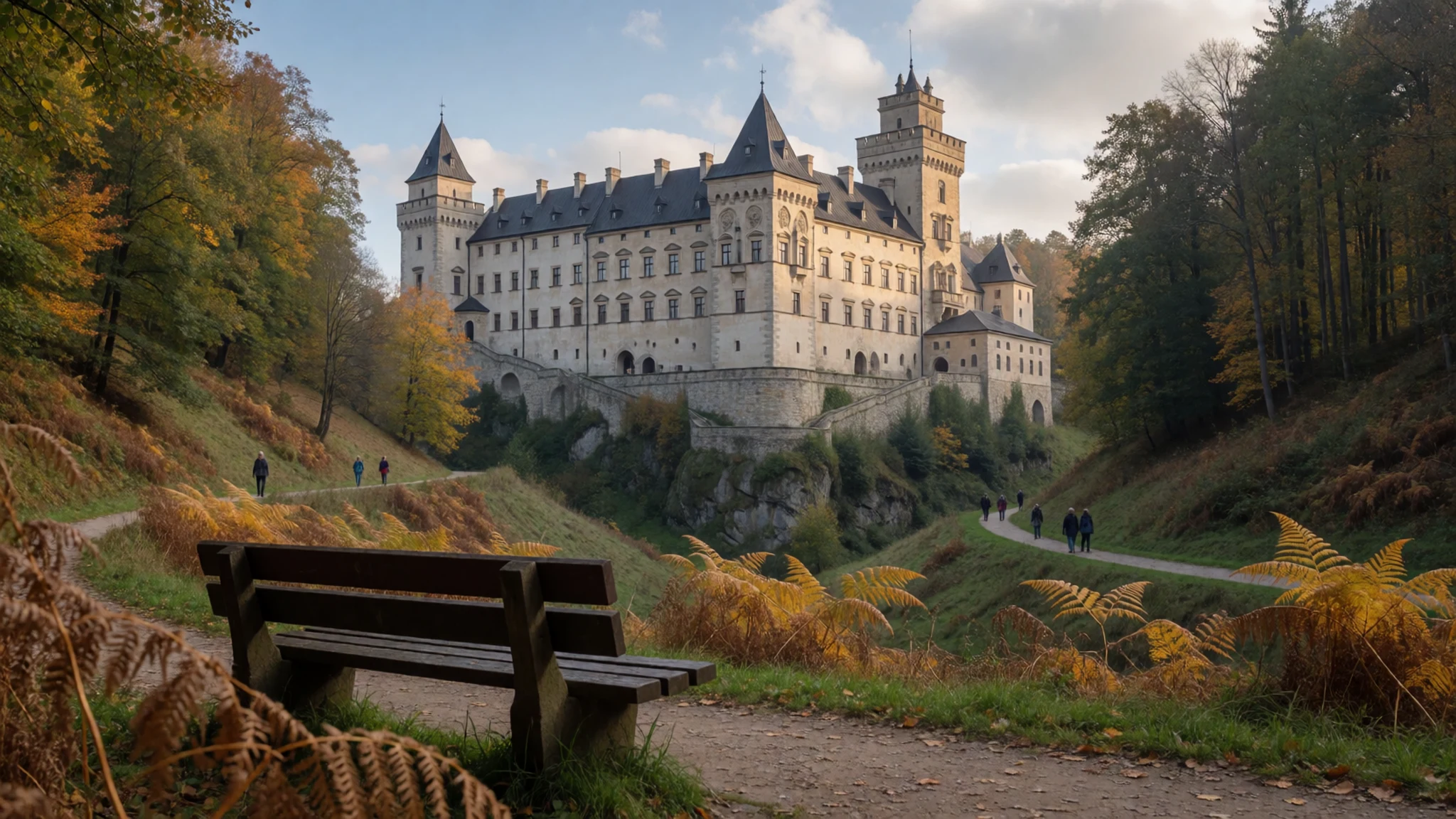
- Castle interiors and courtyard — Książ Castle
Inside, the rooms are used for exhibitions and events as well as for showing the historic interiors, so what is open varies; check the official site before travelling. The courtyard holds classical sculpture, including a group showing Perseus rescuing Andromeda, which makes a good pause between rooms.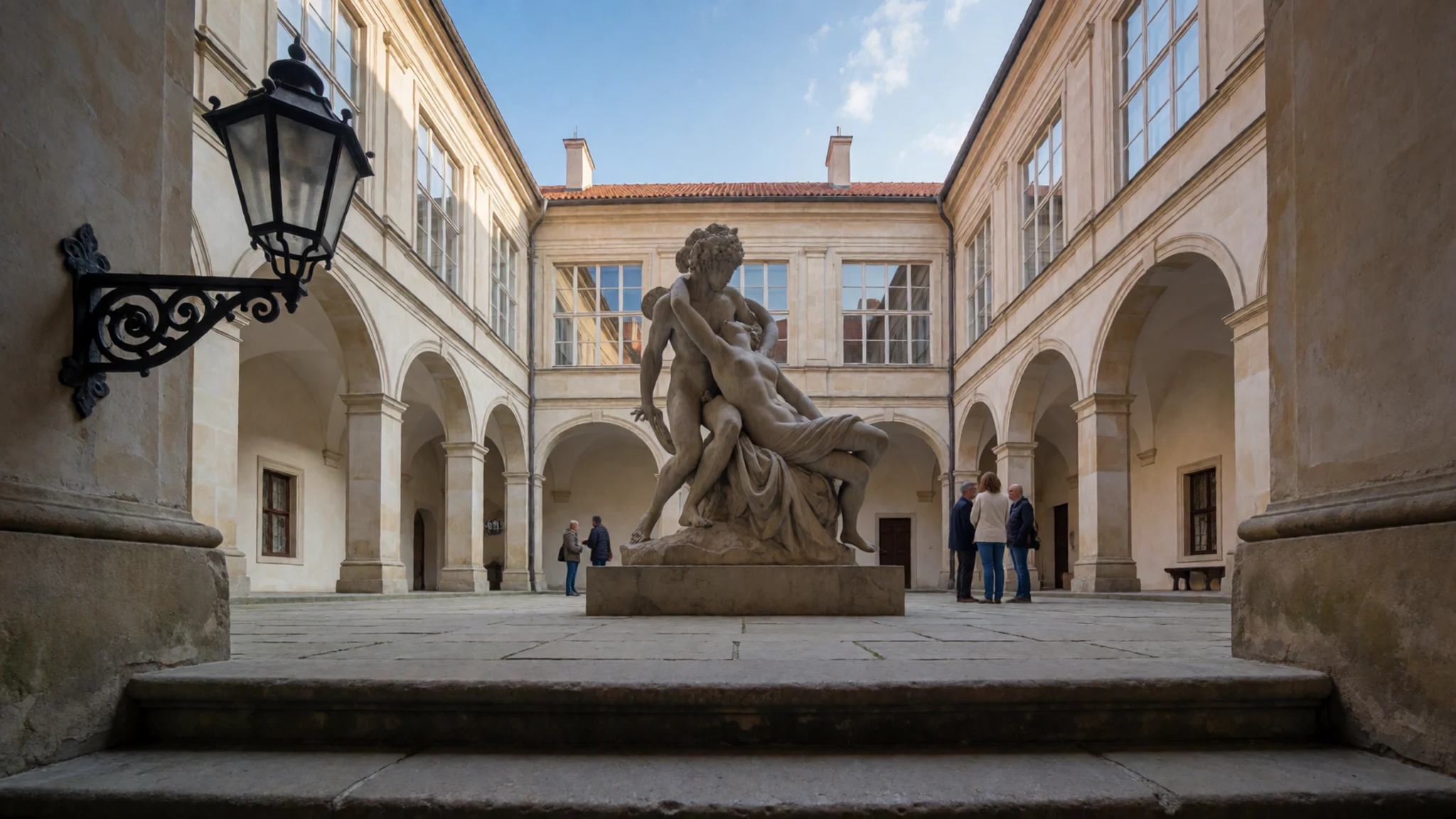
- Palm House — Książ park, east of the castle
The Palm House was built by Jan Henryk XV Hochberg as a tribute to his wife, the duchess known as Daisy. It sits a short distance from the castle, and today part of it works as a café, which suits a rest after walking the park paths. Opening arrangements change, so check first.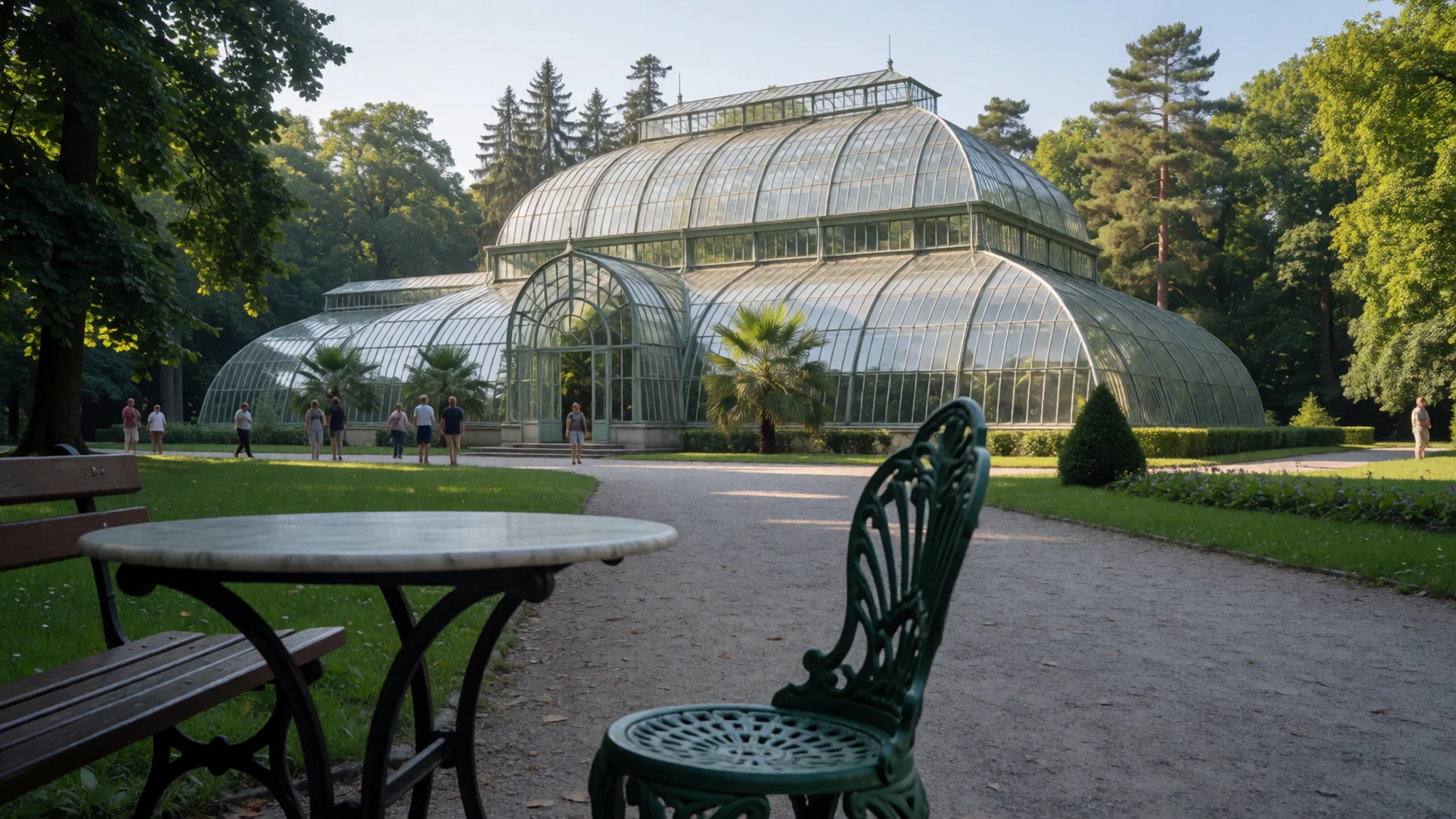
- Ruins of Old Książ — Opposite the castle, across the gorge
Across the valley from the castle stand the ruins of Old Książ, built at the end of the eighteenth century as a deliberate Gothic fake. They were meant to be looked at, and the view back towards the real castle is the reason to walk here. Paths can be muddy after rain.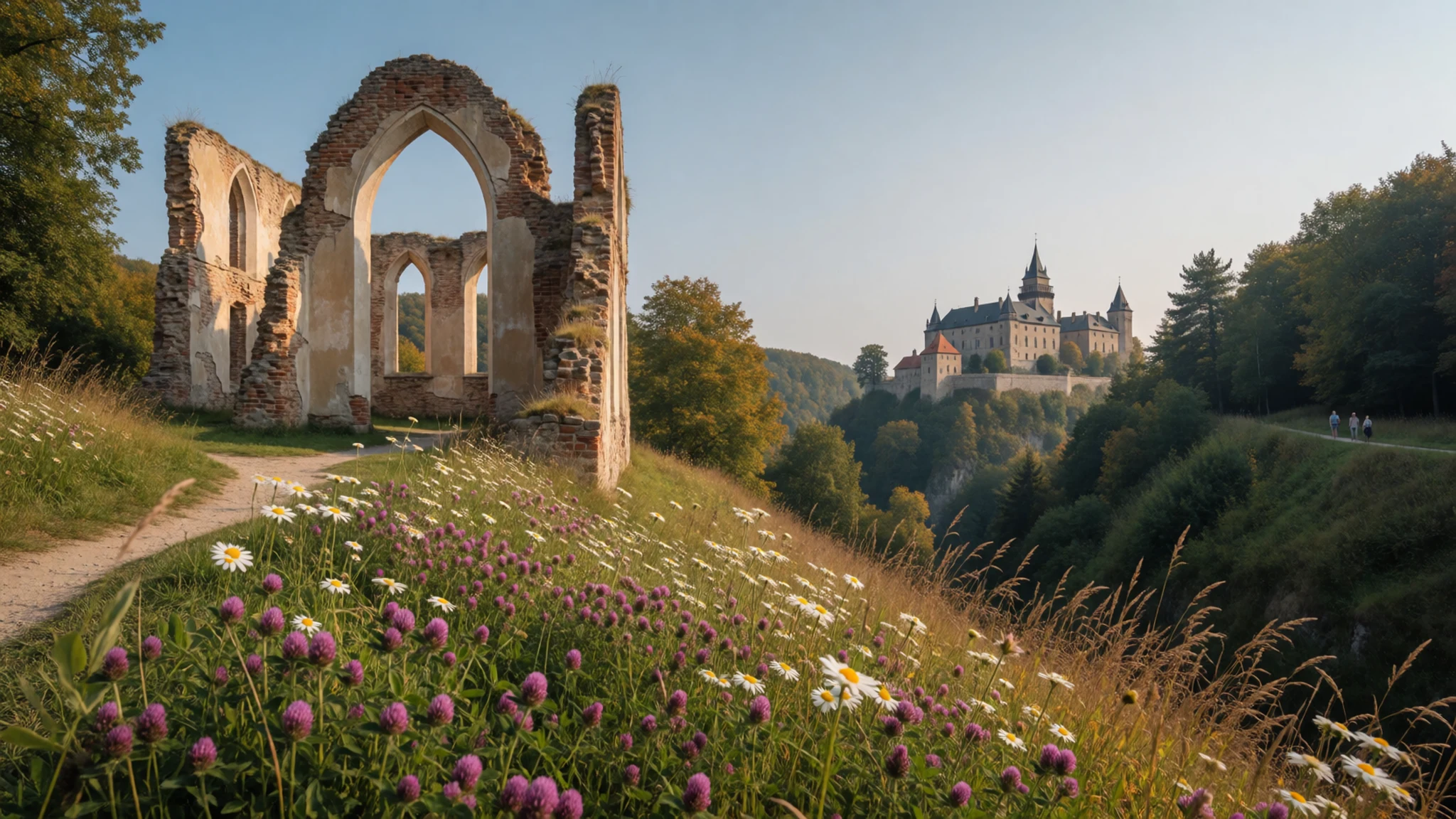
- Wałbrzych Market Square and Town Hall — Wałbrzych town centre
Wałbrzych's old market square once hosted a weekly market and held a Baroque town hall in its centre for over a century. The present three-storey town hall imitates Gothic in an eclectic style, with a clock and carved shields on its front. It gives a feel for the town beyond the castle.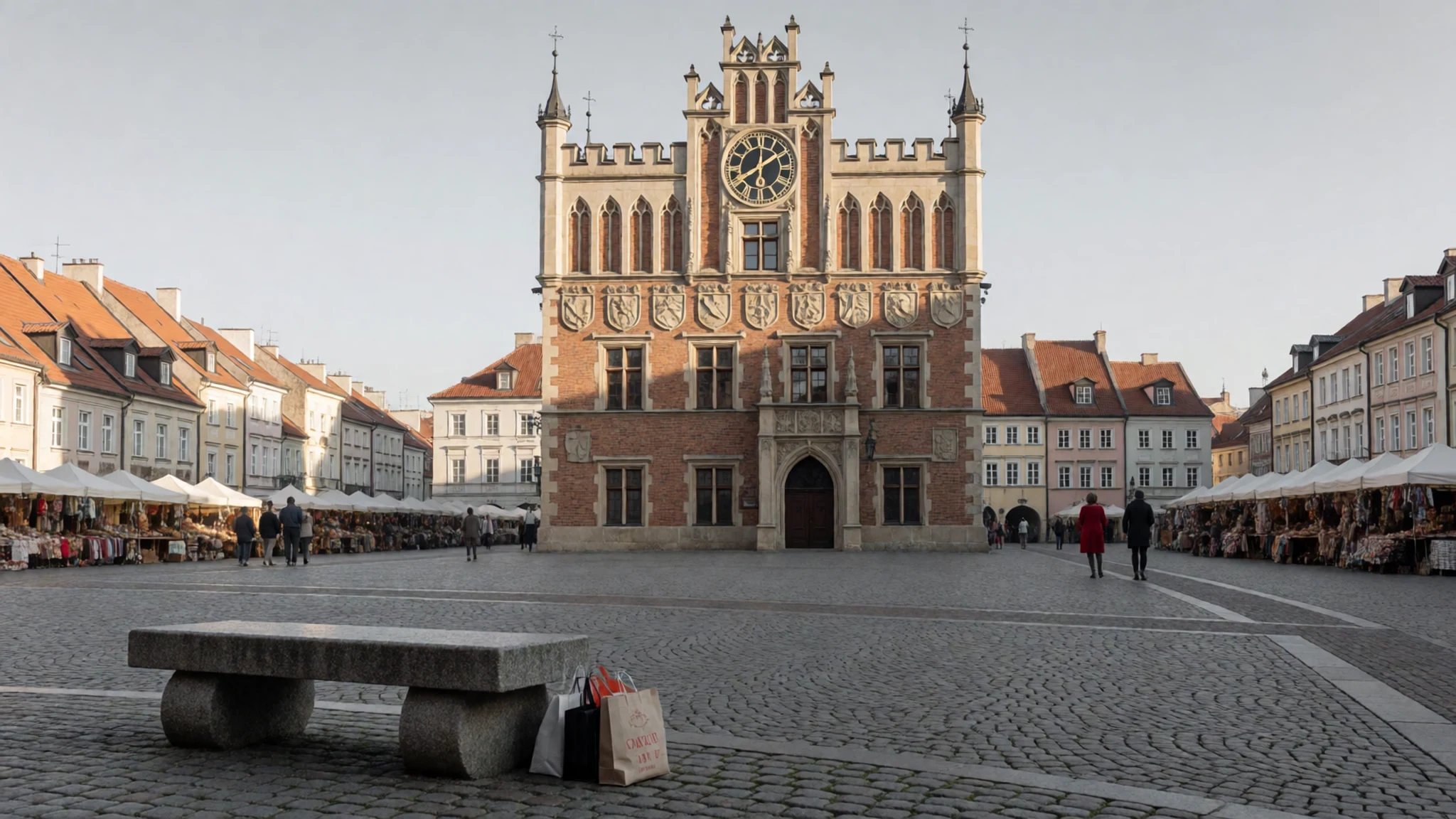
Culture
Książ Castle sits in a region whose identity has changed more than once. Silesia passed between local dukes, the Bohemian crown and, later, German states before becoming part of Poland after the Second World War, and the castle carries both of its names, Zamek Książ and Schloss Fürstenstein. Today it is run as a heritage site and cultural centre, so exhibitions, concerts and events share the grounds with ordinary visitors. Polish families often treat it as a day out, pairing the castle with a walk through the landscape park and coffee and cake afterwards. The Hochberg story, and above all the glamour attached to Daisy, is told with affection, and the guides tend to talk about the nobles' gardens and interiors as much as about the medieval dukes. Wałbrzych itself has the character of a working town shaped by cloth, coal and pottery. Many families have histories tied to the mines, and the town has been trying to reshape its image through heritage and the arts. Polish hospitality is warm but unshowy: a greeting on entering a café or shop is expected and appreciated, and service is relaxed rather than hurried. Pace yourself accordingly, and expect a slower rhythm than in a big city. Greet staff with a quiet 'dzień dobry' when you enter, and keep your voice low and your hands off furnishings in the historic rooms.
What to wear
Książ Castle has no single costume tied to it, and that says something about the region. Lower Silesia was resettled from many parts of Poland after the Second World War, so there is no one local dress. Polish regional folk costume, with wool skirts and waistcoats, linen shirts and bright embroidery, mostly appears at festivals and folk events rather than in daily life. Textiles do matter to the area's past, since Wałbrzych was a cloth-making centre long before coal arrived. What people wear now is ordinary European casual: jeans, jackets and trainers, with a little more polish for concerts or dinners at the castle. Locals dress for the weather, which in the Sudeten foothills can turn quickly. For a visit, comfortable, sturdy shoes matter most, because the castle terraces, cobbles and park paths are uneven and can be slippery after rain. Bring layers in every season, a waterproof jacket in spring and autumn, and a warm hat and gloves from late autumn into winter, since the castle's stone rooms can feel cold even on mild days. In summer, light cotton and a hat are enough. There is no strict dress code at the castle, but if a service or event is held in a nearby church, shoulders and knees should be covered. Smart casual suits any evening event.
What to eat
- Pierogi — Dumpling-focused restaurants and casual eateries in Wałbrzych
Polish dumplings, filled with potato and cheese, meat, or cabbage and mushroom, and often finished with fried onion or sour cream. They are the safest order for a first meal and turn up at casual family eateries in Wałbrzych and beside the castle park.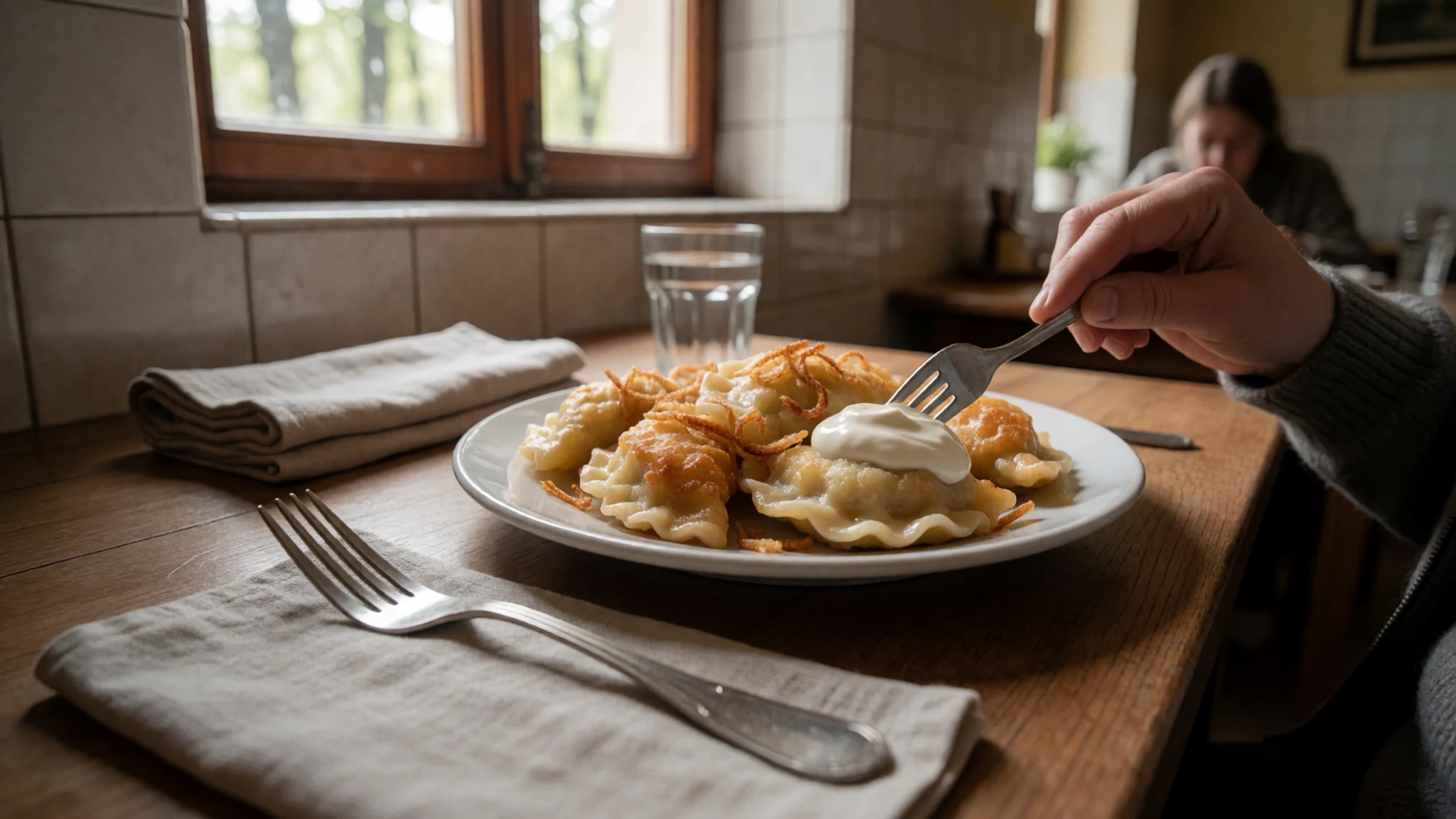
- Żurek — Traditional Polish restaurants in town and near the castle
A sour rye soup, usually served with sausage and boiled egg, sometimes in a bread bowl. It has a tangy, smoky edge and is a warming order after a cold walk in the park. Look for it at traditional Polish restaurants.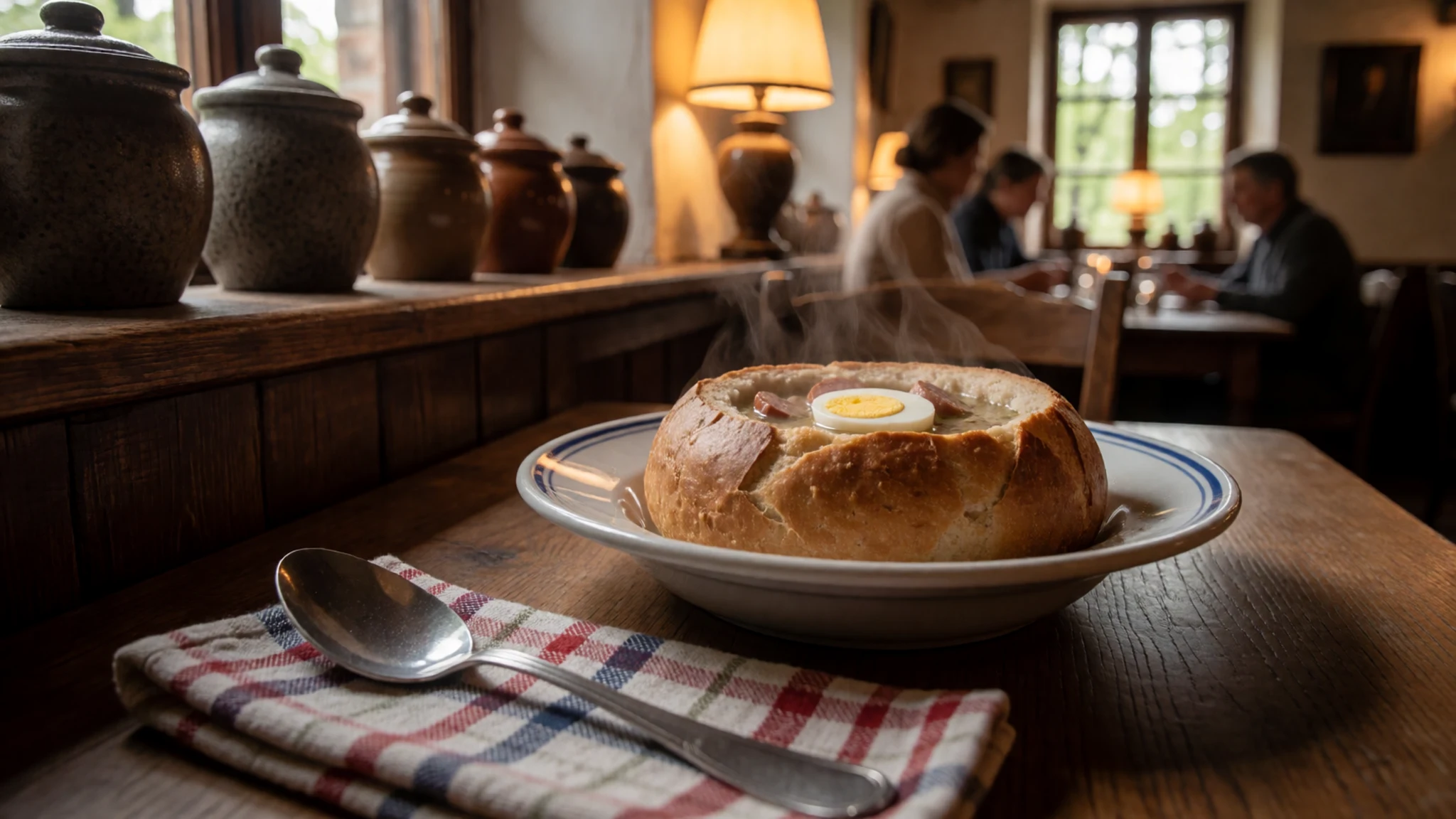
- Placki ziemniaczane — Home-style eateries and café-restaurants in Wałbrzych
Crisp potato pancakes, served plain with sugar or sour cream, or topped with goulash. They are filling, simple and cheap by European standards, and a staple at home-style eateries rather than smart dining rooms. - Bigos — Traditional Polish restaurants, especially in autumn and winter
A slow-cooked hunter's stew of sauerkraut, fresh cabbage and several kinds of meat and sausage, often better the day after it is made. It is hearty, sour and smoky, and common in the colder months. - Sernik — Cafés near the castle park and around the market square
Polish baked cheesecake, made with white curd cheese and usually denser and less sweet than the cream-cheese kind. A slice with coffee is the standard stop after a castle visit, and cafés in the park and town usually have it.
Plan it
Best time. May–June and September–October, when the park is green or turning colour and walking is comfortable; summer weekends are busiest, and winter is cold with short daylight, so check the castle's opening arrangements.
How long. 1–2
Getting there. Wrocław is the usual gateway, about an hour from Wałbrzych by train or by road on the DK35. Choose Wałbrzych Fabryczny, Centrum or Miasto stations, which are closer to town than Wałbrzych Główny. For the last leg to the castle, use a local bus or taxi, and check current options.
Budget. low
Tips
- Check the castle's official site for opening times, tickets and events before you travel
- Arrive early on weekends and in summer to avoid the biggest crowds
- Wear sturdy shoes for cobbles and park paths, and carry a waterproof jacket
- Carry some cash as well as a card for small cafés and kiosks
- Allow time to walk across to the Old Książ ruins for the view back to the castle
Etiquette
- Greet staff with 'dzień dobry' when entering shops and cafés
- Do not touch furnishings or displays in the historic rooms, and follow photography signs
- Keep to marked paths in the landscape park
Nearby
Sources
- Wikidata Q738109 (CC0)
- Wikipedia: Książ Castle (rev 1373016669) (CC BY-SA 4.0)
- Wikivoyage: Wałbrzych (rev 5422102) (CC BY-SA 4.0)
- Photo: Książ zamek 01 — Jar.ciurus (CC BY-SA 3.0 pl)
- Photo: Zamek Książ 2026 — Szymon Staniec (CC BY 4.0)
- Photo: Książ Castle in Autumn — Lukaszmalkiewicz.pl (CC BY-SA 4.0)
- Photo: Wałbrzych, zamek — Poconaco (CC BY 3.0)
- Photo: Andromeda sculpture in the courtyard — Scotch Mist (CC BY-SA 4.0)
- Photo: Exterior of the Książ Castle — Maksym Kozlenko (CC BY-SA 4.0)
- Photo: Wałbrzych - Zamek Książ — Bosia2011 (CC BY 3.0)
- Photo: Interiors of the Książ Castle — Andrzej Otrębski (CC BY 3.0)


