Korçë
Korçë, Albania
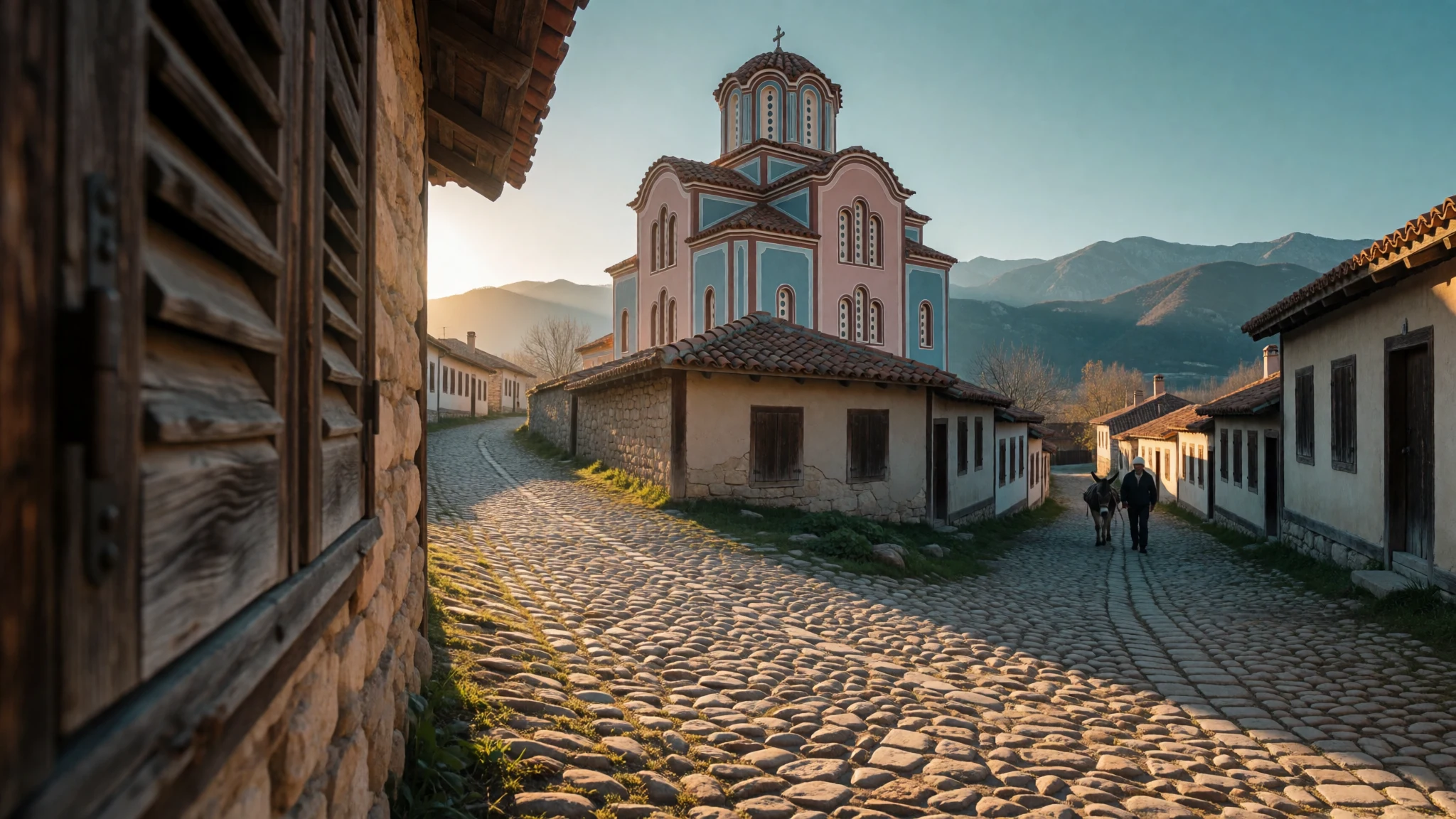
Korçë is a cobbled, café-filled plateau town in south-eastern Albania, where schools, music and an old bazaar matter more than beaches.
The place
Korçë is a city of 43,254 people on a high plateau in south-eastern Albania, 850 m above sea level and ringed by mountains. It is the administrative seat of its county and municipality, and the farmland and villages around it feed its markets. The centre is low-rise and easy on foot: cobbled lanes, villas with shuttered windows, and a bazaar quarter that anchors the old town. Mirahori Mosque stands inside that quarter, and the bazaar has long been the place where the region traded. Much of the town's present look comes from the 19th century, when it grew quickly, rather than from its earliest decades. The altitude shapes daily life. The climate sits on the edge between Mediterranean and continental, so summers are warm without the coastal swelter, evenings cool fast, and winters bring real cold. Anyone who knows Albania only for its beaches tends to be surprised by the crisp air and the slower, provincial pace, which is a compliment here. Korçë works well as a base for a few days. The main sights lie within a short walk of one another, cafés fill the pedestrian streets from mid-morning, and villages such as Voskopojë are a short drive or furgon ride away. Locals think of the city as the cultural capital of the south, and the museums, schools and serenades give that claim some weight. Crowds are rarely a problem, though early August, when the brewery's beer festival runs, and the carnival season before Orthodox Easter are livelier and busier.
Its story
Korçë as a town begins with one man, Ilias Bey Mirahori, an Albanian-born Ottoman nobleman who converted to Islam and rose to become master of the stables to Sultan Bayezid II. As a reward for his service, in 1484 he was granted seven villages around the Korçë area, among them Vithkuq, Leshnjë and Panarit. The grant did not run smoothly. Collecting income proved difficult, and some years later the villages reverted to their earlier status. A further decree in 1497 swapped them for a locality called Piskopiye, and another that year fixed its borders between Mborje, Barç and Bulgarec, ground that matches the centre of today's city. The name Piskopiye points to a bishop's residence, and an older fortified settlement called Gorica was later attached to it. Historians therefore date the town to the closing years of the 15th century, from these documents rather than from any single founding day. Real growth came later. The Old Bazaar and the streets around it took on their present character in the 19th century, as trade swelled and the town prospered. In 1887 Korçë opened the first secular school teaching in Albanian, called Mësonjëtorja, and that act is a large part of why the city is remembered for learning. An Ottoman landlord, an Orthodox bishopric and merchant money together explain most of what a visitor sees today.
What to see
- Old Bazaar — Old town centre
The Old Bazaar is the historic core of Korçë, a tangle of narrow streets around Mirahori Mosque where trade has gone on for centuries. Most of what stands dates from the 19th-century boom. Today it mixes craft stalls, cafés and taverns, and it is best walked slowly in the morning, before the lunchtime crowd.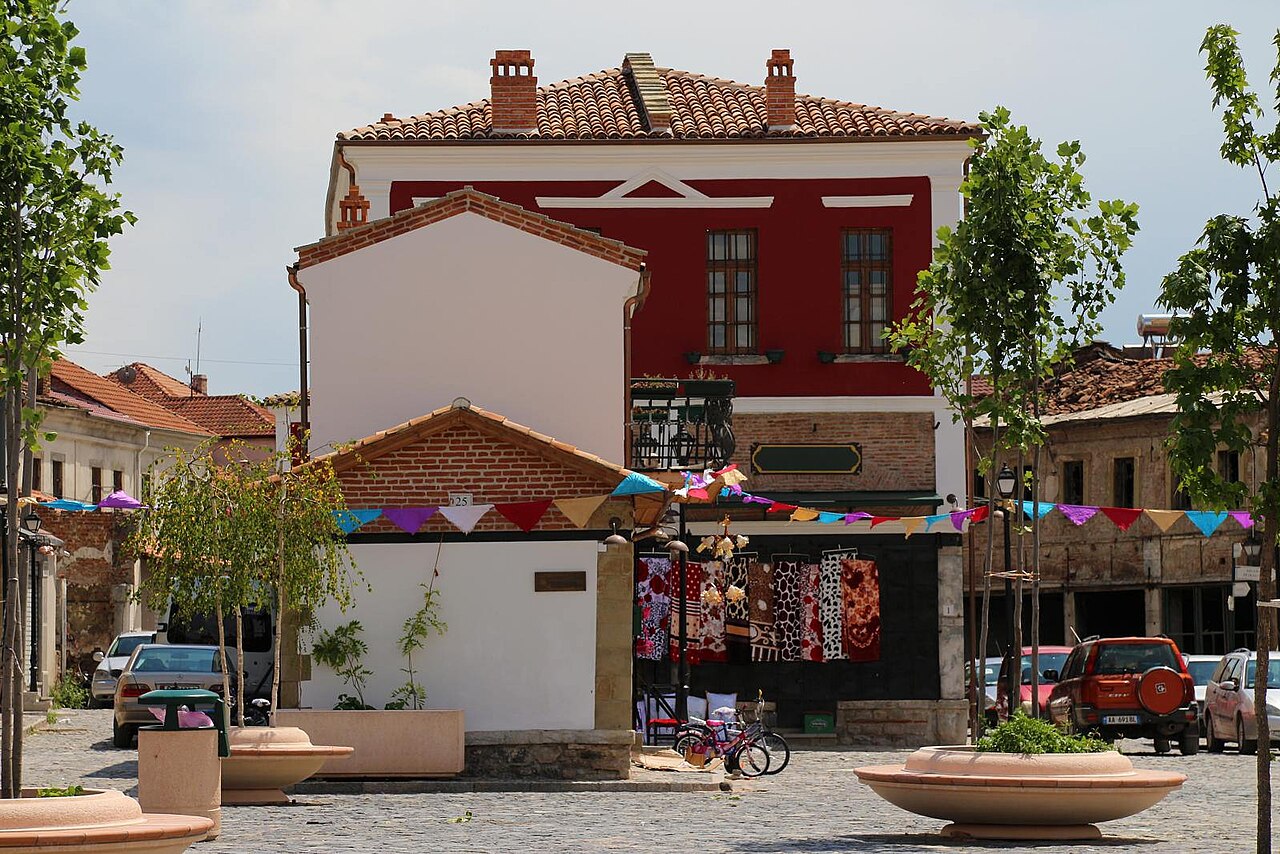
- Resurrection of Christ Orthodox Cathedral — Town centre, near the bazaar
The Resurrection of Christ Orthodox Cathedral is the main Albanian Orthodox church in Korçë, its walls in a soft palette of pink, blue and brown rather than the plain stone of many Balkan churches. It stands a few minutes' walk from the bazaar, and the interior is best seen outside service times.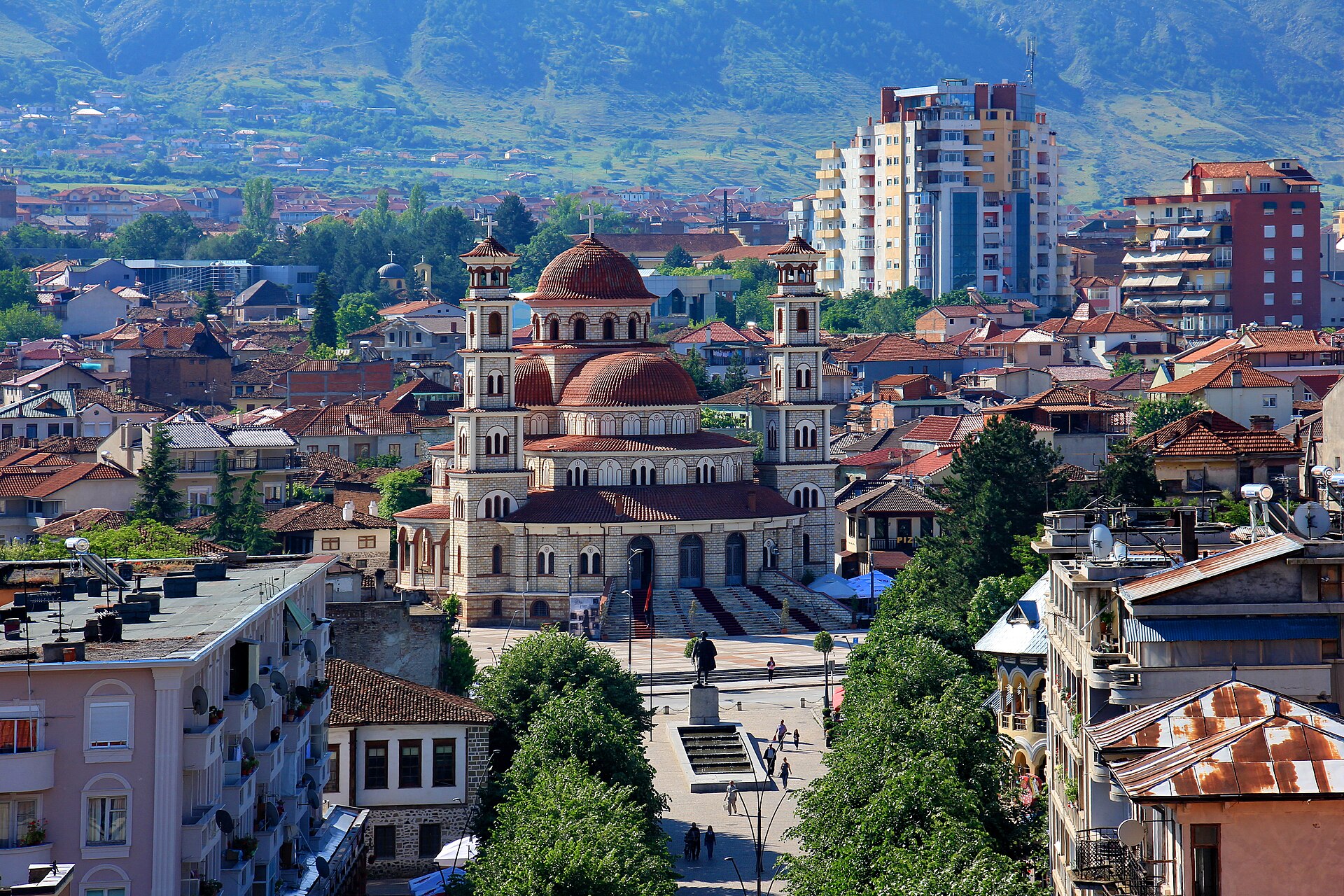
- First Albanian School and Museum of Education — Town centre
The First Albanian School and Museum of Education occupies the building where secular teaching in Albanian began in 1887, under the name Mësonjëtorja. Displays follow the school's story and the place of the language in education. For many locals it is the emotional heart of the city's cultural pride.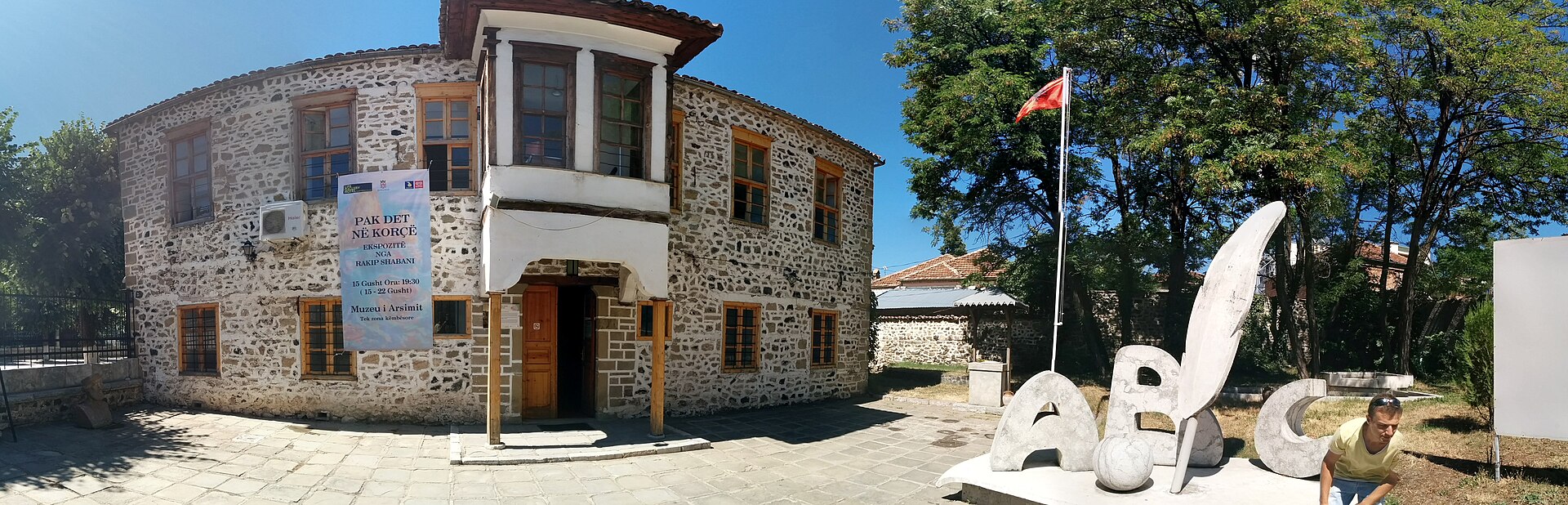
- Gjon Mili Museum of Photography — Town centre
The Gjon Mili Museum of Photography honours a photographer born in Korçë in 1904. A compact exhibition of 240 photographs is joined by interactive spaces, which makes it an easy, absorbing stop of about an hour. Opening times can change, so check the municipal website, bashkiakorce.gov.al, before going. - National Museum of Medieval Art — East of the centre
The National Museum of Medieval Art holds church art and icons in a collection that rewards slow looking. The door can be locked even during published opening hours; ringing the buzzer is the local routine. Allow about an hour, and pair it with the cathedral, which is close by. - French Military Cemetery — North of the centre
The French Military Cemetery lies north of the centre and holds 640 crosses for French soldiers who died in this area in the First World War. It is quiet and unhurried, and a reminder that the Balkan front reached Korçë. A short taxi ride gets there; walking takes longer.
Culture
Korçë has a reputation as the intellectual capital of southern Albania, and the label fits a city that prizes schools, books and music. The town and its hinterland keep a distinct local culture within Albania, with a wide range of traditional and urban songs. The best known are the serenata, tender, guitar-led serenades with roots in the town's evenings and courtship customs. Many of the older houses and villas are low-built and sit on cobbled streets, which gives the centre a village-like intimacy despite its size. The calendar matters too. A carnival is held before Orthodox Easter, with costumes, bands and processions that draw people from across the area, and early August brings the brewery's beer festival. Korçë has a long Orthodox Christian tradition alongside its Ottoman-era mosque and bazaar, and the two sit side by side without fuss. Daily life revolves around the café: people linger over coffee for an hour or more, and a visitor who does the same will be taken for a local. Conversation is warm and curious, and foreign guests are usually asked where they are from within a minute. Dress up a little for evening strolls, as locals do. When entering the cathedral or the mosque, cover bare shoulders and knees, lower your voice, and ask before photographing anyone at prayer.
What to wear
Korçë's traditional dress belongs to southern Albanian costume, made mainly from wool, cotton and felt, with embroidery in dark thread and braid on waistcoats, jackets and skirts. Men's outfits often include a white felt cap, and women's include long layered skirts, aprons and embroidered vests. Such clothing now appears mostly at weddings, festivals, carnival time and folk-music performances, and it is carefully kept within families. Everyday dress is much like any other European town. Residents wear jeans, jackets and smart-casual layers, and people tend to dress neatly for the evening promenade and café hours. Younger people follow wider European trends, and there is little sign of dress being a barrier in either direction. Visitors should dress for altitude. At 850 m, nights are cool even after warm days, so bring a light jacket in summer and proper winter layers, a hat and gloves from late autumn. Footwear matters: the old streets are cobbled and can be slick after rain or frost, so shoes with grip are better than smooth soles or heels. For the cathedral and Mirahori Mosque, cover shoulders and knees, and carry a light scarf for the mosque. Rain is possible in spring and autumn, so a compact waterproof is sensible.
What to eat
- Qofte Korçare — Taverns around the Old Bazaar
Qofte Korçare are Korçë-style meatballs, seasoned and usually served hot with bread, salad or chips. They are a staple of local cooking and a sensible first order for visitors who want something plain and filling. - Tavë kosi — Family-run taverns in the town centre
Tavë kosi is baked lamb under a set yoghurt and egg topping, golden at the edges and soft inside. It is a comforting dish for cool plateau evenings and a regular on traditional Albanian menus. - Fërgesë — Traditional restaurants near the bazaar
Fërgesë is a baked casserole of peppers and cheese, rich and a little tangy, often eaten with bread. It works as a starter to share, and it is easy to find in a vegetarian version. - Stuffed vegetables — Taverns inside the Old Bazaar
Stuffed vegetables, usually peppers or tomatoes filled with rice and herbs, appear on tavern menus when produce is in season. Ask what is fresh that day, as the best versions follow the local harvest. - Grilled meats — Taverns and grill houses in the old town
Grilled meats are the centre of many tavern meals in Korçë, served with salad, bread and sometimes roasted vegetables. Portions are generous, so sharing a plate between two is common and sensible. - Korça beer — Cafés and taverns throughout the town
Korça beer comes from the city's own brewery, which is known across Albania. A cold glass goes well with grilled food, and early August brings a week-long festival devoted to it.
Plan it
Best time. May–June and September–October for mild days and cool evenings. July–August is warm and lively, with the beer festival in early August. Winters on the plateau are properly cold, and the carnival before Orthodox Easter adds colour in spring.
How long. 2–3
Getting there. Fly to Tirana's airport, then take a bus or furgon (minibus) to Korçë by the main road via the Elbasan highway; driving is the easiest option. Furgons also connect Korçë with Pogradec, and there is a bus link to Berat. Buses to Sarandë leave early from the central bus depot near the bazaar.
Budget. low
Tips
- Walk the Old Bazaar in the morning, when it is quiet and cool
- Carry cash for small cafés, market stalls and furgons
- Bring layers: the plateau is cool in the evenings even in summer
- Check the official site, bashkiakorce.gov.al, for museum hours and event dates
- Leave early for day trips to villages like Voskopojë, as furgons run on limited schedules
Etiquette
- Cover shoulders and knees in the cathedral and the mosque
- Ask before photographing people, especially at religious sites
- Greet shopkeepers before asking prices or browsing
Nearby
Sources
- Wikidata Q116341 (CC0)
- Wikipedia: Korçë (rev 1384631068) (CC BY-SA 4.0)
- Wikivoyage: Korçë (rev 5407559) (CC BY-SA 4.0)
- KorçaVonOben, Joergsam (CC BY 3.0)
- Katedralja e Korçës, ShkelzenRexha (CC BY-SA 4.0)
- The Albanian House: House 'Çeva', Sonia Budini (CC BY-SA 4.0)
- Pazari i vjetër Korçë, Sali Jonuzi (CC BY-SA 4.0)
- Korca Old Bazaar, oktopuzz (CC BY-SA 2.0)
- The Albanian House: House 'Lubonja', Sonia Budini (CC BY-SA 4.0)
- First Albanian school of Korçë Mësonjëtorja, 1899 (Public domain)
- Mësonjëtorja e parë shqipe, Korçë, Negrocos (CC BY-SA 4.0)


