Konstamonitou Monastery
Konstamonitou Monastery, Greece
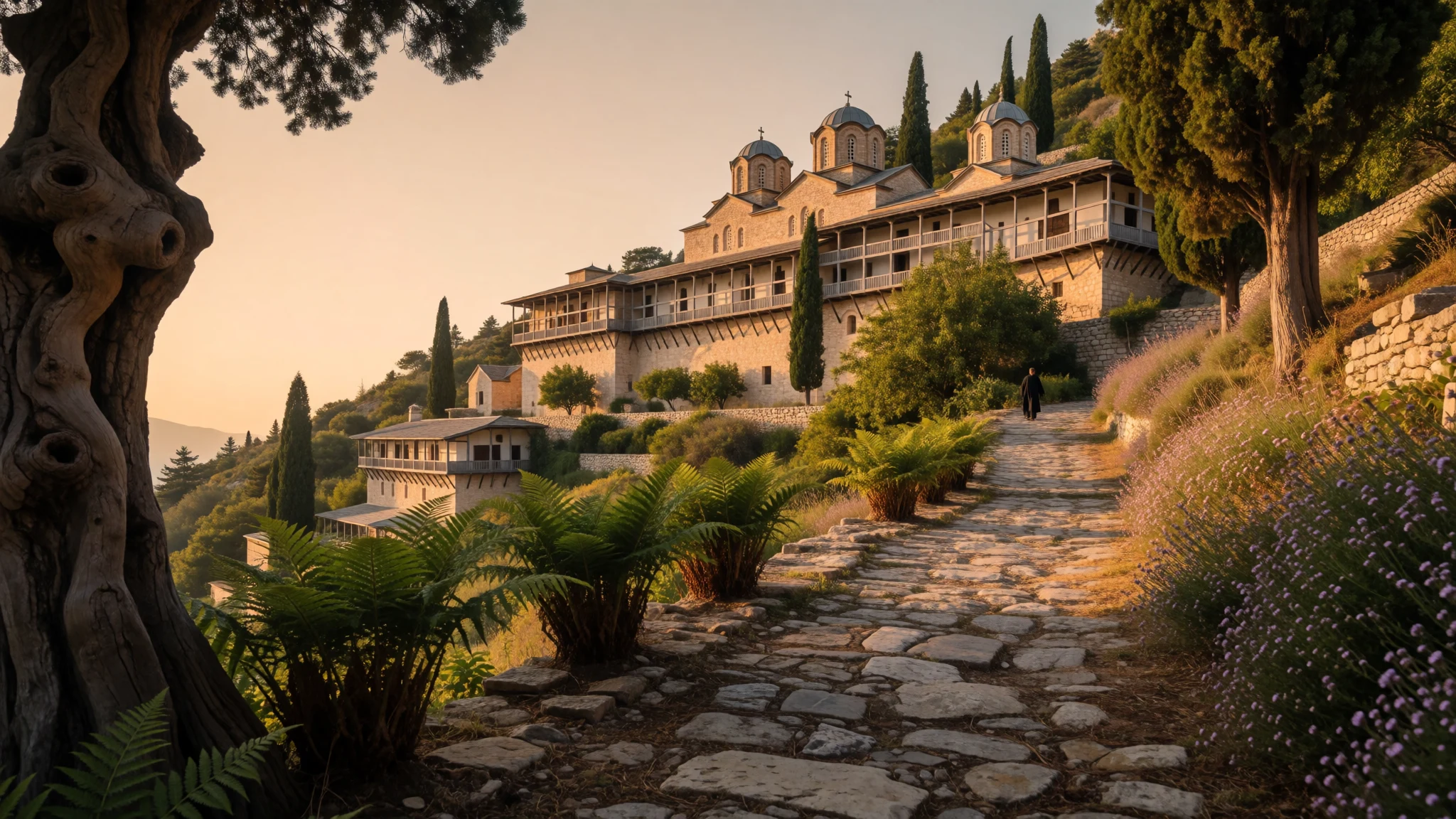
Konstamonitou Monastery is a working Orthodox house above a quiet Aegean harbour on Mount Athos, where visiting means joining a way of life.
The place
Konstamonitou Monastery stands on the south-eastern side of the Athos peninsula in northern Greece, a self-governing monastic region where Orthodox Christian monks have lived for centuries. Within that community it ranks twentieth and last in the formal order of monasteries, a position that reflects protocol rather than worth. The buildings face the Aegean and are reached from the sea or along forest paths, with a small harbour (arsanas) below the main complex. The monastery is dedicated to Saint Stephen. Wikidata records a population of 29, a small number that suits a place where the day is organised around services in the church and work in gardens, workshops and the library. Most of the present complex was built in the eighteenth and nineteenth centuries, so what a visitor sees is mainly later stone and timber rather than anything from its mid-eleventh-century founding. The surroundings are steep, wooded hillside dropping to a rocky shore, and the climate is Mediterranean: bright, dry summers and damp, cooler winters. Reaching it takes planning, because Mount Athos admits only a limited number of pilgrims each day, and women are not permitted on the peninsula at all. Those who do arrive tend to come for quiet and for the rhythm of the services rather than for sightseeing in the usual sense. The experience is closer to a stay in a working household than a museum visit.
Its story
The story of Konstamonitou Monastery begins with an open question: who founded it. One account points to a member of the Kastamonites, a Byzantine aristocratic family. Another credits a man from Kastamon, a town in Paphlagonia on the Black Sea side of Anatolia, whose origin would then have given the monastery its name. The foundation is generally placed in the mid-eleventh century. Very little is recorded about the Byzantine centuries, and the community seems to have remained small and unremarkable for a long time. A fire in the early fifteenth century left it badly damaged. Its recovery came through Radič, a Serbian nobleman who paid for the rebuilding, and the restored house drew many monks from the South Slavic lands. For roughly a century afterwards it prospered, with a lively community and enough means to keep building and copying books. Later fortunes were more uneven, as with many Athonite houses. The surviving buildings come mostly from the eighteenth and nineteenth centuries, which is why the monastery reads as a late-period complex on a much older site. The library still keeps manuscripts and printed books, a reminder that Athonite houses have always been archives as well as places of prayer. Saint Stephen remains the patron, and a printed icon in the British Museum shows the monastery under his protection.
What to see
- The harbour (arsanas) — Shore below the monastery
The harbour below Konstamonitou Monastery is where most visitors first touch the property, stepping off a boat onto a small quay beneath the wooded slope. Buildings stand by the water, and the monastery appears above through the trees. It is a quiet landing, worth a few minutes' pause before the walk up.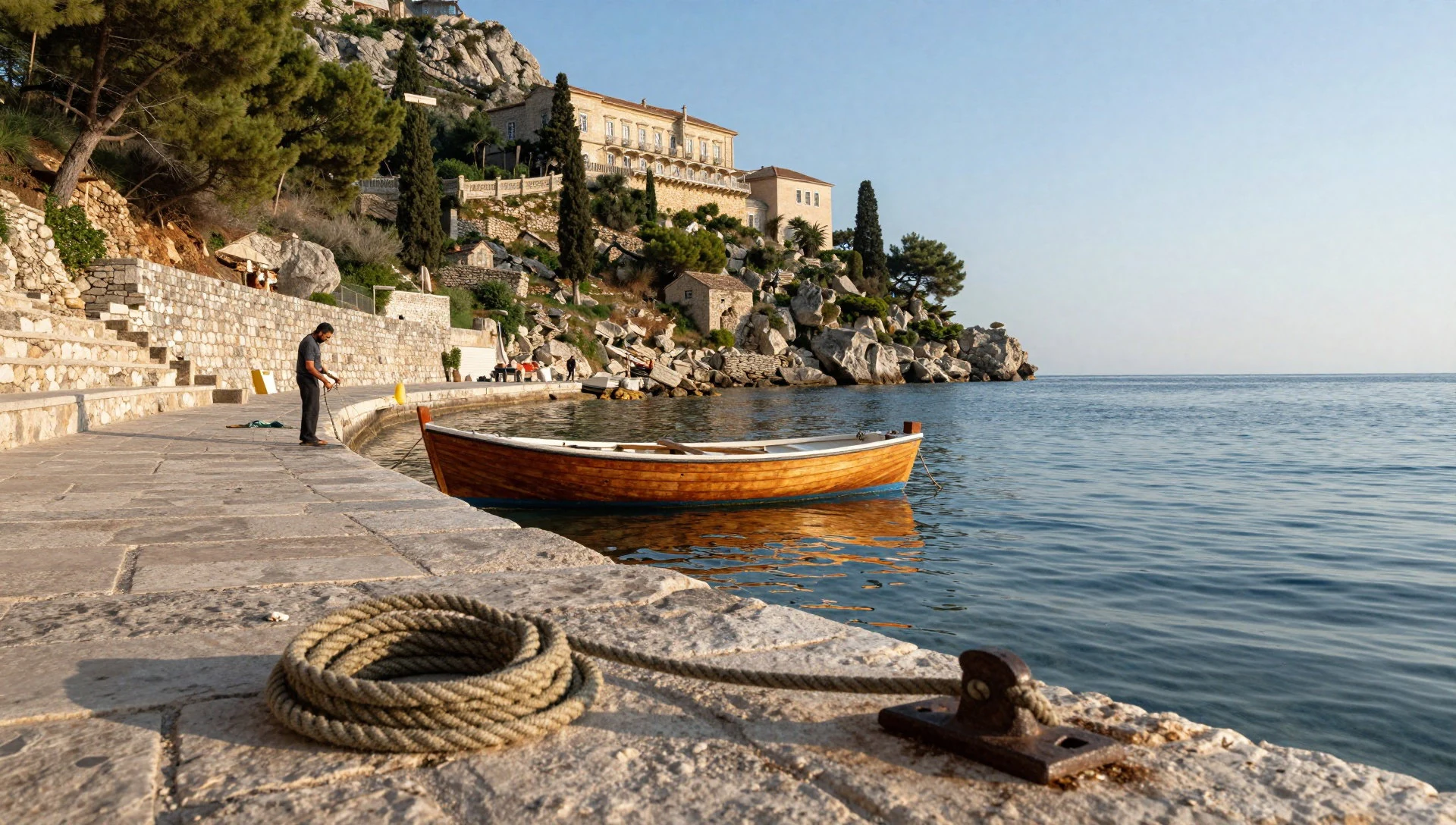
- The monastery complex from the water — South-eastern coast of the Athos peninsula
The main complex of Konstamonitou Monastery rises on a steep hillside, its ranges of stone and timber dating mostly to the eighteenth and nineteenth centuries. Seen from the sea, the cells, galleries and church roofs stack against the forest. The nineteenth-century artist Edward Lear painted the same view, and the outline is still recognisable.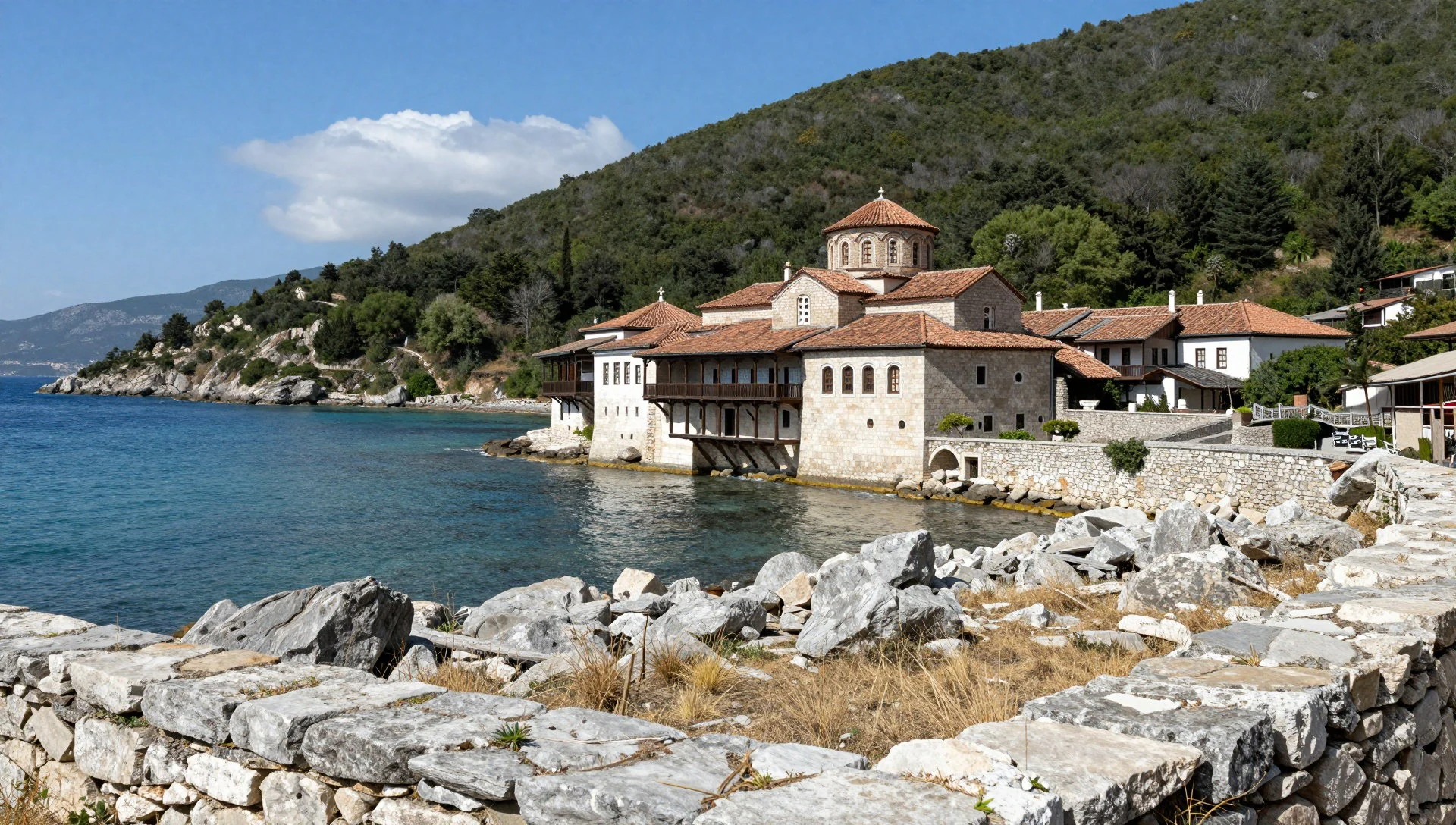
- The katholikon (main church) — Inside the monastery walls
The main church of Konstamonitou Monastery is dedicated to Saint Stephen, the monastery's patron. Services follow the Athonite pattern and begin well before dawn, and guests are normally welcome to stand quietly at the back. The interior is lit by candles and oil lamps, and the icons and painted walls reward patience once eyes adjust.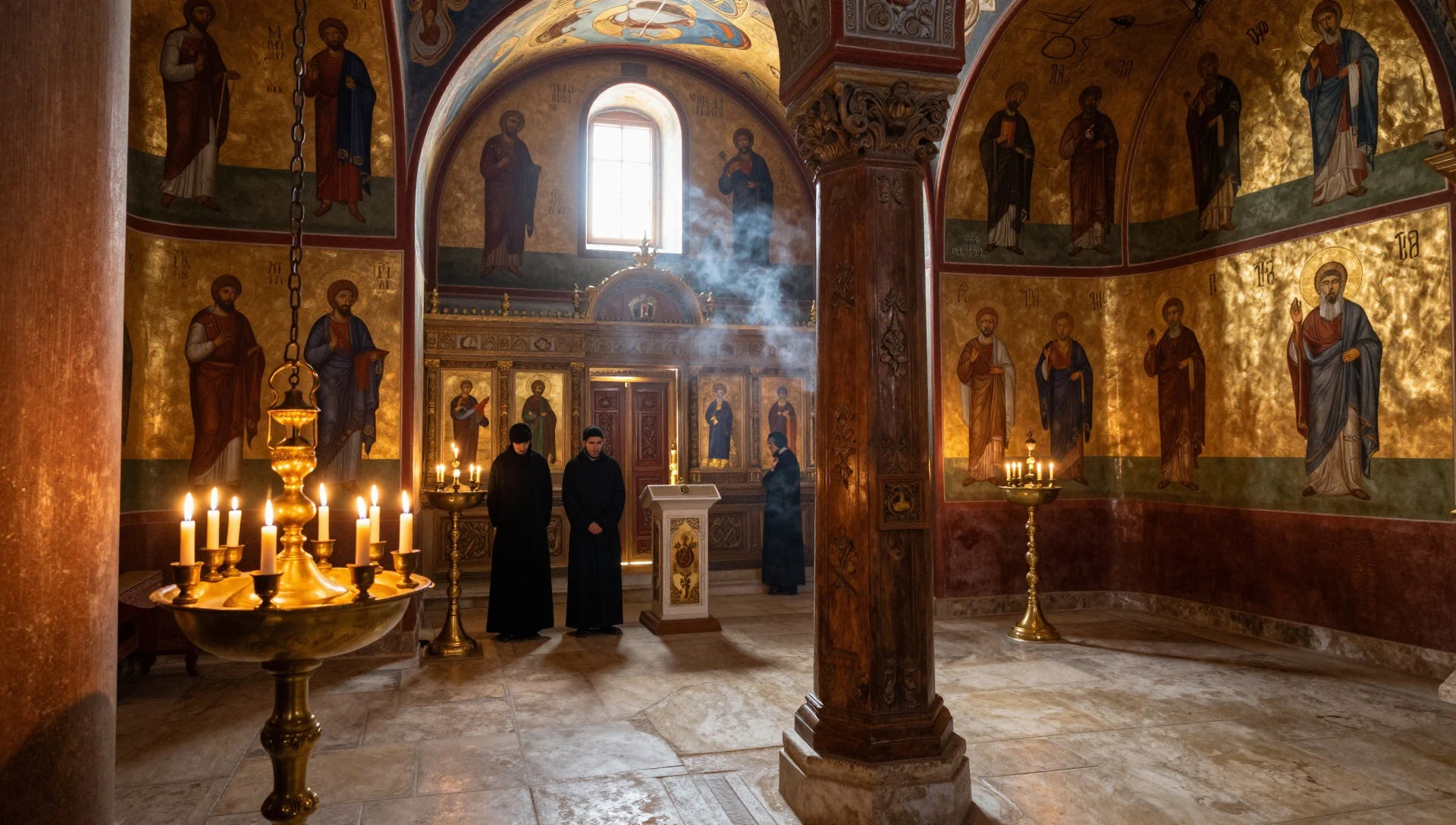
- The library and manuscripts — Inside the monastery
The library of Konstamonitou Monastery holds manuscripts and several thousand printed books, kept by the monks rather than displayed as an exhibition. Casual visitors do not get access, and scholars write ahead through the proper channels. Even so, knowing it is there changes how the quiet corridors feel: this is a house that has kept books for centuries.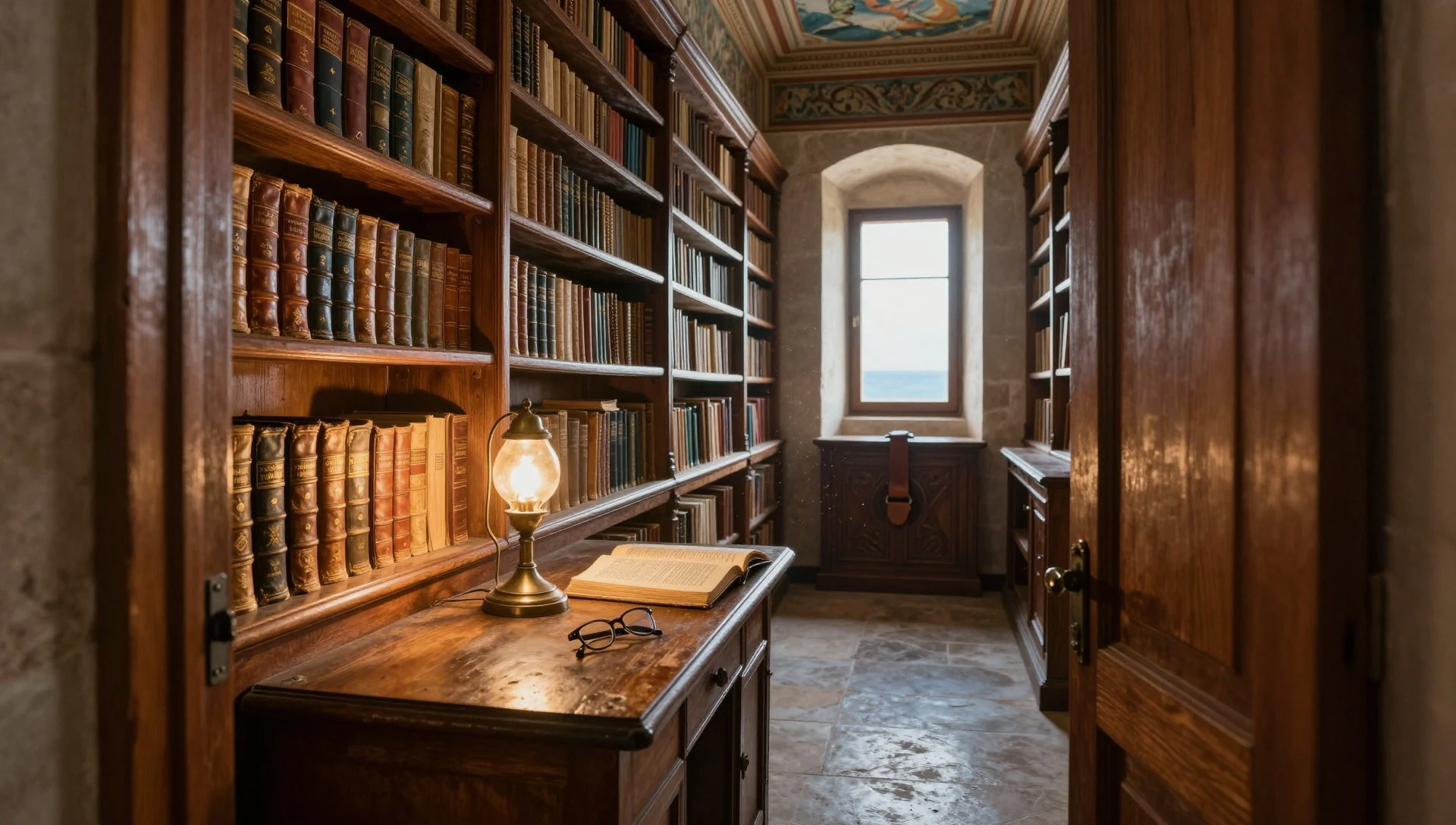
- Forest paths along the coast — Hillside and shoreline around the monastery
Paths around Konstamonitou Monastery link it with the shore and with neighbouring houses along the south-eastern coast. Walking under the trees is pleasant outside midsummer, but trails can be steep and poorly signed, so ask the guestmaster about the route and the remaining daylight before setting out, and carry water.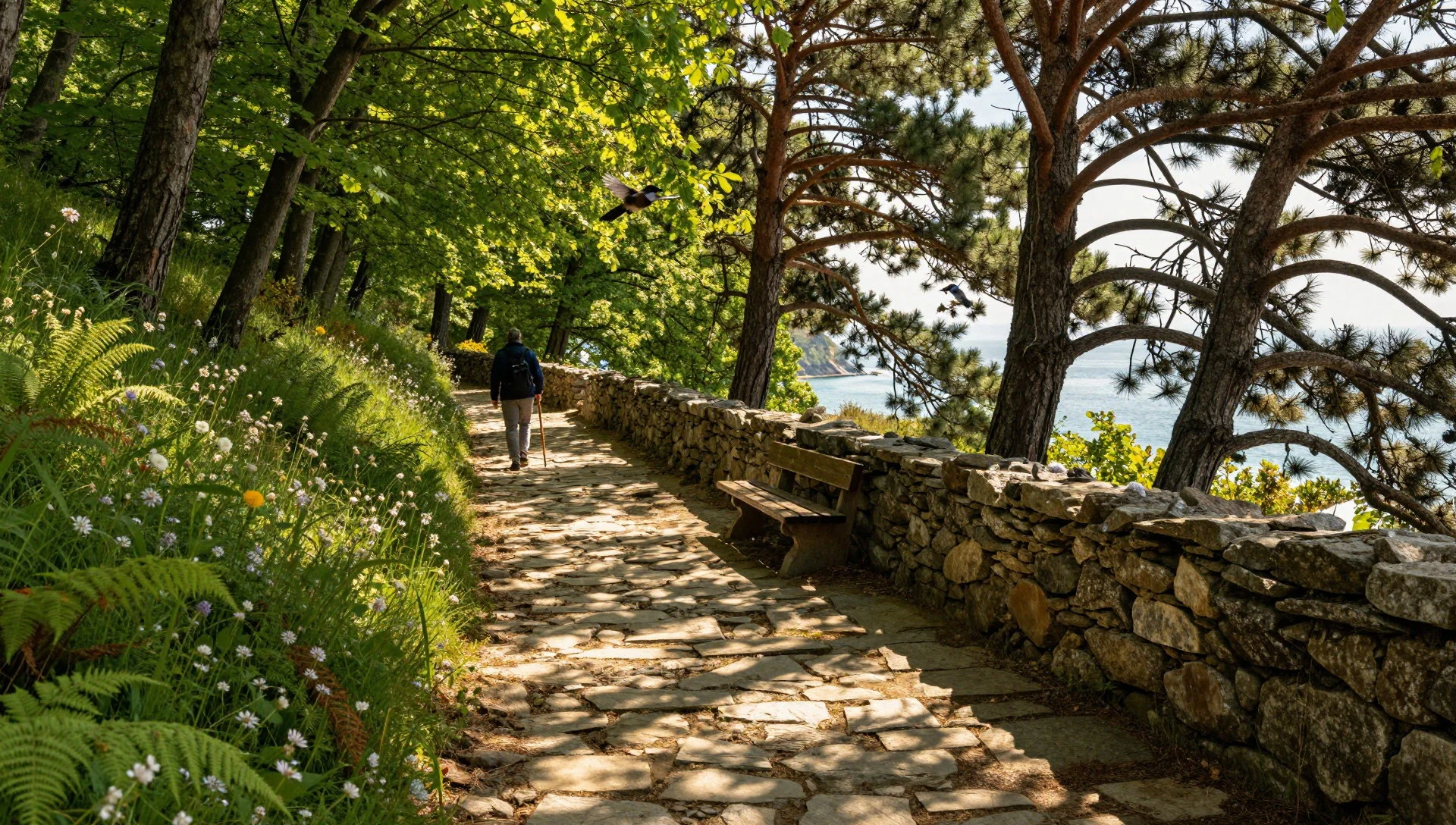
Culture
Konstamonitou Monastery belongs to the Orthodox Christian world of Mount Athos, where daily life follows the church calendar and the cycle of services rather than the clock of the mainland. Monks pray together in the church, eat in the refectory while a text is read aloud, and spend the rest of the day on work and private prayer. Guests are received as pilgrims first and tourists second, and the monastery's hospitality is part of that tradition rather than a commercial service. Feast days and fasting days shape what is served and when, and the church calendar can place festivals on dates that feel unfamiliar to Western visitors. Women cannot visit the peninsula; the rule is long-standing and not open to negotiation. Beyond the monastery, Greek manners are informal and expressive. People gesture freely, favour warmth over stiff politeness, and tend to soften quickly once a visitor offers the first greeting. A few words go a long way: efcharistó (thank you, ευχαριστώ) and parakaló (please, or you are welcome, παρακαλώ). Inside the walls voices drop, phones go quiet and conversation with the monks stays courteous and unhurried. Many are glad to talk, and curiosity goes down better than argument. Dress modestly, keep your voice low in the church, and ask the guestmaster before taking any photograph inside the buildings.
What to wear
Konstamonitou Monastery sits in a place where dress is set mostly by the monastic habit. Monks wear black: an inner cassock, a looser outer robe called the rason, a belt, and a tall cylindrical hat, the kalimavkion, often with a veil. The cloth is wool or heavy cotton, made for work and long services rather than display. In wider Greece, traditional costume now survives mainly for festivals, folk dancing and ceremonial guards: the pleated fustanella kilt, embroidered waistcoats, and regional dresses in wool, linen and silk with woven or stitched trim. On the mainland coast people wear what suits the heat, which means cotton shirts, light trousers, sandals and sunglasses, with beachwear kept to the beach. A visitor to the monastery should dress to be unremarkable. Wear long trousers in light cotton or quick-dry fabric, a shirt with sleeves that cover the shoulders and ideally the upper arms, and closed, grippy shoes or light boots for steep, stony paths. Shorts, sleeveless tops and loud slogans are best left behind. Pack a hat and sun protection for the walk up from the harbour, a light waterproof for sudden weather, and a warm layer, because stone buildings and coastal evenings can feel cool even in summer. A small torch helps on unlit paths and stairs.
What to eat
- Horta with lemon and olive oil — Village tavernas on the mainland coast, and the monastery refectory
Boiled wild or cultivated greens dressed with olive oil and lemon, served warm or at room temperature. It is a staple of fasting days, which makes it a regular on monastery tables. Outside Athos, find it at any village taverna on the mainland coast.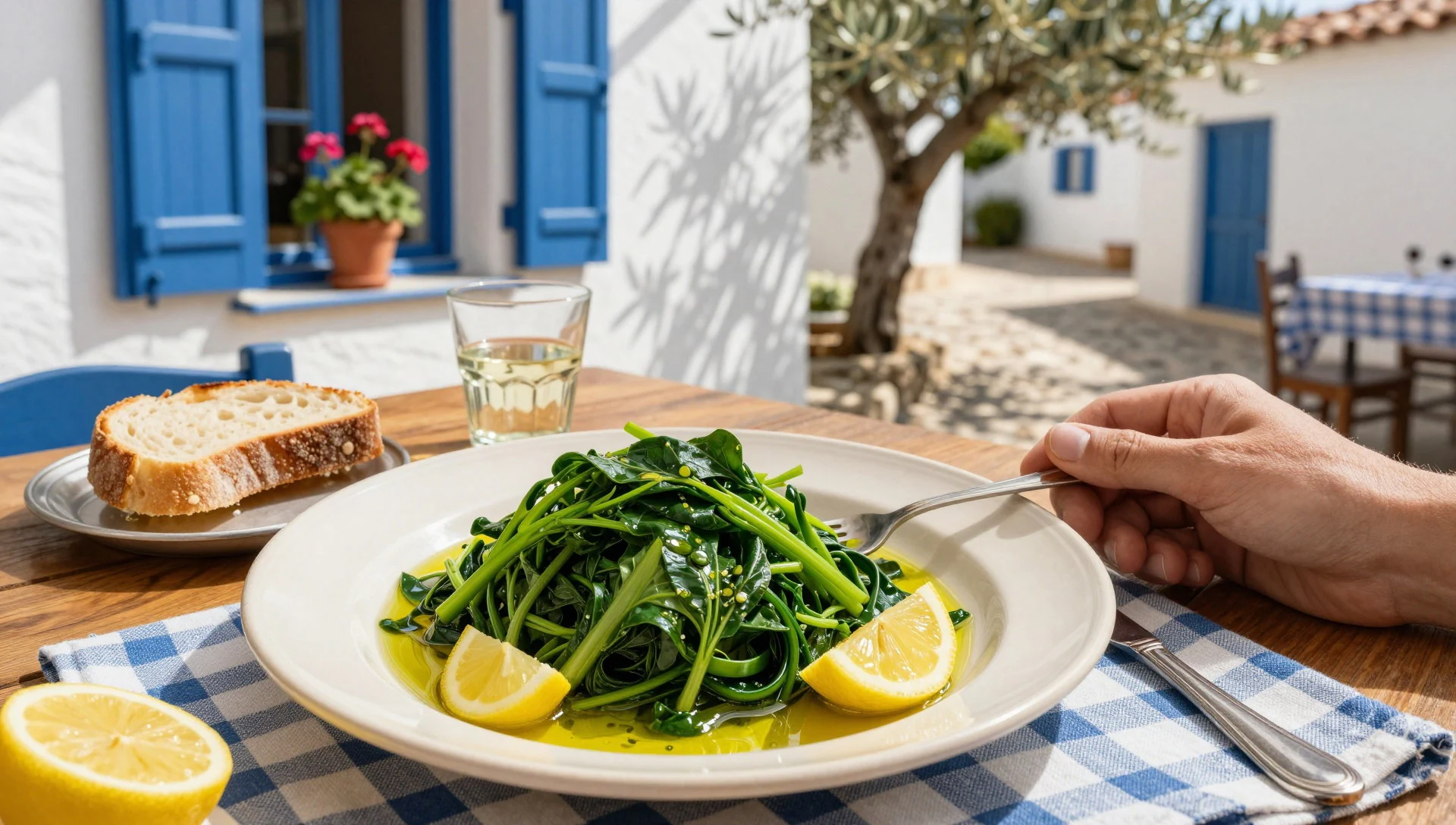
- Fasolada — Village tavernas near the departure ports, and monastery guesthouses
A thick white-bean soup cooked with olive oil, tomato, carrot and celery. It suits cool months and fasting days alike, and arrives with bread and olives. Look for it in village tavernas around the gulf or at a monastery guesthouse when it is offered.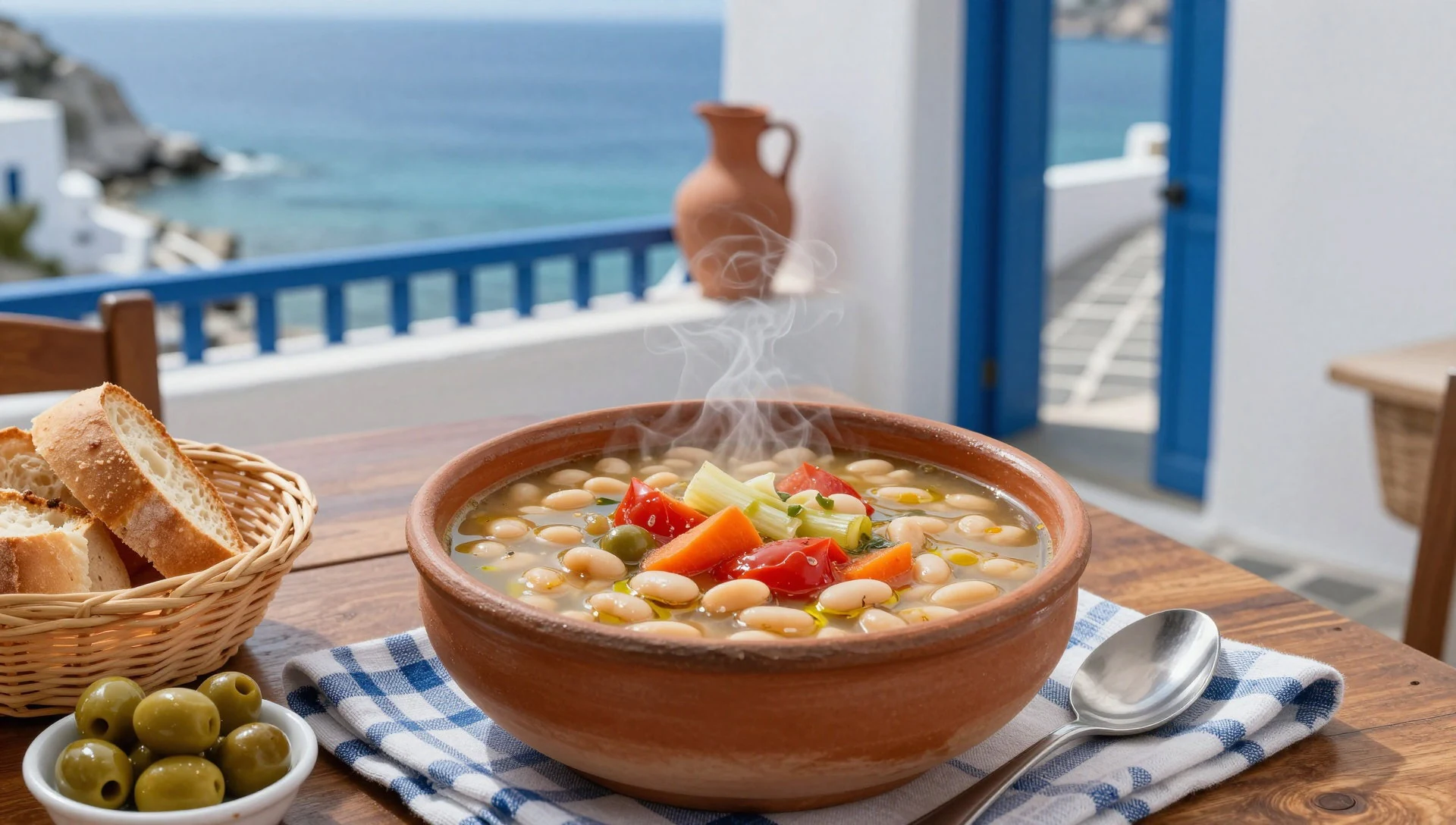
- Fakes (lentil soup) — Village eateries in Ierissos and Ouranoupoli
A plain lentil soup, often finished with a splash of vinegar and a drizzle of olive oil. It is hearty and meat-free, and appears wherever fasting rules shape the menu. Try it in a village eatery near Ierissos or Ouranoupoli, the usual starting points for the peninsula. - Grilled octopus — Harbour tavernas in Ierissos or Ouranoupoli
Octopus grilled over charcoal and dressed with lemon and oil, a seaside favourite. Octopus and other shellfish are often allowed on fasting days when meat is not, which keeps the sea on monastic menus. Find it at harbour tavernas before or after the trip. - Loukoumi, water and tsipouro — The monastery guesthouse reception on arrival
Guests arriving at an Athonite monastery are traditionally offered a small welcome: a piece of loukoumi (soft, sweet jelly), a glass of cold water and often a small measure of tsipouro, a grape spirit. Accept with thanks, even if only a taste.
Plan it
Best time. April, May and October suit walking best, with mild temperatures; July and August are the hottest and driest months, and May to September is the peak tourist season; winter brings the most rain and rough seas that can disrupt boats.
How long. 2–3
Getting there. Fly to Thessaloniki, continue by road to Ierissos or Ouranoupoli, the usual departure points for the peninsula, then take a boat along the coast to the monastery's harbour. A pilgrim's permit must be arranged in advance through the official Mount Athos pilgrims' office; check its site for current rules and boat timetables.
Budget. mid
Tips
- Apply for the permit well ahead, as daily numbers are limited
- Check boat times and sea conditions the day before, and keep a margin for delays
- Carry some cash, as card payment cannot be relied on in remote places
- Bring water, sturdy shoes and a hat for the climb from the harbour
- Arrive with enough daylight to settle in before evening services
Etiquette
- Dress in long trousers and covered shoulders, and keep voices low in the church
- Ask the guestmaster before photographing any interior or any monk
- Women cannot enter the peninsula, so plan accordingly
Nearby
Sources
- Wikidata Q1148615 (CC0)
- Wikipedia: Konstamonitou Monastery (rev 1362387373) (CC BY-SA 4.0)
- Wikivoyage: Greece (rev 5425334) (CC BY-SA 4.0)
- Photo: Манастир Констамонит, Саша Шљукић (CC BY 3.0)
- Photo: Konstamonitou monastery on Mount Athos, Benjen (CC BY 3.0)
- Photo: Arsanàs Konstamonitu (047), Enric (CC BY-SA 4.0)
- Photo: Arsanàs Konstamonitu (048), Enric (CC BY-SA 4.0)
- Photo: Edward Lear, Monastery of Konstamonitou (Public domain)
- Photo: Printed icon with a view of Konstamonitou Monastery (BM) (Public domain)
- Photo: The harbour of Konstamonitou Monastery, Sigma vita (CC BY-SA 4.0)
- Photo: Μονή Κωνσταμονίτου, Stavros Stavrakis (CC BY 4.0)


