Konopiště Castle
Konopiště Castle, Czech Republic
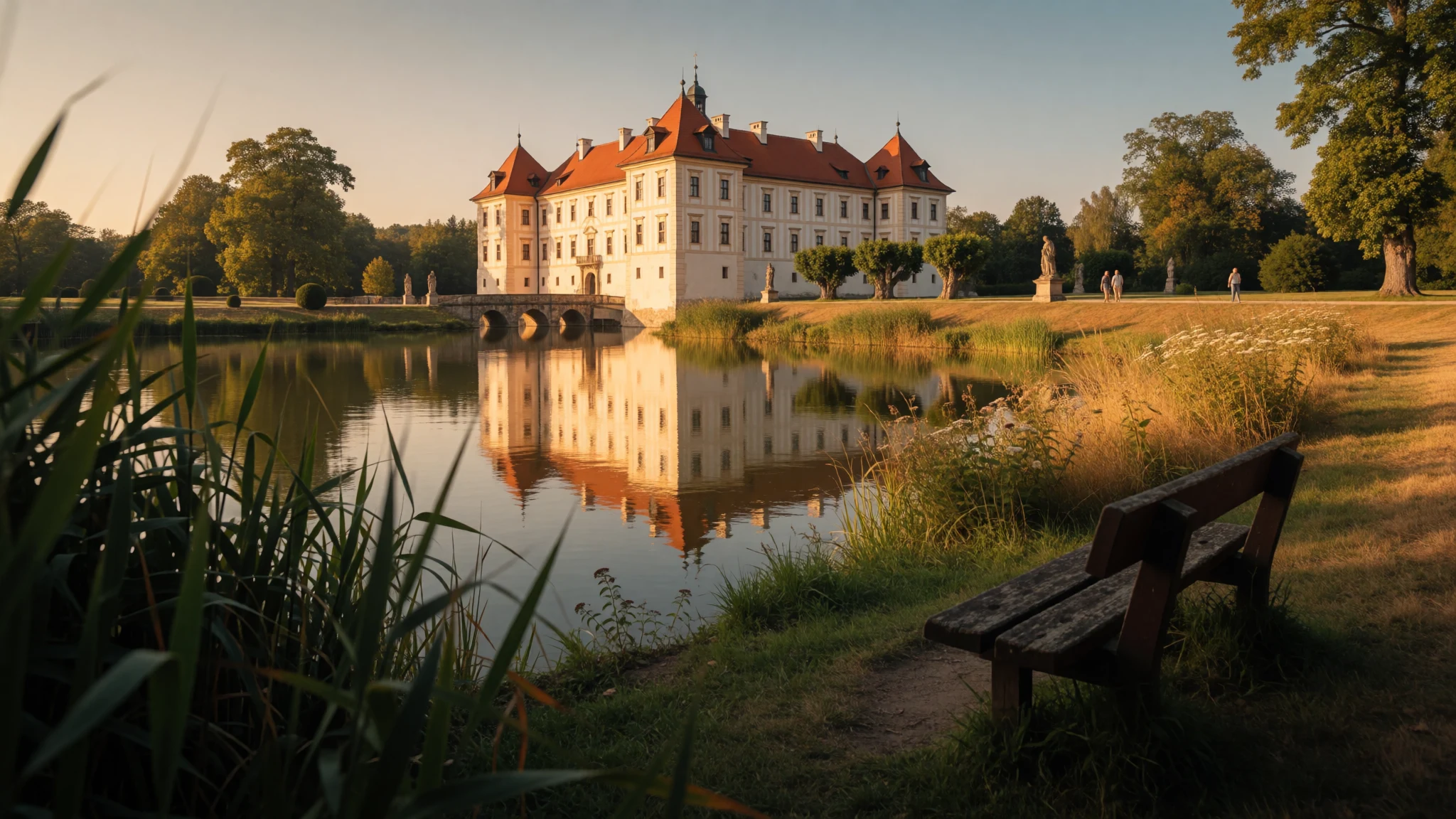
Konopiště Castle is the Bohemian retreat where Archduke Franz Ferdinand kept his roses, his armoury and his hunting trophies before Sarajevo.
The place
Konopiště Castle sits on a gentle rise at about 380 m, just outside Benešov, a small town in Central Bohemia south-east of Prague. The building has three storeys arranged around four wings, with towers, a stone bridge over the moat and a courtyard at its centre. It reads more like a rambling country house than a fortress, because successive owners softened its Gothic bones with Renaissance and Baroque changes, followed by a heavy restoration at the end of the nineteenth century. Around it lies a large landscaped park with a lake, terraces, statues, greenhouses and a rose garden, and the grounds are as much a part of a visit as the rooms.
Most people come for one name. The castle was the last home of Archduke Franz Ferdinand, the Habsburg heir whose murder in Sarajevo set off the First World War. He married a Czech countess, a match the Vienna court looked down on, and Konopiště gave the couple a family life away from that disapproval. Inside, the tour leans on his passions, which were hunting, weapons and gardening, and the guides also place those rooms in the wider story of an empire coming apart.
The atmosphere is calm and rural rather than monumental. Visitors are mostly day-trippers from Prague, school groups and Czech families, with the busiest hours around midday in summer. Compared with Prague's famous castle, this one is quieter, greener and easier to see in half a day, and it rewards anyone who also walks in the park.
Its story
Konopiště Castle began around 1300 as a Gothic fortress modelled on French designs: a rectangle with round corner towers, planned to be hard to attack. Its early owners included a bishop of Prague, local nobles and then the Šternberk family. In 1468 it fell to the army of George of Poděbrady after a siege that dragged on for almost two years, which says something about how well it was built.
Later centuries were less kind. The Hodějovský family added Renaissance touches, then lost the estate after backing the losing side in the Bohemian Revolt, and it passed to Wallenstein and others. Swedish troops plundered it in 1648, and the Vrtba family eventually rebuilt the damaged structure in Baroque style. They replaced the drawbridge with a stone bridge, added a new gateway with statues from the workshop of Matthias Braun, and gave the interiors painted ceilings and carved marble fireplaces.
The last great change came when Franz Ferdinand bought the estate in 1887 with money inherited from the Duke of Modena. He hired the architect Josef Mocker to turn it into a comfortable home fit for a future emperor, and he preferred it to the Belvedere in Vienna. The English-style park, covering 225 ha, was laid out at the same time. In early June 1914 he invited Kaiser Wilhelm II to come and admire the roses, a visit remembered mainly because of what followed. The castle has welcomed the public since 1971.
What to see
- Franz Ferdinand's rooms and trophies — Konopiště Castle, Benešov
The guided tour of Konopiště Castle passes through the archduke's living quarters, guest rooms and halls hung with hunting trophies, including a very large antler collection that says plenty about his habits. Guides also cover the death of Crown Prince Rudolf and the road to Sarajevo, so the rooms become a lesson in late Habsburg history rather than just furniture.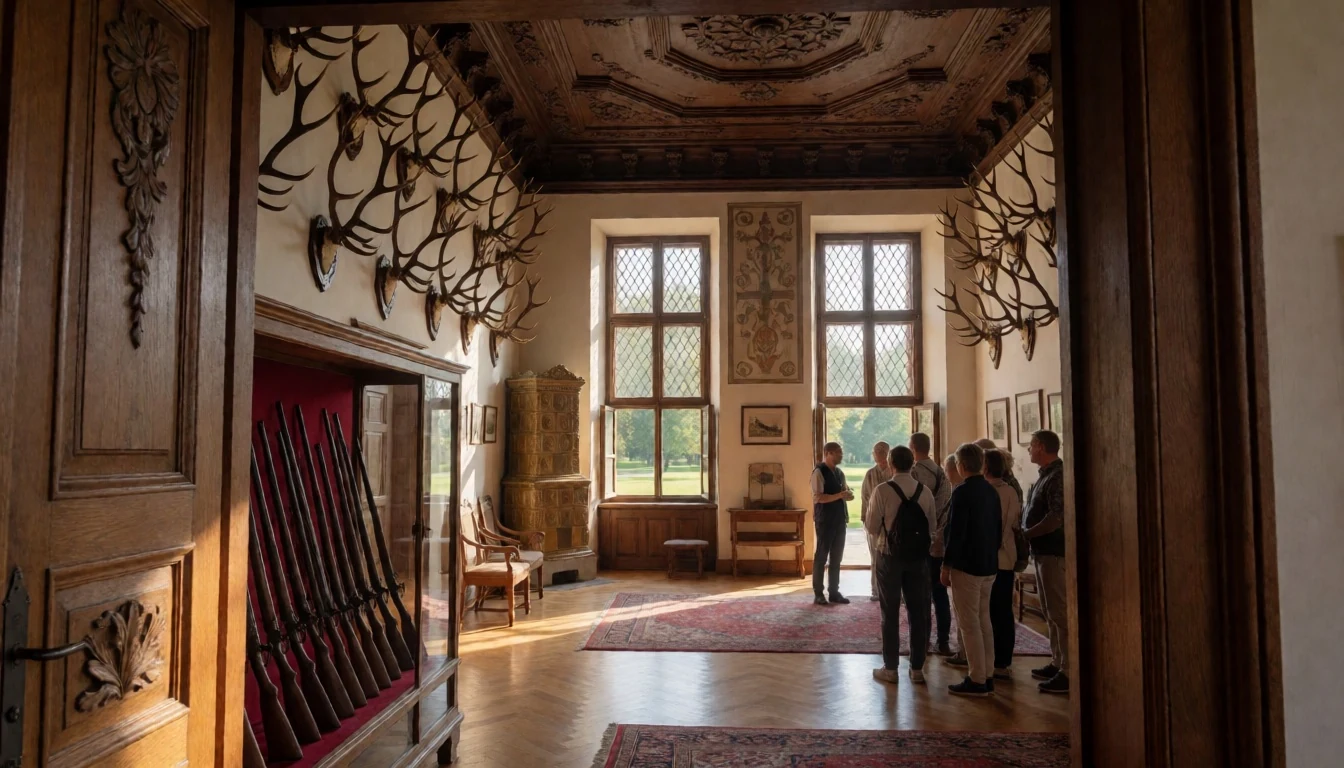
- Armoury and shooting hall — Inside Konopiště Castle
Konopiště Castle holds the Obizzi-Este collection of armour and medieval weapons, brought from Castello del Catajo near Padua in Italy, and many visitors single it out as the strongest part of the tour. A shooting hall with moving targets shows how seriously the archduke took marksmanship. Allow extra time here if arms and armour interest you.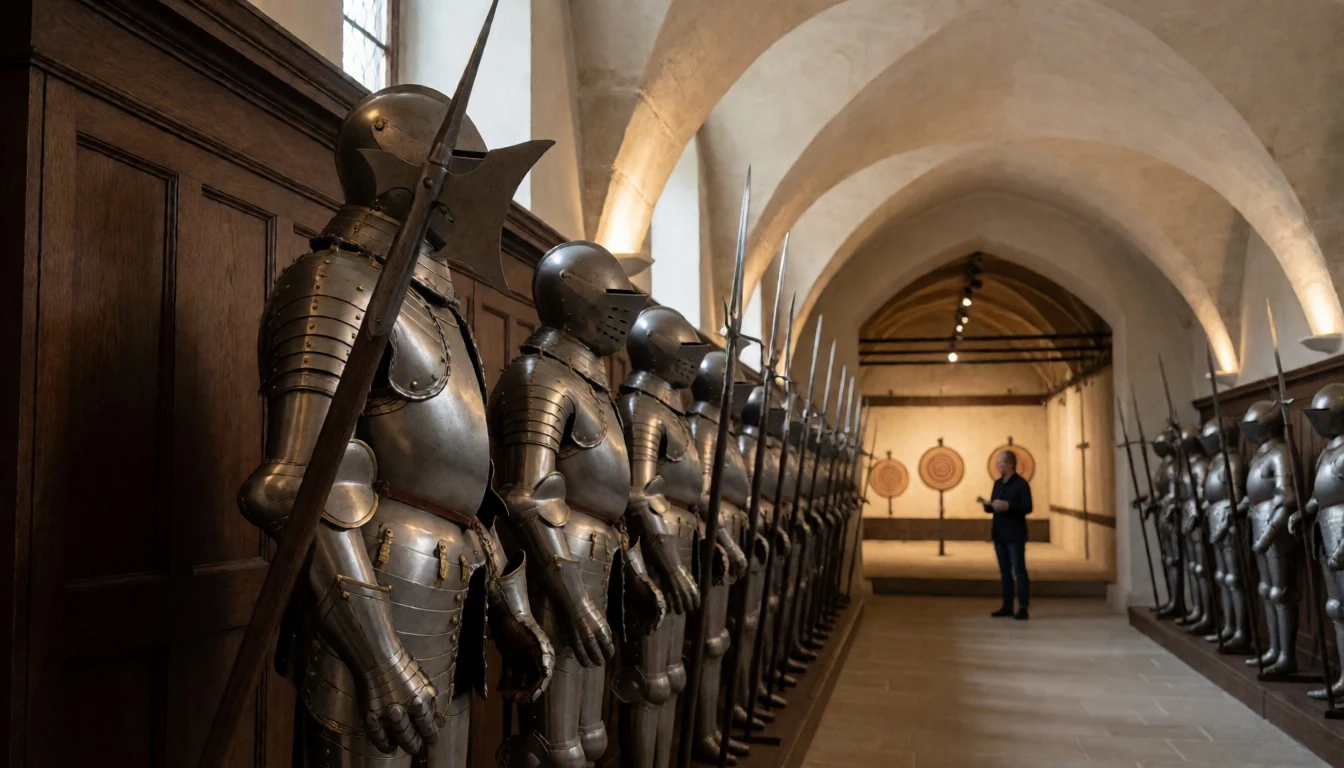
- Park and rose garden — Grounds of Konopiště Castle
The park around Konopiště Castle is an English-style landscape of terraces, statues, greenhouses and a lake, with a formal rose garden among the beds. Franz Ferdinand cared about roses enough to invite the German Kaiser to admire them. Late May to June is when the beds are likely to be fullest, and the paths suit a slow walk.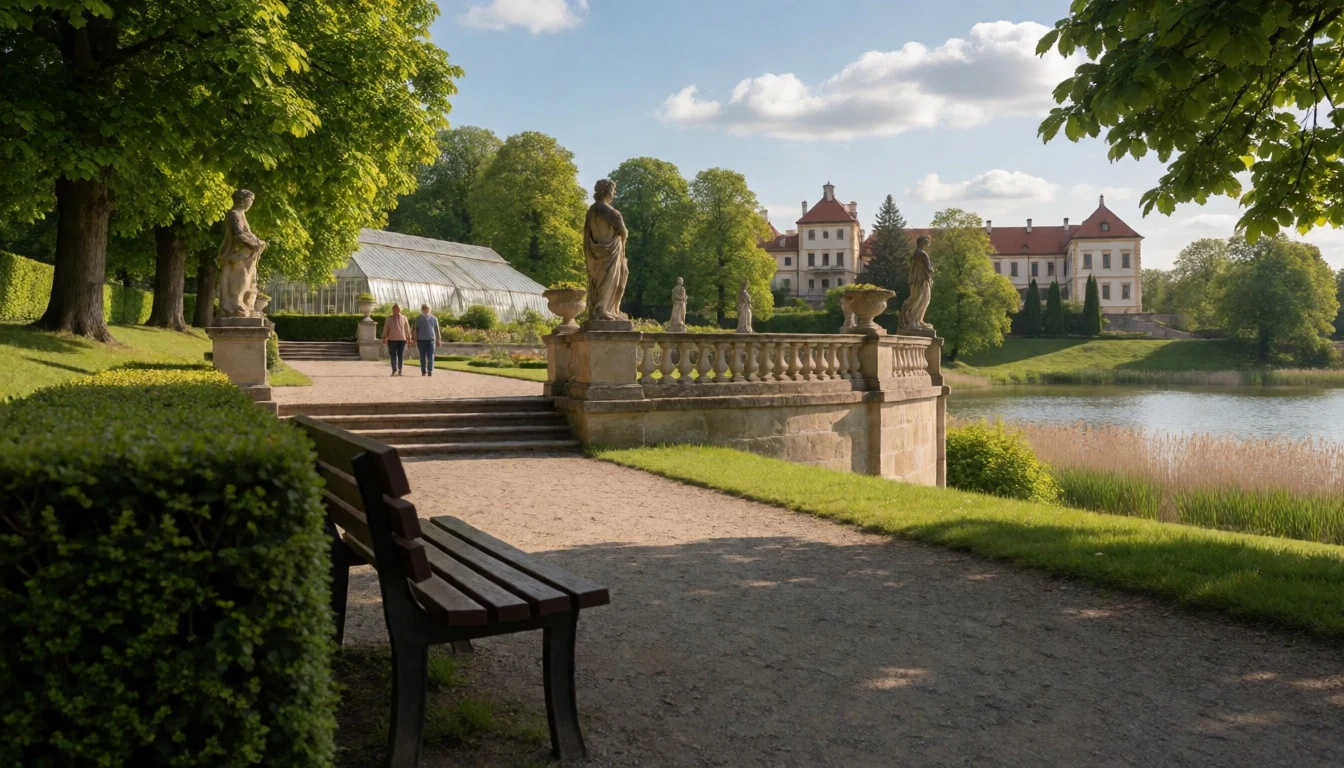
- Český Šternberk Castle — East of Benešov
Český Šternberk Castle, east of Benešov, is a thirteenth-century Gothic castle open to visitors and often described as well preserved. It needs onward transport and a few hours, so treat it as a second stop on a longer day out rather than a quick add-on. Check opening details before setting out.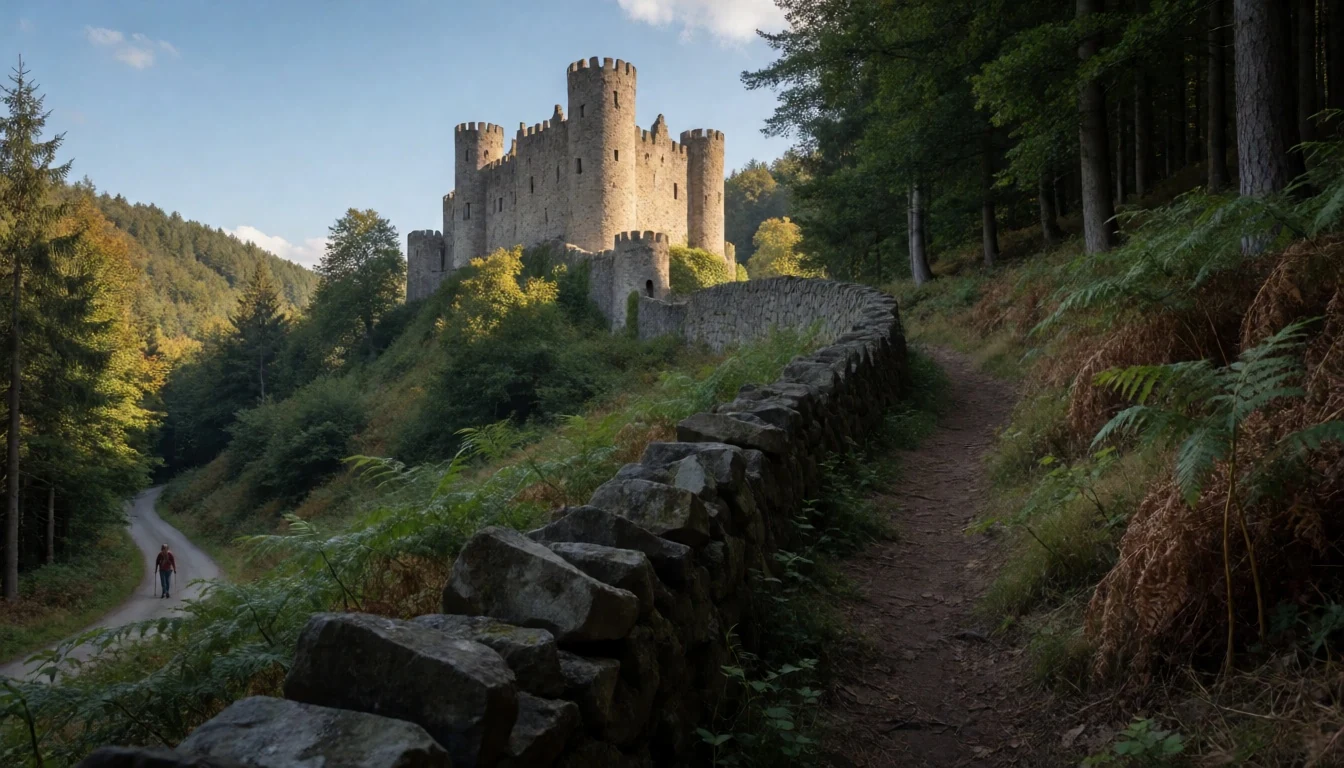
- Sázava Monastery — North-east of Benešov
Sázava Monastery, founded in 1032, lies north-east of Konopiště Castle and offers an older, more religious layer of Bohemian history beside the aristocratic castle. Reaching it from Benešov takes some planning, so check transport first, and consider pairing it with Český Šternberk if driving.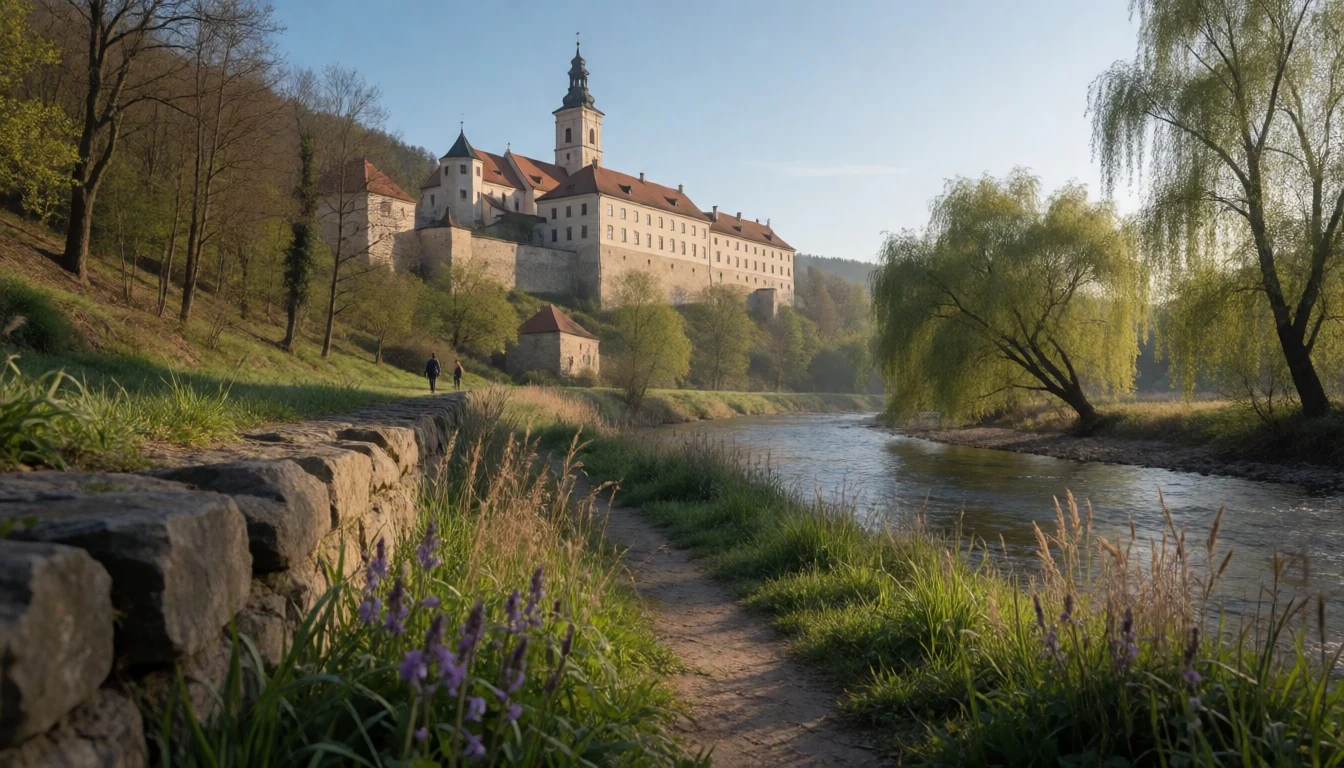
Culture
Konopiště Castle shows a side of Czech history that sits between two identities. Bohemia was then part of the Habsburg empire, ruled from Vienna, yet the archduke's wife was Czech and the castle stands on Czech soil, so imperial and local stories meet here. Today it is run as a heritage site, and its tours stress the twentieth-century consequences of events in Sarajevo.
Hunting culture is the other thread. The trophies, the shooting hall and the weapons collection reflect a world in which hunting was a noble pastime, and visitors who dislike the subject may find the sheer quantity of it surprising. It is worth remembering that the same man who filled his walls with antlers also planted a famous rose garden, and both belong to the picture of an aristocrat at leisure.
Czech social life outside the castle is simpler. After a tour, the habit is to sit in a pub, share a table with strangers when the room is full, and take time over a beer and a plate of sausage. Walking in the park on a weekend afternoon is common among local families, so the grounds feel lived-in rather than staged.
Visitors should follow the guide's instructions on photography and stay on the marked route inside the castle rooms, and keep to the paths rather than stepping onto the beds in the rose garden.
What to wear
Konopiště Castle sits in Central Bohemia, where traditional dress, known in Czech as kroj, survives mainly as folk costume rather than daily wear. Regional versions combine linen blouses with embroidered or lace trim, wool or cotton skirts, waistcoats, aprons, ribbons and headscarves. Such outfits appear today at folk festivals, parades and some weddings, and regional museums show the local variations. In the archduke's day, the clothing most linked to the castle was hunting wear in sturdy green or grey wool, built for damp woods rather than ballrooms.
Day to day, people around Benešov dress like most of the country: jeans, practical jackets, trainers or walking shoes, and layers that cope with changeable weather. Czech families are used to walking and cycling, so outdoor clothing is normal even at a heritage site, and nobody dresses up for a castle tour.
Visitors should wear comfortable closed shoes with grip, because the walk from Benešov station is about two kilometres and the park paths are uneven in places. Bring layers in spring and autumn, a waterproof in any season, a hat and sunscreen in summer, and warm clothes in winter, when old stone rooms can feel cold. No special dress code applies, though covered shoulders are courteous when stepping into a church in town.
What to eat
- Grilled sausage with horseradish and mustard — A pub with an outdoor barbecue near the castle lake
Czech sausage grilled over an open barbecue and served with sharp horseradish, mustard and bread is the classic snack after walking the grounds. Konopiště Castle visitors find it at pubs near the castle lake, where the barbecue runs outdoors in good weather.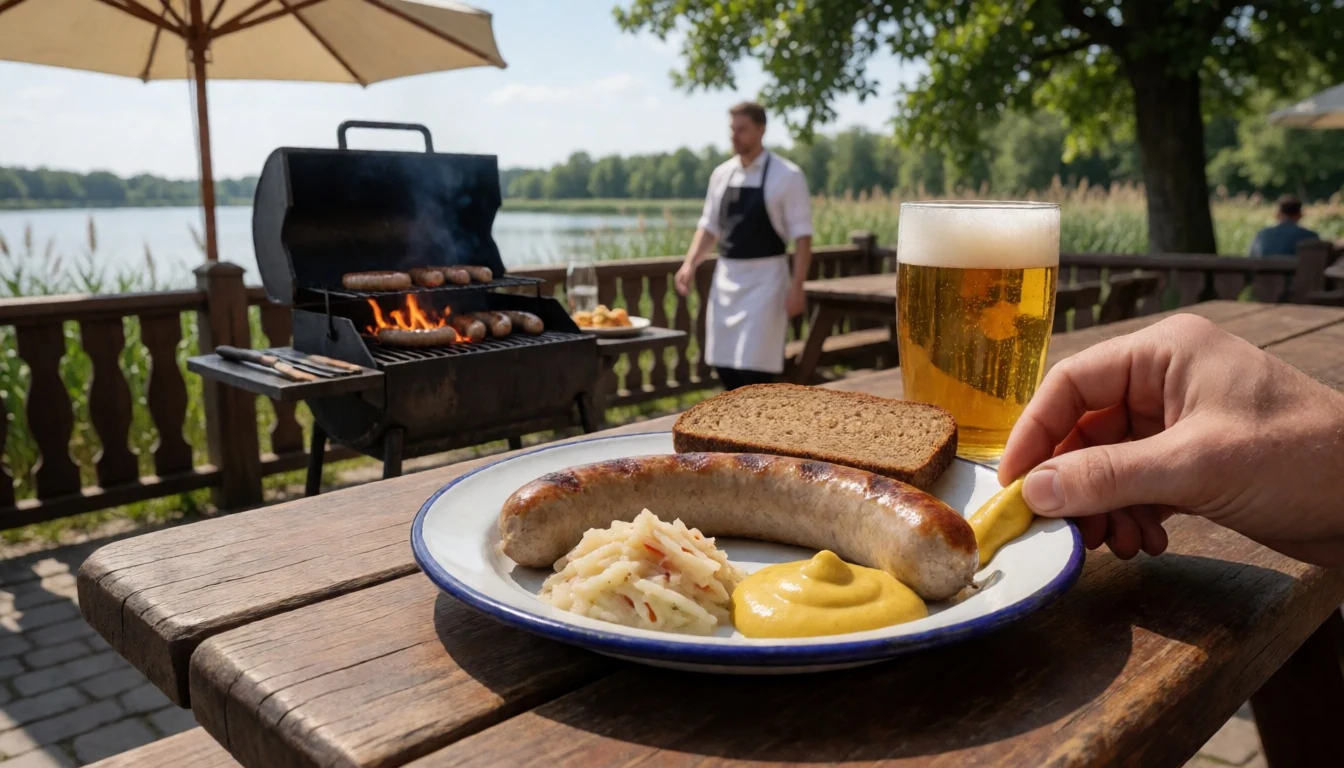
- Svíčková — Traditional Czech restaurants and pubs in Benešov
Marinated beef sirloin in a smooth, slightly sweet sauce of root vegetables and cream, served with sliced bread dumplings and a spoonful of cranberries. It is a standard Sunday-lunch dish across Bohemia and appears on most traditional menus.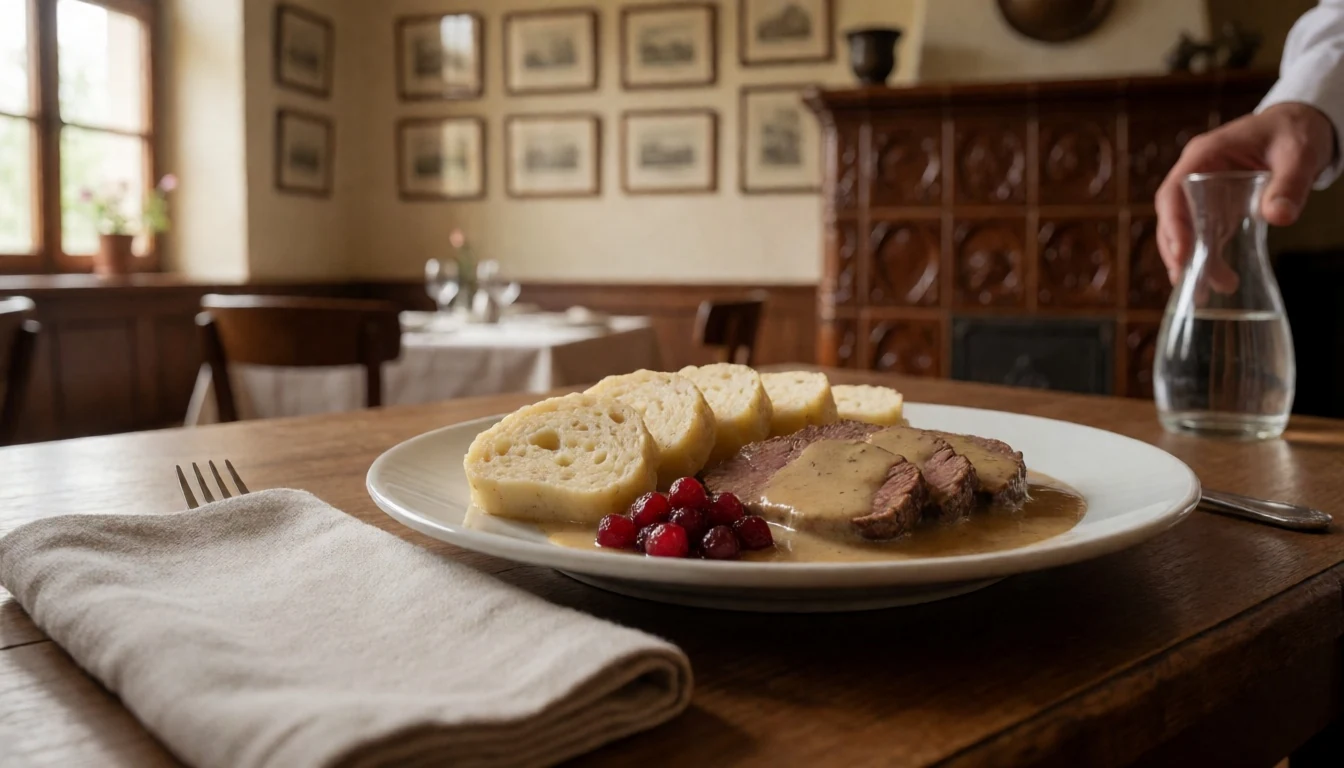
- Guláš with bread dumplings — Any pub or lunch eatery in the town centre
Czech goulash is a slow-cooked beef stew in a rich, paprika-spiced onion gravy, served with sliced dumplings to soak it up. It is a dependable lunch after a morning of touring and is nearly always on a pub's daily menu. - Smažený sýr — Pub menus in Benešov and near the castle
A slab of cheese coated in breadcrumbs and fried until golden, usually served with chips or boiled potatoes and tartare sauce. It is a filling meat-free choice that Czech pubs treat as everyday comfort food rather than a speciality. - Bramboračka — Local pubs and home-style eateries around Benešov
A thick potato soup flavoured with dried mushrooms, marjoram and a little caraway, usually served as a starter. It suits cool days in the park and is one of the cheapest, most reliable dishes in a Czech pub.
Plan it
Best time. May to June for the roses and the green park, and September to October for softer light and fewer school groups. July and August are warm and busier, and winter is cold with fewer tour options, so check the official site before travelling out of season.
How long. 1
Getting there. Fly to Prague Václav Havel Airport and reach the city centre, then take a train to Benešov: a fast service takes about 40 minutes, while slower regional trains take up to about an hour. From the station, follow the yellow tourist trail for about two kilometres on foot to the castle.
Budget. low
Tips
- Check the official site (http://www.zamek-konopiste.cz/) for tour types, opening days and booking before going, as interiors are seen on guided tours
- Go on a weekday morning to avoid school groups and the midday summer crowd
- Read the return train timetable at Benešov station before walking up, so the trip back is not rushed
- Carry some cash as well as a card for pubs and snack stalls
- Bring water and a rain jacket, as the park is open and exposed
Etiquette
- Follow the guide's rules on photography and stay on the marked route inside the castle
- Keep to the paths and off the beds in the rose garden
- Greet staff in shops and pubs with a quick 'dobrý den'
Nearby
Sources
- Wikidata Q744016 (CC0)
- Wikipedia: Konopiště Castle (rev 1378027222) (CC BY-SA 4.0)
- Wikivoyage: Benešov (rev 5394854) (CC BY-SA 4.0)
- Photo: Konopiště Chateau, Marek Prokop (CC BY 2.5)
- Photo: Konopiště Chateux, Juan de Vojníkov (CC BY 3.0)
- Photo: 19.7.16 Konopiste and Benesov 07, donald judge (CC BY 2.5)
- Photo: 19.7.16 Konopiste and Benesov 08, donald judge (CC BY 2.5)
- Photo: 19.7.16 Konopiste and Benesov 09, donald judge (CC BY 2.5)
- Photo: 19.7.16 Konopiste and Benesov 17, donald judge (CC BY 2.5)
- Photo: 19.7.16 Konopiste and Benesov 20, donald judge (CC BY 2.5)
- Photo: 19.7.16 Konopiste and Benesov 22, donald judge (CC BY 2.5)


