Mount Kinabalu
Mount Kinabalu, Malaysia
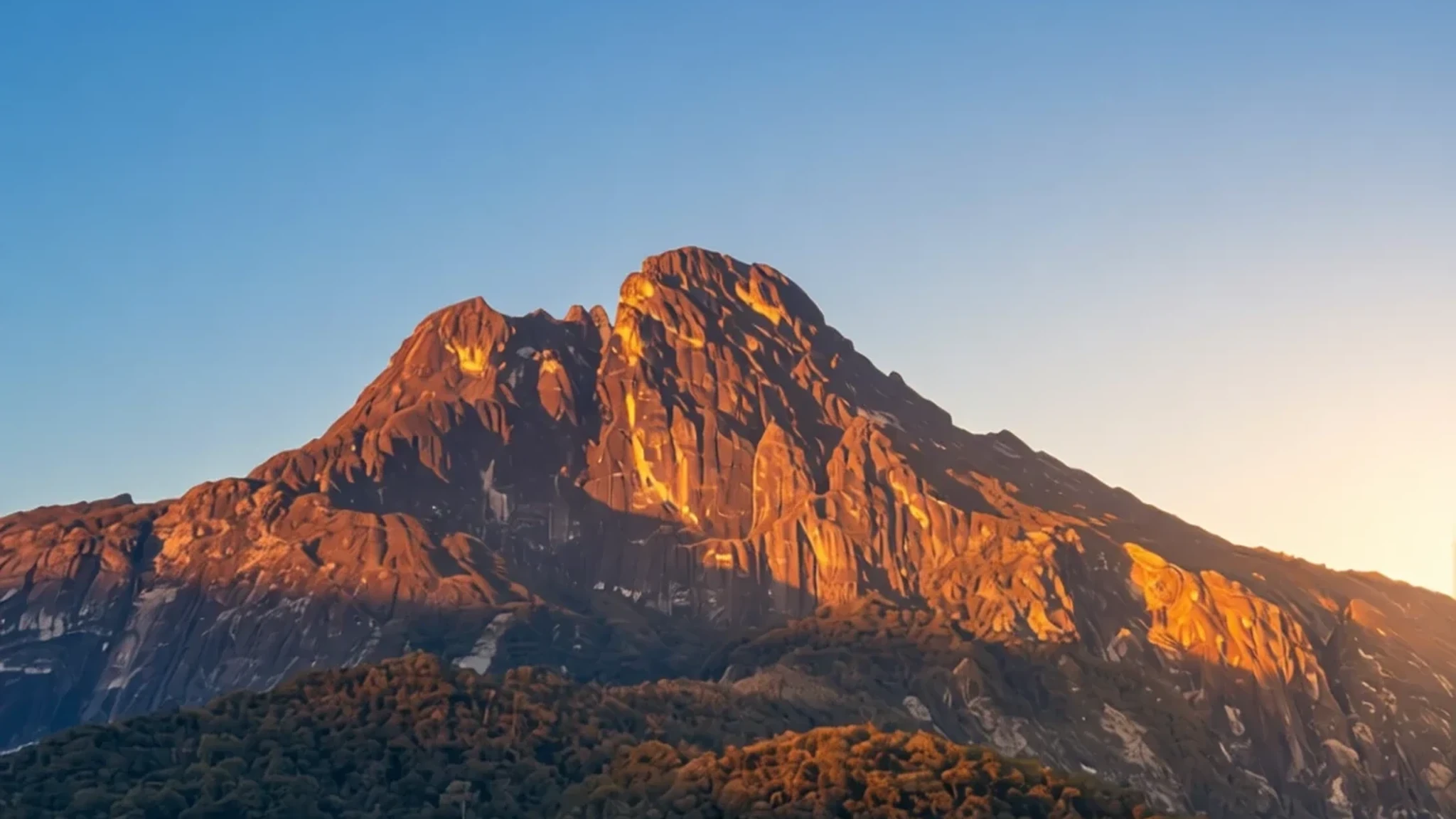
Rise above the clouds to stand on Malaysia's highest summit, where ancient rainforests give way to stark granite peaks and rare alpine flora.
The place
Mount Kinabalu dominates the geography of Sabah on the island of Borneo, piercing the sky as the highest peak in Malaysia and across Maritime Southeast Asia. Rising within the protected bounds of a World Heritage Site, this immense pluton of granodiorite forms the core of a rugged massif that supports an extraordinary concentration of life. Dense dipterocarp forests blanket the lower slopes, transitioning upward through cloud forests to stunted montane scrub before ending in bare, wind-scoured granite at the summit. The mountain supports thousands of plant species, ranging from carnivorous pitcher plants to delicate orchids, alongside hundreds of bird and mammal species that find refuge in its varied ecological zones. Unlike many peaks of comparable scale, the highest point can be reached on foot by travellers with good stamina without needing ropes or technical climbing gear, though local regulations require every group to be accompanied by certified guides. Weather conditions shift rapidly across the slopes, turning humid jungle air into freezing alpine mists within hours. Rivers carve deep valleys away from the central core, nourishing fertile agricultural plateaus where local communities farm vegetables in the shadow of the great peak. The mountain remains a living landscape where indigenous traditions, scientific discovery, and physical endurance intersect every day.
Its story
Mount Kinabalu holds deep historical significance alongside its geological grandeur, having drawn naturalists and explorers since the colonial era. Back in 1851, a British official named Hugh Low reached the summit plateau for the first time on record, guided by a local Dusun man called Lemaing. Low didn't climb the absolute highest rocks, though—he figured they were impossible for humans to scale. Other British figures followed, including Spenser St. John, before zoologist John Whitehead finally stood on the highest point in eighteen eighty-eight. Botanical exploration deepened in the twentieth century through expeditions led by E. J. H. Corner, paving the way for the establishment of the national park in nineteen sixty-four to protect the fragile ecosystems. The mountain experienced a profound tragedy when a severe earthquake struck the region in two thousand and fifteen, triggering massive landslides that altered the shape of the granite spires and claimed eighteen lives, including hikers and guides. In the days preceding the disaster, a group of foreign tourists had engaged in disrespectful behaviour on the summit ridge, deeply offending local residents who viewed the mountain as a sacred resting place for ancestral spirits. The recovery of the park and its trails demonstrated both the resilience of the local community and the enduring reverence demanded by the peak, ensuring that modern visitors approach the climb with renewed humility and respect for the natural environment.
What to see
- Low's Peak Summit — Summit trail, Kinabalu Park
Climbing to the highest point of Mount Kinabalu rewards perseverance with a panoramic vista above the clouds as dawn breaks over Borneo. The trail winds upward through steep stone steps and wooden boardwalks, testing your endurance before you step onto the bare granite summit.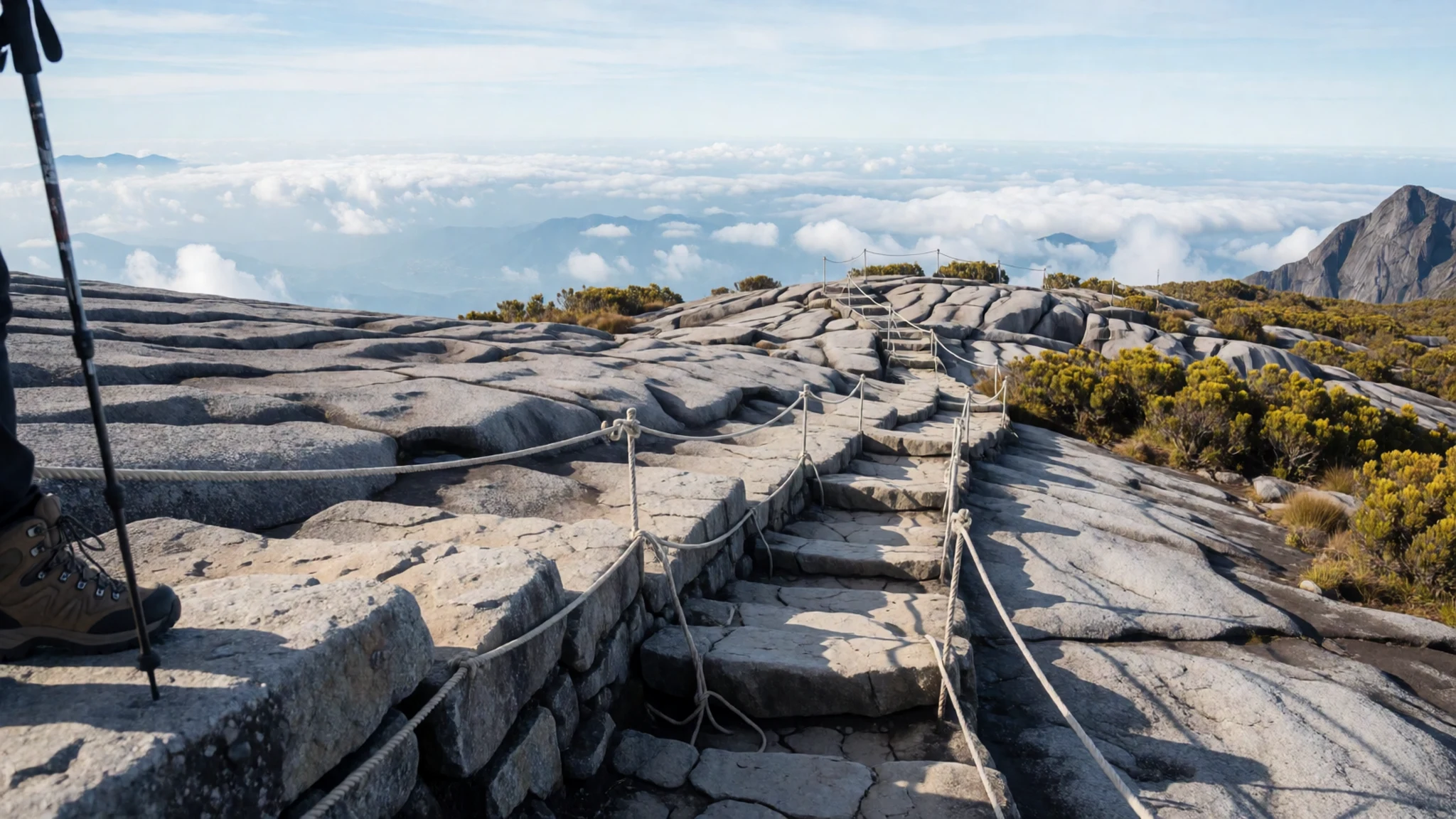
- Kinabalu Park Headquarters — Park entrance, Kundasang
Serving as the main gateway for all climbers and hikers, this verdant hub features informative exhibition halls, botanical gardens displaying native orchids and pitcher plants, and registration desks where you meet your assigned mountain guides before starting the ascent.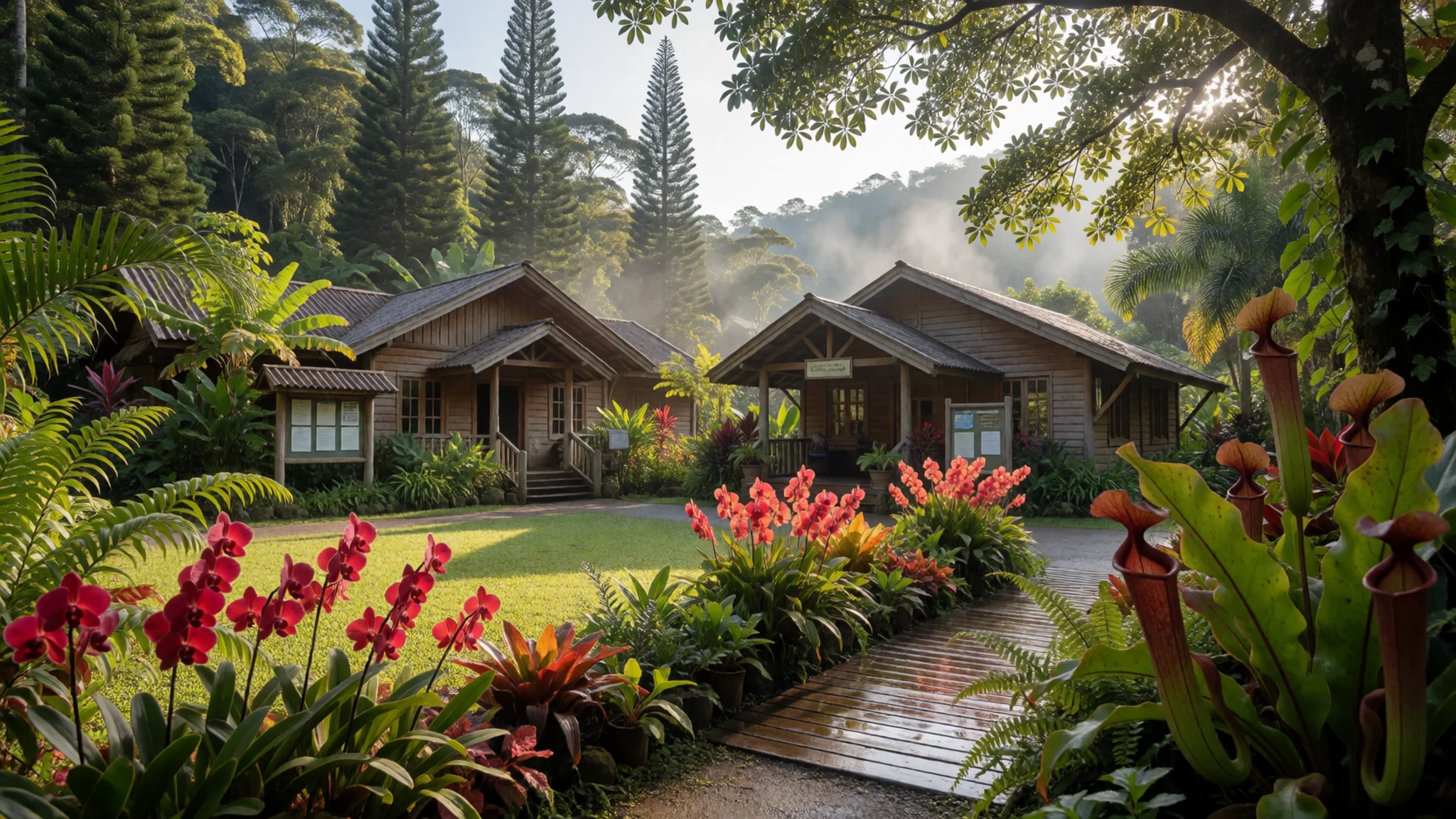
- Poring Hot Springs — Ranau district, lowland sector
Located on the eastern side of the park, these natural sulphur-rich hot water pools offer a soothing soak to relieve tired muscles after your strenuous descent from the mountain. A nearby canopy walkway suspends visitors high above the tropical rainforest floor.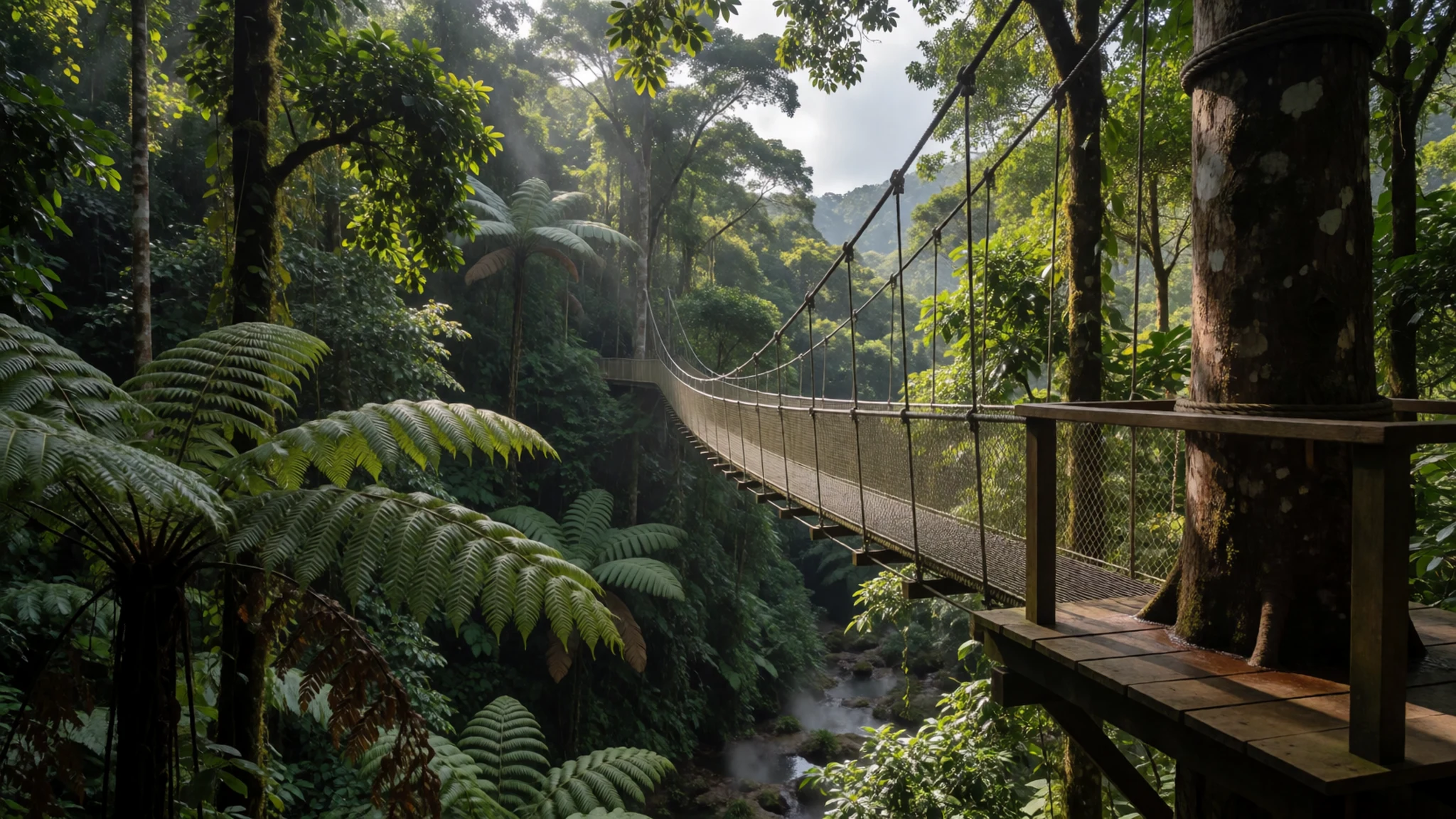
- Kundasang Agricultural Valley — Kundasang plateau, near park boundary
Stretching across the foothills beneath the towering peak, this fertile valley features terraced vegetable farms and panoramic viewpoints. It provides the classic postcard vista of the mountain rising behind patchwork fields and morning mist.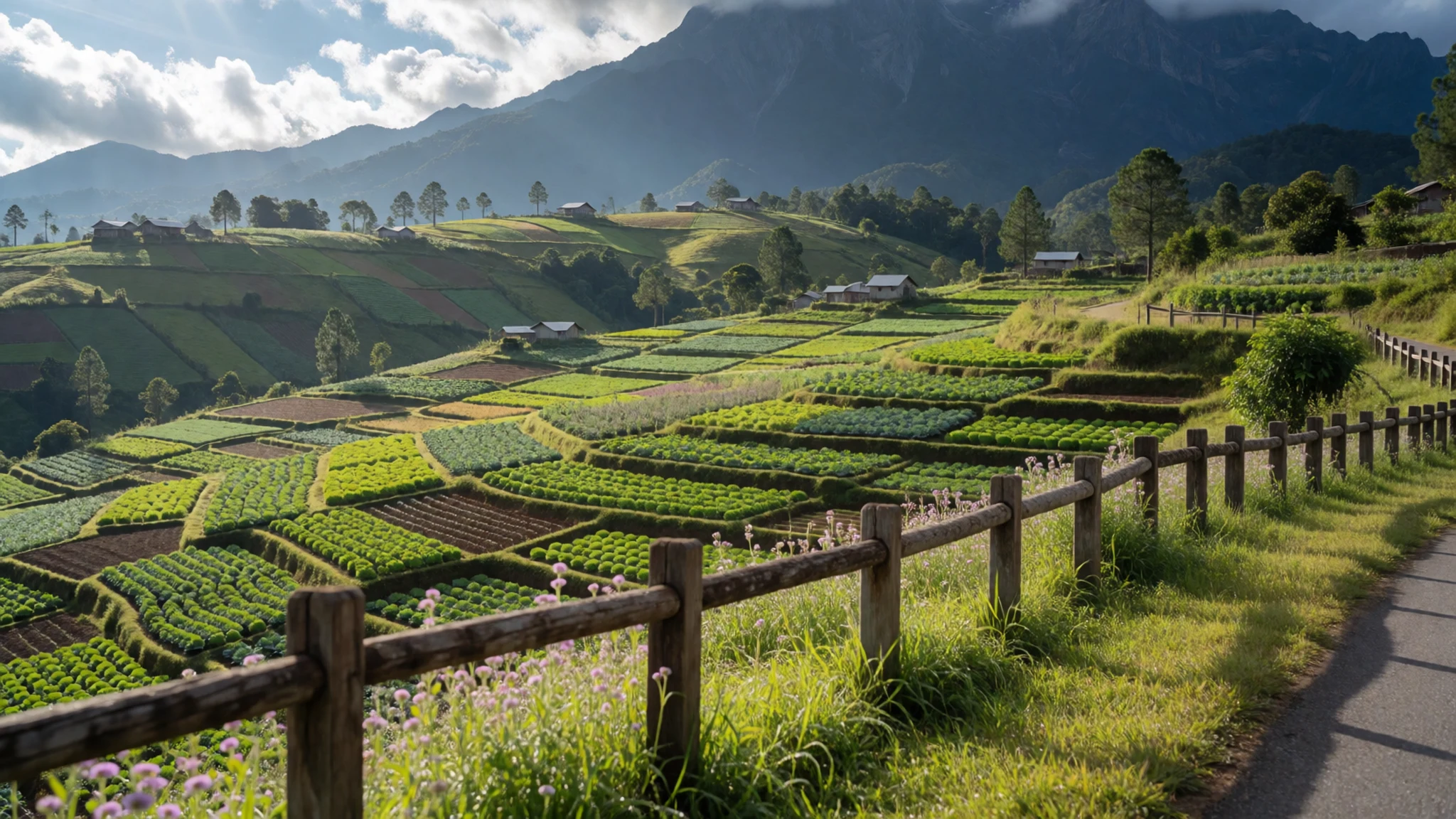
Culture
Mount Kinabalu is steeped in the ancestral traditions of the indigenous Kadazan-Dusun communities, who regard the massif as a sacred sanctuary where spirits of the departed dwell. Traditional ceremonies have long been performed by village ritual specialists to appease these unseen guardians and ensure safe passage for travellers. While modern life has brought modern clothing and technology to Sabah, traditional woven textiles and beadwork remain prized cultural markers, worn during festivals such as the annual Kaamatan harvest celebration with distinct geometric patterns reflecting local folklore and village identities. Everyday dress across the region is practical and casual due to the tropical climate, consisting of lightweight fabrics, breathable cotton shirts, and sturdy footwear for navigating uneven terrain. Visitors venturing onto the mountain should pack layered clothing, waterproof shells, and broken-in hiking boots capable of handling wet, slippery roots and steep granite slabs. Always treat the mountain and local shrines with deep reverence by keeping your voice down and following your guide's instructions at all times.
What to wear
Traditional attire among the indigenous Dusun and Kadazan communities of the Mount Kinabalu region reflects a rich heritage of handloom weaving and natural dyeing techniques. Elaborate costumes feature dark cotton garments accented with intricate gold thread embroidery, intricate beadwork necklaces, and woven headbands that denote specific community lineages, traditionally reserved for weddings, harvest festivals, and ceremonial gatherings. In daily life across Sabah, locals dress in comfortable, lightweight modern clothing suited to the tropical heat, such as cotton shirts, trousers, and sandals or trainers. When preparing to visit Mount Kinabalu, visitors must shift their wardrobe to accommodate extreme climate variations, transitioning from humid jungle gear at the base to thermal layers, fleece jackets, wool hats, and windproof outer shells for the freezing summit push. Sturdy, waterproof walking boots with reliable grip are essential for safety on the damp forest trails and steep granite rocks, while modest clothing covering shoulders and knees is recommended when visiting villages around the foothills.
What to eat
- Kin-Zhi Mien — Morning coffee shops and roadside stalls
Also known as economy mee, this beloved local breakfast noodle dish features yellow noodles topped with savoury selections of sliced meats, fried eggs, stuffed tofu, and vegetables, found readily in morning coffeeshops around Ranau and Kundasang.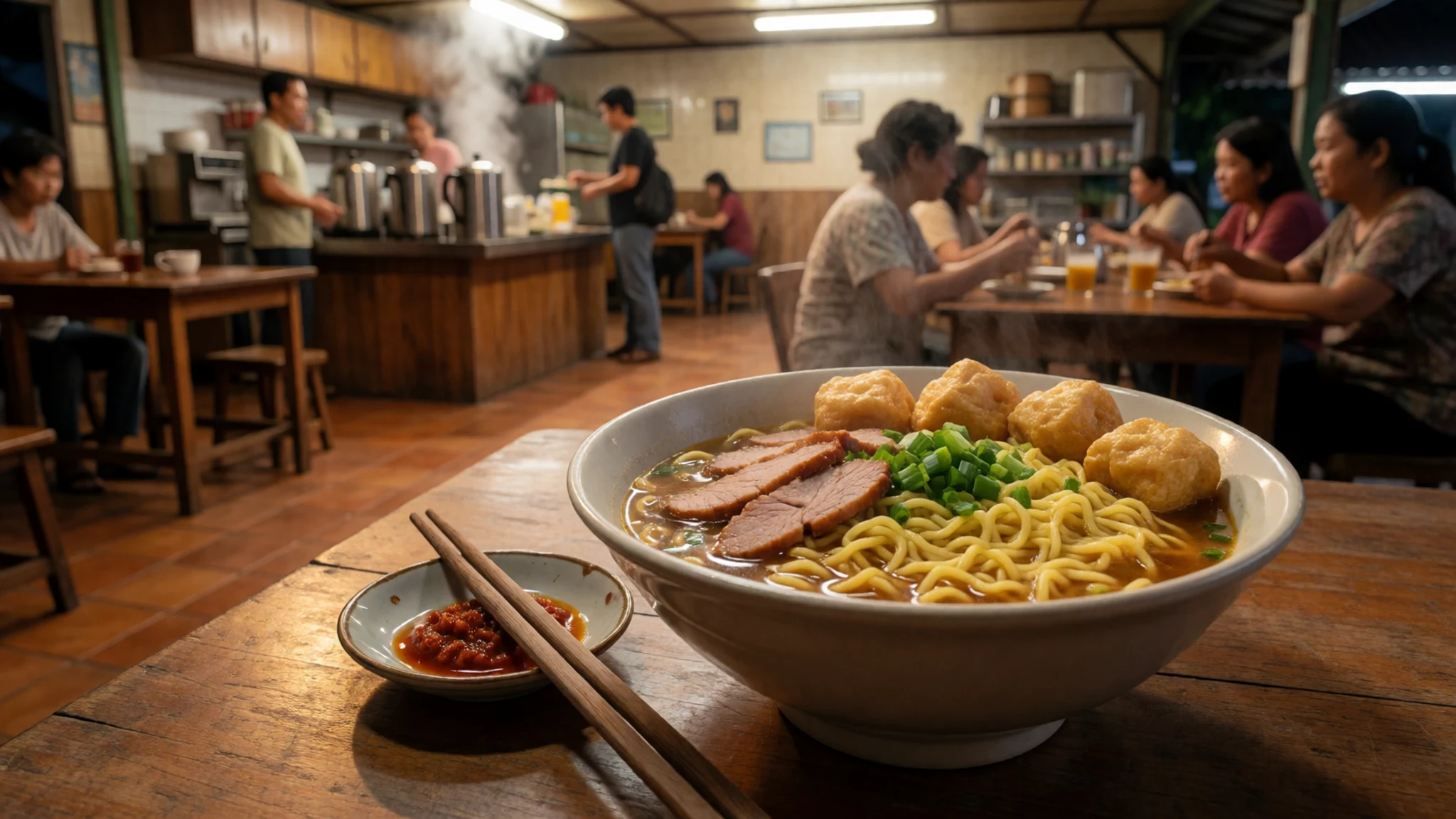
- Sang-Nyuk Mien — Local noodle stalls and town eateries
A comforting bowl of pork noodles featuring tender slices of fresh, lightly marinated pork served in a rich, clear broth alongside smooth noodles, popular in bustling noodle houses across the West Coast Division.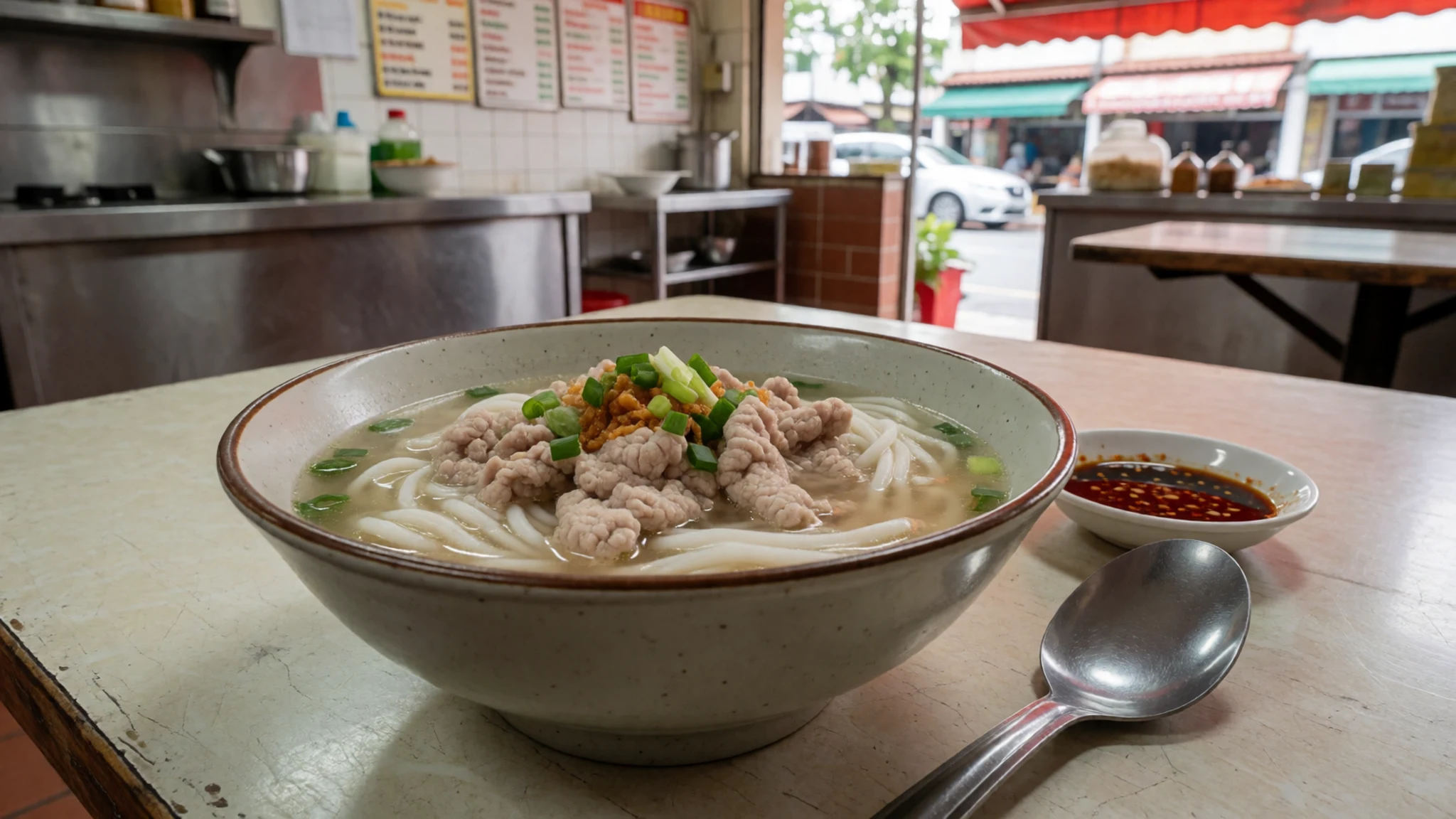
- Ngiu Chap — Traditional food courts and market stalls
A hearty traditional beef noodle soup combining various cuts of beef, tender brisket, meatballs, and offal in a deeply spiced broth, cherished by locals as a warming meal after mountain excursions.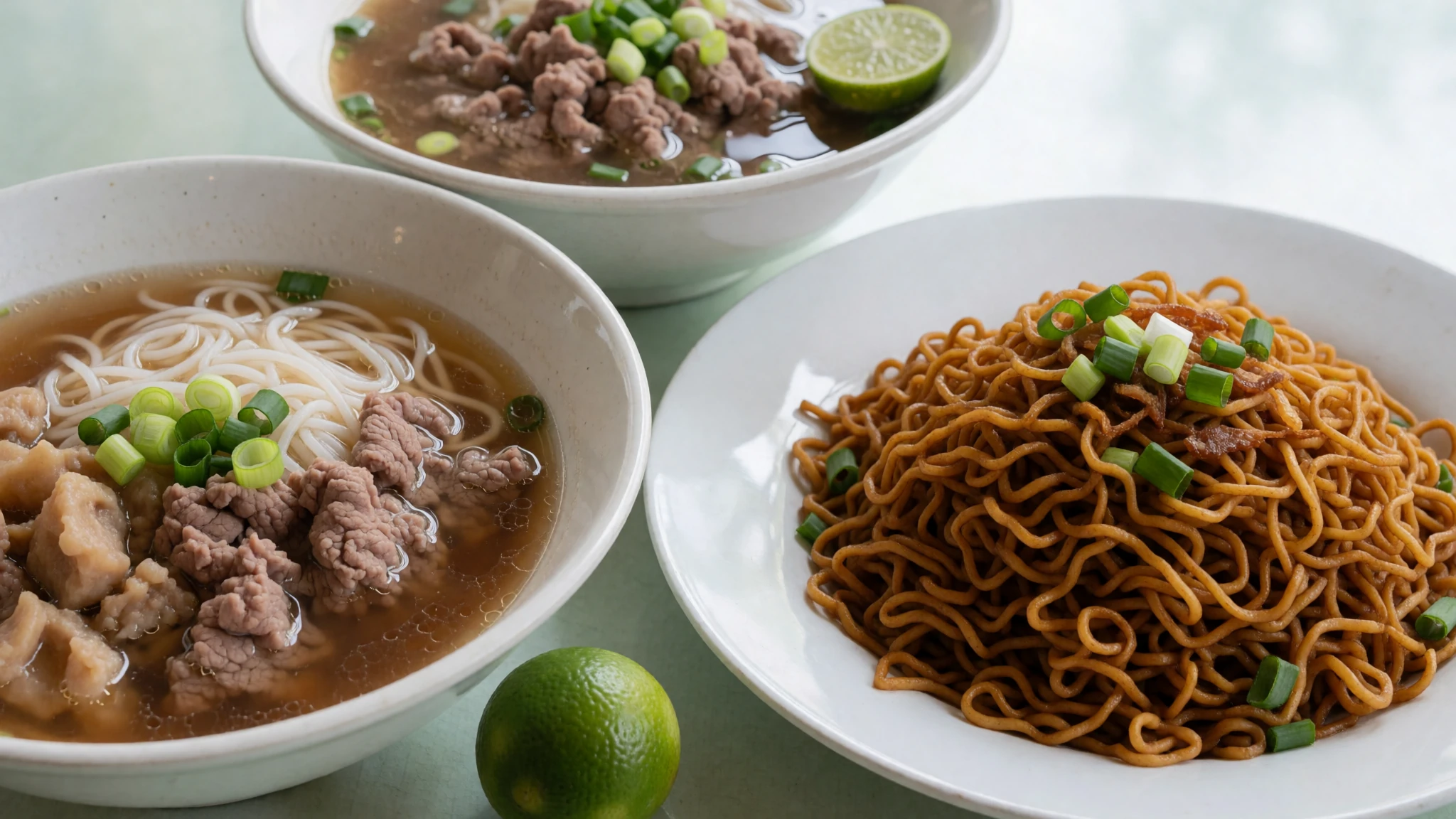
- Fresh Fruit Juices — Night markets and roadside fruit vendors
Refreshing cold beverages pressed from tropical fruits such as sweet mangoes, calamansi limes, and local pineapples, widely available at open-air drink stalls to quench your thirst in the equatorial heat.
Plan it
Best time. February to April offers the driest weather and clearest skies for climbing Mount Kinabalu, while the wettest months from September to November bring heavier rains and slippery trails.
How long. 3–4
Getting there. Fly into Kota Kinabalu International Airport, then take a shared taxi, bus, or arranged transfer for the two-hour scenic drive inland to Kinabalu Park headquarters.
Budget. mid
Tips
- Book your climbing permit and accommodation months in advance as daily quotas are strictly enforced
- Start your final summit push in the early hours of the morning to catch sunrise above the clouds
- Carry sufficient cash for park fees, guide tips, and meals as card facilities are limited on the mountain
- Pack layers ranging from light rainforest gear to thermal wear for freezing summit temperatures
- Drink plenty of water throughout the ascent to mitigate the effects of altitude
Etiquette
- Always remain with your assigned accredited guide at all times during the climb
- Respect local sacred sites by maintaining quiet behaviour and avoiding inappropriate actions on the upper slopes
Nearby
Sources
- Wikidata Q60967 (CC0)
- Wikipedia (rev 1370305959) (CC BY-SA 4.0)
- Wikivoyage (rev 5277517) (CC BY-SA 4.0)