Kernavė
Kernavė, Lithuania
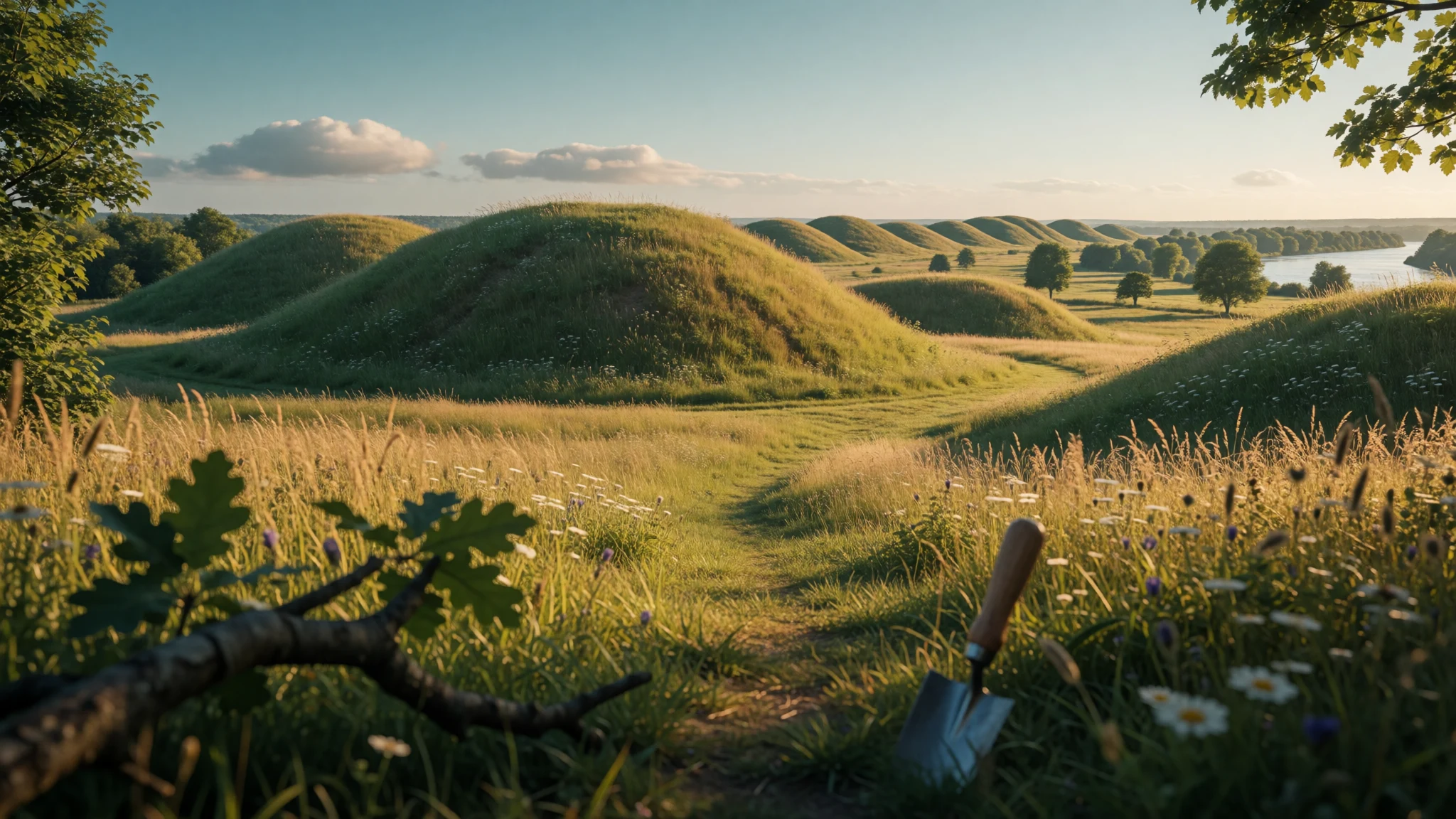
Kernavė is a quiet river valley ringed by grassy mounds, where a lost medieval capital lies under the meadow and the walking is gentle.
The place
Kernavė is a quiet village of 272 people in the Širvintos district of south-eastern Lithuania, north of Vilnius, with the Neris river curving past its edge. The setting is what draws visitors: a broad river terrace, the Pajauta valley, ringed by steep grassy mounds that were once the strongholds of a medieval power. Wikidata lists the place as a castle, a town and a hillfort at once, which is a fair summary. There is no skyline to speak of. The hills carry grass and wildflowers, the valley floor is open meadow, and most of what mattered in the Middle Ages lies under the turf, recorded by archaeologists rather than by standing walls. A state cultural reserve covers the area, and it has World Heritage status as an archaeological site. That makes the experience mostly about landscape and imagination: walking the ridges, reading the information boards, and picturing a timber town on the valley floor. Hillforts of this kind are called piliakalniai in Lithuanian, and the country has many of them; Kernavė is where a cluster sits together beside a river. Expect a day of gentle walking rather than sightseeing in the usual sense. Paths are mostly grass and gravel, with some steep climbs up the mounds. Summer weekends bring school groups and event crowds, while spring and autumn weekdays can feel nearly empty. The village is small, with a church, a school and a few places to eat and sleep, so many visitors come as a day trip from the capital. Winters are cold and snowy, and the open site offers little shelter from wind.
Its story
Kernavė's story starts well before the Middle Ages, with scattered settlers at the end of the Paleolithic and many more through the later Stone Age, drawn by the river and the defensible hills. By the 13th century it had become a political centre, and it is often called the first capital of Lithuania, a symbol of pagan independence. Written sources first mention it in 1279, when the Teutonic Knights besieged the town while Grand Duke Traidenis held court there; the episode survives in the Livonian Rhymed Chronicle. Those were hard decades. Crusading orders raided Lithuanian lands again and again, and local hills were built up with earth and timber against them. The end came in 1390, during a civil war, when the knights burned the town in the valley along with its castle. It was never rebuilt. The surviving residents moved up onto the hilltop, and the valley town faded from use. Over the following centuries, river floods laid silt across the ruins, which turned into wet peat. That layer sealed in wood, tools and everyday objects that would normally rot, which is why archaeologists prize the site and why some call it the Troy of Lithuania. Excavations have uncovered streets, house remains and a timber road laid through waterlogged ground. What a visitor sees is therefore a landscape with the evidence mostly hidden: the mounds are real and climbable, but the town they guarded is read through finds, maps and models rather than ruins.
What to see
- The hillfort mounds — Kernavė Archaeological Site
Kernavė's cluster of steep grassy mounds above the Neris valley is the core of the visit. Each was once a fortified hill with a wooden palisade, and the tops give wide views over river, meadow and forest. The climbs are short but steep, and the grass turns slippery after rain, so footwear matters.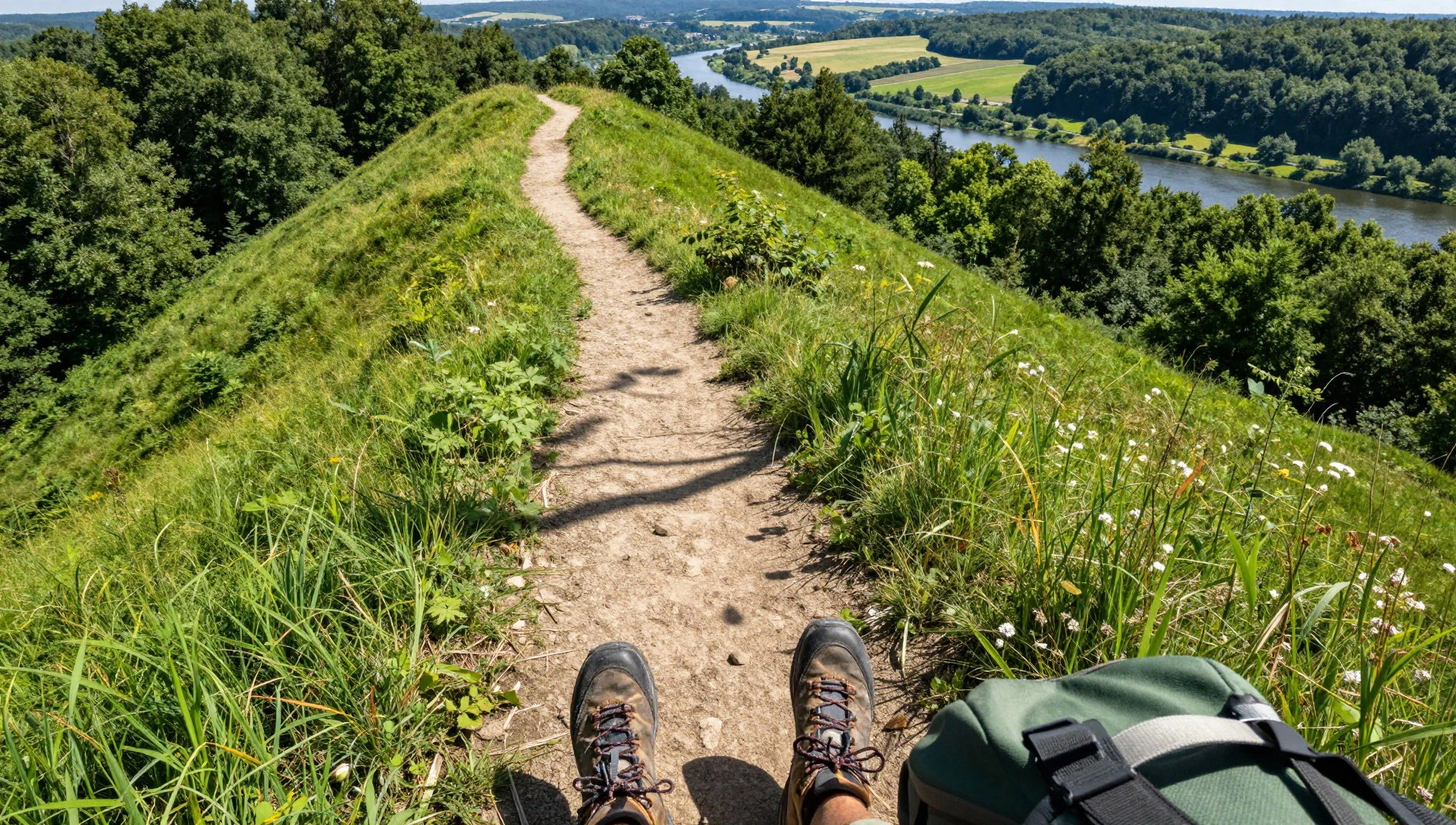
- Mound of Lizdeika — Kernavė Archaeological Site
Kernavė's Lizdeika mound sits near the centre of the classic view across the ridges, and it carries a name from Lithuanian tradition. Go up in late afternoon for low light over the valley, and use the information boards to work out how each neighbouring mound was used.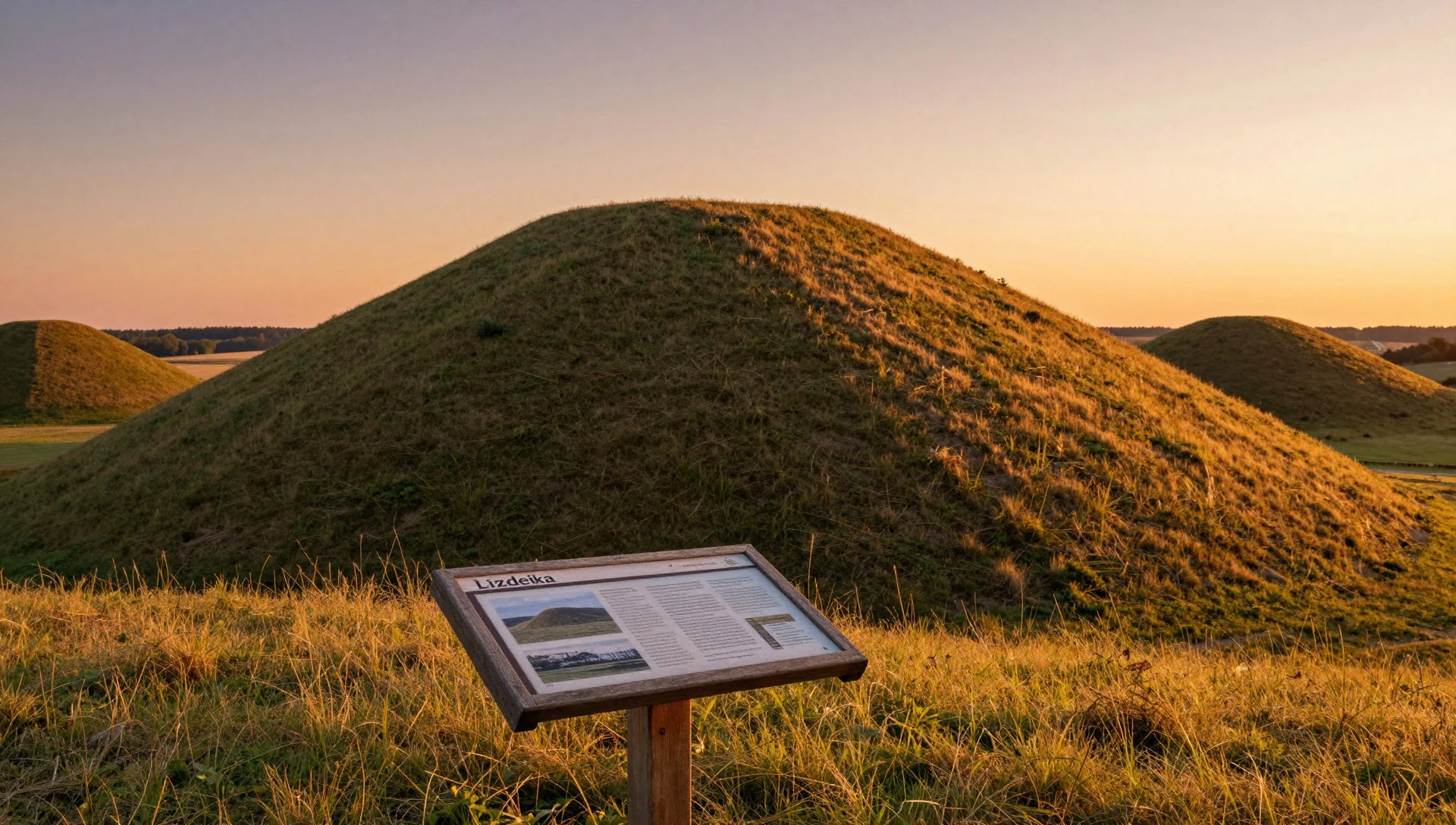
- Pajauta valley — Below the mounds
The flat meadow below the mounds is where Kernavė's medieval town stood until it burned in 1390. Nothing rises from it now, which is the point: archaeologists found timber streets and house remains beneath the peat. Walk the valley floor to feel the scale, then look back up at the hills that guarded it.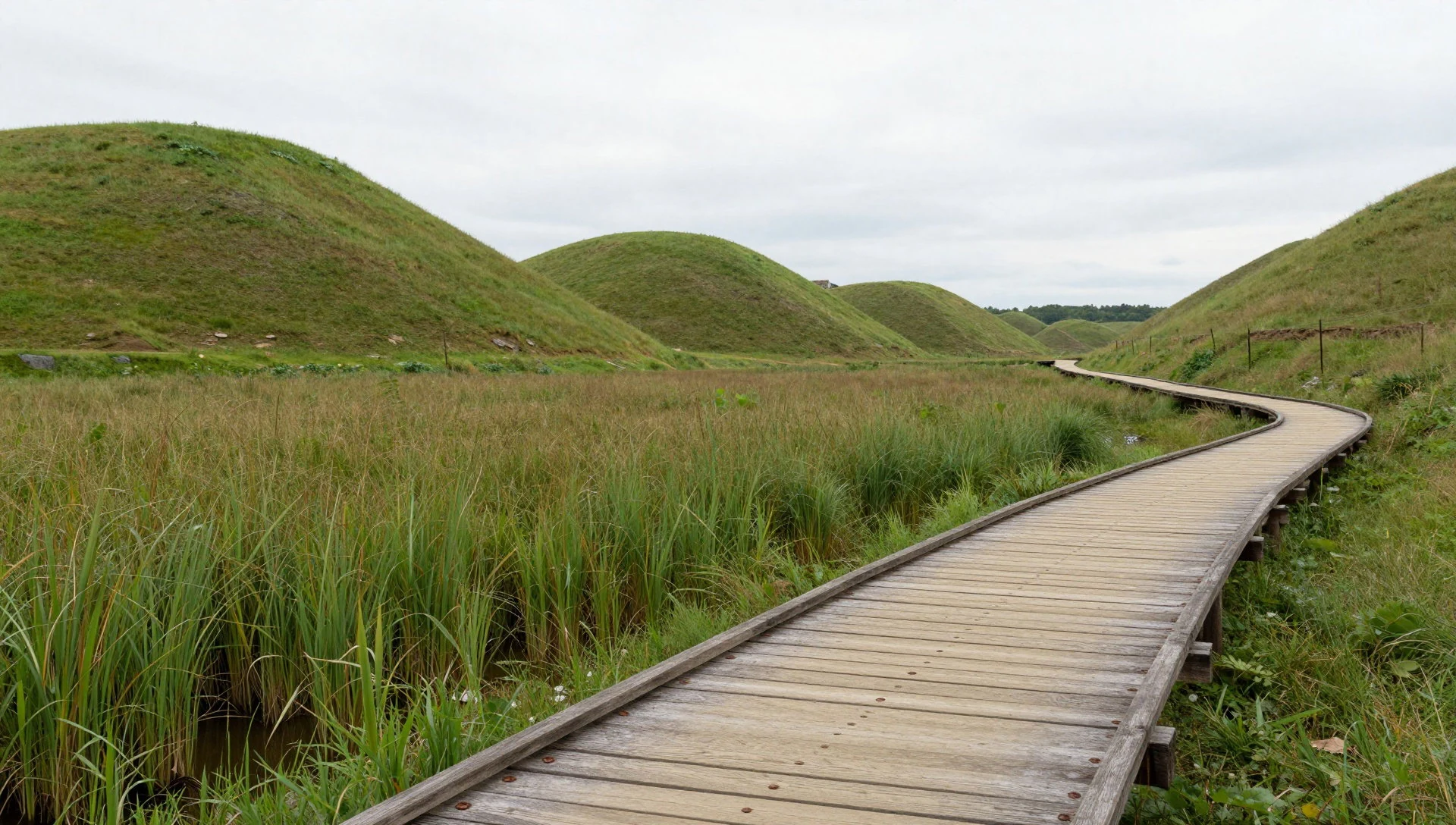
- The two churches — Kernavė village
In Kernavė village a newer church stands beside the ruins of an older one. The pairing makes a quiet pause between hillfort walks and shows that settlement carried on after the pagan town was gone. Check the official site before assuming the interior is open.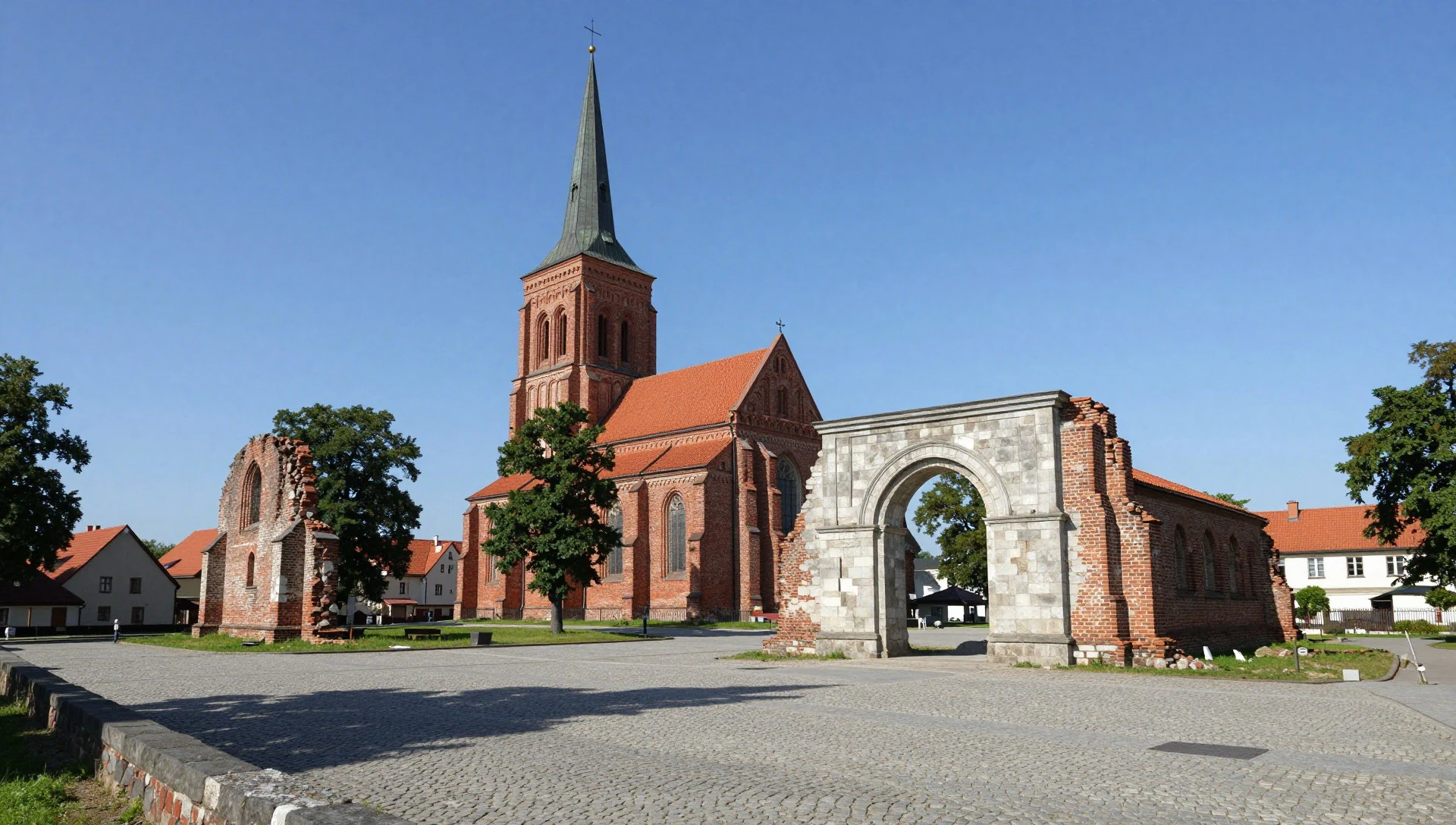
- The Neris riverbank — Edge of the reserve
The Neris runs along the edge of Kernavė's reserve, and a short stroll to the water makes it clear why people settled here: a river for travel and trade, hills for defence. Early summer evenings are pleasant, though midges can be a nuisance near the water, so carry repellent.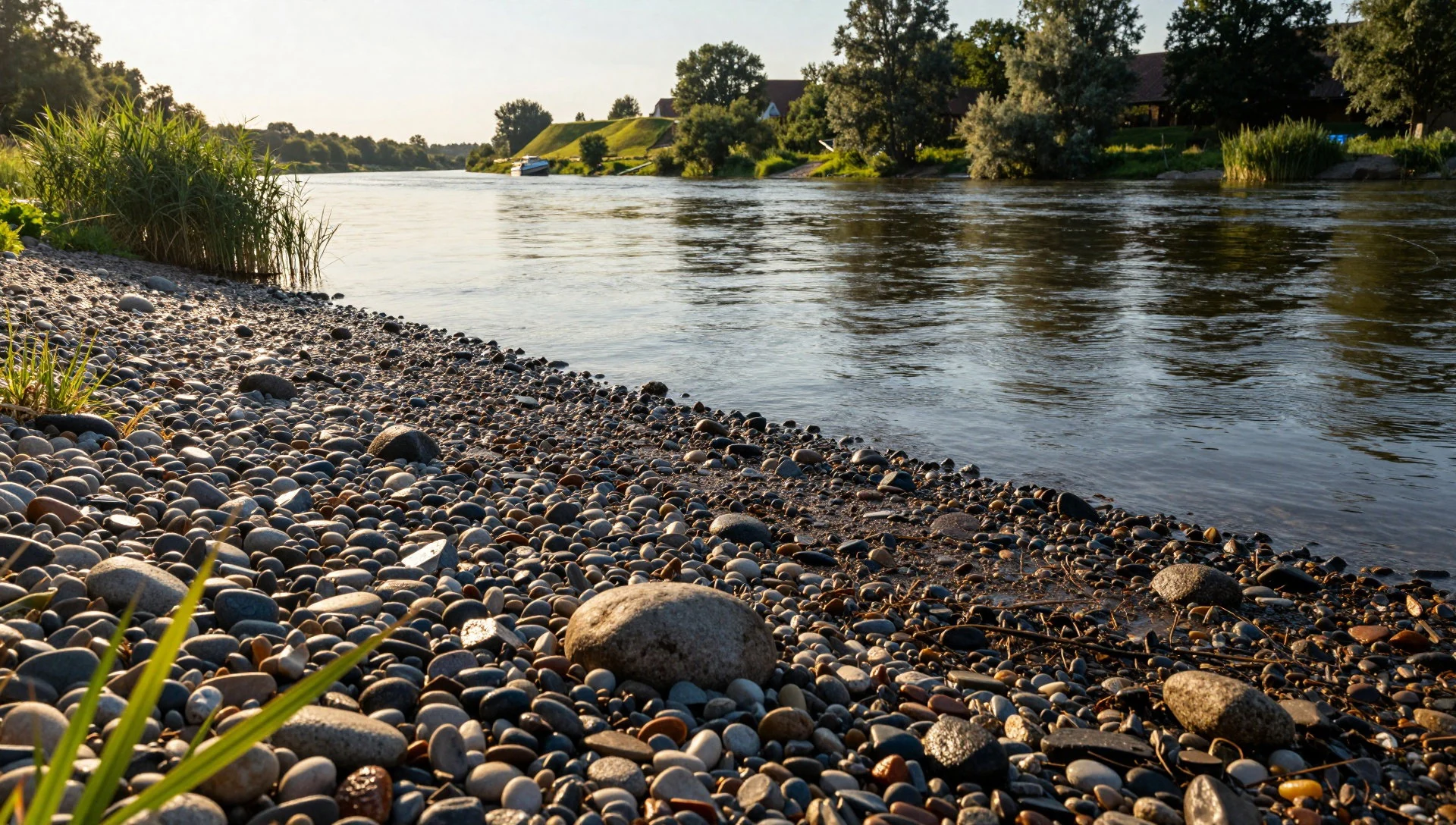
Culture
Kernavė sits in a part of Lithuania that is largely Roman Catholic and fairly traditional once you leave Vilnius, and the village reflects that: a church at its centre, a school, modest homes and well-kept gardens. The site also carries national weight. Lithuanians treat it as an early seat of statehood and of the pagan past, and the reserve is used for school trips, commemorations and festivals about medieval crafts and daily life. Since 2022, symbols of national identity have been defended with extra feeling, so tact about history and current events goes a long way. English is common among younger people but less so among older residents of small villages, and a few Lithuanian words, such as ačiū for thank you, are always appreciated. Archaeology here is ongoing, and the ground is both a protected monument and a place where local families walk, so the mood is relaxed but respectful. The mounds are fragile landforms, and erosion from many feet is a real concern, which is why paths are marked. Stay on the marked paths on the mounds and keep off the slopes outside them, because the turf is what holds the hillforts' shape together.
What to wear
Kernavė and the wider Aukštaitija region share Lithuania's folk dress, woven from linen and wool and now worn mainly for festivals, song celebrations, school performances and reenactments at the reserve. Women's costume combines a white linen blouse, a striped or checked wool skirt, a bodice and an apron, finished with a woven sash (juosta) in patterned bands; men wore linen shirts, wool trousers and waistcoats. Amber beads are the classic ornament. Everyday dress today is plain and practical: jeans, fleeces, rain jackets and trainers, with smarter clothes kept for church, family events and the capital. For a visit, plan around weather and terrain rather than dress codes. Wear sturdy shoes with good grip, since the mounds are steep and the grass is slick when wet. Bring layers: the valley is open and exposed to wind, so even a bright day can feel cool, and a hat and sun cream help in summer. Waterproofs are wise in any season except midwinter, when insulated boots, gloves and a warm hat matter more. Shorts are fine in warm weather, though long trousers help against ticks and nettles in tall grass. If the church interior is open, cover shoulders and avoid beachwear; no formal dress is expected.
What to eat
- Cepelinai — Village cafés near the reserve
Cepelinai, nicknamed Zeppelins, are large potato dumplings with a meat filling, usually served with soured cream and bacon bits. Heavy and filling, they suit a cold day. Look for them at village cafés near the reserve and at family-run eateries on the road from Vilnius.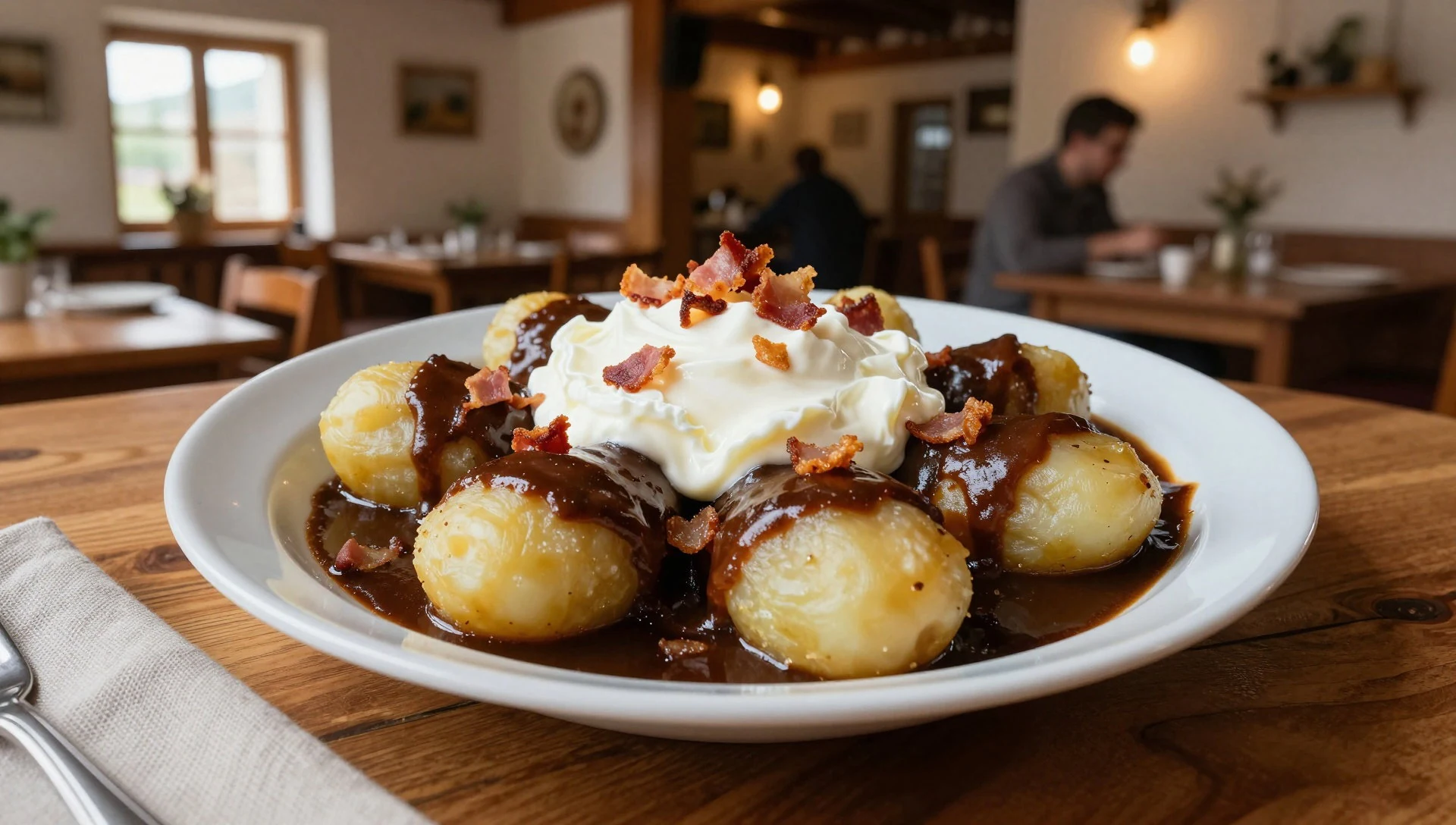
- Šaltibarščiai — Cafés and eateries in warm months
Šaltibarščiai is a cold summer soup of beetroot and soured milk, vividly pink and eaten with boiled potatoes on the side. It is refreshing after a morning on the mounds. Most country cafés and eateries serve it from early summer.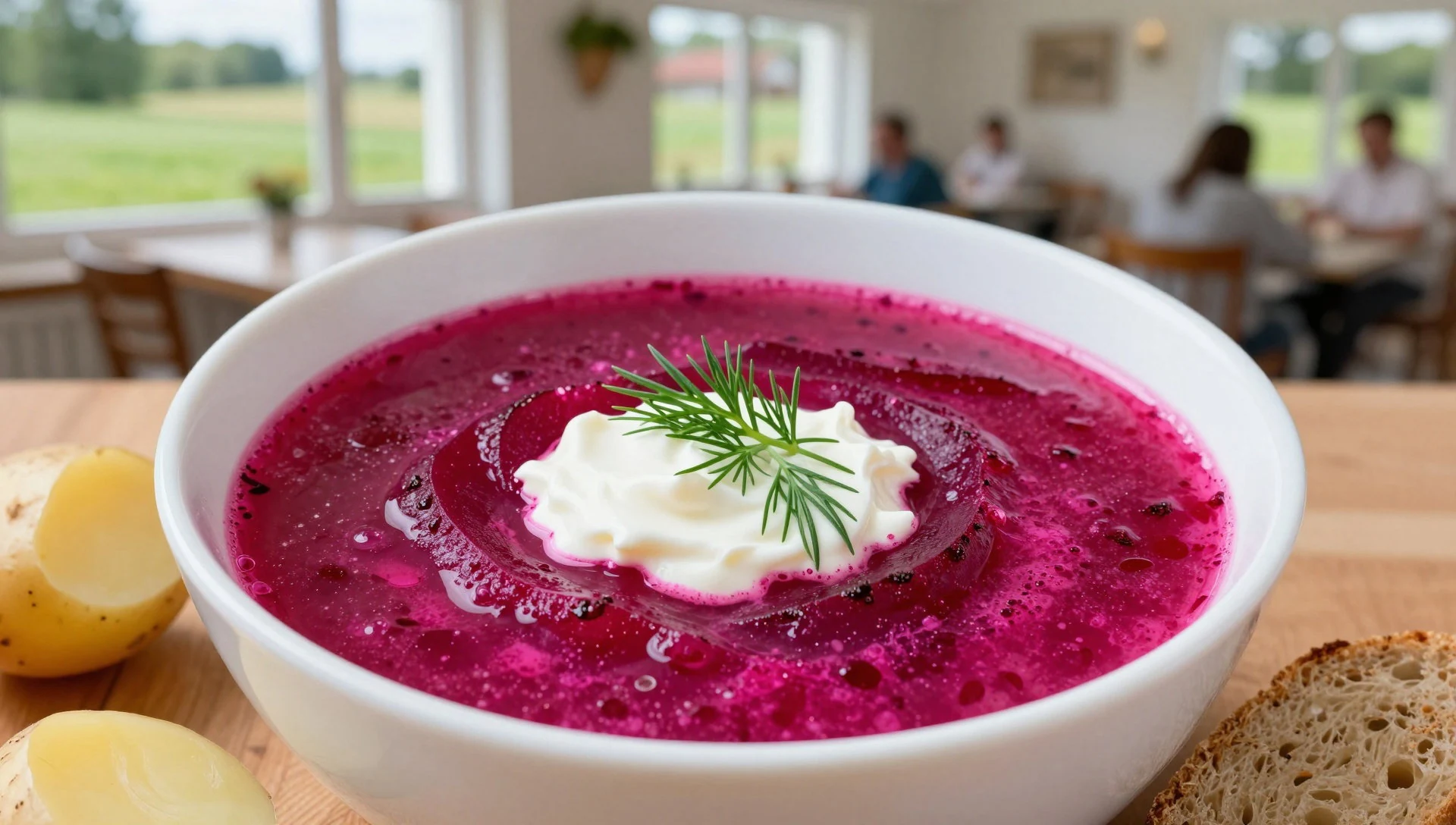
- Bulviniai blynai — Roadside cafés towards Kernavė
Bulviniai blynai are grated potato pancakes, fried until crisp at the edges and served with sauces such as soured cream or mushroom. They are an easy, cheap choice and often come with a salad. Find them on ordinary café menus along the road to the site. - Ruginė duona — Village shops and bakeries
Ruginė duona is dark rye bread, dense and slightly sour, and the natural partner to Lithuanian soups. Served with butter or garlic, it is also good for a picnic on the hills. Buy a loaf from a village shop or a bakery in Vilnius before driving out. - Kugelis — Traditional Lithuanian eateries
Kugelis, also called plokštainis, is an oven-baked potato dish, grated, rich and golden on top, often with bacon. It is homely comfort food that holds up well after hours outdoors. Ask for it at traditional Lithuanian eateries in the area.
Plan it
Best time. May–June and September for green hills, long daylight and comfortable walking; July is warm and busier at weekends, while winter is cold and snowy with short days and little shelter on the open site.
How long. 1
Getting there. Fly to Vilnius Airport, then continue by road to Kernavė, which lies north of the capital; most visitors go by car or on an organised day trip. Check the official site for current transport options.
Budget. low
Tips
- Check the official site (https://www.kernave.org/) for events, visitor information and opening arrangements before you go
- Aim for a weekday or an early start in summer to avoid school groups and festival crowds
- Carry water and sun protection, as the valley has little shade
- Wear sturdy shoes, since the mounds are steep and slippery when wet
- Bring some cash as well as a card for small village cafés
Etiquette
- Stay on the marked paths on the mounds to protect the turf
- Keep voices low and dress modestly if you visit the church
- Take rubbish away with you from the meadows and hillsides
Nearby
Sources
- Wikidata Q215315 (CC0)
- Wikipedia: Kernavė (rev 1367157332) (CC BY-SA 4.0)
- Wikivoyage: Lithuania (rev 5421490) (CC BY-SA 4.0)
- Photo: Kernavė - Hill forts 01, Lestat (CC BY 3.0)
- Photo: Kernave mounds 20200926, Mindaur (CC BY-SA 4.0)
- Photo: Kernave church, Juliux (CC BY 3.0)
- Photo: Magni Ducatus Lithuaniae map fragment, Žemėpatis (CC0 1.0)
- Photo: Lithuania Kierniów churches, Wojsyl (CC BY 3.0)
- Photo: Lithuania Kierniów mounds1, Wojsyl (CC BY-SA 2.5)
- Photo: Kernave Neris, Dmitry A. Mottl (CC BY 3.0)
- Photo: Kernavė, pradinė mokykla, Vilensija (CC BY 3.0)


