Kaunas
Kaunas, Lithuania
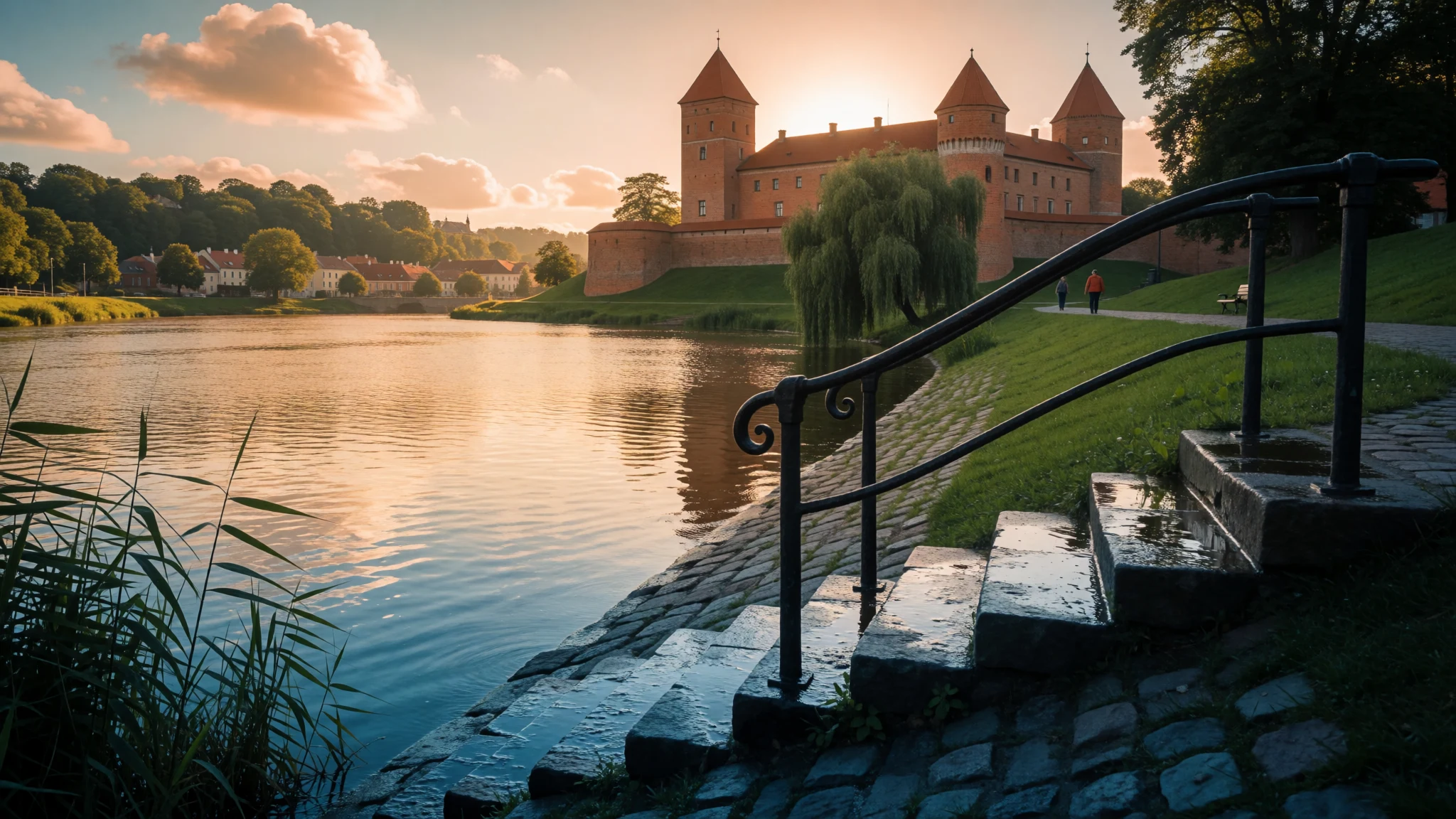
Kaunas is a river-meeting university city of brick churches, interwar Art Deco and slow café afternoons, with few crowds even in high summer.
The place
Kaunas is Lithuania's second city, home to about 305,000 people, and it sits where the Nemunas and the Neris meet, the two longest rivers in the country. The old centre lies low and close to the water, at about 48 m above sea level, with wooded hills rising behind the newer districts. That setting explains most of what the city is: a river crossing, a fortress site, a trading town. Today it feels like a working university and business city rather than a showpiece capital, which is much of its appeal. The Old Town is compact and walkable, a tangle of brick churches, merchant houses and a Renaissance town hall, ending at a castle beside the confluence. Beyond it, the streets laid out in the twentieth century are lined with modernist apartment blocks, schools and offices from the years when Kaunas stood in as the temporary capital. Those Art Deco and National Revival buildings have earned the European Heritage Label, and they give the city a calm, slightly faded elegance that suits walking. Cafés are everywhere, a habit that dates from the same era. Further out are the broad reservoir known locally as Kauno marios, popular for summer swimming and sailing, and the baroque monastery of Pažaislis on its shore. Crowds are thin even in July, daily costs are modest for a European city, and younger residents usually speak good English. Winters are cold and dark, so the city is at its best from late spring to early autumn.
Its story
Kaunas has drawn settlers for a very long time: pottery and tools dug up around the meeting of the Nemunas and the Neris show people living here several thousand years before the Common Era. By the tenth century a community stood on the ground now covered by the Old Town, and written sources first name the town in 1361. Its position made it a frontier. The Teutonic Order was pressing along the Nemunas, and Kaunas, one of only two brick castles on that stretch of river, became a key barrier between the crusaders and Vilnius. The castle fell after weeks of siege and was wrecked in 1362, then rebuilt as the town grew into a merchant centre. From 1413 Kaunas was the main city of its district within the Grand Duchy of Lithuania. In 1843 the Russian Empire made it the seat of a governorate, and the city gained fortifications, barracks and new streets. The twentieth century brought its best-known chapter. When Vilnius was seized by Poland, Kaunas became the temporary capital, and for two decades it filled with ministries, a university, theatres, cafés and modern housing. Soviet rule followed, and after independence the national capital returned to Vilnius, while Kaunas kept its character as a serious, studious second city with a proud memory of having once led the country.
What to see
- Kaunas Castle
Kaunas Castle stands at the confluence of the Nemunas and the Neris, where the town's story began. The first fortress here dates to the fourteenth century; most of what visitors see is later rebuilding from the fifteenth and sixteenth centuries. It is small, so an hour is plenty, and the riverbank walk beside it is the real reward.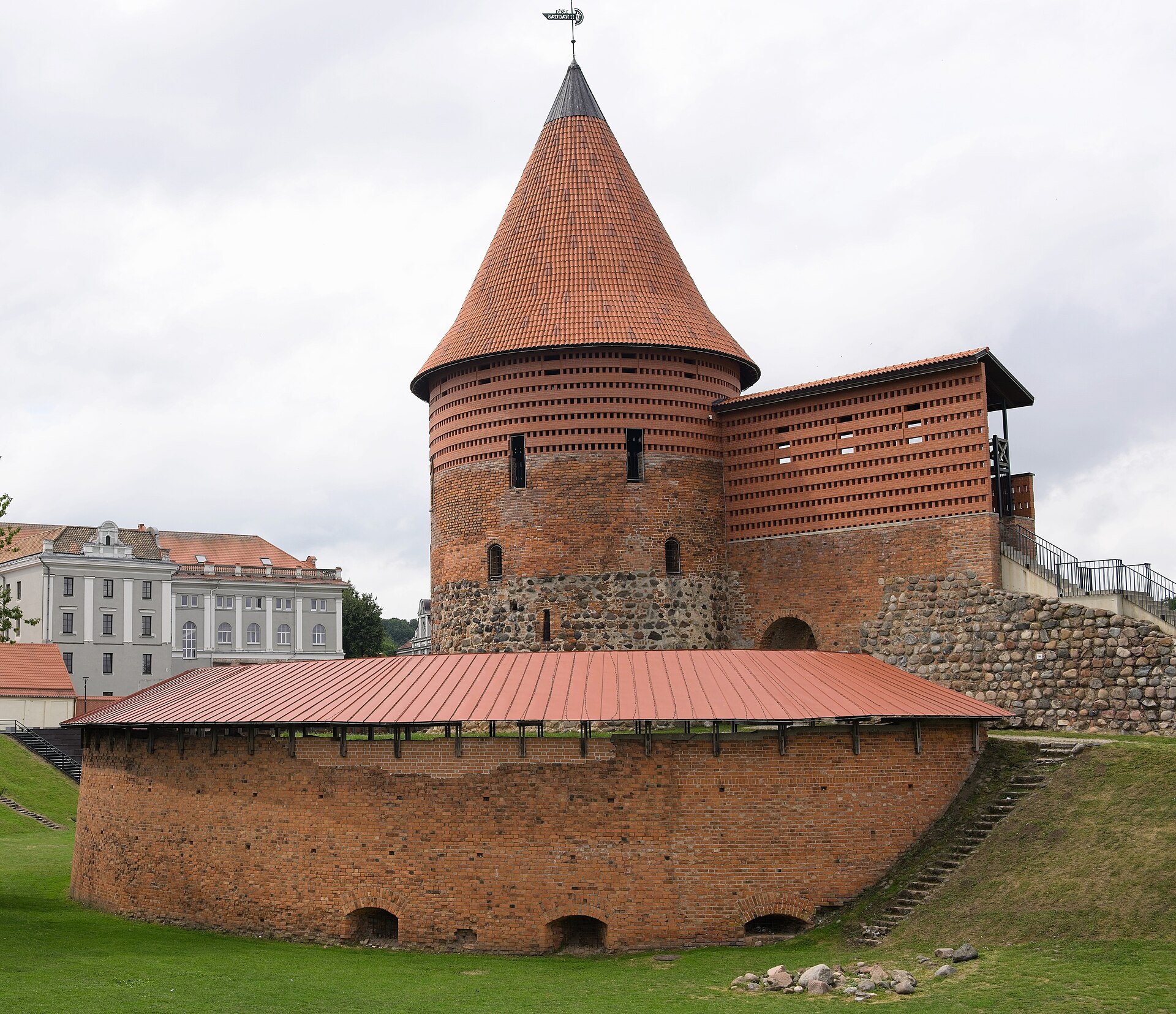
- Church of St George
The Church of St George is a Gothic redbrick church near the castle, once part of a Bernardine monastery. A wooden church stood here in the fifteenth century before brick replaced it, and the building has taken a lot of damage and rebuilding since. The plain exterior rewards a short stop, and the surroundings are quiet. - Kaunas City Hall
Kaunas City Hall, nicknamed the White Swan, rises over the main square of the Old Town. Built in Renaissance style in the sixteenth century, when merchants ran the town, it was remodelled in the nineteenth century as a residence for Russian tsars. It is an easy meeting point, and the tower looks best from across the square.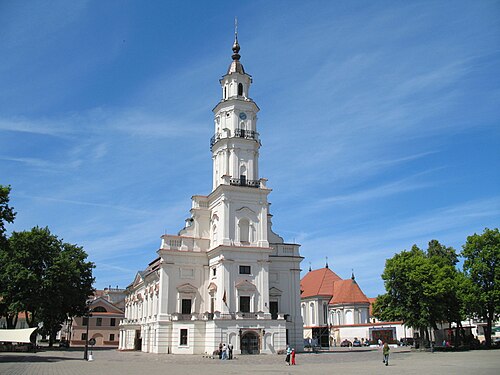
- Church of St Francis Xavier
The Church of St Francis Xavier is a Jesuit church in rococo style, close to the town hall. Building took decades, running from the seventeenth century into the eighteenth. The pale exterior is restrained, but the interior is richly ornamented, so it is worth stepping inside when it is open and not in use for services.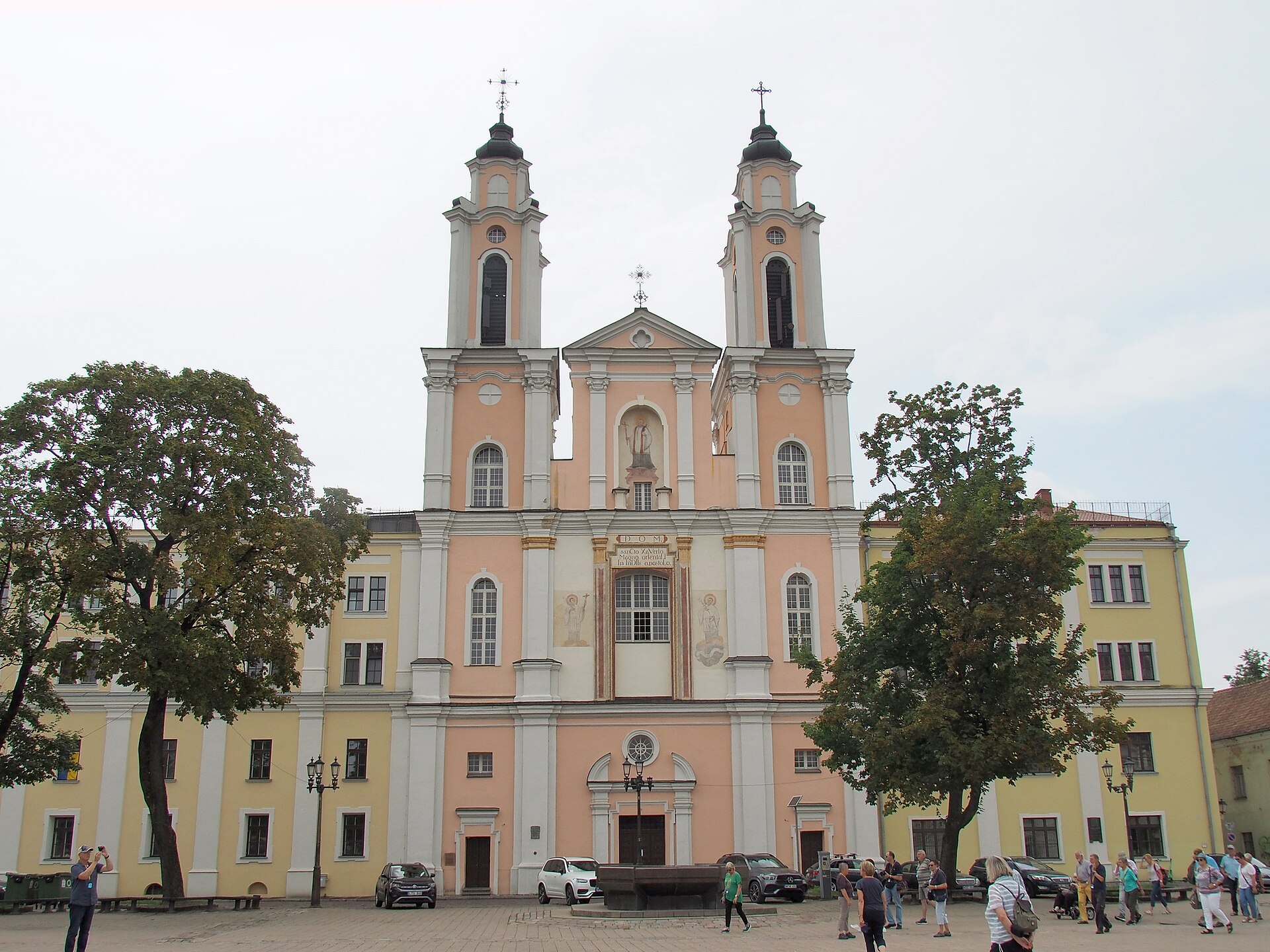
- Maironis Museum of Lithuanian Literature
This museum occupies Siručiai Palace, the home of the poet and priest Jonas Maironis, a central figure in Lithuanian-language writing. Its rooms hold books, manuscripts, paintings and personal belongings. It suits a rainy afternoon, and visitors should check the official site for opening times before going. - Museum of the History of Lithuanian Medicine and Pharmacy
This is an offbeat museum with a large and slightly macabre collection of skulls, dried herbs, instruments and other medical objects. It gives a view of how ordinary people were treated in the past, and it is a good choice for anyone who has had enough of churches for one day.
Culture
Kaunas wears its Catholicism lightly but visibly. Lithuania turned from its older pagan faith to Christianity at the end of the fourteenth century, and Grand Duke Vytautas the Great, honoured in the city with a bridge, a university and a church, funded early religious foundations here; the cathedral basilica grew from a parish church he established. Bernardine monks, meanwhile, preached in Lithuanian to win over townspeople, and the language has stayed central to the city's identity ever since. Kaunas also nurtured Lithuanian-language culture through poets such as Maironis, whose home is now a literary museum, and through its interwar university and theatres. The café habit comes from that period, and people still sit over coffee and cake for a long time while nobody hurries a table. Daily manners are quiet and courteous. Greetings are brief, voices are low on public transport, and people tend to be reserved with strangers before they warm up. Older residents may speak Russian as a second language, but a few words of Lithuanian, such as ačiū for thank you, are appreciated far more. Churches are in regular use, and Sundays feel slow, with many shops running shorter hours. Cover your shoulders and keep your voice low inside a working church, and put the camera away during Mass rather than photographing worshippers.
What to wear
Kaunas shares Lithuania's folk dress, which is built on linen and wool. Women's costume centres on an embroidered linen blouse, a woollen skirt woven in stripes or checks, an apron and a bodice, finished with amber beads. Woven sashes, called juostos, carry patterns that vary by region. Men wore linen shirts, wool waistcoats and trousers. This clothing appears today at song festivals, folk dance performances, weddings and national holidays rather than on the street. The city has its own fashion memory too: in the interwar years Kaunas was known for its stylish dress and tailoring, and a smart, careful look still comes naturally to many residents. Everyday wear now is understated and practical, with dark colours, good coats, layers and clean trainers or boots, and little flash. Students give the centre a casual feel. Visitors should pack for the season. Summer calls for light layers, a rain jacket and sun protection, while winter needs a proper coat, hat, gloves and boots with grip for snow and ice. Comfortable shoes matter on the cobbles of the Old Town. For churches, bring a scarf or shirt that covers shoulders, and avoid very short shorts. Otherwise, neat casual clothes fit in everywhere, from cafés to the theatre.
What to eat
- Bread-bowl soup — traditional Lithuanian eateries in the Old Town
A hearty soup served inside a hollowed loaf, so the bowl is part of the meal. It makes a filling lunch in cold months and a friendly introduction to Lithuanian home cooking. Try it with a home-brewed beer where the kitchen makes one. - Spurga — small bakeries and old-fashioned doughnut counters; ask locally
The Lithuanian doughnut, deep-fried and sweet, eaten fresh and warm. Only a few places still make it the old way, so it is worth asking locally rather than settling for a modern imitation. It pairs well with coffee on a cold morning. - Cepelinai — traditional Lithuanian restaurants across the centre
Large potato dumplings shaped like airships, usually stuffed with minced meat, curd cheese or mushrooms. They arrive heavy and filling, topped with soured cream and crisp bacon pieces. One portion is a full meal, so share if appetite is modest. - Šaltibarščiai — cafés and restaurants in the Old Town, mainly in summer
A cold, bright pink beetroot soup made with kefir or buttermilk, cucumber and dill, often served with a hot boiled potato on the side. It is refreshing in summer and unlike most soups elsewhere, which makes it memorable. - Coffee and cakes — cafés on the central pedestrian streets and around the Old Town
Café culture is a real tradition in Kaunas, dating from the interwar years. Cakes are usually layered with cream, berries or poppy seed, and tables are rarely rushed. It is a good way to rest between churches and museums.
Plan it
Best time. May to September, when days are long and the weather is mild; summer is warm and pleasant, with a few hot days. Winters are cold, sometimes snowy and dark, and spring and autumn are cool to mild.
How long. 2–3
Getting there. Fly to Kaunas Airport, where a city bus from outside Arrivals runs to the main railway and bus station in around an hour. Trains and buses also connect Kaunas with Vilnius, the other major airport option.
Budget. mid
Tips
- Check the official city site, https://www.kaunas.lt, for events, museum hours and any closures before you go.
- Walk the Old Town early in the morning or in the evening, when it is quiet and the light is soft.
- Carry a card as well as some small cash for markets and little cafés.
- Pack layers and a rain jacket in any season, and proper winter gear from late autumn.
- Book a table ahead for weekend evenings, especially in summer.
Etiquette
- Cover shoulders and keep voices low inside working churches.
- Do not photograph worshippers during Mass.
- Greet staff with a short hello in shops and cafés; try ačiū for thank you.
Nearby
Sources
- Wikidata Q4115712 (CC0)
- Wikipedia: Kaunas (rev 1382037231) (CC BY-SA 4.0)
- Wikivoyage: Kaunas (rev 5406397) (CC BY-SA 4.0)
- Vytautas the Great Bridge from hill, Kaunas, Lithuania — Diliff (CC BY 3.0)
- Kaunas Old Town — BigHead (CC BY-SA 4.0)
- Kaunas Castle in 2023 — dave massie (CC BY 2.5)
- The exterior of House of Perkūnas in Kaunas, Lithuania — Diliff (CC BY 3.0)
- Kauno rotušė — Creative at Lithuanian Wikipedia (Public domain)
- Šv. Pranciškaus Ksavero (Jėzuitų) bažnyčia, Kaunas — Hajotthu (CC BY 3.0)
- Kauno marios — Watas (CC BY-SA 1.0)
- Pažaislis Monastery exterior, Kaunas, Lithuania — Diliff (CC BY 3.0)


