Karnak
Karnak, Egypt
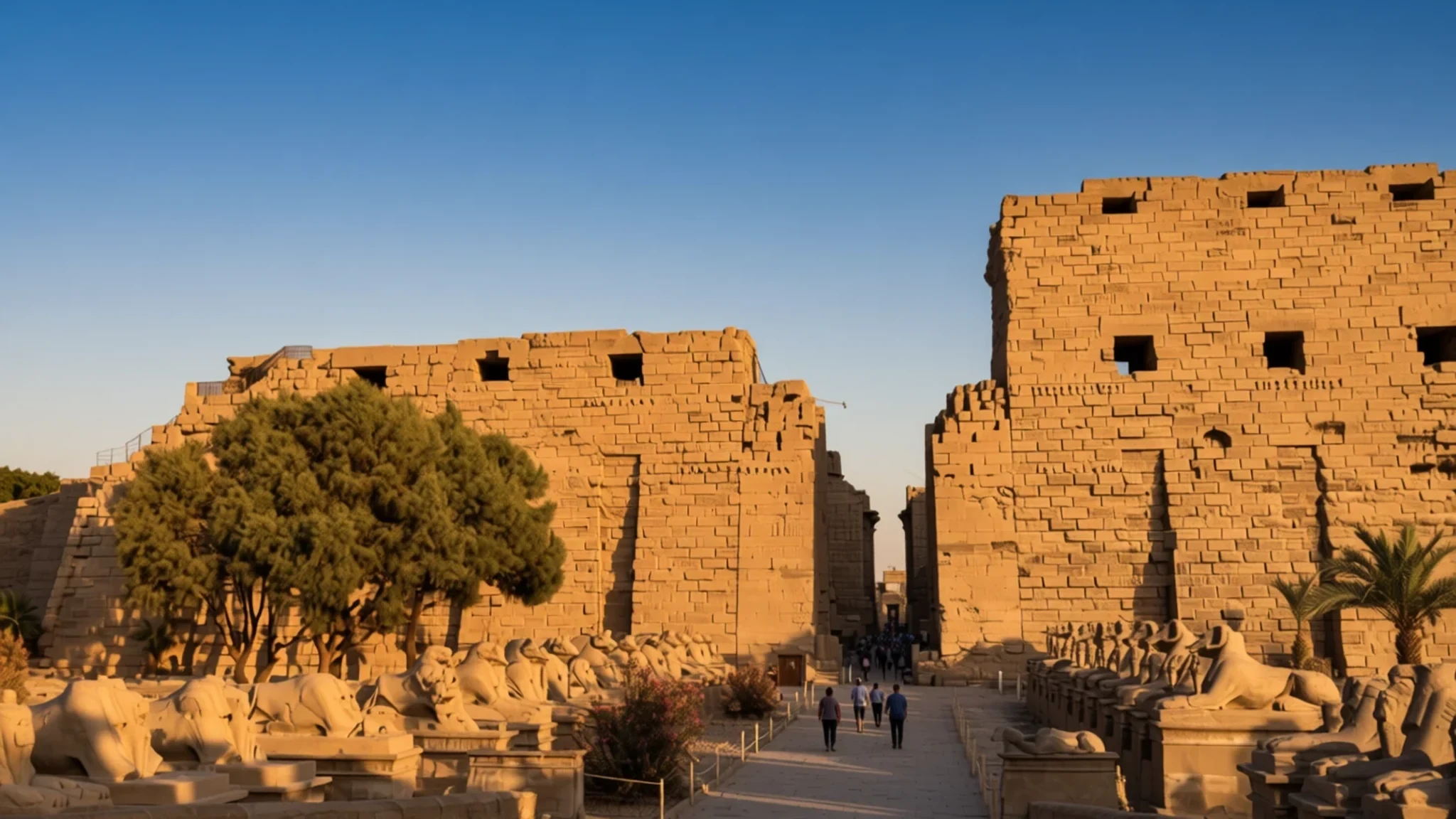
Karnak offers an astonishing journey through colossal ancient stone halls and sacred sanctuaries built by generations of pharaohs along the Nile.
The place
Karnak sits near the vibrant modern town that shares its name, rising gently above the surrounding North African landscape along the great river. As part of the monumental ancient city of Thebes, this sprawling complex comprises an immense collection of sanctuaries, towering pylons, and weathered stone chapels that span centuries of dynastic rule. Visitors approaching the site are met with an atmosphere shaped by intense sunlight, dry desert winds, and the quiet reverence that lingers among weathered sandstone columns. The local elevation sits comfortably above the river floodplain, offering clear views across the surrounding fields and date palm groves that line the valley.
The broader regional environment connects the monumental archaeological remains with a bustling settlement where thousands of residents live and work today. The air carries the sounds of local street life alongside the chatter of travellers arriving from across the globe to witness the ancient remains. Walking through the pathways reveals a landscape of immense scale, where every stone block tells a story of ancient engineering and religious devotion. Despite the dry climate and high temperatures, the area remains a vibrant hub of cultural heritage, blending ancient stone preservation with the daily rhythms of modern Egyptian life.
Its story
Karnak shares its deep historical roots with the ancient capital of Thebes, rising from a modest local worship site into the most important religious centre of the empire. Long before monumental stone halls filled the horizon, early shrines stood dedicated to regional deities such as the Earth goddess Mut and the war god Montu. As political power shifted and unified dynasties established their seat of government in the region, the local sanctuary of the hidden god Amun grew in stature and wealth.
Generations of rulers expanded the sacred precinct, adding towering gateways, pillared halls, and protective enclosure walls to honour the divine triad of the city. Each monarch sought to leave a lasting mark on the sacred landscape, resulting in an architectural layering where older structures were often incorporated into newer expansions. Stone by stone, the complex evolved into a vast chronicle of imperial ambition and religious ritual, surviving centuries of political upheaval, foreign conquest, and gradual desert encroachment to remain an enduring testament to ancient craftsmanship.
What to see
- The Great Hypostyle Hall — Central sanctuary precinct
Walking into this forest of colossal stone columns at Karnak is an unforgettable experience, as towering sandstone shafts rise to support massive overhead architraves covered in intricate hieroglyphic carvings and traces of ancient colour.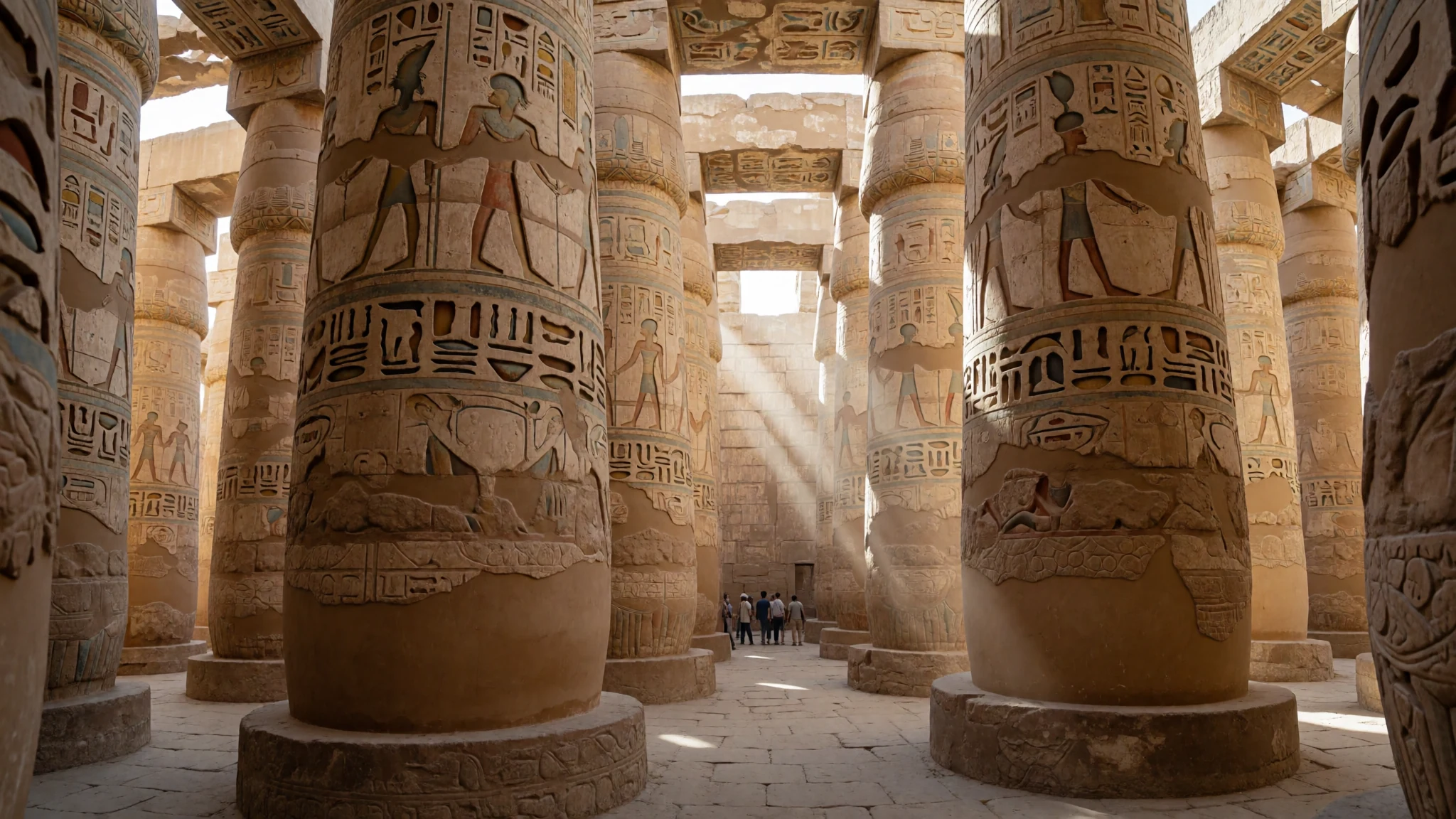
- The First Pylon — Main western entrance
This massive, unfinished stone gateway serves as the grand entrance to the Karnak complex, presenting visitors with sheer mudbrick and sandstone walls that demonstrate the monumental scale attempted by later builders.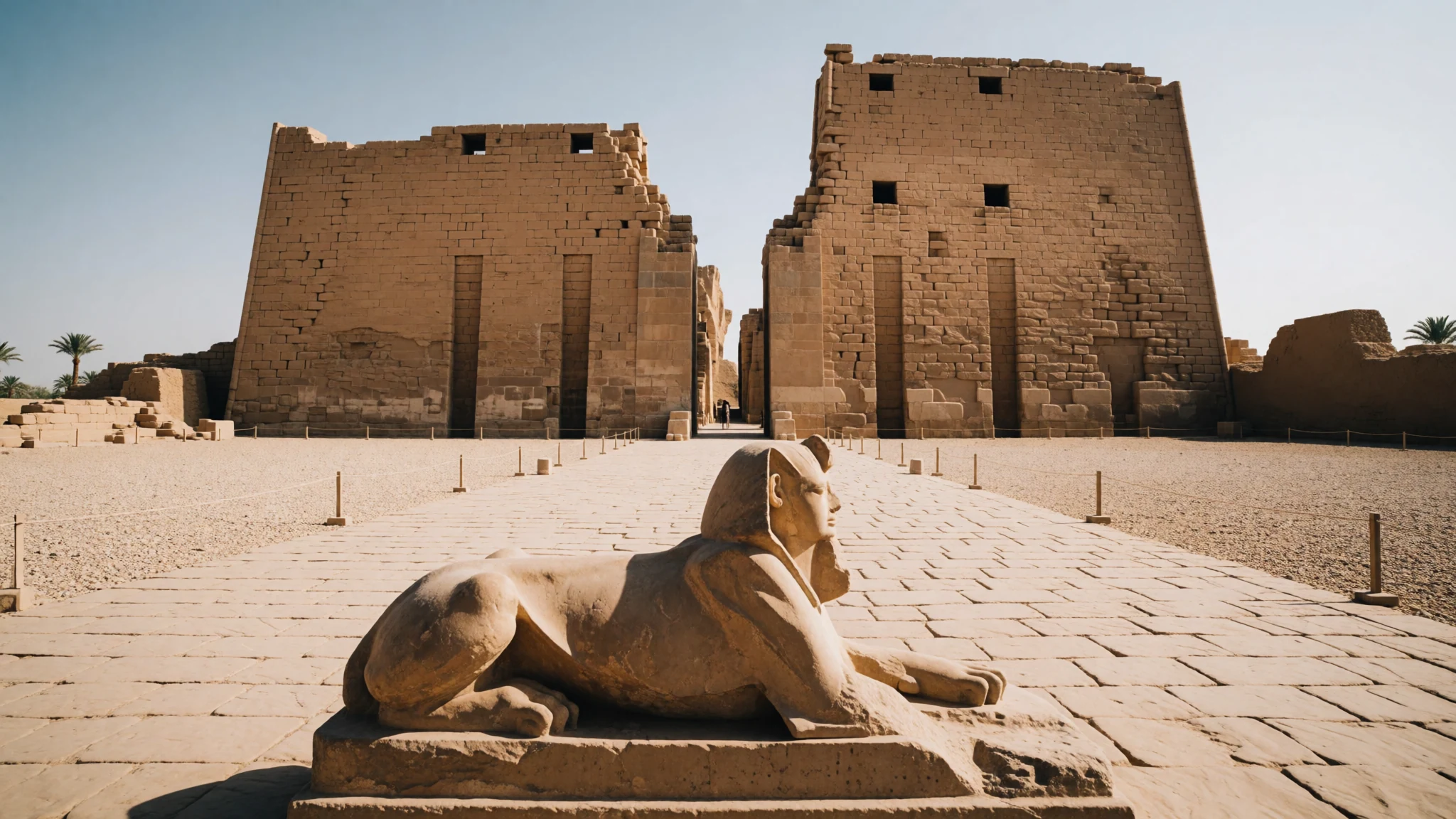
- The Open Air Museum — Northern sector of the complex
Located within the enclosure, this fascinating collection at Karnak displays reconstructed shrines, restored chapel fragments, and delicate architectural elements rescued from earlier structures during archaeological excavations across the site.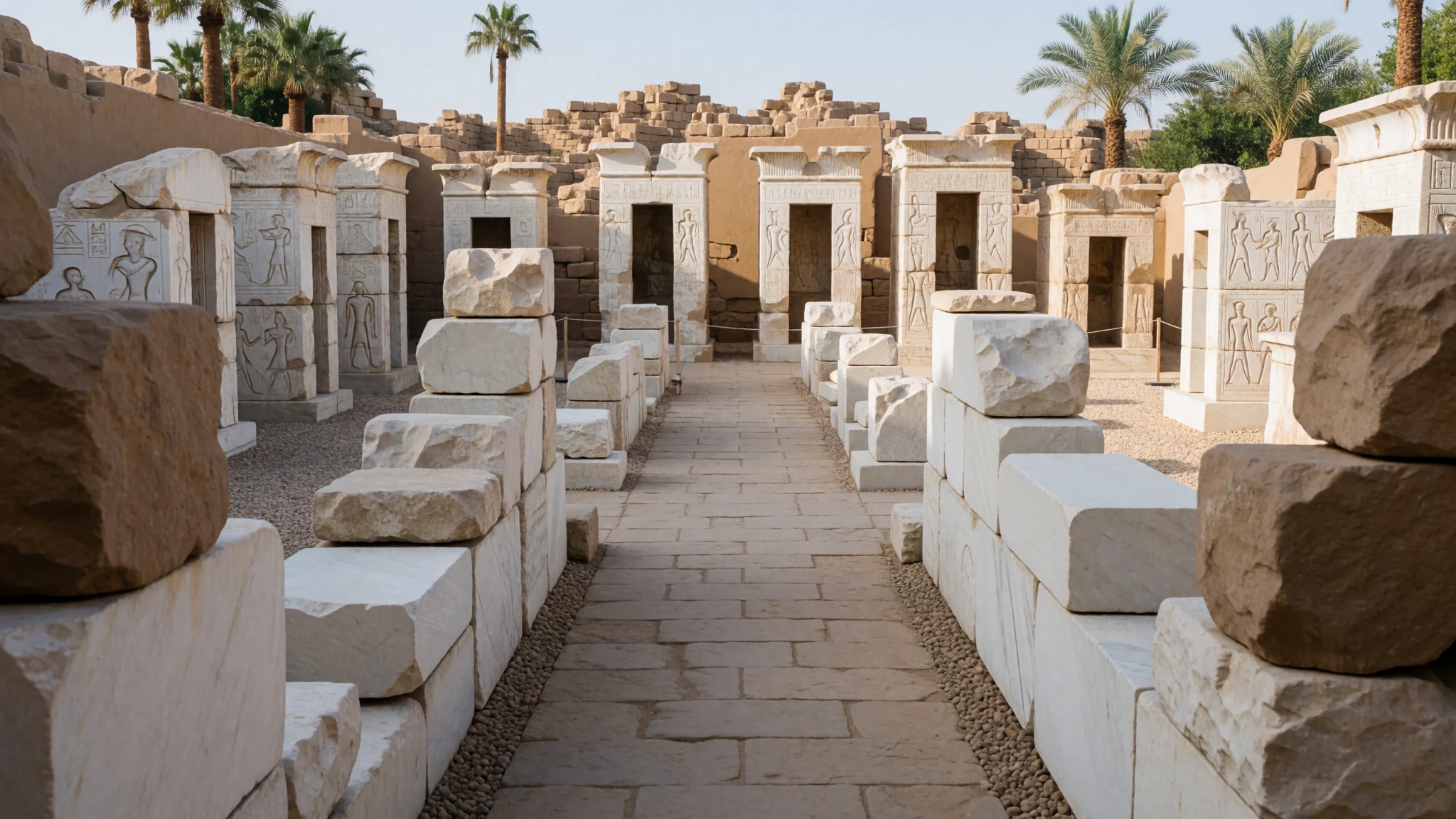
- The Sacred Lake — Southern section near the Temple of Khonsu
This crescent-shaped basin in the Precinct of Mut was once used by priests for ritual purification rites, and today it provides a peaceful, reflective vantage point surrounded by tall palms and circling desert birds.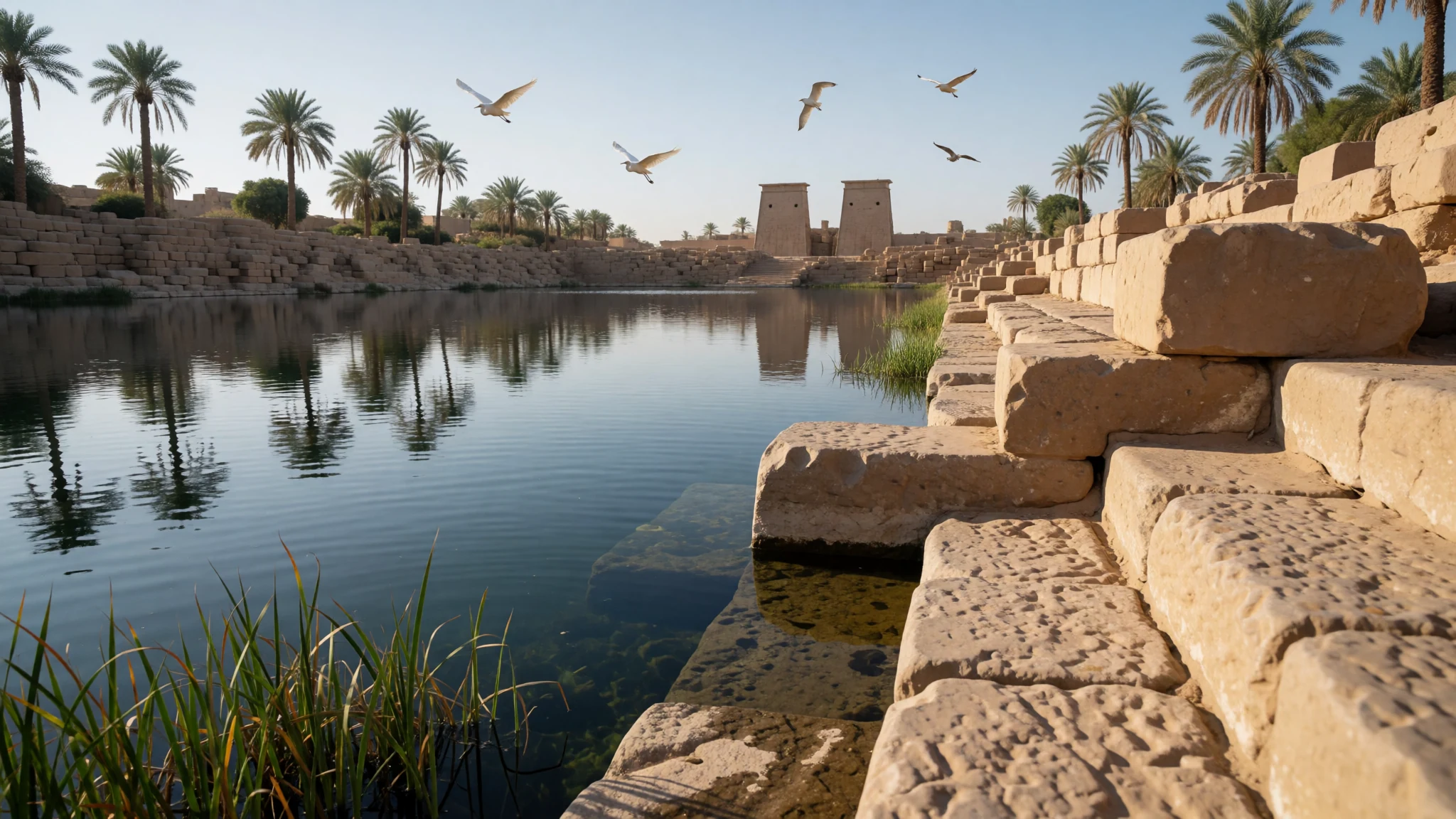
Culture
Karnak and the surrounding region reflect the deeply welcoming and hospitable traditions found throughout Egypt, where local residents take immense pride in greeting visitors warmly. Social interactions are guided by a strong sense of community honor, courtesy, and mutual respect, making polite conversation and patience essential parts of daily engagement. Traditional values emphasize family bonds, religious devotion, and graceful hospitality, creating an atmosphere where guests are treated with genuine kindness. When discussing cultural or traditional matters, approaching conversations with sensitivity ensures positive and meaningful exchanges with local residents. Always dress modestly when visiting local towns and religious sites out of respect for regional customs.
What to wear
Karnak sees a blend of traditional attire and modern clothing styles worn by residents in daily life. Traditional garments often include flowing cotton robes and headscarf coverings suited to the intense regional climate, while younger generations in nearby towns frequently wear contemporary western-style shirts, trousers, and modest dresses. For visitors exploring Karnak and the surrounding area, lightweight, loose-fitting cotton or linen clothing is essential to manage the strong desert heat while maintaining local modesty norms. Shoulders and knees should remain covered when walking through town or visiting heritage sites, and a wide-brimmed hat or light scarf offers necessary protection against the bright sun.
What to eat
- Koshary — Local neighbourhood eateries and downtown canteens
A comforting national staple found in local eateries across Egypt, combining layers of rice, macaroni, lentils, crispy fried onions, and a tangy tomato vinegar sauce.
- Fūl and Falafel — Street-side stalls and traditional breakfast spots
Traditional spiced fava bean dishes and crispy fried chickpea patties served warm with fresh flatbread, popular for breakfast or a quick daytime meal.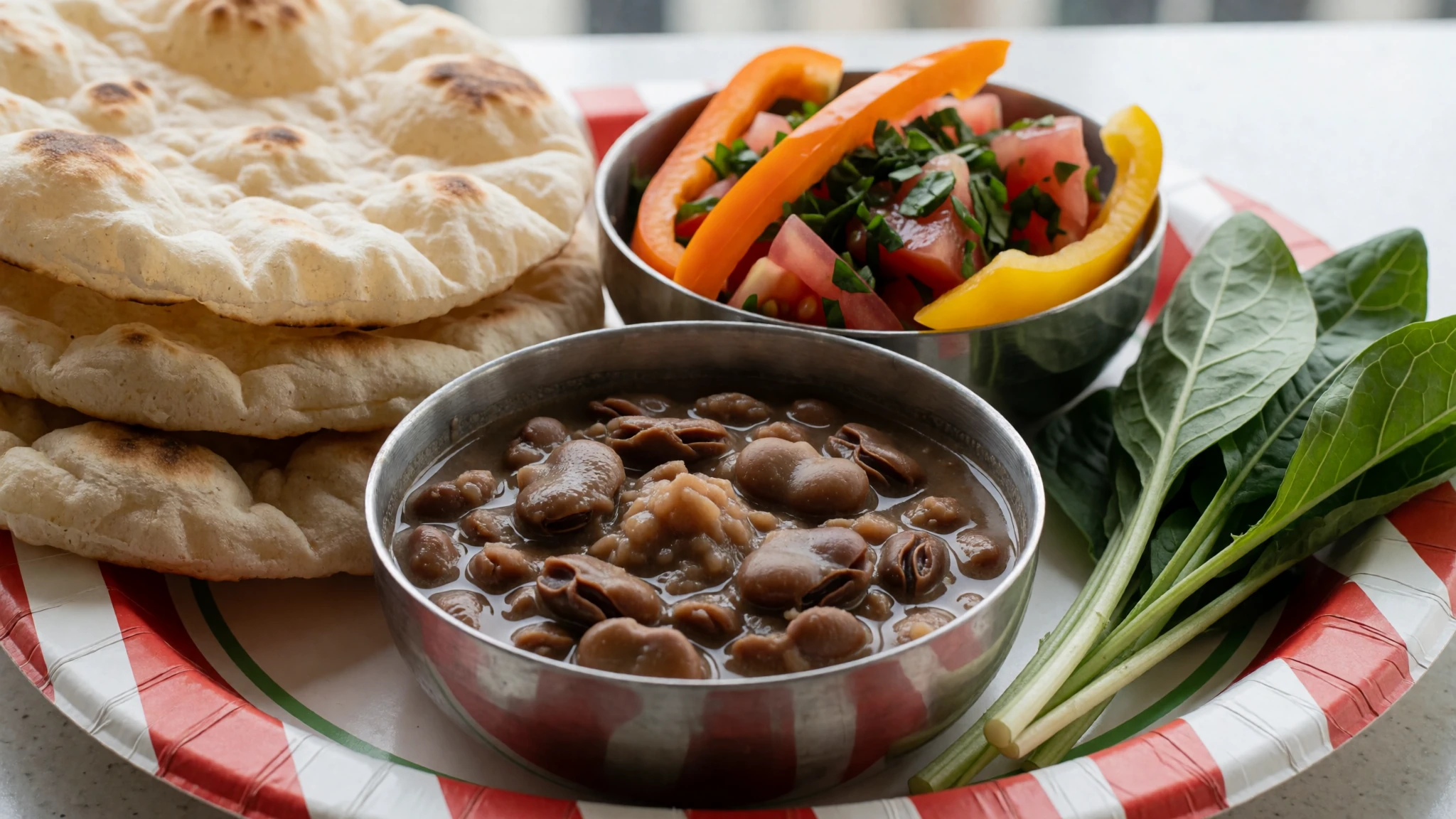
- Grilled Nile Fish — Riverside restaurants and local fish markets
Fresh fish caught from the river, seasoned with local herbs and spices, then grilled over open flames and served alongside rice and fresh salads. - Om Ali — Traditional bakeries and local sweet shops
A rich, traditional Egyptian bread pudding baked with milk, cream, nuts, raisins, and coconut flakes, served warm as a sweet dessert.
Plan it
Best time. December to February offers the most comfortable daytime temperatures for exploring the ruins, while summer months bring intense, dry heat that requires careful pacing.
How long. 2–3
Getting there. Fly into Luxor International Airport, then take a short taxi or local transport ride directly to the Karnak temple complex.
Budget. mid
Tips
- Arrive early in the morning before tour groups crowd the hypostyle hall
- Carry plenty of drinking water to stay hydrated under the desert sun
- Wear comfortable, sturdy walking shoes for uneven stone terrain
- Keep small denominations of local cash handy for tickets and small purchases
Etiquette
- Dress modestly with shoulders and knees covered when exploring local towns
- Ask permission before taking photographs of local residents
Nearby
Sources
- Wikidata Q189392 (CC0)
- Wikipedia (CC BY-SA 4.0)
- Wikivoyage (CC BY-SA 4.0)