Karlštejn Castle
Karlštejn Castle, Czech Republic
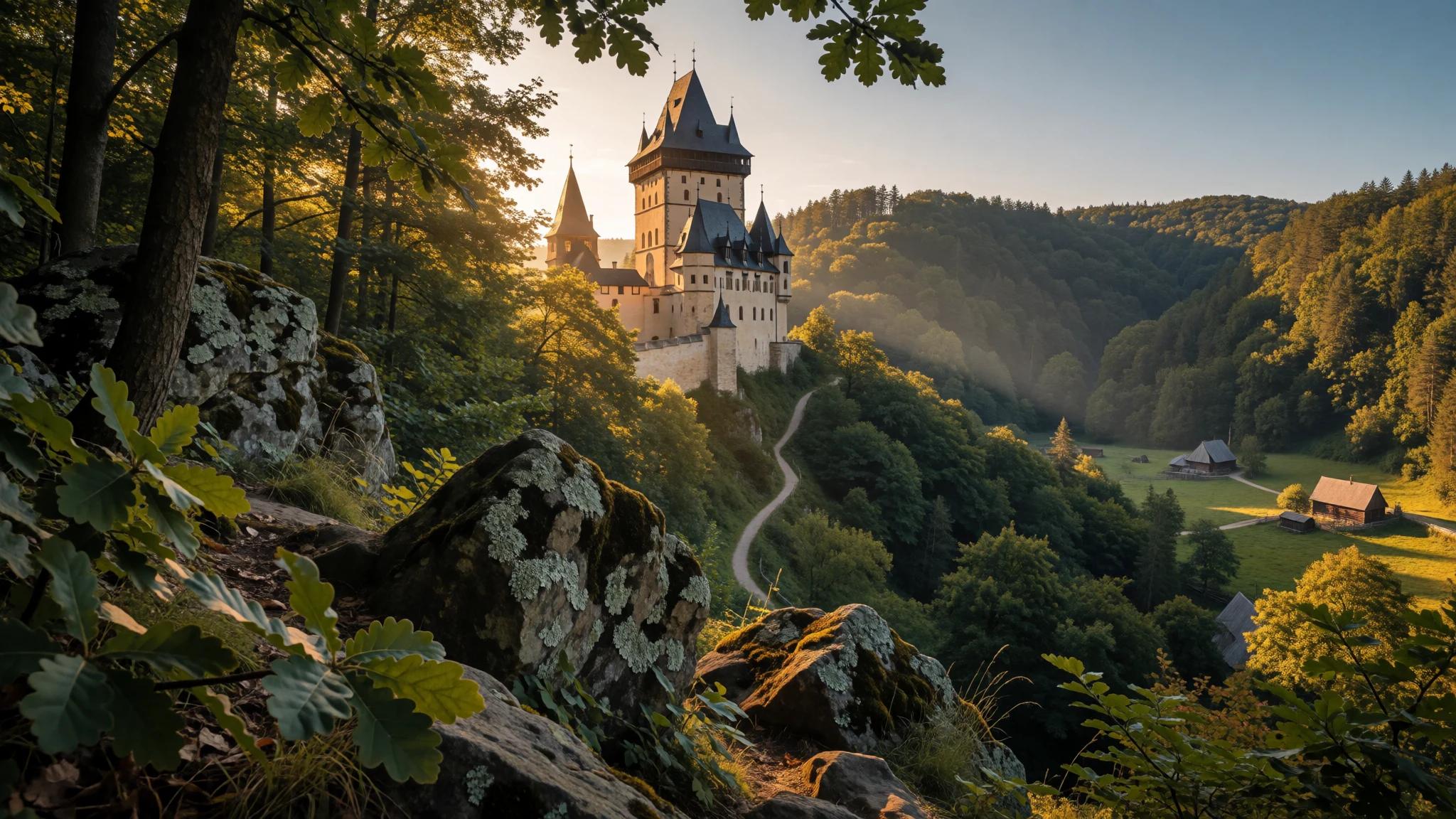
Karlštejn Castle is a Gothic fortress on a wooded hill near Prague, built by an emperor to guard crowns and holy relics.
The place
Karlštejn Castle (Czech: hrad Karlštejn; German: Burg Karlstein) rises from a wooded ridge about 30 km south-west of Prague, in the Central Bohemian Region. The hill stands at 298 m above the Berounka river and the small town that shares the castle's name. Charles IV founded it in 1348, and its purpose was never to be a comfortable palace. It was a strongroom, a place where the regalia of the Holy Roman Empire, Bohemia's coronation jewels and a store of sacred objects could sit behind thick walls under constant guard. The silhouette people photograph today, a tall tower crowning a stepped cluster of roofs, owes much to a restoration in the late nineteenth century, so it looks more storybook than the medieval building probably did. The walk up from the station passes stalls, cafés and souvenir shops aimed squarely at day-trippers, and it is honestly the weakest part of the outing; most travellers simply keep walking. The castle rewards the effort with courtyards, wooden galleries, parapets with long views over forested hills, and a guided interior route that is the only way to see the rooms. Away from the village, the forests and limestone country of the Český kras protected area offer far quieter walking. Karlštejn works as a half-day trip from Prague, or a full day when paired with a hike. Weekends and summer are the busiest times, and weekdays outside school holidays feel noticeably calmer.
Its story
Karlštejn Castle was begun in 1348 under Charles IV, King of Bohemia and later Holy Roman Emperor, who personally watched over the building work and the decoration of the rooms. No record names the master builder. Matthias of Arras has been suggested, but the question remains open. The core of the whole scheme, the Chapel of the Holy Cross inside the great tower, was consecrated in 1365, and that moment marks the practical completion of the castle. When the Hussite Wars broke out, the imperial regalia were carried away in 1421 and eventually reached Nuremberg. The castle was besieged the following year, and the attackers flung corpses and cartloads of dung over the walls, an early and grim attempt at germ warfare that seems to have sickened some of the defenders. The Bohemian coronation jewels later came back and stayed for generations. Fire damaged the great tower, and over the following centuries the interiors were altered, first in a late Gothic manner and then with Renaissance touches. The jewels and the archive were later moved to Prague for safety, and the castle was handed to a new ruler. Swedish troops took it in 1648, after which it fell into decay. The appearance visitors see now comes from Josef Mocker's Gothic Revival rebuilding in the late nineteenth century. Early in the twentieth century an industrialist, Wilhelm von Medinger, bought the castle and its estate.
What to see
- Castle walls and parapets — Karlštejn Castle, hilltop
The courtyards and parapets give the best sense of the castle's hilltop setting, with forest rolling away on every side and the river valley below. Entry to the interiors is by guided tour only, and ticket and opening rules change, so check the official site at https://www.hrad-karlstejn.cz/ before travelling.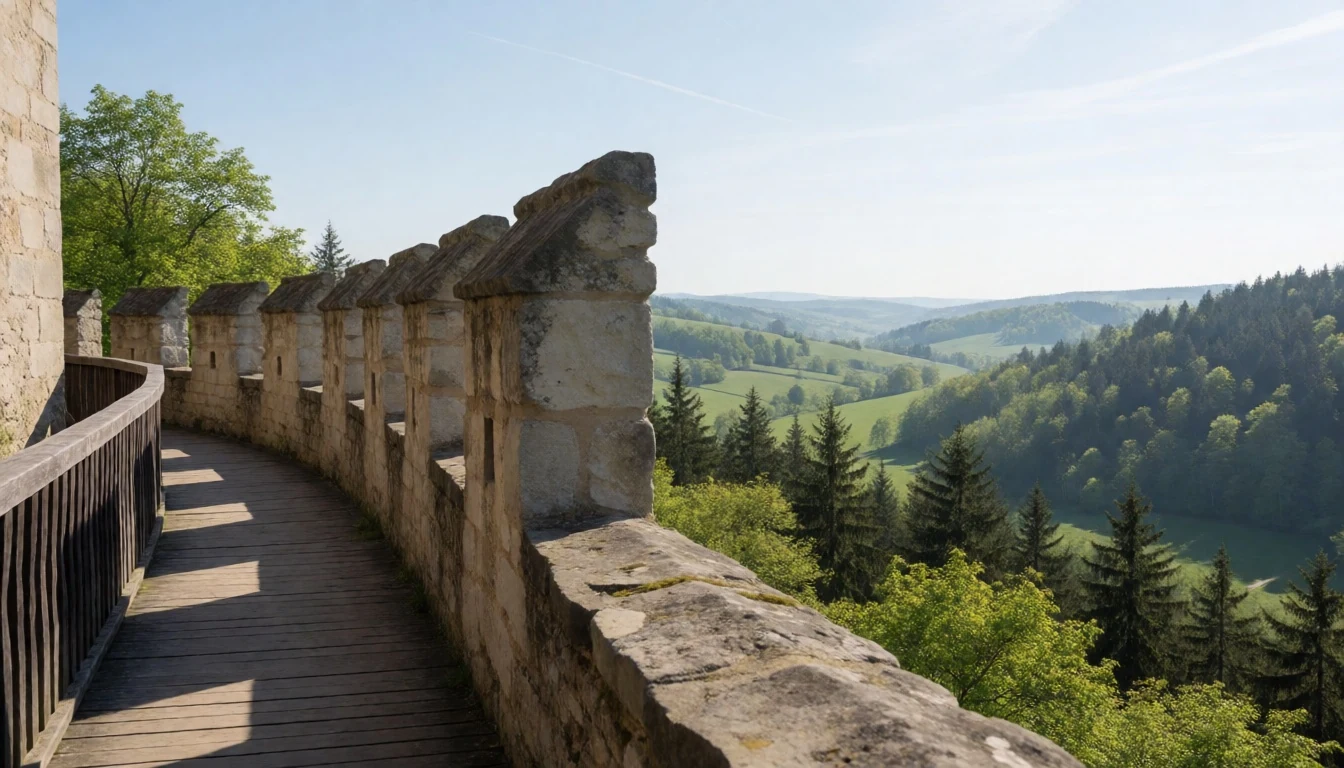
- Chapel of the Holy Cross — Great tower, Karlštejn Castle
The chapel sits inside the great tower and was the innermost room of the castle, where relics and the crown treasures were kept. It was consecrated in 1365. Access is on a longer guided route that is worth reserving ahead, since places are limited and the tours fill up on busy days.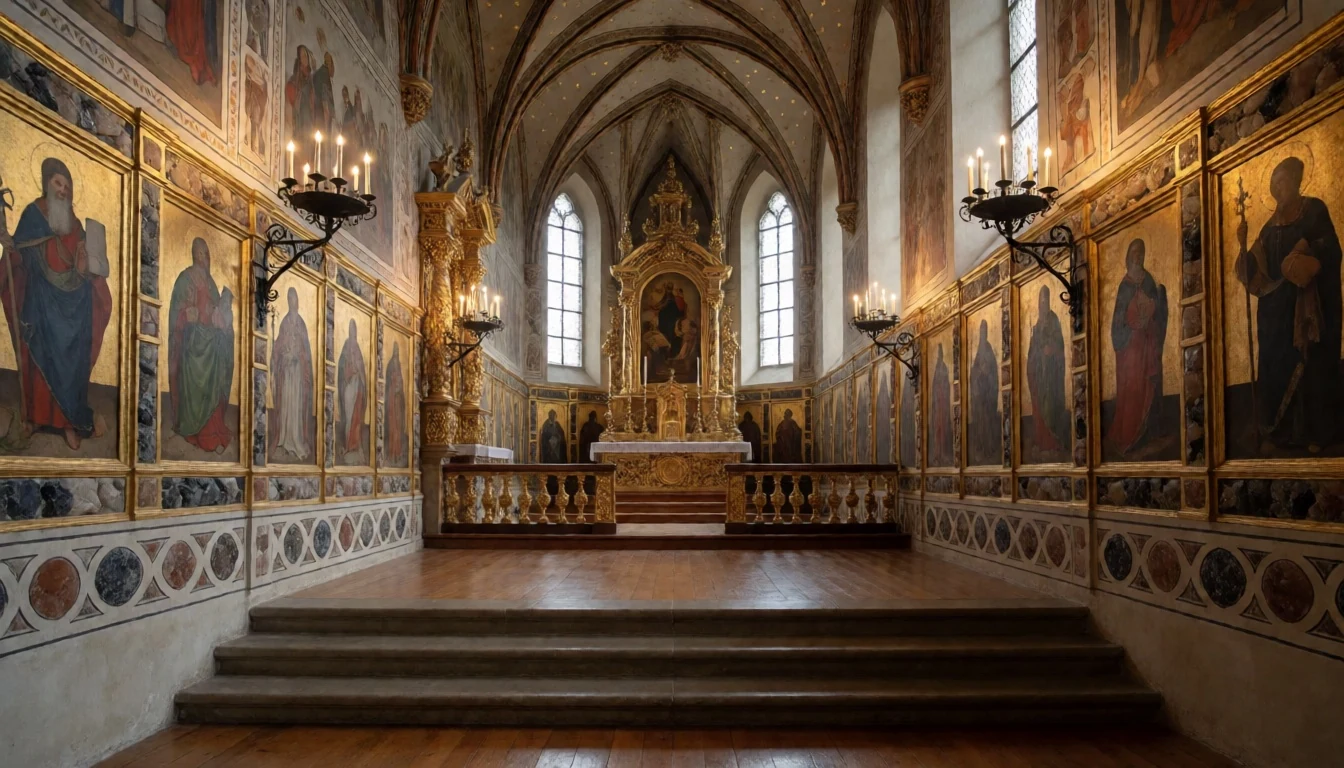
- Karlštejn village and river — Below the castle, along the Berounka
The small town beneath the castle was founded as the building work began, and it has changed its name several times since. Today it is mostly a strip of shops and eateries, but the river bank is pleasant for a flat stroll, and the view back up to the castle is the classic one.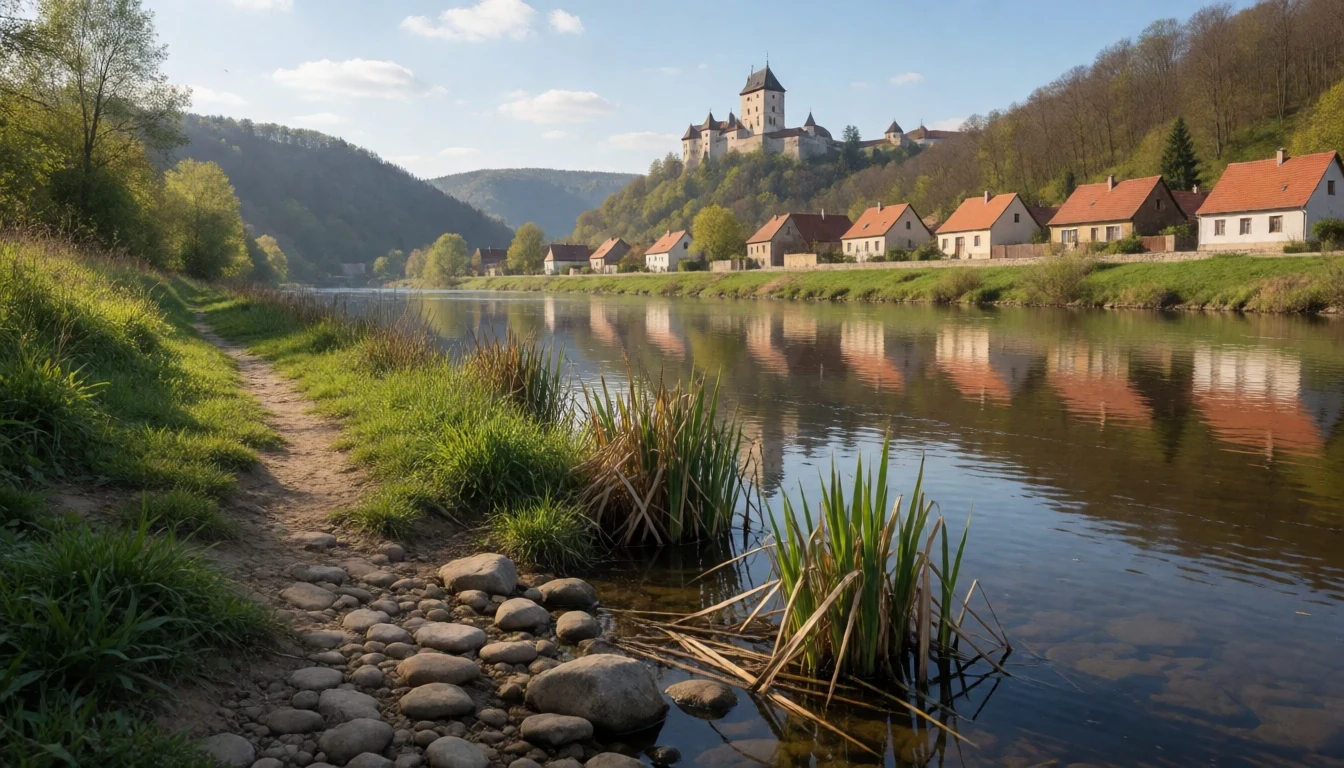
- Svatý Jan pod Skalou — Forest trail west of the castle
The name means Saint John under the rock, and the monastery tucked against a cliff fits it neatly. It is a rugged forest walk of about 12 km from the castle, with steep climbs, slippery rocks and stretches without phone signal, so it needs good fitness and proper hiking shoes, though it feels far more local and unhurried than the main lane. There is a pub close by, and the buses and trains back to Prague are within reach.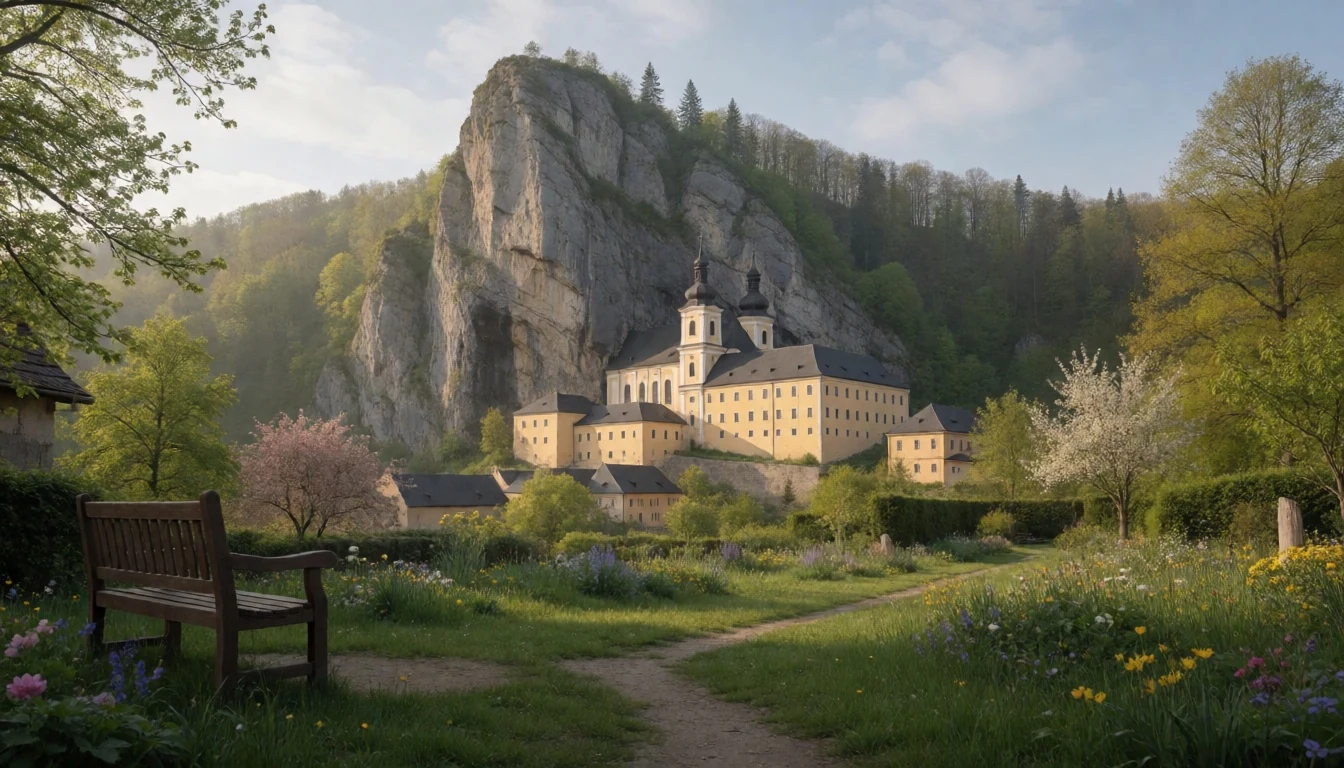
- Solvayovy lomy — Former quarry north-west of the castle
This former quarry has been turned into a small museum of its own. At weekends from spring to autumn a narrow-gauge railway runs there, with a little buffet in a tram carriage. It suits families, anyone who likes industrial heritage, or a gentle detour on a longer hike through the Český kras.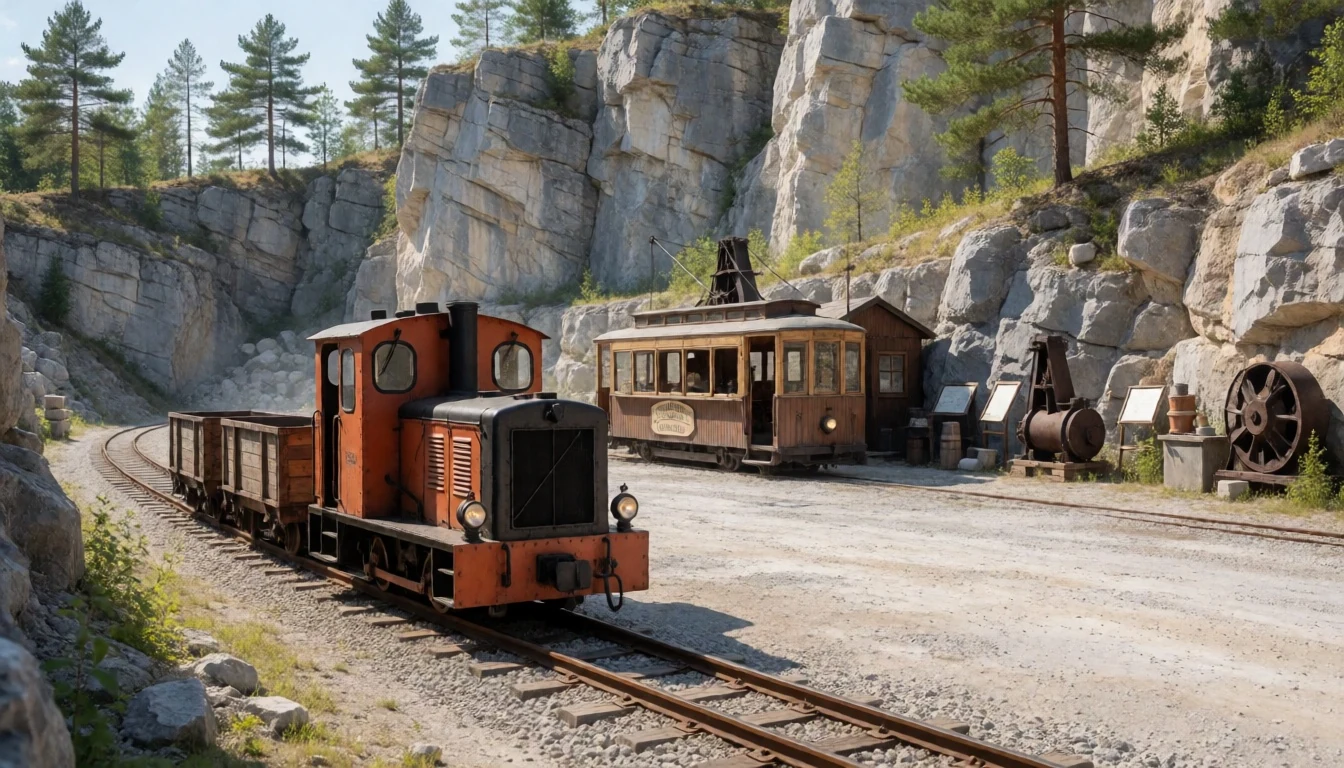
Culture
Karlštejn Castle was built as a statement of both faith and statecraft, and that mixture still colours how people treat it. Charles IV, who held the Bohemian and imperial crowns, wanted a sanctuary where relics and regalia sat under one roof, guarded almost like a shrine. The chapel and the tower are therefore handled as serious heritage, and guides tend to tell the story with a dry humour that keeps even the grimmer episodes, such as the Hussite siege, lively. Outside the busiest weeks, local families come simply to walk. Hiking and weekend cabin life are woven into Czech habits, and the forest trails behind the castle are used by people from Prague as much as by visitors. The pub is the other pillar of the day out: a plain meal, a half-litre of lager and slow conversation make a natural end to a walk, and the unpretentious places away from the castle lane are gentler on the wallet than the tourist-facing ones. A cheerful greeting of dobrý den on entering a shop, pub or ticket office is expected and warmly returned, and a few words of Czech go a long way. Keep to the guide's route inside the castle, speak quietly in the chapel rooms, and follow every rule on photography and touching walls or furnishings.
What to wear
Karlštejn Castle sits in a part of Bohemia where traditional dress, known as kroj, varies from village to village. Typical pieces include embroidered blouses and bodices in linen or cotton, wool skirts, aprons, patterned headscarves for women, and waistcoats, breeches and felt hats for men. Today kroj appears mainly at folk festivals, weddings, church celebrations and school performances rather than daily life. At the castle itself, costumed events sometimes recall Charles IV's court, where rich wool, fine linen, fur trim and jewelled clasps marked rank. Everyday dress among local people is practical and understated: jeans, trainers or walking boots, fleeces and rain jackets, with a trend towards outdoor gear because so many families head into the forest at weekends. Visitors should dress for a hill walk rather than a formal sight. Shoes with a decent grip matter, as the path to the castle climbs steadily and the courtyard cobbles can be slippery after rain. Bring layers: stone interiors stay cool even on a hot day, and the hilltop can be windy. Summer is warm, so carry sun protection and water, while winter needs a proper coat, gloves and a hat. There is no strict dress code, but covered shoulders and knees are polite in the chapel rooms and any working church nearby.
What to eat
- Svíčková na smetaně — Traditional Czech pubs on the trail below the castle
Marinated beef sirloin in a smooth root-vegetable cream sauce, served with sliced bread dumplings, a spoonful of cranberries and a slice of lemon. It is a Sunday-lunch favourite, and the unpretentious pubs outside the castle lane tend to cook it well.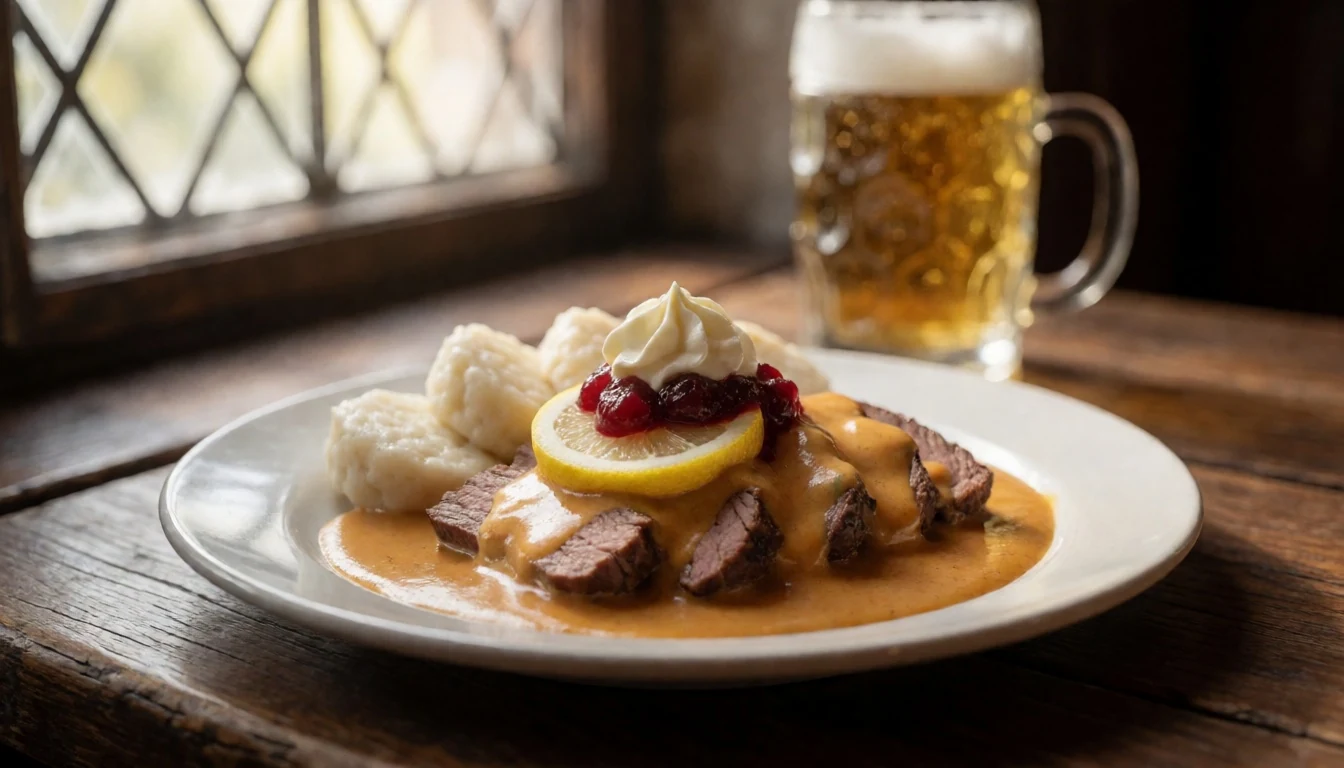
- Guláš with knedlíky — Village pubs along the forest paths
A thick, paprika-rich beef stew eaten with sliced dumplings to mop up the gravy. It is warming after a damp hike and appears on nearly every pub menu, usually in a simple, generous version.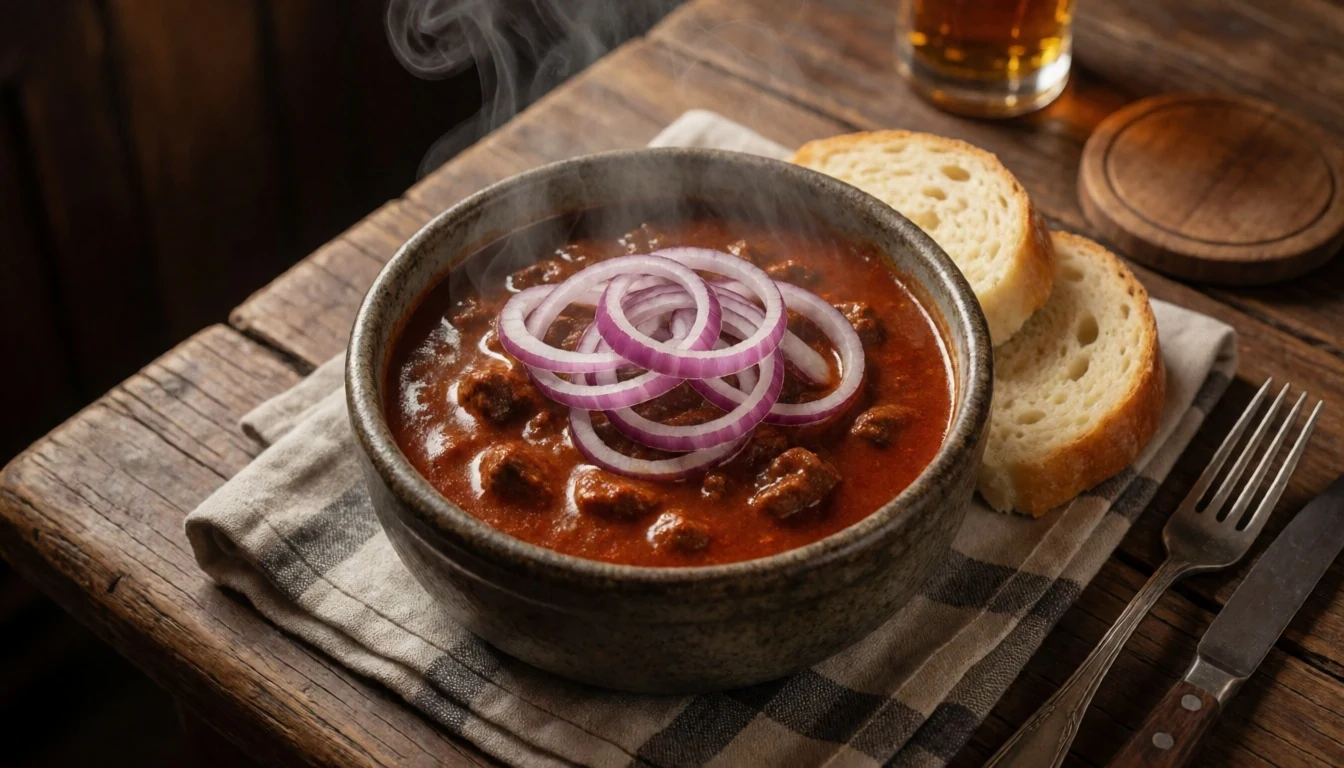
- Smažený sýr — Casual eateries and pub kitchens in Karlštejn and nearby villages
A slab of cheese coated in breadcrumbs and fried until crisp, usually served with chips or boiled potatoes and tartare sauce. It is the standard meat-free option and a hearty choice before a climb. - Klobása — Outdoor grills at campsites and riverside stalls, such as those near Srbsko
A grilled Czech sausage, often eaten with mustard, bread and pickles at an outdoor table. It is the typical camping and hiking meal in the valley, and cheap and filling compared with sit-down restaurants. - Czech lager (pivo) — Any traditional pub, such as the ones near Svatý Jan pod Skalou
Freshly poured pale lager is the usual accompaniment to every dish here, served in half-litre glasses. Pubs away from the castle approach are friendlier on price, and many also pour darker beers if the lighter style is not to your taste.
Plan it
Best time. April–May and September–October. Spring brings fresh green forest and warm days, though nights can still drop below freezing, while early autumn has colour and fewer school groups. July and August are the hottest and wettest months, with highs near 37 to 38 C and the busiest crowds; winters are cold, so the hilltop can feel raw and some trails are icy.
How long. 1
Getting there. Fly to Václav Havel Airport Prague, then go to Prague's main station (Hlavní nádraží) or Smíchov station for the S7 commuter line to Karlštejn station, a ride of about 40 minutes. The last leg is a steady uphill walk of roughly half an hour from the station through the village to the castle gate. Driving is possible, with parking by the river.
Budget. mid
Tips
- Check opening days and book guided tours through the official site (https://www.hrad-karlstejn.cz/); the castle has a weekly closing day and interiors are visited by tour only.
- Arrive early on weekdays to beat the day-trip crowds and tour-bus groups, and book the longer tour with the Chapel of the Holy Cross well ahead.
- Eat away from the castle lane: walk a short way down a forest trail to a local pub where food is cheaper and simpler.
- Wear sturdy shoes and carry water, as the walk up is steady and shade is patchy.
- Combine the castle with a demanding forest walk of about 12 km to Svatý Jan pod Skalou, but only if you are fit and wear proper hiking shoes.
Etiquette
- Follow your guide's route and stay with the group inside the castle.
- Respect photography limits in the chapel rooms and never touch walls, furnishings or exhibits.
- Greet staff and pub owners with a friendly dobrý den.
Nearby
Sources
- Wikidata Q266698 (CC0)
- Wikipedia: Karlštejn (rev 1382558607) (CC BY-SA 4.0)
- Wikivoyage: Karlštejn (rev 5208429) (CC BY-SA 4.0)
- Photo: Burg Karlstein / Karlštejn (Jürgen Regel, Marian…) (CC BY 3.0)
- Photo: The Imperial Crown (Gryffindor) (Public domain)
- Photo: Ludvík Kohl, Chapel of the Holy Cross at Karlštejn (Ablakok) (CC BY-SA 4.0)
- Photo: Chapel of Karlshtein (Interfase) (CC BY-SA 4.0)
- Photo: Burg Karlstein, oldest known picture (Unknown author) (Public domain)
- Photo: Castle, Karlstein (Frode Inge Helland) (CC BY 3.0)
- Photo: Air photo of Karlštejn Castle (Karelj) (Public domain)
- Photo: Air photo of Karlštejn Castle and village (Karelj) (Public domain)


