Kandy
Kandy, Sri Lanka
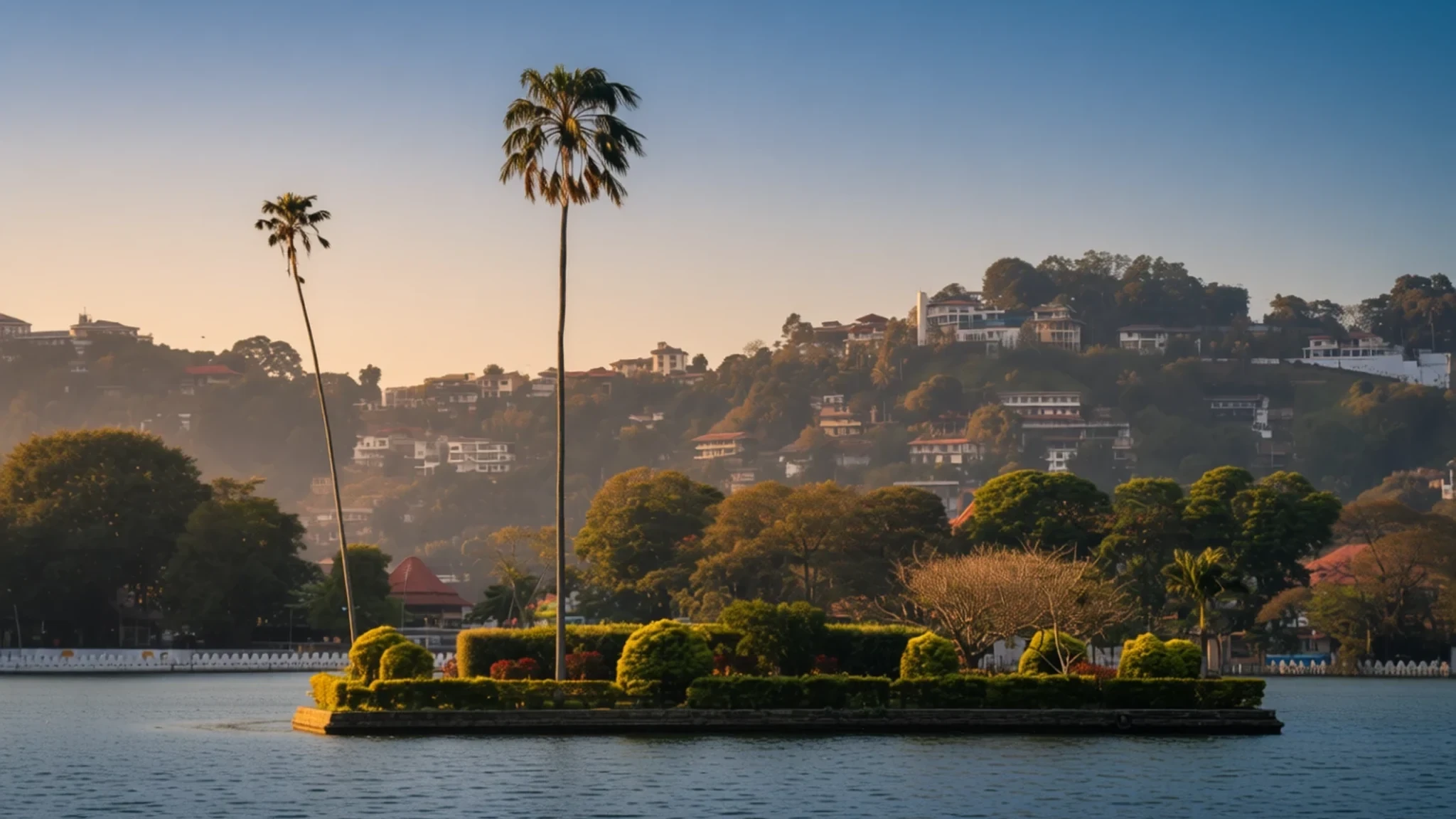
Kandy is the hill-country heart of Sri Lanka, a compact town of temples, a lake and an easy walk between them.
The place
Kandy sits in the hills of the island's interior, in Sri Lanka's Central Province, at about 500 metres (1,600 ft) above sea level. Ridges and forested mountains surround it, so the air is cooler and greener than in the coastal lowlands most travellers pass through first. A lake, made by hand long ago, lies in the middle of town beside the central business district, and the streets climb and bend around its edges.
The city is the administrative capital of the province and is often called the cultural capital of Sri Lanka, largely because of its architecture and its temples. Its best-known building is the Temple of the Tooth, which holds a relic believed to be a tooth of the Buddha and draws pilgrims as well as tourists. UNESCO has recognised the town as a World Heritage Site, and the old royal core is compact enough to explore on foot in an afternoon.
Expect a busy, lively town rather than a quiet hill station. Traffic is heavy around the lake and the temple, and tuk-tuks are everywhere. The altitude keeps the heat gentler than on the plains, but the midday sun is still strong. Stay near the lake if you want to walk everywhere; the hillside neighbourhoods are quieter but mean more climbing.
Its story
Kandy's story begins in the fourteenth century, when a king of Kurunegala, a city to the southeast, is recorded as founding a settlement here under an earlier name. The oldest religious foundation in the town, the Asgiri Maha Viharaya, was built by a minister and general, and it still stands as a reminder of how early Buddhism took root in these hills.
The town's great moment came when it became the seat of the Kingdom of Kandy. Its first king, a royal from the Kotte line, ruled the hill country as a semi-independent state under Kotte, and the city grew into the capital of the last Sinhalese monarchy. The court held on through a long run of rulers, some of them rivals, and the throne changed hands by succession, marriage and, at times, by force.
The kingdom's defining trait was resistance. Its rulers pushed back against Portuguese, Dutch and British expansion, and the hills gave them cover that the coastal forts never had. Kandy eventually fell under British control in the early nineteenth century, and the old royal buildings were adapted to new uses. Today that long history is told through the temple, the palace and the museums around the lake.
What to see
- Temple of the Tooth — City centre, beside the lake
The Temple of the Tooth, or Sri Dalada Maligawa, houses a relic said to be a tooth of the Buddha, which makes it one of the holiest shrines in Sri Lanka. Dress modestly, with shoulders and knees covered, and join pilgrims in white. Go early for fewer crowds, and remove shoes and hats before entering.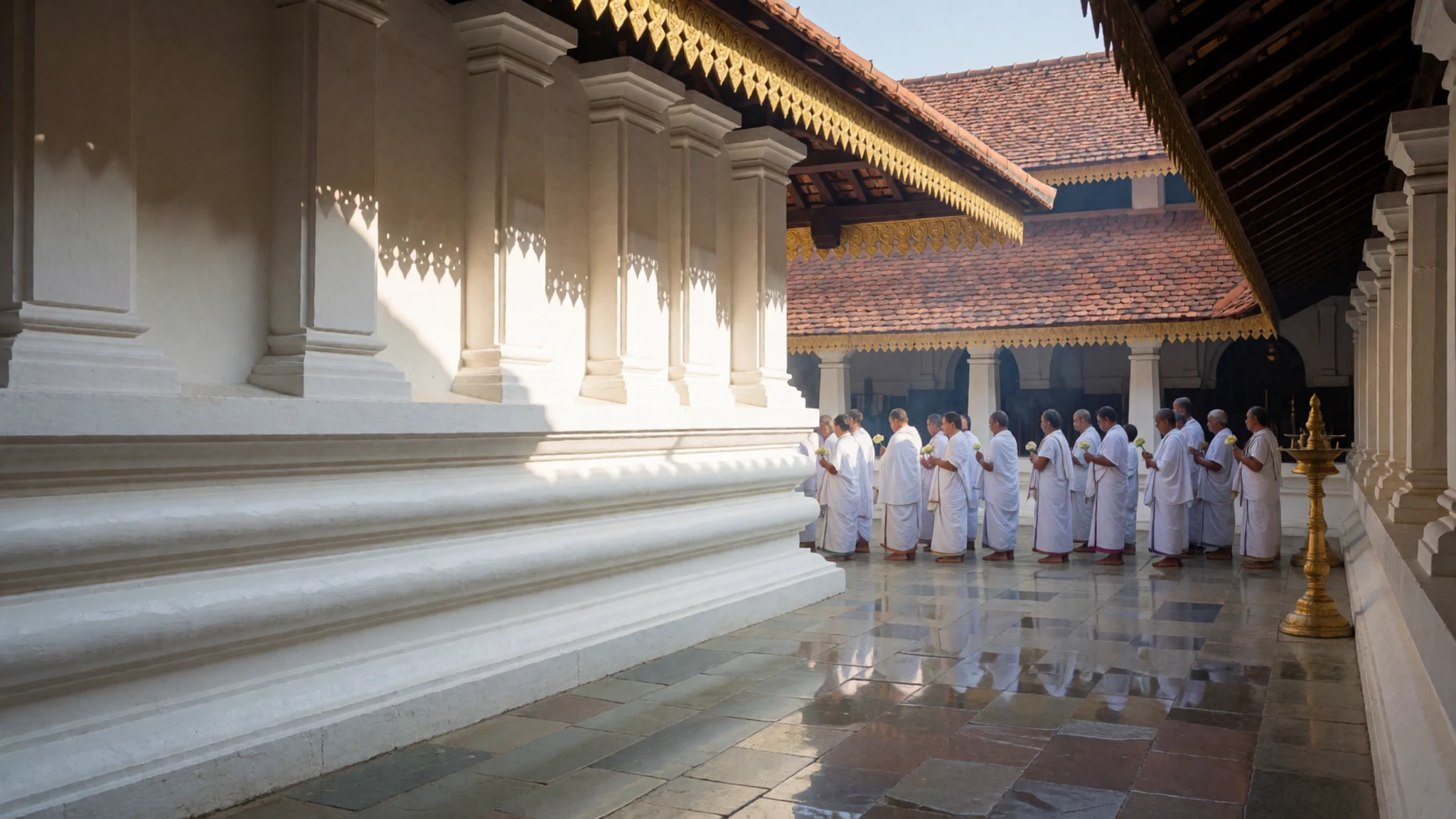
- Royal Palace of Kandy — Next to the Temple of the Tooth
The Royal Palace of Kandy, close to the temple, was the residence of the kings and now houses an archaeological museum. Its courtyards and old halls give a sense of court life before the British era. Allow an hour or so, and check the official site for current opening times before you go.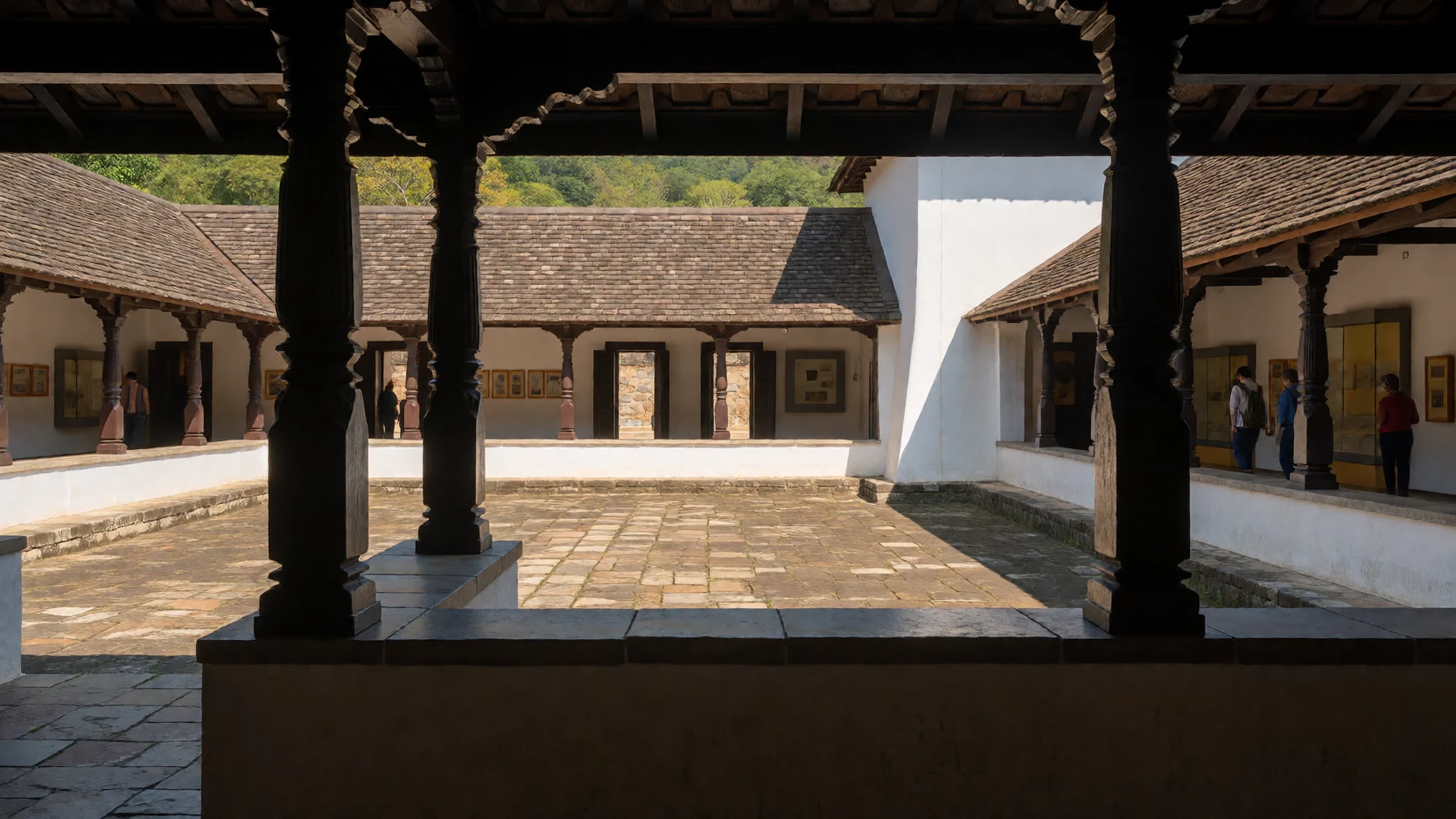
- Bahirawakanda Vihara — Hill above the town
Bahirawakanda Vihara, a hill temple a short walk or tuk-tuk ride from the centre, is marked by a large seated Buddha statue visible from almost everywhere in Kandy. The climb is steady, so go in the cooler hours and carry water. It gives a good view over the city.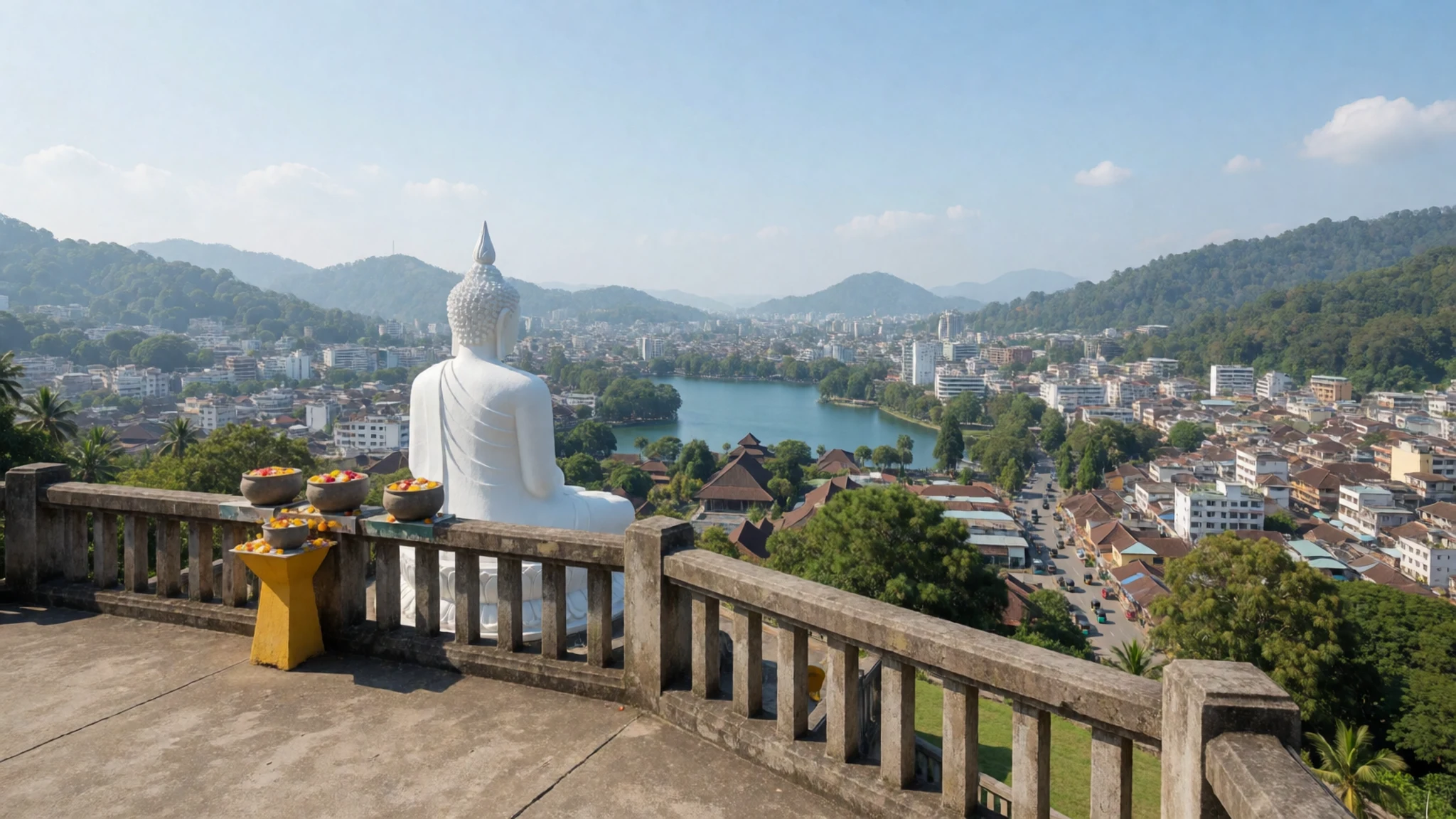
- Udawattakele Royal Forest Sanctuary — Hill behind the palace
Udawattakele Royal Forest Sanctuary, on the hill above the palace, was planned and kept as part of the royal palace grounds. Its trails run through shaded forest, a welcome break from the traffic below. Entry arrangements change, so check the official site before you set out, and wear sturdy shoes for the slopes.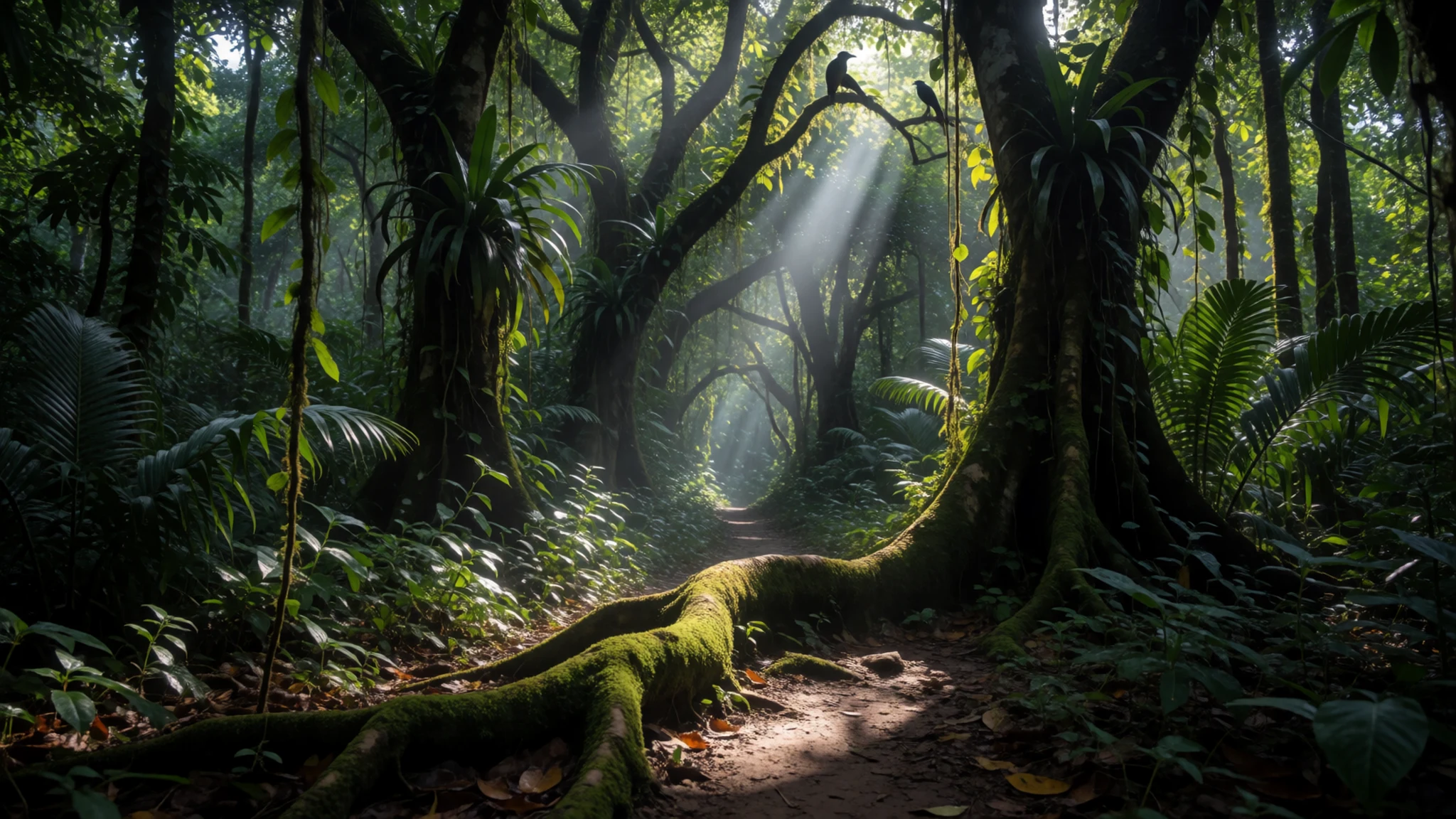
- National Museum of Kandy — Near the lake, central Kandy
The National Museum of Kandy holds a collection of Sri Lankan relics and is usually quiet, which makes it a good midday stop. Staff are often glad to give a free tour, so ask at the desk. It is a calm contrast to the temple crowds.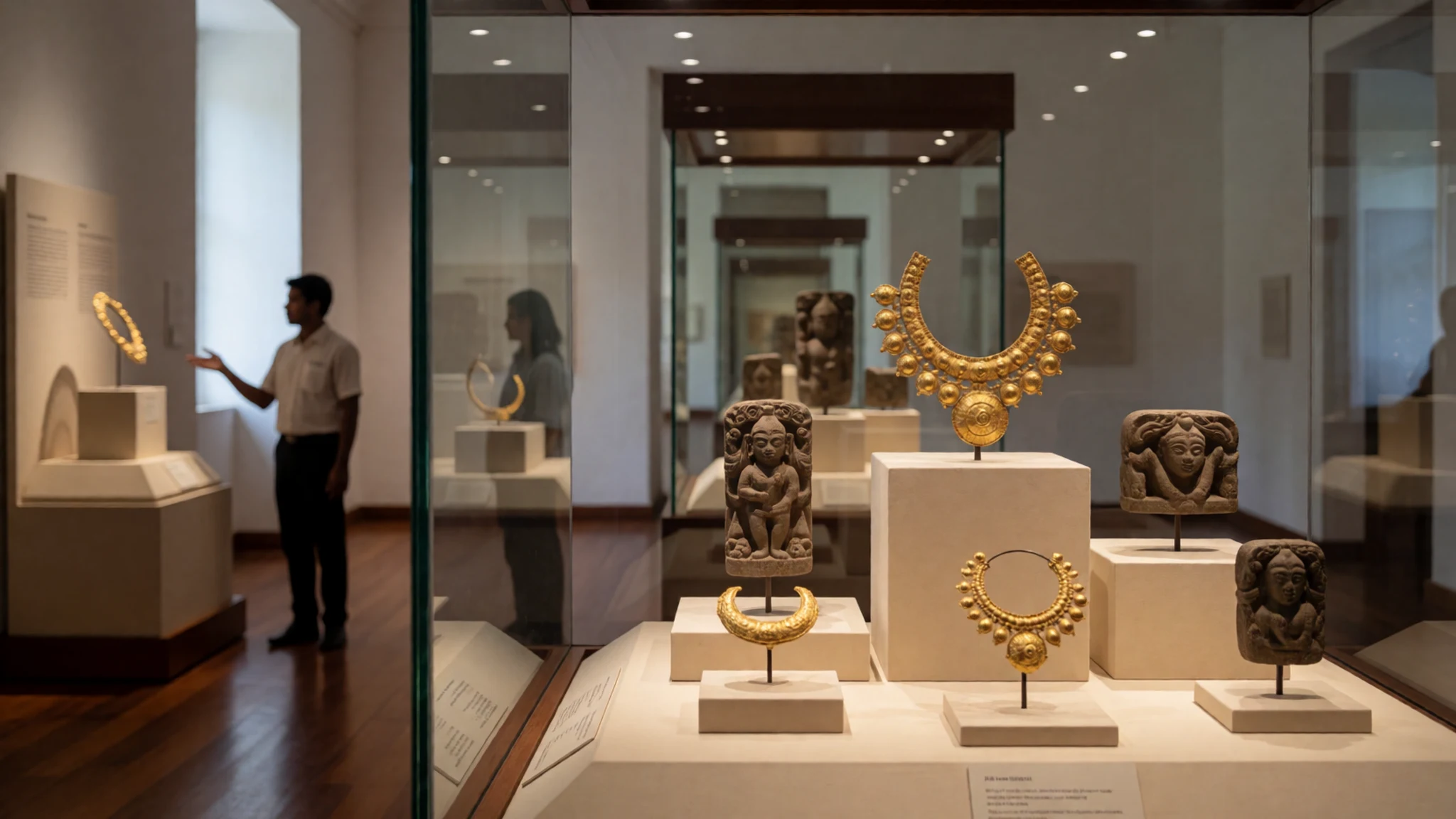
Culture
Kandy takes its religious life seriously, and visitors feel it most in the rhythm of the Temple of the Tooth. Buddhist custom shapes daily routines around the lake: people bring flowers and offerings, and monks in saffron are a common sight in the streets. The city's best-known public event is the Esala Perahera, a procession held in July or August in which one of the inner caskets used to cover the tooth relic is carried through the streets on a royal tusker. Traditional dancers, drummers, flag bearers from the provinces of the old kingdom and temple custodians in their traditional dress accompany it, and torch-bearers light the way after dark. Large crowds arrive from across the country and from abroad, so book accommodation early if you plan to attend. Away from the ceremonies, the modern shopping centre at Dalada Veediya offers a contrast to the older streets around it. Whatever you do, dress modestly and take off your shoes before entering any temple or shrine, and never turn your back on a Buddha statue to pose for a photograph.
What to wear
Traditional dress in Kandy reflects the old kingdom's court. Men often wear a white cloth wrapped at the waist, sometimes with a jacket and a head cloth, and white is the colour of temple visits. Women wear draped cotton or silk saris and dresses in the Kandyan style, with pleats at the front and the end gathered over the shoulder. For the Esala Perahera, the processional costume is far more elaborate: dancers and temple custodians wear heavy, richly embroidered fabric, often in deep reds and golds, and carry silver and gold ornaments that catch the torchlight.
Day to day, Kandy looks much like the rest of Sri Lanka. Office workers and students wear Western clothes, many women wear the national dress for weddings and religious occasions, and older men are often seen in sarongs. Cotton and light synthetic fabrics dominate because of the heat.
For a visit, choose loose, lightweight cotton that covers the shoulders and knees, and carry a light scarf to cover your shoulders when you enter a temple. White or pale colours suit the temple setting and keep you cool. Bring comfortable closed shoes for hill paths and steps, plus a light rain layer, since showers can arrive quickly in the hills.
What to eat
- Rice and curry — A local eatery a block back from the main street
A plate of rice with several curries, usually dhal, vegetables, fish or chicken, and a sambol on the side. Most local eateries serve it at lunchtime, and you pick the combination you want. It is the most dependable meal in town and is often very good value.
- Kottu roti — Street stalls and late-night food spots around the town centre
Roti bread chopped on a hot griddle with egg, vegetables and a spiced sauce, rhythmically clanged with two metal blades. It is a late-evening favourite, best eaten standing at a roadside stall. Choose chicken, egg or vegetable, and ask for it mild if you are cautious with chilli.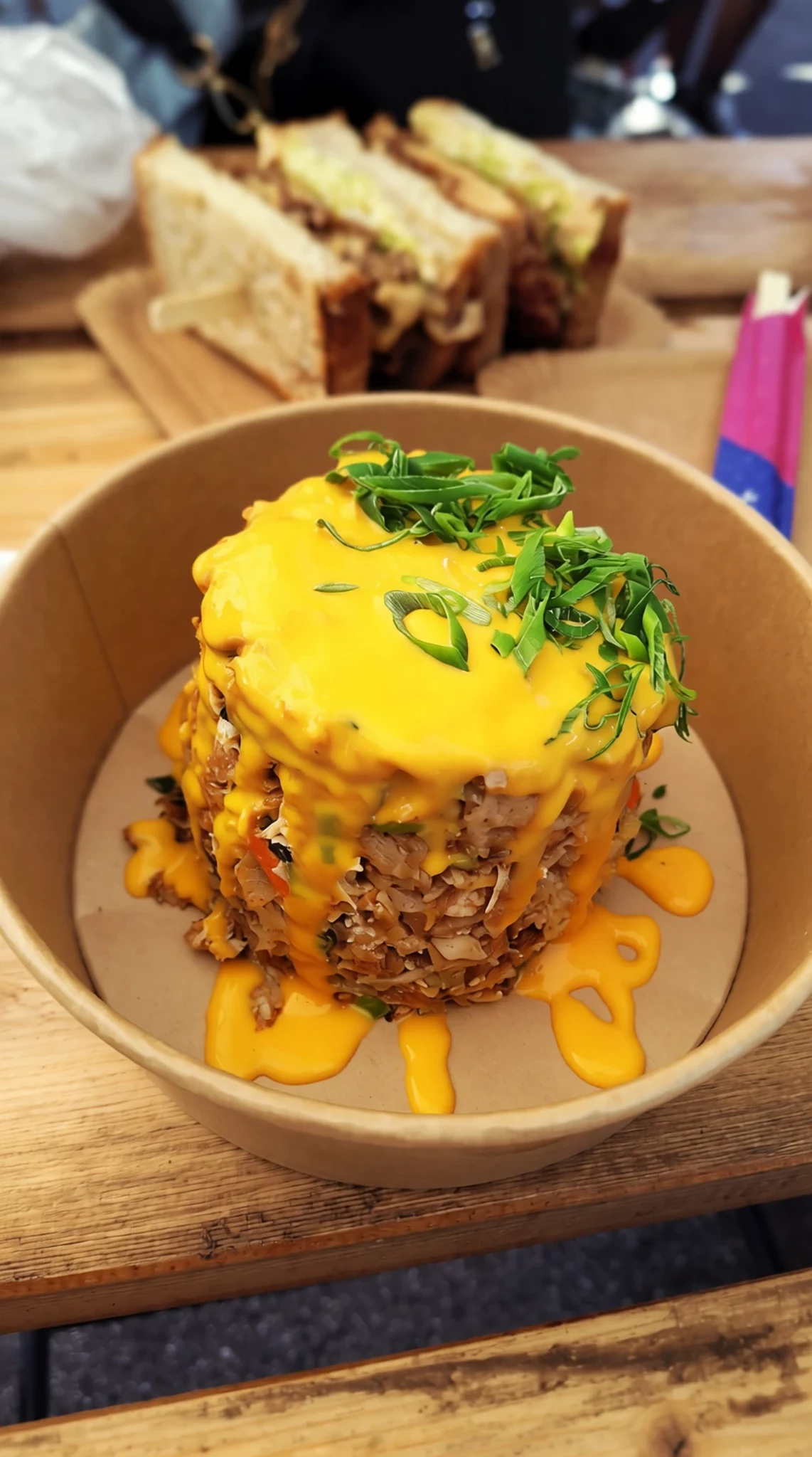
- Hoppers — Evening eateries in town; some places serve them only after dark
Bowl-shaped rice-flour pancakes with crisp edges and a soft middle, often eaten with an egg cracked into the centre or with a sweet coconut sambol. Hoppers are usually served in the evening at eateries, so they are a good dinner choice rather than a breakfast one. - Short eats — Bakeries and snack counters near the main street and the lake
Small fried snacks such as curry-filled patties, fish cutlets and vegetable rolls, sold by weight or by piece. They are cheap, portable and ideal for a walk around the lake. Ask for them hot from the fryer and eat them soon after buying. - South Indian-style vegetarian meals — Simple restaurants near the centre, especially those with a vegetarian counter
Dosas, idlis and vegetarian meals in the South Indian style are easy to find in town. They suit a lighter lunch, and many places serve them on banana leaves or steel plates. Expect a quick, cheap, filling plate and a sweet milky tea afterwards.
Plan it
Best time. January to April is generally the drier stretch, and the hills feel cooler than the coast. The south-west monsoon runs from May through July, and October through December is wetter still, peaking in November, while the Esala Perahera in July or August draws large crowds and fills accommodation quickly.
How long. 2–3
Getting there. Fly into Colombo, then take an intercity express train to Kandy, which takes about three hours and is the most comfortable option. Trains on the main line also continue to the hill country beyond Kandy.
Budget. mid
Tips
- Reserve train seats early, since the observation saloon on the intercity express books out quickly
- Visit the Temple of the Tooth early in the morning for fewer crowds
- Carry cash for tuk-tuks and small eateries, and agree fares before you ride
- Ignore touts at the railway station and use a metered or prebooked ride
- Save the lake walk for early evening, when the air is cooler
- Carry water and sun cover for the hill walks
Etiquette
- Remove shoes and hats before entering the Temple of the Tooth and other shrines
- Cover your shoulders and knees at religious sites
- Ask before photographing monks or people at ceremonies
Nearby
Sources
- Wikidata Q203197 (CC0)
- Wikipedia (Kandy) (CC BY-SA 4.0)
- Wikivoyage (Kandy) (CC BY-SA 4.0)
- Photo 01-front-view-of-temple-of-the-tooth-kandy.jpg (CC BY 3.0)
- Photo 02-pallekele-international-cricket-stadium.jpg (CC BY 3.0)
- Photo 03-botanical-garden-of-peradeniya-03.jpg (CC BY 3.0)
- Photo 04-sri-lanka-kandy-esala-perahera.jpg (CC BY-SA 4.0)
- Photo 05-amh-6978-kb-the-portuguese-pedro-lopez-welcomes-the-empress-.jpg (Public domain)
- Photo 06-sri-lanka-029-kandy-temple-of-the-tooth.jpg (CC BY 2.5)
- Photo 07-map-of-kandy-and-environs-baedeker-1914.jpg (Public domain)
- Photo 08-kandy-lake-panoramio.jpg (CC BY 3.0)


