Jebel Barkal
Jebel Barkal, Sudan
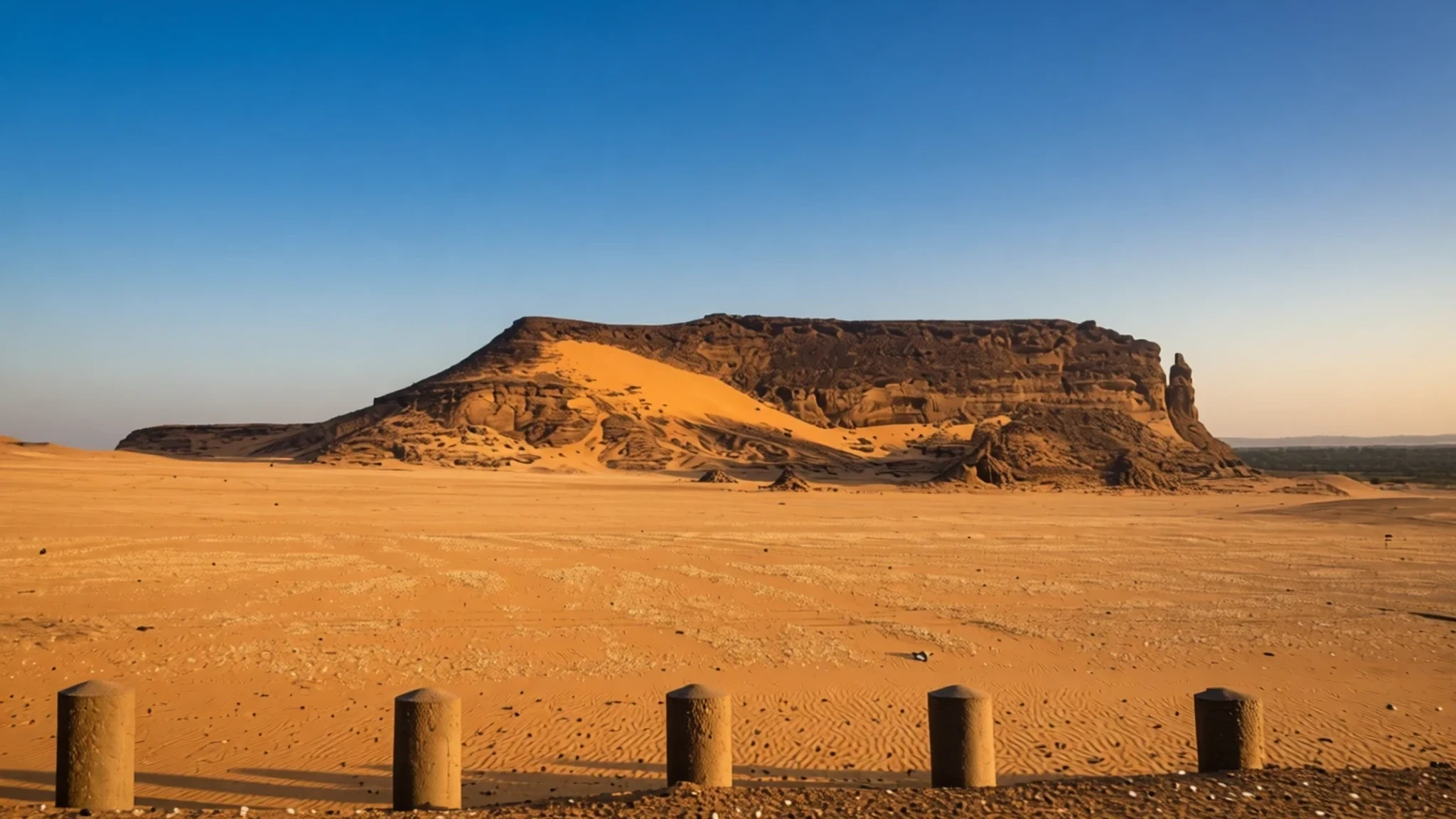
A flat-topped sandstone mesa beside the Nile that became sacred to both Kushite kings and Egyptian pharaohs.
The place
Jebel Barkal, also written Gebel Barkal, is a mesa about 104 metres tall, rising from the desert near Karima in Sudan's Northern State. It lies roughly 400 km north of Khartoum, close to a bend of the Nile in the region known as Nubia. The rock is easy to recognise because of its flat top, which makes it look like a table set down on the sand. People were drawn to it for a very long time. Early communities seem to have treated it as a natural landmark with spiritual weight, and later builders followed the same instinct, raising temples at its foot rather than anywhere else in the region. In 2003 the mountain and the archaeological site beneath it were inscribed as a UNESCO World Heritage Site. The Jebel Barkal Museum stands in the same area, so a single morning can cover both the stone and the finds taken from the ruins.
Walking the site feels less like visiting one monument and more like reading a long conversation between cultures. Temples built for Amun, the ram-headed god of Napata, stand near shrines linked to other deities, and carved reliefs show Kushite kings in poses drawn from Egyptian royal tradition. The ruins are low and sandy, so the sense of scale comes mostly from the mesa looming overhead. Summer is punishing here, and the air above the sand can be fierce by midday. Early hours are kinder for walking the paths, and a hat and plenty of water matter more on this site than at most others in the region.
Its story
The story at Jebel Barkal begins long before the first temple was built, with people of the Kerma culture who left behind only scattered pottery fragments. Whatever they believed about the mesa, it seems to have held a sacred meaning, and that reverence passed to the newcomers who followed. Kerma is believed to have served as the seat of the earliest Nubian realm with a unified central government, which is why the mesa lay amid a broader region of powerful kingdoms along the river.
Egypt's arrival marks the next chapter. Nubia came under Egyptian control in the 16th century BCE, and around 1450 BCE the pharaoh Thutmose III took the site and set up a fortified settlement there, using it as the southern edge of Egyptian authority. The Egyptians called the place menenu, and the surrounding region came to be known as Napata. Later, Egyptian craftsmen built a temple complex at the base of the rock. Its main shrine honoured a regional, ram-headed incarnation of Thebes' principal deity, as Amun was worshipped at Napata. Apart from the temples, very little trace of that Egyptian town has been found on the ground.
Egyptian power weakened over time. Building at the site slowed in the last years of the New Kingdom and largely stopped after its collapse in 1169 BC. Local rulers gradually took control of the region, and from around 800 BCE Jebel Barkal became the capital of the Kingdom of Kush, under the dynasty known as Napata. Its kings kept using the temples built under Egyptian rule, adding monuments and inscriptions that tied their authority to the older gods. Nineteenth-century European artists later drew the ruins in detail, and their sketches still help historians compare the reliefs with what survives today.
What to see
- The Amun temple (B500) — The temple complex at the foot of the mesa
The Amun temple, catalogued as B500, is the principal temple of the complex at the foot of the mesa, built for the local form of the god Amun. Its walls and courts are now low and worn, but the plan remains readable. Walk slowly and look at the surviving stone blocks, and the arrangement of rooms and courts becomes clear against the rock behind.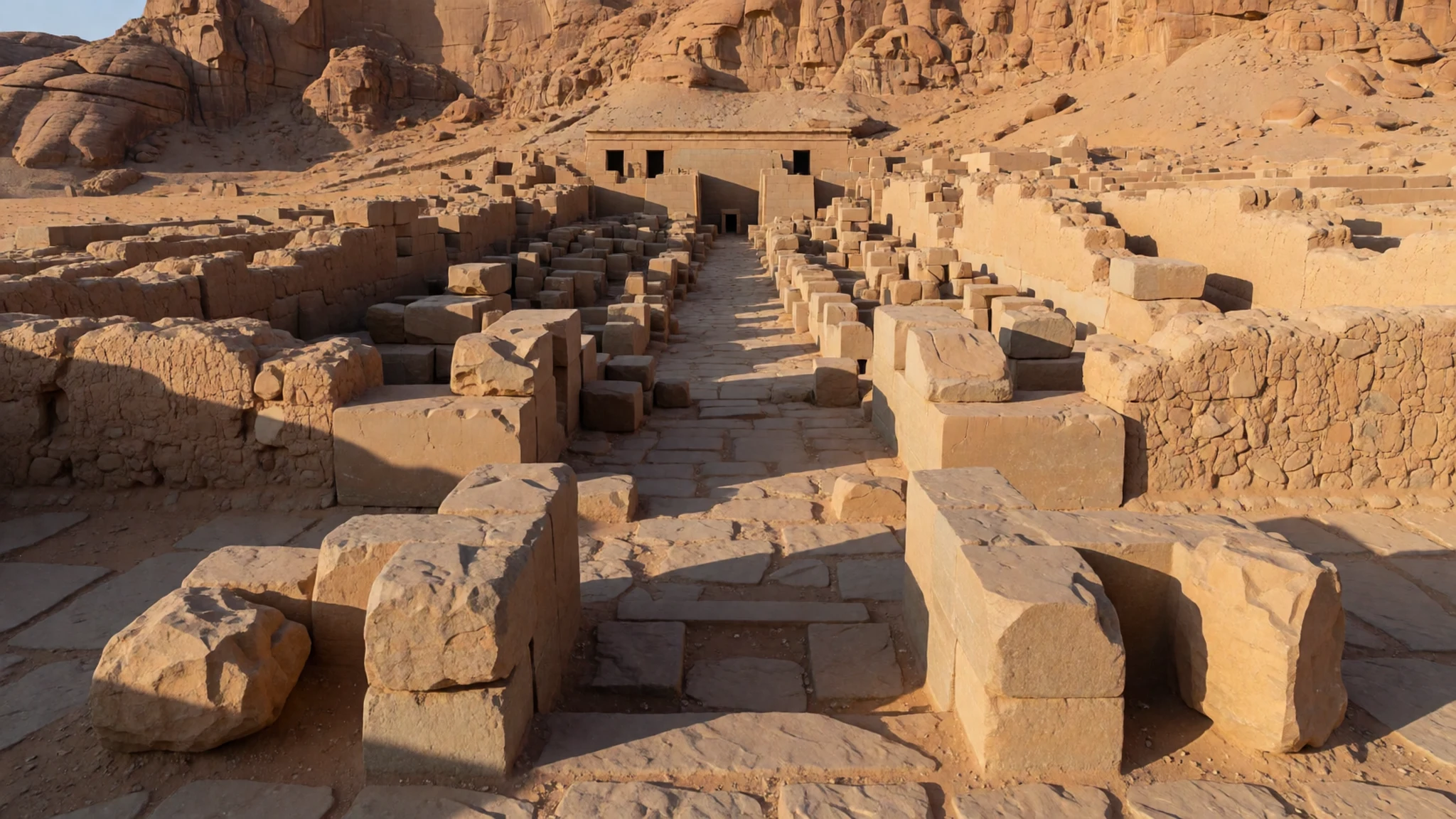
- The Mut temple — Within the temple complex at the foot of the mesa
The Mut temple, a separate building in the complex, is known for a relief of the lion-headed god Apedemak standing beside the pharaoh Taharqa. Apedemak is also spelled Appademak in some records. The carvings show that Kushite rulers adopted Egyptian royal imagery while keeping local deities at the centre of their religious life. Ask at the museum which sections are open.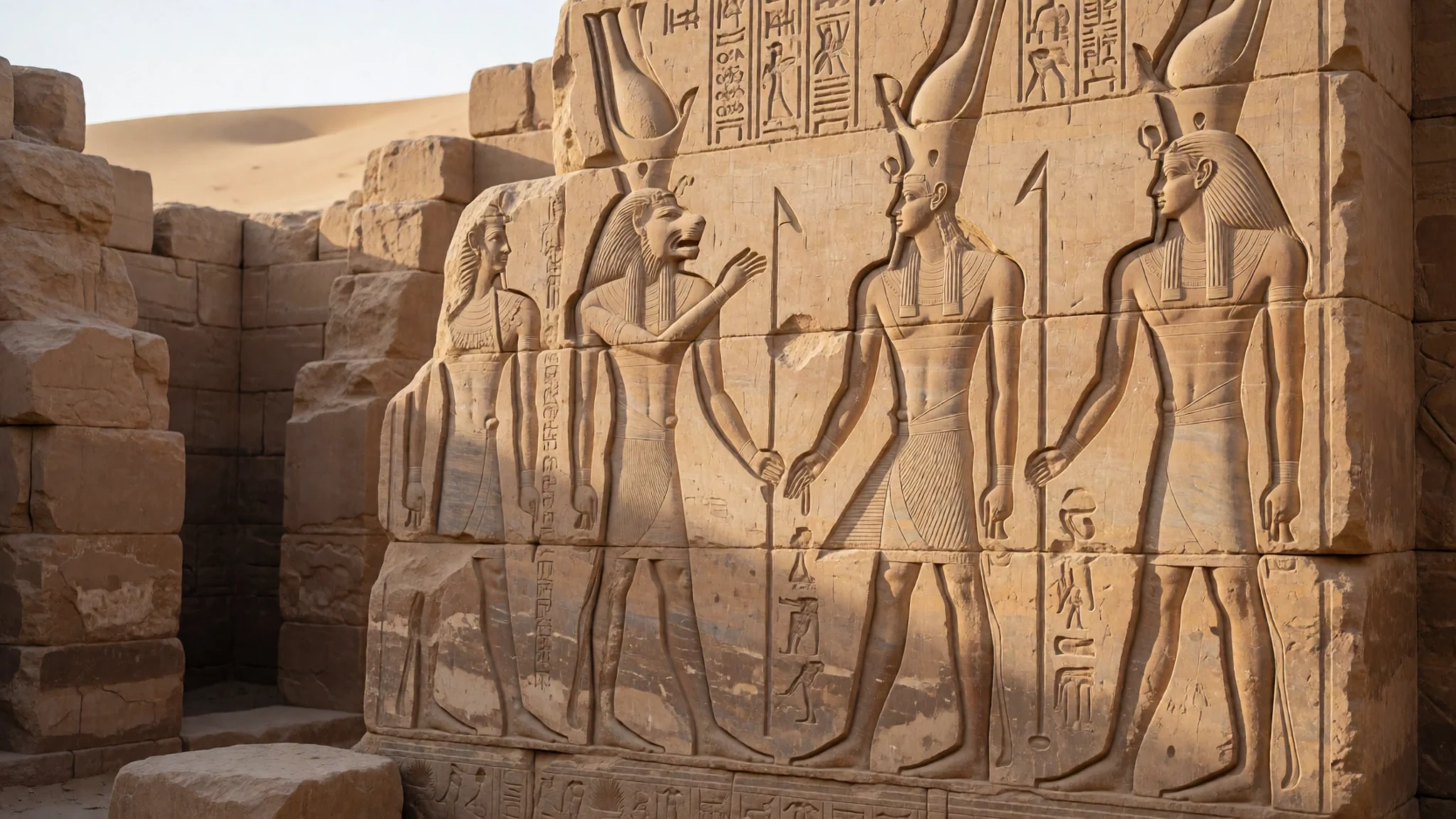
- Temple B700 and the Senkamanisken relief — The temple area at the foot of the mesa
Temple B700 holds a relief of the Kushite king Senkamanisken clubbing enemies, a scene that European artists recorded in drawings made in 1821. The image is a standard expression of royal power, showing the king as the victorious protector of his land. Compare the old sketches with the stone as you see it, since many surfaces have eroded since then.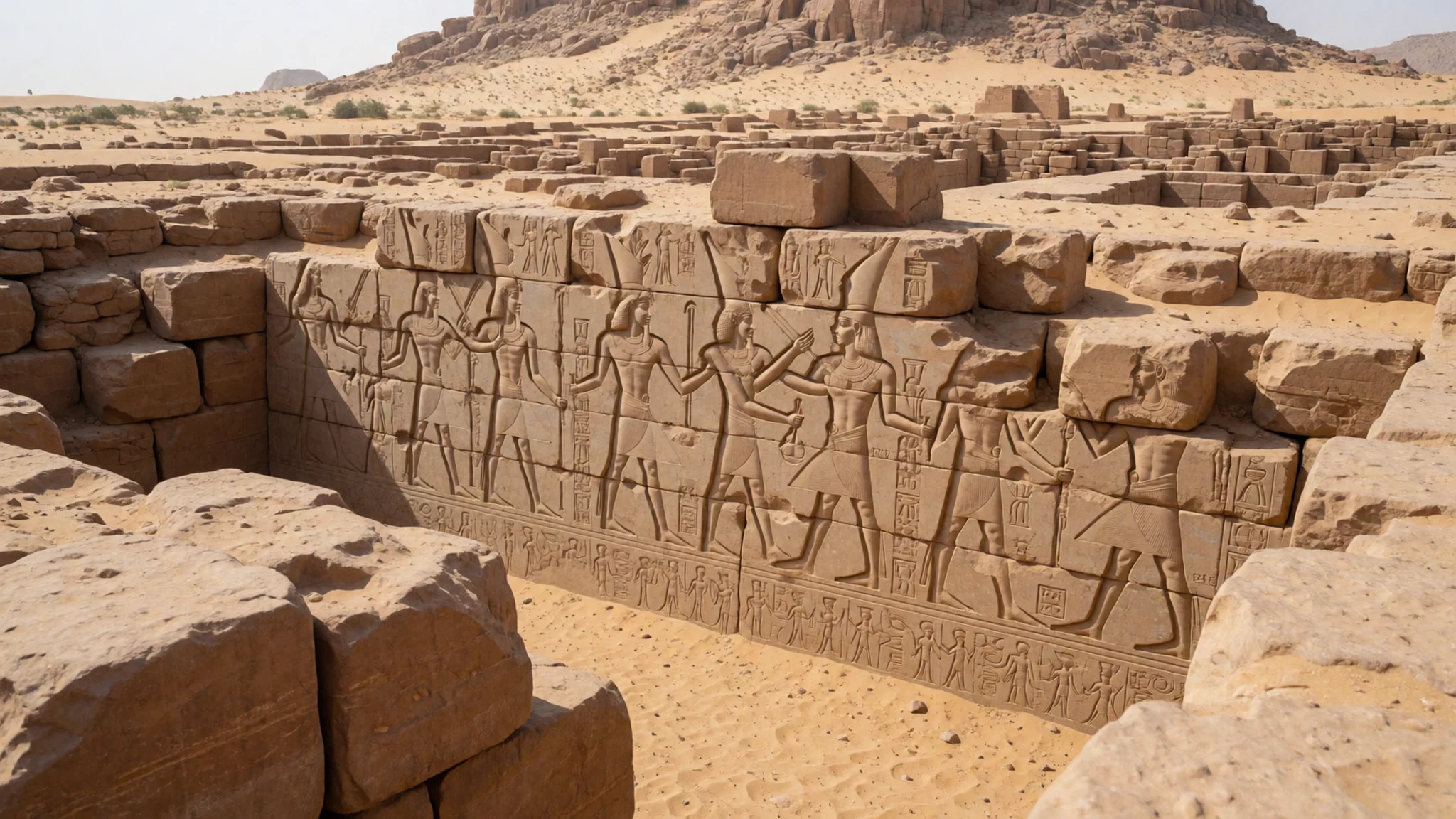
- The mesa itself — Above the temple complex, beside Karima
The mesa rises about 104 metres from its base and has a flat top that gives the place its distinctive outline. From the plain the cliffs look steep in places, and the colour of the rock shifts through the day. Whether the summit can be reached is a question to settle locally before setting out, because access arrangements can change.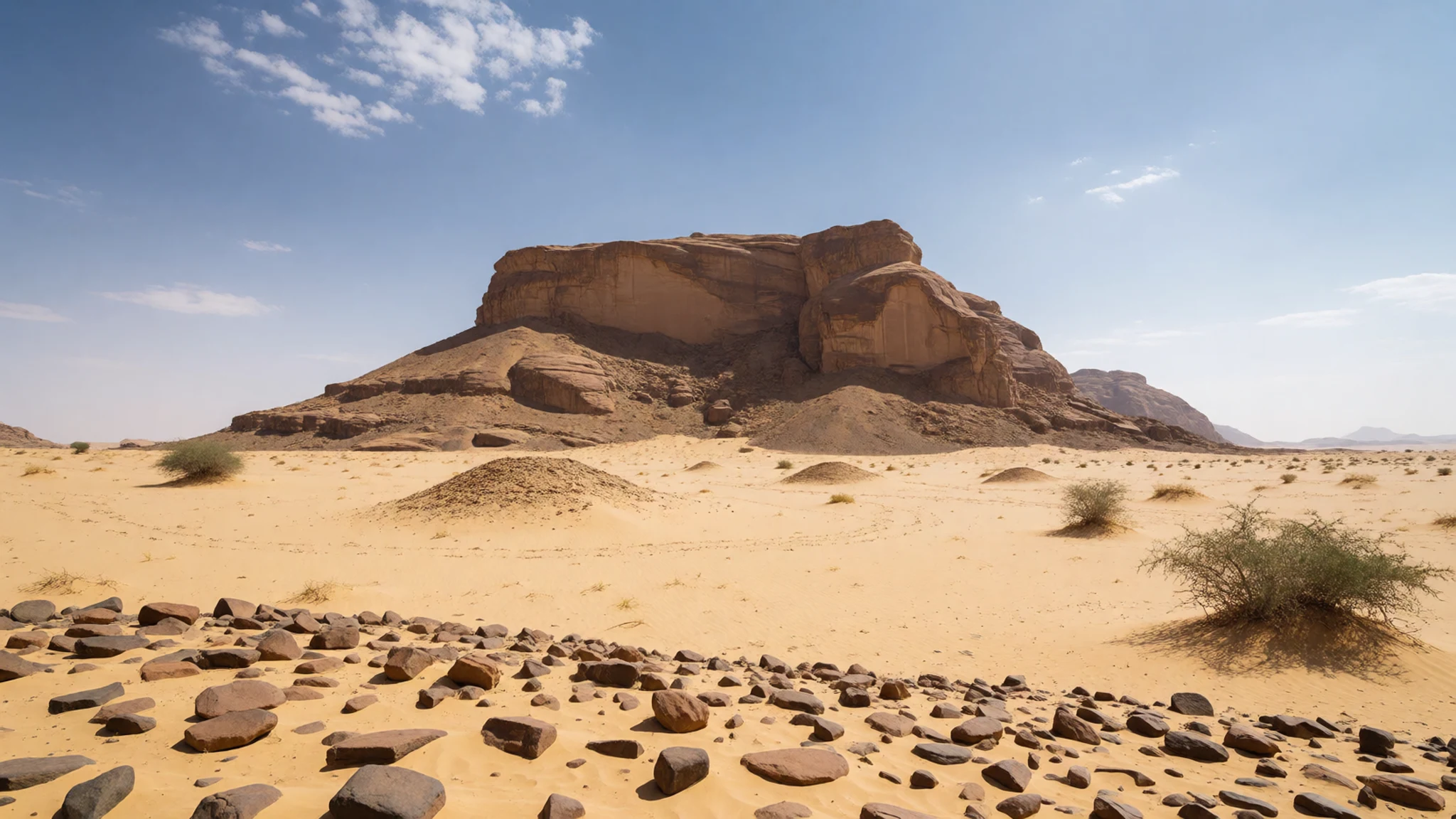
- The Jebel Barkal Museum — The Jebel Barkal site, near the temples
The Jebel Barkal Museum stands in the same area as the temples and gathers finds from the site, which help explain the Napatan period. It makes a sensible first stop for context before walking the ruins. Check the official site for current opening times and any entry arrangements, as these can change.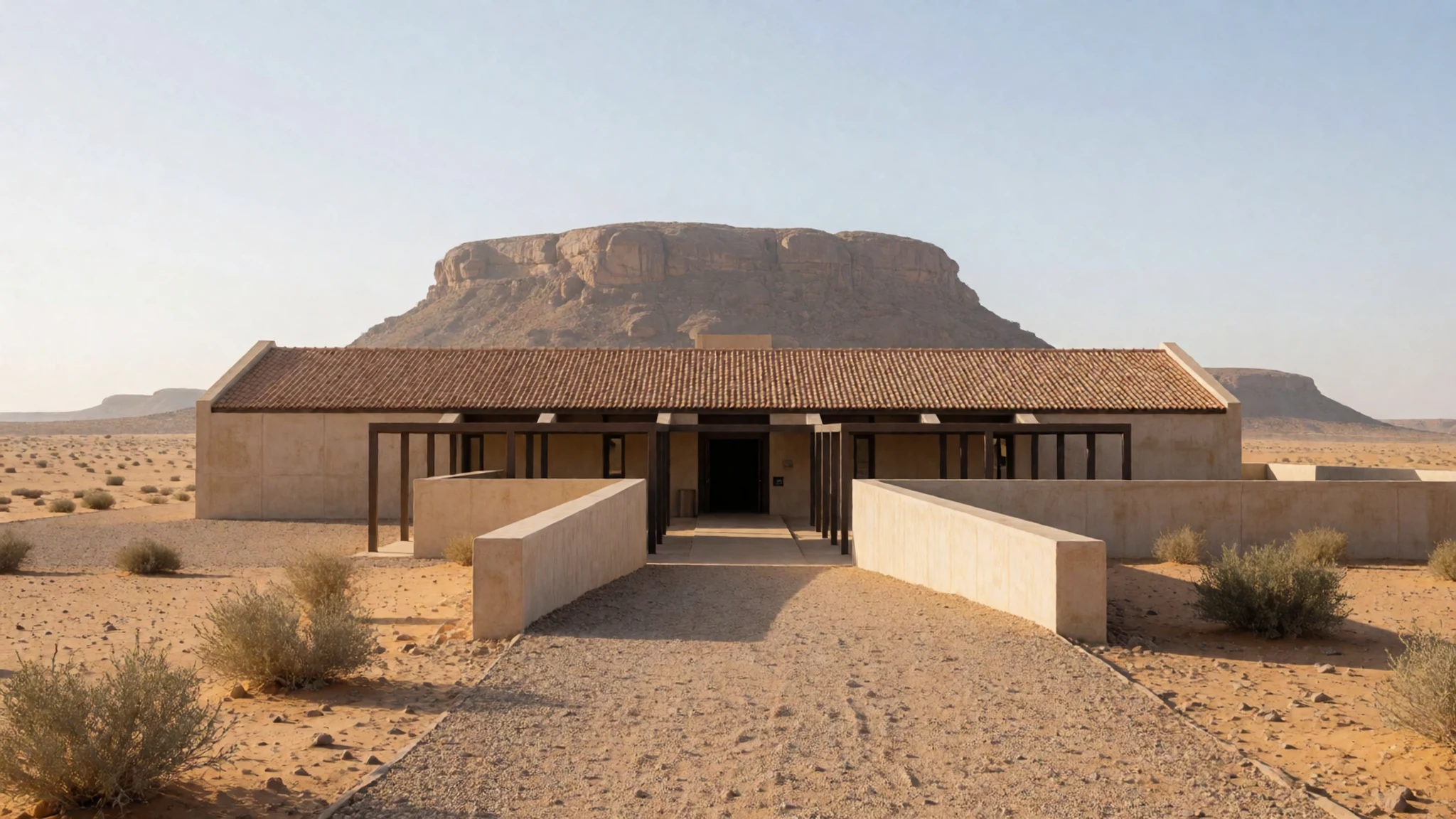
Culture
Across Sudan, and in the towns around Jebel Barkal, hospitality is central to daily life. Hosts take real pride in welcoming guests well, so a visitor can expect warmth, generosity and an invitation to share tea or a meal. Time works differently here. Punctuality is loose, and friends or relatives sometimes arrive without warning. When that happens, the usual response is to put aside what you were doing and attend to the guests. Relationships are treated as long-term commitments, so a short visit can grow into a lasting friendship. Gestures carry weight too. The left hand is considered unclean, so the right hand is used for shaking hands, passing objects and accepting food or drink. At the temples, keep to marked paths and ask before photographing local people. Give and receive everything with your right hand, because the left is considered unclean.
What to wear
Jebel Barkal sits in Sudan's Northern State, where dress follows Islamic custom and long-standing local tradition. The jellabiya is the classic garment for men and women alike, a loose, full-length robe usually made of cotton and often in plain, pale colours. Many women also wear the tobe, a long cotton wrap draped over the head and body, sometimes with a woven or printed border. These cotton garments suit the heat and are still worn for ceremonies and family occasions. In towns today, the jellabiya and tobe are common alongside Western clothing, particularly among younger people and in Khartoum, where office and school wear is often European in style. Visitors should dress modestly. Choose loose, light cotton in long sleeves, with trousers or a skirt that covers the knee, and carry a scarf that women can use at religious sites and in villages. Shorts and vests are best left at the hotel. Closed, sturdy shoes are the practical choice for sand, loose stone and the steep path to the mesa.
What to eat
- Foul — Morning eateries and market stalls in Karima
Foul, a stew of cooked fava beans, is a breakfast favourite for many people, and it sits at the heart of everyday eating. Look for it at morning eateries and market stalls in Karima, where it usually arrives hot with bread.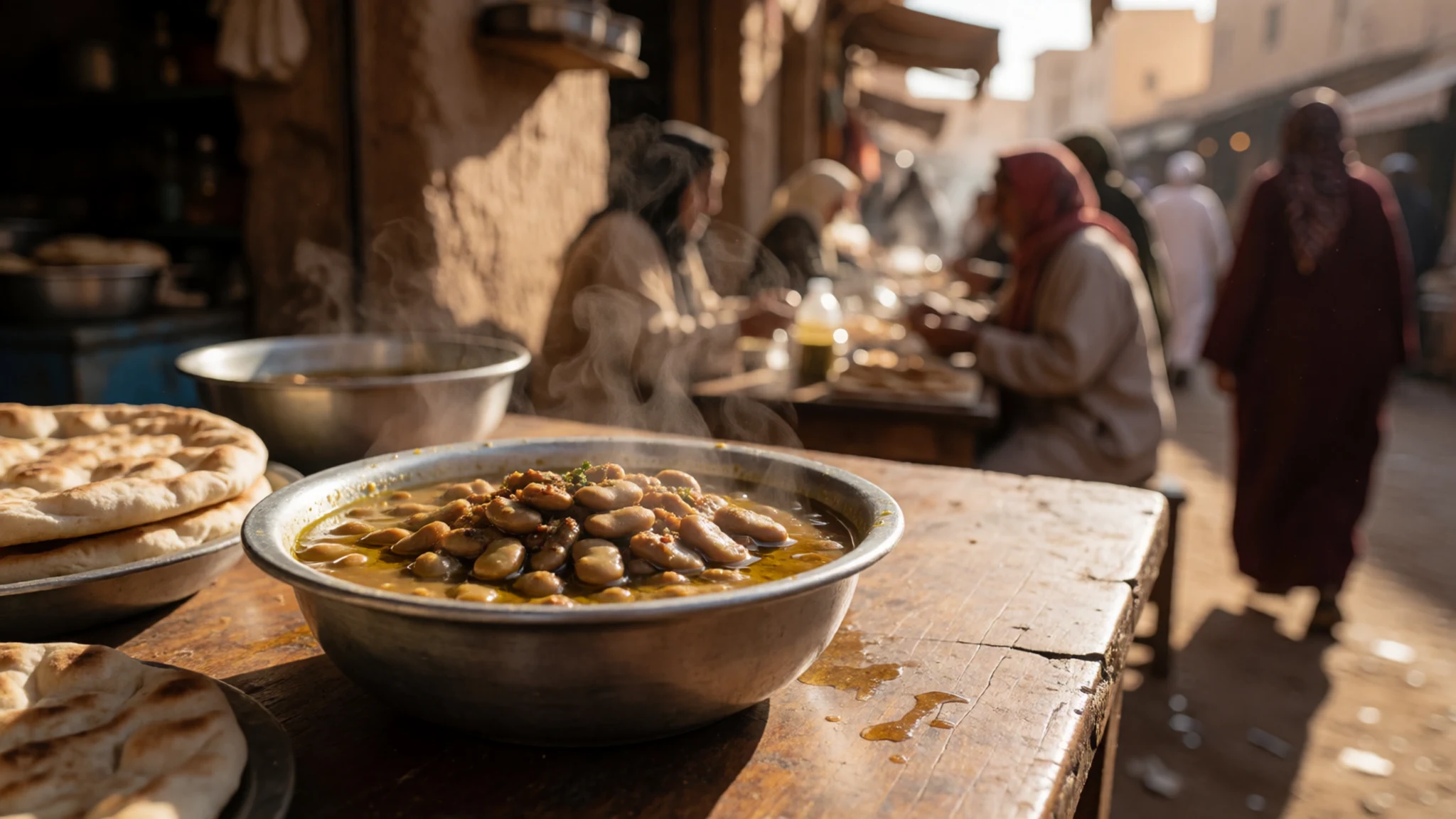
- Kissra — Family kitchens and lunchtime eateries in Karima
Kissra is a thin, soft flatbread made from durra (sorghum) or maize, and it is the bread many households reach for with stews. Ask for it at a family kitchen or a lunchtime eatery in Karima, where it is often torn and used to scoop up sauce.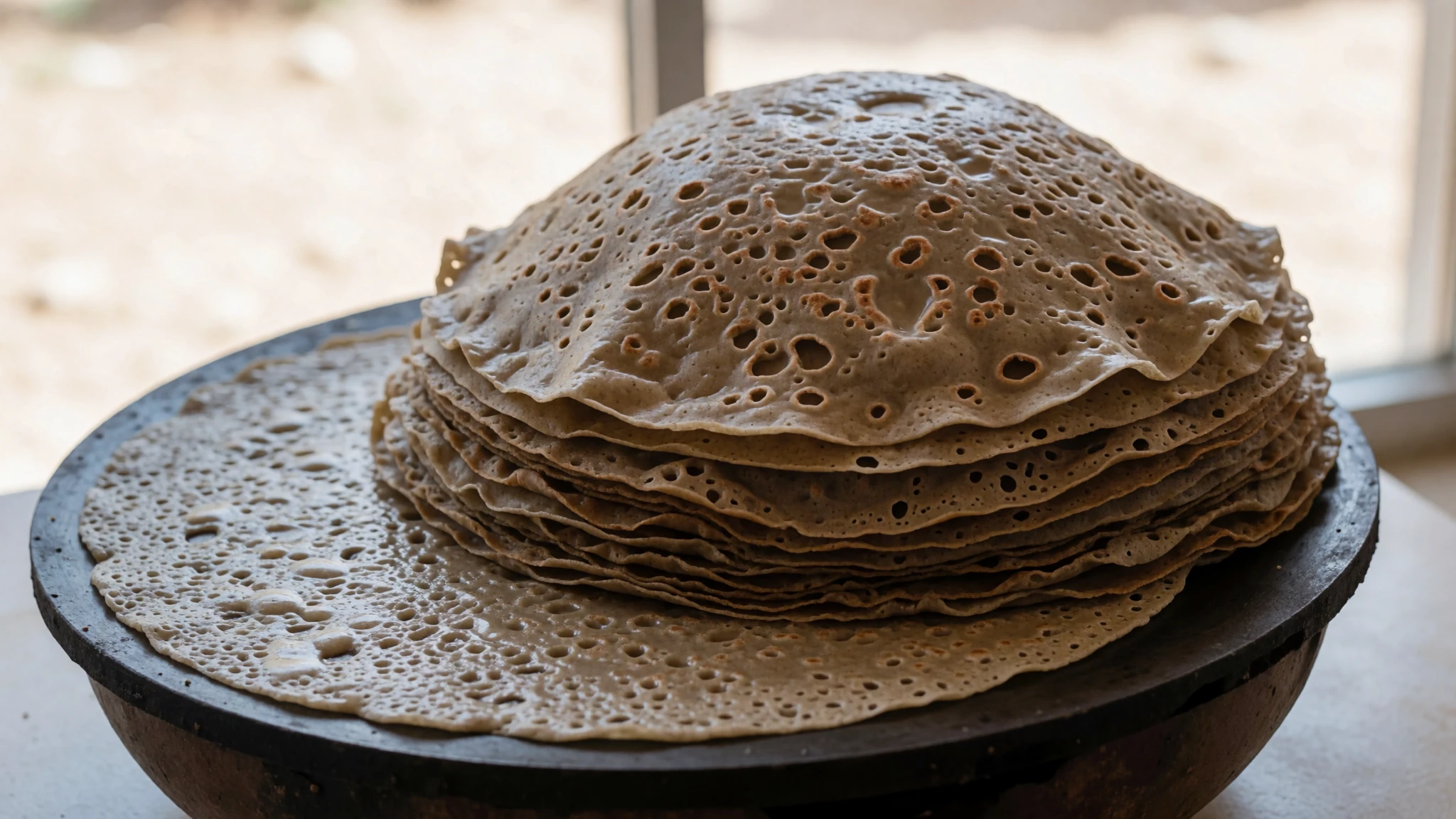
- Gurassa — Bakeries and small eateries in Nile-side towns
Gurassa is a substantial wheat bread with a soft, layered texture, and it is sturdier than most flatbreads in the region. Look for it in bakeries and small eateries in the towns along the Nile, where it makes a filling plain breakfast. - Sudanese tea — Tea stalls in Karima and along the main streets of Khartoum
Sudanese tea is strong, sweet and often served in small glasses at roadside stalls. Tea sellers are common in towns, and a glass is an easy way to pause in the shade. Ask for it sweet, or without sugar if you prefer.
Plan it
Best time. November to March is the cooler, drier stretch and the most comfortable time for walking the ruins. April and May turn very hot, and summer is the hardest season for time on open sand.
How long. 2–3
Getting there. Fly into Khartoum, then travel about 400 km north by road to Karima, the nearest town to the site. The last leg is by road, so arrange transport and a driver in advance.
Budget. low
Tips
- Start the visit to the Sudanese visa early, since it is slow and can be confusing; check the official site for current rules
- Go early in the morning or late in the afternoon, when the sand is cooler and the light is softer
- Carry plenty of water, a hat and a sun covering, because shade on the site is limited
- Carry cash, as cards may not be accepted in small places; confirm locally before you go
- Hire a driver who knows the area and the site arrangements, and allow extra time for delays
Etiquette
- Greet people and accept hospitality with your right hand
- Ask before photographing people, especially women
- Dress modestly at the site and in town
Nearby
Sources
- Wikidata Q499019 (CC0)
- Wikipedia: Jebel Barkal (rev 1382247381) (CC BY-SA 4.0)
- Wikivoyage: Sudan (rev 5406985) (CC BY-SA 4.0)
- Photo 01-gebel-barkal.jpg, Gebel Barkal in Nubia (Sudan) (CC BY-SA 2.5)
- Photo 02-gebel-barkal-amun-temple-b500.jpg, Amun temple (B500) (CC BY 3.0)
- Photo 03-temple-amon-napata-elevation-2.jpg, Proposed elevation of the Amun temple (CC BY 3.0)
- Photo 04-jebel-barkal.jpg, Jebel Barkal (CC BY 2.5)
- Photo 05-gebel-barkal-and-the-sites-of-the-napatan-region-114686.jpg (CC BY-SA 3.0 igo)
- Photo 06-jebelbarkalmuttemple3.jpg, Temple of Mut (CC BY-SA 4.0)
- Photo 07-ruins-of-temple-b700-of-jebel-barkal-with-relief-of-senkaman.jpg (Public domain)
- Photo 08-senkamanisken-slaying-enemies-at-jebel-barkal.jpg (Public domain)


