Jasmund National Park
Jasmund National Park, Germany
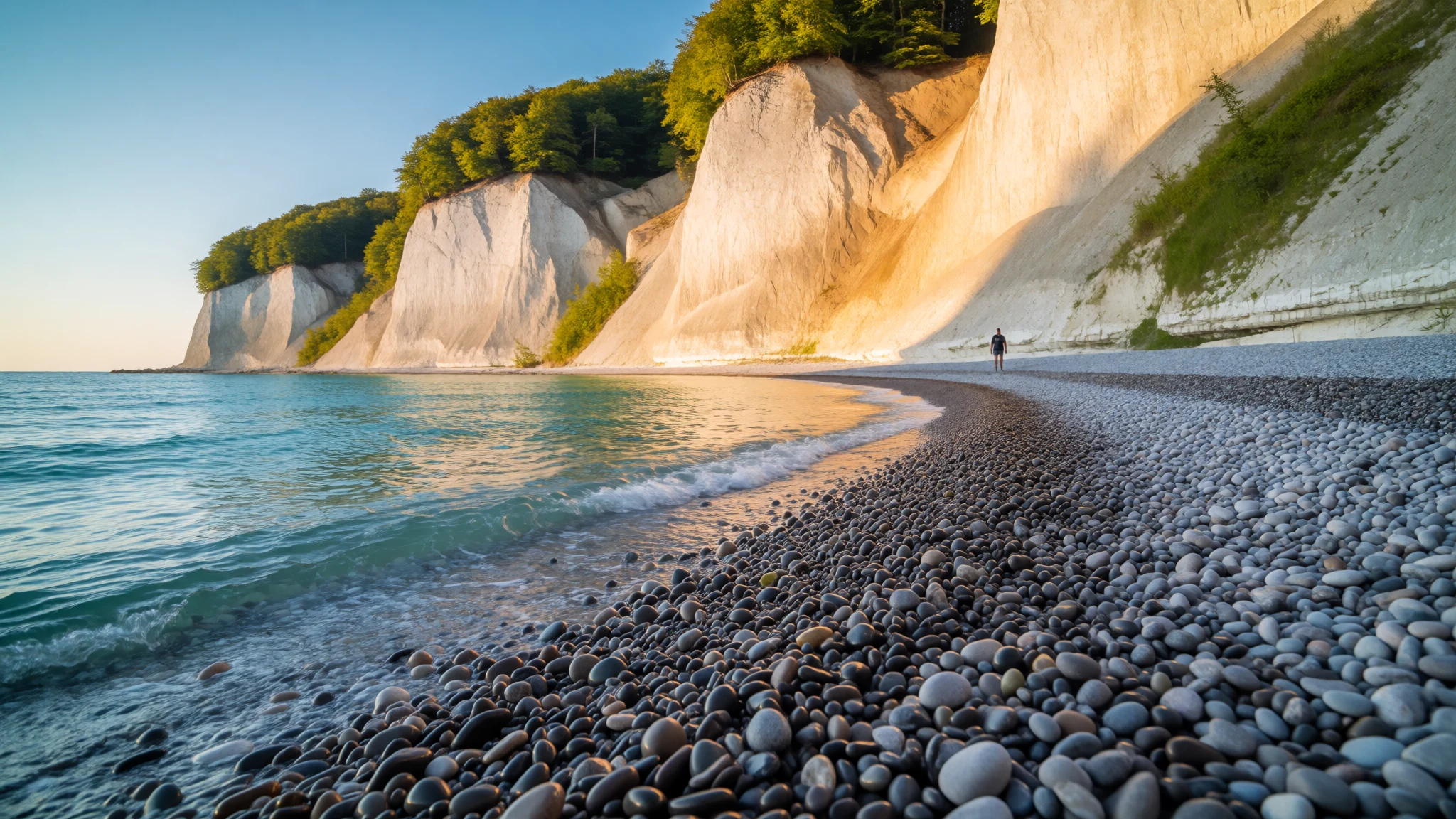
Go for Rügen’s chalk cliffs and beech forests, a rugged Baltic coastline walk with plenty of room to breathe.
The place
Jasmund National Park (German: Nationalpark Jasmund) sits on the Jasmund peninsula in Germany’s north-east, on the island of Rügen (Mecklenburg-Vorpommern). This is a cliff-and-forest landscape: pale chalk steps down towards the Baltic Sea, and behind them stretches the Stubnitz ridge, wrapped in beech woodland.
The park is built around the dramatic coastline scenery, especially the chalk cliffs linked with Königsstuhl. The cliff rises to 118 m above the sea, and the viewpoints here have that classic “where the land ends and the water starts” feeling—windy, bright, and very exposed. Inland, the mood shifts. You move from coastal views into forest paths that feel cooler, darker, and more sheltered, with the beech trees forming a dense green backdrop to the cliff edges.
Jasmund also has a distinct sense of scale. At about 30 km², it’s compact for a national park, which makes it realistic as a day-trip or a short stop between bigger Rügen plans. The park’s boundaries include the ridge of the Stubnitz north of Sassnitz, and coastal stretches and water corridors that connect the land to the Baltic.
A practical note for expectations: it’s popular. On good weather days, paths near the best viewpoints can get busy, and the air feels sharper on the cliffs. The best experience comes from timing—arriving early for the views and doing the forest walks when the light has softened.
Its story
Jasmund National Park’s story is tied to both politics and geology. The park was founded in 1990, and that timing sits right at the end of East Germany’s era, just before German reunification. In other words, it’s not only a landscape story; it’s also a “new chapter” story for how protected nature took shape in that period.
Geology is the daily show. The park’s coastal identity comes from chalk cliffs that form along the Baltic. These cliffs aren’t just pretty backdrops—they’re a working part of the coastline, with erosion and layers you can feel in the way the sea meets the land. Königsstuhl anchors that experience at 118 m above the Baltic, while the broader terrain includes higher ground such as Piekberg.
Then there’s the forest behind the cliffs. Beech woodland covers the Stubnitz ridge, and the park includes long stretches where the forest edge rises towards the coast. In 2011, the beech forest in Jasmund was added to the UNESCO World Heritage List as an extension of the Primeval Beech Forests of Europe site—an acknowledgement of long-term ecological continuity rather than a single landmark.
That’s the balance you notice when walking here: the cliffs give you impact and openness, and the woodland gives you calm and depth. Together they make Jasmund feel like two worlds stitched into one compact area.
What to see
- Königsstuhl chalk cliffs — Stubbenkammer / coast
Königsstuhl is the cliff profile most visitors point at: a chalk wall rising 118 m above the Baltic Sea, reached via paths around the Stubbenkammer area. The views are sharp and airy, and on breezy days the sea spray makes the coast feel close.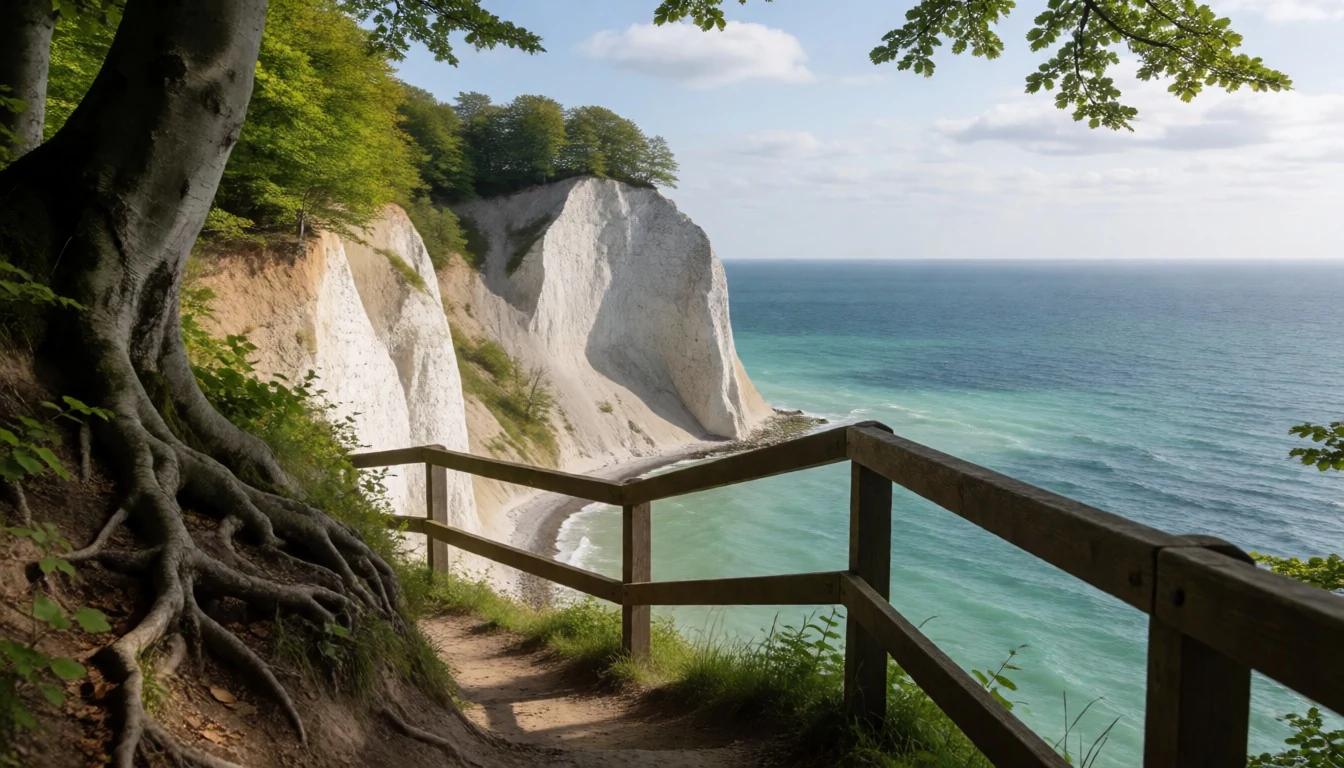
- Walk the Hochuferweg coastal path — Between Sassnitz and Lohme
The Hochuferweg runs along the cliff edge through woodland, linking the coast around Sassnitz and the Lohme area. It’s an easy way to “read” the park: forest shade gives way to open chalk views, with multiple lookouts as the route undulates above the water.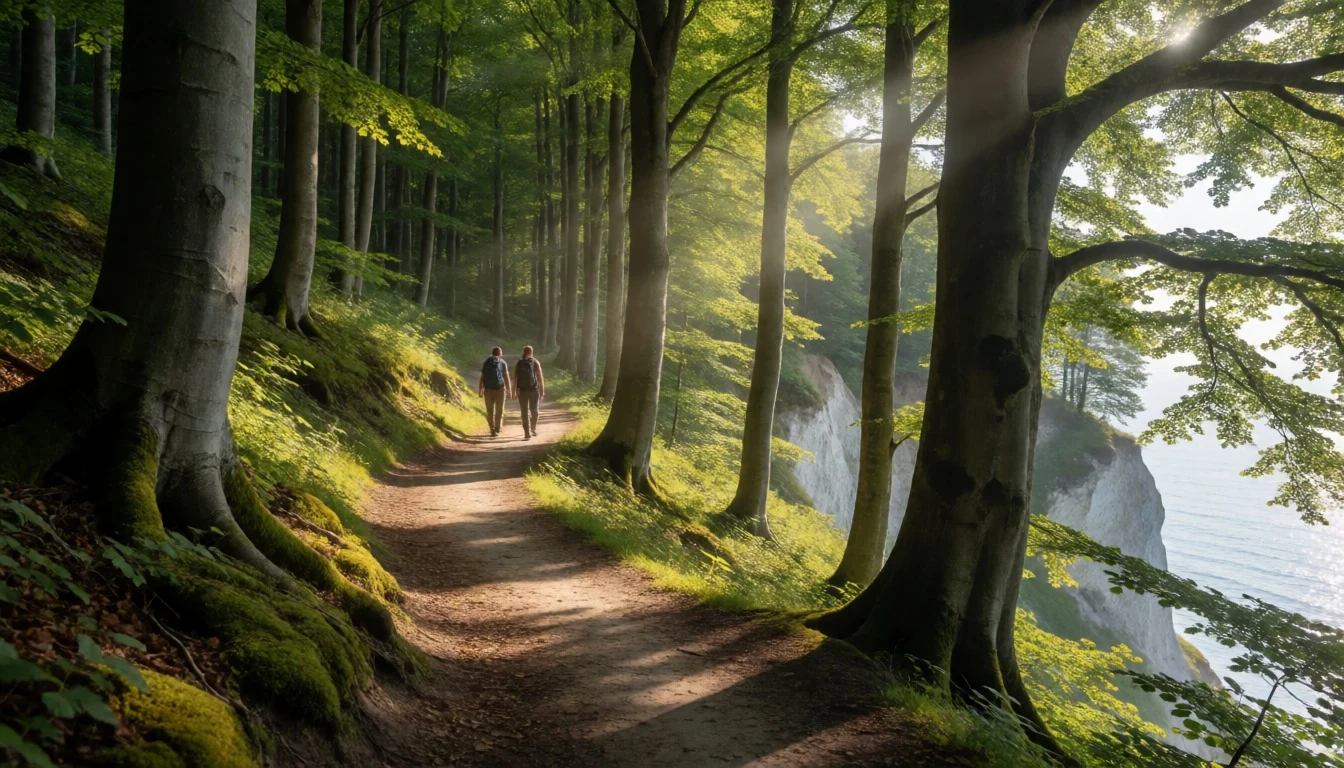
- Nationalpark-Zentrum Königsstuhl — Near Königsstuhl Centre
The National Park Centre is the place to orient yourself before heading out to the cliffs. Visitors typically start here to understand the landscape and the walking routes, then step out towards the viewpoints. It also helps on days when weather is changeable.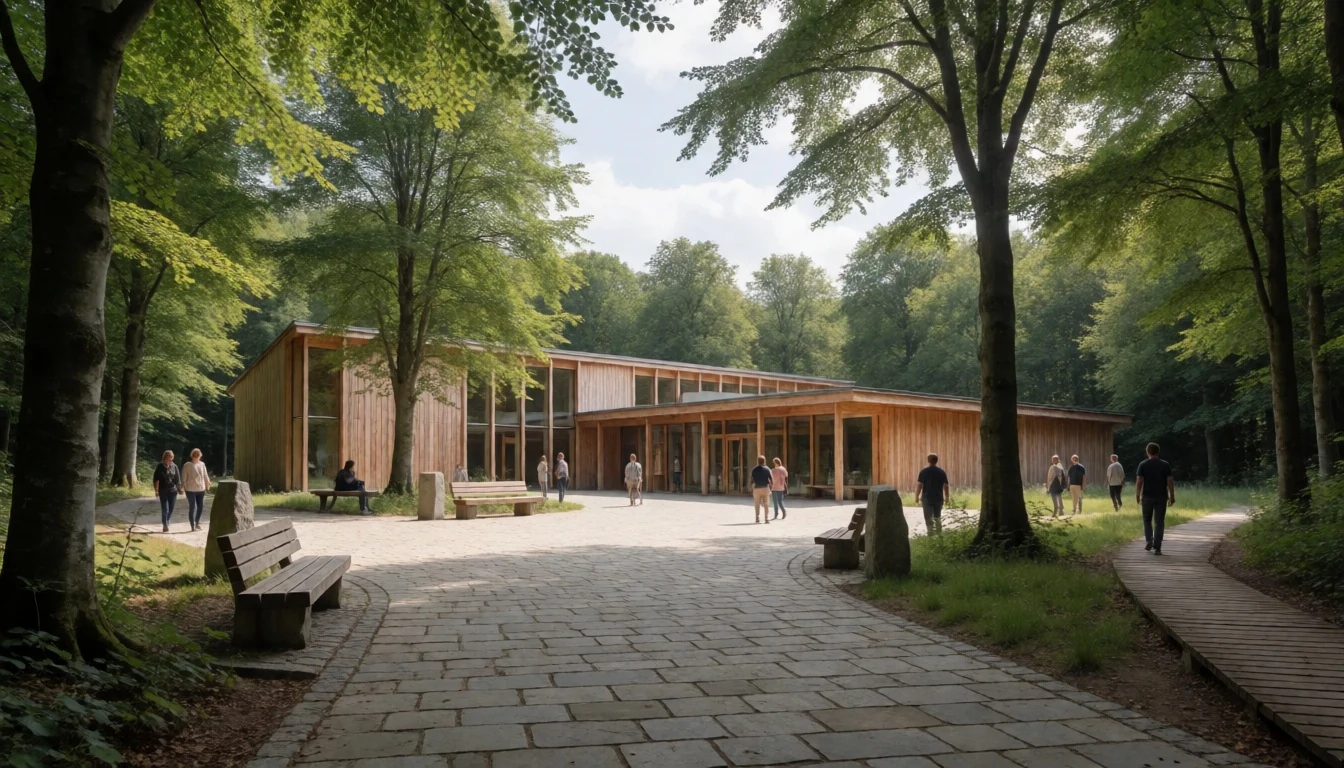
- Stubnitz beech forest ridge — Inland Stubnitz ridge
The Stubnitz ridge behind the cliffs is covered with beech forest, creating a cooler, quieter contrast to the exposed shoreline. Walking here feels more “inside” the park—less glare, more shade—and it’s a good bet when you want a calmer rhythm than the viewpoints.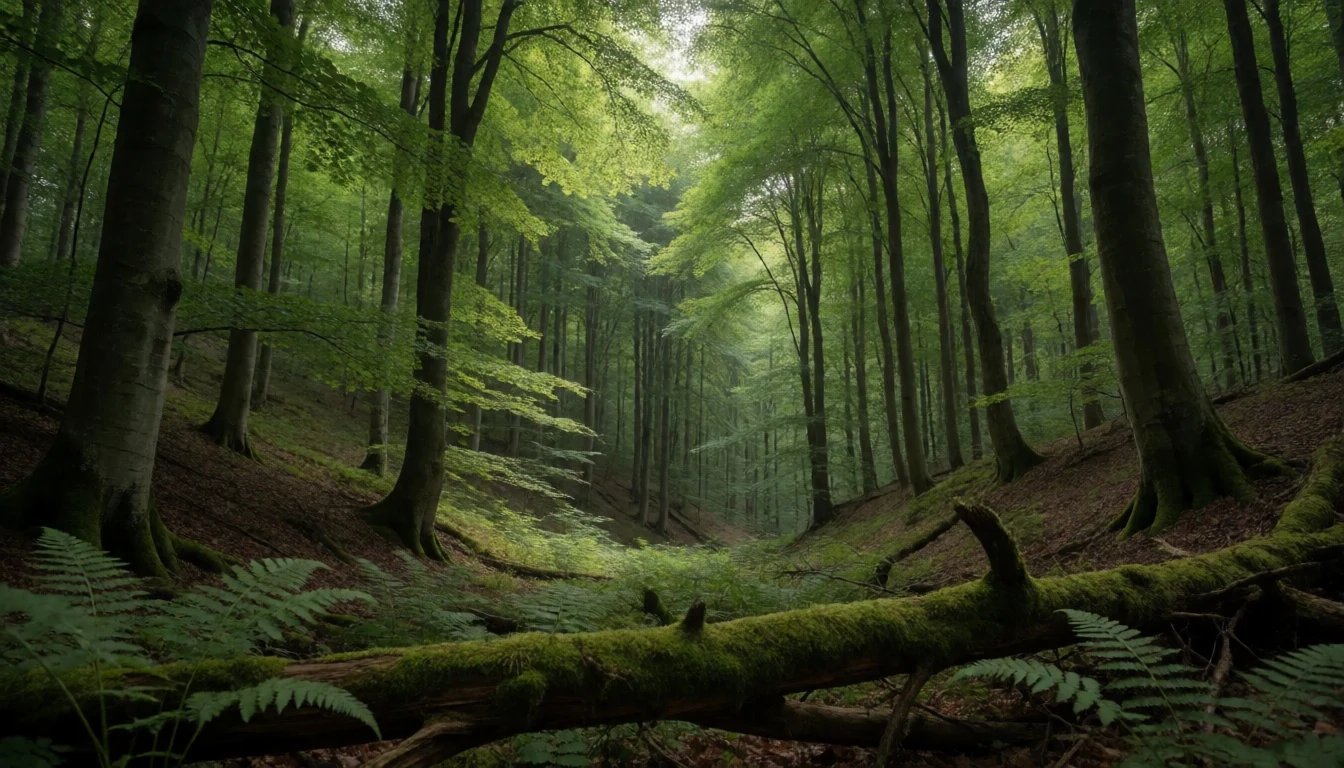
- Views from Viktoria-Sicht — Cliff rim viewpoints
Viktoria-Sicht is one of the viewpoint angles that frames Königsstuhl with sea and forest in the same view. It’s the sort of stop where you can pause, check the light and wind, and decide whether to keep walking along the rim or step back into the trees.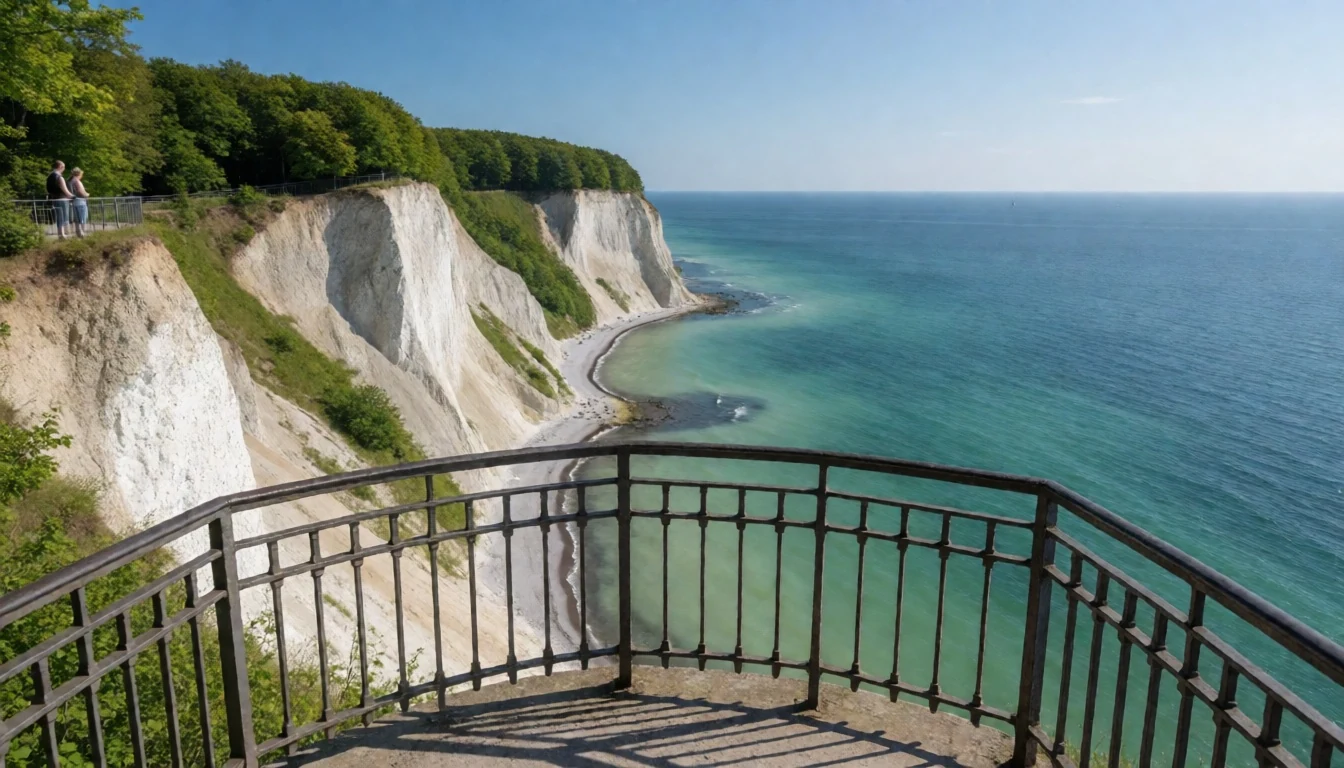
Culture
Jasmund National Park is all about moving respectfully through a landscape that’s both fragile and actively shaped by the coast. The chalk cliffs and the beech forest are the headline features, so visitor behaviour matters: erosion happens naturally, but trampling and littering make it worse.
On a busy summer day, the busiest sections are usually around the cliff-edge viewpoints. People often arrive with the same idea—quick photos, a short pause, then back down. That’s normal, but it’s also when crowding happens. Keep to the walking routes, resist the urge to cut off into the grass, and give space around lookouts where others are waiting for clear sightlines.
In the park, there’s also a practical etiquette angle: weather changes fast near the sea, and paths can get slippery. Good boots and careful footing are part of courtesy too—slow down where the route narrows and don’t block the way while checking your camera settings.
Visitor etiquette: stay on marked paths near the cliff edge, keep noise low, and don’t move off-trail for photos—chalk coasts and beech woodland recover slowly.
What to wear
Jasmund National Park doesn’t have a single “traditional dress” culture in the way a village festival might, but you can still dress for the setting. The park’s main materials are chalk, sea wind and beech forest shade, so the practical focus is layers and grip.
What people wear now is mostly outdoorsy: lightweight jackets, long trousers, and walking footwear—often with a hat or sunglasses for the coastal glare. In cooler months, you’ll see warmer layers as the forest turns damp and breezy near the water.
For a visit, pack like this: a waterproof or windproof outer layer, breathable base layers, and a warm mid-layer if visiting in the cooler months (autumn evenings can feel sharp). Wear proper walking shoes with tread; the cliff-edge routes and forest paths can be uneven. If rain is on the cards, bring an extra pair of socks or plan for damp grass in lower sections. Since this is Germany’s Baltic coast, expect wind even when inland feels mild.
Keep it simple and functional—clothing that lets you move comfortably on sloped paths will matter more than style.
What to eat
- Grill plates and German classics around Sassnitz — Sassnitz
In the Sassnitz area, look for everyday German comfort food—grilled meats, sausages and hearty plates—best grabbed before or after a coastal walk. It’s the kind of meal that refuels you without needing a big detour from the park.
- Seafood stop-offs in Lohme — Lohme
Lohme is a common base for Rügen nature days, and you’ll usually find simple seafood options and light meals suited to a waterfront outing. Aim for something quick to eat while keeping energy for the next section of cliff views.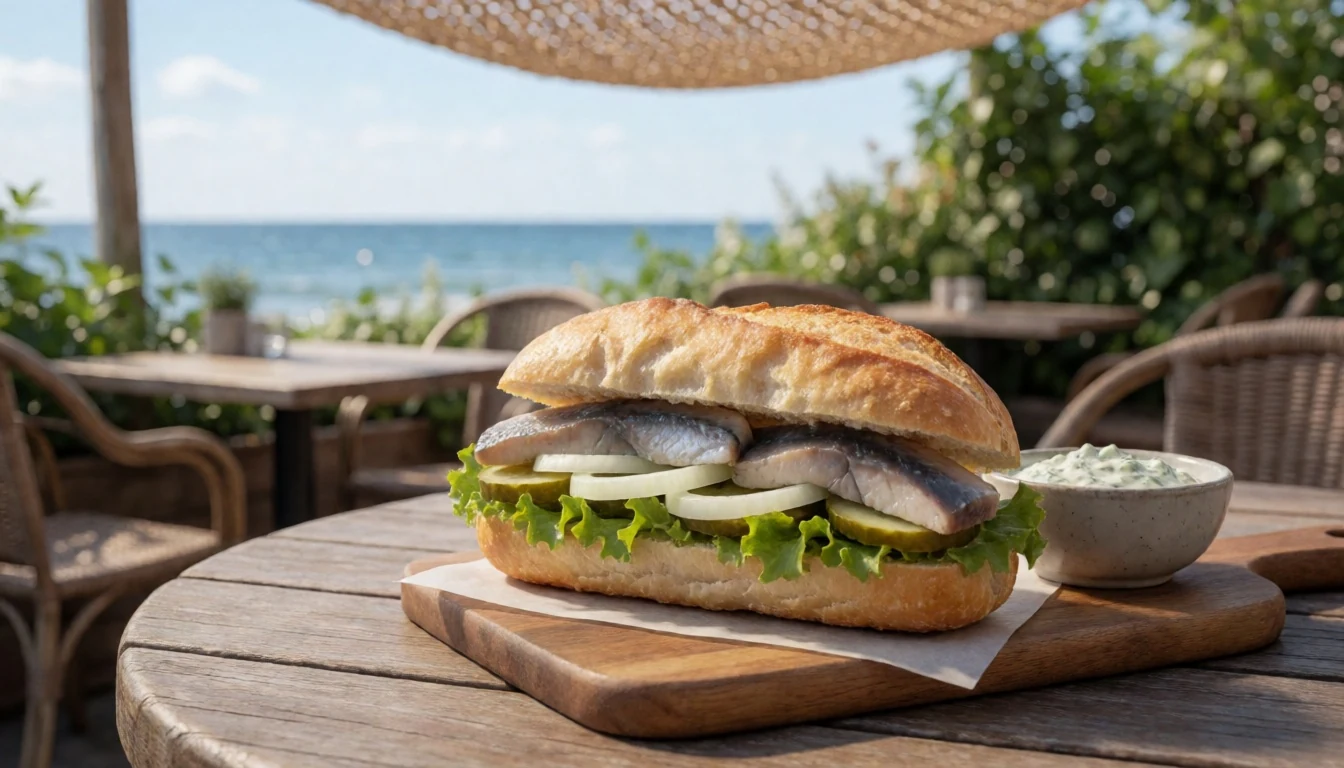
- Coffee and cake breaks near the park entrances — Near park access points and visitor areas
Between walks, cafes around the park access points work well for coffee and cake—easy, practical, and good when the weather turns. It’s also a handy way to wait out wind before heading back to the viewpoints. - A meal inside the park (Baumhaus Hagen) — Inside Jasmund National Park
For something more “in the middle of nature”, Baumhaus Hagen is listed as a food option within the park. It’s the sort of place that keeps you from having to rush back out just to eat. - Local bakery snacks and picnic-friendly bites — Town centres around Rügen (near the park)
If a full sit-down meal doesn’t fit the day, grab bakery snacks and picnic-friendly items in nearby towns. Bring them along for calmer moments on forest paths, and keep litter under control so the paths stay clean.
Plan it
Best time. March–April and October–November for comfortable temperatures and better light for both cliff views and forest shade; summer can be crowded and feels windier on the exposed coastline.
How long. 2–3
Getting there. Fly into a major airport serving Berlin, then continue by rail towards Rügen; the park sits just north of Sassnitz, with the last leg handled by local connections or a short drive to the visitor centre area.
Budget. mid
Tips
- Start early to beat crowds at the cliff-edge viewpoints.
- Expect wind on the chalk cliffs; bring a windproof layer even in warmer months.
- Use the visitor centre area as the base for planning the route through forests and viewpoints.
- Parking inside the park is discouraged; consider leaving the car at the visitor centre and walking in.
Etiquette
- Stay on marked paths near the cliff edge and avoid shortcuts into grass or woodland.
- Keep the flow moving at narrow lookouts so other walkers can reach the best sightlines.
- Don’t camp or leave gear around the park; camping is not allowed within the park.
Nearby
Sources
- Wikidata Q679173 (CC0)
- Wikipedia (rev 1373042820) (CC BY-SA 4.0)
- Wikivoyage (rev 4960200) (CC BY-SA 4.0)
- Photo photos/08-kreidefelsen-r-gen.jpg (Public domain)
