Islay
Islay, United Kingdom
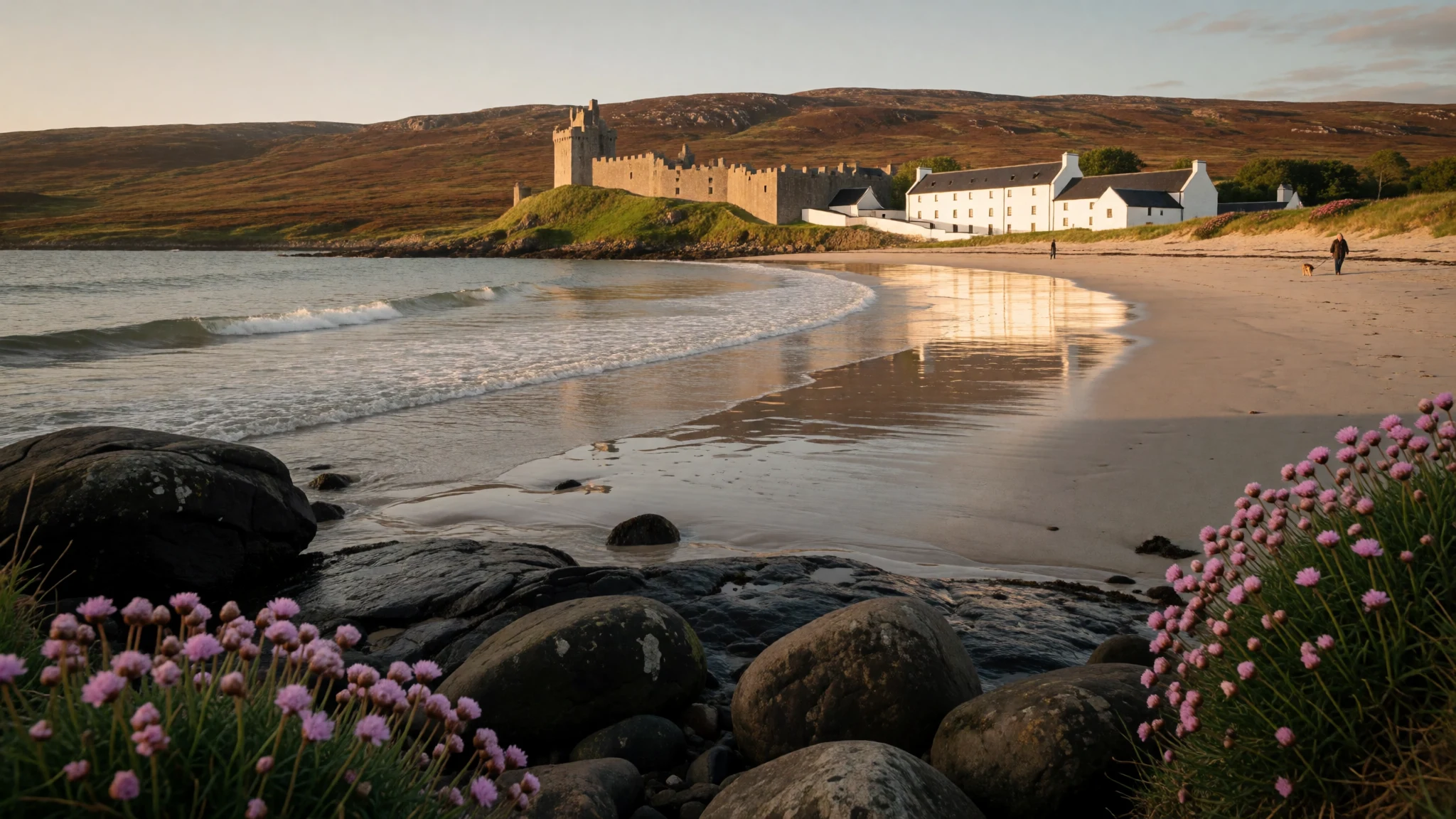
Islay pairs wind-scoured Atlantic coast and quiet moorland with working whisky distilleries, ancient Gaelic history and a friendly island pace.
The place
Islay lies off Scotland's west coast in Argyll and Bute, at the bottom end of the Inner Hebrides chain, with Jura as its northern neighbour and the Northern Irish coast roughly 40 kilometres to the south. It carries the nickname Queen of the Hebrides. At about 620 square kilometres it is large enough that a visit really needs a car or a bicycle, plus some patience on single-track roads. Around 3,200 people live here, and the economy rests on farming, malt whisky and tourism. Bowmore is the administrative centre, recognisable by its round church, while Port Ellen is the main ferry port and Port Askaig is a tiny settlement where the boat to Jura leaves. The land between them is mostly low: peat moor, farmland, sandy bays and rocky shore, with the highest ground at 491 metres. Weather arrives straight off the Atlantic, so sun, squalls and wind can all pass through in a single afternoon. Distilleries sit right on the shoreline, many in whitewashed buildings facing the sea, and on a still day the smell of peat smoke carries across the nearest village. Outside the villages, services are thin, so petrol, cash and food are worth sorting out before heading to remote corners. The mood is quiet, spread out and unhurried, and while summer is busier than winter, the island rarely feels crowded.
Its story
Islay's recorded story begins thinly, with evidence of prehistoric settlement and a possible mention by a writer in the first century AD. By the sixth century the island belonged to Dál Riata, a Gaelic kingdom with strong ties across the water to Ireland. Historians still argue over whether Gaels arrived from Ulster or were already native to this coast, but the language and culture that took hold here lasted for centuries. Early Christian missionaries from Iona left their mark, and the Kildalton Cross, carved in the eighth century from local stone, still stands as a reminder. Later the island fell under Norse rule as part of the Kingdom of the Isles, before the Hebrides passed to the Scottish crown. Out of that shift grew the Clan Donald Lordship of the Isles, whose centre was Finlaggan, on a small island in a loch in the middle of Islay. Clan Donald's power faded in the seventeenth century, but better farming and transport helped the population climb until the middle of the nineteenth century. Then came forced removals and steady emigration, and numbers fell to the roughly 3,200 residents of today. Roofless cottages in the fields are a quiet reminder of that loss. Older remains survive too, including the hillfort of Dun Nosebridge in the south, and the whisky trade grew up alongside this long farming story rather than replacing it.
What to see
- Finlaggan — Inland, near Ballygrant
Finlaggan, beside a loch in the island's interior, was the base of the Clan Donald Lordship of the Isles. The ruins stand on small islands in the water, and the low stones are easiest to understand with a little reading beforehand. Walk the paths and look across at Eilean Mór, the main island. It is exposed, so waterproofs matter even in summer.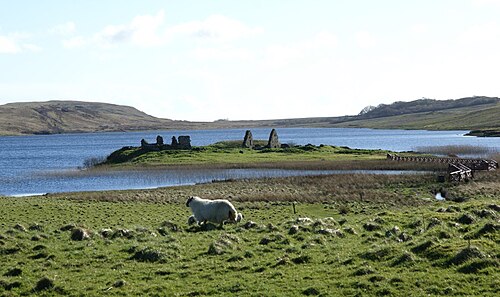
- Ardbeg Distillery — South coast, east of Port Ellen
Ardbeg, east of Port Ellen on the southern shore, makes a heavily peated malt, and its Gaelic name means the small promontory. Like its neighbours on this coast it sits right at the water's edge. The road from Port Ellen links all three southern distilleries, so they can be combined by bike or on foot. Check the distillery's own site for tours. - Lagavulin Distillery — South coast, near Port Ellen
Lagavulin, between Port Ellen and Ardbeg, takes its name from the Gaelic for hollow of the mill. Its single malt is smoky and peaty, and the whitewashed buildings stand beside a small bay that makes a good photograph. Tours and tastings usually need booking ahead, especially in summer, so check the official site rather than turning up.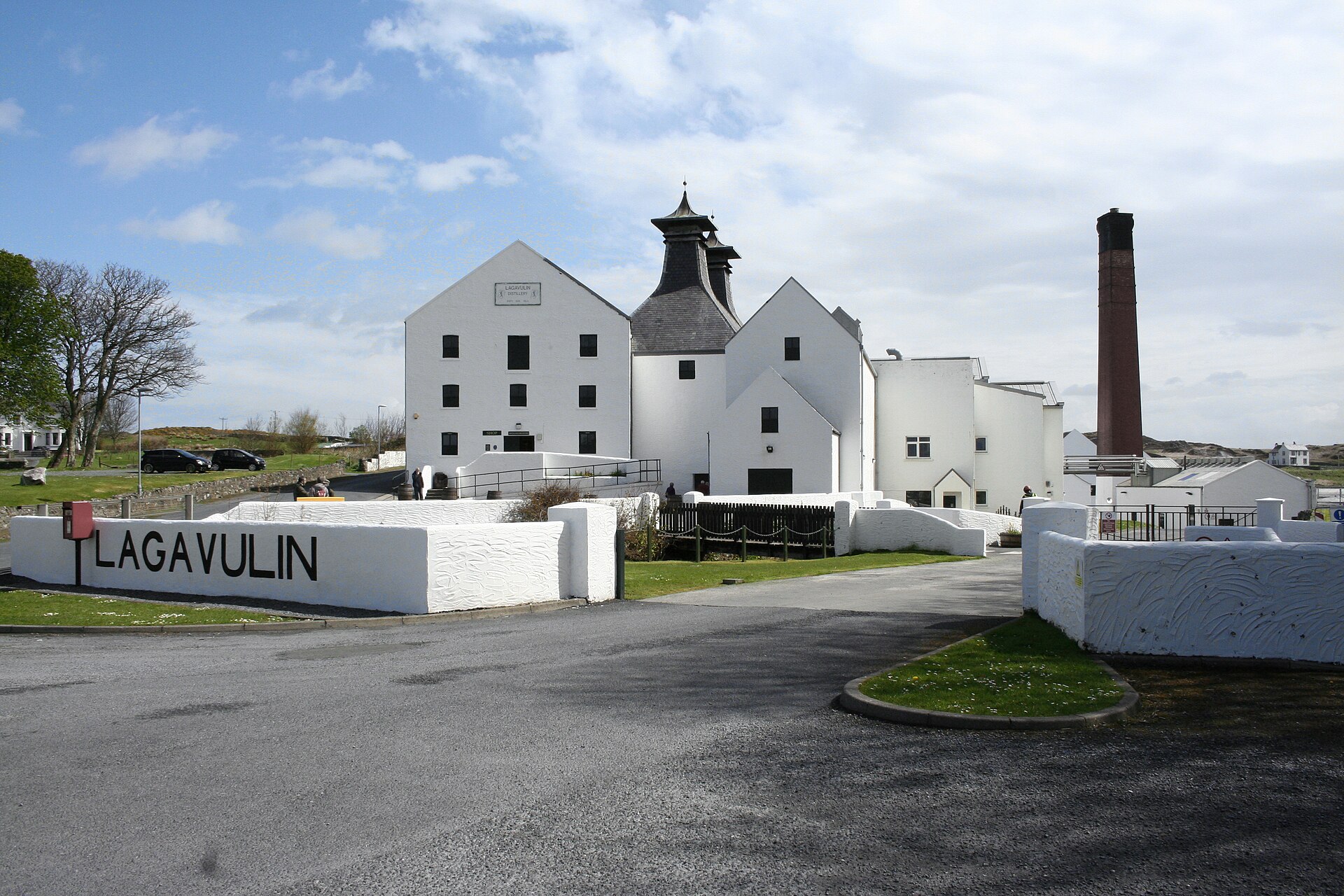
- Laphroaig Distillery — South coast, near Port Ellen
Laphroaig, the nearest of the three southern distilleries to Port Ellen, is thought to take its name from a Gaelic phrase meaning hollow of the broad bay. Its whisky is another strongly peated one, with a bold smoky character that people tend to love or avoid. Book any visit through the distillery's own website. - Bowmore — Loch Indaal, centre of the island
Bowmore is both the island's main village and home to a distillery that dates from the late eighteenth century. The village runs down to Loch Indaal, with its round church standing at the top of the main street. It is the practical base on Islay for shops and cafés, so most visitors pass through at least once. - Kilchoman Distillery and church — West coast, the Machir Bay side
Kilchoman, on the west side of the island, is an independent distillery established in 2005, so it is far newer than the south-coast names. Farmland surrounds it. The nearby church has an old carved cross standing on a cupstone, so the distillery and the churchyard fit neatly into one short loop.
Culture
Islay's culture is shaped by Gaelic roots, early Christianity and a farming-and-whisky life that still revolves around small communities. Carved stones tie the island to its past. Kilchoman and Kilchiaran churches on the Rhinns both feature cupstones, and Kilchoman's carved cross rests on one of them. Some may once have been linked to wishing rituals or belief in the wee folk. The Kildalton Cross, from the eighth century and cut from local stone, dates from the time when missionaries from Iona and Lismore were spreading Christianity through the region. Drystone chapels and small burial grounds from the later Norse era are scattered across the island, many tucked into fields. Today community life centres on village halls, churches and the annual Feis, a festival of Gaelic music and culture that even changes the ferry timetable. Whisky is a point of local pride and a major employer, so people are happy to talk about it, though conversations tend to be unhurried. A wave to oncoming drivers on narrow lanes is part of everyday courtesy. At old chapels and burial grounds, stay on the paths, leave stones and carvings untouched, and keep your voice low.
What to wear
Fashion on Islay starts with wool. The traditional Highland dress of kilt, plaid and jacket, woven in tartan, is Scotland's formal costume, and families linked to Clan Donald may wear that clan's pattern. Kilts are made of woven wool, usually worsted or tweed, and appear at weddings, ceilidhs, Highland games and other formal occasions, often with a sporran, dark jacket and long socks. Tweed caps and jackets are also a familiar country sight. In everyday life, though, people dress for the weather. Waterproof jackets, fleeces, jeans, walking boots and wellingtons are the working wardrobe of farmers, distillery staff and ferry crews, and knitwear is common even in summer. Dressing up usually means clean boots. Visitors should pack as for the Atlantic coast: a proper waterproof coat and trousers, a warm mid-layer, a windproof hat and sturdy shoes with good grip for wet grass, peat paths and slippery rocks. Evenings turn cool even in summer, so a jumper is wise, and sun cream helps on bright days at the beaches. Churches and old chapels have no special dress code, but covered shoulders and a quiet manner suit them. Sandals and thin trainers are poor choices on moor and shore.
What to eat
- Islay single malt whisky — Distillery visitor centres on the south coast and around Loch Indaal
The island's signature drink, known for peat smoke and a salty, maritime edge. Distilleries along the south coast and around Loch Indaal run tours and tastings, which should be booked ahead through each official site. Nominate a driver, since the roads are narrow and unlit. - Local shellfish — Seafood kitchens and inns in Port Charlotte and other loch-side villages
Langoustines, scallops and crab, when in season, are landed around the Hebrides and served simply, often with bread, butter and lemon. A shellfish supper is one of the pleasures of a trip, though tables fill quickly in summer, so book early. - Islay real ale — Island pubs and the brewery visitor centre
Cask ale brewed on the island, best drunk in a pub after a day outdoors. The brewery has a visitor centre that opens on limited days, so check before making a special trip. Ask for the local pour in any village pub. - Islay gin — Bars and shops in Bowmore and Port Ellen
Island-made gin is a newer addition to the drinks list, served in bars and sold in village shops. It makes a lighter gift to carry home than a bottle of smoky malt, and it pairs well with the cool, damp weather. - Pub meals — Village inns in Port Ellen, Bowmore and Port Charlotte
Hearty soup, pies, fish and chips and roast dishes are the reliable fallback in the villages, particularly after a long ferry crossing. Portions are generous and menus are short, so ask what came in fresh that day. - Curry in Bowmore — Bowmore town centre
Bowmore has an Indian restaurant, a welcome surprise for travellers from India and the UK alike. Some eateries here take cash only and some do not serve alcohol, so carry notes and check before sitting down.
Plan it
Best time. Late spring to early autumn, roughly May to September, when days are long and ferries run more often. Winter brings shorter days, fewer sailings and rougher crossings, though the island is at its quietest. Expect changeable Atlantic weather in any month.
How long. 3–4
Getting there. Most visitors take the CalMac ferry from Kennacraig, near Tarbert on the Kintyre peninsula, to Port Ellen or Port Askaig, about two hours; Kennacraig is roughly a three-hour drive from Glasgow, and Citylink buses from Glasgow connect with the sailings. The island also has an airport, so check airline schedules. Check the ferry operator's official site for current timetables.
Budget. mid
Tips
- Book ferry crossings and any car space well ahead for summer and for the Feis, when the timetable changes
- Book distillery tours in advance, as many fill up and need a confirmed slot
- Carry some cash, as a few eateries and small shops take notes only
- Fill the petrol tank in the villages and keep to passing places on single-track roads
- Pack a waterproof coat in every season, since the weather turns quickly
Etiquette
- Wave to oncoming drivers and pull into passing places to let others by
- Do not drive after a tasting; book a driver or nominate one
- Leave gates as you found them and keep to paths across farmland
Nearby
Sources
- Wikidata Q273 (CC0)
- Wikipedia: Islay (rev 1384733591) (CC BY-SA 4.0)
- Wikivoyage: Islay (rev 5405494) (CC BY-SA 4.0)
- Wfm islay landsat.jpg (Public domain)
- Dun Nosebridge fort, Islay, Scotland from the south (W. L. Tarbert) (CC BY 3.0)
- Finlaggan, Eilean Mór from the north (Otter) (CC BY 3.0)
- Islay House (Haveyougotanypets) (CC BY 3.0)
- Cottage on Islay, 18th century (John Cleveley) (Public domain)
- Port Askaig (Rayhusthwaite) (Public domain)
- Islay distilleries updated 2011 (Mortendreier) (CC BY 3.0)
- Lagavulin Distillery (MSeses) (CC BY-SA 4.0)


