Ibiza
Ibiza, Spain
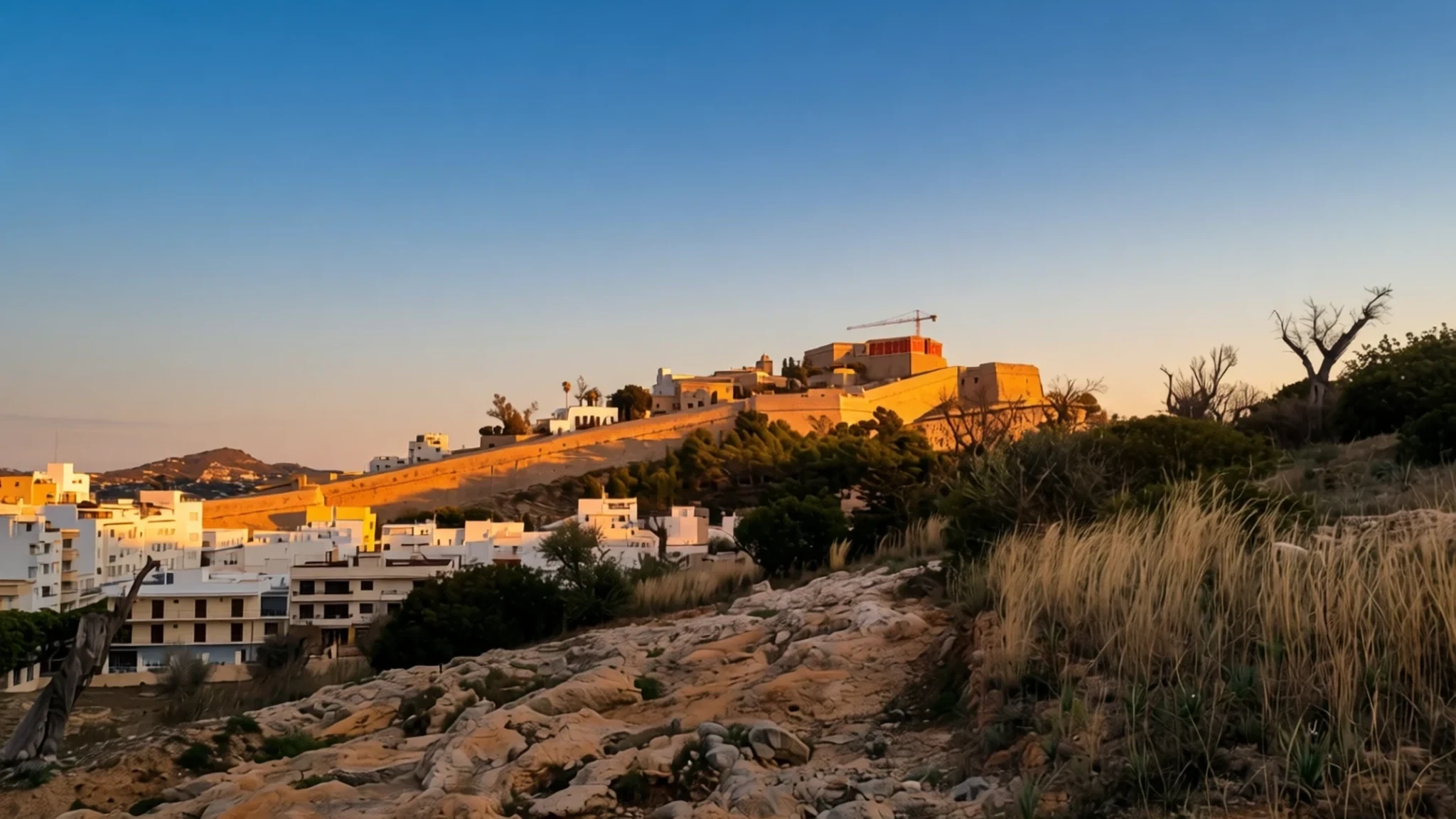
A rocky Mediterranean island with famous nightlife, quiet inland villages and Phoenician roots, best enjoyed outside the midsummer crush.
The place
Ibiza is a Spanish island in the Mediterranean, lying off the eastern coast of the Iberian Peninsula. The city of Valencia on the mainland is about 150 km away, and the island is reached mostly by air in the present day. Measured by land area, Ibiza ranks third among the Balearic Islands, but in population it comes second, with roughly 161,000 people living there. The landscape is largely flat, with pine woods, dry scrub and a broken coastline of coves and small bays. The highest point, Sa Talaiassa, rises to 475 m, which is modest, and the island as a whole stays low, with its few rises barely noticeable from the coast.
Most of the population lives in three main towns. Ibiza Town, known locally as Vila, has a walled old centre above the harbour. Santa Eulària des Riu sits on the east coast, and Sant Antoni de Portmany on the west, where sunset crowds gather on the bars and terraces. Away from these towns the island is quieter than its reputation suggests. Small farms, whitewashed villages and dry-stone walls cover the inland districts, and many visitors find the countryside more restful than the resorts. Ibiza forms part of the Pine Islands group with Formentera, its smaller neighbour to the south, and the two are linked by boat.
Its story
Ibiza's recorded history begins in 654 BC, when Phoenician traders set up a harbour on the island. As Phoenicia declined under Assyrian pressure, Ibiza passed under the control of Carthage, the former Phoenician colony in North Africa that had grown into a power in its own right. In this period the island's economy rested on dye, salt, fermented fish sauce and wool, goods that moved along the busy Mediterranean trade routes. A sanctuary dedicated to the goddess Tanit was established in a cave at Es Cuieram, and after about 400 BC the wider Balearic group drifted into the island's commercial network. Ibiza also ran its own trading posts on Mallorca, and Balearic men served in Carthaginian armies as slingers.
The Second Punic War brought conflict to the island. In 217 BC the two Scipio brothers attacked, yet Ibiza kept its loyalty to Carthage. Later, in 205 BC, the retreating Carthaginian general Mago used the island to gather supplies and fighters before sailing on. Rome eventually reached an agreement with Ibiza that spared it further destruction and allowed it to keep Carthaginian institutions, customs and coinage well into the imperial era, when it became a Roman municipality.
After the Western Roman Empire fell, a brief period of Vandal and then Byzantine control followed. In 902 the island was conquered by Muslim forces, and it remained under their rule until the medieval Christian conquest that followed. The island's history is therefore layered, with Phoenician, Carthaginian, Roman and Islamic phases that still shape its archaeology and place names.
What to see
- Es Vedrà — West coast, off Cala d'Hort
The steep rock island that stands about two kilometres off the west coast, opposite Cala d'Hort. It is one of the island's most photographed sights, especially at sunset, and it has a reputation in local legend that draws visitors to the cliffs above the coast. Boat trips pass close to it, and the view from the headlands gives the clearest sense of its scale.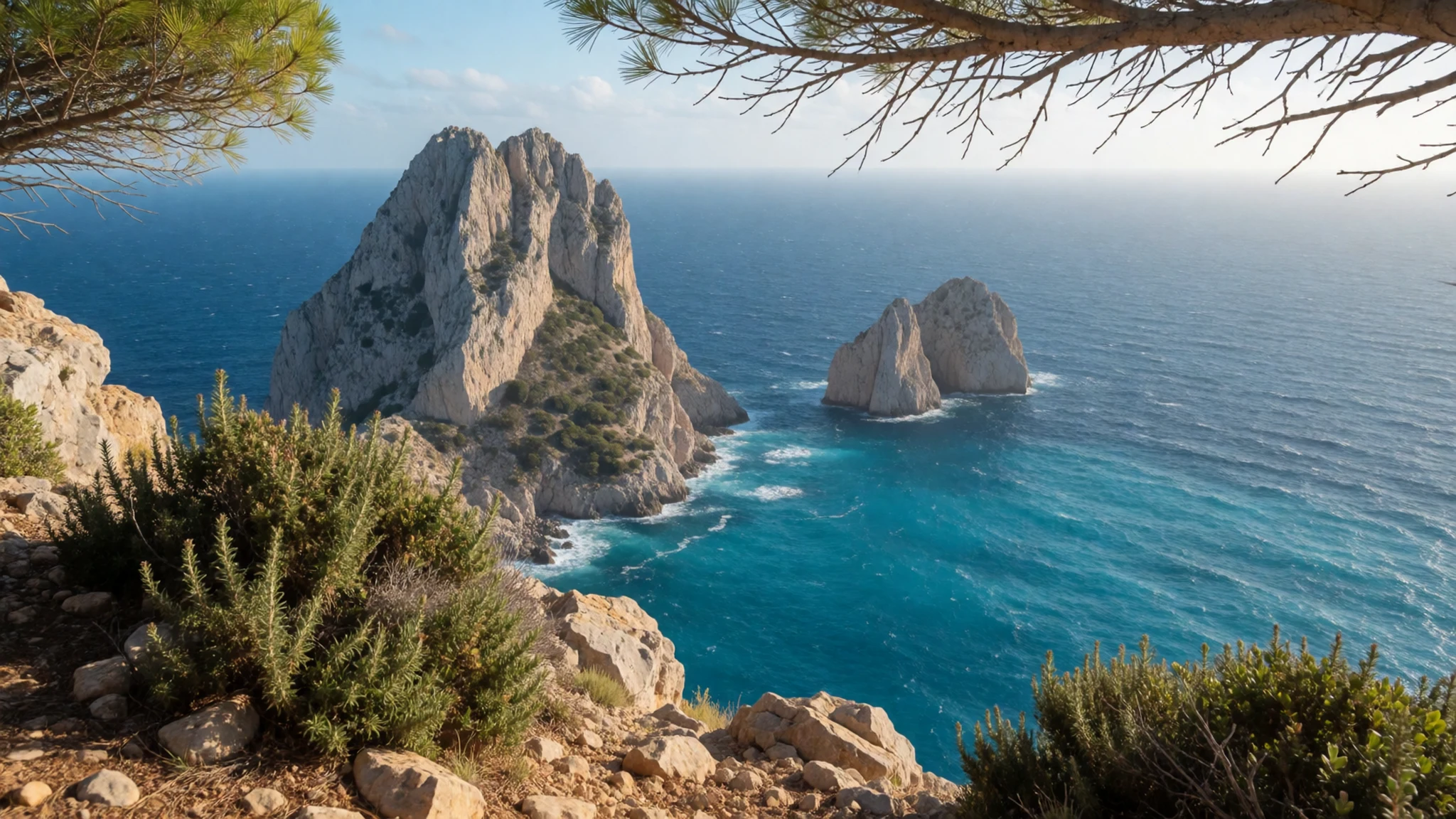
- Dalt Vila, the old town — Ibiza Town (Vila)
The walled old centre of Ibiza Town sits on a hill above the harbour, with narrow cobbled streets, bastions and a cathedral. Its shaded lanes are cooler than the modern town below, and the views over the harbour and the sea are the main reason to climb up. Go in the morning or late afternoon, when the stone is less hot and the streets are quieter.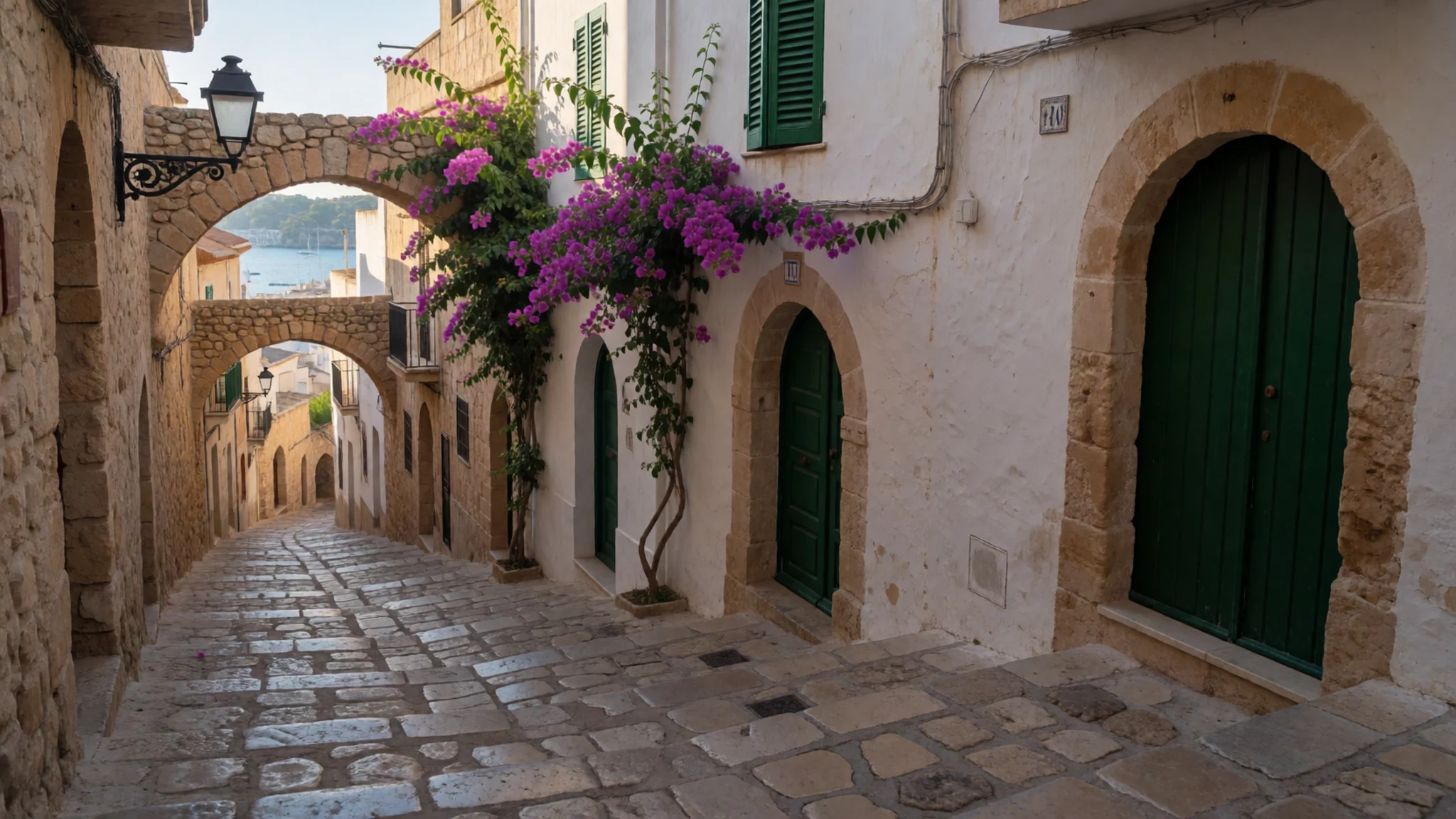
- Passeig de ses Fonts and the Sunset Strip — Sant Antoni de Portmany, west coast
In Sant Antoni de Portmany, the seafront promenade and the Sunset Strip are where the evening crowds gather to watch the sun go down over the bay. Bars and terraces fill from late afternoon, and the atmosphere is lively but busy. It is a fine place for an evening drink, though the prices reflect the location.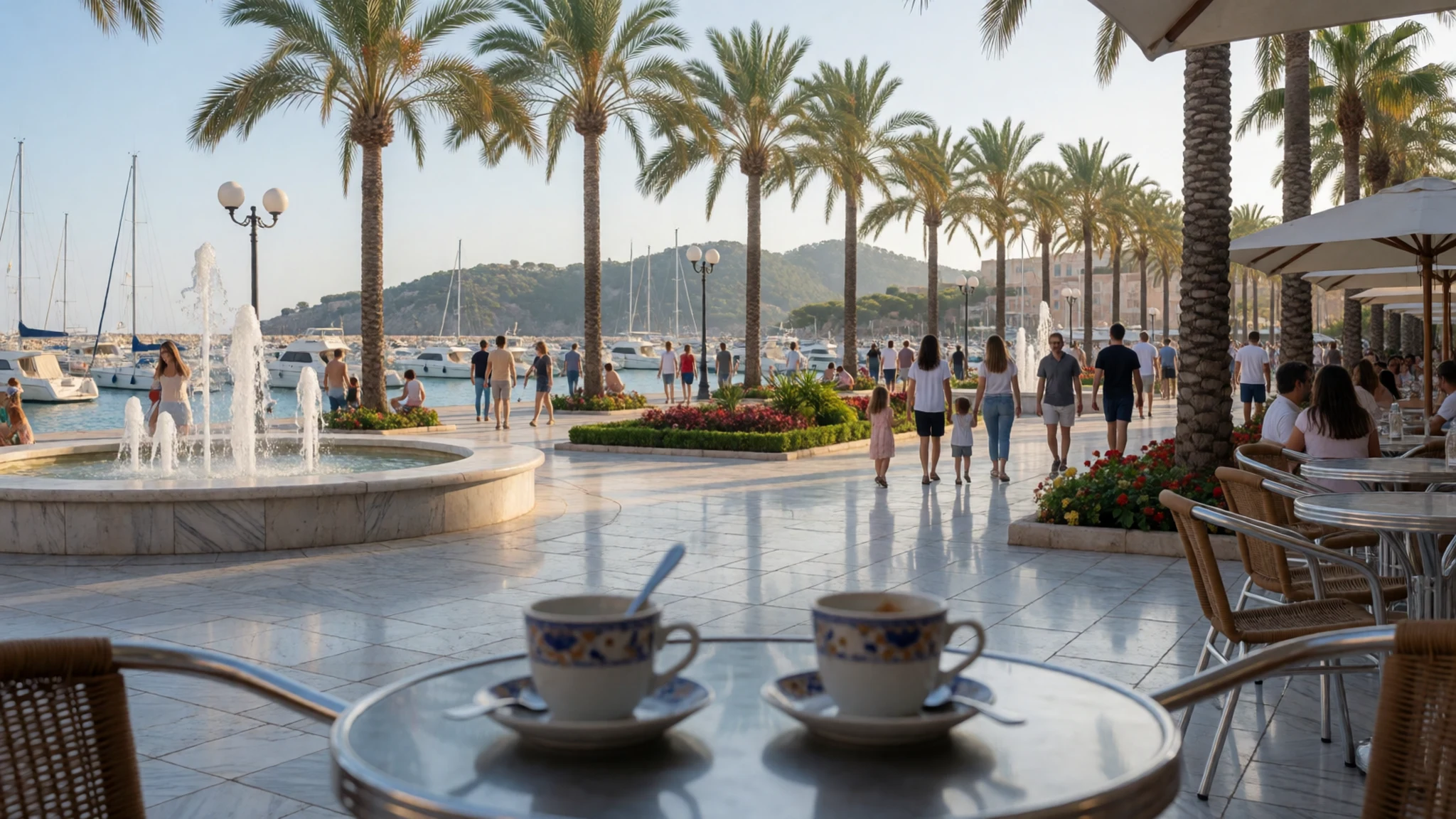
- Es Canar hippy market — East coast, Es Canar
The market at Es Canar, on the east coast, is held only on Wednesdays and has a long-standing place in the island's counterculture history. Stalls sell clothing, jewellery, leather goods and handmade crafts, and the stalls are often set under trees. Arrive early, as the most popular stalls sell out by the middle of the day, and bring cash for the smaller traders.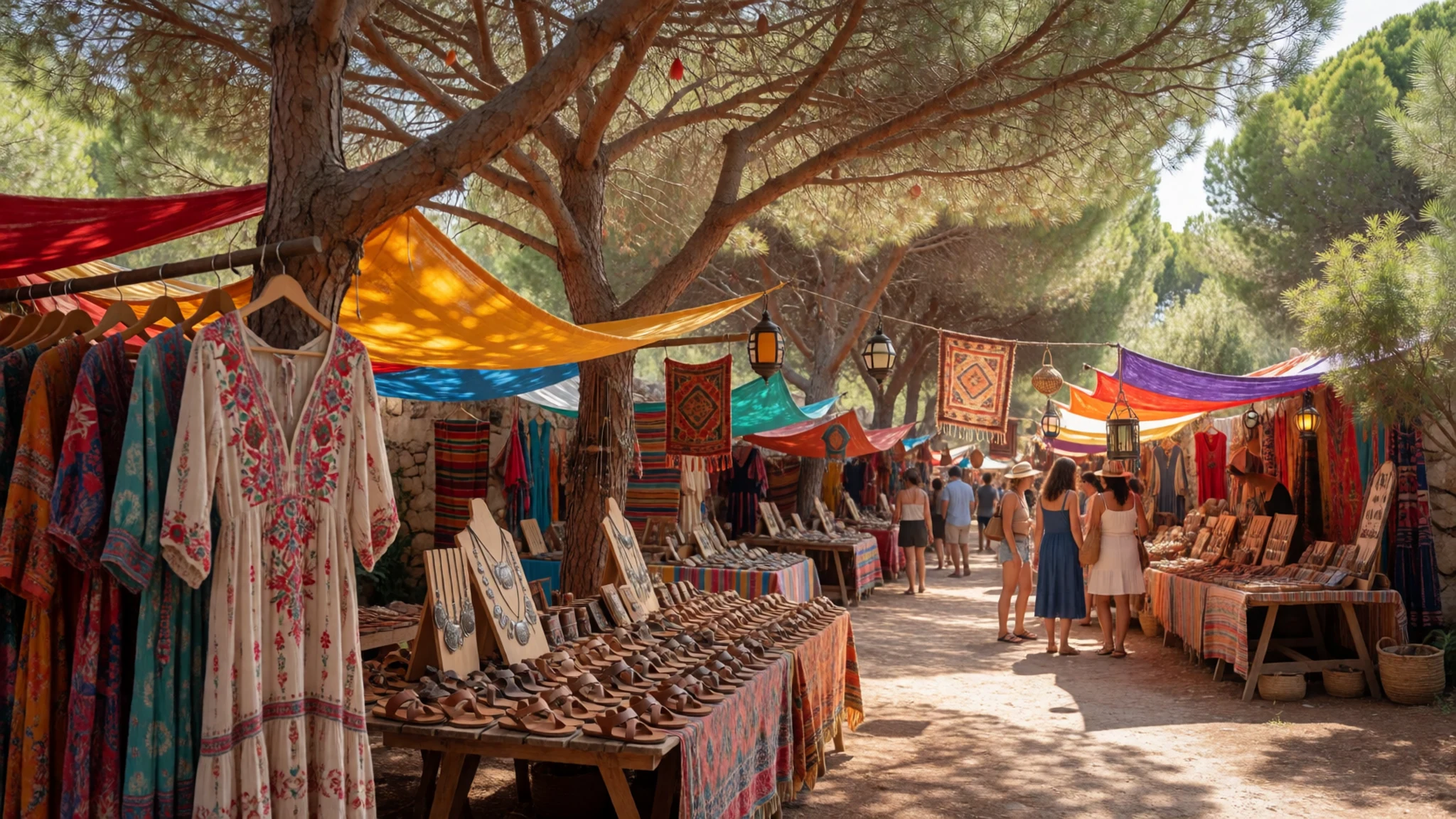
- Cova de Can Marçà — Puerto de San Miguel, north-west coast
Cova de Can Marçà, near Puerto de San Miguel, is among the largest natural cave systems on the island. Guided visits move through chambers of stalactites and stalagmites, and the cool air is a welcome change from the summer heat outside. Check the official site for opening times and tour details before setting out, as these change through the year.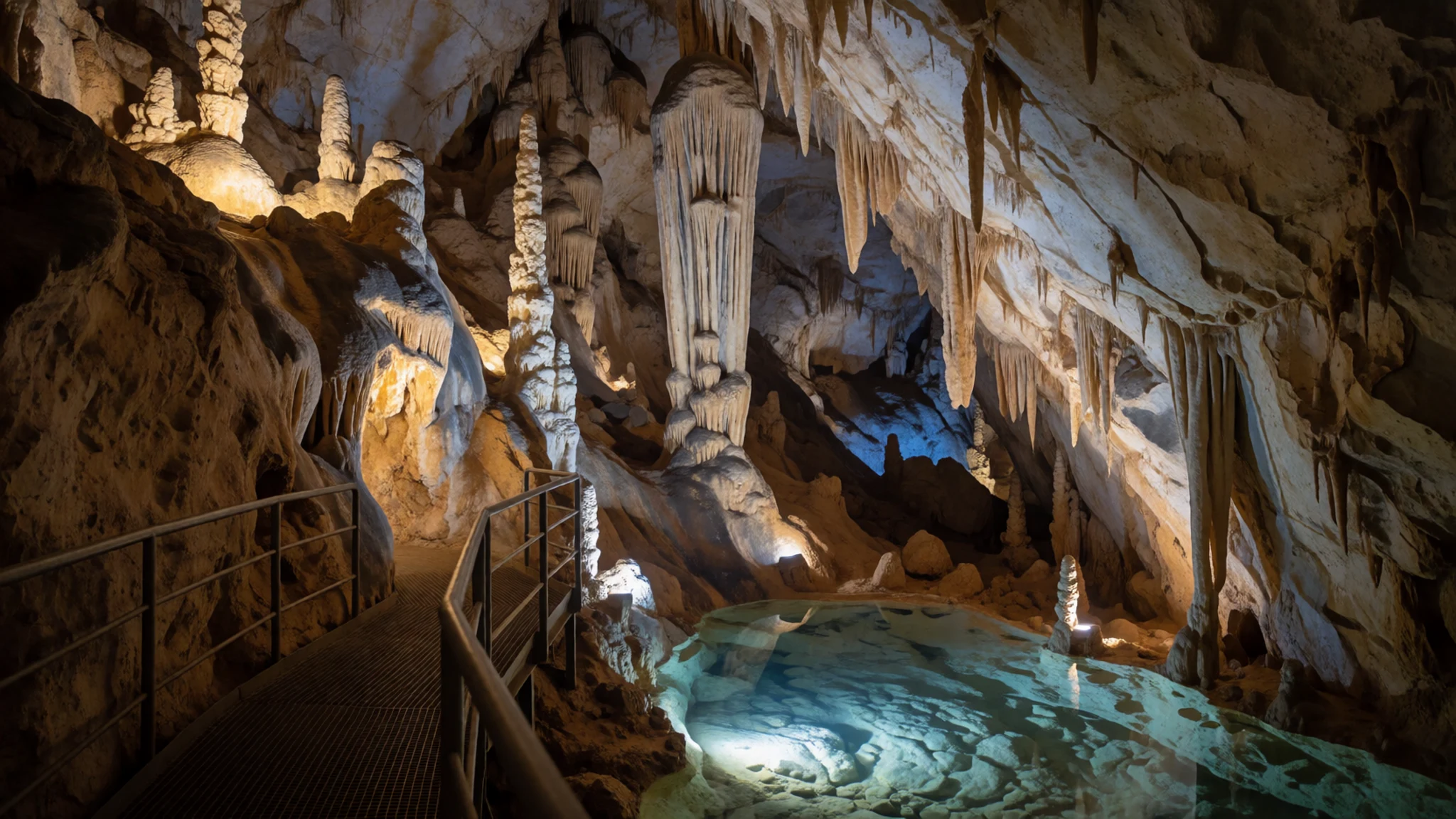
Culture
Ibiza is best known abroad for its summer nightlife, and the island's government and tourist office have worked to attract more families and older visitors as well. Clubs in the hills and along the coast open late, and bars in Ibiza Town and Sant Antoni rarely fill before early evening, so daytime life runs at a slower pace than the reputation suggests. The old town, Dalt Vila, contains churches and a cathedral that remain active places of worship, and the streets around them are lived in by residents as well as visitors. The Wednesday market at Es Canar and the Saturday market in San Carlos have a long history with artists, writers and traders, and both draw a mixed crowd of locals and tourists. Beach life is relaxed, but the coves and villages in the countryside depend on quiet neighbours and narrow roads, so drive slowly and park with care. Before entering a church in Dalt Vila, cover your shoulders and keep your voice low.
What to wear
Ibiza's traditional dress, often called the Ibicenca costume, was worn by farming families in the countryside and is now seen mainly at festivals and folk displays. Women generally wore dark skirts with embroidered bodices and sashes, and a red headscarf became one of the island's most recognised motifs. Men typically wore linen shirts, dark trousers and a sash at the waist. Cloth was usually cotton, linen or wool, spun and woven locally, and the garments were practical as much as decorative.
Most people on the island now dress much as they would anywhere in southern Europe. In summer that means light cotton and linen, with plenty of beachwear in the busier towns. Club dress codes are looser than the scene's reputation implies, although many venues turn away guests in flip-flops or heavy trainers.
For a visit, choose light, breathable layers. The cobbled streets of the old town reward flat, closed shoes, and churches and shrines ask for covered shoulders and knees. Bring a hat and sun protection for the daytime, and a lightweight layer for evenings, which can cool quickly by the sea. Swimwear that works for coves reached by steep steps is a sensible choice.
What to eat
- Ensaimada — Any pastelería in Ibiza Town or Sant Antoni
A soft, flat coil of pastry dusted with sugar, somewhere between a Danish and a doughnut in texture. Pastelerías sell it through the day, and it makes an easy breakfast with coffee.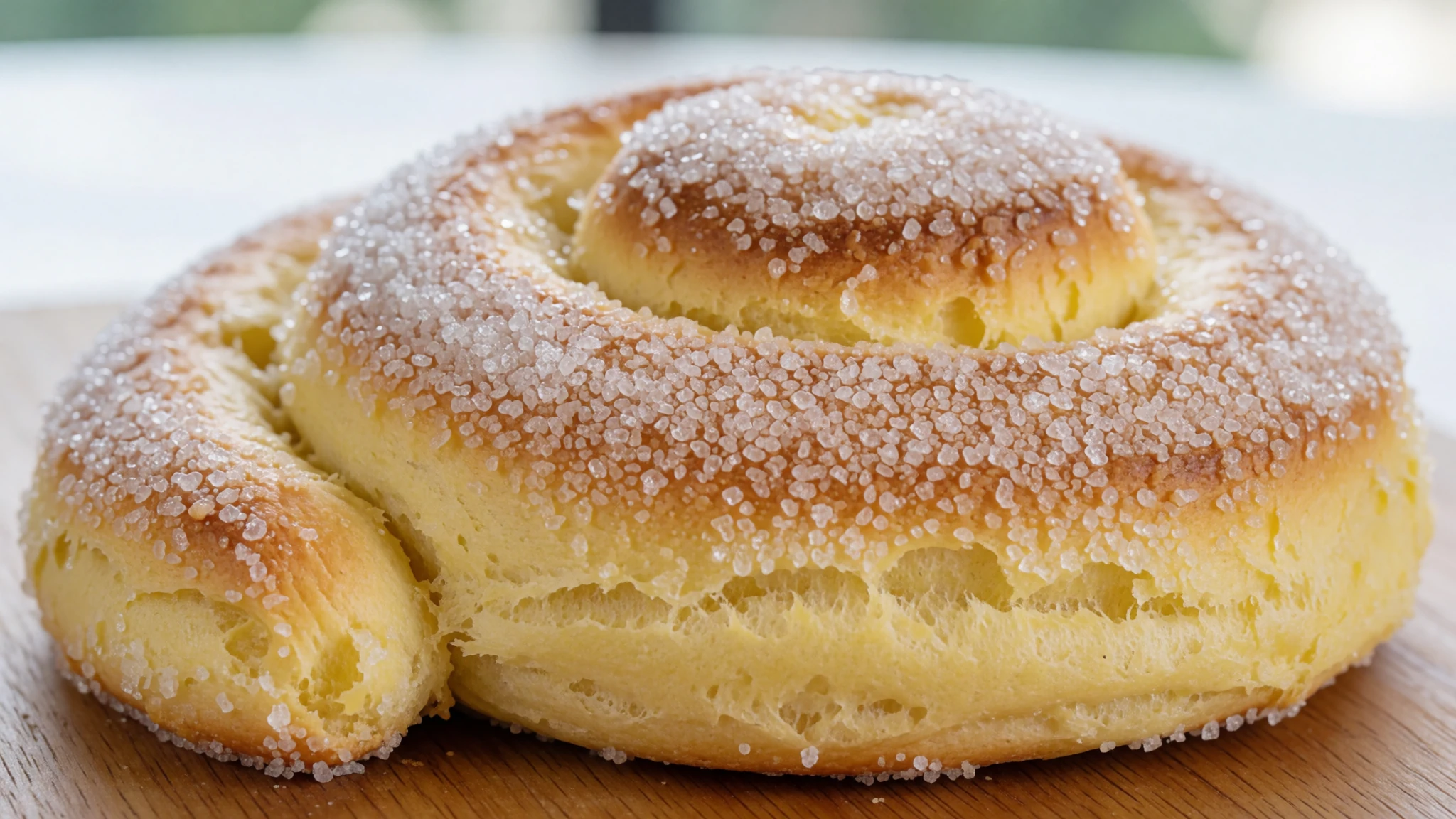
- Flao — Traditional bakeries in Ibiza Town
A sweet cheese and mint flan that is harder to find than ensaimada. Look in traditional bakeries and in older bars in Ibiza Town, and ask whether it was made that day.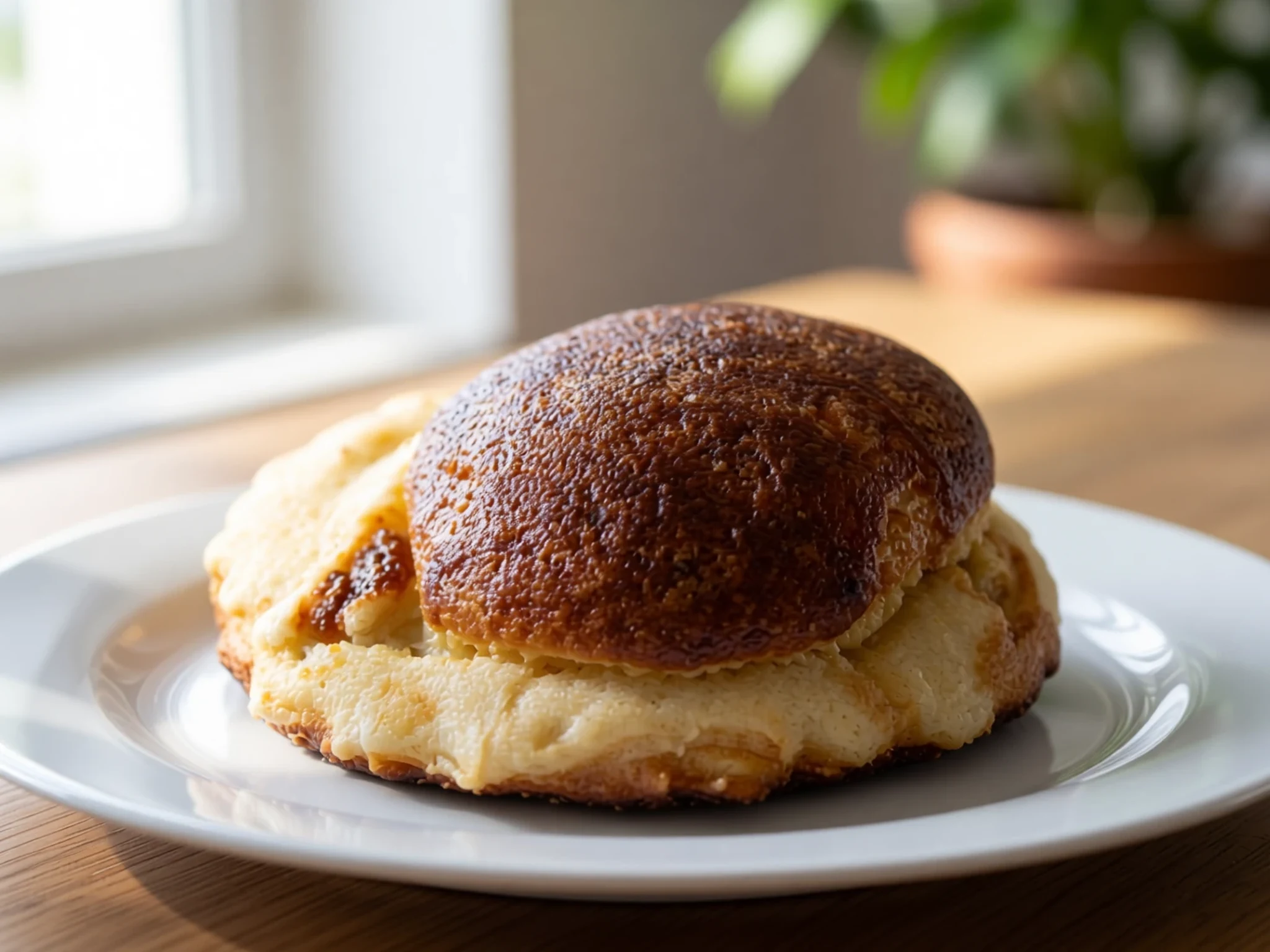
- Sobrasada — Delicatessens and market stalls across the island
A soft, spreadable cured pork sausage flavoured with paprika. It is sold by the slice at delicatessens and market stalls, and is often served on bread or alongside local cheese.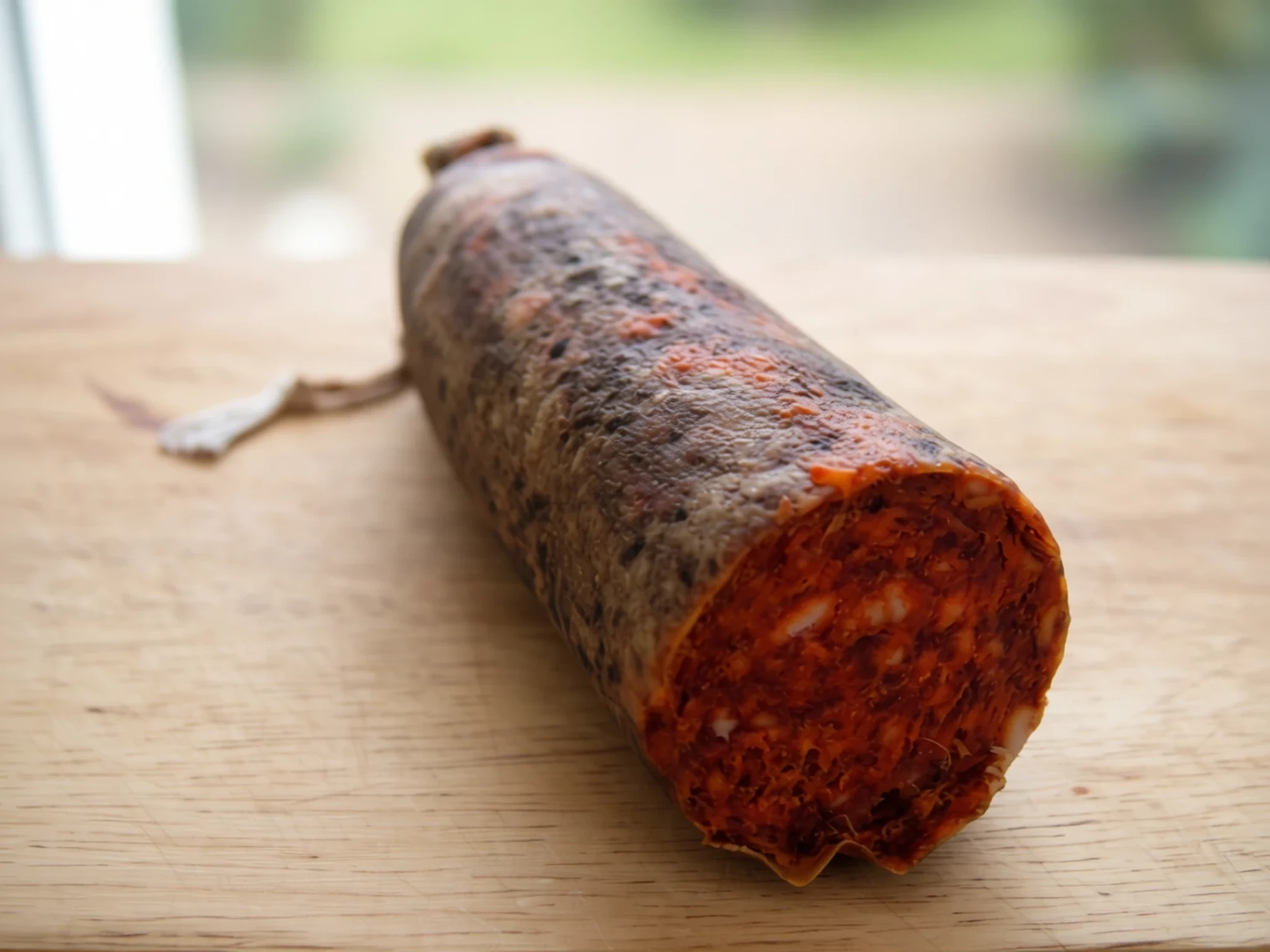
- Caldereta de langosta — Harbour restaurants in Ibiza Town and the south coast
A rich lobster stew with tomato, pepper and rice, traditionally a dish from the fishing boats. Harbour restaurants in Ibiza Town and along the south coast serve it, and it is usually shared between several diners. - Hierbas — Village squares and local bars
A sweet herbal liqueur flavoured with local herbs and aniseed, served in small glasses after a meal. Most bars and restaurants stock it, and the eateries in village squares are a good place to try it.
Plan it
Best time. May to early July and September to October. Beach weather usually lasts from May to November, the sea is warm enough for swimming, and the island is less crowded than in midsummer. July and August are hot and humid and the busiest months for clubs and flights.
How long. 3–4
Getting there. Ibiza Airport, the island's one main airport, is a short taxi or bus ride from Ibiza Town. Many European routes serve it in season. Check the official airport site for timetables.
Budget. high
Tips
- Book beds and car hire early for July and August, when the island is busiest.
- Visit Dalt Vila in the early morning or late afternoon, before the day crowds arrive.
- Take water and sun protection; summer heat is humid and the walk to some coves is steep.
- Carry cash for the hippy markets and small bars, as card payment is common but not universal.
Etiquette
- Keep voices and music low in villages and on country roads at night.
- Ask before photographing people at the markets or in the old town.
Nearby
Sources
- Wikidata Q52631 (CC0)
- Wikipedia (rev 1381281314) (CC BY-SA 4.0)
- Wikivoyage (rev 5404501) (CC BY-SA 4.0)
- Photo 01 — sea view, Ibiza Spain (athinaf) (CC BY 2.5)
- Photo 02 — The island of Ibiza, ISS035-E-007431 (Expedition 35 crew) (Public domain)
- Photo 03 — Greek Aryballoi, Puig des Molins (Nanosanchez) (Public domain)
- Photo 04 — Ibiza, 1960 (Biblioteca de la Facultad de Empresa y Gestión Pública, Universidad de Zaragoza) (CC BY-SA 2.0)
- Photo 05 — Festival Club-Spain Ibiza (Saaremees) (CC BY-SA 4.0)
- Photo 06 — Eivissa 2021 OSM map (Kelisi) (CC BY-SA 4.0)
- Photo 07 — Illa des Penjats (Vicenç Salvador Torres Guerola) (CC BY 3.0)
- Photo 08 — Es Vedrà, south slope (Vicenç Salvador Torres Guerola) (CC BY 3.0)


