Hyderabad
Hyderabad, India
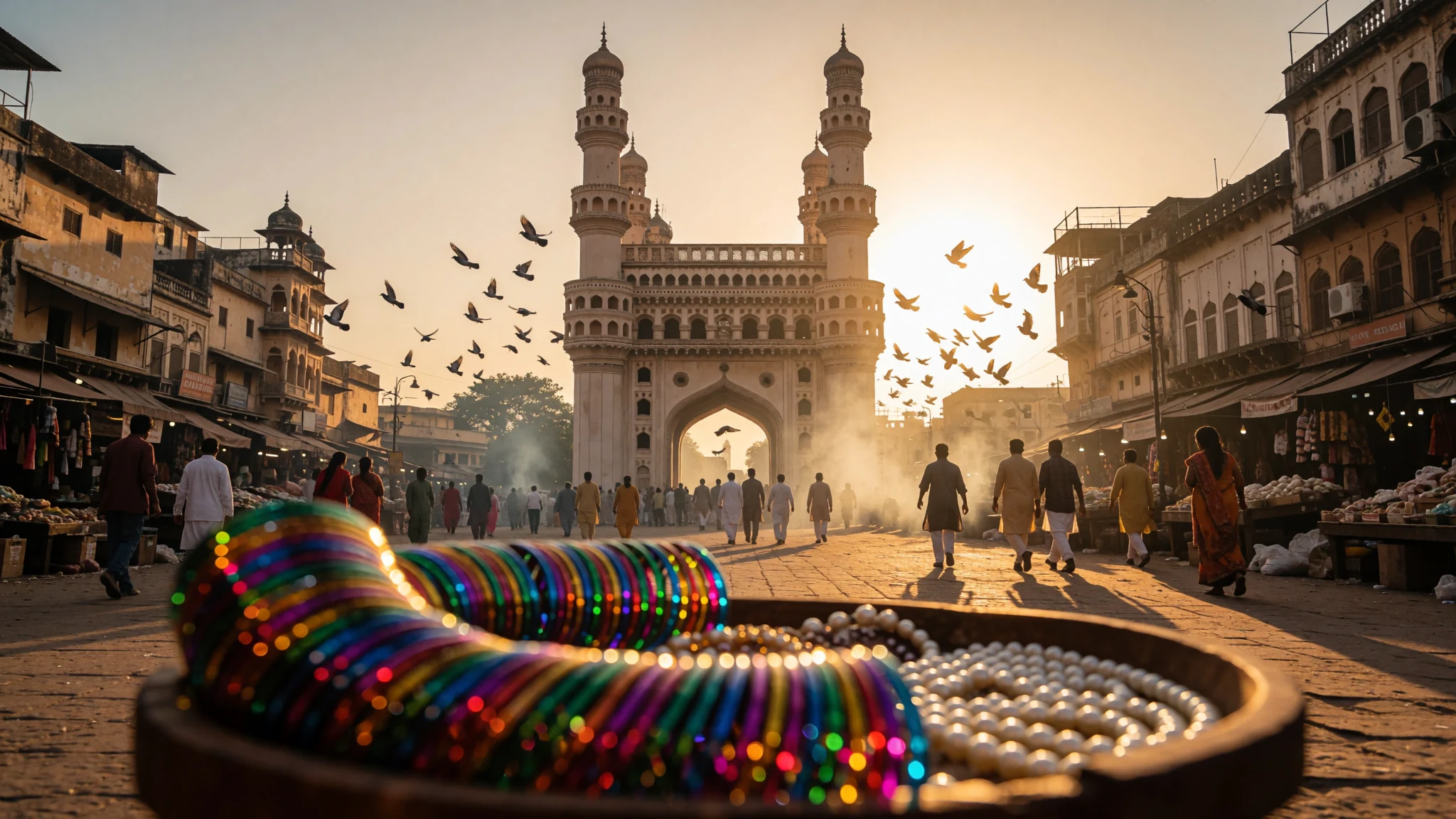
Come for old bazaars, Qutb Shahi monuments and Nizam-era palaces, and for food that rewards slow eating.
The place
Hyderabad sits on the Deccan Plateau in southern India, spread over low hills and beside artificial lakes, with the Musi River running through its older heart. It is the capital of Telangana and home to about 9.2 million people. Most visitors arrive expecting one famous landmark and find instead a city of several distinct areas. The Old City, south of the river, is dense with bazaars, mosques, lanes of bangle and pearl sellers, and the Charminar at its centre. North of the centre, around Hussain Sagar, the skyline is newer, with office towers, wide roads and the Hitech City district. Government buildings in the Indo-Saracenic style sit between these zones, and Golconda Fort rises on the western edge, a short drive from the middle. Expect crowds in the markets, slow traffic at rush hour and long distances between sights, so group your plans by area rather than zigzagging across town. Hyderabad rewards a slow approach: take one neighbourhood at a time, use an auto-rickshaw or app cab for the longer hops, and leave room for an unhurried lunch.
Its story
The name is usually explained as 'Haydar's City' or 'Lion City', after Ali, whose nickname Haydar, meaning lion, recalled his courage in battle. Before that the place was known as Baghnagar, the city of gardens, and seventeenth-century European travellers recorded both names in use. A popular story says the founder, Muhammad Quli Qutb Shah, first called it Bhagyanagar, the fortunate city, after a dancer he married, who converted to Islam and took the title Hyder Mahal, after which the city was renamed in her honour. Historians treat this as legend rather than record. The city was founded in 1591 by Muhammad Quli Qutb Shah, who wanted space to grow beyond the fortified hill of Golconda, a short distance to the west. Later the Mughals took the city, and emperor Aurangzeb renamed it Dar-ul-Jihad, 'abode of holy war', a title that appeared on coins minted there. In the eighteenth century a Mughal viceroy, Asaf Jah, declared his own sovereignty and founded the line known as the Nizams, who made Hyderabad a court city of great wealth and patronage. The princely state later housed a British Residency and cantonment. When the princely state joined the Indian Union, Hyderabad became a state capital, and today it is the capital of Telangana.
What to see
- Charminar — Old City
Charminar is a brick-and-stone gateway with tall arches and slender minarets at its corners, and it is the emblem of the Old City. Most visitors head there first, so go early, before the lanes fill and the heat builds. The bazaars around it sell bangles, pearls and sweets, and the surrounding streets are best explored slowly on foot.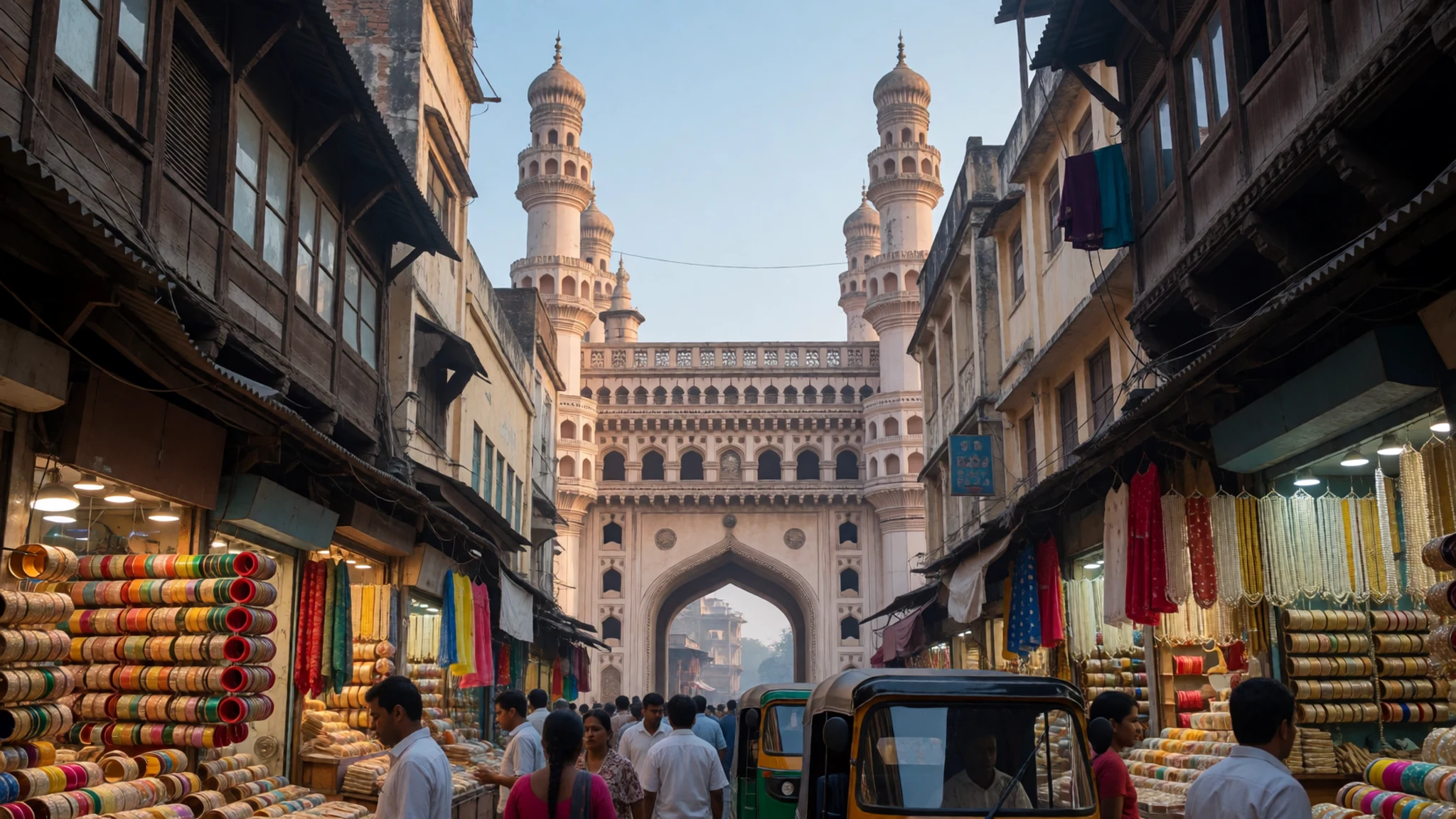
- Golconda Fort and Qutb Shahi Tombs — Golconda, west of the centre
Golconda Fort sits on a granite hill west of the centre and was the fortified capital before the city grew onto the plains. Climb in the cooler morning or late afternoon, when the stone holds less heat and the views are clearer. The nearby Qutb Shahi Tombs are domed monuments set in landscaped grounds, a quieter visit that pairs well with the fort.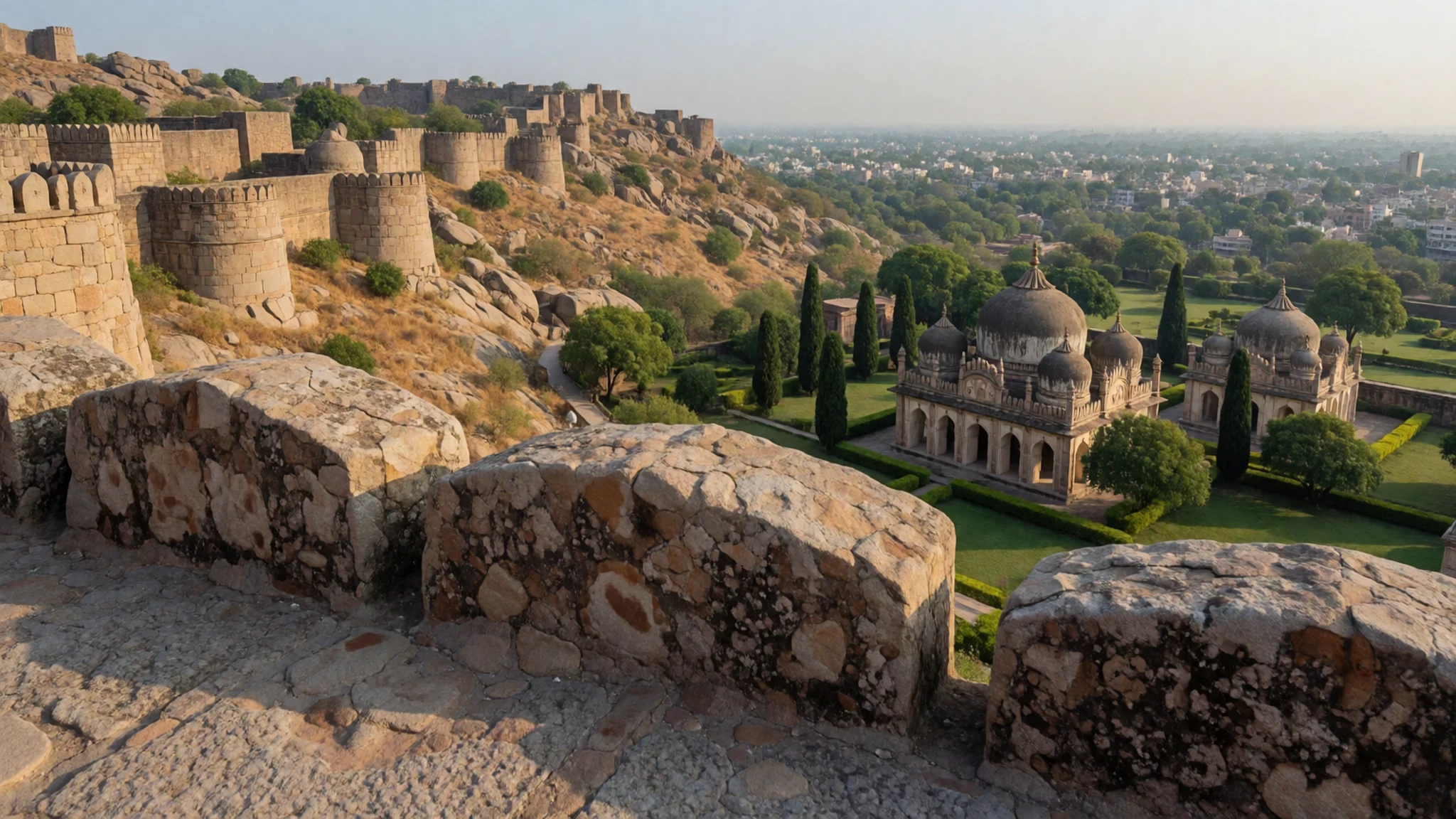
- Buddha on Gibraltar Rock — Hussain Sagar, north of the centre
A monolithic granite Buddha stands on a rock in the middle of Hussain Sagar, the lake north of the city centre. Boat trips out to the rock run from the shore, though availability varies, so check locally before you go. The lakeside promenade is busiest in the evenings, when families come out for snacks and the air cools. The statue looks its best from the banks.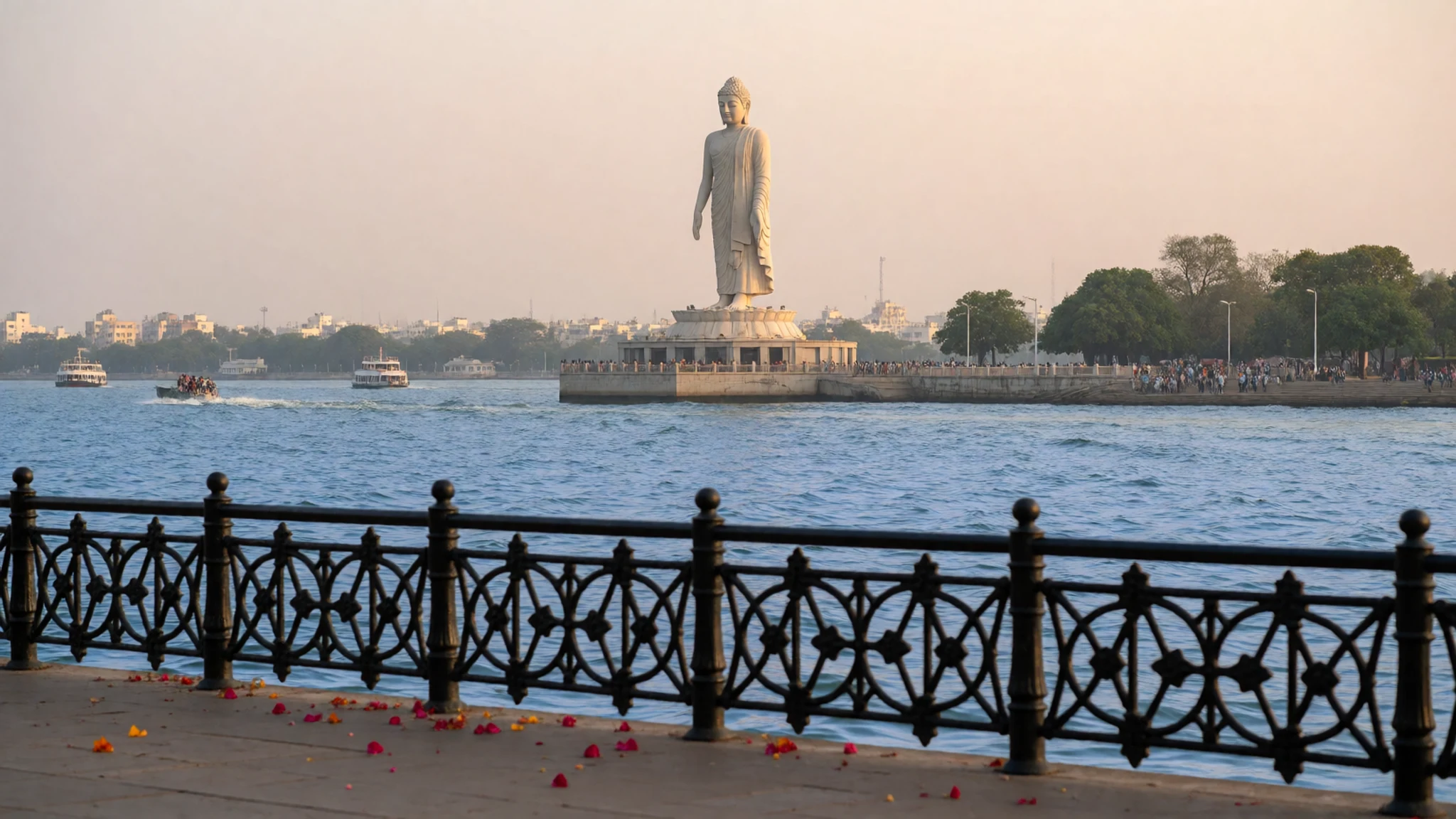
- Birla Mandir — Hill above Hussain Sagar
Birla Mandir is a white marble Hindu temple on a hill overlooking the city and Hussain Sagar. It is most atmospheric at sunset, when the marble takes on warm colour and the lights come on below. Expect queues on evenings and weekends. Dress modestly and remove your shoes before entering the shrine.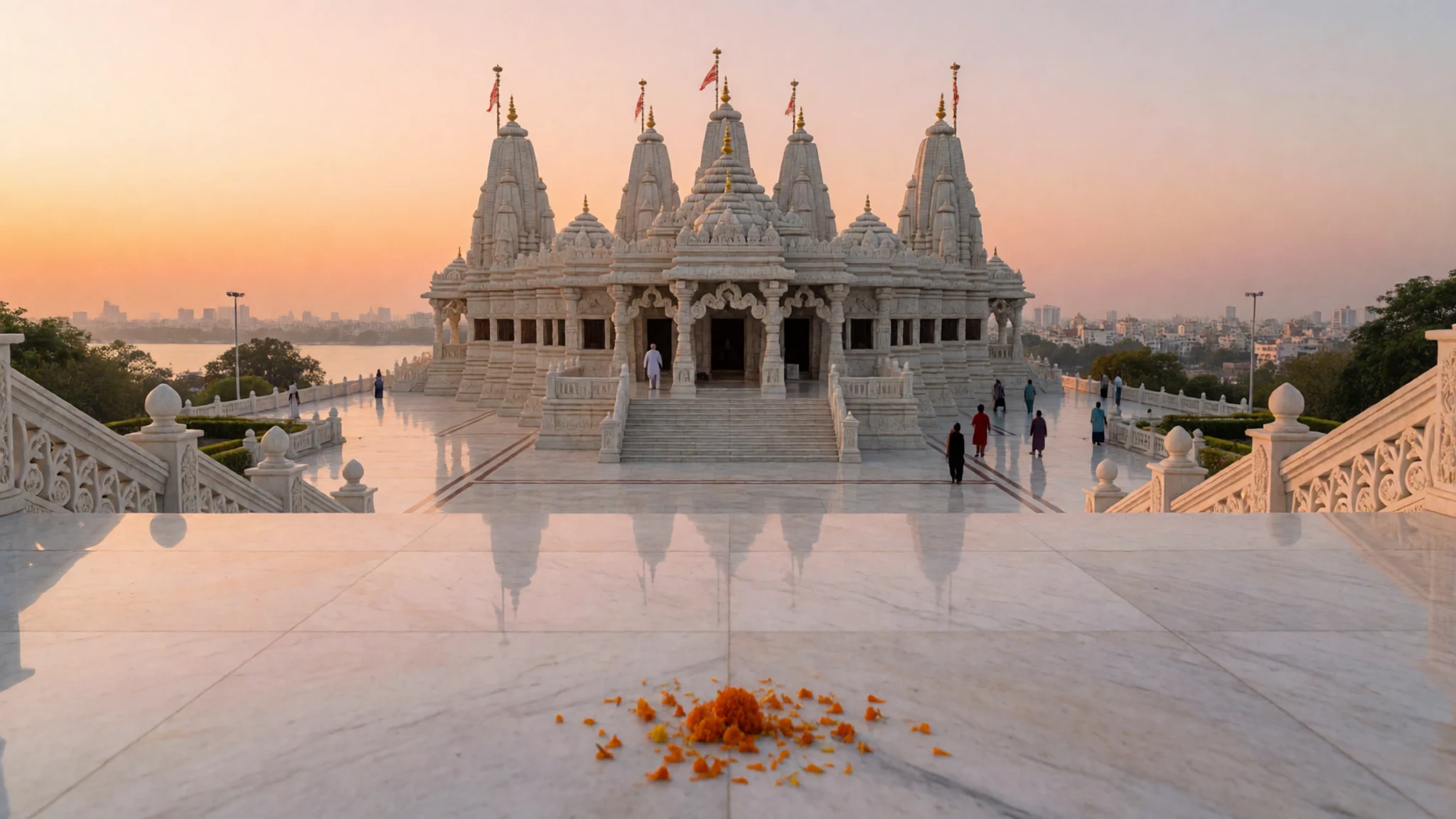
- Falaknuma Palace — Falaknuma hill, south of the centre
Falaknuma Palace is a grand palace on a hill south of the centre, built in the Nizams' era and blending European and Indian architectural ideas. It now operates as a luxury hotel, and visitors usually see it through a guided visit or a meal, so book ahead and check the official site for current arrangements. The views across the Old City are the reason to go.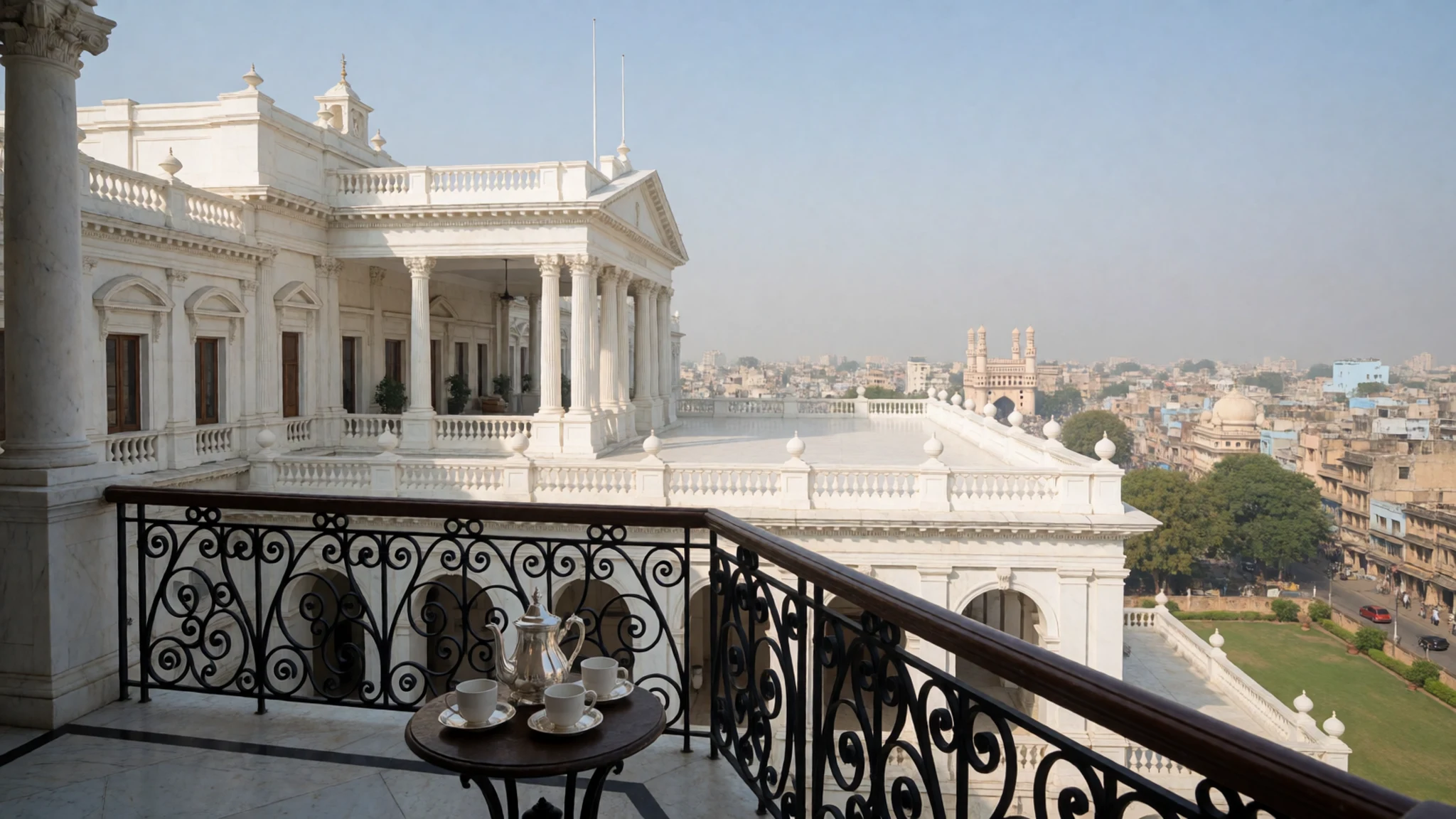
Culture
Hyderabad's culture grew out of mixing. As the Mughal Empire declined, performers, poets and scholars from the north and west of the subcontinent moved south, many of them drawn to the patronage of the Nizams, and the city became the foremost centre of culture in India. The result is a blend of North and South Indian languages, customs and food, and Hindu and Muslim traditions have lived side by side here for a long time. Telugu and Urdu are both official languages of Telangana, so you will hear both, and English is widely understood. In the Old City, the call to prayer and temple bells can sound within minutes of each other, and shops often close briefly for prayer times. Festivals such as Muharram and Ramadan change the rhythm of the streets, with processions and late-night food stalls. Locals are generally friendly and curious, and many are happy to talk about the city, but ask before photographing people, particularly women and people at prayer. Remove your shoes before entering any temple, mosque or dargah, and cover your shoulders and knees; always check whether a site asks for covered heads before you go in.
What to wear
Traditional dress in Hyderabad was shaped by the Deccani style and by the court culture of the Nizams. Women have long worn the sari, often in silk or cotton, and Telangana's weavers are known for ikat textiles, with Pochampally and Gadwal saris especially prized. Older men may still wear the sherwani for weddings and formal events, and the long kurta with churidar is common. Hyderabad is also known for lac bangles and pearl jewellery, which feature in bridal and festival dress. In everyday life, most people wear Western clothes at work and in malls, with kurtas, jeans and salwar kameez as common choices. In the Old City, many women wear the burqa or a headscarf, and men often wear kurtas. For your own clothes, choose loose cotton or linen that breathes in the heat, and carry a light scarf or shawl to cover your shoulders at mosques, dargahs and temples. Pack a hat and sturdy closed shoes that are easy to slip off, because you will take them off at most shrines and at the entrances to many buildings.
What to eat
- Hyderabadi dum biryani — Long-established eateries in the Old City, around Charminar
Basmati rice is layered with marinated meat or vegetables and cooked in a sealed pot, so the flavours steep together. Dum is the slow sealed-pot method, and the aroma escapes when the lid is lifted. Order it at long-established eateries in the Old City, around Charminar.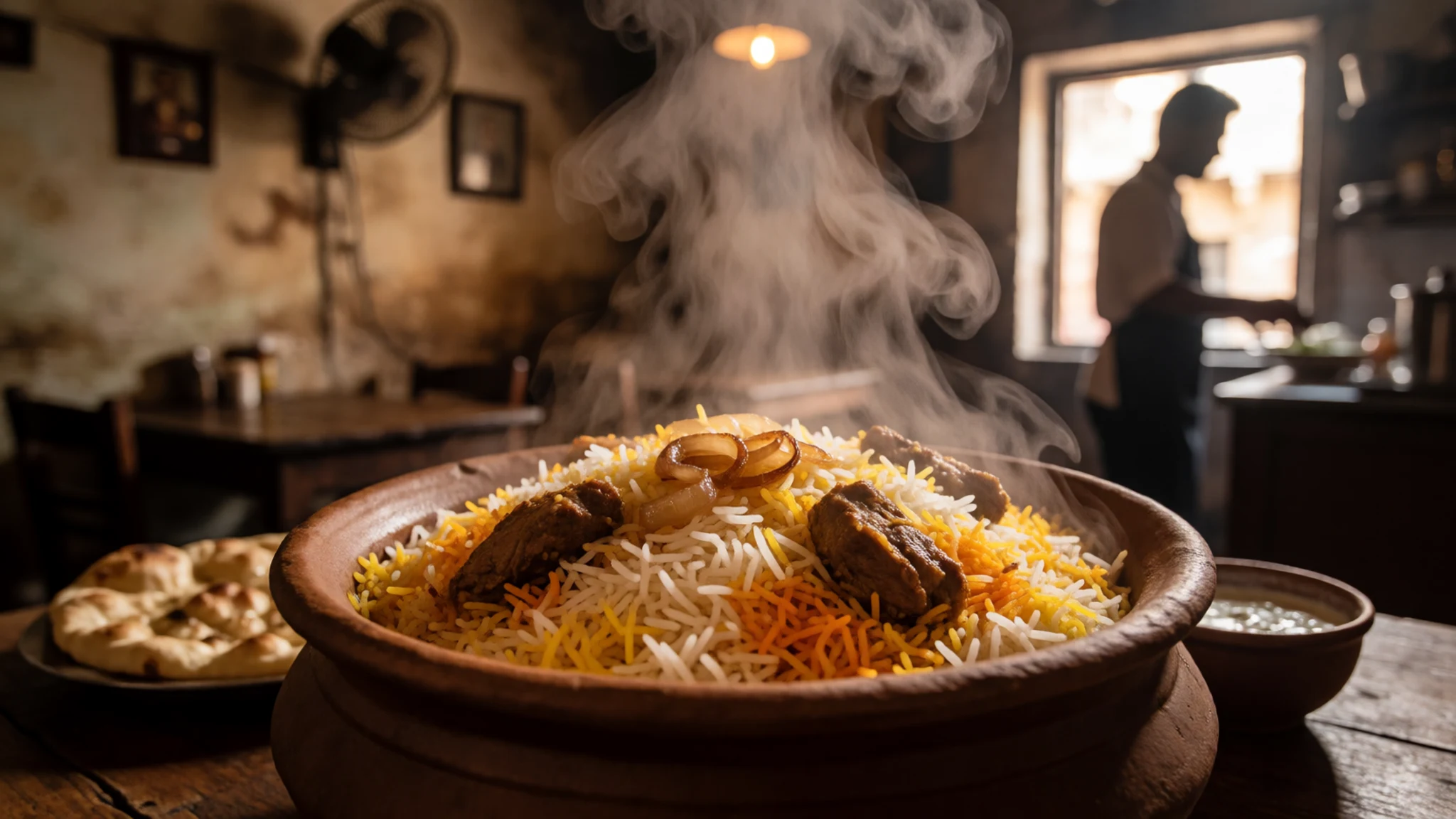
- Hyderabadi haleem — Evening food stalls in the Old City during Ramadan
A slow-cooked stew of wheat, lentils and meat, cooked and pounded until thick and rich. It is most closely associated with Ramadan, when it is sold widely in the evenings. Try it in the Old City after sunset, when the stalls are busiest.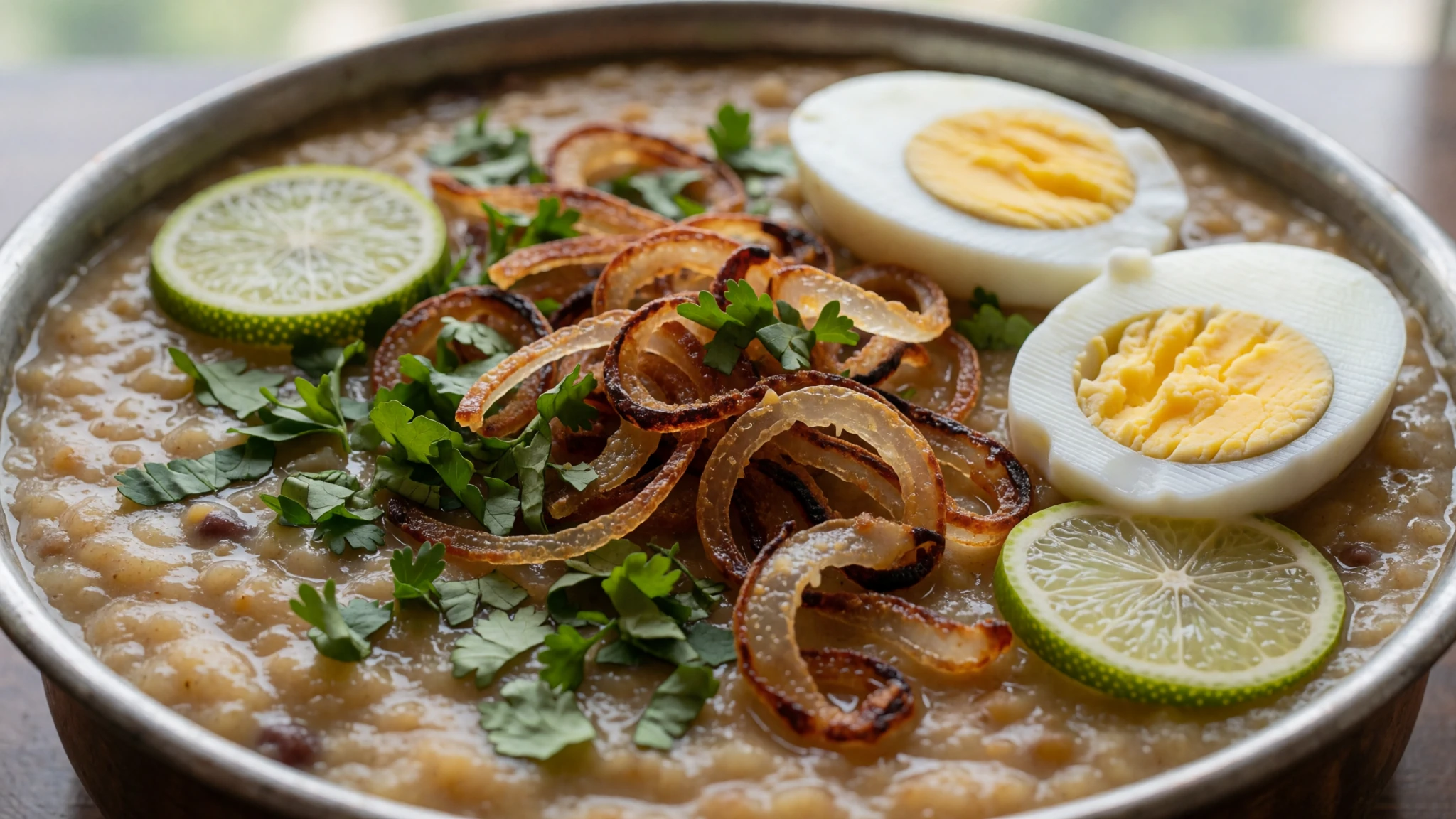
- Irani chai — Any chai shop, from roadside stalls to older cafés
A milky, sweet tea that Hyderabadis drink throughout the day, served in small glasses or cups. Chai shops are everywhere, from roadside stalls to older cafés. Standards of hygiene vary, so choose a busy stall where the tea is made fresh, and carry some cash. - Double ka meetha — Long-running sweet shops and traditional Hyderabadi restaurants
A dessert of fried bread soaked in sweetened milk and reduced until rich, then topped with dry fruits and nuts. It is a common sweet at weddings and celebrations. Ask for it at a long-running sweet shop or at a restaurant serving traditional Hyderabadi food. - Khubani ka meetha — Traditional Hyderabadi restaurants, usually at the end of a meal
An apricot dessert, sweet and slightly tangy, often served cold and sometimes with cream. It is a favourite across the city's homes and restaurants. Look for it on the menu at traditional Hyderabadi restaurants, especially to finish a meal.
Plan it
Best time. December and January are the most comfortable months, with cool nights and little rain, though days stay warm. March to May is very hot, and the monsoon brings heavy rain from June to October.
How long. 2–3
Getting there. Fly into the international airport, which is a long drive from the centre, then take the Pushpak Airport Liner air-conditioned bus to Imlibun near Charminar or to Secunderabad, or take a metered Meru or Sky cab.
Budget. low
Tips
- Visit Charminar and the Old City before 9 am to avoid the worst crowds and heat
- Book the Falaknuma Palace visit or meal ahead, and check the official site for current arrangements
- Carry cash for small eateries, chai shops and markets, and use app cabs or auto-rickshaws with the fare agreed in advance
- Drink bottled or filtered water and keep a hat handy, since the midday sun is strong
- Group your sights by area so you spend less time in traffic
Etiquette
- Remove your shoes before entering any temple, mosque or dargah
- Ask before photographing people, especially women and worshippers
- Dress modestly and cover your shoulders and knees at religious sites
Nearby
Sources
- Wikidata Q1361 (CC0)
- Wikipedia: Hyderabad (CC BY-SA 4.0)
- Wikivoyage: Hyderabad (CC BY-SA 4.0)
- Aerial view of Durgam cheruvu and Hitech CIty, iMahesh (CC BY-SA 4.0)
- Charminar-Pride of Hyderabad, Gopikrishna Narla (CC BY 3.0)
- Birla Mandir on a sunset, iMahesh (CC BY-SA 4.0)
- Dr. B.R. Ambedkar Telangana State Secretariat complex, iMahesh (CC BY-SA 4.0)
- Monolithic Buddha statue in Hussain Sagar, iMahesh (CC BY-SA 4.0)
- Qutb Shahi Tomb 5, Alaka123 (CC BY-SA 4.0)
- Falaknuma Palace 01, Bernard Gagnon (CC BY 3.0)
- Govardhan II, Visit of sufi-singer Shir Muhammad to Abul Hasan Qutb Shah, ca. 1720 (Public domain)


